A premium candle can lose trust before anyone smells it. One curled corner, one cloudy clear label, one logo that scratches during shipping, and the buyer quietly downgrades the whole product. Many people searching for custom vinal stickers are not just shopping for a cheap decal. They are trying to solve a durability, branding, and packaging problem at the same time.
The spelling in that search is common; the standard product name is Custom Vinyl Stickers. These are printed adhesive graphics made from flexible PVC or similar durable films, often protected with laminate, varnish, or UV coating. Compared with basic paper stickers, vinyl usually offers better water resistance, stronger tear resistance, cleaner color density, and a more polished hand-feel on product packaging.
That does not mean every vinyl sticker is automatically suitable for every package. A label for a dry mailer insert has a different job than one wrapped around a refrigerated bottle, a lotion tube, or a powder-coated tumbler. The buyer’s real work is matching the material, adhesive, finish, artwork, and production format to the surface and use conditions.
What Custom Vinal Stickers Are and Where Buyers Use Them
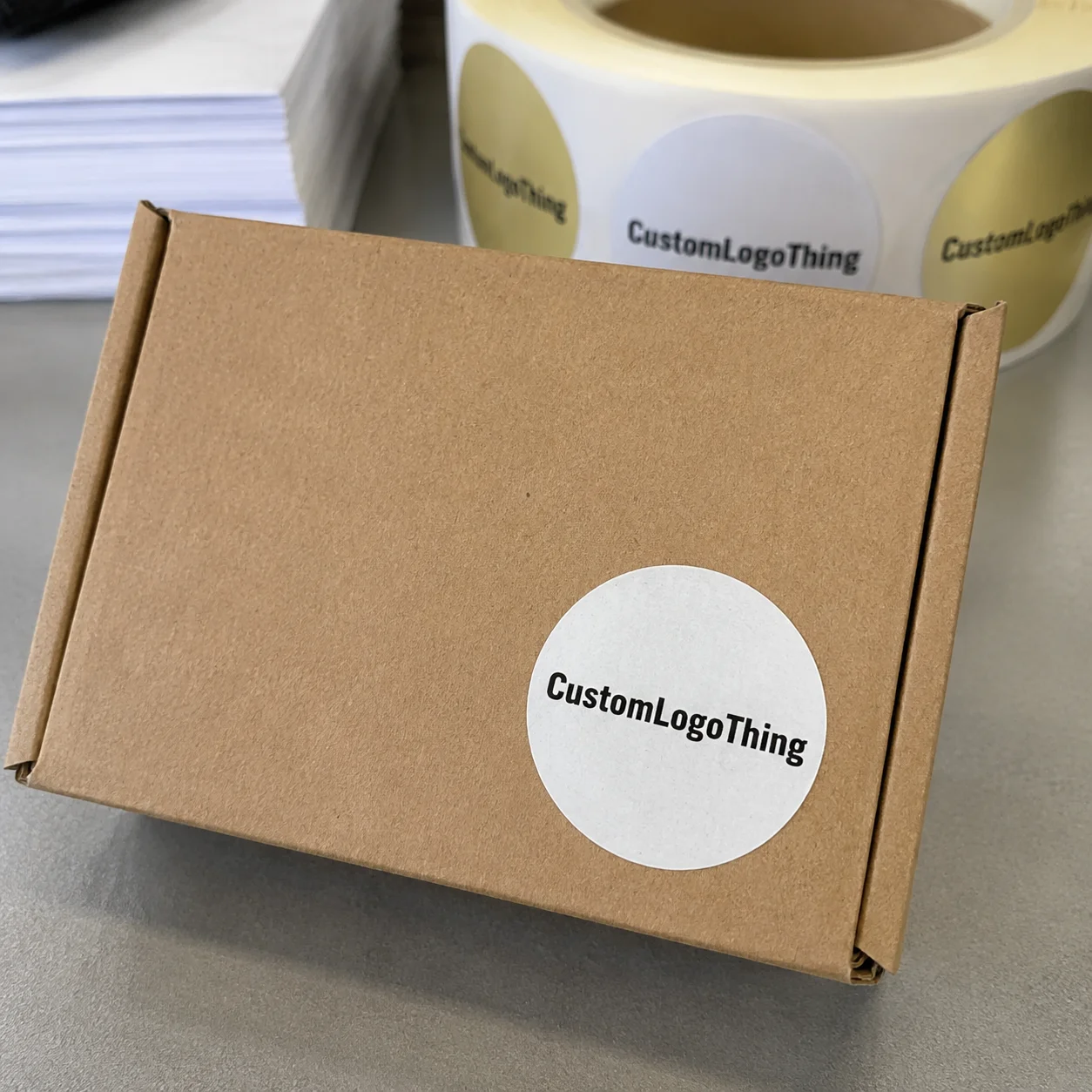
The category covers far more than logo giveaways. A vinyl sticker can sit on a candle jar, coffee pouch, shipping box, boutique retail bag, laptop, water bottle, cannabis pouch, cosmetic tube, equipment case, window, or seasonal gift kit. In packaging terms, it behaves like both a brand asset and a functional label.
That dual role matters. One sticker may carry a logo, barcode, QR code, tamper cue, batch code, limited-edition message, warning, use instruction, or seal. Buyers sometimes treat stickers as an afterthought because they cost pennies compared with jars, cartons, or Custom Packaging Products. That accounting can backfire. The cheapest sticker is rarely the lowest-cost sticker if it fails during refrigeration, hand contact, shelf display, or parcel transit.
Consider a small skincare brand using the same white jar for three SKUs. A well-specified vinyl label can create distinct package branding without ordering three separate printed containers. For a coffee roaster, a matte black vinyl label on a kraft bag can create a premium retail cue without committing to a large run of printed pouches. For an event team, die-cut logo stickers turn attendee bags, laptops, notebooks, and bottles into repeat impressions.
Buyer rule: judge a sticker by the worst environment it will face, not the best product photo. Condensation, abrasion, curved glass, and rushed hand application expose weak specifications fast.
Good vinyl sticker buying starts with a plain question: what must this label survive? If the answer includes cold storage, damp hands, oil, sunlight, cleaning chemicals, rough shipping, or curved packaging, the specification needs more attention than a simple size-and-quantity quote.
How Vinyl Sticker Materials, Adhesives, and Finishes Work
A sticker looks simple because most of its engineering is hidden. The usual construction includes a face film, printed ink layer, adhesive, release liner, and optional protective laminate or varnish. Change one layer and performance changes. Sometimes dramatically.
White vinyl is the workhorse for bold logos, product labels, and promotional decals because colors print predictably on an opaque surface. Clear vinyl works well on glass jars, bottles, and windows, but it often needs white ink behind light colors so the artwork does not disappear. Holographic and metallic films add shelf impact, especially for limited drops, beauty products, dispensary packaging, and event stickers. Static cling is used for glass where adhesive residue is unwanted. Removable vinyl is useful for temporary campaigns, rental equipment, short-term retail signage, and price changes.
Adhesive choice deserves more attention than it usually gets. Permanent adhesive is common for long-term labels. Removable adhesive helps when a promotion or price sticker must come off cleanly. Freezer-grade adhesive is built for cold chains, frozen foods, cooler labels, and refrigerated display. Aggressive adhesive is designed for textured plastics, powder-coated metal, corrugated board, or surfaces that resist normal bonding.
Surface energy is the quiet troublemaker. Glass and smooth PET bottles usually accept labels well. Kraft paper, uncoated cardboard, low-energy plastics, curved jars, powder-coated tumblers, and slightly oily product containers can behave differently. A label that sticks perfectly to a flat sample sheet may lift on a tapered candle jar after 48 hours because the adhesive is fighting curve tension the entire time.
Finish changes both protection and perception. Gloss gives color pop and works well for bold promotional stickers. Matte feels calmer and more premium, especially for cosmetics, candles, coffee, and boutique packaging design. Satin splits the difference. Soft-touch adds a tactile cue, although it can show oils from fingers. UV coating or over-laminate protects against scuffing, moisture, and sunlight better than ink alone.
- Die-cut: the sticker is cut to the final shape, with no extra backing around it.
- Kiss-cut: the sticker is cut through the top layer but stays on a larger easy-peel backing sheet.
- Roll labels: efficient for applicators or fast hand labeling.
- Sheeted stickers: practical for giveaways, inserts, mixed designs, and short runs.
Weather resistance is real, but it is not magic. Vinyl handles moisture and sunlight better than paper, yet lifespan depends on film grade, ink system, laminate, UV exposure, cleaning chemicals, and application surface. Indoor packaging labels do not need the same build as bumper stickers, cooler decals, or outdoor equipment labels. Organizations such as ISTA focus on transit testing because real distribution is harsher than a desk review.
Key Specs to Decide Before You Request Artwork or Samples
Before requesting artwork or samples, define the basics: size, shape, quantity, material, finish, adhesive type, print colors, intended surface, application method, and expected environment. That list sounds ordinary. It prevents expensive confusion.
Size should be measured on the actual package, not guessed from a screen mockup. A 2-inch circle can look generous in a PDF and cramped on a curved 8-ounce jar. For front labels, buyers often test with a paper printout first. Wrap it around the real container. Check seams, taper, lid clearance, barcode placement, and how much of the product remains visible.
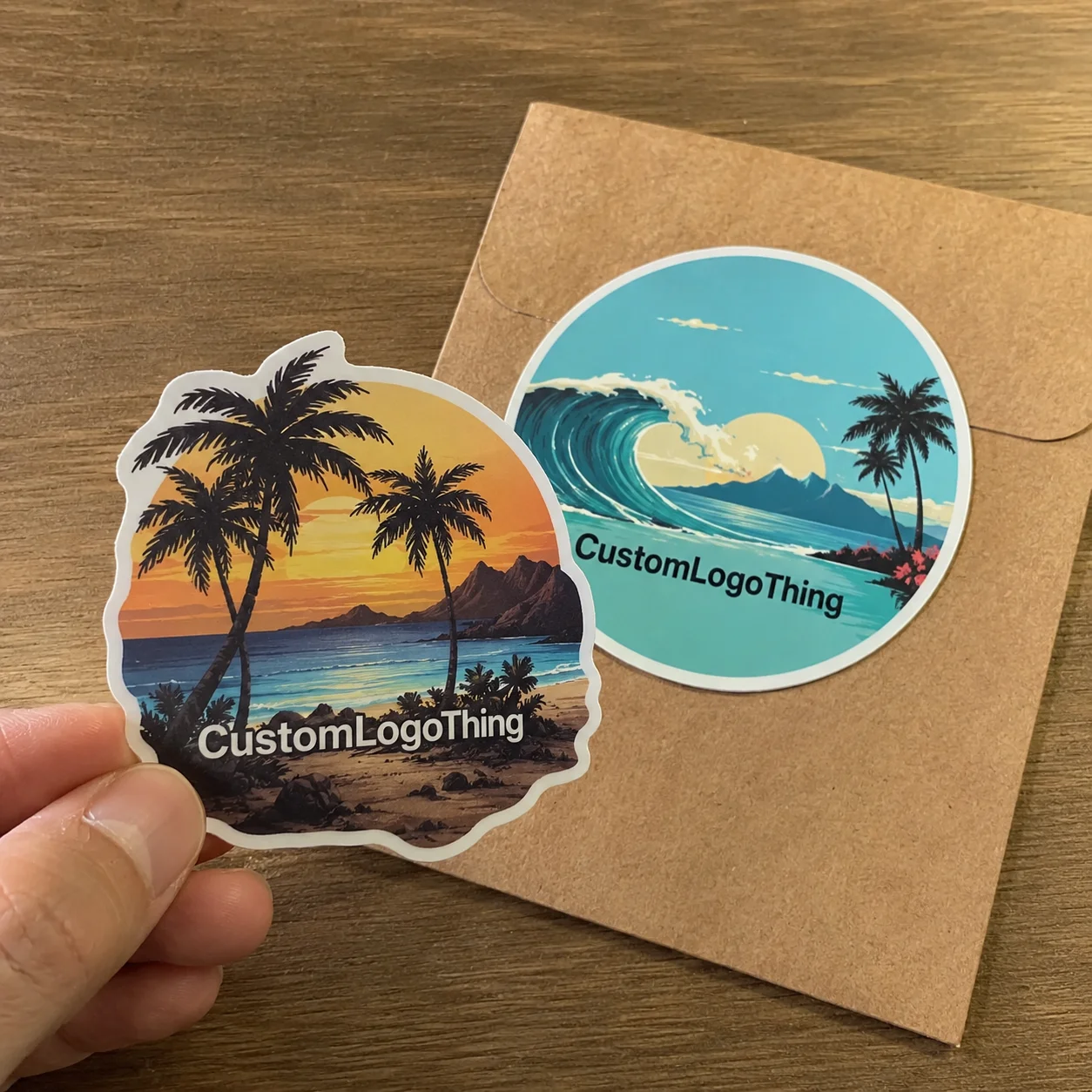
Shape affects both cost and recognition. Circles, ovals, squares, and rectangles are usually efficient because they nest well during production. Custom contours can make a brand mark more memorable, especially for laptop stickers, water bottle decals, or retail inserts, but they require cleaner dielines and more careful proofing. Thin points, tiny cutouts, and sharp internal corners can tear or weed poorly, especially at small sizes.
Artwork has its own language. Bleed is extra printed area beyond the final cut so tiny cutting shifts do not leave white edges. Safe zone keeps text, icons, and barcodes away from the blade path. Cut line tells production where the sticker shape should be cut. For many jobs, 0.0625 inch to 0.125 inch of bleed is common, but the exact spec depends on the printer’s workflow.
Color planning is another place where buyers get surprised. Most sticker printing uses CMYK, while brand guides often show Pantone or RGB values. Rich black may need a controlled CMYK build rather than 100% black only. Clear, metallic, and holographic stocks often need white ink layers to control opacity. Without that planning, pale yellow, beige, light gray, and pastel logos can nearly vanish on amber glass or dark products.
Compliance can be less forgiving than brand graphics. Nutrition panels, ingredient lines, warnings, QR codes, and barcodes need enough contrast after printing and after application. A UPC that scans on the proof may fail if it is wrapped around a tight curve or printed too small. For regulated categories, ask for a physical proof or pilot run before committing to the full order.
Samples are not overkill when custom vinal stickers will touch moisture, oil, refrigeration, textured packaging, or premium retail displays. They are cheap insurance compared with reprinting 5,000 labels after a launch date is locked. A useful sample test is simple: apply labels to the real surface, wait 24 to 72 hours, then rub, chill, wet, stack, or ship them in the way the finished product will be handled.
Pricing Factors, Unit Cost, and MOQ Tradeoffs
Sticker pricing is driven by material, size, shape, quantity, finish, adhesive, color complexity, proofing needs, and shipping speed. Unit cost usually drops as volume rises because setup, prepress, machine time, and quality checks are spread across more pieces. That curve is why a 250-piece test run may feel expensive per sticker while a 2,500-piece order looks efficient.
Numbers vary by supplier and specification, but a small 2-inch square gloss white vinyl label might land around $0.18 to $0.45 per piece at moderate quantities. A larger contour-cut clear sticker with white ink and laminate may sit closer to $0.55 to $1.50 per piece at lower volumes. Very small runs can exceed those ranges because setup dominates the job.
| Sticker Option | Typical Use | Cost Pressure | Buyer Watchout |
|---|---|---|---|
| White gloss vinyl, simple shape | Logo labels, coffee bags, shipping boxes | Lower | Confirm scuff resistance if used in transit |
| Matte vinyl with laminate | Candles, cosmetics, boutique retail packaging | Medium | Check fingerprints on dark designs |
| Clear vinyl with white ink | Glass jars, bottles, windows | Medium to high | Plan opacity and bubble visibility |
| Holographic or metallic film | Limited editions, promos, event giveaways | Higher | Proof fine text and brand color shifts |
| Freezer-grade vinyl adhesive | Cold-chain labels, coolers, frozen goods | Higher | Test at application temperature |
MOQ, or minimum order quantity, is not automatically good or bad. Low minimums help test designs, new SKUs, or event concepts. Larger runs make sense for stable product lines, seasonal packaging, and recurring promotions. A practical quote request asks for breaks at 250, 500, 1,000, and 2,500 pieces. The useful question is not “What is the cheapest?” It is “Where does the cost curve change enough to justify the inventory?”
Hidden costs deserve scrutiny. Rush shipping, repeated artwork revisions, wrong adhesive selection, reprints, and ordering too few labels for launch inventory can wipe out savings. If a brand needs 1,000 sellable units, ordering exactly 1,000 stickers leaves no room for setup waste, staff training, damaged labels, samples, retailer extras, or returns.
Premium finishes can still be strategic. A soft-touch label, metallic accent, or custom die-cut may create enough perceived value to delay a more expensive move into custom printed boxes or new container molds. For many small brands, smart stickers bridge the gap between plain stock packaging and fully custom structures.
A strong quote request includes dimensions, quantity, artwork status, surface, use case, finish preference, delivery location, and deadline. Custom Logo Things also groups related options under Custom Labels & Tags, which helps buyers compare sticker labels against hang tags, seals, and other package branding tools.
Production Process, Timeline, and Turnaround Expectations
A normal order flow runs through consultation, quote, artwork review, digital proof, approval, printing, finishing, cutting, quality check, packing, and shipping. The clock usually starts after final artwork and proof approval, not when the first inquiry is sent. That distinction causes a surprising number of missed launch dates.
For straightforward custom sticker printing, production commonly takes 5 to 10 business days after proof approval. Specialty films, laminated outdoor decals, high-volume roll labels, color matching, or sample approvals may push that to 10 to 15 business days or more. Shipping time is separate. International freight, holiday congestion, customs checks, or remote delivery locations can add several days.
Proofing checkpoints should be boring and exact. Check spelling, dimensions, cut line, bleed, safe zone, color notes, white ink layers, barcode readability, and orientation. Roll labels also need unwind direction confirmed. A label that prints correctly but comes off the roll upside down for an applicator can slow a packing line immediately.
Production format changes use. Rolls suit machine application or fast hand labeling on a bench. Sheets are easy for retail inserts, event tables, or multiple designs in one pack. Singles work well for branded giveaways, influencer kits, or product inserts where the sticker itself is part of the unboxing experience.
Rush orders are possible in some cases, but they narrow the space for correction. Faster production may mean fewer review rounds, limited material choices, higher freight cost, or no time for physical samples. If the sticker carries compliance copy, a barcode, or a warning, speed should not outrank verification.
Count backward from the launch, fill date, event, or retail delivery date. Add time for receiving, inspection, and application. A practical rule: do not schedule product filling, influencer kits, or retailer delivery on the same day stickers are expected to arrive. One carrier delay can turn a packaging plan into a labor problem.
Common Ordering Mistakes That Make Stickers Fail
The most expensive mistake is choosing sticker material based only on price. A low-cost label that lifts on curved glass, smears under hand lotion, or fails in a cooler is not a bargain. It is a delayed rework bill.
Paper-like assumptions create many vinyl failures. Buyers may expect every adhesive to behave the same on cardboard, glass, matte pouches, and plastic jars. It will not. Curves add tension. Condensation blocks bonding. Oily products can migrate. Outdoor exposure introduces UV, rain, heat, and cleaning chemicals. Textured mailers reduce contact area.
Artwork mistakes are just as common: low-resolution screenshots, missing bleed, tiny legal text, hairline borders, incorrect file formats, flattened transparency, and unconverted fonts. Vector files such as AI, EPS, or print-ready PDF usually give the cleanest result for logos, text, and cut lines. Raster artwork should be high resolution, often 300 dpi at final size, not enlarged from a web image.
Clear stickers need special discipline. Without white ink planning, light colors may disappear on dark products, amber bottles, tinted jars, or colorful contents. Transparent areas also reveal bubbles, seams, glue lines, and container imperfections. That can be elegant on clean glass. It can look messy on rough surfaces.
Application causes failures that look like production defects. Dusty surfaces, cold rooms, moisture, hand oils, and rushed curved applications can create bubbles or edge lift. Most pressure-sensitive adhesives need firm pressure and dwell time. In plain language: they get stronger after being pressed down and left alone. Testing immediately after application may not reflect final bond strength.
Storage matters too. Labels stored in heat, direct sunlight, damp rooms, or crushed cartons can curl, block, or lose application consistency before they ever reach the product. Keep rolls and sheets flat, clean, and climate-stable. Rotate stock if designs are reordered often, especially when adhesives or finishes are matched across batches.
Inventory planning is another weak spot. Ordering only the exact launch quantity ignores damaged labels, sample kits, staff practice, returns, display units, retailer extras, and quality rejects. A 3% to 8% buffer is often sensible for hand-applied packaging; more may be needed for new staff, new containers, or complex placement.
Failure diagnosis: if a sticker lifts, investigate surface, adhesive, temperature, pressure, dwell time, and storage conditions before blaming print quality. The print may be fine while the specification is wrong.
Skipping proofs or samples is especially risky for customer-facing labels and compliance-related packaging. ASTM and other standards bodies publish test methods for materials and adhesion behavior, but everyday buyers can still do a useful field test: apply samples to the real package, wait 24 to 72 hours, then expose them to the handling, moisture, cold, or abrasion they will actually meet.
Build a Sticker Brief Before You Buy
A sticker brief does not need to be long. It needs to be specific. Before contacting a manufacturer, gather the product type, surface material, sticker size, desired quantity, finish, application method, deadline, delivery location, and budget range. If the product will sit near water, oil, refrigeration, sunlight, or heavy handling, say so early.
Take three photos. First, photograph the packaging surface. Second, photograph the application area with a ruler or tape measure. Third, include a competitor, inspiration example, or previous label that shows the target style. These images often answer questions that a written request misses: curve, texture, gloss level, container color, seam placement, and available label space.
Prepare artwork carefully. Vector files are best for logos and typography. Include brand color references, barcode files, dielines, bleed, safe zones, and notes for white ink, metallic effects, or special finishes. If the sticker is part of a broader branded packaging system, share the surrounding carton, pouch, bag, or insert design so the label does not look like a late add-on.
Ask for samples or a small pilot run before a large order if the surface, adhesive, material, or retail channel is new. For high-value launches, the sample cost is minor beside repacking labor, missed delivery windows, or damaged shelf presentation. The U.S. Environmental Protection Agency also offers useful context on packaging and material recovery through containers and packaging data, which is helpful when teams are balancing durability, waste, and packaging choices.
Compare quotes fairly. Match material, size, finish, adhesive, quantity, proofing, cutting, lamination, shipping, and lead time. A lower headline price may exclude laminate, use a different adhesive, skip white ink, or assume a slower delivery method. Ask what is included before treating two quotes as equal.
- Product and packaging surface
- Exact sticker size and shape
- Quantity plus launch buffer
- Indoor, outdoor, wet, cold, oily, or high-touch conditions
- Finish preference: gloss, matte, satin, soft-touch, clear, metallic, or holographic
- Artwork format, barcode needs, and proof approval contact
- Deadline, delivery address, and receiving buffer
Custom vinal stickers are easiest to buy well when the brief connects design, surface, durability, cost, and delivery date before production starts. That is the practical difference between a sticker that merely looks good on a mockup and one that protects trust on the shelf, in transit, and in the customer’s hands.
FAQ
Are custom vinal stickers the same as custom vinyl stickers?
Most buyers who type custom vinal stickers are looking for Custom Vinyl Stickers; vinyl is the standard spelling for the durable sticker material. The product is typically a flexible printed film with adhesive backing, used for packaging labels, decals, branding, and promotional stickers. For an accurate quote, describe the surface, use case, quantity, and exposure conditions.
How long do custom vinyl stickers last?
Indoor packaging stickers can last for years if they are stored, applied, and handled correctly. Outdoor life depends on vinyl quality, ink system, laminate, UV exposure, weather, cleaning chemicals, and surface type. For water bottles, coolers, windows, or vehicles, ask for weather-resistant vinyl plus a protective laminate.
What is the best finish for vinyl sticker labels?
Gloss works well for bright colors, promotional stickers, and bold logos. Matte or satin is often better for premium packaging, cosmetics, candles, boutique products, and designs with fine text. Soft-touch, metallic, holographic, or clear finishes can add shelf impact, although they may raise unit cost and proofing complexity.
How much do custom vinyl stickers cost per piece?
Unit cost depends on size, material, shape, finish, quantity, adhesive, artwork complexity, and turnaround speed. Larger orders usually reduce the per-sticker cost because setup and production time are spread across more pieces. Ask for several quantity breaks and confirm whether proofing, cutting, lamination, and shipping are included.
What files do I need to order custom sticker printing?
Vector files such as AI, EPS, or print-ready PDF are ideal for logos, text, and cut lines. High-resolution PNG or TIFF files may work for raster artwork, but low-resolution screenshots usually print poorly. Include bleed, safe zones, dielines, brand color notes, barcode files, and any white ink instructions for clear or metallic materials.