Custom Vinyl Stickers Houston: What Buyers Usually Miss
A sticker in Houston can have a rough week. It may sit on a chilled beverage cooler Monday, ride on a food truck window Wednesday, then end up on a sun-baked jobsite helmet by Friday. That is why Custom Vinyl Stickers houston buyers should treat decals as small pieces of packaging engineering, not just printed graphics.
Vinyl stickers can mean product labels, bumper decals, window graphics, hard-hat stickers, event giveaways, packaging seals, equipment labels, or branded inserts. The word “custom” carries the real weight. A 3-inch circle for a candle lid, a 6-inch contour-cut decal for a cooler, and a 2-by-4-inch warning label for machinery may all use vinyl, but they do not need the same film, adhesive, or finish.
Vinyl differs from paper stock because it handles moisture, outdoor exposure, and repeated handling far better. Paper can be the smarter choice for dry indoor packaging with a short shelf life. Vinyl earns its keep when condensation, oils, sunlight, abrasion, refrigeration, or frequent touch enter the equation. Add lamination, and the printed face gets more protection against scuffs, UV exposure, and fingertip wear.
The buying mistake is usually simple: people approve the look before they define the job. A laptop sticker, salsa jar label, and construction equipment decal can all look sharp on screen. Spec them the same way, and at least one will disappoint you.
The useful decision is matching film, adhesive, print method, cut style, and finish to the surface. That sounds fussy until the first edge lifts, QR code fails to scan, or matte black logo disappears under warehouse lighting.
How Vinyl Sticker Production Works From File to Finished Sheet
A typical order moves through artwork review, size confirmation, material selection, proofing, printing, lamination or coating, cutting, quality checks, and packing. Each stage can be quick. Each can also stall if the file or specification is vague. “Use our logo and make stickers” is not a production spec. It is the first email.
Most short-run and full-color Houston vinyl sticker jobs are printed digitally because digital presses handle gradients, photos, small batches, and version changes efficiently. Screen printing or specialty production can still make sense for large quantities, heavy ink deposits, unusual opacity needs, or demanding outdoor decals. The tradeoff is setup. More setup can be worth it at scale, but it rarely helps a small batch needed by Friday.
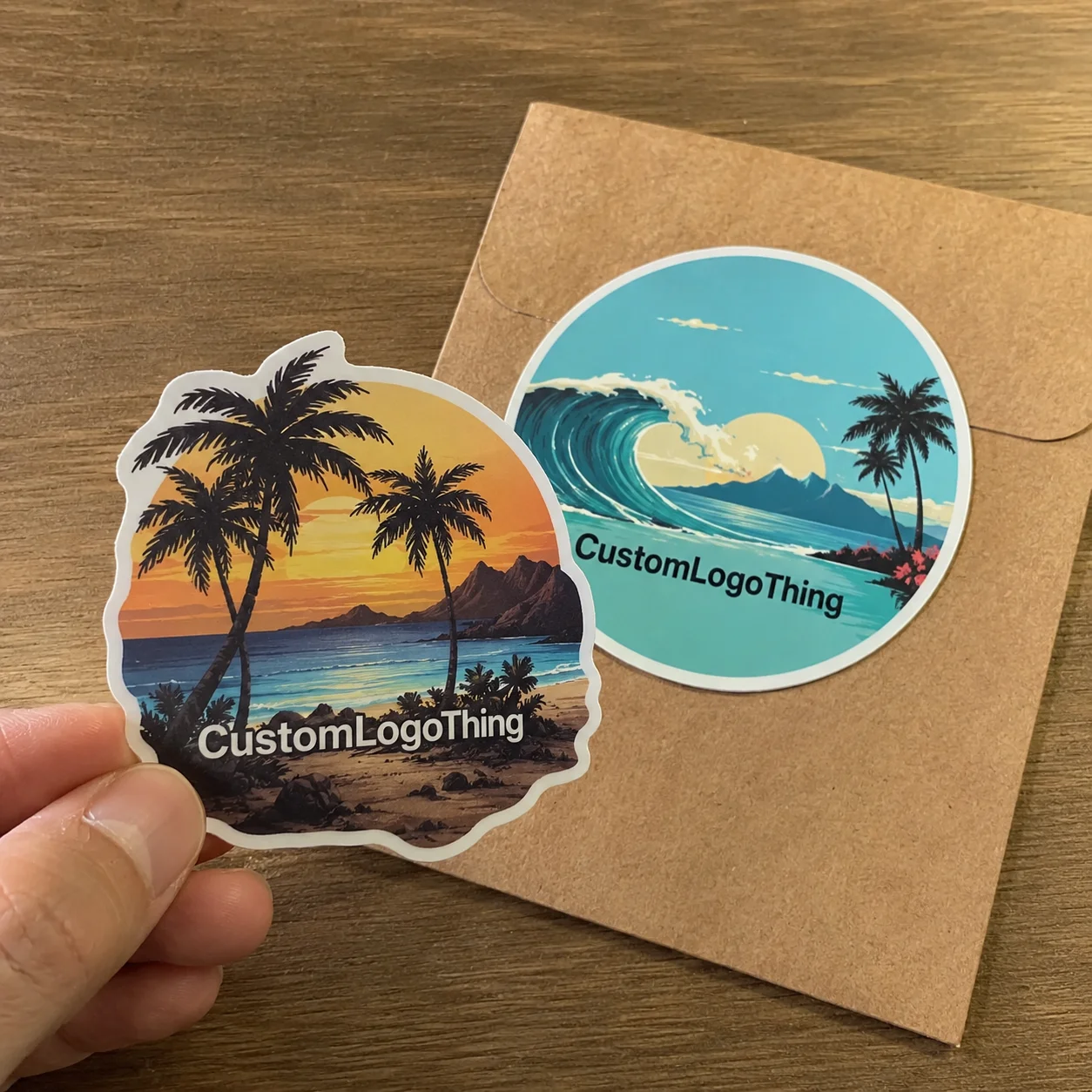
Cut format affects usability as much as appearance. Kiss-cut stickers stay on a sheet or backing, so they are easy to peel. Die-cut singles are trimmed around the sticker shape and work well for giveaways. Contour-cut decals follow custom artwork. Roll labels suit packing lines, label applicators, and fast hand application at a worktable. Simple squares and rectangles are usually the fastest and most economical because they waste less material and cut cleanly.
Finish is both a design choice and a protection choice. Gloss makes color look brighter. Matte reduces glare and feels more restrained on retail packaging. Clear vinyl works for windows, bottles, and “no-label” effects, although white ink may be needed behind color for opacity. Holographic, metallic, and specialty films can help promotional stickers stand out, but they also change cost, proofing expectations, and sometimes readability.
Proofing is the control point. Check size, bleed, cutline, spelling, QR codes, brand colors, and viewing distance before production turns one mistake into hundreds or thousands.
A restaurant ordering jar seals may care most about moisture resistance, packing-table speed, and how the sticker behaves on refrigerated glass. A contractor may care about high-tack adhesive, outdoor life, and abrasion from gloves or tools. Same category. Different sticker.
Material, Adhesive, and Finish Factors That Decide Durability
Sticker durability has three main levers: the vinyl film, the adhesive, and the surface protection. Changing only one may not solve the failure. A tough film with the wrong adhesive can lift. A strong adhesive without lamination can still scratch. A laminated decal on a dusty or textured surface can fail early because the bond never fully formed.
Indoor stickers usually need clean print quality, neat peeling, and sometimes removable adhesive. Outdoor decals need stronger adhesive, UV protection, and often lamination. Houston heat and humidity raise the stakes. Sun exposure can fade inks. Condensation can attack edges. Hand abrasion can wear unprotected print surprisingly fast, especially on coolers, helmets, bottles, and field equipment.
Surface compatibility deserves more attention than it gets. Glass is smooth but often wet with condensation. Powder-coated metal can be slightly textured. Cardboard absorbs, flexes, and sheds fibers. Some plastic tubs use low-surface-energy materials that resist bonding. Painted walls may reject adhesive if the paint is fresh, dusty, or textured. Vehicles add curvature, heat, washing, and road grime.
Helmets introduce another wrinkle. Some safety programs restrict added labels because unauthorized adhesives or coverage can conflict with internal policy, inspection practices, or manufacturer guidance. Buyers should verify requirements before ordering hard-hat stickers in bulk.
Common adhesive choices include permanent, removable, repositionable, freezer-grade, high-tack, low-tack, and clear adhesives for transparent applications. “Permanent” does not mean impossible to remove. “Removable” does not mean it will survive a wet outdoor season. Those words are shorthand. The surface, temperature, application pressure, dwell time, and cleaning process decide the result.
Lamination and coatings protect the printed face. Gloss lamination can intensify color and improve scuff resistance. Matte lamination reduces glare and gives packaging a quieter look. UV-resistant protection matters when decals face direct sun, and the EPA’s UV Index guidance is a useful reminder that sunlight exposure is measurable, not theoretical.
Disclose the ugly conditions before quoting: heat, humidity, dishwashing, freezer storage, fuel, oils, cleaning chemicals, curved containers, pressure washing, and heavy handling. If the only instruction is “make it cheap,” the result may be a low unit cost and a high failure rate. From a packaging buyer’s point of view, that is not savings. It is deferred waste.
Cost and Pricing Variables Behind a Sticker Quote
Sticker pricing is driven by setup, material, ink coverage, size, shape, finish, quantity, cutting style, proofing needs, and packing format. Square inches matter, but they are only part of the math. A small holographic contour-cut sticker with white ink and individual trimming can cost more than a larger rectangle printed on standard white vinyl.
Quantity changes the economics quickly. Short runs carry more setup cost per piece because file review, proofing, press setup, cutting setup, and packing still happen. Larger runs spread those steps across more units, usually lowering the unit price. A simple 3-inch white vinyl circle may price very differently at 100, 500, and 5,000 pieces even with identical artwork.
Real-world ranges vary by shop, finish, and artwork complexity, but buyers often see small basic vinyl runs priced in the low hundreds rather than by a few dollars of raw material. Unit costs can drop sharply as quantity rises. Specialty stocks, lamination, white ink, individually cut singles, and rush timing push the number back up. That is why two sticker quotes with the same size can be legitimately far apart.
Shape is another hidden cost driver. Rectangles, circles, and ovals are efficient. Intricate silhouettes can increase cutting time, material waste, weeding risk, and quality-control effort. Tiny points and thin bridges may look clever in design software but curl, tear, or catch during peeling.
| Option | Best Fit | Typical Cost Impact | Buyer Watchout |
|---|---|---|---|
| Standard white vinyl | General labels, decals, package branding | Lowest to moderate | May still need lamination outdoors |
| Clear vinyl with white ink | Windows, bottles, transparent packaging | Moderate to high | Color can look weak without white backing |
| Gloss or matte lamination | Handled products, retail packaging, outdoor use | Adds cost per piece | Finish changes both look and durability |
| Contour-cut singles | Giveaways, brand decals, merch inserts | Moderate to high | Complex shapes slow cutting and packing |
| Roll labels | Product packaging and packing-line use | Efficient at scale | Core size, unwind direction, and gap matter |
Lamination, metallic stock, holographic film, clear stock, white ink, variable data, and split-back liners can all raise pricing. Minimum order quantities vary by equipment, material, and finishing method. Instead of asking only for the lowest MOQ, ask whether sheets, rolls, or singles are most economical for the way the stickers will be applied.
Before requesting pricing for Custom Vinyl Stickers Houston production, prepare the final size, quantity, artwork file, indoor or outdoor use, surface type, finish preference, deadline, and delivery format. Price is risk management. Saving a few cents per sticker can backfire if the adhesive fails on windows, packaging, or field equipment.
Process and Timeline: What Happens After You Send Artwork
The usual path is inquiry, quote, file review, proof, approval, production, finishing, quality check, packing, then local delivery or shipping. The clock normally starts after proof approval, not after the first message. That distinction matters. Missing size details, unresolved artwork, or unclear material choices can pause an order before it reaches the press.
Artwork review is where many delays begin. Low-resolution logos, missing bleed, unclear cutlines, RGB-to-CMYK color shifts, tiny text, QR code readability problems, and unoutlined fonts all slow the process. A vector AI, EPS, or editable PDF file is generally easier to work with than a screenshot pulled from a website. For raster artwork, 300 dpi at final size is a common baseline, though small text and crisp logos benefit from vector paths.
Production variables can stretch lead time. Specialty materials may not be stocked. Lamination adds a finishing step. Custom contour work requires careful cut setup. Roll finishing adds rewind, core, gap, and direction checks. Multiple sticker versions multiply proofing and quality-control points. Large quantities may require batching, especially if the job uses heavy ink coverage or specialty stock.
Typical simple jobs may move in a few business days after approval if the material is on hand and the artwork is clean. More complex orders can take longer. Rush work is easiest when the buyer uses standard white vinyl, a simple cut, a clear file, and fast proof approval. Rush work is hardest when every variable is still undecided.
Want to move faster? Approve proofs quickly, provide vector artwork, consolidate revisions, choose standard materials, avoid last-minute size changes, and confirm delivery details early. A one-day delay in proof approval can ripple through printing, lamination, cutting, and packing. Event stickers and product launch labels deserve buffer time because the calendar does not care that a font was missing.
For companies managing broader Custom Packaging Products, a clear sticker spec sheet can prevent the week of back-and-forth that often happens between marketing, purchasing, and production. One page with size, surface, finish, quantity, deadline, and application method does more than a long email thread.
Step-by-Step Guide to Ordering the Right Vinyl Stickers
Ordering a sticker job well starts with defining the job. Is the sticker for brand awareness, product labeling, tamper indication, event promotion, window signage, equipment marking, or packaging decoration? A giveaway decal can prioritize visual punch. A product label must survive storage, handling, and scanning. A tamper seal needs geometry and adhesive behavior that show interference without wrecking the package.
- Define the job. Write one sentence describing what the sticker must accomplish. “Promote the brand” is weaker than “seal a 12-ounce jar lid in refrigerated retail for three weeks.”
- Identify the surface and environment. List moisture, sunlight, heat, refrigeration, abrasion, oils, cleaning chemicals, and frequent handling. These details shape material and adhesive choice.
- Choose size and shape. Base the dimensions on visibility, application speed, packaging fit, and reading distance. If a customer reads it from 3 feet away, tiny text is not your friend.
- Pick the format. Sheets work for hand application. Rolls suit labeling equipment and packing tables. Individually cut decals fit giveaways. Kiss-cut sheets feel retail-ready and peel easily.
- Prepare artwork correctly. Use vector logos when possible, add bleed, keep safe margins, outline fonts, supply high-resolution images, and include a clear cutline layer for custom shapes.
- Review the proof like a buyer. Check spelling, phone numbers, barcode scans, QR destinations, brand color expectations, and whether the shape wastes material or creates fragile points.
- Test unusual applications. Ask for samples or a small run for textured surfaces, freezer packaging, outdoor gear, curved bottles, or industrial equipment.
The testing step is often skipped because everyone is rushing. It is also one of the costliest shortcuts. A 50-piece test on a curved plastic tub can reveal edge lift, glare, or poor scan readability before a 5,000-piece order exposes the same problem at scale.
Application method deserves a place in the order discussion. Hand-applied stickers need easy peeling and practical sheet layouts. Machine-applied roll labels need the right core size, roll outside diameter, gap, unwind direction, and label orientation. A label wound the wrong way can be technically correct and operationally useless.
If stickers are part of a larger product packaging system, coordinate them with boxes, pouches, labels, and inserts. The team handling Custom Labels & Tags may need dielines, barcode zones, and compliance copy before artwork is final. A good sticker is not isolated. It fits the package, the workflow, and the buyer’s hand.
Common Mistakes That Make Sticker Orders Fail
The first mistake is choosing the cheapest vinyl without explaining the use case. A sticker that behaves beautifully on a laptop may fail on a cooler, bottle, textured shipping carton, or powder-coated toolbox. Adhesives are not magic. They need the right surface energy, pressure, temperature, and dwell time.
The second mistake is ordering by screen color alone. Screens glow; printed stickers reflect light. Brand colors shift depending on stock, finish, lighting, and whether the print sits on white, clear, metallic, or kraft-toned packaging. If color is critical, provide references and ask how proofing handles color expectations.
The third mistake is ignoring real-world size. Text that looks readable on a 27-inch monitor may disappear on a 2-inch label. Barcodes and QR codes need quiet zones and enough contrast. A promotional decal viewed from 6 feet away needs larger type than a label held in hand.
The fourth mistake is forgetting application speed. A beautiful decal can slow staff if it is hard to peel, too delicate, supplied as loose singles when sheets would work better, or wound the wrong direction for a label applicator. On a packing table, seconds add up fast. Ten extra seconds on 1,000 units is nearly three hours of labor.
The fifth mistake is over-designing the shape. Thin spikes, tiny notches, and delicate corners can create fragile points, slow cutting, or curl-prone edges. The sixth is approving proofs too quickly. Phone numbers, ingredient claims, social handles, QR codes, and event dates deserve a slow read. Once printed, small errors become physical inventory.
The seventh mistake is applying stickers to dirty, cold, oily, or freshly painted surfaces. Pressure-sensitive adhesives usually need firm pressure and time to build bond strength. A quick wipe with the wrong cleaner can leave residue. A cold surface can keep adhesive from flowing properly. A sticker pressed only at the center may lift at the edges.
Sample testing matters most for outdoor, refrigerated, industrial, and curved applications. ASTM’s pressure-sensitive adhesive test methods are technical, but the principle is plain: adhesion performance can be measured, compared, and ruined by poor surface conditions. For transport packaging programs, resources from ISTA can also help teams think more rigorously about vibration, handling, and distribution stress beyond the sticker itself.
What to Confirm Before Requesting a Quote
Before contacting a supplier, write down the sticker’s use case, surface, environment, size, quantity, finish preference, deadline, and desired delivery format. That small prep step changes the conversation. Instead of vague pricing, you get a specification that can be compared, adjusted, and approved.
Gather brand assets before the quote stage. Useful files include a vector logo, color references, previous sticker photos, packaging dielines if the sticker fits a box or pouch, compliance text, barcode files, and QR destinations. For retail packaging or Custom Printed Boxes, also confirm whether the sticker crosses a fold, seam, curve, lid edge, or tear strip. Those small placement details affect size and adhesive stress.
If you are uncertain, ask for two specification paths: one budget-friendly option and one durability-focused option. That comparison is more useful than a single low number. Ask targeted questions: What material fits this surface? Is lamination needed? Are these supplied on rolls, sheets, or singles? What causes the lead time? Can I approve a digital proof, physical proof, or sample?
Test high-risk applications before scaling. Outdoor decals, freezer labels, curved bottles, textured equipment, and packaging exposed to condensation all deserve caution. For paper-based components in the same packaging system, FSC-certified material may also matter for sustainability claims; the Forest Stewardship Council is a useful reference for responsible fiber sourcing, even though vinyl stickers follow a different material path.
Before ordering custom vinyl stickers houston buyers should treat the quote as a specification exercise, not a price hunt. The right details protect the design, the production schedule, and the budget. The wrong assumptions turn a simple decal into rework.
FAQs About Vinyl Sticker Orders
How long do custom vinyl stickers in Houston usually take to produce?
Production time depends on artwork readiness, material availability, quantity, finish, and cutting style. The timeline usually starts after proof approval, so fast feedback matters. Rush options are generally easier with standard white vinyl, simple shapes, and print-ready artwork.
What affects the cost of Houston vinyl sticker printing the most?
Major cost drivers include size, quantity, vinyl type, lamination, cut complexity, ink coverage, and whether stickers are supplied as sheets, rolls, or singles. Larger quantities usually lower unit cost because setup is spread across more pieces. Specialty materials such as clear, metallic, holographic, or heavy-duty outdoor vinyl can increase pricing.
Are custom vinyl decals better than paper stickers for packaging?
Vinyl is usually better when packaging faces moisture, refrigeration, handling, or outdoor exposure. Paper stickers can be more economical for dry indoor packaging with short shelf life. The best choice depends on the surface, budget, brand look, and how the package will be stored or handled.
What artwork files work best for custom sticker printing?
Vector files such as AI, EPS, or editable PDF are best for logos, text, and clean cutlines. High-resolution PNG or TIFF files may work for raster artwork if they are sized correctly. Files should include bleed, safe margins, outlined fonts, and a clear note for any custom contour cut.
Can vinyl stickers be used outdoors in Houston heat and humidity?
Yes, but outdoor use should be specified before quoting so the printer can recommend suitable vinyl, adhesive, and lamination. Sun exposure, rain, cleaning chemicals, and surface texture all affect lifespan. For demanding outdoor applications, ask about UV protection, high-tack adhesive, and sample testing.