Buyer Fit Snapshot
| Best fit | Custom Void Fill for Cartons projects where brand print, material claims, artwork control, MOQ, and repeat-order consistency need to be specified before quoting. |
|---|---|
| Quote inputs | Share finished size, material target, print colors, finish, packing count, annual reorder estimate, ship-to region, and any compliance wording. |
| Proofing check | Approve dieline scale, logo placement, barcode or warning zones, color tolerance, closure strength, and carton packing before bulk production. |
| Main risk | Vague material claims, crowded artwork, missing packing details, or unclear freight terms can make a low unit price expensive after revisions. |
Fast answer: Custom Void Fill for Cartons: Board, Finish, Dieline, and Unit Cost should be specified like a repeatable production item. The safest quote records material, print method, finish, artwork proof, packing count, and reorder notes in one written spec.
Production checks before approval
Compare the actual filled-product size with the drawing, then confirm tolerance on folds, seals, hang holes, label areas, and retail display edges. Reserve space for logos, QR codes, warning copy, and material claims before decorative graphics fill the panel.
Quote comparison points
Review material grade, print process, finish, sampling route, tooling charges, carton quantity, and freight assumptions side by side. A quote is only useful when the supplier can repeat the same color, closure quality, and packing count on the next order.
Custom Void Fill for Cartons: How to Choose the Right Fit
Custom void fill for cartons is one of those packaging decisions that looks simple until a product starts drifting inside the box, shaving a painted edge, or arriving with the faint rattle that says the packout never really held. A carton can sit neatly on the bench and still fail in transit if the contents have room to gather speed. The job is bigger than filling empty space. It is about controlling movement, protecting surfaces, and making the package feel deliberate from the first lift to the last unboxing.
What Custom Void Fill for Cartons Really Solves
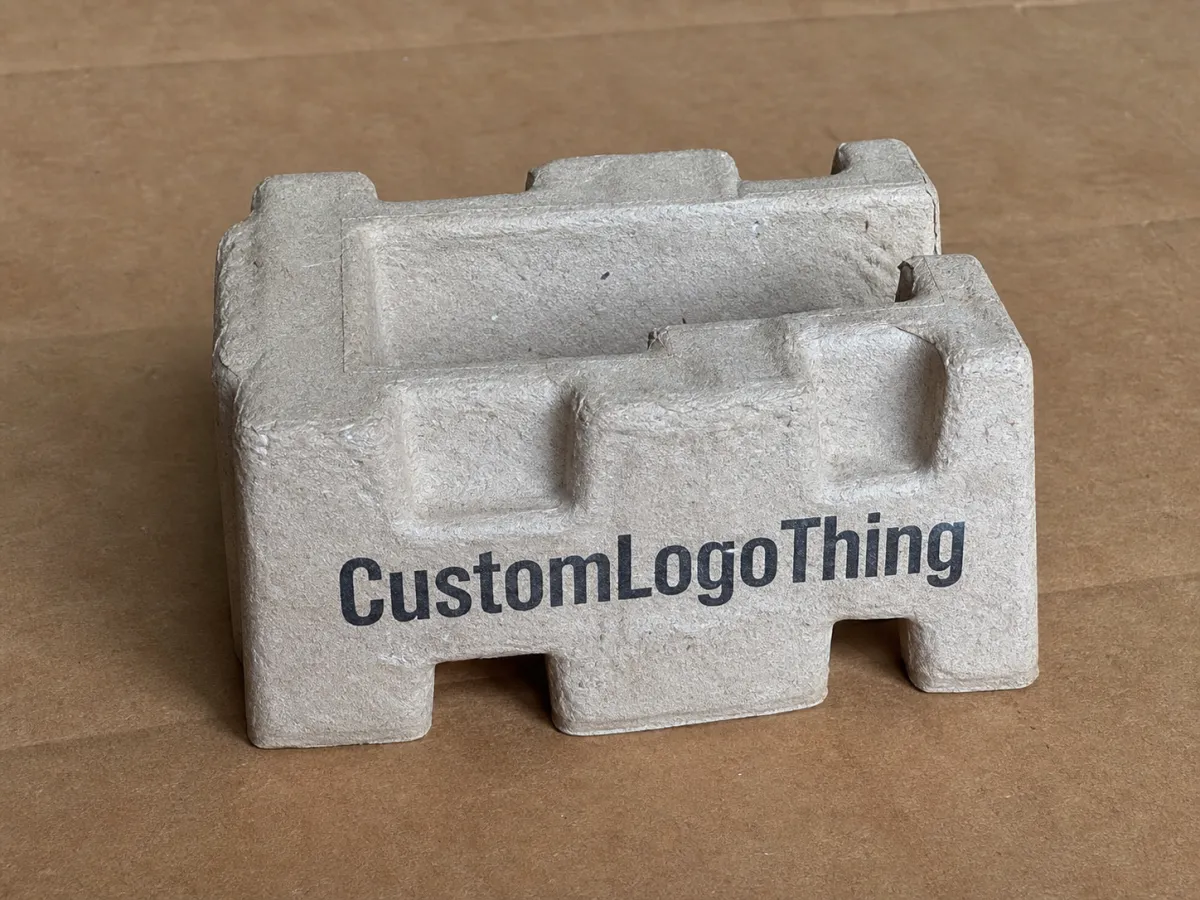
Many packing problems start with a carton that seems close enough. The product sits near the center, the flaps close, and the box looks fine, yet one tilt on a conveyor, one stack of freight, or one ordinary drop is enough to let the item move. Once that happens, a corner chips, a surface scuffs, or a brittle edge takes the hit. That is where custom void fill for cartons earns its place: it stabilizes the item, absorbs some handling stress, and cuts down the free travel that turns a small bump into a return claim.
Three functions often get treated as if they are the same thing. Void fill occupies open space. Blocking and bracing keep the product from shifting in a specific direction. Cushioning absorbs shock and softens impact transfer. A light accessory may only need space control, while a glass part or a painted surface may need genuine shock protection too. Treating every empty carton the same is where packaging goes wrong, because a fragile item, a sharp-edged part, and a dense component all respond differently to vibration and compression.
Small amounts of empty space can do more damage than a slightly larger carton with better support. If the product can gain speed before it reaches a wall, the damage risk rises quickly. The answer is rarely to add more filler. It is usually to match the filler to the product behavior and the carton geometry.
A carton that looks full is not necessarily protected. If the contents can move, the package is still underpacked.
For brands balancing shipping protection and presentation, the right fill also changes the way the package feels in hand. A fitted packout reads as deliberate, which matters for branded packaging as much as it matters for protection. Customers notice whether the contents arrive as a composed system or as loose parts held in place by guesswork. If your team is building a broader shipping standard, reviewing Custom Packaging Products alongside the fill strategy helps the carton, insert, and presentation work as one system.
The real question is not “What filler is cheapest?” It is “What combination of material, shape, and placement gives the lowest total cost once damage, labor, and customer experience are counted?” That answer shifts with the SKU, the carton family, and the lane. Local ground shipments and long-haul freight do not punish packaging in the same way.
How Custom Void Fill for Cartons Works
At its simplest, custom void fill for cartons works by shrinking the distance a product can travel inside the box. Less travel means less chance of impact, scuffing, corner crush, and edge wear. It also helps with vibration, which is easy to miss because it does not always show up in a quick drop test. Over a long run through sortation equipment and truck transport, repeated small movements can be just as destructive as one obvious hit.
Different formats behave differently under load. Paper fill conforms to irregular shapes and is often a strong fit for light-to-medium products that need general restraint. Air pillows occupy space efficiently and can work well for low-weight items, though they do not always give the same surface control as paper or molded structures. Molded pulp offers shape retention and can cradle products neatly, especially where corner support matters. Corrugated inserts work well when the pack needs clear blocking points or a defined nest. Foam pieces can provide strong cushioning, though they may raise disposal or sustainability questions. Honeycomb structures sit between cushioning and restraint, with a useful balance of compression and presentation.
Fit matters as much as material. A filler that performs beautifully in one carton size can fail in another if the product sits too high, the contact points are uneven, or the material compresses more than expected. Packaging design is not just a material choice; it is a geometry problem. The best solution lines up with the product shape, the carton interior, and the way the packer actually builds the box on the floor.
Custom formats do more than protect. They can reduce the number of packing steps, keep labor more consistent across shifts, and improve the speed of hand-pack or semi-automated lines. In higher-volume operations, that repeatability matters. A fill pattern that is easy to understand, easy to place, and hard to misuse tends to produce better results than a clever but fussy design that only works when one experienced operator is on duty.
For teams considering automation, pre-formed inserts and standardized void fill components can improve repeatability sharply. A well-set station can place the same protection level into carton after carton, which helps quality control and makes it easier to train new packers. For some brands, that consistency is worth more than saving a few cents on material.
Key Factors That Drive the Right Choice
The product itself should lead the decision. Weight, fragility, and surface finish all matter. A light electronic accessory may only need a paper-based restraining system, while a glass item or a lacquered part may need a shaped insert that keeps corners and edges from direct contact. Dense mechanical parts create a different challenge: they carry more momentum, so the support structure needs to stop movement without letting the item batter the carton walls.
Carton dimensions and board strength come next. A strong box helps, but it cannot replace proper internal fit. Even a high-quality corrugated carton can fail if the contents have too much room to build speed. Dimensional variation is another common problem. If the product or carton runs loose by even a small amount, the planned void fill may no longer touch the right surfaces. A design that tolerates normal manufacturing variation is usually safer than one that only fits a perfect sample.
Shipping conditions shape the choice too. A parcel moving through local ground service will see different stresses than one exposed to long-distance freight, stacked pallets, or humid transit lanes. Vibration, compression, temperature swings, and moisture all affect performance. In some programs, the packaging has to survive a mix of handling environments, which is why real testing matters. ISTA test methods are a useful reference point for that work, and the wider industry uses standards-based testing to compare options before a rollout. For general guidance on transport testing and packaging performance, the International Safe Transit Association is a reliable starting point.
Sustainability is no longer a side issue. Many brands want a solution that can be recycled easily, fits their material strategy, and does not create a mixed-waste headache for the customer. Paper-based fills, molded pulp, and corrugated structures often align well with that goal, while some foam or multi-material options can be harder to sort. If fiber recovery matters to your program, it is smart to check material compatibility against current recycling guidance from the EPA recycling resources and ask suppliers how the pack should be disposed of in practice.
Operational fit matters just as much as protection. If the fill is hand-packed, it needs to be intuitive and fast. If the line is machine-dispensed, the material must flow predictably and stay within the target fill pattern. Labor training, station layout, and the number of pack variations all influence the best choice. A design that saves five seconds per carton can matter a lot at scale, especially if the operation runs thousands of units per week.
These are the kinds of factors that often sit behind a packaging decision:
- Product behavior: Does it shift, tip, chip, crush, or scratch easily?
- Carton family: Is the box size stable, or does it vary across orders?
- Shipping lane: Short local delivery, national parcel, or stacked freight?
- End-of-life handling: Can the customer recycle or dispose of it easily?
- Packout speed: Does the design fit the labor model on the floor?
From a purchasing standpoint, the best choice is the one that survives the real lane, not the lab-only version. That is why brands often compare a few material paths before locking in a final packaging design.
Common material options at a glance
| Option | Best for | Protection style | Typical cost signal | Notes |
|---|---|---|---|---|
| Paper fill | Light to medium products, mixed shapes | Space control and moderate restraint | Often low to moderate | Good for easy packout and broad recyclability |
| Air pillows | Low-weight shipments with large voids | Space occupation with light cushioning | Usually low on material, higher on equipment if automated | Not ideal where strong surface restraint is needed |
| Molded pulp | Fragile or shaped goods | Blocking, bracing, and some cushioning | Moderate, depending on tooling and volume | Strong presentation value in retail packaging |
| Corrugated inserts | Products needing precise placement | Defined support and edge control | Moderate | Useful for custom printed boxes and branded packaging systems |
| Foam pieces | Very fragile or high-value items | Shock absorption and surface protection | Often higher | Check sustainability and disposal goals carefully |
| Honeycomb structures | Presentation-focused shipping and cushioning | Compression support with good visual appeal | Moderate to higher | Can fit well where package branding matters |
Custom Void Fill for Cartons: Process, Timeline, and Lead Time
The development path usually starts with discovery. That means gathering product dimensions, weight, fragile areas, carton style, shipping method, and the level of protection the item actually needs. The more precise the input, the faster the solution tends to move. A supplier cannot design a good fit from guesswork, and vague sizing often leads to back-and-forth that burns time without improving the pack.
From there, teams usually review a few material families. One proposal might use paper-based fill, another could use a molded insert, and a third might explore corrugated blocking. The goal is to match the physical behavior of the product to the behavior of the filler. A tall but light item may need anti-tip support. A flat but fragile piece may need edge restraint. A dense object may need both containment and cushioning.
Sample creation and fit testing are where the concept becomes real. A carton that looks fine in a drawing can reveal awkward clearance, compression points, or labor issues once the sample is built. A smart pilot often shows whether the product centers properly, whether the top flaps close without strain, and whether the packer can build the box quickly enough to keep the line moving. Many teams run more than one sample revision before approving the final structure, and that is normal.
Lead time depends on whether the solution is stock-based or fully custom. A simple paper fill format can move quickly if the size and specification are already established. A shaped insert, a die-cut part, or a printed component usually needs more development time. Tooling, material availability, converting capacity, seasonal demand, and revision count all affect the schedule. If the project also includes Custom Printed Boxes or branding elements, that can add another layer of proofing and approval.
The easiest way to avoid delays is to send complete information up front. Useful details include:
- Accurate product dimensions and weight
- Carton dimensions and board grade
- Fragile zones or sensitive surfaces
- Target packing speed
- Shipping method and lane
- Sustainability requirements
- Any package branding or unboxing goals
It also helps to run a pilot before full rollout. A small batch can expose problems that samples do not always show, such as box variation across suppliers, operator fatigue on the line, or compression under stacked freight. That is especially useful if the final program will ship at scale or if the SKU family includes more than one size. A pilot is far less expensive than discovering a failure after launch.
Browse Custom Packaging Products if you want to compare insert styles, carton-compatible materials, and presentation-focused options before locking in a final packout.
Custom Void Fill for Cartons: Cost, Pricing, and MOQ Factors
Pricing depends on more than raw material. Material choice, size, thickness, print coverage, setup charges, tooling, labor, conversion method, packaging format, and freight all shape the quote. A simple fill system may have low setup cost but higher per-use labor, while a shaped insert may cost more to develop yet save time every time a carton is packed. The cheap-looking option can end up costing more overall.
A useful pricing conversation looks at total landed cost instead of unit cost alone. If a higher-cost insert prevents damage claims, reduces repacking, and shortens the packing cycle, it may be the better financial decision even before customer experience is counted. The best buying teams do not stop at the line item; they ask what the packaging costs after returns, customer support, and labor are included.
Minimum order quantity depends on the manufacturing path. Stock paper fill and some standard materials can move in smaller amounts. Molded pulp, corrugated die-cuts, and custom-shaped components often need higher volumes to justify setup or tooling. That does not make them poor choices. It simply means the economics need to match the order profile and forecast. A solution that saves money per unit at 10,000 pieces may not be practical at 500 pieces, and the reverse is true as well.
There are hidden cost traps worth avoiding. Overfilling wastes material and slows the line. Underfilling creates damage. Combining too many loose pieces can make packout clumsy, especially if operators have to place several components in sequence. In many cases, one well-designed shape beats three generic pieces, both for labor and for consistency.
The table below shows how buyers often compare options at a practical level rather than a purely theoretical one.
| Decision Factor | Lower-Cost Path | Higher-Value Path | What to Ask |
|---|---|---|---|
| Material cost | Generic fill with minimal conversion | Custom fit with better restraint | How much material is actually needed per carton? |
| Labor time | Loose fill that takes longer to place | Pre-formed insert with consistent placement | How many seconds does each packout add? |
| Damage risk | Low upfront spend, higher breakage exposure | Stronger control of movement and shock | What does one damaged shipment really cost? |
| Customer experience | Messy unpacking or mixed materials | Cleaner presentation and easier disposal | Does the solution support the brand story? |
| MOQ pressure | Smaller order flexibility | Better economics at scale | What volume do we need over the next two quarters? |
For teams comparing custom printed boxes and inserts, cost should be weighed alongside visual impact. Sometimes the right branded packaging system uses a simple internal structure that keeps the product centered and lets the outer box do the presentation work. Other times the insert itself carries part of the unboxing story and becomes part of the brand experience.
Typical pricing varies with the specifics, but buyers usually see strong swings based on coverage, material density, and order volume. A paper-based fill program may sit in a modest range for large runs, while molded or die-cut components can rise as tooling and form complexity increase. The real question is not whether the number is low, but whether the shipping result is stable enough to justify it.
Common Mistakes When Choosing Void Fill
The first mistake is choosing by habit. A filler that worked for a soft textile item may be a poor fit for a glass jar or a machined part. Product behavior should lead the decision, not tradition. In practice, that means looking at what the item does under movement: does it slide, tip, chip, flatten, or abrade?
Carton-size variation is another common failure point. A design that works in one box can become loose in another if the interior dimensions shift even slightly. On the other side of the problem, overcompression can distort the product, stress the carton, or make the pack hard to close. Good void fill design leaves enough restraint to stop movement without turning the box into a clamp.
Both overfilling and underfilling cause trouble. Too little material allows shift and impact. Too much can warp the product or slow the line so much that operators start improvising, which usually undermines consistency. The best programs define the target compression and fill volume clearly enough that the team can repeat the packout without guessing.
Customer experience gets overlooked more often than it should. A filler can protect well and still feel cheap if it sheds dust, builds static, mixes paper and plastic in a way that frustrates disposal, or makes the unboxing feel like trash removal. That matters for product packaging and retail packaging alike, because the customer sees the inside of the box as part of the brand.
Finally, some teams skip real-world validation. A sample on a desk does not equal a pack under vibration, drop events, and stacked freight. A proper test program should include line trials, drop testing, and if relevant, vibration checks against accepted methods such as ISTA procedures. Those tests help avoid the expensive surprise of a solution that looks right but fails once it leaves the building.
Here are a few failure modes that deserve extra attention:
- Loose corner movement: causes scuffing and chipped finishes.
- Top-heavy packouts: increase tipping risk during handling.
- Mixed-material mess: creates disposal complaints and customer friction.
- Poorly trained packers: lead to inconsistent fill density and fit.
- No pilot testing: leaves the team guessing about real transit performance.
Expert Tips and Next Steps for Better Packaging
A good starting point is a packaging audit. Track where damage actually happens, how much empty space exists in each carton family, which SKUs generate the most complaints, and how long the current packout takes. A lot of waste becomes visible once you put simple numbers on it. In many operations, the issue is not one catastrophic packaging failure; it is a steady leak of time, material, and customer confidence.
Next, build a small test matrix. Compare two or three candidate materials and measure them on protection, labor speed, customer presentation, and disposal ease. That gives the team a real basis for selection instead of an argument based on preference. It also helps identify whether the pack needs blocking, cushioning, or both. The right answer is often a combination, but the balance changes by SKU.
Standardizing carton families can make a big difference. Fewer box sizes usually mean fewer mistakes, cleaner inventory management, and less room for pack-line confusion. Standard sizes also make it easier to design custom void fill for cartons that stays stable across production runs. If the box architecture is chaotic, the insert work becomes chaotic too.
It is also smart to create a simple supplier spec sheet. Include dimensions, acceptable compression, ship method, sustainability goals, branding requirements, and expected order volume. If the package is part of a retail packaging or package branding strategy, say so clearly. Suppliers can usually design better when they understand whether the internal structure is meant to disappear or to support a premium unboxing moment.
For brands that want the outer appearance to stay polished, the inner packing should support the story instead of fighting it. That is where branded packaging and custom inserts work together: the box carries the visual identity, while the void fill keeps the contents centered, quiet, and protected. A well-balanced package feels intentional on the outside and calm on the inside.
One practical approach is to move in this order:
- Choose the most likely material family.
- Request samples sized to the real carton and product.
- Test them on the actual packing line.
- Check handling with drop and vibration trials.
- Confirm cost, lead time, and MOQ before rollout.
If you are comparing options across a broader packaging program, Custom Packaging Products can help you evaluate fill, inserts, and carton formats together rather than treating them as separate purchases. That usually leads to better fit and fewer surprises later.
The final decision should feel practical, not theoretical. If the material protects the product, supports the line, fits the carton family, and works for the customer after delivery, it is probably the right fit. That is the real value of custom void fill for cartons: not just occupying empty space, but shaping a more controlled shipment that reflects the quality of the product inside. The best next step is simple: define the product’s movement, test one or two candidate fills in the real carton, and choose the option that holds the item steady without adding unnecessary labor or waste.
What is the best custom void fill for cartons with fragile items?
Use a format that stops movement first, such as molded pulp, shaped corrugated, or a well-fitted paper system. Then match the material to the product surface so corners, coatings, and weak points are not pressed or scratched. Before full production, validate the choice with drop and vibration tests so the pack holds up in the actual shipping lane.
How do I know how much custom void fill for cartons I need?
Measure the actual free space around the product, not just the carton size on paper. Then factor in weight, fragility, and how much the item can move when the box is tilted or shaken. A sample pack should keep the product centered and remove the rattle without overcompressing the contents.
Is custom void fill for cartons recyclable?
It depends on the material and whether it is mixed with plastic, adhesive, coatings, or other non-paper components. Paper and molded pulp options are usually easier to recycle than multi-material solutions. If recyclability matters for your program, ask for a material breakdown and disposal guidance before ordering.
What is the difference between void fill and cushioning?
Void fill mainly removes empty space and stops the product from shifting inside the carton. Cushioning absorbs impact, so it is often used when the product needs shock protection as well as stabilization. Many packaging systems use both, but the balance changes depending on product weight and fragility.
How long does custom void fill for cartons take to produce?
Stock materials can move quickly, while fully custom inserts usually need sample review and setup time. Lead time depends on tooling, material availability, and how many revisions are needed during testing. Send accurate specs early so the supplier can give a realistic timeline and reduce delays.
For brands trying to reduce damage without making the packout feel heavy or wasteful, custom void fill for cartons is best treated as a design decision shaped by samples, testing, and a clear cost review rather than guesswork.

