Buyer Fit Snapshot
| Best fit | Custom White Shipping Boxes projects where brand print, material claims, artwork control, MOQ, and repeat-order consistency need to be specified before quoting. |
|---|---|
| Quote inputs | Share finished size, material target, print colors, finish, packing count, annual reorder estimate, ship-to region, and any compliance wording. |
| Proofing check | Approve dieline scale, logo placement, barcode or warning zones, color tolerance, closure strength, and carton packing before bulk production. |
| Main risk | Vague material claims, crowded artwork, missing packing details, or unclear freight terms can make a low unit price expensive after revisions. |
Fast answer: Custom White Shipping Boxes: Board, Finish, Dieline, and Unit Cost should be specified like a repeatable production item. The safest quote records material, print method, finish, artwork proof, packing count, and reorder notes in one written spec.
Production checks before approval
Compare the actual filled-product size with the drawing, then confirm tolerance on folds, seals, hang holes, label areas, and retail display edges. Reserve space for logos, QR codes, warning copy, and material claims before decorative graphics fill the panel.
Quote comparison points
Review material grade, print process, finish, sampling route, tooling charges, carton quantity, and freight assumptions side by side. A quote is only useful when the supplier can repeat the same color, closure quality, and packing count on the next order.
Custom white shipping boxes do more than move a product from point A to point B. They set the tone before the customer even sees what is inside. Clean white packaging looks organized, modern, and trustworthy, which is why custom white shipping boxes show up so often in ecommerce shipping, branded packaging, and retail packaging programs that need polish without turning the pack-out process into a circus.
The real value is not just the color. It is the fit. The board strength. The print method. The finish. The way the box behaves once it hits the warehouse floor and starts getting handled by real people. Custom white shipping boxes can be simple corrugated mailers, specialty tuck-top cartons, or heavy-duty shipping cases built around a product’s exact size and handling needs. That mix of presentation and performance is the whole point.
Anyone comparing custom printed boxes for a launch, a subscription program, or a rebrand should pay attention to the details. A box can look great in a mockup and still fail the second it gets crushed, leaves too much empty space, or forces the team to stuff in extra filler and tape. Custom white shipping boxes are predictable once you understand how they are built, what drives cost, and where the usual mistakes show up. Most of the drama starts when someone treats the carton like an accessory instead of a working part of the supply chain.
Why Custom White Shipping Boxes Change the First Impression
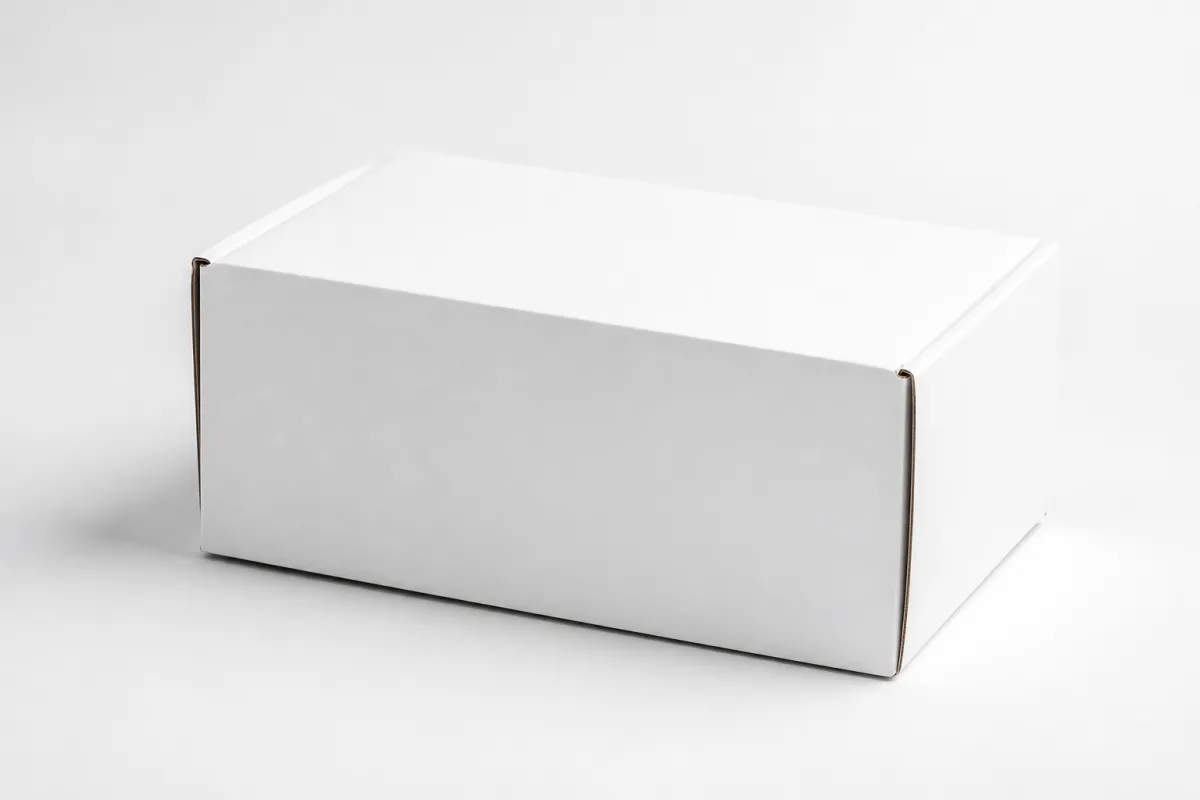
The first touch matters. Customers start judging the product before they open the carton, and custom white shipping boxes can either help that moment or waste it. White gives you a clean surface for logos, strong contrast for printed graphics, and a brighter look in photos. That matters whether the package gets opened on a warehouse bench, a kitchen table, or in a social post that reaches more people than your ad budget ever will.
Custom white shipping boxes tend to feel more controlled than plain stock kraft. White signals premium without needing a lot of decoration. It works especially well for products that need a tidy, modern presentation. The surface also makes labels easier to read, helps printed colors stand out, and gives a more consistent background if the carton gets reused, photographed, or displayed before final shipment.
That is not the same thing as slapping a sticker on a plain mailer and calling it branding. True custom white shipping boxes are sized for the product, designed for the shipping method, and built from the right corrugated or paperboard structure so the carton protects the contents while still delivering the look you want. Most buyers asking about custom white shipping boxes are trying to solve three problems at once: protection, presentation, and pack-out speed. If one of those gets ignored, the whole thing gets goofy fast.
“The cheapest carton is expensive if it crushes, rattles, or slows down the pack station.”
That sounds blunt because it is. A box that looks nice but creates damage claims, tape failures, or slow packing lines becomes a problem fast. Well-specified custom white shipping boxes support branded packaging, reduce guesswork for the pack team, and help the customer receive something that feels intentional the second it lands at the door.
There is a resale angle too. White photographs better. That matters for ecommerce product listings, gift packaging, and unboxing content. If customers share the package online, custom white shipping boxes create a cleaner visual frame than many stock alternatives. White is not always the right answer, but it deserves serious consideration any time presentation matters.
For teams comparing Custom Shipping Boxes with other packaging formats, fit is usually the first question. A standard carton can work. So can custom white Shipping Boxes That match your product dimensions, shipping method, and branding goals more closely. The second path takes more planning. It also tends to pay back in better protection and a cleaner customer experience.
How Custom White Shipping Boxes Are Built and Sized
Most custom white shipping boxes start with corrugated board. That is where the strength comes from. Corrugated board uses a fluted medium between linerboards, and the flute size plus board grade determine how well the carton resists crushing, stacking pressure, and the usual abuse that happens during carrier handling. Lighter product packaging may only need single-wall board. Heavier or fragile products often need double-wall construction or a stronger test rating.
The white exterior can come from white linerboard, a clay-coated surface, or a print-ready sheet that holds higher-quality graphics. Flexographic print works well for simple logos and one- or two-color branding. Digital print can make sense for shorter runs or more detailed art. Aqueous coating can improve scuff resistance and give the surface a cleaner feel, especially if the box passes through several hands before delivery. People talk about custom white shipping boxes as if the color is the main feature. It is not. The structural board underneath does most of the work.
Sizing is where many projects either get efficient or quietly burn money. Inside dimensions should start with the product itself, then account for inserts, protective pads, or the clearance needed for the carton to close properly. Too much space means more board, more freight, and more void fill. Too little space means the customer struggles to open the box, or the pack team forces the seam shut and weakens it. Good custom white shipping boxes are measured from the product outward, not from a catalog inward. I have seen plenty of teams reverse that logic and then spend weeks trying to hide the fallout with paper and tape.
Box style matters too. Regular slotted cartons are common because they stack well and are easy to source. Mailer-style custom white shipping boxes can create a more polished opening experience. Tuck-top styles, roll-end fronts, and specialty ecommerce designs can also work when the goal is a stronger presentation at a controlled pack station. The style should fit the ship method. A box that works beautifully for direct-to-consumer orders may be the wrong choice for retail distribution or palletized freight.
Another detail people miss is what happens after the box leaves the warehouse. A carton that looks fine on a table may not hold up as well if it sees humidity, temperature swings, or repeated compression in transit. Packaging engineers talk about stacking strength, edge crush resistance, and moisture exposure together for a reason. Good custom white shipping boxes are built with the full trip in mind, not just the moment they are assembled.
If you want a formal reference point for testing and handling, the industry often looks at ISTA procedures and related transit-testing practices. The organization at ISTA publishes useful testing frameworks, while the EPA’s materials guidance at EPA helps when sustainability goals are part of the spec. Those references do not choose the box for you, but they do help teams compare custom white shipping boxes on more than appearance alone.
White also has a finishing advantage. A crisp white face can make custom printed boxes feel more premium even when the print coverage is modest. That is one reason brands often choose custom white shipping Boxes for Ecommerce subscriptions, apparel, beauty, and light consumer goods. The carton does not need full graphics to feel branded. It just needs a clean surface, decent print registration, and the right proportions.
Key Factors That Decide the Best Box Spec
The best custom white shipping boxes start with the product, not the box. Weight, fragility, surface finish, and shape all affect which board grade makes sense. A lightweight skincare set may fit in a compact mailer. A ceramic item or bottle pack may need stronger corners, a snug insert, and more shock protection. The same logic applies to tall items, odd shapes, and products with accessories that can shift in transit.
Shipping method changes the spec just as much as product type. Parcel carriers create different stress than palletized retail distribution, and fulfillment center handling is different again because cartons can be repacked, stacked, or cross-docked several times. If your boxes go into direct-to-consumer ecommerce shipping, the spec should account for sorting belts, drop risk, and label placement. If they move through retail packaging channels, the outer appearance may matter more, and the carton may need to hold up longer on shelf or in backroom storage.
Branding needs should be stated early. Some teams only want a clean white exterior with a logo and a return address. Others want inside print, messaging panels, barcodes, or seasonal artwork. That choice changes the print budget and the production method. More coverage usually means more setup or more passes through the press, and custom white shipping boxes with inside print need careful planning so the graphics line up with folds, seams, and glue flaps.
A practical spec checklist
Before you request quotes, write down the basics in a simple spec sheet. For custom white shipping boxes, that sheet should include product dimensions, finished carton dimensions, product weight, pack method, expected shipping environment, and whether inserts or partitions are needed. Add quantity bands too, because a box that works at 5,000 units may not be the most efficient choice at 500 units. That kind of detail saves time and keeps quote comparisons honest.
- Product size: length, width, height, and any protrusions or closures.
- Product weight: net weight plus any secondary packaging or inserts.
- Ship method: parcel, pallet, retail distribution, or mixed use.
- Branding goals: logo only, full print, inside print, or label-ready white surface.
- Handling requirements: stacking, moisture exposure, or drop resistance.
Sustainability should be part of the conversation, but it needs to be specific. The best custom white shipping boxes are often the ones that use the least material while still protecting the product properly. Right-sizing cuts filler and wasted air, and recyclable corrugated board supports recovery goals more clearly than overbuilt packaging ever will. If you want FSC-certified board, recycled content, or less coating coverage, say so early so the supplier can quote the right materials.
Operations details matter too. Barcode placement, label adhesion, and compatibility with automated pack-out lines can make or break the carton’s usefulness. A beautiful box that jams on a conveyor or forces a manual rework is not a win. For teams that move high volume, custom white shipping boxes should be tested against the actual pack station, not just a drawing. That becomes even more true when tape, corner pads, or mailer closures need to line up in a specific way.
Honestly, the best custom white shipping boxes tend to be boring in the best possible way: they close cleanly, stack predictably, print well, and disappear into the workflow until the customer opens them. That is usually a sign the spec was done right.
Custom White Shipping Boxes Cost: What Drives Pricing
Custom white shipping boxes are priced from a mix of material, setup, and production variables, so the quote looks simple until you compare it against the actual spec. Size is one of the biggest drivers because more board means more material and more freight weight. Board grade comes next; stronger corrugated construction costs more, but it may save money by reducing damage or letting you use less void fill. Print coverage, finish type, and quantity all move the number in predictable ways.
Higher quantities usually lower the unit cost because setup time, tooling, and press preparation are spread across more boxes. A small run of custom white shipping boxes may carry a higher per-unit price because the supplier still has to prepare dies, plates, or digital files, and that work does not shrink just because the order is small. If the project is short-run, near-custom options can make more sense than a fully bespoke structure, especially if the size can be matched from an existing die.
| Option | Typical Unit Cost Range | Best For | Notes |
|---|---|---|---|
| Stock white mailer | $0.55-$1.20 | Very small runs or fast needs | Limited sizing choices, minimal branding |
| Near-custom white carton | $0.80-$1.75 | Brands balancing fit and budget | Uses an existing style or die size |
| Fully custom printed white shipping box | $1.10-$3.25 | Branded ecommerce shipping and retail packaging | Higher setup, stronger branding, better fit |
| Heavy-duty custom shipper with inserts | $1.80-$5.00+ | Fragile, premium, or higher-value products | More board, more protection, more labor |
Those ranges only help if they are compared on equal terms. One quote might use 32 ECT board with a simple one-color logo, while another uses a heavier test rating, a better white face, and a different finish. That is why custom white shipping boxes need to be judged on the full spec, not the headline price alone. Two cartons that look similar on paper can behave very differently in the warehouse and during shipping.
Hidden costs can matter just as much as the box price. Freight is a big one, especially if the cartons ship from a distant plant or the order gets split into multiple releases. Sampling and prototype runs can add cost, but they often save money by catching fit problems before the full run. Art revisions matter too, because extra proof cycles slow production and can trigger additional prepress work. If the project is rushed, the surcharge may be worth it, but it should be visible in the budget.
Storage and scheduling belong in the landed cost too. If you order custom white shipping boxes in one large batch and hold inventory, you need room to store them safely, and you need a replenishment plan so you do not run out between launches. For many brands, the smartest move is not the absolute cheapest carton. It is the box that lowers damage, speeds pack-out, and protects margin across the full order cycle.
Here is the simple version: if a better-fit carton saves thirty seconds of labor per order, cuts filler use, and reduces damage claims by even a little, the higher unit cost may be the better business decision. That is especially true for premium custom white shipping boxes, where the unboxing moment is part of the purchase, not an afterthought.
Custom white shipping boxes also compare well against other packaging formats like Custom Packaging Products and Custom Poly Mailers. The right choice depends on how much rigidity the product needs, whether presentation is critical, and how much control you want over the unboxing experience. Sometimes a poly mailer is the better tool. Sometimes the carton is the only option that truly protects the product and supports the brand.
Custom White Shipping Boxes Timeline: From Quote to Delivery
The ordering path for custom white shipping boxes usually starts with a spec review and a quote, then moves into artwork, proofing, production, finishing, and freight. That sounds straightforward. The delays usually start at the front end, not in the press room. If dimensions are unclear, if the die line needs adjustment, or if the brand team is still arguing about logo placement, the project slows before the first box is ever made. Clean inputs produce faster results.
Simple printed mailers can move fairly quickly once artwork is approved. More complex custom white shipping boxes, especially those with special finishes, inserts, or nonstandard structures, usually take longer because each extra step adds another layer of review. A practical planning range for many projects is often 12-15 business days from final proof approval for straightforward runs, while more involved builds can stretch beyond that depending on quantity and production load. It is not a guarantee. It is a useful planning frame.
Sampling matters because it tells you more than a PDF ever will. A prototype or white sample lets you verify fit, closure, print placement, and board feel before the full run starts. If the product slides too much, the flap closes awkwardly, or the label lands on a seam, you can fix it early. That is one of the best uses of custom white shipping boxes: they let you test the physical reality of the pack before you commit to volume.
Artwork approval is another common bottleneck. Teams often treat the proof as a formality, but that is where the details become real. Bleed, crease lines, print contrast, and logo placement can all look different on an actual carton than they do on a screen. With custom white shipping boxes, a small shift in logo position or a change in white face stock can change how premium the final result feels. Slow down there, and you avoid ugly surprises later.
Planning around warehouse receiving windows matters just as much as the production schedule. If the boxes arrive while the warehouse is full, you create a storage problem. If they arrive after inventory is already in place, you create a pack-out problem. The best custom white shipping boxes order is the one that lands just before the product launch or replenishment wave, giving the team enough room to inspect, store, and use the cartons without scrambling.
One more practical point: if the boxes are going across multiple channels, you may need staggered releases. That can help. It lets you test one batch of custom white shipping boxes in the field before releasing the full quantity. A small pilot shipment can show whether the carton fits the product, survives normal carrier handling, and supports the brand message the way you expected.
Because the timeline depends so heavily on proofing and sample approval, the safest move is to start earlier than you think you need to. Custom white shipping boxes are easy to underestimate on the calendar because the box itself looks simple, but every decision in the chain has to be locked before the run starts.
Common Mistakes to Avoid Before You Order
One of the most common mistakes with custom white shipping boxes is measuring the product and forgetting everything else inside the pack. Inserts, tissue, protective pads, closures, and even the stiffness of the board affect the final inside dimensions. A carton that is perfect for the naked product may fail once you add the real packing materials. Measure for the complete pack, not the item alone.
Another mistake is choosing a carton because it looks premium in a render, then learning it is too weak for the shipping path. White looks clean, but custom white shipping boxes still need to survive the same physical reality as any other shipper: drop risk, compression, vibration, and moisture exposure. A lighter board may be enough for a soft-goods subscription, but not for glass, ceramics, or anything with weight concentrated in one area.
Visual planning can go wrong too. White surfaces show scuffs, tape marks, and dirt more easily than some other finishes, so the pack process needs discipline. If your team uses too much tape or places labels at odd angles, the clean look disappears fast. With custom white shipping boxes, label placement and tape color should be part of the design conversation, not an afterthought once the cartons arrive.
Lead time is another place where buyers get burned. It is easy to assume the box will arrive when the product is ready, but artwork approval, sample signoff, and freight timing all affect the schedule. If internal review takes a week longer than expected, custom white shipping boxes can become the bottleneck that delays launch. Build a buffer into the plan, especially if the product has a hard release date.
Price-only buying is probably the biggest mistake of all. A low quote can hide weak board, poor fit, or extra labor at the pack station. Sometimes the cheaper carton also creates more freight cube, which raises shipping cost in a way the quote never showed. The smarter comparison is total cost: box price, damage risk, labor time, freight, and the effect on customer perception.
For sustainability-minded teams, the wrong move is overbuilding just to feel safe. More material is not automatically better. The best custom white shipping boxes often use less board, less filler, and fewer coatings while still protecting the product. Right-sizing is usually the cleanest sustainability win because it lowers material use and shipping air at the same time.
Expert Tips for Ordering Smarter
Start with a complete spec sheet and include the boring details. Weight, dimensions, quantity bands, packing method, branding goals, and shipping path all belong in the first conversation about custom white shipping boxes. If you know whether the order is for direct-to-consumer ecommerce shipping, retail packaging, or mixed distribution, the supplier can steer you toward a box structure that fits the job instead of guessing.
Ask for samples or a prototype run before you place the full order, especially if the product is fragile, premium-priced, or expensive to replace. A sample of custom white shipping boxes can reveal board feel, fit, closure pressure, and print placement in a way flat artwork never will. That is a modest investment compared with the cost of reworking a full production run.
Compare quotes using the same dimensions, the same board grade, and the same finishing assumptions. That sounds obvious, but in practice it is where many buyers lose clarity. Two quotes for custom white shipping boxes may look different because one includes stronger board, better white face stock, or a print method that holds finer detail. Apples-to-apples comparison is the only fair way to judge price.
A small pilot shipment can tell you a lot. Ship a limited quantity, inspect the returns and damage rate, and watch how the team packs the carton at speed. That real-world feedback often matters more than the drawing set. Once you are confident in the fit and handling, scale the order with much less risk.
The next step is simple: gather measurements, decide on finish, request a sample, and set a realistic replenishment schedule. If you are still deciding between carton styles, compare the options against your broader Custom Shipping Boxes plan, then choose the structure that supports both protection and presentation. Custom white shipping boxes work best when the spec is grounded in the actual product, the actual ship path, and the actual customer experience you want to create.
Custom white shipping boxes are not just a packaging choice. They are a business decision that touches protection, labor, freight, and brand perception in one move. Get the spec right, and the box does its job quietly every day. Get it wrong, and you feel it in damage claims, slow packing, and a weaker first impression the moment the customer opens the carton.
If you are building a new program, the practical takeaway is this: define the product weight, finished dimensions, shipping method, and branding needs before you ask for quotes. Everything else hangs off that. Skip that step, and you will end up paying for the box twice.
Are custom white shipping boxes better than plain kraft boxes for branding?
Usually, yes, if the goal is a cleaner and more polished brand presentation. Custom white shipping boxes tend to photograph better, give stronger contrast for logos and labels, and create a brighter unboxing moment for ecommerce shipping and retail packaging. Kraft can feel more natural or rugged, but white often gives a more premium read with less print coverage. The better choice depends on whether you want visual polish, lower cost, or a more natural material look.
What affects the price of custom white shipping boxes the most?
Size, board grade, quantity, print coverage, and finishing are the biggest drivers. Larger cartons use more material; stronger board raises cost but can reduce damage; and smaller runs usually cost more per box because setup is spread across fewer units. Inserts, special coatings, freight, sampling, and art revisions also affect the landed price. If you want a useful quote, compare custom white shipping boxes on the same spec so the numbers are truly comparable.
How long do custom white shipping boxes usually take to produce?
It depends on the structure and the print method. Simple printed mailers can move faster, while fully custom white shipping boxes with special finishes, inserts, or more complex artwork usually take longer. Artwork approval and sample signoff often matter more than the press schedule itself, so the safest plan is to build in extra time for proofing, revisions, and freight. If your launch date is fixed, start the packaging process early.
What measurements do I need before ordering custom white shipping boxes?
You should have the product length, width, height, weight, and any inserts or protective materials that will sit inside the carton. It also helps to know how the product will ship, because parcel carriers, fulfillment centers, and retail distribution each place different demands on the box. Measure for internal fit, not just the product footprint, so your custom white shipping boxes close cleanly and protect the contents without extra filler.
Can custom white shipping boxes be made more sustainable?
Yes. The best path is often right-sizing, because a well-fitted carton uses less material and reduces shipping air. Recyclable corrugated board, FSC-certified fiber, and fewer unnecessary coatings or inserts can all support sustainability goals. The most sustainable custom white shipping boxes are usually the ones that protect the product without being overbuilt, because wasted material rarely helps the product or the planet.

