Buyer Fit Snapshot
| Best fit | Custom Window Box Packaging projects where brand print, material claims, artwork control, MOQ, and repeat-order consistency need to be specified before quoting. |
|---|---|
| Quote inputs | Share finished size, material target, print colors, finish, packing count, annual reorder estimate, ship-to region, and any compliance wording. |
| Proofing check | Approve dieline scale, logo placement, barcode or warning zones, color tolerance, closure strength, and carton packing before bulk production. |
| Main risk | Vague material claims, crowded artwork, missing packing details, or unclear freight terms can make a low unit price expensive after revisions. |
Fast answer: Custom Window Box Packaging: Design, Cost, and Uses should be specified like a repeatable production item. The safest quote records material, print method, finish, artwork proof, packing count, and reorder notes in one written spec.
Production checks before approval
Compare the actual filled-product size with the drawing, then confirm tolerance on folds, seals, hang holes, label areas, and retail display edges. Reserve space for logos, QR codes, warning copy, and material claims before decorative graphics fill the panel.
Quote comparison points
Review material grade, print process, finish, sampling route, tooling charges, carton quantity, and freight assumptions side by side. A quote is only useful when the supplier can repeat the same color, closure quality, and packing count on the next order.
Most shoppers do not stand around reading carton copy. They glance, compare, and make a call fast. In retail audits I have reviewed, the first decision window is often only a few seconds long, which is not much time for a brand to be persuasive. That is why Custom Window Box Packaging matters so much: it gives people a real object to verify before they commit. Color, texture, shape, finish, and even the way the product sits inside the box all become part of the sale.
For brands trying to balance branded packaging with shelf performance, Custom Window Box Packaging is one of the most efficient tools on the table. A candle can feel more premium. A skincare line can feel more credible. A gift item can look purchase-ready instead of hidden behind an opaque panel. If you are comparing structures, print methods, and finishing choices, review our Custom Packaging Products as you plan the build.
Used well, Custom Window Box Packaging does three jobs at once. It displays the product, supports the brand story, and protects the contents enough to survive handling. Used poorly, it becomes a weak cutout that looks unfinished and exposes too much. Buyers notice. Store staff notice too, which is maybe even more telling.
What Custom Window Box Packaging Is and Why It Sells
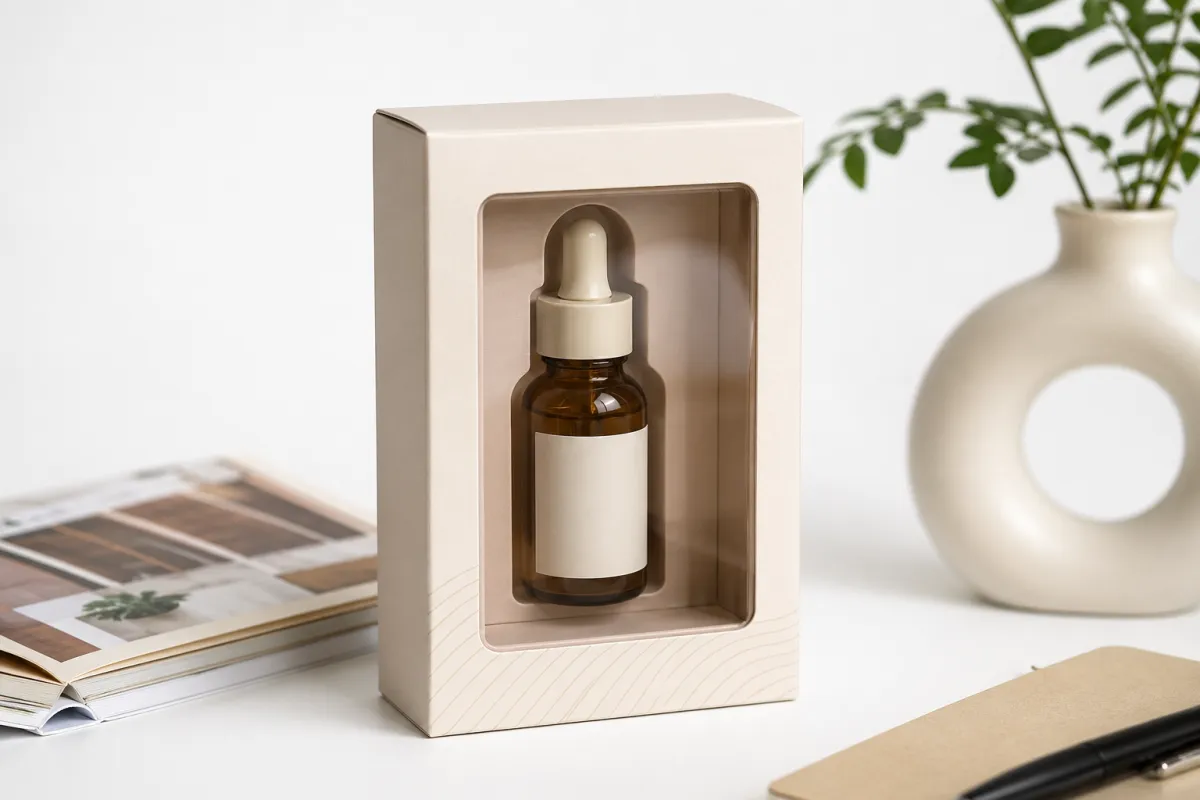
Custom Window Box packaging is a printed carton with a die-cut opening that lets shoppers see part of the product before buying. That opening may be covered with clear film, paired with an insert tray, or left open depending on the item and how it will be sold. The idea is simple: let the product do part of the selling.
The window works because people trust what they can inspect. A customer may skim a few claims and then stop cold for a glimpse of candle wax, a cosmetic bottle, a pastry glaze, a toy profile, or a metal finish on an accessory. Custom Window Box Packaging reduces the “what exactly am I getting?” moment, and that hesitation often costs brands more than teams expect. I have seen otherwise strong products lose the shelf race because the box made them feel vague.
From a product packaging perspective, the cutout also supports comparison shopping. Two cartons can look almost identical when stacked flat or viewed from a distance. One visible detail can settle the decision in seconds. That is why this approach performs so well in retail packaging, where attention is short and speed matters.
The strongest use cases are easy to spot. Candles benefit because buyers want to check wax color, jar shape, and label tone. Cosmetics benefit because shade, cap quality, and bottle profile shape perceived value. Baked goods benefit because freshness cues are visual. Toys and small electronics benefit because size and surface matter before anyone reaches for a box. In each category, custom window box packaging is not decoration. It is a sales mechanism dressed up as a carton.
Still, a good window is more than a hole in cardboard. It has to protect the item, keep the display clean, and support the brand narrative. A sloppy cutout makes the box feel cheap. A deliberate opening can make even simple Custom Printed Boxes feel sharper and more controlled than their base material might suggest.
A window should frame the product, not elbow it out of the way. Make the opening too large and the box starts looking fragile. Make it too small and the feature disappears. The best designs are usually restrained, not loud.
In practice, the strongest custom window box packaging combines visibility with structure. The front panel is built around the hero feature. The board stock holds its shape. The opening lands where the eye naturally goes first. Good package branding is not about stuffing the panel with claims. It is about making the visible part of the product feel inevitable, as if the carton and the item were designed together from the start.
The short version is pretty simple. custom window box packaging sells because it reduces uncertainty. It lets shoppers see the real thing, not just a promise. In retail, certainty closes more sales than clever copy ever will.
How Custom Window Box Packaging Works
Custom window box packaging is built from familiar pieces: paperboard or folding carton stock, printed outer graphics, a die-cut window, and sometimes a clear film or inner insert. On paper, the structure looks simple. The difference starts in the details, where some projects move cleanly and others turn into expensive detours.
Most projects begin with a dieline. That flat template defines size, glue flap, folds, and window placement. Once the structure file is locked, the artwork wraps around it so graphics land correctly after folding. From there, production moves through printing, cutting, scoring, optional lamination, window insertion, folding, and final packing.
Window shape is usually one of the first decisions. A rectangle is efficient and predictable. A circle reads softer. A custom outline can echo the brand or mirror the product itself. Shape matters, but it is only one part of the equation. Window size, corner radius, and placement determine how custom window box packaging looks on shelf and how much protection the carton still keeps.
Then comes the film decision. Some projects use no film, which can work for dry, durable, or low-risk items. Others use PET or another transparent film to keep dust out and make the shelf presentation cleaner. Film adds cost and time, but for many categories that tradeoff earns its keep. Nobody loves an extra line item, but in a store environment a clean window often pays for itself.
When the product needs extra support, an insert tray helps center it inside the opening. That detail matters more than many buyers expect. If the item shifts, the display looks off and the brand appears careless. A centered product makes custom window box packaging feel intentional, and intentional packaging usually reads as higher value.
Retail behavior changes the equation too. Buyers compare quickly when they can see color, finish, and proportion without opening the carton. That speed matters in busy stores, seasonal displays, and checkout zones. Custom window box packaging is not only about showing off. It helps people decide faster.
If the box will travel through parcel networks, transit testing is worth the time. For shipping-related projects, the ISTA test methods are a useful reference, especially when the carton has to survive drops, vibration, and compression. A beautiful box that crushes in transit still fails, and that failure can be surprisingly expensive once returns and reprints enter the picture.
The production flow is predictable, but only if dimensions and artwork are right. The carton should be designed around the actual product, not a hopeful estimate. Even a few millimeters off can push the window out of alignment, and once that happens, custom window box packaging stops looking clean very quickly.
Compared with standard cartons, the difference is not just the opening. It is the relationship between structure, print, and the visible product. The carton has to protect the item, communicate the brand, and make the window feel deliberate. That is a lot of work for one package. It is also why design discipline matters so much.
Custom Window Box Packaging Cost and Pricing Factors
The cost of custom window box packaging depends on several variables: board grade, print coverage, coating, window film, insert type, and quantity. Remove one and the price often drops. Add three, and the price climbs faster than many buyers expect.
Quantity is usually the strongest lever. Smaller runs spread setup, cutting, and tooling across fewer units, so per-unit cost rises. Larger runs usually bring the unit price down, especially once the dieline is proven and the press is already dialed in. That is why custom window box packaging for 500 units can feel expensive while the same structure at 5,000 units looks far more reasonable.
Here is a practical range, not a fantasy quote. Simple retail custom window box packaging with modest print coverage can sometimes land around $0.25-$0.60 per unit at larger quantities, depending on size and board. Add a clear window film, heavier board, or an insert, and the range often moves into $0.60-$1.25 per unit. Premium finishes, custom structures, and lower order volumes can push it higher. That is normal, not a red flag by itself.
The cheapest option is not always the smartest one. An open window costs less than a film-covered one, but film usually improves dust control, product protection, and shelf presentation. For food-adjacent items or higher-value goods, that extra layer often pays for itself in reduced damage and fewer returns. For promotional products moving quickly, an open window may be enough. The best structure for custom window box packaging should match the use case, not an abstract budget target.
| Option | Typical Use | Cost Impact | Main Tradeoff |
|---|---|---|---|
| Open window | Display-first products, simple retail cartons | Lower | Less protection from dust and handling |
| Film-covered window | Cosmetics, gifts, food-adjacent items | Moderate | Better presentation, slightly higher production cost |
| Window plus insert | Fragile or premium items | Moderate to higher | Better product control, more setup and material cost |
| Premium finish with custom insert | High-value branded packaging | Higher | Stronger shelf appeal, but not cheap |
Finishing upgrades shift pricing quickly. Foil stamping, embossing, soft-touch lamination, spot UV, specialty inks, and complex inserts add material or labor cost. These upgrades can look excellent in custom window box packaging, but only if the product value justifies them. Spending luxury-style treatments on a mid-tier line can be the packaging equivalent of writing in capital letters all the time: loud, and a little tiring.
Board choice matters too. A thinner stock may work for a light candle or compact cosmetic item, but heavier products need stronger material to keep the panel from bowing around the window. In many projects, 300-400 gsm SBS or C1S carton stock is common, though some boxes need more. With custom window box packaging, the right board is often the difference between a clean retail piece and a carton that feels soft in the hand.
If sustainability factors into your buy, ask about recycled content and certified sourcing. The FSC system remains one of the most recognized references for responsibly sourced paper materials. It does not make a carton better by itself, but it does support a cleaner sourcing claim when specs are transparent.
Artwork complexity hides another cost factor. Full-bleed graphics, multiple spot colors, and precise registration all require production attention. Small windows placed near folds or edges can do the same. Better custom window box packaging specs usually reduce rework, which is one of the least glamorous ways to save budget.
For brands comparing custom printed boxes across product lines, it often makes sense to standardize the board and insert style first, then vary the graphics. That can lower cost across the line without flattening brand identity. Consistency in structure often protects both style and margins.
Step-by-Step Custom Window Box Packaging Process and Timeline
Most projects for custom window box packaging start with measurements, not artwork. That is the step many teams rush. Measure the product with enough room for the insert, wall thickness, and retail clearance. If the fit is too tight, the window can never look right even when the graphics look excellent.
Once the dimensions are confirmed, structural design comes next. That is where the dieline is built and the opening is positioned. After that, artwork wraps around the template. Strong custom window box packaging is built from the structure outward, not from a polished front panel hoping the rest of the carton behaves.
- Confirm product dimensions and weight.
- Decide on shelf channel, shipping method, and display goals.
- Choose board stock, window style, and insert type.
- Build the dieline and place the graphics.
- Review proofs and request a sample if needed.
- Approve production only after fit and alignment look right.
- Run the order, pack it, and plan delivery around launch timing.
That sequence sounds basic because it is basic. The problem is that every skipped step turns into waste later. A buyer who approves production before checking the sample often finds the product sits too low, the window is too high, or the finish is not what the brand expected. Those mistakes are avoidable, which makes them especially frustrating.
Timeline depends on complexity. Simple custom window box packaging jobs can move quickly once the dieline is approved and artwork is final. More custom structures, insert-heavy builds, or premium finishes add time. A realistic window for a straightforward project is often around 10-15 business days after proof approval, while more involved runs can take longer, especially if sampling is part of the process. If someone promises a miracle deadline without seeing full specs, a healthy amount of skepticism is probably warranted.
Delays usually come from three places: late artwork, incorrect dimensions, and revision loops on the structure. The window is often innocent. It is the information around the box that creates the trouble. Custom window box packaging depends on precise coordination, and precise coordination requires decisions, not guesses.
For shipping-sensitive projects, test the sample in real conditions. If the box will go through e-commerce fulfillment, test it inside the shipping carton. If it will sit on a shelf, check the lighting and viewing angle in that exact environment. A design can pass a desktop review and still fail in a physical setting. I have seen boxes that looked gorgeous on screen and weirdly flat under store LEDs.
Before production starts, use this checkpoint list:
- Fit: the product sits centered without forcing the window shape.
- Visibility: the hero feature is visible from the expected shelf angle.
- Strength: the panel does not flex badly around the cutout.
- Print: logos, copy, and color blocks align cleanly.
- Finish: coating, lamination, or film matches the intended feel.
Once those boxes are checked, custom window box packaging is usually much safer to approve. If your launch date is fixed, build the packaging schedule backward from that date. Inventory arriving after launch is not a strategy. It is a preventable operational failure.
One practical note: if your brand sells across multiple channels, you may need different versions of the same structure. The retail version of custom window box packaging might use a film window and stronger finish, while the shipping-friendly version might need a sturdier insert or outer carton. The right format depends on movement and handling, not just a mockup.
Which Custom Window Box Packaging Shape Sells Best on Shelf?
The short answer is that shape sells best only when it matches the product and the environment. A broad rectangular window gives maximum exposure, but a narrow or geometric shape can be more intentional on crowded shelves. In many seasonal retail settings, a clean horizontal window paired with clear branding text tends to win because it reads quickly at a side angle.
For analytics-minded teams, the comparison is usually straightforward. Track which SKUs convert better after a shelf refresh, then map that to display behavior. If a rectangular window supports faster recognition for a cosmetic line while an oval window does not move conversion, the data usually points to the obvious fix: standardize only what performs, not what merely looks adventurous.
Shape also affects physical safety. Wide windows reduce stacking confidence unless the board is upgraded, and tight windows can look too restrictive on large items. The best fit window design is the one that shows enough of the product to reduce uncertainty while preserving top-loading and corner support. That balance is what makes a retail shelf display feel premium and stable at the same time.
Common Mistakes in Custom Window Box Packaging
The most common mistake in custom window box packaging is making the window too large. Bigger is not automatically better. A huge opening can weaken the front panel, expose too much of the product, and make the carton feel structurally nervous. A well-sized window usually looks more premium than an oversized one trying too hard.
Another problem is weak material. Thin board may save a few cents, but if the box has to survive stacking, handling, or shipping, that saving vanishes quickly. A window removes surface area that would otherwise add strength, so custom window box packaging often needs more structural discipline than a solid-front carton.
Misalignment is a silent killer. If the product sits too low, too far left, or at an odd angle, the entire box looks sloppy even when print is sharp. That matters especially in custom window box packaging for cosmetics or gifts, where symmetry and presentation carry real weight.
Brands also overload the front panel. They add copy, badges, icons, claims, and decorative clutter until the window no longer feels like the focal point. That is weak package branding. The eye needs room to settle. If everything is shouting, nothing wins. Good custom window box packaging gives the product room to speak first.
Compliance and usability mistakes cause their own damage. Food-adjacent products may need barrier considerations, depending on contents and shelf time. Open windows may not fit those cases. Fragile films can scratch. Boxes that open awkwardly frustrate customers. In short, custom window box packaging has to function as packaging, not just a display prop.
For projects that ship, another often ignored issue is weakness around the opening under vibration and pressure. If the carton is intended for transport, ask whether the design has been evaluated against a transit method such as ISTA 3A or another relevant benchmark. Not every project needs formal lab testing, but every project benefits from shipping logic.
The cheapest box is the one that never gets remade. That usually means checking fit, window size, and board strength before the full run starts.
There is also a branding mistake that shows up in photo-heavy lines: using identical window placement for every SKU even when products differ. A tall bottle, a short jar, and a flat accessory do not all deserve the same opening. Custom window box packaging should be built around the item, not forced into a one-size-fits-nobody template.
Finally, do not ignore the opening experience. A box that tears badly or opens awkwardly can annoy the customer before the product is even in hand. That is poor product packaging, plain and simple. If the user experience feels clumsy, the packaging story loses credibility even when the shelf image looked excellent.
Expert Tips for Better Custom Window Box Packaging
Start with the hero feature. That sounds obvious, yet plenty of projects get designed around the easiest die-cut shape instead of the most useful display point. If the item has a beautiful label, show it. If the silhouette is the selling point, frame the shape. Strong packaging design begins with what actually sells the item.
Use contrast with intention. A window works best when surrounding graphics help frame it. Dark borders can make light products pop. Simpler typography can keep attention on the item instead of the artwork. In custom window box packaging, the printed area should support the visible product, not fight it.
For delicate products, build support from the start. Inserts, snug cavities, and stable board stock make the box feel more reliable. That matters for premium cosmetics, fragile gifts, and anything with weight concentrated in one corner. Custom window box packaging should not wobble, bow, or let the product drift.
A smaller window often looks more premium than a huge one. Restraint usually reads as control. A controlled opening suggests the brand knows exactly what it wants to show. That is the difference between thoughtful custom window box packaging and an oversized cutout that feels improvised.
Material choices should match the product type:
- Food and food-adjacent items: favor cleaner window protection, barrier-aware materials, and easy-to-inspect sealing.
- Cosmetics: focus on color accuracy, clean print, and a display that protects delicate surfaces.
- Gifts and seasonal items: prioritize shelf appeal, ornamentation, and fast visual recognition.
- Fragile products: use inserts and stronger board so the opening does not compromise structure.
That product-specific logic is what separates decent custom window box packaging from Packaging That Actually earns its keep. One carton may need structure first. Another may need visibility first. There is no single universal answer, which is exactly why teams that ask better questions usually get better results.
If you are comparing formats across a line, review broader custom printed boxes options and decide where the die-cut window belongs. Some SKUs need full coverage. Others benefit from a partial reveal. The strongest lineup keeps visual language consistent while respecting each product’s needs.
Another useful habit: test the box in real lighting where it will be sold. Fluorescent retail lighting, warm boutique lighting, and photo-studio lighting all change how windows behave. A glossy panel can create glare. A matte finish can calm the presentation. That is why custom window box packaging should be evaluated in context, not only on a render.
From a practical buying perspective, good custom window box packaging usually starts with a clean spec sheet. Clear dimensions, realistic quantity targets, and a short list of non-negotiables save time. If you need a premium look, say so. If you need a lower cost, say that too. A direct brief may not be glamorous, but it prevents expensive revision rounds.
Next Steps for Custom Window Box Packaging
If you are planning custom window box packaging, start with three things: measure the product, decide what the shopper needs to see, and pick the window style that supports both. That sounds simple because it is. Problems begin when those decisions are skipped and everyone hopes the box will sort itself out later.
Next, compare board strength, window material, and finishing. Those three choices drive most performance and cost differences. A thin carton with a large open window is cheap for a reason. A sturdier carton with a protected window and stronger finish costs more for a reason. custom window box packaging is full of tradeoffs, and pretending otherwise only wastes time.
If your product is delicate, order a sample before committing to volume. One physical prototype tells you more than ten mockups. You can check fit, shelf impact, opening behavior, and whether the window actually shows the right part of the item. For custom window box packaging, the sample is not a luxury. It is cheap insurance.
Check timing against launch. If the product arrives in two weeks and packaging is still being debated, the schedule is already strained. Leave enough time for proofing, revisions, and production. A clean launch needs both product inventory and custom window box packaging on site, not one or the other.
Before you place the order, ask what matters most: display, protection, or budget. You can usually get two of those cleanly. Getting all three in perfect form is harder, which is why experience matters in packaging design. The right structure keeps the brand sharp without pretending cost never enters the room.
If you want a system that feels intentional instead of improvised, review your custom window box packaging against the actual sales channel, not just a mood board. Shelf, mailer, boutique counter, and gift set all call for different choices. The best version is the one that fits the channel and product, not the one that wins a concept contest.
And yes, if your brand is already comparing retail packaging options or broader branded packaging styles, that is a sign you are thinking beyond one box and looking at the full customer experience. That is where stronger buying decisions usually happen.
So the next move is straightforward: define the product, lock the structure, request a sample, and confirm the exact custom window box packaging format that fits your budget, shelf plan, and launch date. Do that, and the carton will do its job instead of creating avoidable problems for your team.
What is custom window box packaging used for?
Custom window box packaging is used when shoppers need quick visibility before purchase. It works especially well for items where color, texture, shape, or finish is part of the decision, such as candles, cosmetics, baked goods, gifts, toys, and small electronics. It also helps reduce uncertainty while improving trust in the purchase moment.
How much does custom window box packaging cost?
Price depends on board stock, print coverage, window film, inserts, and quantity. Smaller runs of custom window box packaging usually cost more per unit because setup costs are spread over fewer boxes. Adding premium finishes or complex structures can push the price up quickly, while simpler builds stay leaner.
Is a clear film necessary for custom window box packaging?
No, but it helps protect the product from dust and handling. Film is often the stronger choice for retail, food-adjacent, or premium products. Open windows can work when protection is less important and display is the main goal, which is why custom window box packaging should match both product and shelf environment.
What products work best with window box packaging?
Cosmetics, candles, baked goods, toys, gifts, and small electronics are common fits. Any product with strong visual appeal benefits from being seen before purchase. Fragile or premium items often need inserts to stay centered and protected, especially in custom window box packaging used for retail display.
How long does custom window box packaging take to produce?
Simple runs can move quickly, but custom structures and sampling add time. Artwork approval and dieline revisions are the most common delay points. Build in extra time if the project requires premium finishes, inserts, or special materials, because custom window box packaging tends to move at the speed of final details, not wish lists.