Buyer Fit Snapshot
| Best fit | Custom Window Box Packaging Wholesale projects where brand print, material claims, artwork control, MOQ, and repeat-order consistency need to be specified before quoting. |
|---|---|
| Quote inputs | Share finished size, material target, print colors, finish, packing count, annual reorder estimate, ship-to region, and any compliance wording. |
| Proofing check | Approve dieline scale, logo placement, barcode or warning zones, color tolerance, closure strength, and carton packing before bulk production. |
| Main risk | Vague material claims, crowded artwork, missing packing details, or unclear freight terms can make a low unit price expensive after revisions. |
Fast answer: Custom Window Box Packaging Wholesale: Pricing, Specs, Process should be specified like a repeatable production item. The safest quote records material, print method, finish, artwork proof, packing count, and reorder notes in one written spec.
Production checks before approval
Compare the actual filled-product size with the drawing, then confirm tolerance on folds, seals, hang holes, label areas, and retail display edges. Reserve space for logos, QR codes, warning copy, and material claims before decorative graphics fill the panel.
Quote comparison points
Review material grade, print process, finish, sampling route, tooling charges, carton quantity, and freight assumptions side by side. A quote is only useful when the supplier can repeat the same color, closure quality, and packing count on the next order.
Custom Window Box Packaging wholesale is one of those packaging decisions that looks simple on paper and changes sell-through in the real world. I remember standing beside a bakery counter in Chicago, watching a customer go from “I’m just browsing” to “I’ll take two” because the frosting was visible through a 60 mm die-cut window. That tiny opening did more selling than the clerk did in five minutes, which is both impressive and mildly insulting to the clerk. I’ve seen the same effect on cosmetics shelves in Los Angeles where the color of the product did half the work before anyone spoke. That is the commercial logic behind custom window Box Packaging Wholesale: it shows proof, reduces hesitation, and still leaves plenty of room for branding, specifications, and retail packaging graphics.
A lot of brands underestimate how much a window does. A customer can’t feel softness through a carton, but they can see a cream texture, a gloss finish, a stitched accessory, or a bakery filling line. In supplier meetings in Shenzhen and Dongguan, I’ve had more than one buyer admit they chose Custom Window Box packaging wholesale after a single shelf test because the box turned a “maybe” into a visible product promise. I’m biased, but I think that matters more than most teams want to admit, especially when margins are measured in cents, not slogans.
For companies comparing Custom Printed Boxes, branded packaging, and more traditional cartons, window boxes sit in a sweet spot. They’re more persuasive than a plain opaque tuck box, usually cheaper than rigid display packaging, and far easier to scale across seasonal promotions, gift sets, and recurring wholesale runs. If you are sourcing through Wholesale Programs or building a new line through Custom Packaging Products, this format deserves a serious look. With runs of 5,000 units, you can often keep unit costs around $0.15 to $0.55 depending on board, print, and window size, which is a much friendlier number than the $1.50 to $4.00 range common in rigid gift boxes. Honestly, it’s one of the most practical formats a brand can choose when it wants shelf appeal without burning money on fancy structure for the sake of fancy structure.
Why Custom Window Box Packaging Wholesale Sells More Products
Shoppers make fast decisions. In one retail audit I reviewed with a beauty client in Atlanta, the average pause at shelf was under 8 seconds, and the boxes with visible product had noticeably higher pickup rates than closed cartons nearby. That’s the core selling point of Custom Window Box Packaging Wholesale: the window acts like instant product proof. It gives the customer color, texture, fill level, and size cues without asking for trust up front.
That visibility lowers friction. A buyer looking at candles wants to see wax tone and jar shape. A bakery customer wants freshness and decoration. A supplement buyer wants count, capsule color, or insert arrangement. With Custom Window Box Packaging wholesale, the shelf does part of the explanation for you. The box still carries logo, claims, and compliance text, but the product itself becomes the visual evidence.
Compare that with opaque cartons. Those can protect better from light, but they force the shopper to rely on text and brand familiarity. Blister packs offer visibility too, yet the material feel is often more clinical and less premium, especially for giftable categories. Rigid display packaging can look striking, but it comes with higher board cost and more expensive freight due to volume. A 2,000-piece rigid carton order can easily add $0.80 to $2.50 per unit over a folding carton, before you even count warehousing. Custom window box packaging wholesale sits between those extremes: visible, brandable, and usually efficient enough for commercial rollouts.
I saw this firsthand at a contract bakery outside Philadelphia where the team was debating between a standard folding carton and custom window box packaging wholesale for seasonal pastries. The carton quotes were nearly identical once print was added, but the window box won because the pastries were hand-finished and customers wanted to see the decoration. That decision lifted the “grab rate” at checkout, and the buyer told me the extra die-cut window paid for itself in the first promotion cycle. I still remember someone joking that the box was doing “more networking” than the sales team, which was not exactly a morale boost, but there it is.
The same logic applies outside food. Apparel accessories, soaps, candles, small electronics, gift items, and cosmetics all benefit from a preview window when the product itself carries visual value. In package branding terms, the window becomes part of the brand story. It says, “We have nothing to hide.” That message is especially powerful in crowded aisles in Dallas, Toronto, or Manchester where similar products compete on shelf space and perceived quality.
One more thing most people get wrong: a window does not mean sacrificing brand space. Custom window box packaging wholesale still gives you enough printable surface for color blocks, typography, usage instructions, and certification marks. If the layout is disciplined, the window enhances branded packaging instead of crowding it out. The trick is balance, not maxing out every square inch. I’ve seen too many brands cram every corner with copy like they’re trying to win a lawsuit instead of a sale.
Custom Window Box Packaging Wholesale: Box Styles and Product Fit
Box style matters as much as the window itself. I’ve seen buyers fall in love with the transparency concept, then discover the structure was wrong for the product weight or display environment. Custom window box packaging wholesale works best when the carton style matches the item, the stacking load, and the way retailers present the shelf.
Tuck end boxes are the workhorse. They’re common, efficient, and easy to print in high volumes. For light cosmetics, soaps, cookies, and small accessories, custom window box packaging wholesale in a tuck-end format is often the most economical option. For a 5,000-piece run, a 350gsm C1S artboard tuck box with a standard PET window can land around $0.18 to $0.32 per unit, depending on print coverage. If the product is under about 1 lb and does not need a premium unboxing sequence, tuck end usually makes sense. I’ve always thought this is the packaging equivalent of a reliable sedan: not glamorous, but it gets the job done without drama.
Auto-lock bottom boxes add more support. I’ve specified these for candles and heavier gift items where the bottom load matters. The window can still face front or top, but the structure holds better under stacking and shipping. When a client wants custom window box packaging wholesale for a product that includes a glass component, I usually push hard for an auto-lock bottom or a reinforced insert. The number of times I’ve had to say “no, gravity is not optional” is frankly embarrassing.
Sleeve and tray formats are useful when presentation is the point. The outer sleeve can carry the branding while the tray and window reveal the item in a controlled way. This is common in premium chocolates, gift sets, and stationery. In custom window box packaging wholesale, sleeve designs often cost more than basic tucks, but they can create a stronger retail packaging experience without jumping to rigid box pricing. In practice, that often means a 5,000-piece run pricing in the $0.45 to $0.90 range rather than the $1-plus level of rigid packaging.
Gable boxes are practical for takeaway food, bakery assortments, and event favors. They move well in hands, show well on counters, and offer enough structure for a die-cut window in the front panel or top flap. I’ve seen them used successfully for mini muffin packs, artisan soaps, and small apparel accessories when the branding needed to feel friendly rather than formal. A bakery in Austin, for example, used a 300gsm kraft gable with a 50 mm window and sold through 18% faster during weekend markets than with opaque cartons.
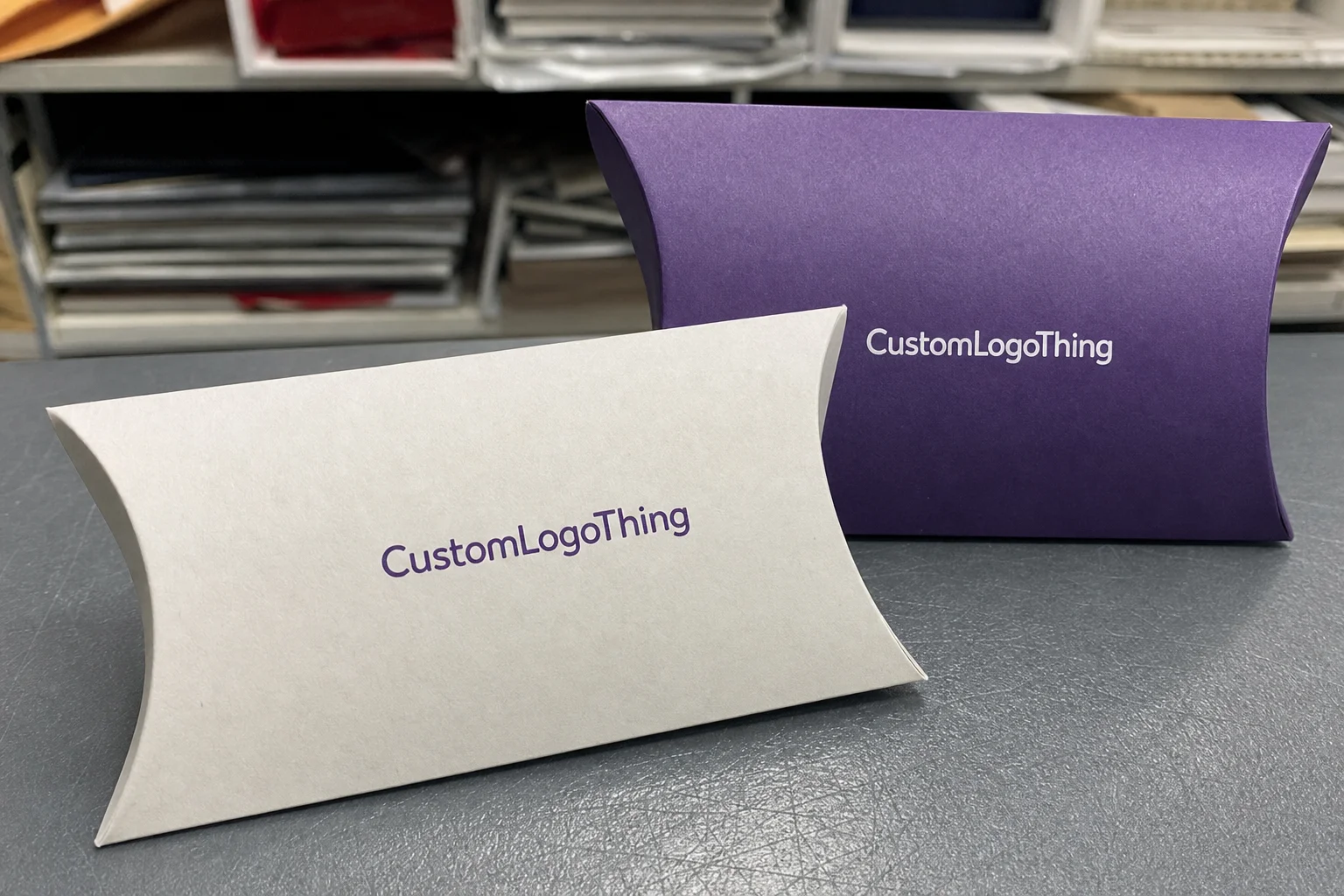
Pillow boxes are less common in large wholesale programs, but they work for lightweight gifts, jewelry, and promotional items. The window often needs careful placement because the curved shape limits usable print area. For custom window box packaging wholesale, pillow formats are more of a niche choice, but they can be effective when shelf space is tight and the package itself is part of the appeal. In runs under 3,000 pieces, they’re usually chosen for visual novelty rather than structural efficiency.
Two-piece boxes with windows can create a stronger premium impression. They cost more than a folding carton, though, and freight volume increases. I usually recommend them only when the product margin supports it or the gift-market expectation is high. If you are comparing custom window box packaging wholesale options, ask whether the unboxing moment justifies the extra material and assembly time. Sometimes it does. Sometimes it’s just expensive theater. For many brands, a two-piece window box starts around $0.95 to $1.80 per unit at 5,000 pieces, which is useful information before anyone gets carried away with mood boards.
Window placement changes merchandising too. Front-facing windows work best on retail shelves where the consumer sees the box head-on. Top windows help with gift presentation and counter displays because the product is visible as soon as the box is lifted. Side windows can support stacked displays, especially when the brand name dominates the front panel. A good packaging design team in Guangzhou or Long Island will align window position with the planogram, not just the artwork.
Product fit is where inserts and dividers enter the conversation. A bakery box may need a grease-resistant board insert. A candle box may need a molded pulp or folded paper insert to prevent movement. Supplements may need a divider so the product count looks orderly through the window. Custom window box packaging wholesale is not just about the carton shell; it’s about holding the product in place so the visual impression stays clean from warehouse to shelf.
Materials, Printing, and Finishing Specifications
Material choice determines how a box performs under handling, moisture, and print expectations. For custom window box packaging wholesale, I typically see three board families used most often: folding carton stock, kraft paperboard, and coated SBS. Each has a different feel, price point, and print behavior. In factories around Shenzhen, Dongguan, and Ningbo, the difference between boards is often the difference between a box that looks average and one that looks intentional.
Folding carton stock is the standard for many retail packaging jobs. It prints cleanly, die-cuts well, and handles a wide range of folds. For custom printed boxes that need sharp graphics and a moderate-strength structure, this is often the safest starting point. A 350gsm carton is common for lightweight retail items, while 400gsm or higher may be needed for heavier contents or premium presentation. For a 5,000-piece wholesale run, 350gsm C1S artboard is a strong middle ground because it supports color without becoming too rigid to fold.
Kraft paperboard gives a natural, earthy look. It works especially well for artisanal food, eco-conscious brands, and handmade goods. I’ve sat in meetings where a buyer insisted on kraft because the uncoated surface matched their package branding story better than a glossy board ever could. The tradeoff is that full-color imagery may look slightly muted compared with SBS, so design should be planned accordingly. A 300gsm to 350gsm kraft board with a water-based coating is common for bakery and soap packaging coming out of Zhejiang and Guangdong facilities.
Coated SBS is often the best choice for high-resolution artwork and bright brand colors. It supports crisp type, strong contrast, and a polished retail finish. If the product is luxury cosmetics or a gift item, custom window box packaging wholesale on SBS can create a more refined shelf presence. This board also behaves predictably in offset printing, which matters when the brand color has to match across multiple SKUs. In many production quotes, 350gsm SBS with matte lamination is the baseline for mid-tier retail cartons because it balances cost and appearance well.
Window film is the next major decision. Clear PET is the most common transparent film because it offers excellent clarity and decent stiffness. It is often used where the window needs to stay flat and resist bowing. In food applications, buyers should confirm film suitability and adhesive compatibility for the intended use. I always advise asking for the exact film spec, not just “clear plastic,” because the difference between a clean retail presentation and a wrinkled window can be one weak material choice. A 0.2 mm PET window generally performs better than thinner film on larger front panels, especially during summer freight from coastal factories in Xiamen or Ningbo.
Printing method affects the final look. CMYK is ideal for full-color work and photographic images. PMS spot colors make sense when brand consistency matters and a specific shade must repeat across batches. In custom window box packaging wholesale, I often recommend PMS for logo areas and CMYK for imagery, especially if the brand wants to maintain control over package branding across seasonal runs. If a buyer asks for “bright red” and nothing else, I push for a Pantone reference, because “bright” is not a color standard.
Finishing is where the product becomes premium or merely adequate. Matte lamination softens the surface and reduces glare, which can make the window feel more intentional. Gloss lamination adds brightness and punch. Soft-touch coating creates a velvety feel, though it can raise the price by a noticeable margin, often by $0.06 to $0.14 per unit on 5,000-piece runs. Foil stamping and spot UV are best reserved for brands that need premium cues without filling the whole box with ornament. Embossing can also work well, but only if the board thickness supports a clean raised detail.
Here are the specification details I tell buyers to confirm before approving custom window Box Packaging Wholesale:
- Board thickness in gsm or pt, not just “sturdy.”
- Exact dimensions after folding, not guessed outer size.
- Window size and shape with dieline reference.
- Insert requirements for movement control.
- Product weight limit per carton.
- Print method and color standard, preferably PMS references where needed.
- Finish selection including matte, gloss, soft-touch, foil, or UV.
Sustainability still matters, but claims must be real. If the board is recyclable, say so only if local recycling streams support it. If you reduce plastic by using a smaller window or a paper-based alternative, that can support environmental messaging, but I’d avoid exaggeration. The EPA’s packaging and waste resources are a useful reference point for broader material choices and disposal context: EPA recycling and waste reduction guidance. For brands making FSC claims, the certification chain should be verified through FSC, not assumed. I know that sounds dull, but dull paperwork beats a claims headache every single time.
Pricing, MOQ, and What Affects Wholesale Cost
Pricing for custom window box packaging wholesale is driven by a few predictable variables: size, material grade, print complexity, finish, and order volume. The bigger the box and the more elaborate the decoration, the more material and machine time you consume. That sounds obvious, but I’ve seen buyers compare quotes without realizing one carton included a foil logo, a PET window, and a custom insert while another was a plain printed shell. In a factory quote from Foshan, that difference alone added $0.23 per unit on a 5,000-piece order.
As volume rises, unit pricing usually falls because setup costs are spread across more pieces. That is why custom window box packaging wholesale often becomes much more attractive at 3,000, 5,000, or 10,000 units than at 500 units. A die-cut tool, print plate, and setup charge may be fixed or semi-fixed. Once you cross a threshold, the per-box cost can drop sharply. A client ordering 10,000 units can sometimes see a 22% to 35% reduction versus a 2,000-piece run, even when the board stays the same.
Here is a practical pricing comparison I use with buyers. These are illustrative ranges, not a promise, because the final quote depends on dimensions, print coverage, and shipping destination.
| Option | Typical Specs | Indicative Unit Price | Best Use Case |
|---|---|---|---|
| Simple kraft window box | 300-350gsm kraft, one-color print, basic PET window | $0.15-$0.28 at 5,000 pcs | Bakery goods, soaps, light gift items |
| Mid-tier printed carton | 350gsm SBS, CMYK print, matte lamination, standard window | $0.24-$0.48 at 5,000 pcs | Cosmetics, accessories, retail packaging |
| Premium window box | 400gsm SBS, foil, spot UV, custom insert, complex die-cut | $0.58-$1.10 at 5,000 pcs | Gift sets, candles, premium branded packaging |
Those numbers make one thing clear: a simple structure can be far more economical than a premium build, even if the footprint is similar. I’ve seen buyers try to save money by choosing a “cheap” design that later required expensive manual assembly. That is not savings. That is hidden labor wearing a fake mustache. Custom window box packaging wholesale should be evaluated on total landed cost, not just factory unit price.
MOQ usually depends on the production method. If the box is a straightforward structure with standard print, the minimum can be relatively low. If you need unusual die-cuts, special inserts, or multiple finishing stages, the MOQ may rise because the press setup and finishing line need enough volume to justify the run. In practical terms, wholesale orders often start around 1,000 to 3,000 units for custom work, but a complex premium carton can push that higher. For plants in Dongguan or Yiwu, 5,000 pieces is often the point where pricing becomes meaningfully more efficient.
There are also hidden cost variables buyers should ask about early. I’ve watched quotes change because a client forgot to mention window film thickness, or because the insert needed to hold a glass bottle instead of a cardboard sample. Ask about die-cut tooling, window film, insert engineering, sample charges, shipping, and rush fees. If a quote does not itemize these points, you are not comparing the same job. A standard prototype sample may cost $35 to $120, while a fully printed pre-production sample can run $90 to $250 depending on complexity.
One factory negotiation I remember vividly involved a seasonal candle line. The client thought the price difference between two suppliers was 11 cents per unit. Once we separated board grade, lamination, and insert cost, the real difference was 4 cents, not 11. That kind of detail matters when you order 20,000 pieces. Four cents becomes $800. At wholesale scale, packaging math is never small.
Here’s the most honest pricing advice I can offer: request an itemized quote. You want to see the base carton, the window, the print, the finish, the insert, the setup, and the freight. Then compare quote A to quote B line by line. That is the only way to judge custom window box packaging wholesale properly. If one supplier quotes EXW Shenzhen and another quotes DDP Los Angeles, the numbers are not comparable until freight and duties are on the same line.
How Long Does Custom Window Box Packaging Wholesale Take?
The order process should be straightforward. If it is not, the supplier is probably hiding complexity or underquoting something. For custom window box packaging wholesale, the normal workflow runs from inquiry to quote, then dieline, artwork, proofing, sample, production, and shipping. Each step has a purpose, and skipping one usually creates a problem later. In my experience, the cleanest runs are the ones that move from approval to shipment in 12-15 business days after proof approval for standard cartons produced in Guangdong or Zhejiang.
To speed up quoting, send exact box dimensions, product type, quantity, print colors, finish preference, and target delivery date. If I receive a vague brief that says “small Box with Window,” I know the estimate will be rough. If I get a product drawing, target weight, and an idea of whether the box will sit on shelf or ship in cartons, the quote becomes much more accurate. That level of clarity helps custom window box packaging wholesale move faster and with fewer revisions.
Dieline approval is one of the most important steps. The dieline defines fold lines, cut lines, glue areas, and window placement. If the artwork is approved before the dieline is checked against the actual product, the result can be a beautiful box that does not fit the item. I’ve seen this happen with cosmetic kits where the insert blocked the window by 8 mm. It was a fixable mistake, but only because the sample was caught early. I wish I could say that was rare. It isn’t.
Samples are worth the time. A physical sample tells you whether the product sits correctly, whether the window aligns with the visible feature, and whether the box closes with acceptable pressure. Digital proofs cannot show glue behavior or real board stiffness. For custom window box packaging wholesale, I usually recommend a sample whenever the product is new, heavier than expected, or intended for a premium retail launch. A sample turnaround of 3-7 business days is common, and that small delay can prevent a much larger reprint cost later.
The timeline depends on quantity, complexity, and the season. Standard orders may move in 12-15 business days after proof approval, while more complex jobs with inserts or special finishes can take longer. Seasonal demand matters too. If you plan a holiday rollout in October, order early; November requests can add a week or more, especially if the factory is already booked with year-end programs. Rush orders nearly always increase cost by 10% to 20%, and they also narrow your correction window if artwork needs changes.
In one client meeting in Dallas, a bakery owner asked for boxes “as soon as possible” for a retail reset. The problem was not the box itself; it was the custom insert and a last-minute logo change. We saved the project by splitting the order into two phases: a plain pilot run for immediate shelf use and a full branded packaging run once artwork was finalized. That kind of phased plan can keep custom window box packaging wholesale moving without forcing bad decisions.
Why Choose Us for Custom Window Box Packaging Wholesale
We do not sell packaging fantasy. We sell measurable output: board thickness, print accuracy, window placement, and dependable turnaround. That is the mindset Custom Logo Things brings to custom window box packaging wholesale. Brands do not need more noise. They need cartons that arrive on spec, hold the product correctly, and support retail performance without creating avoidable rework.
In my experience, the best packaging partner is the one that catches problems before production. That means checking cut accuracy, adhesive integrity, fold memory, and window alignment before a full run starts. It also means giving straight answers on MOQ, freight, and material tradeoffs. If a supplier cannot explain why a 350gsm SBS carton behaves differently from a 400gsm kraft carton, they probably should not be guiding your packaging design. I’ve seen factories in Shanghai and Suzhou catch a 2 mm window shift before print plates were made, and that kind of attention saves real money.
We also pay attention to color management because branded packaging lives or dies on consistency. A logo that turns muddy on one SKU and bright on another weakens package branding instantly. For custom printed boxes, I want the buyer to know whether the factory is using CMYK, PMS, or a mixed approach, and what tolerance is acceptable from batch to batch. That is not glamorous, but it is what protects your shelf presence. A delta-E shift that looks tiny on screen can look obvious under store LEDs in Miami or London.
Direct manufacturing coordination reduces middleman markups and shortens the revision chain. I’ve watched fragmented sourcing create expensive delays: one vendor handled design, another handled printing, and a third handled logistics. Nobody owned the final result. With custom window box packaging wholesale, one coordinated process is almost always cleaner than three disconnected ones. Fewer handoffs usually mean fewer mistakes, fewer “sorry, we thought someone else confirmed that,” and fewer late-night emails that make everyone grumpy.
We also support repeat orders and seasonal replenishment. If your pumpkin spice line needs a re-run or your spring gift set sells faster than forecast, you want a supplier who can repeat the spec without renegotiating every detail from scratch. That matters for wholesale buyers who scale from pilot runs to larger production volume. The box should not become a new project every time you reorder. A stable spec from a factory in Guangdong or Ningbo can save days on each replenishment cycle.
“The box wasn’t the cheapest quote we got, but it was the one that fit, printed right, and showed the product clearly. That saved us money on the shelf.”
That kind of comment is common after a smart packaging decision. And it is why I keep recommending custom window box packaging wholesale to clients whose products have visible appeal. If the item looks good, let it be seen. If it needs protection, engineer that into the structure. If it needs shelf impact, let the artwork and window work together.
How to Place an Order and Get the Right Quote
Getting the right quote starts with the right information. If you send only a logo and a guess at quantity, you will get a vague answer back. For custom window box packaging wholesale, I recommend assembling a brief that includes product dimensions, product weight, box style, print colors, finish, and target delivery date. Five minutes of prep can save days of back-and-forth.
- Measure the product in millimeters or inches, including height, width, depth, and weight.
- Choose the box style you want: tuck end, auto-lock bottom, sleeve and tray, gable, pillow, or two-piece.
- Decide the window placement based on shelf display, counter presentation, or gift use.
- Select print and finish preferences, including CMYK, PMS, matte, gloss, foil, or spot UV.
- Confirm quantity targets at 1,000, 3,000, 5,000, or higher so tiered pricing can be compared.
- Request a dieline if you do not already have packaging artwork.
Reference images help too. If you have competitor packaging you like or a sample from another brand, send it. I’ve used those references many times to speed up structural recommendations and window sizing discussions. A picture of the shelf context is even better because retail packaging is not judged in isolation; it is judged against what sits next to it. A box that looks great in a studio can disappear under store lighting in Houston if the contrast is too weak.
Before the final quote, confirm whether the box must meet food-contact expectations, shipping durability, or display-only use. That one question changes the board, adhesive, and insert choices. For example, a bakery box may need grease resistance, while a cosmetics box may prioritize print fidelity and a crisp opening feel. Custom window box packaging wholesale works best when the use case is specified before the artwork is locked.
Ask for the first round of pricing in a way that lets you compare options. The best request includes unit price at multiple quantities, MOQ, sample cost, lead time, artwork requirements, and any tooling charges. If you want to evaluate whether a reduced window size saves money, ask for that comparison explicitly. The more precise the question, the better the answer. If you ask for pricing at 1,000, 3,000, and 5,000 pieces, you can often see exactly where the curve starts to flatten.
Then review a prototype or digital proof against the actual product. I would not approve a full run based on a screen image alone unless the box is very simple. The fit, opening tension, and visible window placement should be checked against the real item. That is especially true for custom window box packaging wholesale where the whole point is visibility; if the opening frames the wrong part of the product, the design misses the job.
If you are ready to proceed, send your specs, quantity, and target timeline, then request a custom window box packaging wholesale quote and a dieline. That is the fastest route to an accurate proposal and a package that performs on shelf, in transit, and at reorder time. For buyers working through Custom Packaging Products and scaling through Wholesale Programs, that clarity usually shortens the path from concept to carton.
FAQs
What is the minimum order for custom window box packaging wholesale?
MOQ varies by box style, print complexity, and material, but wholesale orders usually start at a production-efficient quantity. Simple structures often allow lower minimums than highly finished or structurally complex boxes. Ask for tiered pricing so you can see how cost changes at different volumes, especially at 1,000, 3,000, and 5,000 units. For many factories in Shenzhen or Dongguan, 1,000 pieces is the practical starting point for basic custom work, while premium builds may start higher.
How much does custom window box packaging wholesale cost per unit?
Unit price depends on dimensions, board type, window size, finishes, and quantity. A simple 350gsm kraft window box at 5,000 pieces may be around $0.15 to $0.28 per unit, while a premium 400gsm SBS carton with foil and spot UV may be $0.58 to $1.10. The first quote should separate setup, tooling, printing, finishing, and shipping so you can compare options accurately. Larger orders usually lower the per-box cost because fixed production expenses are distributed across more units.
Can I use custom window box packaging wholesale for food products?
Yes, if the materials and window film are suitable for the product and intended use. For food items, confirm board coatings, adhesives, and film requirements before production. Bakery and confectionery boxes often need grease resistance, product support, and clear visibility. A 300gsm to 350gsm board with PET film is common for cookies, pastries, and takeaway sweets.
How long does production take for custom window box packaging wholesale?
Timeline depends on proof approval, sample needs, quantity, and finishing complexity. Standard orders often take 12-15 business days after proof approval, while jobs with inserts, foil, embossing, or unusual die-cuts may take longer. Request lead time before approval so your packaging arrives before launch or replenishment deadlines. If the project is seasonal, add at least a one-week buffer for transit and revisions.
What file format do I need for the artwork?
Print-ready vector files are usually preferred for sharp logos and accurate dieline placement. Confirm bleed, safe area, and color mode requirements before sending artwork. If you do not have packaging artwork, ask for a dieline and layout support before design begins. PDF, AI, and EPS files are typically accepted, and the factory should confirm whether images need to be 300 dpi or higher.
Custom window box packaging wholesale works because it solves a real retail problem: buyers want proof before purchase, and brands want enough print space to control the story. I’ve seen it improve shelf conversion, simplify merchandising, and reduce skepticism in categories from baked goods to cosmetics. If you want packaging that does more than sit there, start by matching the box style to the product, then lock the window placement, board grade, and finish before you ask for final pricing. That order of decisions keeps the quote honest and the carton useful.