Buyer Fit Snapshot
| Best fit | custom window sleeves for bakery branding for packaging buyers comparing material specs, print proof, MOQ, unit cost, freight, and repeat-order risk where brand print, material, artwork control, and repeat-order consistency matter. |
|---|---|
| Quote inputs | Share finished size, material target, print colors, finish, packing count, annual reorder estimate, and delivery region. |
| Proofing check | Approve dieline scale, logo placement, barcode or warning zones, color tolerance, and any recyclable or compostable wording before bulk production. |
| Main risk | Vague material claims, crowded artwork, or missing packing details can create delays even when the unit price looks attractive. |
Fast answer: Custom Window Sleeves for Bakery Branding: Dieline, Finish, Proof, and Buyer Review should be specified like a repeatable production item. The safest quote includes material, print method, finish, artwork proof, carton packing, and reorder notes in one written spec.
What to confirm before approving the packaging proof
Check the product dimensions against the actual filled item, not only the sales mockup. Ask for tolerance on folds, seals, hang holes, label areas, and retail display edges. If the package carries a logo, QR code, warning copy, or legal claim, reserve that space before decorative graphics fill the panel.
How to compare quotes without losing quality
Compare board or film grade, print process, finish, sampling route, tooling charges, carton quantity, and freight assumptions side by side. A lower quote is only useful if the supplier can repeat the same color, closure quality, and packing count on the next order.
Custom window sleeves for bakery packaging solve a simple problem with real money behind it: baked goods sell faster when people can see them, and they sell better when the package looks intentional. That sounds obvious because it is. The part that gets missed is that the sleeve has to support the product, not bury it under graphics and claims.
That is where sleeves sit in a useful middle lane in branded packaging. They add a clean brand layer without forcing a full structural redesign, they wrap boxes or trays that already work, and they make it easier to update package branding for seasonal lines, gift packs, limited flavors, and promo runs. For teams comparing Custom Printed Boxes, labels, and wraps, sleeves often land in the most practical spot between visual impact and cost control.
From a buyer’s point of view, the value is straightforward. You keep the window open, you give the pastry or dessert room to do the selling, and you get more space for logo, flavor, and story cues than a tiny sticker can offer. That works especially well for cookies, donuts, brownies, macarons, tarts, and mixed dessert boxes where the product itself is part of the display. The result is stronger retail packaging without locking the bakery into a heavy or expensive structure.
There is also a production reason sleeves keep showing up in bakery programs. They are easier to refresh than a full carton line. If the base box already stacks, ships, and fills well, a sleeve can update the presentation without changing every operational detail around it. That makes it a useful option for bakeries testing a new look, upgrading a wholesale account, or pulling together a more consistent product packaging system across several SKUs.
The question is not whether the sleeve looks nice on a mockup. Mockups are cheap. The real question is whether it helps sell the item, packs cleanly, and survives the pace of the bakery line. That is what this piece covers: how custom window sleeves for bakery packaging work, what drives cost, and where teams usually trip over avoidable details.
Custom Window Sleeves for Bakery: Why They Matter
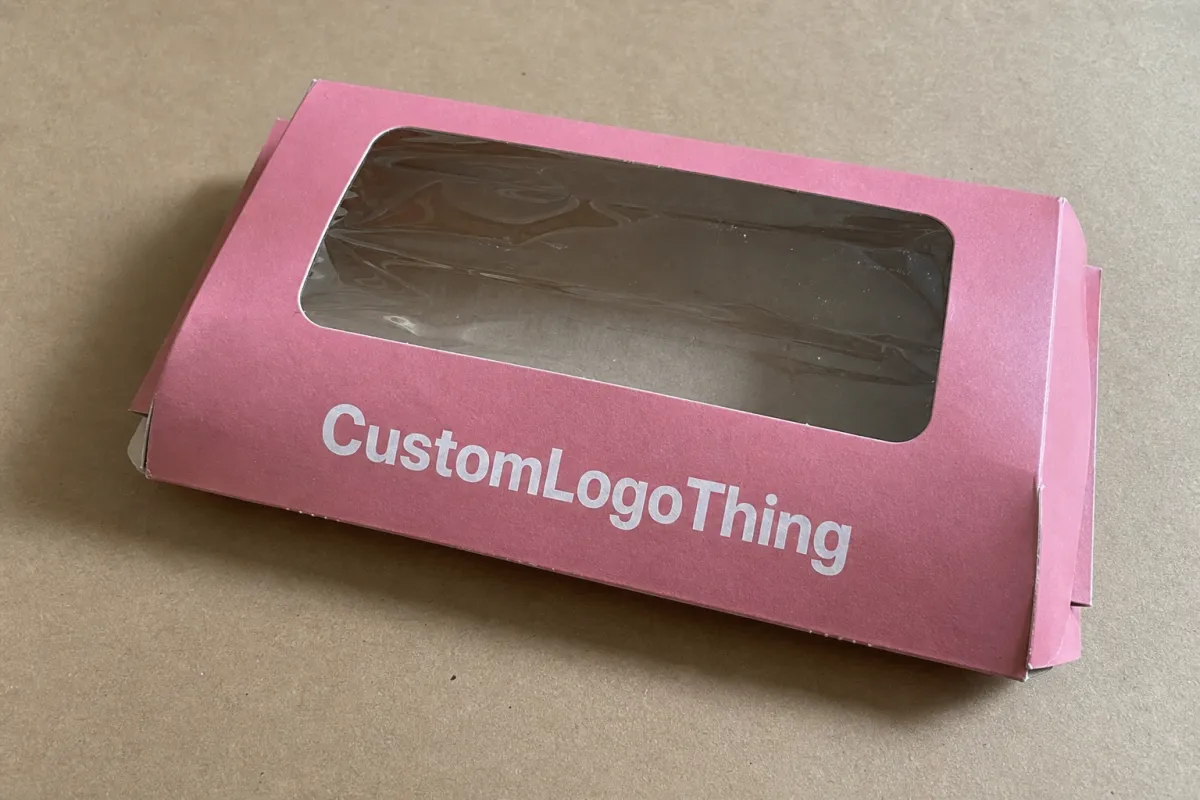
Bakery buying happens fast. A shopper glances at a case, spots a tray of cookies or a box of cupcakes, and decides before there is much time for thought. The packaging gets a few seconds to do its job. A sleeve frames the product, reinforces the brand, and makes the pack feel deliberate instead of thrown together between tasks.
A window sleeve is not the same thing as a full custom carton. It is usually a printed paperboard wrap that slides around a tray, carton, or clear-lidded bakery box while leaving a cutout or window area visible. It is also different from a label system, which covers only a small surface and depends on the base box doing most of the work. A sleeve gives the brand more room, more story space, and more freedom to create a premium feel without changing the structure underneath.
That matters because baked goods are visual products. A raspberry tart, a dusted brownie, or a hand-decorated donut already brings color, texture, and shape to the table. The sleeve should frame those strengths, not fight them. Done well, the customer sees the product first and gets the message quickly: fresh, appealing, and worth the price. That matters even more for bakery assortments sold as gifts, samplers, or seasonal bundles, where the pack needs to say “special” without getting dramatic about it.
There is a blunt business reason too. Updating a sleeve is usually less risky than replacing an entire bakery box line. If the base carton already works for filling, stacking, and shipping, the sleeve can refresh the look without changing the operating system around it. That makes it a practical choice for retail tests, wholesale presentations, and multi-SKU programs that need a cleaner visual system.
Rule of thumb: if the sleeve hides the dessert, it is doing the wrong job. The best bakery sleeves frame the product, clarify the flavor, and give the first impression a cleaner finish than a bare box ever could.
Consistency matters too. A bakery selling loose pastries, clamshells, gift boxes, and shipping packs can still create a recognizable visual language across all of them. Color blocks, typography, ingredient cues, and logo placement help tie the line together even when the structure changes. That is the quiet strength of package branding: customers start recognizing the bakery before they remember the exact SKU.
There is also a trust factor. A sleeve with a clear window reduces the gap between expectation and reality. Customers can see the actual product. That matters for premium items, but it matters just as much for simple ones. Nobody wants a glossy box that promises a lot and delivers a dry cookie hiding in the corner.
How Custom Window Sleeves Work on Bakery Packaging
The structure is simple. The design work is not. A sleeve usually wraps around a box or tray, and the opening is placed so the product stays visible. That can mean a paperboard band around a clear-lidded brownie box, a printed wrap around a macaron tray, or a belly-band style sleeve that secures a bakery carton while keeping a central window open. The sleeve can ship flat, then be folded and applied during packing, which keeps it manageable for daily production.
That visible area is the whole point. A window creates a direct link between what the shopper sees and what they believe they are buying. If the product looks polished, the sleeve reinforces that feeling. If the product leans rustic, the sleeve can signal craft and authenticity without piling on gloss. The window becomes a trust signal because customers are not forced to guess what sits inside a sealed carton.
Common uses include macaron boxes, cupcake carriers, cookie sleeves, dessert sampler packaging, brownie trays, and assorted pastry packs. Bakeries also use sleeves for holiday assortments, corporate gifts, wedding favors, and limited-edition flavor drops. Those formats benefit from a printed outer layer because the base box can stay the same while the graphics change from one season to the next. That saves time, money, and a lot of packaging headaches.
Good sleeves do more than show the product. They help tell the story. A bakery can use the surface area for flavor names, ingredient highlights, allergen notes, origin cues, or a short line about the product style. A small note like “brown butter,” “hand-finished,” or “small batch” can shift how a customer reads the value of the pack. The sleeve is not decoration for decoration’s sake. It is part of the sales pitch, whether anyone likes that fact or not.
There is a practical benefit too. A sleeve is not a structural brace in the way a rigid carton is, but it can help keep the presentation tidy and reduce scuffs on exposed edges. That matters for bakery items moving through display coolers, handoffs, and courier routes. A sleeve keeps the pack looking more intentional from shelf to photo to final handoff.
For teams building a broader product packaging system, sleeves are a flexible way to test visual direction without locking into a more expensive structural build. They can also be paired with a Custom Packaging Products order if the bakery wants to compare sleeves against trays, wraps, and full box programs before scaling up.
Key Design Factors That Influence Shelf Appeal
Designing a bakery sleeve is part visual work, part structural work, and part line planning. It has to look good, fit properly, and survive real handling. That means the strongest choices are rarely the loudest ones. They are the ones that balance shelf appeal with production reality.
Window shape and placement come first. A centered window usually creates a clean, balanced look and works well for one hero product. A corner window can feel more editorial and may fit cookies, slices, or rustic pastries. A panoramic opening can show variety in a sampler box, but it also cuts into printable space. More window is not automatically better; too much exposure can leave the design thin and rob the brand of room to speak.
Material choice changes the tone immediately. SBS board usually gives a cleaner print surface and sharper color reproduction, which suits polished bakery branding. Kraft stock feels warmer and more handmade, and it can support an artisanal story if the palette stays controlled. Coated stock can produce stronger contrast and more saturated imagery, though it may feel too slick if the bakery wants a natural look. Specialty finishes can raise perceived value, but they should be used with restraint because baked goods already carry a freshness cue that can be drowned out by overdesigned packaging.
Brand hierarchy is where a lot of sleeves go off the rails. The logo should not shout so loudly that the product disappears. A cleaner hierarchy usually leads with the product name or category, supports it with flavor or assortment details, and lets the logo anchor the layout. If the bakery is premium, the typography can stay restrained and open. If the brand is playful, color and illustration can do more of the work, as long as readability holds up at normal shelf distance.
Finishing choices can push the pack one way or another. Matte lamination usually reads calmer and more premium, while gloss makes color punch harder under display lighting. Spot UV can highlight a logo or window edge, but too much of it can make the pack feel busier than a bakery item should. Foil has a place for holiday assortments and gift packs, especially on premium lines, but it should be used like seasoning. A little can feel sharp. Too much turns the pack into candy-store noise.
Readability and retail conditions deserve real attention. Bakery packaging sits under warm case lighting, cooler LED retail lighting, and sometimes brutal phone-camera flash when customers post delivery photos. Small type can fade. Fine lines can vanish. Dark backgrounds can glare if the finish is too reflective. Before approving anything, print a mockup and view it from a normal shopper distance and in a quick photo. That small test catches more problems than a polished screen proof ever will.
Window-to-product ratio also deserves a deliberate decision. A sleeve can look generous on screen and cramped in hand. If the visible area is too small, the customer does not get the reward of seeing the item. If the visible area is too large, the branding can feel stranded around the edges. The best ratio depends on the product shape, the brand voice, and how much printed copy the team truly needs.
If a bakery wants to source responsibly, this is also the point to ask for paper certifications where relevant. For fiber-based stock, a traceable chain-of-custody claim from FSC may matter to buyers, especially on retail programs where sustainability messaging is part of the brand story. If the packs move through e-commerce or distribution, transit testing informed by ISTA methods can reduce ugly surprises after launch.
Design here is not just art direction. It is a retail packaging decision with operational consequences. The right answer has to look good, but it also has to survive the line, the cooler, the driver, and the customer’s very first glance.
Custom Window Sleeves for Bakery: Process and Timeline
Most sleeve projects move through the same basic flow: brief, dieline, artwork, proofing, sampling, production, finishing, cutting, folding, and shipment. The exact route depends on whether the bakery already has a box size locked in, whether the window needs adjustment, and whether the design uses standard print methods or specialty finishes.
The fastest projects start with complete information. A supplier can work much more efficiently when they have the box dimensions, window dimensions, target quantity, SKU count, print colors, finish preference, and launch date up front. If the bakery can also share a photo of the actual product, the fit conversation gets clearer fast. A sleeve built for a single brownie square is not the same thing as one meant for a layered dessert slice or a mixed assortment tray.
Here is the sequence that usually keeps things moving:
- Brief and measurement check: confirm carton dimensions, fold style, fill method, and where the sleeve will sit.
- Dieline creation: map the print layout around the actual structure so windows and folds land where they should.
- Artwork review: align logo, flavor copy, legal text, and any barcode or label zones.
- Proof approval: verify layout, spelling, color values, and finish callouts before production starts.
- Sampling: test the fit on real bakery stock if the order is new or the product shape is unusual.
- Printing and finishing: run the approved artwork, then apply coating, foil, embossing, or other specified finishes.
- Cutting and folding: convert the printed sheet into sleeves that can be packed and applied efficiently.
- Shipment and receiving: allow freight time and a small buffer for inspection before the launch date.
Delays usually show up in the same few places. Artwork that is not press-ready can add days. Structural changes after the first proof can add more. If the bakery asks for a window move, a size shift, or a new finish late in the process, the schedule stretches quickly. That is not unusual. It is why first-time sleeve orders do better with a realistic timeline instead of a hopeful one.
For a standard project, many buyers plan around roughly 12-15 business days from proof approval to production completion, then add freight time depending on destination. First orders can take longer if sampling is needed, and seasonal launches should carry extra padding because everyone else is moving at the same time. Repeat orders often move faster because the structure has already been approved and the production specs are already set.
There is a practical planning note here: do not schedule the sleeve only around the marketing launch. Schedule it around the actual bakery packing window. If the product needs to be filled, sleeved, labeled, and distributed in a narrow stretch of time, the packaging should arrive early enough to absorb a reprint, a minor fit adjustment, or a freight delay. That buffer costs less than emergency shipping and a lot less than a missed retail reset.
If your team is comparing sleeve builds alongside other formats, browse our product packaging options before locking the structure. Sometimes the sleeve is the right answer. Sometimes a different base carton makes the whole line easier to run.
Cost, Pricing, and MOQ Considerations
Pricing for sleeves depends on more variables than many bakery teams expect. Material thickness, print coverage, number of colors, finishing, window complexity, sleeve size, and volume all affect the final quote. A simple one-color kraft sleeve with a basic cutout is a very different purchase from a full-bleed, matte-laminated sleeve with foil and a custom shape window. The quote should show that difference clearly.
As a general pattern, unit cost drops as quantity rises. Setup and prepress work can make very small runs expensive on a per-piece basis, because the fixed production work gets spread across fewer units. That is why a 500-piece test run often looks expensive next to a 5,000-piece retail order. The math is normal. The real question is whether the test is worth the spend.
For small bakeries, the MOQ question usually ties back to launch style. If the product is a limited holiday assortment, a pilot flavor, or a local retail test, a higher minimum may not fit the plan. In that case, the bakery may want a simple sleeve with restrained coverage, fewer finishes, and a stock board choice that keeps the order efficient. If the line is already moving and the goal is to raise presentation across several stores, a larger run can reduce the per-piece cost enough to justify richer branding.
To make the tradeoffs easier to compare, here is a practical view of common options. These figures are illustrative only; real pricing will vary by dimensions, print setup, finish, structural details, and quantity.
| Option | Typical unit cost at medium volume | Best use | Main tradeoff |
|---|---|---|---|
| Custom window sleeve | $0.18-$0.48 per unit | Bakery retail packaging, seasonal assortments, brand refreshes | Requires accurate sizing and a bit more setup than a sticker |
| Printed sticker or label | $0.03-$0.12 per unit | Simple branding, allergen notes, short-term promotions | Limited surface area and weaker shelf impact |
| Full custom printed box | $0.45-$1.20 per unit | Premium lines, gift packaging, long-term core SKUs | Higher structural and tooling commitment |
| Belly band on stock carton | $0.10-$0.30 per unit | Short runs, pilot products, simple package branding | Less coverage and less structural presence |
That table shows why sleeves keep showing up in bakery programs. They cover more surface than a label, cost less than a fully bespoke carton, and still deliver a strong branded packaging story. For many bakeries, they are the cleanest compromise between visual upgrade and financial caution.
When requesting a quote, ask for a breakdown that separates structural setup, print costs, finishing, and any special cutting or window work. That makes it much easier to compare suppliers fairly. A low-looking unit price can hide a steep setup charge, while a slightly higher unit price may include better board, cleaner finishing, or stronger prepress support. Without the breakdown, the cheapest quote is often the most misleading one.
It also helps to quote the sleeve against the current packaging reality, not a theoretical ideal. If the bakery is already buying blank cartons and labels, compare the sleeve’s all-in cost against that existing system. If the line is moving toward premium gifts, compare it against custom printed boxes. The right answer depends on the role the pack is supposed to play.
One more honest point: pricing alone does not tell you whether the sleeve is the best option. A very cheap sleeve that slows packing or looks flimsy can cost more in labor and customer perception than a slightly pricier one that fits right the first time. The real total includes time, handling, and how the pack reads in a display case.
Common Mistakes With Bakery Window Sleeves
The most common mistake is very simple: too much coverage. A bakery may want bold branding and strong visual presence, but if the sleeve covers so much of the product that the window stops doing its job, the design loses the one advantage it had. Customers buy with their eyes first. If the pastry disappears, the sleeve has missed the point.
Fit is another frequent problem. If the sleeve is too loose, it shifts during transport or display and starts looking careless. If it is too tight, it wrinkles, bows, or becomes annoying for staff to apply. That is why accurate box dimensions and a real sample matter so much. A millimeter mistake can look minor on screen and obvious in hand.
Overcrowded graphics are another trap. It is tempting to add badges, flavor notes, claims, icons, social handles, ingredient callouts, and a seasonal message all at once. The result often feels cluttered instead of premium. Better to choose a clear hierarchy: product name, one or two selling cues, then the logo. If more information is necessary, place it where it helps the decision instead of fighting for attention.
Ignoring the actual shelf or service environment can create problems later. A sleeve for a chilled pastry case is not the same as one for a high-turn grab-and-go display. A sleeve for local delivery has different handling pressures than one for in-store pickup. Heat, condensation, stacking, and human touch all change how the pack performs. Good packaging design accounts for those conditions before production starts, not after a customer complains.
Proofing errors are the last major failure point. Color shifts, misaligned windows, misplaced barcodes, and text sitting too close to a fold line are all avoidable if the team reviews the proof carefully. Bakery packaging often carries small but important details such as allergen statements or flavor codes. If those land in the wrong place, the package may look fine but function poorly. That is an expensive miss because it affects both brand perception and operational flow.
A few checks reduce most of the risk:
- Measure the actual filled box, not just the flat carton.
- Confirm how the sleeve is applied on the line and who applies it.
- Check the window against the tallest or most decorative product in the pack.
- View the proof under bright light and on a phone screen.
- Test one real sample before committing to the full order.
Those steps sound basic because they are. They are also where good bakery packaging programs separate from expensive rework. The teams that slow down here usually move faster later.
Expert Tips and Next Steps for Better Results
If the bakery is trying a sleeve project for the first time, the smartest move is to start with one hero product. Pick the item that already sells well, has a clear visual identity, and benefits from stronger presentation. A single strong launch gives better feedback than converting the entire line at once. It also makes it easier to judge whether the sleeve improves shelf performance, photo appeal, and customer response.
Think of the window as a frame, not just an opening. That sounds subtle, but it changes the design brief. A frame sets expectations. It tells the eye where to look and what matters. If the pastry is a long éclair, the window should respect that shape. If the box holds three assortments, the window should make the variety readable at a glance. The package should help the product tell its own story, not cut across it.
A useful supplier checklist usually includes these items:
- Exact outer dimensions of the box or tray
- Window size and preferred position
- Target quantity and likely reorder volume
- Finish preferences, such as matte, gloss, foil, or spot UV
- Timeline, including launch date and any seasonal deadline
- Budget range per unit
- Product photo or sample for reference
That checklist saves time because it cuts down on back-and-forth. It also helps the packaging partner recommend the right structure instead of guessing. For a bakery, every extra email cycle can slow sampling, proofing, or production. Clear inputs make a cleaner quote and a better fit.
Seasonal planning deserves extra attention. A good sleeve system can be built so the structure stays stable while graphics change from one promotion to the next. That is especially useful for holiday gift packs, limited flavors, and store anniversaries. If the dieline stays the same, the bakery can swap artwork without renegotiating the whole packaging setup. That flexibility is one of the strongest arguments for sleeves over more rigid custom printed boxes.
If sustainability is part of the brand story, keep the claims precise. Ask whether the board is recyclable in the intended market, whether the inks or coatings affect recovery, and whether a certification is available for the fiber source. Customers are skeptical of vague eco language, so accuracy matters more than big promises. The EPA offers helpful guidance on materials and recycling considerations, but the real answer still depends on local recovery systems and the actual construction of the sleeve.
From there, the path is straightforward: concept, quote, sample, fit test, then full order. If the sample looks good on real bakery stock and the print reads cleanly under actual lighting, the rest of the rollout becomes a lot easier.
For bakeries that want more shelf pull without tossing a working structure, custom window sleeves for bakery packaging remain one of the cleanest upgrades available. They strengthen package branding, support better retail packaging, and give the product a more polished stage without demanding a full packaging overhaul.
The practical takeaway is simple: start with the product that already earns repeat sales, verify the fit on real stock, and make the window do the work it was meant to do. If the sleeve respects the dessert instead of competing with it, the packaging earns its keep.
What are custom window sleeves for bakery boxes used for?
They wrap around bakery packaging to add branding while leaving part of the product visible. That makes pastries, cookies, and desserts look more premium on shelf or in delivery photos, especially when the bakery wants a stronger branded presentation without replacing its entire box line.
How do custom window sleeves for bakery packaging compare to stickers?
Sleeves cover more surface area, so they support stronger branding and more storytelling. Stickers are cheaper and simpler, but they usually cannot change the overall presentation as much as a sleeve. Sleeves are the better fit when the goal is a polished retail look rather than a quick label solution.
What affects the price of custom window sleeves for bakery products?
Quantity, board stock, print colors, finishing, and sleeve dimensions all affect unit cost. Complex designs and specialty finishes usually raise pricing more than simple one-color runs. Higher volumes generally reduce per-piece cost, but small test runs may carry more setup impact.
How long does the process usually take for custom window sleeves for bakery orders?
The timeline depends on artwork readiness, proof approval, and whether structural adjustments are needed. Sampling and revisions can add time, especially for first-time orders or seasonal launches. Repeat orders often move faster because the structure and production specs are already approved.
Can custom window sleeves for bakery packaging work for small batch or seasonal runs?
Yes, they are often used for holiday assortments, test flavors, and limited-edition bakery items. Small runs can work well if the design stays efficient and the MOQ matches the launch plan. They are especially useful when a bakery wants to look premium without committing to a full packaging redesign.

