Custom Woven Label Beanies for Boutique Winter Collections: What You Are Really Buying
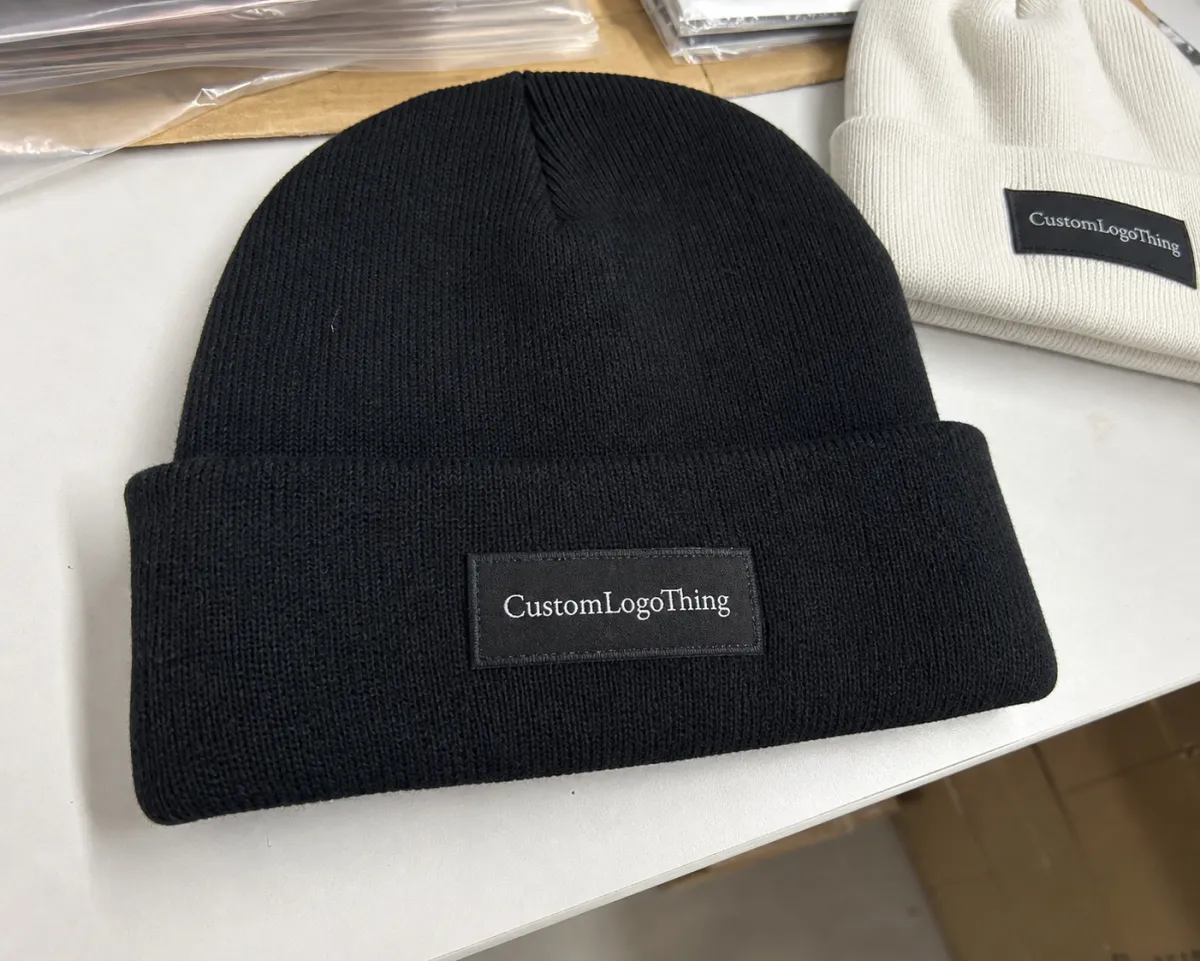
People often notice the label before they notice the yarn gauge, cuff height, or rib structure. That small rectangle or folded tab gives a simple knit hat a retail identity almost immediately, which is why custom Woven Label Beanies for boutique winter collections can work so well for small seasonal assortments.
The product is not complicated: a knit beanie made from acrylic, wool blend, cotton, recycled polyester, or a mixed yarn, finished with a sewn-on woven label. The label might show the boutique name, a logo mark, a collection title, a size cue, or a small seasonal detail. The value comes from getting the spec clean and repeating it consistently across the run.
Woven labels are different from embroidered logos, printed tags, rubber patches, and faux leather patches. The design is created with thread woven into the label rather than ink printed on top of fabric. That gives the branding texture, durability, and cleaner small-logo detail than direct embroidery often allows on a chunky or stretchy knit. Embroidery can look excellent on twill, fleece, or dense fabric panels; on rib knit, it can pull, distort, or sink into the structure.
For boutiques, beanies are a practical winter product because they are easy to merchandise, easy to gift, and less size-sensitive than most apparel. A one-size adult cuffed beanie can sit near scarves, jackets, candles, checkout displays, or holiday bundles without requiring a full size run. Retail pricing often falls around $18-$38 depending on yarn, label quality, packaging, and brand position, although premium blends or specialty packaging can push higher.
The boutique part matters. A small collection usually looks stronger with two or three carefully chosen beanie colors than with a crowded assortment. Black, oatmeal, charcoal, heather gray, camel, navy, olive, and one seasonal shade tend to carry more retail confidence than a full rack of experimental colors. Inventory has a way of making brave color decisions feel less charming by March.
How Woven Labels Actually Work on Beanies
A woven label is made on a loom with colored threads that form the background, border, logo, and text. Because thread has physical limits, artwork usually needs to be simplified before production. Tiny script, distressed textures, hairline borders, gradients, and miniature icons can turn soft or muddy once woven at actual label size.
Common formats include flat woven labels, center-fold labels, end-fold labels, loop labels, and hem tags. Flat labels are sewn down on the face of the cuff or body and work well for front-center branding. Center-fold labels wrap over an edge or cuff and can show branding on both sides. End-fold labels tuck the cut edges under, giving a cleaner rectangular patch effect. Loop labels are more understated and often suit side placement.
Placement changes the entire character of the beanie. Front-center cuff placement is the safest retail choice because it photographs clearly and gives shoppers immediate brand recognition. Side placement feels quieter and more fashion-oriented. Back placement works better for secondary branding, staff pieces, or drops where the beanie should remain visually minimal.
Attachment quality deserves more attention than it usually gets. Labels are stitched to the cuff or body of the beanie, and the stitch color, thread tension, sewing line, backing, and label stiffness all affect the finished piece. Good artwork can still look cheap if the label sits crooked, puckers the rib knit, or lifts at the corners.
Label feel matters as well. A soft damask woven label can produce sharp detail with a smoother hand, which is useful for beanies that touch the forehead. A thicker high-density label may feel more structured and visible, but it can also feel stiff if the placement is wrong. A scratchy label on a winter accessory is not a small problem; customers remember the discomfort long after they forget the spec sheet.
Practical rule: if the logo cannot be understood at actual label size from about 2 feet away, simplify it before approving the woven proof.
Key Specs That Make Boutique Beanies Look Retail-Ready
The beanie body comes first. Cuffed rib knit is the most common boutique choice because it gives the label a stable surface, fits a broad range of customers, and looks familiar on a retail wall. Fisherman beanies are shorter and sharper, often with a more styled look. Slouchy beanies feel relaxed, but the extra movement in the fabric can make label placement less crisp.
Yarn choice affects price, handfeel, warmth, stretch recovery, and perceived value. Acrylic is budget-friendly, consistent, and widely available in stock colors. Wool blends feel warmer and more premium, though a poor blend can itch or shed. Cotton is soft and breathable, but it may not read as winter-heavy unless the styling supports it. Recycled yarn can add a credible sustainability angle only if the certification, handfeel, and color consistency hold up in real use.
Ask for more than a generic material description. Weight, gauge, finished height, cuff height, and approximate piece weight help you compare one beanie to another. For adult cuffed beanies, finished heights often sit around 8-12 inches uncuffed, with cuff heights around 2.5-3.5 inches. A denser rib knit usually feels more substantial in hand, while a very light knit may look thin unless the design is intentionally minimal.
If a physical sample is not available before quoting, request close-up photos in natural light, flat measurements, yarn composition, stretch notes, and photos of the cuff with a sample label or ruler for scale. Photos cannot replace touch, but they can reveal loose knitting, uneven cuffs, low contrast, and awkward proportions before money is committed.
Color planning should stay disciplined. Neutral colors usually sell best for boutiques because they fit more coats, scarves, and gift recipients. One seasonal accent color can make the collection feel current. Five bright colors may make the order look lively on a spreadsheet and uneven on the sales floor.
Label size needs proportion. Small side tabs may run around 0.75 x 1 inch. Front labels often sit around 1.5 x 1.5 inches, 2 x 1 inches, or 2 x 1.25 inches, depending on the logo shape and cuff height. Bigger is not automatically better. A label should be readable in product photos without turning the beanie into a billboard.
Compliance should be planned early, especially if the beanies will sell through stores, marketplaces, gift programs, or wholesale accounts. Fiber content, care instructions, country of origin, and other textile labeling requirements may apply. The FTC textile labeling guidance is a useful reference for U.S. sellers dealing with apparel and textile products.
Cost, Pricing, and MOQ Factors Buyers Should Check First
Unit cost depends on the beanie material, knit style, yarn color, label type, label size, number of thread colors, sewing complexity, order quantity, packaging, and shipping method. A beanie is a small product, but there are plenty of places for cost to move.
For planning purposes, basic acrylic beanies with simple woven labels usually sit in a lower custom range, especially at 250-1,000 pieces. Wool blends, recycled yarn, custom dyeing, heavier knits, specialty label finishes, and individual retail packaging increase the cost. A small run may cost noticeably more per unit because label setup, proofing, sewing setup, and handling are spread across fewer pieces.
Lower MOQs help boutiques test demand. A 100-piece drop can validate color, retail price, display strategy, and customer response without tying up too much cash. The tradeoff is margin. A 500-piece or 1,000-piece run usually gives better unit economics, but only if the color mix and style actually sell. Inventory is not cheaper just because the unit price looked friendly on the quote.
Label cost drivers include extra thread colors, metallic thread, very small text, special folds, backing, merrowed edges, heat-cut edges, and unusual dimensions. A small label still needs setup and production time. The simplest label is not always the best one, but complexity should earn its place.
Compare landed cost rather than only product price. Landed cost includes the beanie, woven label, sewing, hang tag or belly band, polybag or retail packaging, duties if applicable, freight, and rush charges. If the product will ship in Custom Packaging Products such as mailers or custom printed boxes, include those costs in the same calculation. Branded packaging can raise perceived value, but it still needs to fit the intended retail price.
| Order Type | Typical Quantity | Best For | Cost Tradeoff |
|---|---|---|---|
| Small test run | 100-250 pieces | New boutiques, limited drops, market testing | Higher unit cost, lower inventory risk |
| Core boutique run | 250-500 pieces | Seasonal retail launch with 2-4 colors | Better pricing, still manageable inventory |
| Deeper production | 500-1,000+ pieces | Established sellers, wholesale, repeat colors | Stronger margin, higher cash commitment |
| Premium custom build | Often 500+ pieces | Custom yarn, custom dye, premium retail packaging | Longer lead time and higher setup cost |
Ask for tiered quotes at 100, 250, 500, and 1,000 pieces. The meaningful price break is not always where buyers expect it to be. Sometimes the jump from 250 to 500 is worth it; sometimes freight, packaging, or cash flow changes the answer. Run the full numbers before committing to a larger quantity.
Process and Timeline From Artwork to Finished Beanies
The workflow is straightforward on paper: confirm the beanie style, choose yarn and colors, submit logo artwork, approve the woven label proof, approve a sample or pre-production photo, enter bulk production, inspect, pack, and ship. Delays usually come from vague specs, late artwork, unclear color references, or proof changes after approval.
Vector artwork is best. Send AI, EPS, or clean PDF files whenever possible. If the only available logo is a low-resolution PNG from an old website header, the artwork may need to be redrawn before weaving. That can add 1-3 business days and may add an art fee, depending on the supplier and complexity.
The digital proof should show label dimensions, thread colors, fold type, edge finish, placement, and stitching notes. Check spelling, spacing, logo proportions, and actual-size readability. If the label is 2 inches wide, print the proof at 2 inches wide and look at it under normal conditions. A logo that looks crisp at 300% on a screen can become crowded once it is reduced to thread.
Physical samples reduce risk, especially for first orders, premium retail drops, giftable products, or custom Woven Label Beanies for boutique winter collections using new artwork. Sampling may add 7-14 business days depending on the label and beanie source. A repeat order using an approved label often moves faster because the thread colors, dimensions, and sewing notes are already established.
Bulk production for a straightforward stock beanie with a custom woven label may take around 10-20 business days after approval, before shipping. Custom knit colors, wool blends, recycled yarn sourcing, retail packaging, and peak seasonal demand can extend the timeline. Rush production may be possible, but speed reduces the room for corrections, and corrections are exactly what you want available if a label proof or placement sample is wrong.
Plan backward from the selling window. Winter accessories should arrive before customers have already bought their scarves, outerwear, and holiday gifts. If cartons land after the seasonal peak, the product is not merely late; the revenue window has shifted.
Step-by-Step Buying Guide for a Small Winter Drop
Start by defining the role of the beanie. Is it a boutique accessory, a merch item, a gift-with-purchase, an employee uniform piece, or a limited seasonal product? That answer should guide the yarn, price target, label size, packaging, and order quantity.
- Choose one core silhouette. For most boutiques, a cuffed rib knit beanie is the safest starting point. It photographs well, fits broadly, and gives the woven label a clean display area.
- Pick two to four sellable colors. Use neutrals plus one seasonal shade. A smaller, tighter palette usually looks more intentional than a mixed assortment with weak sellers.
- Simplify the artwork. Use a clean logo, strong contrast, and limited thread colors. If the primary logo is delicate, create a woven-label version with fewer details.
- Set the label dimensions. Common front labels often sit around 1.5-2 inches wide. Side tabs can be smaller. Ask for the proof at actual size.
- Request a quote with complete specs. Include quantity, beanie material, color count, label dimensions, label fold, placement, packaging, delivery address, and target in-hands date.
- Review the proof carefully. Check spelling, logo proportions, thread colors, placement, care label details, and whether the label will sit flat on the cuff.
- Prepare launch assets while production runs. Product photos, flat lays, bundle pricing, display cards, email copy, and social captions should not wait until cartons arrive.
Product packaging deserves its own line item. A beanie in a plain polybag can still sell, but a hang tag, belly band, branded insert, or compact gift box can raise perceived value. If the drop is meant for holiday gifting, packaging becomes part of the product, not an afterthought. For labels, hang tags, and accessory branding, review Custom Labels & Tags before locking the final presentation.
Be careful with sustainability claims. Recycled yarn, FSC paper hang tags, and plastic-free packaging can support a stronger brand story, but the wording should match the actual materials and documentation. The FSC site is a useful place to understand certified paper sourcing. Avoid printing broad eco claims on a belly band unless the supply chain can support them.
Common Mistakes That Make Custom Beanies Look Cheap
The first mistake is using artwork that is too detailed for woven thread. Fine lines, gradients, tiny icons, and delicate script often lose definition at small scale. A strong woven label usually has fewer elements, better contrast, and cleaner spacing than the full brand logo.
The second mistake is choosing the wrong label size. Too small looks accidental. Too large overpowers the beanie. The label should match the cuff height, logo shape, and brand personality. A minimalist boutique may need a quiet side tab, while a merch-driven brand may want a stronger front patch.
Contrast is another frequent miss. Tonal labels can look elegant in person, especially cream on oatmeal or charcoal on black, but they may disappear in product photos. If online sales matter, test the label color against the beanie color under normal lighting before production.
Buying only on the lowest unit price is the classic trap. Cheap yarn, loose knitting, scratchy labels, weak recovery, and crooked sewing can damage a boutique's brand faster than they save money. A beanie that feels flimsy at $8 landed cost may be worse than one that feels giftable at $10.50 landed cost, especially if the retail price is above $28.
Skipping packaging can also weaken the presentation. Product packaging does not need to be elaborate, but it should support the sale. A belly band with fiber content and a short brand note, a hang tag with care instructions, or a small branded insert can make boutique beanies feel planned rather than generic.
The final mistake is waiting too long. Winter accessories have a real selling window. Late production can mean missed holiday traffic, rushed freight, and a collection that arrives while customers are already thinking about lighter layers.
Next Steps Before You Request a Quote
Build a simple spec sheet before contacting a manufacturer. Include beanie style, material preference, color list, label type, label size, logo file, estimated quantity, packaging needs, delivery deadline, and ship-to location. A clear spec sheet produces a better quote than a vague message asking for beanie pricing.
Decide what matters most: lowest unit cost, premium handfeel, fastest turnaround, sustainable materials, or retail presentation. You can usually optimize for two or three of those priorities, not all of them at once. A very low unit cost may limit yarn options; a premium handfeel may raise MOQ; a fast timeline may reduce sample flexibility.
Prepare logo files in vector format if possible, then create a simplified backup version for woven production. That saves proofing time and avoids awkward compromises later. If the logo has thin script, a delicate symbol, or tiny secondary text, assume it will need adjustment before it becomes thread.
Ask for tiered pricing, sample options, production lead time, shipping method, and the revision process if the sample needs changes. A useful quote should explain more than the unit price. It should help you understand beanie quality, woven label clarity, MOQ, timeline, packaging, landed cost, and what happens if the first proof is not quite right.
The final check is simple: approve production only after the proof, label placement, quantity, delivery date, and retail packaging plan are clear. A beanie may be a small product, but the details are visible. Customers notice the weight, the label, the stitching, the packaging, and the way the piece feels in hand.
FAQ
What is the best label size for custom woven label beanies?
Most boutique beanies work well with a small to medium woven label that fits cleanly on the cuff without wrapping awkwardly. The right size depends on logo shape, cuff height, and desired visibility. Ask for a proof shown at actual size before approval. If the logo has fine details, a slightly larger label usually weaves cleaner than a tiny one.
How much do custom woven label beanies usually cost?
Pricing depends on quantity, yarn, beanie style, woven label complexity, sewing, packaging, and shipping. Higher quantities usually lower the unit cost, but boutiques should compare landed cost instead of only the factory unit price. Request tiered quotes at 100, 250, 500, and 1,000 pieces so you can see where the real price break starts.
What MOQ should a boutique expect for custom beanies with woven labels?
MOQ varies by manufacturer, beanie style, and whether the beanie body is stock or fully custom. Stock beanies with custom woven labels usually have a lower MOQ than custom-knit colors or custom yarn blends. A smaller test run is useful for boutiques, but the unit cost will usually be higher than a larger production run.
How long is the lead time for boutique beanies with woven labels?
Lead time includes artwork review, label proofing, sample approval if needed, bulk production, inspection, packing, and shipping. Repeat orders are usually faster because the label and specs are already approved. New artwork, physical samples, custom colors, premium yarns, retail packaging, and seasonal demand can all extend the timeline.
Are woven labels better than embroidery for boutique winter beanies?
Woven labels are often better for small logos, clean branding, and a retail boutique look on cuffed beanies. Embroidery can look strong for bold marks, but it may distort on stretchy or chunky knits. For many boutique winter collections, woven labels offer a practical balance of clarity, texture, durability, and repeatable production.