Guests rarely comment on the label stitched into a robe hem or towel edge, yet that small detail often shapes how finished the whole room feels. Custom Woven Labels for hotel brands do a quiet kind of work: they reinforce identity, help textiles feel intentional, and hold up through the repeated washing, pressing, folding, and handling that hospitality textiles go through every day.
For hotel teams, this is not a decorative afterthought. It is one of the smallest branded components in the property, but it touches products that guests handle constantly. When the label is soft, legible, and consistent across departments, the textile program feels organized. When it frays, curls, or looks mismatched, the eye catches it immediately, even if the guest cannot explain why the room feels less polished.
There is also a practical reason these labels matter. A well-specified woven label can support brand consistency across robes, towels, uniforms, spa items, and amenity packaging without adding much cost to the textile itself. That makes it one of the more efficient branding tools in hospitality, provided the artwork, materials, and placement are chosen with the actual use case in mind.
Why Hotel Labels Quietly Shape Guest Perception
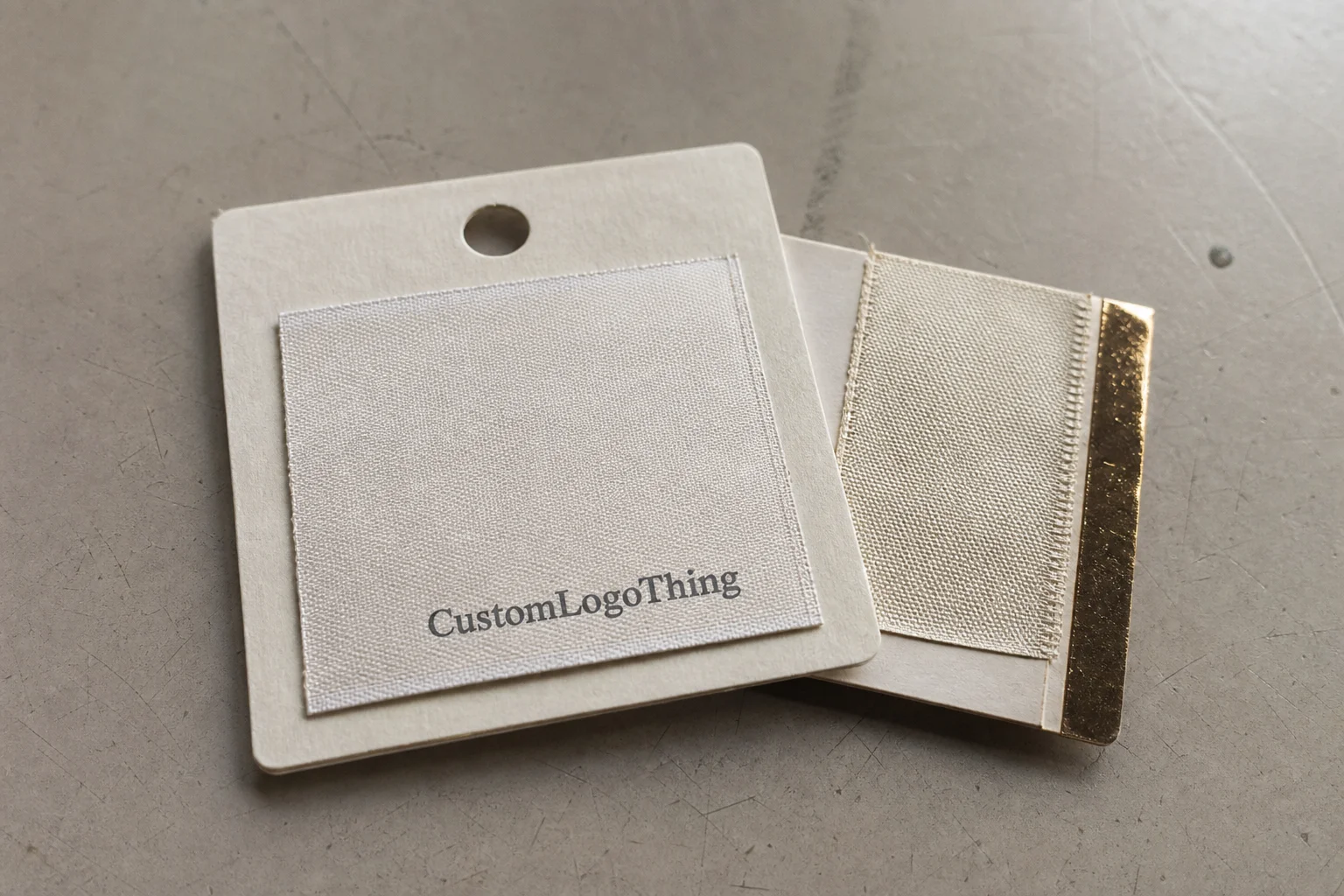
Most buyers begin with the big textile questions: fabric weight, absorbency, thread count, hand feel, shrinkage, or how a robe drapes after laundering. Those details matter, but labels influence perception in a different way. They sit close to the guest, repeat across multiple product categories, and often become the one branded element that stays visible after the initial room tour is over.
Custom Woven Labels for hotel brands work well because they communicate quality without adding visual noise. A woven label does not have to dominate the product the way a large embroidery patch or oversized print might. Instead, it acts like a restrained signature. For hotels, that balance is useful: the brand is present, but the textile still feels calm and usable.
That restraint matters more in hospitality than it might in retail apparel. A guest does not buy the robe to admire the label. The label has to disappear into the experience, which means comfort, softness, and wash durability are more important than novelty. If the label scratches the skin, puckers after laundering, or looks off-center, it stops being a brand asset and becomes a complaint waiting to happen.
The strongest hotel label programs also support operational consistency. When the same visual language appears on linen, spa items, staff uniforms, and even branded packaging for in-room merchandise, the property feels better managed. That kind of consistency is subtle, but guests read it as care. It also helps procurement teams reduce variation across departments, which can make reordering simpler over time.
There is a real cost advantage here too. Labels are a small line item compared with the textile itself, yet they have a disproportionate effect on perceived value. A towel or robe can be perfectly functional, but if the branding looks generic or unfinished, the item can feel cheaper than it is. A clean woven label is one of the simplest ways to avoid that problem.
“In hospitality, the label is small, but the expectation attached to it is not. If it fails early, guests remember the failure more than the savings.”
How Woven Labels Work on Hotel Textiles
Woven labels are made by weaving the design into the label fabric with threads, instead of printing ink onto the surface. That difference matters. Because the artwork is formed by the weave itself, the label typically holds up better under abrasion and repeated laundering, and it has a more finished, tactile appearance than many printed tags.
Hospitality buyers usually work with a few common constructions: center-fold, end-fold, sew-in, loop labels, and flat brand tags. Center-fold labels are useful when the label needs to sit neatly in a seam. End-folds tend to look cleaner on robes and uniforms because the edges are tucked in. Sew-in labels are versatile across towels, linens, and apparel. Loop labels can be useful when a visible brand point is needed without adding bulk. The right format depends on where the label will sit and how often the guest will touch it.
Placement is just as important as format. Hotels use woven labels on bathrobes, towels, pillowcases, spa wraps, staff shirts, pillow protectors, tote bags, slippers, amenity pouches, and guest gift items. Some properties also use them on retail packaging for in-room merchandise, which helps connect the textile program with the rest of the brand system. That is where consistency matters most: the label should feel like part of the same visual family as custom packaging products, not a separate decision made in isolation.
The weave itself limits how much detail can be reproduced. Very small text, thin script, tiny crests, and busy linework can blur once reduced to label scale. A logo that looks elegant on a screen may need simplification before it can be woven cleanly. In practice, bold shapes, clear letterforms, and modest color counts usually produce the most reliable result, especially when the label needs to remain readable after repeated commercial washes.
- Center-fold: good for seams and inner edges
- End-fold: cleaner finish for robes and apparel
- Sew-in: versatile for linens, towels, and soft goods
- Loop label: useful for visible branding or hanging points
- Brand tag: practical for identification and department sorting
Thinking about labels in the same way as packaging helps. A hotel would not choose a carton style that cannot protect the product inside, and it should not choose a label construction that cannot survive the laundry environment. The label may be smaller than the box, but it still has a job to do.
Key Design, Material, and Branding Factors
Good label design in hospitality starts with restraint and a clear understanding of the product. The most important decisions are size, weave density, thread count, fold style, color count, and attachment method. If any of those is mismatched to the textile, the label can look too loud, too stiff, or too fragile.
Typography is usually where buyers run into trouble first. Bold, clean type tends to remain legible at smaller sizes, while fine script or decorative lettering can lose clarity quickly. Once a label drops below roughly 25 mm in width, tiny details become much harder to read. Logos with crests or multiple thin line elements often need a simplified version for woven production. That is not a flaw in the artwork; it is a limitation of the medium.
Color choice also affects the final result. Two to four thread colors is common for hotel labels because it keeps production manageable and usually preserves sharper definition. Metallic yarns, gradients, and fade effects may look attractive in a mockup, but they are harder to translate into a woven structure and less predictable after laundering. If the brand system depends on subtle color transitions, the label may need a simplified treatment.
Material feel matters more than many first-time buyers expect. A label for a plush towel or spa robe should be soft and low-profile so it does not interfere with comfort. A label on a housekeeping uniform can be slightly more structured because it is not sitting against skin in the same way. The goal is not just durability; it is matching the tactile experience to the product.
For procurement teams, wash performance is the non-negotiable piece. Hotel textiles face hot laundering, frequent tumbling, pressing, friction in linen carts, and, in some properties, exposure to chlorine or strong detergents. Labels should be selected with that environment in mind. Ask about thread quality, colorfastness, edge finishing, and whether the construction has been used in commercial laundry conditions before. If a vendor cannot speak clearly about those points, that is a warning sign.
There are also broader quality-control references worth keeping in view. Transit damage and packaging stress are separate from wash performance, but they still affect final presentation, so shipping and handling expectations should be clear. Where relevant, standards and guidance from organizations such as ISTA can help frame shipping protection, while broader materials and sustainability practices can be aligned with EPA guidance. Those references do not replace textile testing, but they do help buyers ask sharper questions.
| Design choice | Typical hotel use | Effect on performance |
|---|---|---|
| 2-3 thread colors | Most robes, uniforms, towels | Cleaner detail and simpler production |
| Fine script type | Boutique branding | Higher risk of blur at small sizes |
| Bold monogram | Premium soft goods | Better legibility after repeated washing |
| Soft folded edge | Spa wear, bath textiles | Improves comfort against skin |
When the artwork is complex, the best result is often a slight reduction in detail rather than a forced reproduction of every line. That may sound conservative, but it is usually the smarter route for hospitality. The label should work in the room, in laundry, and on the shelf, not just in a digital proof.
Process and Timeline: From Artwork to Delivery
The production process is usually straightforward, but approvals can slow it down more than the manufacturing itself. A standard order moves through brief, artwork submission, digitizing, proofing, sample approval, bulk production, finishing, and shipping. If the brand team is decisive and the artwork is clean, the process stays manageable. If the spec is vague, revisions start to stack up quickly.
Most delays come from avoidable issues: incomplete artwork, too many revision rounds, or multiple teams trying to solve the same design problem at different stages. A frequent example is a label that needs to work on towels, robes, and uniforms at once, while purchasing wants a single SKU for simplicity. That can be done, but only if the label size, fold, and placement are chosen with all three use cases in mind from the start.
For hotel launches and renovations, the timeline should be built around approvals, not just production. A simple woven label order may move in 12-15 business days after proof approval, though complex artwork, large quantities, special finishes, or multiple versions can extend that window. If the order involves different departments or property types, add extra time for internal review. Label projects rarely stall because of weaving alone; they stall because of indecision.
A physical sample is worth the wait. A digital proof can confirm layout, text, and approximate color direction, but it will not show how the label feels against skin, how the edges finish, or how the weave behaves on the actual textile. For urgent projects, a proof may keep the process moving, but a sample remains the better approval checkpoint whenever time allows.
A typical schedule might look like this:
- Day 1-3: submit artwork, dimensions, and use-case notes
- Day 4-6: receive proof or digitized mockup
- Day 7-10: approve sample or request revision
- Day 11-20+: bulk production and finishing
- Final step: shipping, receiving, and inspection
Hotels that already manage coordinated guest-facing materials often get better results because they treat the label as part of a larger branding system. The same discipline used for amenity cartons, custom printed boxes, and other branded presentation pieces should also apply here. That approach keeps the textile program aligned with the property’s broader identity instead of letting each department make isolated decisions.
Cost, Pricing, and MOQ Basics for Hotel Buyers
Pricing depends on more than quantity, although quantity has a major effect. Label size, weave complexity, thread count, number of colors, fold style, and finishing all influence the quote. A simple one-color sew-in label will usually sit in a much lower price band than a small multi-color crest with folded edges and specialized finishing. For a property-wide rollout, that difference can matter.
MOQ, or minimum order quantity, is the smallest run a supplier will produce for one design. For hotel brands that need labels across multiple room categories, it is often more efficient to build one master spec with minor variations rather than create several different labels with tiny changes. Fewer SKUs make reordering easier and can reduce setup costs, which is useful when purchasing is trying to control both budget and inventory.
At higher volumes, unit prices usually fall. That is normal. A run of 5,000 pieces may land in a different price range than 20,000 pieces, even when the design is identical. As a rough sourcing reference, simple woven labels can fall around $0.08-$0.18 per unit at larger volumes, while more complex labels may move into the $0.18-$0.35 range or beyond, depending on size, finish, and production details. Those figures are not fixed rules; they are a practical starting point for budgeting.
The trap is buying too much too early. Hotels sometimes chase the lowest unit price, order far beyond near-term demand, and then end up with unused stock after a logo refresh, room category change, or supplier switch. Storage takes space, and obsolete inventory turns into waste. In many cases, a slightly higher unit cost is the better choice if it reduces overstock and prevents rework later.
When comparing quotes, review the full commercial picture:
- sample fees
- setup or digitizing charges
- shipping costs
- label finishing and folding costs
- rush fees, if any
A lower quote can lose its appeal once all the extras are added. A higher quote may be easier to justify if it includes better wash durability, cleaner edge finishing, or more accurate branding. In hospitality, that matters because a label that lasts longer usually costs less over the life of the textile than a cheaper label that needs replacing after a few laundry cycles.
Step-by-Step Buying Guide for Hotel Procurement Teams
Good procurement starts with a clear specification, not a price request. For Custom Woven Labels for hotel brands, the buyer needs to define the use case, laundry environment, and placement before any quote comparison makes sense. Otherwise, each vendor is pricing a different version of the same idea.
Step 1: Define the use case
Decide whether the label is for a bathrobe, towel, uniform, pillowcase, spa wrap, or amenity pouch. Each category has a different balance of comfort, visibility, and wear. A label that works on a housekeeping shirt may feel too firm for a robe collar.
Step 2: Gather the right files
Send the logo in vector format if possible, along with Pantone references, target size, fold preference, quantity estimate, and placement notes. If there are care instructions or compliance details, include them at the same time. Clean inputs reduce revision cycles.
Step 3: Request a proof with exact specs
The proof should show dimensions, thread colors, fold style, attachment method, and any special finishing. If the hotel is also refreshing packaging or retail presentation, keep those references together so the woven label stays aligned with the broader brand system rather than drifting off on its own.
Step 4: Test on the real textile
A paper proof is not enough. Place the sample on the actual product and check it from a normal viewing distance. Look at softness, contrast, edge finish, and how the label sits against the fabric. This is the point where the label either proves itself or needs adjustment.
Step 5: Align internal stakeholders
Operations, brand, and purchasing should sign off before production begins. If one team approves layout while another has concerns about washability or placement, the order can stall midstream. That is one of the most common and most expensive mistakes in branded textile programs.
Hotels that buy packaging, uniforms, and guest amenities together often get the best coordination when they keep the label spec tied to the same visual standards used elsewhere. The fewer disconnected decisions there are, the cleaner the final presentation tends to be.
Common Mistakes Hotel Brands Make with Woven Labels
The first mistake is overcomplication. Too much text, too many colors, tiny icons, and ornate borders all work against woven construction. The medium has limits, and if the design ignores them, the label becomes hard to read or awkward to manufacture.
The second mistake is sizing the label for a screen mockup rather than the real product. Artwork that looks balanced in a design file can shrink into unreadability once it is sewn into a seam or placed on a towel corner. That is why scale testing matters before production begins.
The third mistake is assuming all woven labels behave the same in commercial laundry. They do not. Thread quality, weave density, edge finishing, and attachment method all affect durability. A property with high turnover and hot laundering should ask for samples or evidence of performance under comparable conditions.
The fourth mistake is ignoring guest comfort. A label placed in the wrong spot can irritate skin, catch on fibers, or create a visual distraction on an otherwise premium textile. For spa robes and bath goods, that matters a great deal because comfort is part of the brand promise.
The fifth mistake is approving artwork too quickly. Misspelled text, distorted proportions, or inconsistent placement can slip through when several people review the same file and nobody checks the final spec carefully. Basic errors are common, and they are costly because they usually show up only after production has started.
From a sourcing perspective, the label should be treated with the same discipline as any other branded component. It is small, but it still needs documentation, quality control, and a clear approval trail. That is especially true when the labels will be used across multiple departments or property types.
Expert Tips and Next Steps for a Cleaner Order
If the goal is a cleaner order, start with one hero application. Robes and uniforms are often the best testing ground because they combine visibility with wear and comfort concerns. Once that version is approved, it becomes easier to extend the same spec to towels, spa items, or guest merchandise.
Use one master label spec whenever possible. A separate version for every department makes inventory messy and reordering harder than it needs to be. Minor variations are fine if they are intentional, but they should be documented clearly so the team can repeat the order without confusion.
Ask for a wash-test sample and compare it beside an existing hotel textile. Side-by-side testing reveals more than a digital proof ever will. Pay attention to contrast, softness, edge finish, and how the label looks after handling. The real question is not whether the logo looks good in isolation; it is whether the label still looks right after use.
Keep a reordering file. Store the approved artwork, exact dimensions, fold style, thread colors, attachment method, quantity history, and any vendor notes in one place. That is not glamorous, but it prevents a lot of wasted time the next time procurement needs a refill run or a property refresh.
If the hotel is coordinating labels with broader branded materials, keep the woven label spec connected to packaging, guest amenities, and other soft goods. Consistency across touchpoints is what makes the brand feel deliberate rather than assembled piecemeal. For teams building that kind of system, Custom Packaging Products can be part of the same planning conversation as the label itself.
Before placing the order, confirm the use case, approve the sample on the actual textile, and lock the spec sheet. That sequence reduces surprises and gives the finished label a much better chance of doing its job quietly and well.
FAQ
What are custom woven labels for hotel brands used for?
They identify and brand hotel textiles such as robes, towels, linens, uniforms, and spa products. They also help create a more polished guest experience by making soft goods look intentional and consistent.
Are woven labels better than printed labels for hotel linens?
Woven labels usually hold up better under frequent laundering and abrasion. Printed labels can work for some uses, but woven construction generally gives a more durable and premium result.
How much do custom woven labels for hotel brands cost?
Price depends on size, quantity, thread colors, fold style, and finishing requirements. Larger orders usually lower unit cost, while small runs and complex designs cost more per label.
What is the typical turnaround for hotel woven label orders?
Turnaround depends on proofing speed, order size, and production load. Fast approvals and simple specs usually shorten the process, while sample revisions and special finishes add time.
What should hotels send when requesting a quote for woven labels?
Send the logo file, preferred label size, intended product use, fold type, quantity estimate, and color preferences. Including placement details and any wash-performance requirements helps vendors quote more accurately.


