Custom Woven Labels for Coffee Brands: Buying Guide
Learn how Custom Woven Labels for coffee brands work, where they fit, what they cost, which specs matter, and what to check before ordering labels for merch, uniforms, and gift packaging.
A $22 bag of single-origin coffee can look carefully considered on the shelf, then lose that same premium feeling as soon as it is paired with a plain tote, a scratchy apron tag, or a gift pouch that feels like it came from the bottom drawer of a supply closet. Custom Woven Labels for coffee brands exist for that exact gap. They carry the brand’s texture, restraint, and finish beyond the coffee bag and into the pieces customers keep, wear, reuse, and photograph.
The coffee may be excellent. The roast profile may be dialed in. The sourcing story may be thoughtful without being overdone. But if the physical brand details feel improvised, people notice, especially in specialty coffee, where customers are already trained to read small cues: paper stock, bag structure, roast-date placement, ink color, shelf presence, and the way a package feels in the hand.
A woven label will not rescue weak merchandise or cover for a messy packaging system. It can, however, make a simple canvas tote feel more intentional, turn a staff apron into part of the retail environment, and give a gift set one of those small tactile details that makes the price feel more credible.
Custom Woven Labels for Coffee Brands: What They Actually Do
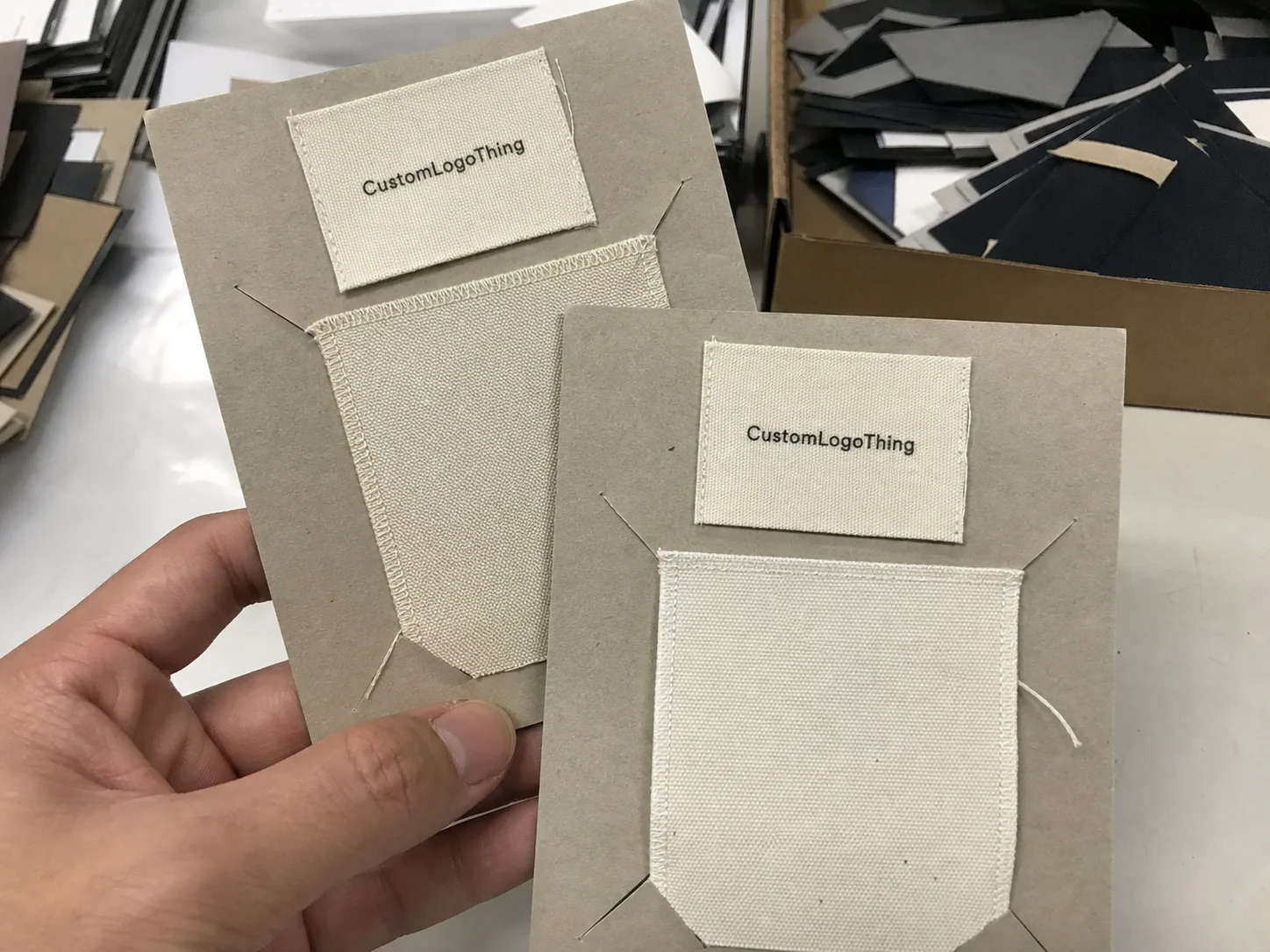
Custom Woven Labels for coffee brands are usually not made to seal roasted beans directly. They are best used on fabric-based brand touchpoints: cafe aprons, barista uniforms, tote bags, cupping towels, canvas pouches, soft gift bundles, subscription inserts, retail display pieces, and merch that stays in use long after the coffee is gone.
A woven label is made from thread on a loom. The artwork is translated into colored yarns rather than printed as ink on top of a surface. That gives the label texture, durability, and a more finished feel than a basic printed tag, but it also sets real limits. Thread is not a miniature inkjet printer. Fine detail, small type, hairline illustrations, and subtle gradients all need to be handled with care.
Think of woven labels as one part of a larger branded packaging and merchandise system. They do not replace food-safe coffee bag labels, roast-date stickers, barcode labels, certification marks, or required net-weight and compliance copy. They support the pieces customers touch and reuse: the tote folded in the back seat, the apron hanging behind the bar, the pouch that holds a grinder brush, the towel that ends up beside a home espresso machine.
Coffee brands use them for practical reasons. A small side-seam label can turn a basic tote into sellable merch. An end-fold label on an apron pocket can make staff uniforms feel chosen instead of random. A woven patch on a holiday gift pouch can help a bundle feel giftable rather than assembled from loose parts.
They also work well for collaborations. Roasters partnering with artists, equipment brands, bakeries, farms, or local venues can use a woven label to mark a limited run without redesigning every component of the coffee packaging. One well-sized label can carry a collaboration across totes, towels, aprons, and pouches, provided the artwork is simple enough to hold up at small scale.
Practical rule: use woven labels where durability, touch, and repeat visibility matter. Use printed labels where tiny text, QR codes, variable roast dates, barcodes, or regulatory details matter.
The tradeoff is clarity. A logo that looks beautiful at five inches wide on a coffee bag can turn soft and muddy at three-quarters of an inch on a seam label. Origin names, delicate farm drawings, tasting-note copy, and thin-line typography often need to be removed or redrawn. That is not a downgrade. It is the normal work of adapting a brand mark to a different material.
How Woven Labels Work on Coffee Merch and Packaging Add-Ons
The production process is direct, but every early decision affects the finished label. Artwork is converted into a weave file, yarn colors are selected, the label is woven in rolls or sheets, and the finished material is cut, folded, backed, or edged according to its final use.
For coffee brands, the most common formats are:
- Flat labels: good for patches, canvas pouches, gift bags, retail display pieces, and larger visible brand marks.
- Center-fold labels: useful for seam placement on apparel, towels, small pouches, and soft goods.
- End-fold labels: clean on aprons, tote pockets, cupping towels, sleeves, and edges where the raw ends need to tuck under.
- Loop-fold labels: common for shirts, beanies, caps, and apparel-style merch.
- Iron-on or adhesive-backed labels: useful in limited cases, but less dependable for high-touch or washable products.
Woven labels and printed fabric labels solve different problems. Woven labels tend to feel more premium and usually tolerate rubbing, folding, and washing better. Printed labels handle fine detail, gradients, photographic artwork, small type, and full-color graphics more easily. If a label needs a scannable QR code or a paragraph of tasting notes, print it. If it needs to sit on an apron through repeated cafe shifts, woven is usually the stronger choice.
Sew-on attachment is the most reliable option. Heat-press backing can work for some textiles, especially flat patches on compatible fabrics, but performance depends on the fabric content, surface texture, temperature tolerance, adhesive quality, pressing time, and wash expectations. Adhesive backing is usually temporary. It is fine for mockups, presentation samples, or low-contact inserts. It is not a sound choice for merch that people will wash, bend, stuff into bags, or handle like normal objects in the real world.
Food safety needs a hard line. Woven labels should not be treated as direct food-contact packaging unless the yarns, dyes, adhesives, and supporting documentation have been confirmed for that specific use. For required coffee bag information such as net weight, roast date, ingredients, certifications, and barcodes, use proper printed packaging labels. If you are building a broader Custom Labels & Tags program, separate decorative brand labels from compliance labels early so the design does not need to be untangled later.
Many coffee brands pair woven labels with retail packaging, custom printed boxes, kraft mailers, or paper sleeves for gift sets. That combination can work nicely. The box or sleeve carries shipping information and product details, while the woven label gives the reusable pouch, tote, or towel a more permanent brand presence. The customer opens the package, removes the coffee, and still has a branded object that feels useful rather than disposable.
Key Specs That Make Coffee Brand Labels Look Premium
Start with size. Small side-seam labels often run around 0.5 to 1 inch tall. Patches for totes, aprons, canvas pouches, and gift bags often land between 1.5 and 3 inches wide. Larger patches can work, especially on sturdy canvas or workwear-style aprons, but oversized branding on coffee merch can drift into conference giveaway territory unless the design has enough restraint to carry it.
Yarn density affects clarity. Higher-density weaving can create cleaner logo edges, smoother curves, and better small-letter readability. It can also raise the unit cost. For a simple wordmark, standard damask weaving may be enough. For a detailed icon, fine serif type, or a small monogram, ask whether a high-density weave is available and whether the design will still read at actual size.
Color count matters more than many buyers expect. Most woven labels look strongest with a controlled palette of two to six colors. Coffee brands often have an advantage because their palettes translate well into thread: black, cream, espresso brown, tan, rust, olive, charcoal, clay, and muted gold usually weave cleanly. Neon blends, complex gradients, and photo-style artwork do not. That is not a taste issue. It is material behavior.
Logo simplification is normal. Thin lines may need to be thickened. Tiny origin names may need to move off the label. A complex farm illustration might become a simplified icon. A micro tagline may belong on a hangtag, paper insert, or printed sleeve instead. The woven label is a small piece of fabric doing a specific job, not a billboard with unlimited resolution.
| Spec Choice | Typical Range or Option | Best Use | Tradeoff |
|---|---|---|---|
| Small seam label | 0.5 to 1 inch tall | Totes, towels, shirts, small pouches | Limited room for detail |
| Woven patch | 1.5 to 3 inches wide | Aprons, canvas bags, gift kits | Higher unit cost than a small fold label |
| Color count | 2 to 6 colors | Most coffee brand palettes | Too many colors can soften the design |
| Damask weave | Soft, detailed woven finish | Premium merch and uniforms | May cost more than basic woven styles |
| Merrowed edge | Thick stitched border | Rugged patches and workwear | Less minimal, more utility-driven feel |
Edge and fold choices change the label’s personality. Damask woven labels are common for a soft, detailed finish. Merrowed-edge patches feel heavier and more rugged, which can suit workwear aprons, outdoor-leaning brands, or heritage-style coffee merch. End-fold labels look tidy on towels and apron pockets because the raw edges are tucked under during sewing. Center-fold labels are better when the label needs to sit inside a seam or hang from an edge.
Texture should match the brand system. A roaster using kraft bags, uncoated cream paper, and quiet typography may prefer matte, low-contrast woven labels. A modern espresso bar with black bags, sharp type, and stainless-steel retail fixtures may want crisp black-and-white labels with firm contrast. Good packaging design is not about choosing the most expensive spec. It is about choosing the material that makes the whole system feel deliberate.
Durability belongs in the spec, not in a vague promise after the order is placed. Washable items need stable yarn, strong stitching, and folded or finished edges that do not fray after a few laundry cycles. For products that ship through retail or subscription channels, review packaging performance guidance from organizations like ISTA while planning the full kit, especially if the woven-labeled item sits inside a mailer, box, or multi-product pack.
Pricing, MOQ, and Unit Cost for Custom Woven Labels
Pricing depends on size, weave density, number of colors, fold type, backing, edge finish, quantity, sampling, and shipping. Anyone giving one universal price without seeing the artwork and application is estimating from a distance. Sometimes confidently. Still from a distance.
Small woven labels can often land from low cents to a few dozen cents each at higher quantities. Larger patches, specialty backings, high-density weaving, merrowed edges, or low-volume runs can cost much more per piece. A simple 0.75-inch center-fold label at 5,000 pieces might be very economical. A 3-inch patch with heat backing at 300 pieces belongs in a different budget conversation.
Many woven label orders start around a few hundred pieces. Better unit costs usually appear at 1,000 pieces and above. Small test runs feel safe until the per-label price makes the whole item harder to sell profitably. If you are planning ongoing merch, ask for price breaks at 500, 1,000, 2,500, and 5,000 pieces. The jump from 500 to 1,000 may be meaningful. The jump from 2,500 to 5,000 may or may not justify the extra inventory.
Setup fees and sampling fees deserve the same attention as unit cost. Some suppliers charge separately for artwork conversion, loom setup, digital proofing, or physical samples. Others fold those costs into the unit price. Either way, the work is being paid for. A quote with no setup fee and a higher unit cost is not automatically cheaper, especially if the reorder plan is unclear.
A practical buying strategy is to begin with one flexible label design that works across several products: totes, aprons, towels, and canvas pouches. Split designs only when each product has real volume or a distinct purpose. A separate woven label for every roast, blend, cafe location, and seasonal drop may sound appealing during planning, then become a storage problem after the merch assortment changes.
Hidden costs are where budgets get loose. Sewing labor, heat-press application, freight, duties, rush fees, artwork cleanup, and waste from incorrect specs can add more than the label itself. Sewing 1,000 labels onto totes is labor, not background noise. Ask whether application is included, quoted separately, handled by your cut-and-sew partner, or left to your own team.
If the woven label is part of a larger Custom Packaging Products order, compare the full landed cost rather than only the label line item. A cheaper label can become expensive if it arrives late, does not match the fabric color, needs restitching, or forces a rush shipment right before a launch.
Process and Timeline From Artwork to Finished Labels
The cleanest process starts with the use case. Choose the product first, then confirm the label size, fold, backing, and attachment method. After that, submit artwork, approve the digital proof, review a physical sample if needed, approve production, manufacture the labels, ship them, and attach them to the final merch or packaging add-ons.
Proofing may take a few business days. Sampling can add one to two weeks. Production often takes a few weeks after approval, depending on quantity, complexity, supplier capacity, and shipping method. Rush jobs may be possible, but rush fees and reduced correction time are a poor mix if your artwork has fine detail, tight color requirements, or an unfamiliar fabric pairing.
Timelines slip for plain reasons: missing Pantone references, a logo supplied as a tiny PNG, last-minute size changes, complicated illustrations, holiday capacity, freight delays, or approvals sitting in an inbox for six days. None of these problems are dramatic. They are still enough to miss a coffee drop, cafe opening, wholesale presentation, subscription mail date, or holiday gift campaign.
Build backward from the true deadline. If labels must be sewn onto aprons before an opening, the label delivery date is not the deadline. The finished apron delivery date is the deadline. The same logic applies to gift kits, subscription boxes, and retail bundles. The label has to arrive early enough for application, inspection, repacking, and shipping.
Request a physical sample for retail merch, premium kits, new logo systems, unusual color combinations, or anything being sold at a meaningful price point. If a customer is paying $36 for a tote or $85 for a gift bundle, you want to see the label in real life before approving thousands of pieces. Screens make thread look cleaner, brighter, and larger than it usually feels in hand.
A digital proof may be enough for a simple logo, a repeat order, a standard size, known yarn colors, and non-critical internal use. Still, view the proof at actual size. Print it, trim it, and place it on the item. A zoomed-in approval file can make tiny lettering look much more readable than it will be on a folded seam label.
Timeline rule: if the label is part of a paid retail product, do not treat it like a last-minute sticker order.
For broader package branding, consider how the woven label interacts with printed bag labels, sleeves, mailers, and inserts. If you use FSC-certified paper components in the same kit, sourcing expectations can be reviewed through the Forest Stewardship Council. Woven labels will have their own material questions, but the full customer experience should still feel consistent from outer packaging to reusable item.
Common Mistakes Coffee Brands Make With Woven Labels
The first mistake is trying to weave every detail from the coffee bag artwork. A label that works at five inches wide may become mush at one inch wide. Keep the core mark. Drop the extra copy. Let the fabric breathe.
The second mistake is choosing the label before choosing the item it goes on. Aprons, totes, pouches, towels, hats, and shirts all need different fold styles and attachment methods. A center-fold label that looks correct on a shirt seam may look awkward on a flat canvas pouch. A large patch that works on a heavy apron may overwhelm a thin cotton tote.
The third mistake is using too many colors. More colors can mean more complexity, higher cost, and less visual punch. Restraint is often what makes a label feel expensive. Two strong yarn colors on the right fabric can outperform a six-color design that tries to reproduce the whole brand palette at postage-stamp size.
The fourth mistake is ignoring contrast. Brown thread on dark olive canvas may sound warm and artisanal, but if nobody can read it, the result is decorative fuzz. Test label colors against the actual product fabric, not against a clean white screen or a brand guideline PDF.
The fifth mistake is forgetting attachment cost. The label price is only one part of the budget. Sewing, heat pressing, inspection, repacking, and rejected pieces all matter. If a label costs $0.18 but application costs $0.45, the real cost is not $0.18. Math is rude, but useful.
The sixth mistake is assuming woven labels can replace compliance packaging. Roast date, net weight, ingredients, certifications, barcodes, and QR codes usually belong on printed packaging labels, hangtags, sleeves, or bags. Woven labels are excellent for texture and brand memory. They are poor tools for variable data.
The seventh mistake is approving without checking scale. Print the proof at actual size. Cut it out. Tape it to the apron, tote, pouch, towel, or hat. Stand back 3 to 5 feet. If the logo feels too small, too loud, or unreadable, fix it before production. A five-minute mockup can prevent a carton full of disappointment.
Another common miss is forgetting the rest of the product packaging. A beautiful woven label paired with a weak mailer, sloppy insert, or off-brand box still feels uneven. If the merch ships with coffee, custom printed boxes or structured mailers may need to follow the same visual system. The label should not be the only finished detail in the kit.
What to Prepare Before You Request a Label Quote
Start with the product, not the label. List exactly where the labels will go: aprons, tote bags, canvas pouches, uniforms, hats, towels, gift kits, retail bundles, or subscription inserts. Each use case affects size, fold, backing, placement, and attachment.
Prepare the right artwork files. Vector logo files are best, usually AI, EPS, or clean PDF. If the only available file is a small PNG pulled from a website, fix that before quoting unless delays are acceptable. A supplier can sometimes rebuild artwork, but that adds cost, time, and interpretation.
Choose a practical size range before asking for pricing. For seam labels, think small and readable. For patches, allow enough room for brand texture without overbuilding the item. A 2-inch patch can look refined on a tote or pouch. A 4-inch patch can start to feel like a scout badge if the design was not built for that scale.
Decide quantity based on real use. Are you testing a launch, supplying a wholesale order, refreshing cafe uniforms, building a subscription campaign, or maintaining an ongoing merch program? A small trial may make sense for a new item, while a proven tote or apron program may justify 2,500 or 5,000 pieces.
Ask suppliers for specific quote details: unit cost, MOQ, setup fee, sample cost, production time, shipping method, fold type, backing, color limit, weave style, and whether sewing or application is included. Vague quotes create vague invoices, and vague invoices rarely improve a project.
Request a proof at actual size and compare it against the product color. A beautiful label on the wrong fabric can still look cheap. Packaging has a way of punishing assumptions, especially around scale, contrast, and finish.
If you want to see how branded details fit into complete product launches, review Case Studies and compare how labels, tags, boxes, inserts, and merch pieces work together. Strong package branding usually comes from a system, not from one isolated decoration.
Final advice: if you want custom woven Labels for Coffee brands that actually fit the merch, quote the label and the application together. The label, fabric, stitch method, production timeline, and final use all affect each other. Treat them as one buying decision and most of the expensive nonsense becomes easier to avoid.
FAQs
Are custom woven labels for coffee brands used directly on coffee bags?
Usually no, not as direct food-contact packaging unless the materials and compliance documents are confirmed for that specific use. They are better for aprons, totes, canvas pouches, merch, gift kits, and fabric packaging add-ons. Use printed food-safe labels for roast dates, net weight, barcodes, ingredients, certifications, and required packaging information.
What is the best size for woven labels on coffee merch?
Small seam labels often work around 0.5 to 1 inch tall. Apron, tote, and pouch patches often work around 1.5 to 3 inches wide. Choose size based on viewing distance, logo detail, fabric color, and attachment method, not only what looks good on a screen.
How much do woven coffee brand labels cost?
Pricing depends on size, quantity, color count, weave density, folds, backing, sampling, and shipping. Higher quantities usually lower the unit cost, with stronger price breaks often around 1,000 pieces and above. Ask for pricing at 500, 1,000, 2,500, and 5,000 pieces so you can compare unit cost against your actual merch plan.
How long does production take for custom woven labels?
Proofing may take a few business days, sampling can add one to two weeks, and production often takes a few weeks after approval. Rush timelines cost more and leave less room for fixing artwork or color issues. For launches, trade shows, cafe openings, or holiday kits, build in buffer time before the labels need to be sewn or applied.
Should coffee brands choose woven labels or printed labels?
Choose woven labels for durability, texture, premium merch, uniforms, totes, and fabric goods. Choose printed labels for fine detail, gradients, QR codes, roast details, compliance text, and variable information. Many coffee brands need both: printed Labels for Packaging and woven labels for merch or reusable brand experience pieces.


