Custom zipper pouch bags for apparel accessories do more than hold a small item. They shape the first hands-on impression, keep pieces clean in transit, and give a belt buckle, scarf, sock set, or tie a finished look before the customer even opens the package. In a lot of apparel programs, the pouch gets handled more often than the accessory itself, so the packaging ends up carrying part of the product story.
A loose strap in a carton can look careless. A polished gift set can feel underbuilt if the closure looks flimsy. A display tray can get scratched by a sharp buckle before the buyer has made a decision. Custom zipper pouch bags for apparel accessories solve those small but expensive problems while also giving brands a cleaner way to merchandise, kit, store, and ship.
Buyers comparing retail packaging options usually find the right pouch sitting in a very useful middle zone. It is simpler than Custom Printed Boxes, easier to open and reuse than taped poly mailers, and often more organized than a plain sleeve or folded insert. The strongest results come from matching the pouch structure to the product, the channel, and the level of branded packaging the line actually needs.
Why custom zipper pouch bags for apparel accessories stand out
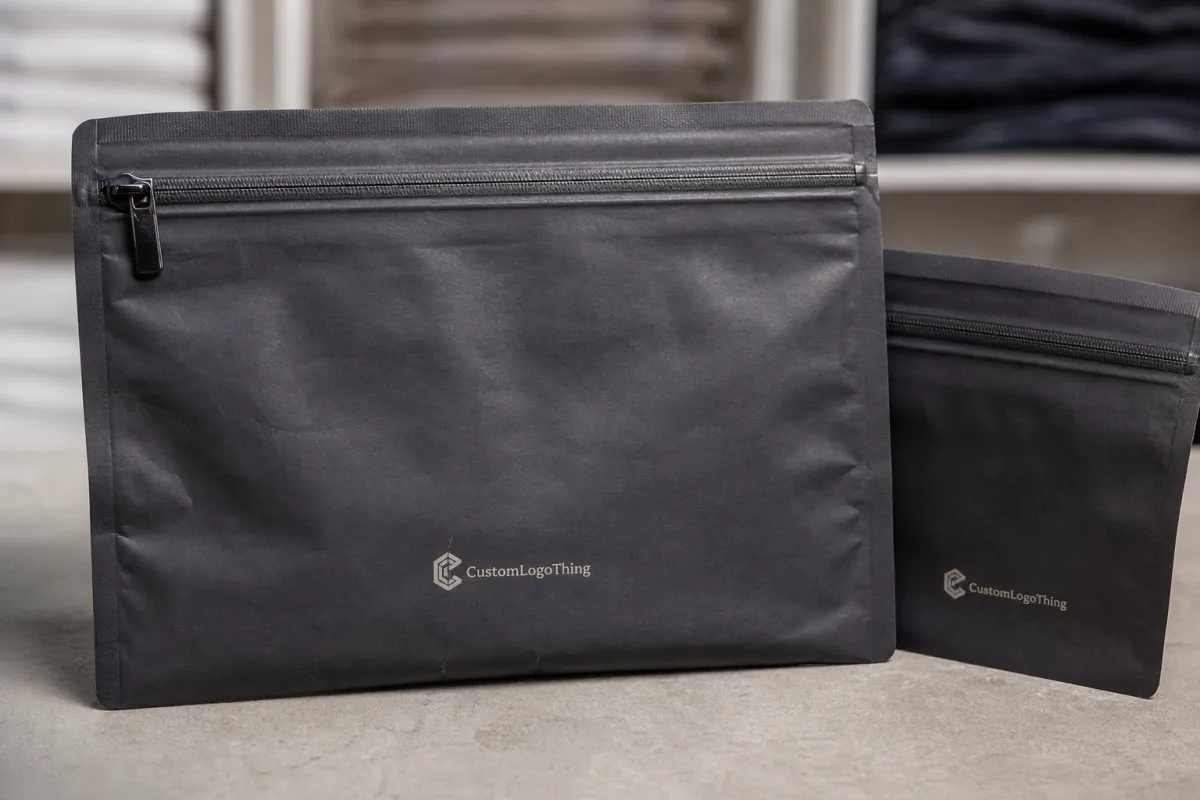
From a packaging buyer's point of view, custom zipper pouch bags for apparel accessories stand out because they protect, present, and organize at the same time. A clear pouch keeps a product visible. A printed pouch gives the brand room to speak. A zipper closure lets the bag stay in use after the first opening. That matters for apparel accessories, where customers often touch the package before they decide whether the item feels worth the price.
Picture a belt buckle sitting in a tray. If it slides loose, it can scuff the finish. If it arrives tangled with straps or tags, the presentation feels rushed. A pouch changes that experience immediately. The same logic applies to glove pairs, scarf sets, cuff links, suspenders, and socks. Custom zipper pouch bags for apparel accessories keep small parts together, which cuts down on handling errors and makes inventory look orderly on a shelf or in a bin.
The format also fits different sales channels without forcing a brand into one look. For e-commerce, the pouch keeps items grouped for picking and packing. For boutique retail, it can hang, stack, or sit inside a display. For wholesale programs, it helps kitting teams separate SKUs quickly. In all three settings, custom zipper pouch bags for apparel accessories support product packaging that feels deliberate instead of improvised.
There is a quiet cost benefit too. A clean pouch can reduce dust, abrasion, and returns caused by surface damage. That does not mean it replaces every protective layer, but it often reduces the need for extra tissue, rubber bands, or loose cartons. When a buyer is trying to tighten the whole packaging design, the pouch can act as both protective wrap and branding surface.
One reason brands choose this format is how easily it adapts to the market. A transparent PE pouch gives a straightforward retail view. A softer EVA or laminated film can create a more refined feel. A simple one-color logo can look restrained and useful, while a full-coverage design can turn the pouch into part of the product display. That flexibility explains why custom zipper pouch bags for apparel accessories show up in everything from entry-level basics to gift-oriented sets.
The common mistake is treating the pouch as a container only. In practice, it becomes part of the customer's judgment about value. If the closure feels weak, the film wrinkles badly, or the print looks off-register, the accessory inside gets dragged down with it. If the pouch is clean, properly sized, and easy to reopen, the whole item feels easier to trust. That is the real appeal of custom zipper pouch bags for apparel accessories: they make a small product feel considered.
How custom zipper pouch bags for apparel accessories work
The construction is straightforward, but the details matter. Most custom zipper pouch bags for apparel accessories are built from a film body with heat-sealed edges and a zipper track at the opening. Depending on the use case, the pouch may also include a hang hole, euro slot, tear notch, or reinforced edge. Those features sound minor, yet they change how the pouch behaves on a retail hook, in a warehouse tote, or inside a shipper.
Clear PE is common when visibility matters most. It is practical, cost-friendly, and easy to inspect on a fulfillment line. PP usually feels crisper and a bit more rigid, which some buyers prefer when the package should stand up visually on a shelf. EVA and laminated films tend to feel softer in hand and can look more premium, especially if the accessory is part of a gift set or a higher-margin brand story. With custom zipper pouch bags for apparel accessories, material choice changes both appearance and handling.
The zipper is more important than many buyers expect. A good zipper track should open smoothly, close firmly, and stay aligned after repeated use. That makes life easier for staff during packing and helps customers reopen the pouch without scissors or tape. For custom zipper pouch bags for apparel accessories, that usability matters because the bag may be opened multiple times during picking, inspection, store handling, or customer reuse.
Branding can be minimal or detailed. A simple logo in one or two colors may be enough when the product itself should stay visible. Full-bleed graphics work better when the pouch is meant to stand in for a larger branded packaging system. Some buyers want matte film for a softer look, while others prefer gloss because it brightens graphics and looks clean under store lighting. White ink underlays can improve readability on transparent or tinted film, but they also add cost and setup time. That is why custom zipper pouch bags for apparel accessories should be specified with the final visual goal in mind, not just the logo file.
Inside the pouch, the fit needs to account for more than the accessory alone. A scarf folded to retail size, a pair of socks with a hang card, or a belt with a tag and insert takes more room than the item does by itself. For that reason, custom zipper pouch bags for apparel accessories are usually sized to the final packed form, not the bare product. That single decision prevents a lot of tight closures and bent corners.
Here is a practical way to think about typical contents:
- Socks, glove sets, and small knit items that need grouping and dust control
- Belts, suspenders, and straps that can tangle in cartons if left loose
- Scarves, ties, and headwear that benefit from a clean fold and a visible brand mark
- Cuffs, jewelry-adjacent accessories, and small add-ons that need separation inside a larger apparel program
Many buyers also use custom zipper pouch bags for apparel accessories as a bridge between products and larger branding systems. If the line already uses custom printed boxes for gift sets or shipping cartons, the pouch can echo the same color palette, icon style, or typography. That creates a more unified package branding experience across product packaging, retail packaging, and transit packaging. If you are comparing those systems, it helps to review the broader Custom Packaging Products catalog so the pouch spec fits the rest of the line.
For shipping validation, some teams use distribution testing such as ISTA procedures to check whether the bag and the packed accessory survive drops, vibration, and compression. A good starting point is ISTA, especially if the pouch is going into e-commerce fulfillment rather than a gentle boutique display. If the accessory includes paper inserts or FSC-certified hang cards, you may also want to align the paper component with FSC guidance. Custom zipper pouch bags for apparel accessories often sit inside a larger system, so the supporting materials matter too.
Cost, pricing, and MOQ for custom zipper pouch bags
Pricing for custom zipper pouch bags for apparel accessories usually comes down to five things: size, film thickness, zipper style, print coverage, and add-on features. A small clear pouch with no print is naturally cheaper than a larger pouch with full graphics, white ink, a hang hole, and a reinforced seal. That sounds obvious, but many buyers compare quotes without realizing that two pouches that look similar on paper can be built very differently.
MOQ matters just as much as unit price. In many custom packaging programs, lower quantities carry a higher per-unit cost because tooling, setup, plate preparation, and press time are spread across fewer pieces. A common range for custom zipper pouch bags for apparel accessories might be 3,000 to 10,000 pieces for a custom run, though simpler formats can sometimes start lower and more complex print builds can push higher. The exact number depends on the supplier, the structure, and how much customization you want.
The cheapest quote is not always the best value. Thin film can wrinkle, puncture, or split more easily. Weak seals can make the pouch feel flimsy in the hand. Poor print registration can make a retail package look rushed, even if the accessory itself is excellent. With custom zipper pouch bags for apparel accessories, a low quote can turn into a higher total cost if damaged goods, repacking, or returns start creeping into the program.
That is why I always tell buyers to look at total landed cost. Freight, carton packing efficiency, warehouse storage, and handling losses all belong in the math. A pouch that saves a cent at the factory can cost more if it takes up extra space in a carton, slows the pack line, or needs more labor to handle. For custom zipper pouch bags for apparel accessories, the real price is not only what you pay the supplier; it is what the package costs once it is moving through your operation.
| Material / Build | Typical Look | Common Use | Relative Cost Signal | Notes |
|---|---|---|---|---|
| Clear PE, plain zipper | Simple, transparent, practical | Basic retail or e-commerce packing | About $0.09-$0.16 per unit at 5,000 pieces | Good visibility and easy inspection, but limited premium feel |
| PP with one-color print | Crisper, slightly stiffer | Retail packaging that needs a cleaner profile | About $0.12-$0.20 per unit at 5,000 pieces | Often chosen when the pouch should stand up visually on shelf |
| EVA or laminated film | Softer, more premium in hand | Gift sets, seasonal programs, branded packaging | About $0.18-$0.35 per unit at 5,000 pieces | More presentation-focused, usually with stronger visual branding potential |
| Printed pouch with white underlay | High contrast graphics, strong logo visibility | Brand-forward product packaging | About $0.20-$0.40 per unit at 5,000 pieces | Better for dark logos or full-bleed design, but print setup is more involved |
The table above is not a quote, but it does show the pattern buyers see again and again: more structure and more print usually mean more cost. Custom zipper pouch bags for apparel accessories can stay surprisingly economical when the design is simple and the quantity is stable. Once you add matte finishes, special windows, complex artwork, or extra hardware, the pricing curve changes quickly.
If you are comparing pouch packaging against hang tags, cartons, or labels, use the pouch spec as part of a broader brand decision rather than a stand-alone purchase. A line that already uses Custom Packaging Products can often simplify costs by standardizing a few pouch sizes across SKUs. That kind of standardization lowers inventory complexity and can improve the overall packaging design system.
One more practical point: shipping method affects perceived cost. Air freight raises landed cost fast, especially on lightweight but bulky packaging. Ocean freight is slower, but usually much friendlier for larger runs. If your custom zipper pouch bags for apparel accessories are tied to a seasonal drop, that timing decision should be part of the pricing conversation from the start.
Process and timeline: from quote to delivery
The cleanest projects follow a predictable path. First, confirm the packed dimensions of the accessory. Then choose pouch style, material, and print approach. After that, Request a Quote, review artwork, approve a sample or proof, and move into production. Custom zipper pouch bags for apparel accessories are not difficult to order, but they do move faster when the buyer supplies complete information on day one.
The details that speed things up are usually the boring ones: flat and packed measurements, exact quantity, color count, desired finish, hang hole or no hang hole, zipper style, and ship date. If you know the accessory includes a hang card, insert, or folded tissue, include that too. Those extras change the pouch size and can shift the cost. With custom zipper pouch bags for apparel accessories, incomplete specs are one of the most common reasons quotes bounce back and forth.
Most delays come from artwork revisions and unanswered questions. A supplier may need to confirm whether a logo should print on one side or both, whether the film is clear or frosted, or whether the customer wants gloss or matte. Color matching can also take time, especially if a brand wants a specific Pantone-like look on a transparent surface. More than one pouch project has slowed down simply because the buyer did not decide whether the pouch should be product-forward or brand-forward. Custom zipper pouch bags for apparel accessories need that decision early.
Typical timing depends on complexity, but a realistic planning window often looks like this: sample or proof review in 3-7 business days, production in 12-20 business days after approval, then transit on top of that. Rush schedules are possible on some jobs, but they reduce flexibility and can raise the price. If your custom zipper pouch bags for apparel accessories need a hard in-hand date, communicate that date before artwork starts, not after.
There is a simple reason the fastest projects usually go smoothly: the buyer has already made the packaging decisions internally. The artwork is ready. The size is checked. The team knows whether the pouch is for storage, shipping, display, or gifting. That is where custom zipper pouch bags for apparel accessories stop feeling like a custom project and start feeling like a clean production order.
Here is the workflow I would recommend:
- Measure the product in its final packed state.
- Choose the pouch material and closure style.
- Prepare artwork with exact logo placement and color notes.
- Request a sample, digital proof, or both.
- Approve only after checking fit, clarity, zipper action, and stackability.
- Release production and reserve enough time for freight.
That order may look basic, but it saves a lot of last-minute scrambling. It also gives your buying team something concrete to compare if you are sourcing custom zipper pouch bags for apparel accessories alongside other product packaging items like cartons, inserts, or labels. A disciplined process tends to produce a cleaner result and fewer surprise costs.
Key factors that affect fit, print, and durability
Fit is the first test. For custom zipper pouch bags for apparel accessories, the pouch should be sized to the item in its final packed state, not just the accessory alone. A folded scarf, a pair of socks with a hanger card, or a belt with a stiff insert can all take up more space than the raw product suggests. If you only measure the item flat on a table, you risk ordering something too tight to close cleanly.
Seal strength and edge width are the next two things I look at. They matter because a pouch that carries a sharp buckle, metal clasp, or rigid tag needs enough margin to resist stress during handling. A narrow seal may be fine for a soft knit accessory, but less ideal for a more angular piece. With custom zipper pouch bags for apparel accessories, the edges do a lot of quiet work, especially in shipping and warehouse movement.
Print choices affect the shopper experience more than many brands expect. Full transparency shows the product clearly, which is useful for items with strong visual appeal. A printed film can frame the item better and make the package feel more branded, but too much ink can hide the product and make the pouch feel heavier. There is no universal answer. The best custom zipper pouch bags for apparel accessories balance visibility and branding instead of chasing one at the expense of the other.
Durability is not only about thickness. Puncture resistance, scuff resistance, moisture protection, and zipper performance all contribute to how the pouch behaves in real use. A bag that looks fine on a desk can fail after repeated carton stacking, friction with other items, or rough pick-and-pack handling. If the pouch is reused by the customer, the closure should still feel reliable after several openings. That is especially relevant for custom zipper pouch bags for apparel accessories that sit in a premium or gift-oriented category.
Sustainability and compliance need a seat at the table too. Some brands want reusable construction so the pouch can live beyond the first purchase. Others want recyclable material choices or clearer guidance for end-of-life disposal. Paper inserts and hang cards may need FSC-aligned sourcing, and shipping programs may need testing notes that align with distribution expectations. Custom zipper pouch bags for apparel accessories are often part of a larger packaging design system, so the film, labels, and inserts should work together rather than fighting each other.
If the item rattles, bends, or scuffs in the pouch, the pouch is the wrong size, the wrong film, or both. The right custom zipper pouch bags for apparel accessories should hold the item with enough clearance to be easy to load, but not so much slack that the product moves around during handling.
If your line uses branded packaging across multiple formats, it helps to align the pouch with the same visual language used in your custom printed boxes, tags, and inserts. That kind of consistency builds trust even when the products themselves are small. A strong package branding system does not need to be loud; it needs to be coherent. Custom zipper pouch bags for apparel accessories can do that job very well.
Step-by-step guide to choosing the right pouch
The easiest way to choose custom zipper pouch bags for apparel accessories is to start with the packed product and work outward. Measure the item as it will actually ship or display, then add clearance for the zipper area, the closure path, and any motion inside the pouch. A pouch that fits the bare product but not the folded version will create trouble on the pack line and a poor experience on the shelf.
Next, sort the use case. A pouch for retail display does not have to behave exactly like a pouch for warehouse storage. A shipping pouch may need more thickness and better seal integrity, while a presentation pouch may need more clarity or a more premium feel. Custom zipper pouch bags for apparel accessories work best when the spec is built around the actual channel, not around a generic idea of packaging.
Then decide how visible the product should be. Some accessories should be seen immediately because the material, color, or texture helps sell the item. Others benefit from a branded frame that makes the package feel more curated. If your team wants the pouch to disappear, a clear film with minimal print is usually the better move. If the pouch should help carry the story, custom zipper pouch bags for apparel accessories can include more graphic treatment and still stay practical.
Sample approval is worth the time. A prototype lets you check zipper action, fit, print placement, and overall hand feel before you commit to a full order. It also shows you how the pouch stacks in a carton or hangs on a display hook. I would rather catch a problem on a sample than discover it in a full run of custom zipper pouch bags for apparel accessories that already arrived at the warehouse.
Here is a simple decision checklist I would use:
- Does the packed accessory fit without forcing the zipper?
- Is the product visible enough for the sales channel?
- Does the film feel sturdy enough for handling and shipment?
- Is the print clear, readable, and aligned with the brand?
- Can the pouch be stocked, stacked, or hung without wasting space?
- Does the budget match the quantity and finish you want?
If you are still narrowing the larger packaging strategy, compare the pouch against the rest of the line through the lens of product packaging, not just one SKU's cost. A pouch may be the best answer for one accessory, while a carton or insert may make more sense for another. The broader Custom Packaging Products range can help you decide where custom zipper pouch bags for apparel accessories fit best inside your assortment.
One other practical note: do not let the packaging style dictate the product choice. Buyers sometimes fall in love with a print idea and then force the product into a pouch that is too small or too fancy for the channel. The better approach is to let the accessory, the handling method, and the retail packaging goal guide the spec. That is how custom zipper pouch bags for apparel accessories stay useful instead of decorative.
Common mistakes and expert tips
The most common mistake is ordering to the accessory's flat size instead of the packed size. A folded belt, a cuff set with a tag, or a scarf with a tissue wrap may need several extra millimeters of room in every direction. If the pouch is too tight, loading slows down and the zipper line can look strained. With custom zipper pouch bags for apparel accessories, small sizing errors show up very quickly in production.
Another frequent misstep is overprinting the pouch when the product should remain the visual lead. A little branding goes a long way. If the film is heavily inked, the accessory can disappear and the package can start to feel dense or overdesigned. Plenty of good products lose retail appeal because the pouch does too much talking. Custom zipper pouch bags for apparel accessories should support the sale, not bury the item.
Thin film is tempting because it lowers the quote. The trouble is that very thin material often scuffs more easily, tears around corners, or feels cheap in the hand. That can hurt confidence even if the contents are fine. For custom zipper pouch bags for apparel accessories, the lowest-gauge option is not always the smartest choice, especially if the pouch will be reused or stacked tightly in transit.
My strongest practical tip is to test with the actual fulfillment team. The people loading the pouch can tell you quickly whether the opening is too narrow, the zipper is awkward, or the product shifts too much inside. They will also notice if cartons overpack, if hooks snag, or if the pouch layout slows down the line. Custom zipper pouch bags for apparel accessories should be judged in the hands of the people who will actually use them.
Also check how the package stacks and ships. A pouch that looks excellent solo may bow, curl, or slide when placed next to other units in a carton. That is where real-world handling matters more than a perfect render. If the line is high-volume, these little details can make a big difference in labor, damage, and rework. That is why repeat-order programs for custom zipper pouch bags for apparel accessories benefit from early testing.
Here are the expert moves that usually save time later:
- Ask for a physical sample or at least a close visual proof before production.
- Confirm zipper smoothness by opening and closing the pouch several times.
- Verify that print stays readable after the product is inserted.
- Check whether the pouch works for both display and shipping, if both are required.
- Keep one or two standard sizes for repeated SKUs whenever possible.
Finally, remember that packaging design is a system. If the pouch feels too plain next to your custom printed boxes, or too busy next to a clean label set, the whole brand can feel inconsistent. The goal is not to make the pouch the star of the show. The goal is to make custom zipper pouch bags for apparel accessories fit the brand's visual rhythm so the customer experiences the line as one coherent package.
Expert tips and next steps
If you are ready to move forward, start with a simple spec sheet. List the exact accessory, its packed dimensions, the quantity by SKU, the sales channel, the needed closure style, and whether the pouch is meant for shipping, display, storage, or gifting. That one page makes custom zipper pouch bags for apparel accessories easier to quote and easier to compare across suppliers.
Then request two or three quotes using the same spec. Do not compare one quote for a plain clear pouch against another quote for a printed frosted pouch and assume the difference is only price. Compare apples to apples: same size, same film, same zipper, same finish, same artwork assumptions. That is the cleanest way to judge custom zipper pouch bags for apparel accessories without getting misled by incomplete pricing.
I would also approve a sample, proof, or close visual reference before releasing a full run. Check the closure feel, the artwork placement, and the way the pouch behaves once the accessory is inside. If your team sells seasonally, map replenishment timing so the pouch does not become the bottleneck when orders spike. In a practical operation, custom zipper pouch bags for apparel accessories should arrive before the sell-through curve accelerates, not after.
If you are building a larger branded packaging system, review how the pouch sits beside your labels, inserts, cartons, and shipping materials. A pouch does not need to match everything perfectly, but it should feel like part of the same brand family. That is where package branding, product packaging, and retail packaging start to reinforce each other instead of competing for attention. Custom zipper pouch bags for apparel accessories do that job best when the specs stay grounded in the product and the channel.
One last point from a buyer's perspective: the best pouch is rarely the fanciest one. It is the one that fits cleanly, opens smoothly, protects the accessory, prints clearly, and lands inside budget. If you get those pieces right, custom zipper pouch bags for apparel accessories can improve presentation, reduce damage, and simplify the work behind the scenes at the same time.
For brands planning a repeatable system, I would treat custom zipper pouch bags for apparel accessories as a standard operating component, not an afterthought. Match the pouch spec to the product, the channel, and the fulfillment plan, and the rest of the packaging line usually settles into place more easily.
Practical takeaway: start with the packed dimensions, choose the film and zipper for the channel, check a sample before production, and standardize a few pouch sizes across SKUs. That is the shortest path to custom zipper pouch bags for apparel accessories that look intentional, pack cleanly, and do not create hidden costs later.
What size should custom zipper pouch bags for apparel accessories be?
Measure the accessory in its final packed state, not flat on the table, because folds, inserts, hang tags, and tissue change the needed room. Leave enough clearance for the zipper area and for easy loading, especially if the item is bulky, rigid, or bundled with multiple pieces. If you have several SKUs, grouping them into a few standard pouch sizes usually makes ordering and inventory much easier.
Are custom zipper pouch bags for apparel accessories good for e-commerce shipping?
Yes, they help keep small items together, reduce tangling and scuffing, and make pick-and-pack easier for the fulfillment team. They also improve the unboxing experience by keeping the product neat and easy to identify when the customer opens the parcel. For shipping use, choose the film thickness and seal strength based on how much handling the pouch will see during packing, transit, and returns.
What affects the pricing of custom zipper pouch bags the most?
Size, material thickness, print coverage, zipper style, and added features like hang holes or matte finishes usually have the biggest impact. Order quantity matters a lot because larger runs spread setup costs across more units and usually bring the unit price down. Freight, storage, and damage rates should also be counted so you can judge the real cost, not just the factory quote.
How long does production usually take?
The timeline usually includes sample or proof review, approval, production, and shipping, so each stage should be planned before you place the order. Artwork changes, unclear measurements, and color revisions are common reasons projects slow down. If the date matters, share your in-hand deadline up front so the supplier can recommend the safest production path.
Can custom zipper pouch bags for apparel accessories be branded on both sides?
Yes, many pouches can be printed on one side or both sides, depending on the material, artwork, and budget. Some buyers use one side for product visibility and the other for branding, care instructions, or a QR code. Ask for a proof that shows logo placement and readability so the final pouch matches the shelf or shipping experience you want.

