For apparel teams packing folded tees, socks, undergarments, and bundled sets by the thousands, zipper pouches are a packaging choice that affects labor, presentation, and damage control. The right spec keeps the line moving, protects the garment, and avoids the pileup of loose film, tape, and repacking at the end of the shift.
For bulk apparel programs, the real decision is usually about fit, closure, Print, and Cost per finished unit. Size, film thickness, zipper style, and artwork coverage all change the quote, so a useful supplier should price the pouch around the garment and the packing workflow. For repeat orders, consistency matters too, which is where Wholesale Programs and a supplier used to reorder discipline can reduce friction on every cycle.
Why custom zipper pouches for apparel bulk order buyers win
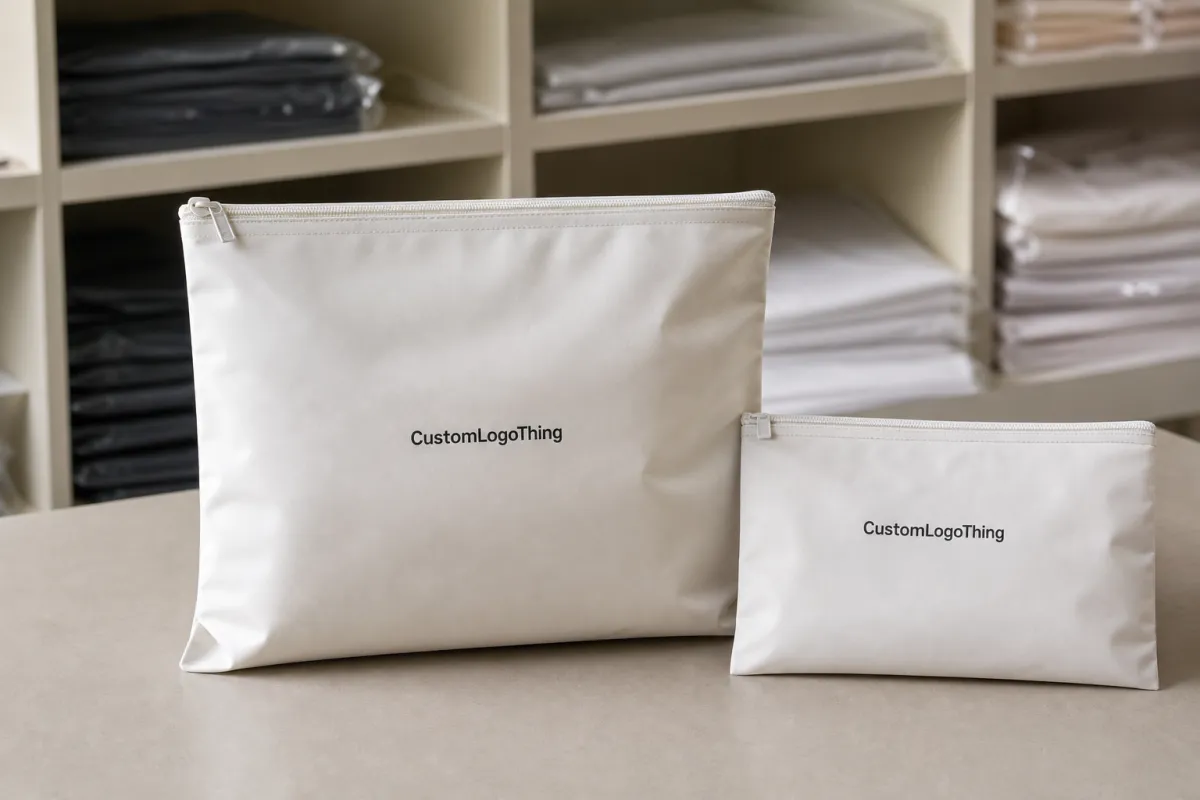
Apparel packaging has to do three jobs at once: protect the product, stay efficient on the packing floor, and look clean enough for the channel it enters. A zipper pouch sits in the middle of those demands. It is lighter than a box, neater than a plain bag, and easier to stack, scan, and sort than loose overpack.
That is why it works well for folded basics and multi-piece sets. A pouch does not need to be fancy to be useful. If it reduces re-folding, keeps sizes separated, and arrives uniform across the lot, it has already paid for itself in workflow terms.
The labor math matters. Seconds add up when a run reaches thousands of pieces. If packers are not re-taping sleeves, fixing wrinkled bags, or sorting mixed sizes, savings appear in labor, scrap, and receiving time before anyone notices the branding. For private label basics, that is often the most important part of the decision.
Practical rule: if the pouch slows packing, it is too clever for bulk apparel. The right one protects the item and keeps the line moving.
Loose poly bags wrinkle and slide. Cartons protect well, but they take more storage room and add cost when the product is already folded and ready to ship. A zipper pouch gives buyers a middle path that often makes more sense than either extreme.
Choosing the right pouch style for folded garments and sets
Most buyers do not need a long list of pouch formats. They need the right one for the item being packed. Flat zipper pouches work well for tees, underwear, socks, and other slim folded goods. Gusseted pouches are better when thickness becomes the issue, especially for bundled sets, layered knits, or multi-item promotions.
Clear film is often the practical choice when visual inspection, barcode scanning, or SKU checks need to happen quickly. Full print makes sense when the pouch itself is part of the branded presentation. Neither is automatically better. A retail set may justify full coverage, while a warehouse-facing bundle may only need a logo zone and enough clarity to identify the contents without opening the pack.
Closure choice changes both price and handling. Standard press-to-close zippers are usually the most economical and easiest to run at volume. Slider zippers feel more consumer-friendly, but they increase cost and are not always necessary for a transit sleeve or a pack that will be opened once and moved into the next stage.
Fit matters more than a spec sheet suggests. A pouch can look right on paper and still fail once the garment is folded the way the team actually packs it. Sleeves pinch, corners catch, or the film looks slack and cheap. A test with a real folded sample is worth more than a dozen guesses.
Use the simplest format that still matches the item:
- Flat pouches suit slim folded apparel and keep carton counts efficient.
- Gusseted pouches suit thicker garments, bundles, and mixed kits.
- Clear windows help when scanning and inspection speed matter.
- Full print works best when the package must carry the brand story.
| Pouch style | Best use | Typical unit range at bulk volume | Notes |
|---|---|---|---|
| Flat clear zipper pouch | Tees, socks, underwear, thin folded apparel | $0.08-$0.16 | Lowest cost, fast to pack, useful for SKU visibility |
| Printed flat pouch | Private label basics, retail-ready packs | $0.18-$0.32 | More branding surface, higher setup and print cost |
| Gusseted zipper pouch | Lounge sets, thicker knits, bundled sets | $0.22-$0.40 | More room, but added material use and freight cube |
The range above is a working benchmark, not a promise. Actual pricing shifts with film thickness, print coverage, closure type, and order size. If the garment is oversized or tightly folded, ask for a fit check before approving production. For buyers comparing Custom Packaging Products, the sample often answers questions the quote cannot.
Material, print, and closure specs that protect apparel
The film is doing the real work, so material choice should be treated as a functional decision rather than a cosmetic one. For apparel, common structures use clear polyethylene in the 2.0 to 4.0 mil range. Thinner film lowers cost, but it may feel flimsy or wrinkle more. Thicker film improves puncture resistance and can hold a cleaner shape, though it adds cost and sometimes weight.
That balance matters because apparel packaging is often judged in hand. A soft film works well for folded knits and lightweight basics. A slightly stiffer film can help retail presentation and keep the pouch from collapsing on shelf. The right choice depends on how the item should behave in transit and how it should look when it arrives.
Print spec changes the result quickly. A simple one-color logo on clear film is a very different job from a full-coverage printed pouch with a white ink underlay. Spot colors can tighten brand consistency, but every extra color adds setup and usually pushes unit cost upward. If the pouch only needs one visible panel to carry the brand, there is no reason to print every square inch of it.
Closure details deserve equal attention. Seal width, zipper engagement, and tear behavior affect both transit performance and the user experience. If the pouch is meant to be reopened multiple times, the zipper should close firmly without forcing the user to fight it. If it is more of a transit sleeve, the design can be simpler, provided it still opens cleanly for inspection and reseals well enough for distribution.
There is also the sustainability question, and it needs to be handled with precision rather than marketing language. Recyclable polyethylene structures and PCR content can be useful, but only if the packaging still protects the garment and runs properly on the line. Claims should match the actual structure and the local recovery system, not just a label on the pouch. For transit expectations and broader pack testing, many buyers reference groups such as ISTA, while carton or insert material may be checked against FSC guidance when fiber certification is part of the brief.
Good packaging design prevents the pouch from doing too much. If the logo needs white ink, the zipper needs a tight seal, and the garment needs a crisp fold, all three should be reviewed together before the order is released. Otherwise the buyer pays for avoidable corrections later.
Pricing, MOQ, and quote factors that change your unit cost
Price in apparel pouch work is driven by a few repeatable variables: size, film thickness, zipper style, print coverage, color count, finishing, and the amount of custom handling required. The more the pouch resembles a standard shape with limited print, the easier it is to hold unit cost down. The more it behaves like a retail presentation piece with multiple colors and specialty features, the faster the price moves.
MOQ usually follows the same pattern. Simple clear pouches may start in the low hundreds or low thousands, while printed or specialty versions often need a higher commitment to cover setup and conversion. Buyers sometimes expect a small pouch to be dramatically cheaper, but setup, printing, and packing labor still matter. The question is not only how much material the pouch uses. It is how much work the pouch creates before it is shipped.
Ask for pricing at several quantities. A 3,000-piece run may land differently than 5,000 or 10,000 pieces, and the best commercial choice is not always the lowest line price. Freight, sampling, and any tooling or plate charges should be visible, because those items can move landed cost more than a small change in unit price.
| Quote factor | What it changes | Buyer takeaway |
|---|---|---|
| Pouch size | Film usage, carton cube, fit | Larger sizes raise material and freight cost |
| Print coverage | Ink, setup, proofing time | Full coverage costs more than a logo zone |
| Zipper type | Material complexity and conversion speed | Sliders and specialty closures usually add cost |
| MOQ | Setup amortization | Higher quantities usually improve unit pricing |
| Sampling | Lead time and approval cycle | Real samples reduce expensive fit mistakes |
For margin-sensitive buyers, the best quote is the one that keeps the apparel team from re-packing finished goods. That is where packaging becomes a production decision, not just a line item. A cleaner pouch spec can save labor, reduce scrap, and keep the order moving without surprise cost later.
Production steps, proofing, and lead time expectations
A clean production run starts with accurate spec intake. The supplier should confirm pouch dimensions, folded garment size, zipper style, print areas, and shipping destination before anything is released. If any of those details are vague, the proof will be vague too, and vague proofs are where delays start.
Proofing should be practical. Digital mockups are useful for layout, but the real value comes from checking the art against a folded sample or a measured fold sheet. If the logo sits near the zipper line, the buyer needs to see where it lands in the closed state. If the pack is tight, a few millimeters can change the difference between a clean fit and a stressed closure.
The production flow is usually straightforward: film preparation, printing, converting, zipper application, sealing, inspection, and final carton packing. What stretches timelines is not usually the machinery. It is artwork approval, sample review, and late changes to the spec. A stable project often runs in about 12 to 15 business days after approval, although larger orders, more colors, or more involved structures can take longer.
To avoid delays, send vector art, confirm Pantone references early, approve the dieline quickly, and keep receiving instructions ready. If the order has a fixed launch date, remember to build in shipping time, not only production time. A schedule that leaves no room for freight is not a schedule; it is a wager.
For distribution-sensitive programs, internal pack tests are worth the time. Check how the pouch behaves in stacked cartons, on a pallet, or during cross-dock movement. A pouch that looks clean in a sample photo but fails when cartons are compressed is not ready for release.
What makes a packaging partner reliable for repeat orders
Repeat buyers do not just want packaging; they want fewer surprises. A reliable partner translates garment dimensions, brand goals, and packing speed into a pouch spec that works on the line and reorders without drama. That matters because the same seal feel, the same print placement, and the same carton counts make forecasting easier month after month.
Communication is part of the product. Fast proof revisions, direct freight updates, and straightforward answers about MOQ or print limits matter once the order becomes routine. If a supplier tells you that a simpler pouch will outperform a more expensive one for your use case, that is usually a good sign. It means the quote is being shaped around the job instead of around upselling.
Sampling support separates useful partners from generic vendors. A good team will review a sample garment, flag fit issues, and say plainly when a pouch is too tight or too loose. That kind of feedback reduces waste and rework, which is why repeat-order buyers value technical guidance as much as price. It is also why organized notes and reorder records matter more than they look at first glance.
The best suppliers think like operations people. They know that a pouch spec that runs cleanly, holds up in transit, and prints consistently is worth more than a clever brochure. That is the standard to expect from any partner handling custom Zipper Pouches for Apparel bulk order programs, especially where the same style returns quarter after quarter.
How to request samples and move your apparel order forward
The fastest route to an accurate quote is complete information. Start with pouch dimensions, garment type, quantity, print colors, zipper style, and the target delivery date. If you have a folded sample size, include that too. A product photo helps, but a measured sample is better because apparel folds can change once the item is packed the way the team actually works.
A simple sequence usually works best: review the quote, check the proof against the real garment, approve a sample if needed, then confirm the production slot. If the order is time-sensitive, say so early. Planning the run and freight is far easier when the ship-to address, receiving window, and carton preferences are known from the start.
Buyers often slow themselves down by asking for a general quote when what they really need is a spec check. Specific input produces a better answer, and that answer reduces back-and-forth later. If the pouches need to coordinate with other branded packaging, include that in the brief. The pouch should support the broader retail experience, not compete with it.
For teams managing more than one packaging program, keep the notes in one place so future buys stay consistent. That is where disciplined Custom Packaging Products planning can save a great deal of repetition during reorder season.
What is the usual MOQ for custom zipper pouches for apparel bulk orders?
MOQ varies by pouch size, print method, and zipper style, but bulk apparel runs often start in the low hundreds or low thousands. If you need multiple sizes or print versions, ask whether the supplier can combine SKUs to help you reach pricing breaks.
How do I choose the right size for apparel zipper pouches in bulk?
Measure the folded garment, then add room for the zipper area and enough clearance so the item slides in without stressing the film. Test the pouch with an actual folded sample, not just a flat measurement, because knitwear and bundled sets can change the final fit.
Can custom zipper pouches for apparel bulk order runs be printed on both sides?
Yes, many pouch structures can be printed front and back, but coverage, color count, and film choice affect price and lead time. If you need clear product visibility, ask about partial print zones or a window layout instead of full coverage.
How long does production usually take after approval?
Timing depends on artwork, sampling, quantity, and current production load, so the best answer comes from a confirmed spec and proof. Build in time for sample review and shipment planning, especially if the order must arrive before a launch or restock window.
What information should I send for an accurate quote?
Send pouch dimensions, apparel type, quantity, print colors, zipper style, packaging destination, and your target delivery date. If possible, include a folded sample size or product photo so the supplier can recommend a pouch that fits cleanly and quotes correctly.

