Apparel packaging pricing can look straightforward until the spec starts moving. A pouch that appears identical at first glance can shift in cost once film thickness, zipper style, print coverage, and freight are all put into the same quote. That is why the most useful Zipper Pouches for Apparel packaging cost breakdown starts with the build, not the headline number. Two suppliers may quote the same size, yet one is pricing a light stock bag and the other is pricing a heavier retail-ready pouch with custom print and tighter tolerances.
For buyers, the aim is simple: compare packaging that actually performs the same job. The pouch should hold folded garments neatly, protect them in transit, and present them cleanly enough that the item looks finished when it reaches the store or warehouse shelf. If the spec is clear, cost decisions become much easier. If the spec is vague, the cheapest quote is often the most expensive one after revisions, waste, and repacking are counted.
That logic applies across branded packaging, retail packaging, and related custom packaging products. Define the product first. Price the packaging second. It saves time, and it usually saves money too.
Zipper Pouches for Apparel Packaging Cost Breakdown
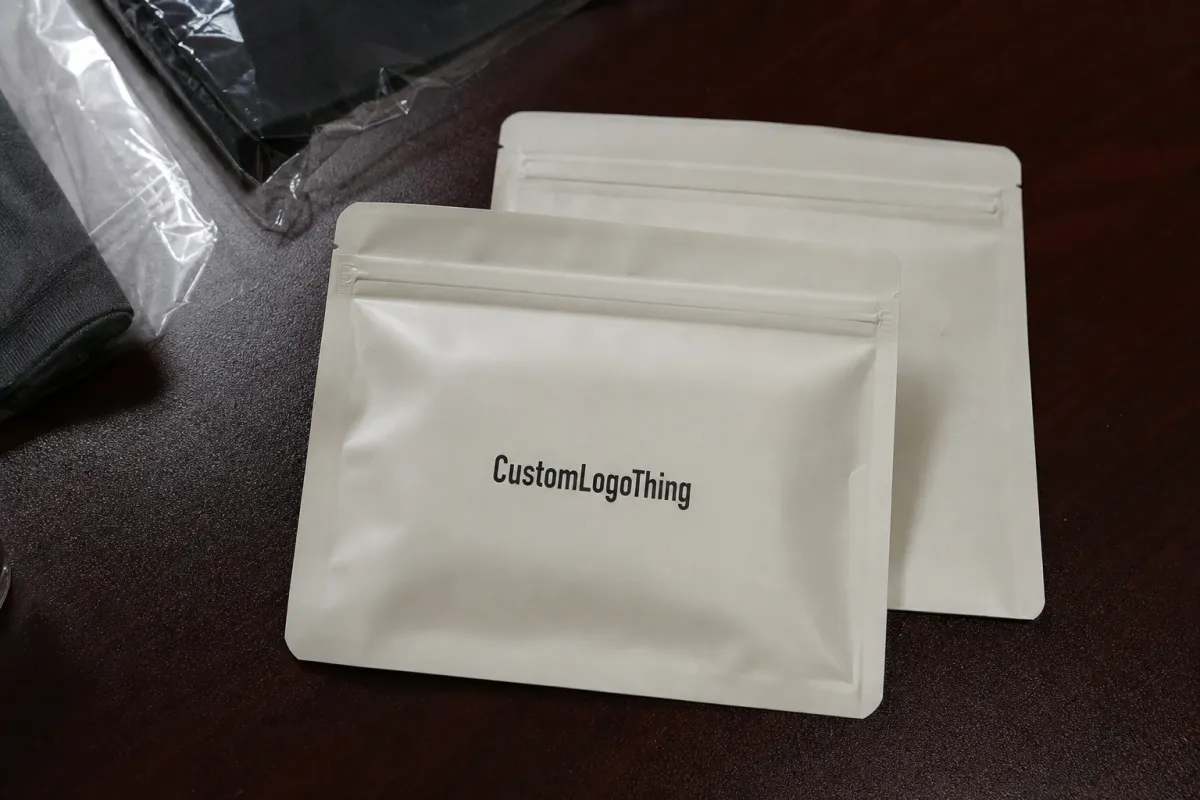
The easiest mistake is to assume every pouch with the same dimensions should price out the same. In practice, resin choice, film gauge, zipper profile, and printing method can move the number more than buyers expect. A 10 x 12 inch pouch in 2 mil clear LDPE with a basic zipper is not in the same cost class as a 10 x 12 inch pouch in 4 mil frosted CPP with a full-face printed design and hang hole. The footprint matches. The build does not.
For apparel, the pouch has to do three jobs at once. It keeps folded clothing compact, it makes counting and handling easier in the warehouse, and it gives the customer or store team a package that looks intentional instead of improvised. That matters for T-shirts, socks, underwear, swimwear, activewear tops, and small multi-piece sets. A well-sized pouch also reduces frustration on the packing line. Too loose, and the item slides around. Too tight, and the zipper gets stressed every time someone closes it.
Practical packaging rule: if the pouch slows packing, distorts the garment, or creates rework, the low quote is already losing money.
The value is not decorative. It is operational. A consistent pouch spec lowers repacking, reduces product handling marks, and gives merchandising teams a cleaner presentation. That is why the real breakdown has to separate material, decoration, and logistics instead of treating the bag as one flat cost. Once those pieces are visible, buyers can decide which upgrade is worth paying for and which is just visual noise.
How the pouch works for shirts, socks, and folded sets
Most apparel zipper pouches are made for flat-folded items. T-shirts are the standard case, but socks, underwear, knitwear, and lightweight promotional sets also fit the format well. The pouch keeps the bundle aligned and easy to count. In distribution centers, that matters more than many teams expect. A package that stays square moves through sorting and replenishment with less handling.
There are a few common versions. A clear-front pouch shows the garment directly. A frosted film softens the look and hides scuffs better. A fully clear pouch keeps the product as the visual focus. Many buyers also specify a resealable zipper closure so the pouch can be opened and closed during receiving, fulfillment, store checks, or customer use without tearing the package apart. That small feature is not cosmetic. It affects how long the package remains useful after first opening.
Hang holes, euro slots, and tear notches change how the pouch moves through the supply chain. A hang hole supports retail display. A tear notch helps the consumer open the bag cleanly. A euro slot is useful if the pouch hangs on a fixture or hook. None of these add much drama to the visual design, but each one can change tooling, packing, or run time.
A plain polybag may still be enough for bulk carton packing, especially if the package never needs to be displayed. A zipper pouch earns its keep when the item needs to look ready for sale, return, or repeat handling. It also helps when the same item may be sampled, rebagged, or checked multiple times before final sale. That is common with apparel, especially where inventory passes through more than one team before it reaches the customer.
The most accurate quote starts with the real folded item, not the flat garment dimension. A shirt that measures one size on paper can require a very different pouch once it is folded, tucked, and packed with tags or inserts. If the supplier is working from assumptions instead of an actual packed sample, the price will look tidy but the production result may not.
Material, size, and closure specs that shape the quote
The main cost drivers are usually easy to list: resin type, film thickness, finished size, zipper style, and seal width. Those five details explain most of the pricing spread in Zipper Pouches for Apparel packaging. Buyers often compare LDPE, LLDPE, and CPP because each one changes the balance between clarity, stiffness, feel, and price. LDPE is often the economical option, flexible and familiar. CPP typically feels firmer and can look cleaner for retail presentation. LLDPE tends to sit in the middle for toughness and handling.
Thickness matters in a very literal way. A 2 mil bag uses less material than a 4 mil bag, so it usually costs less, but the heavier pouch also resists scuffing better and feels more substantial in hand. That can matter for premium basics, gift sets, or products that will be opened and closed more than once. If the garment is light and folded tightly, a thinner film may be enough. If the item is bulkier or the pouch is meant for repeated handling, a heavier gauge can reduce damage and returns.
Optional features add cost faster than many buyers expect. Gussets create more usable volume. Hang holes need extra consideration in cutting and finishing. Anti-static additives may be needed for certain fabrics or environments. White ink underlay, matte surfaces, and frosted treatments all change the production flow. Even the zipper choice matters. Standard reseal tracks, reinforced profiles, and tamper-evident styles do not cost the same to source or run.
- Film thickness: heavier film raises material cost, but it improves feel and scuff resistance.
- Zipper style: standard, reinforced, or tamper-evident profiles affect tooling and run speed.
- Print coverage: one-panel branding is simpler than full-coverage decoration on both faces.
- Dimensional tolerance: define what variation you can accept so the quote reflects real production.
Tolerance is one of the details buyers forget most often. A pouch that varies by a millimeter or two may still be perfectly usable, but only if that allowance is stated up front. If the tolerance is too tight, the quote may climb because the supplier has to control waste more aggressively. If the tolerance is too loose, the final bags may feel inconsistent from carton to carton. Clear boundaries keep both cost and quality in a workable range.
Pricing, MOQ, and landed-cost variables to compare
The useful way to price pouches is to break the quote into its real parts: raw film, zipper track, print setup, cutting, sealing, packing, freight, and any duty or import charge. For custom work, setup costs matter most on smaller runs. For larger programs, raw material and freight take a bigger share of the total. That is why the lowest ex-factory quote is not always the lowest landed price. Sometimes it is not even close.
| Option | Typical spec | Indicative unit cost at 5,000 pcs | MOQ tendency | Best fit |
|---|---|---|---|---|
| Plain stock pouch | Clear LDPE, 2-3 mil, standard zipper | $0.08-$0.16 | Low to moderate | Bulk ship-only packing, simple apparel sets |
| One-color custom print | Clear or frosted film, one-panel logo, standard zipper | $0.14-$0.24 | Moderate | Branded packaging with controlled spend |
| Full-coverage branded pouch | Heavier film, multi-color print, white underlay, hang hole | $0.24-$0.48+ | Higher | Retail packaging with stronger shelf impact |
Those are working ranges, not fixed market prices. Freight can move them quickly, especially on lower-value packaging where shipping is a larger share of the total. MOQ usually helps unit cost as volume rises, but it also increases inventory risk if the size, logo, or pack count is still changing. Many buyers do better asking for tiered pricing at 3,000, 5,000, and 10,000 units so the cost curve is visible before they commit.
Ask for both ex-factory and landed numbers if possible. A quote that looks efficient in the factory can become less attractive once cartons, export handling, duties, and final delivery are added. If the packaging will travel through a distribution network before it reaches a store, ask how the pouch behaves under compression and carton stacking. Suppliers who think about transit, not just print quality, usually produce fewer surprises later. Some teams use ISTA-style testing logic for this reason: it gives a better picture of how the package survives the journey instead of how it looks in a still photo.
Process, timeline, and production steps from sample to ship
A clean ordering process reduces both delay and error. The usual sequence is spec intake, artwork review, proof approval, production, inspection, packing, and shipment. Miss one of those steps, or leave it too vague, and the schedule gets harder to trust. The fastest orders are the ones that begin with a folded sample, a finished size, a clear print file, and a delivery destination already confirmed.
- Spec intake: define the garment, folded size, pouch size, thickness, zipper type, and print coverage.
- Artwork review: confirm placement, colors, bleed, and any white underlay or special finish.
- Proof approval: sign off on dimensions, artwork layout, and carton pack counts before production starts.
- Production: source or extrude film, print, cut, add the zipper, and seal the pouch.
- Inspection and packing: check size, zipper function, seal strength, and carton configuration.
- Shipment: book freight early enough that the finished order does not wait for transport.
Simple stock-style pouches move faster than printed runs. Special finishes, heavy film, and custom zipper profiles add time. For many programs, a straightforward stock order can move in roughly 12 to 15 business days after approval. More customized runs need more time for proofing and production, and freight can add calendar days even after the goods are finished. That is normal, not a sign that the order is failing.
Late artwork edits are one of the main causes of delay. So are unclear dimensions and changing pack counts. A good spec sheet shortens the back-and-forth, and fewer revision cycles usually mean fewer mistakes. The same approach works whether the pouch is part of apparel packaging, custom packaging products, or a larger branded packaging program with several SKUs that need to match.
Print, finish, and branding choices that move unit cost
Branding is where many pouch quotes separate sharply. A one-color logo on a clear film is usually the lowest-cost custom option. Full-face print, multi-color branding, and white ink underlay all raise setup and run cost. A matte or frosted finish can improve the visual feel, but it can also reduce transparency and change how the item photographs for ecommerce. That matters if product images have to stay consistent across marketplaces, direct-to-consumer pages, and retail line sheets.
There is a tradeoff, and it should be treated honestly. Higher visual impact often costs more. That does not mean every item needs the strongest possible decoration. A large run of basic tees may do best with restrained branding and a clean clear pouch. A premium lounge set may justify a fuller treatment because the packaging becomes part of the product story. The right answer is usually the lightest version that still supports the channel, the margin, and the brand look.
Some buyers add paper inserts, care cards, or hang tags inside the pouch. If that is part of the program, ask whether the supplier can coordinate with your print vendor or source FSC-certified stock. Those choices do not change pouch price much on their own, but they do affect the overall packaging system and how polished it feels. A coordinated package looks deliberate. A pile of separate parts assembled late tends to look patched together.
Compared with a printed carton, a pouch can stay economical if the decoration stays restrained. The same rule applies across most packaging: add only the features that change product handling, shelf impact, or brand recognition. Extra print is easy to approve in a mockup and harder to justify in volume if it does not change sales behavior.
What to look for in a supplier before you place the order
Price matters, but repeatability matters more. A supplier should be able to explain dimensional control, zipper smoothness, seal strength, and carton packing without drifting into vague language. If those details are hard to pin down before the order, they usually become harder after the order. Buyers should ask for sample packs, spec sheets, and clear proof of how the pouch closes and reopens before they sign off.
A good test is simple: judge the supplier on consistency, not just sample quality. A polished one-off sample is not difficult to make. A stable result across cartons and repeat runs is the real marker of a dependable program. That is where an understanding of unit cost, MOQ, and production limits makes a difference.
- Clear drawings: look for finished size, zipper placement, seal width, and tolerance notes.
- Fast quote response: quick replies often mean the costing process is already structured.
- Freight clarity: ask how cartons are packed, what terms apply, and whether duties are included.
- Reorder stability: confirm that future runs can hold the same spec and print quality.
A supplier who talks plainly about tradeoffs is usually easier to work with than one who only promotes the lowest number. That matters for apparel pouches, retail packaging, and the broader line of custom packaging products that need to behave the same way across channels. Good packaging partners reduce surprises. Poor ones create them and leave the buying team to clean up the result.
Next steps to request an accurate quote and approve the run
Before asking for pricing, gather the details that actually shape the quote: garment type, folded size, pouch size, print coverage, quantity, and ship-to location. If you can send a folded mock-up or sample, even better. That lets the pouch be sized for the real packed item rather than an assumption. It also cuts down on revision time.
It helps to ask for two versions in the same quote. A standard version gives you the lower-cost baseline. A branded version shows the premium for custom print or finish upgrades. Side-by-side pricing makes the tradeoff obvious. If the added decoration does not support the margin or the channel, the answer is usually right there in the numbers.
For most apparel programs, the smartest move is not the cheapest bag on the page. It is the pouch spec that protects the product, fits the packing process, and keeps the Zipper Pouches for Apparel packaging cost breakdown clear enough that operations, finance, and merchandising can all review it without confusion. Start with the garment size, quote the same pouch in two finishes, and compare landed cost against the value of the package in the channel.
What drives zipper pouch cost for apparel packaging the most?
Film thickness and resin choice usually have the biggest effect on the base price. Print coverage, color count, and special finishes can push the cost higher because they add setup and handling. Zipper style, hang holes, gussets, freight, and duties also change the final landed number.
What MOQ should I expect for custom apparel zipper pouches?
MOQ depends on size, print method, and whether the pouch is stock or fully custom. Plain or lightly modified pouches usually allow lower quantities than fully custom printed runs. Tiered pricing helps you see how much the cost changes at different volumes.
Are printed zipper pouches more expensive than clear ones?
Yes. Printed pouches cost more because of setup, ink, and extra production handling. A small one-color logo is usually the lowest-cost custom option. Full-coverage print or white underlay increases cost but can improve shelf impact and brand visibility.
How long does a custom zipper pouch order usually take?
Timing starts with spec review and proof approval, then moves into production and shipping. Stock-style pouches usually move faster than custom printed or specially finished pouches. Freight booking and destination location can add days after production is complete.
What should I send to get an accurate quote quickly?
Send the garment type, folded size, pouch size, quantity, print coverage, and target delivery date. Include artwork files or a logo reference, plus any finish or zipper preferences. Add the ship-to location so freight can be included from the start.

