Dad Hats Unit Cost Breakdown for fashion boutique orders starts with the blank cap, but the finished number is shaped more by decoration, setup, packaging, and freight than by the cap body alone. For boutique buyers, that matters because the landed cost determines whether the style leaves room for margin or feels too expensive before it reaches the shelf.
The item looks simple on paper: a low-profile crown, curved brim, and strap-back closure. In production, though, small decisions add up fast. A better fabric, a cleaner closure, a woven label, or a more protective pack-out can move the unit cost more than a modest logo change, especially when the order is only 50 to 300 pieces.
The safest way to read a quote is as a landed-cost sheet. Cap body, decoration, setup, packaging, and freight should each be visible. If those pieces are bundled together, comparing suppliers becomes guesswork.
Why boutique hat orders change unit cost faster than the logo
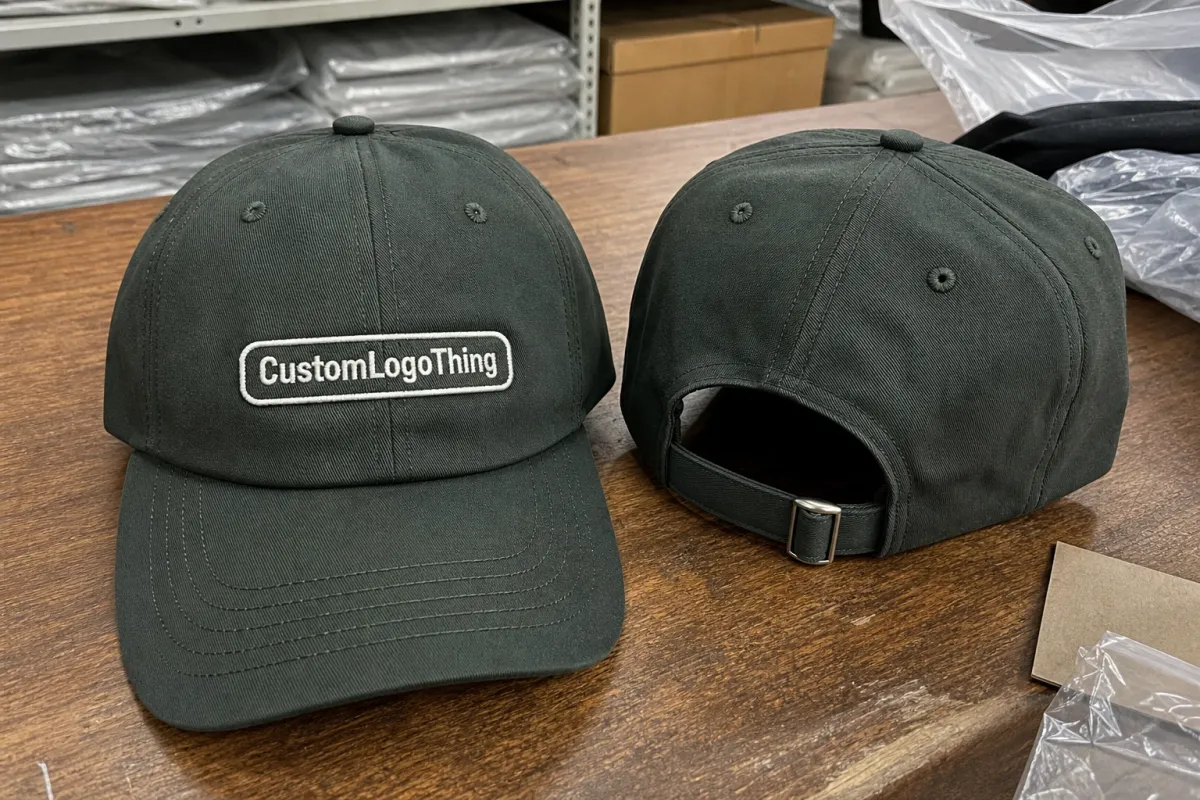
Boutique hat orders are not just buying blanks. They are buying a retail-ready object that has to photograph cleanly, hold its shape on display, and survive handling. That shifts the conversation from simple apparel sourcing to a mix of product design and production control.
Small runs magnify fixed charges. A digitizing fee, a label setup, or a custom hangtag can look minor in isolation, but when spread across 50 hats it changes the unit cost quickly. With low quantities, overhead matters more than material savings, which is why the cheapest blank is not always the cheapest finished product.
- Decoration complexity often outweighs the blank cap price.
- Label changes can add setup fees that are easy to miss in headline pricing.
- Pack-out details such as polybags, inserts, and barcode stickers affect labor.
- Freight and repacking can erase small savings on the cap body itself.
Order splits also change the math. If one style becomes two colors, two thread charts, or two packaging formats, the base rate may look stable while the total cost rises. That is a common boutique trap because variety feels small until the invoice arrives.
Quality control is another hidden cost. If the sample comes back with the wrong crown depth, loose closure stitching, or embroidery too low on the front panel, the buyer loses time and may pay for revisions. A slightly better blank can save money if it reduces rework. Cheap on the front end is not always cheap overall.
Construction details that lock in a clean retail-ready dad hat
The standard silhouette is usually six panels, curved brim, low or mid profile, and an unstructured or lightly structured crown. That shape works because it feels casual without looking sloppy. In boutique retail, the hat has to do two jobs at once: sit nicely on a hook and look polished in product photography.
Brushed cotton is common because it feels soft and takes embroidery well. Garment-washed twill gives a more broken-in, fashion-forward look. Garment-dyed fabrics can deepen color, but buyers should expect more shade variation between lots. That variation may be acceptable, but it should be acknowledged early so expectations stay realistic.
Construction quality is usually easier to feel than to describe. A clean sweatband, tight seam tape, and a closure that adjusts without snagging all shape the customer’s impression. Front-panel stability matters too: if the fabric is too thin, embroidery can pucker; if it is too stiff, the hat loses the relaxed profile that sells the category.
Closures also affect the final feel. A metal buckle can look sharper than a basic plastic closure, but it may add cost and weight. A fabric strap keeps the silhouette softer. If the brand wants a more elevated finish, a better closure and a cleaner inside seam often do more than a louder graphic.
Dad hats unit cost breakdown for fashion boutique orders
A workable cost breakdown separates the order into parts that can be compared across suppliers: cap body, decoration, setup, packaging, and freight. That sounds obvious, but quotes often hide one or two of those pieces. A low headline number can still be expensive if it excludes bagging, labels, sampling, or shipping.
The ranges below are planning figures for small-to-mid boutique runs. They are not fixed prices. Fabric quality, decoration method, carton requirements, and shipping route all change the total, but the pattern stays the same: higher quantities lower the overhead per unit, while more decoration and more pack-out steps push the cost up.
| Order tier | Blank cap | Decoration and setup | Packaging | Freight | Estimated landed unit cost |
|---|---|---|---|---|---|
| 50 pieces | $2.60-$4.80 | $1.50-$4.50 | $0.35-$1.05 | $1.25-$3.75 | $5.70-$14.10 |
| 100 pieces | $2.30-$4.20 | $1.00-$3.25 | $0.28-$0.85 | $0.75-$2.20 | $4.33-$10.50 |
| 300 pieces | $2.05-$3.70 | $0.65-$2.40 | $0.18-$0.60 | $0.35-$1.30 | $3.23-$8.00 |
The pattern is simple: the blank cap may only drop a little as quantity rises, but setup charges spread out much more dramatically. That is why a 300-piece run can look disproportionately cheaper than a 50-piece run even when the style is unchanged.
For boutique planning, the usual line items are:
- Blank cap cost based on fabric, structure, and closure.
- Decoration cost for embroidery, patch application, or specialty placement.
- Digitizing or setup charges for artwork preparation and machine programming.
- Tooling fees when a molded patch, rubber piece, or die-cut element is involved.
- Packaging for polybags, hangtags, inserts, or barcode labels.
- Freight from factory to warehouse, distribution center, or store receiving dock.
Compare landed cost, not just blank cap price. For boutique orders, that is usually the only number that protects margin.
Sample terms are worth checking as well. Some suppliers include a basic proof, some charge for it, and some refund the fee only if the bulk order is placed. The same applies to carton labeling, master carton counts, and whether each hat ships in an individual bag. Missing those details early can create surprise charges later.
Decoration placement changes cost too. Front-only embroidery is usually the most predictable and economical option. Add a side mark, back embroidery, or under-brim print, and labor rises. Those extras can make sense at a higher retail price, but only if the market supports them.
Production steps, lead time, and turnaround expectations
Most dad hat orders follow the same sequence: art review, proof approval, sample or strike-off, bulk production, inspection, packing, and shipment. The process is straightforward until one stage changes. A logo adjustment after proof or a thread color change after sample approval can extend the schedule fast.
- Art review: the supplier checks logo size, stitch count, and placement.
- Mockup approval: colors, closure, panel layout, and decoration method are confirmed.
- Sample or strike-off: the first physical proof shows how the logo sits on the cap.
- Bulk production: cutting, sewing, decoration, and assembly move in sequence.
- QC and packing: finished hats are inspected, bagged, carton-labeled, and staged for shipment.
For straightforward embroidery orders, bulk production often lands in the 10-15 business day range after proof approval. Add a sample round or custom labeling, and the window can stretch to 15-20 business days or more. That is still normal; the key is whether the buyer has enough time for approval, shipping, and store receiving.
Lead time also affects cost. Faster freight can cost more, and rush production may limit the factory’s ability to combine jobs efficiently. A launch date that looks safe on paper can still force a more expensive shipping service once cartons are ready. Time is part of the cost structure whether it is listed separately or not.
Most delays come from predictable issues: late artwork changes, slow color approval, missing shipping instructions, or unclear receiving rules. If the hats are going to multiple stores, carton labels, carton counts, and PO references should be settled early. A production floor can make hats quickly; it cannot guess the destination.
Decoration choices that move retail margins up or down
Decoration is where a dad hat starts to look generic or intentional. Flat embroidery usually sits at the low end of the cost curve when the artwork is clean, the thread count is modest, and the placement is simple. It wears well, reads clearly, and keeps labor predictable.
Woven patches help when the logo has tiny lettering or delicate line work that would not stitch cleanly. They sharpen detail, but they also add setup and attachment steps. That matters more on short runs because fixed costs are spread over fewer hats.
Leather patches and rubber patches create a more directional look, but they behave differently in production. Leather often suits heritage or workwear styles. Rubber reads more sporty or modern and usually introduces mold or tooling charges on the first order. Buyers should treat that upfront cost as part of the design, not as an afterthought.
3D puff embroidery can lift the logo off the surface and make it stand out in photos. It works best with bold, compact graphics. Thin or wide artwork often looks crowded, which is why stitch proofs matter before approval.
Multiple placements increase both labor and risk. Front plus side, or front plus back, or front plus under-brim all add steps. The extra decoration can support a higher retail ticket, but only if the buyer expects the market to pay for it. More decoration is not automatically better margin.
The practical comparison is decoration value, not decoration cost alone. A $1.20 increase in unit cost may be trivial on a hat retailing at $38 and too much on one retailing at $24. The right choice depends on the assortment, the target price, and how much work the design needs to feel finished.
Pre-shipment quality checks and boutique receiving details
Before shipment, the order should be checked twice: first for appearance, then for handling. Appearance checks cover embroidery placement, stitch tension, thread color, crown symmetry, and brim shape. Handling checks cover closure function, label placement, and whether the cap holds its profile after being folded, bagged, and packed.
Boutique receiving teams also care about practical details that are easy to overlook during approval. Cartons need clear labels. Counts need to match the packing list. Color splits should be obvious. If each piece is bagged individually, the bag should protect the finish without crushing the crown or trapping too much moisture.
Variation is normal in textile production, especially on washed or garment-dyed styles. A slight softness shift from piece to piece is acceptable. Small differences in thread sheen can happen. What should not pass is crooked placement, broken stitching, a warped brim, or a closure that sticks.
Inspection matters because distribution can be harder on hats than buyers expect. Cartons get stacked, shifted, and sometimes dropped. A box that looks strong in the factory may still need better inserts or tighter packing if the route is rough. Transit-test planning helps identify weak points before they become damaged goods. For paper-based cartons or inserts, FSC-certified sourcing can matter if the brand tracks material claims in packaging.
If the order ships to more than one store, carton labeling should match the receiving system exactly. Style code, color code, PO number, and carton count are not decorative details. They reduce manual sorting and lower the odds of a case sitting in the back room because nobody can identify it quickly.
Good packing does not make a bad product good, but it does preserve the product the buyer approved. That distinction matters in boutique work. The order has to arrive ready to sell, not ready to be repaired.
What to send for a quote and how to place the order
A useful quote starts with clean inputs. Send the artwork file, target quantity, preferred closure, decoration method, packaging requirements, and in-hand deadline. If the hats are for a pop-up, seasonal launch, or multi-store drop, say so. The channel affects pack-out assumptions more than many buyers expect.
Ask for a line-item quote. The cap body, decoration, setup, packaging, and freight should each appear separately. That is the easiest way to compare suppliers without being misled by a low headline number. If a quote leaves out bagging or carton labels, it is not cheaper; it is incomplete.
Approval method also matters. A digital mockup is fast, but it cannot show hand feel, closure quality, or how embroidery sits on the crown. A physical sample takes longer, yet it reduces surprises. For a repeat boutique program, the first approval round sets the standard for future reorders.
One practical habit helps a lot: compare suppliers only after you normalize the spec. Use the same cap body, logo size, decoration method, packaging, and shipping terms. If one supplier quotes a heavier cotton twill and another quotes a thinner washed fabric, the numbers are not truly comparable.
Confirm the spec in writing before production begins. That sounds administrative, but it prevents the quiet drift that turns a reasonable quote into an expensive correction. In boutique ordering, details are the margin.
What drives dad hat unit cost the most for boutique orders?
Decoration method usually causes the biggest swing, followed by setup charges, packaging, and freight. Quantity matters too, because a 50-piece order absorbs fixed costs very differently than a 300-piece order. If the cap body is inexpensive but the logo needs patch tooling or multi-location embroidery, the finished unit cost can rise fast.
What MOQ should I expect for fashion boutique dad hats?
MOQ depends on the supplier, but boutique-friendly programs often start in small test quantities and improve as the run gets larger. The better question is how pricing changes across tiers. A 100-piece order may be materially better priced than a 50-piece order even if the style is identical.
Which decoration option usually gives the lowest unit cost?
Simple flat embroidery is often the most economical choice when the artwork is clean and uses limited thread colors. Woven patches, 3D puff, rubber patches, and multiple placements usually cost more because they add labor, setup, or tooling. The lowest-cost option is not always the best retail choice, but it is usually the easiest to control.
How long does a boutique dad hat order usually take?
Simple orders often take about 10-15 business days after proof approval, while orders with samples, custom labels, or extra decoration can take 15-20 business days or more. Shipping time sits on top of production time, and it can shift the landed cost if faster freight is needed to meet a launch date.
What should a line-item quote include for dad hats?
A solid quote should show the cap body, decoration, setup or digitizing, packaging, freight, and any special labeling or tooling fees. It should also state MOQ, sample terms, and turnaround assumptions. That is the only practical way to compare a dad hats Unit Cost Breakdown for fashion boutique orders without getting pulled off course by a low headline number.

