Buyer Fit Snapshot
| Best fit | Die Cut Hang Tags Supplier projects where brand print, material claims, artwork control, MOQ, and repeat-order consistency need to be specified before quoting. |
|---|---|
| Quote inputs | Share finished size, material target, print colors, finish, packing count, annual reorder estimate, ship-to region, and any compliance wording. |
| Proofing check | Approve dieline scale, logo placement, barcode or warning zones, color tolerance, closure strength, and carton packing before bulk production. |
| Main risk | Vague material claims, crowded artwork, missing packing details, or unclear freight terms can make a low unit price expensive after revisions. |
Fast answer: Die Cut Hang Tags Supplier: Material, Adhesive, Artwork, and MOQ should be specified like a repeatable production item. The safest quote records material, print method, finish, artwork proof, packing count, and reorder notes in one written spec.
Production checks before approval
Compare the actual filled-product size with the drawing, then confirm tolerance on folds, seals, hang holes, label areas, and retail display edges. Reserve space for logos, QR codes, warning copy, and material claims before decorative graphics fill the panel.
Quote comparison points
Review material grade, print process, finish, sampling route, tooling charges, carton quantity, and freight assumptions side by side. A quote is only useful when the supplier can repeat the same color, closure quality, and packing count on the next order.
Die Cut Hang Tags Supplier: What to Know Before Buying
A die cut hang tags supplier does a lot more than print a pretty card and punch a hole. The job is to turn a brand idea into a tag that cuts cleanly, hangs straight, survives handling, and still looks sharp after it has been packed, shipped, and pawed over on the retail floor. That is the difference between a tag that looks good on a screen and one that actually behaves in production. A die cut hang tags supplier matters more than most teams realize, especially once paper, ink, tooling, and real-world wear enter the chat.
For Custom Logo Things, the practical side of hang tags is usually where the best results are won. Shape, stock, finish, and turnaround all affect the final piece, and a good die cut hang tags supplier helps you balance those choices without turning a simple tag into a budget problem.
What a Die Cut Hang Tags Supplier Actually Does
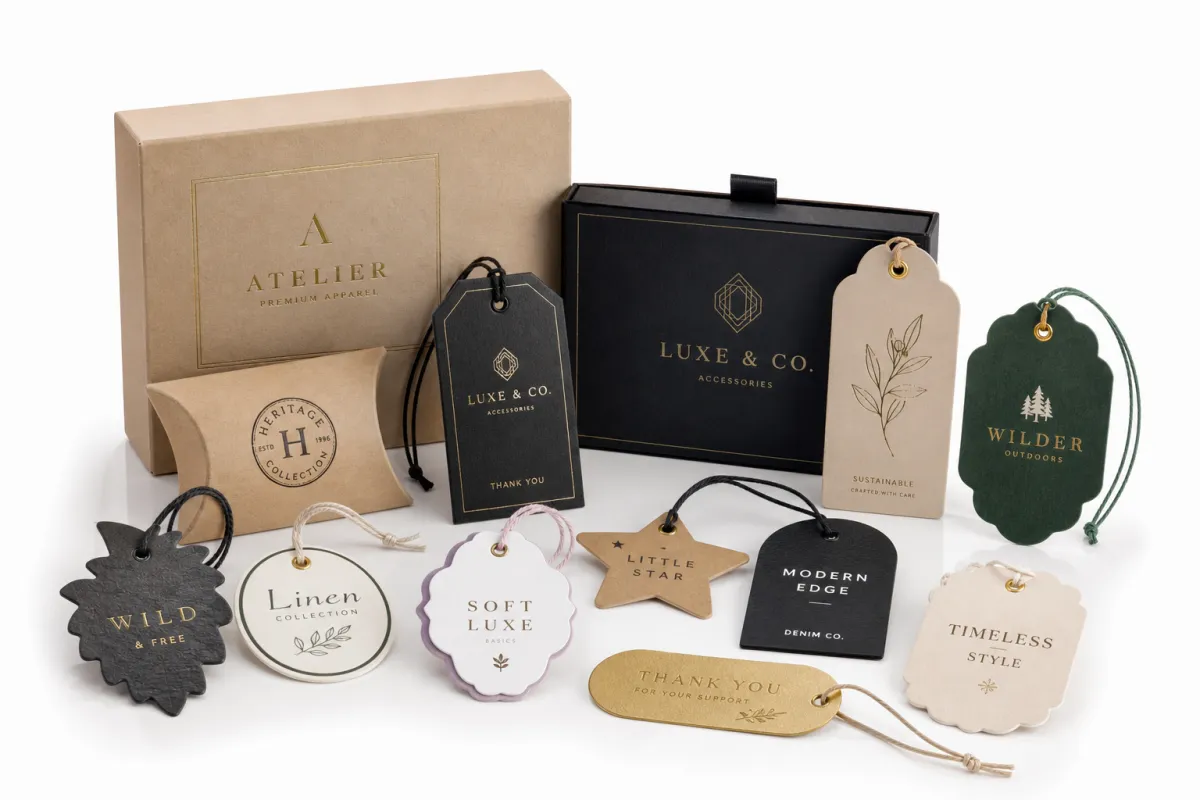
A die cut hang tags supplier takes a flat printed piece and gives it a shape that supports the brand instead of burying it. That sounds simple until you see how much changes with one curve, one cutout, or one hole placement. A tag with a soft arch, a pointed tab, a bottle-neck shape, or a contour that mirrors the logo instantly feels more deliberate than a plain rectangle. Retail buyers notice. Shoppers do too, even if they pretend not to.
A die cut tag starts as artwork, then gets cut to a custom outline with a steel rule die or another cutting method suited to the run. The tag does not need to stay rectangular. It can follow a logo contour, use a rounded profile, carry an internal window, include a hanging tab, or echo a product silhouette. A good die cut hang tags supplier knows shape is not decoration for its own sake. Shape affects stacking, hole integrity, shipping, and how the tag behaves after someone grabs it ten times.
These tags show up everywhere: apparel, accessories, candles, gift items, subscription products, stationery, specialty food packaging, and premium retail boxes. The right shape can signal luxury, handmade quality, playfulness, or technical precision. That is why a die cut hang tags supplier should think beyond ink and paper alone. A tag printed on the wrong stock with the wrong hole position can still feel wrong once it reaches the shelf. Fancy does not excuse bad structure.
There is also a real difference between a printer, a converter, and a die cut hang tags supplier that handles the full job. A printer may handle color and paper well. A converter knows how the stock will cut, whether the corners will lift, and how a tight internal cutout behaves after finishing. The best suppliers pull those decisions together so buyers do not have to play project manager between three vendors and hope nobody drops the file.
From a packaging buyer's point of view, that coordination matters because each step affects the next one. A shape that looks great in artwork may be annoying to cut cleanly at scale. A thick coated board may look premium but crack at a tight radius. A metallic foil may catch the eye, yet still need a careful cut line so it does not flake at the edge. A seasoned die cut hang tags supplier sees those tradeoffs before production starts, which saves everyone from the "why is this peeling" conversation later.
A hang tag is a small object, but it carries a lot of load: brand message, product data, legal text, pricing, and the first physical impression. If one part is off, the whole thing feels cheaper than it should.
How a Die Cut Hang Tags Supplier Turns Artwork Into Tags
The process usually starts with a dieline, which is the cut template for the tag shape. A strong die cut hang tags supplier does not wait until the end to think about the dieline. The outline, bleed, safe area, hole size, and fold lines all need to be planned before artwork gets locked. I have seen beautiful concepts fail because the logo sat too close to the edge or the hole punched through a key design element. That is the kind of mistake nobody wants to explain to a buyer after proofs are already approved.
Once the dieline is set, artwork gets mapped onto it. This is where technical choices start to matter. Very thin strokes can break down on textured stock. Small type can disappear once varnish, foil, or lamination enters the mix. Dark backgrounds can make edge chips more visible on die-cut curves. A careful die cut hang tags supplier checks these details before moving into production, because the file that looks fine on a laptop can act very differently on paper.
The cutting method also matters. Steel rule dies work well for larger runs and consistent repeat orders. Digital cutting can make sense for shorter runs, samples, or complex shapes that would be expensive to tool. Neither option is magically better. The right choice depends on quantity, shape complexity, turnaround, and budget. A supplier who understands both can suggest a path that fits the project instead of forcing the project to fit the machine.
Finishing comes next. This can include matte lamination, soft-touch coating, glossy coating, spot UV, foil stamping, embossing, debossing, or edge painting. Those details change the feel of the tag in hand, but they also change how the die cut behaves. A soft-touch surface can pick up marks during packing if the process is sloppy. Heavy foil near a tight curve can crack if the stock or die is wrong. A good die cut hang tags supplier knows the finish is part of the structure, not just the decoration.
Finally, the tags are packed, counted, and shipped in a way that preserves shape. Sounds boring. It is not boring when a box of tags arrives bent or the stack is rubbing off the coating on the top sheet. Packaging quality says a lot about the supplier's discipline. Small item, big signal.
Die Cut Hang Tags Supplier Pricing and the Factors Behind It
Pricing for Custom Hang Tags is shaped by more than quantity. A die cut hang tags supplier typically prices based on stock choice, shape complexity, print coverage, finishing, tooling, labor, and packing requirements. That means two tags with the same size can cost very different amounts if one uses a simple rectangle and the other has an intricate outline with foil and two punch positions.
Tooling is one of the biggest variables. If a steel rule die has to be made from scratch, that cost gets added to the job. For repeat orders, the die can often be reused, which lowers the long-term cost. Digital cutting can reduce tooling expense on small runs, but the per-piece price may be higher. A supplier who is honest about this tradeoff is doing you a favor. A quote that looks cheap up front can get expensive fast if the structure is not right for the run size.
Paper or board choice changes the feel and the budget. Uncoated stock is usually easier to write on and can feel more natural. Coated stock can make colors punchier, though it may show scuffs differently. Premium textured papers add personality but can be trickier for fine detail. In my experience, brands sometimes chase the heaviest board in the sample deck because it feels expensive in hand. That is not always the smartest move. Too much thickness can make punching, folding, and stacking a pain in the neck.
Special finishes can add a lot of value, but only if they support the design. Spot UV on a tag with subtle graphics might be wasted. Embossing on a tag with too much text can muddy the layout. Foil can look gorgeous, yet it needs enough breathing room around the die line to avoid edge wear. A disciplined die cut hang tags supplier should tell you where finishing helps and where it is just extra cost dressed up as luxury.
Rush orders cost more because they compress proofing, cutting, finishing, and packing into a shorter window. That is not greed; it is capacity. If a project has a hard launch date, bring it up early. A supplier can often suggest a faster path if they know the deadline before art review turns into a fire drill.
Process and Timeline: Ordering From a Die Cut Hang Tags Supplier
The cleanest projects usually follow a simple path: brief, dieline, proof, sample, production, delivery. That order sounds obvious, but teams skip it all the time. A die cut hang tags supplier works best when the buyer has the basics ready: product dimensions, tag purpose, quantity, finish preference, budget range, and target launch date. The clearer the brief, the fewer loops later.
Proofing is where attention pays off. You want to check spelling, barcodes, price placement, hole position, and any legal copy before the run starts. If a tag includes SKU data or care instructions, double-check the tiny stuff. Tiny stuff is exactly where expensive mistakes hide. I have seen a tag pass internal review because the layout looked clean, only for the barcode to be printed too close to the fold. That one hurt.
Sampling is worth the time, especially for custom shapes. A digital mockup can show proportion, but only a physical sample shows how the stock bends, how the cut edge feels, and whether the hole tears under pressure. If your product uses a thick string, narrow cord, or ribbon, test that too. A tag and its attachment system need to behave like one unit, not two separate guesses.
Most standard projects take longer than a plain print job because die cutting adds an extra step. Complex finishing adds another. If the supplier is also sourcing specialty stock, allow even more time. A trustworthy die cut hang tags supplier will give you a timeline that includes proofing, sample approval, production, and packing instead of pretending everything will magically happen by Friday. That kind of honesty is useful, even if it is a little less charming.
Common Mistakes When Working With a Hang Tag Supplier
The most common mistake is treating the tag like a tiny flyer. It is not. It is a functional piece that has to hang, survive shipping, and look right from arm's length and close up. A die cut hang tags supplier can help, but only if the buyer gives the project enough technical attention.
Another mistake is picking a shape before checking production limits. A shape can look elegant and still be hard to cut cleanly, hard to stack, or easy to tear. Internal cutouts and narrow bridges can be especially risky. If the shape looks delicate in the artwork, it will probably be delicate in real life too. Cute is fine. Fragile is not.
Buyers also underestimate the effect of hole placement. Shift the hole too high and the tag swings awkwardly. Too low and the tag may hang crooked or crowd the design. Put it too close to a tight edge and the stock can split. A good die cut hang tags supplier will flag this early, because once a design is locked, moving the hole can ripple through the whole layout.
Color management gets ignored as well. Bright branded colors can shift depending on stock and coating. Dark solids may show scuffs. Metallic inks can read flatter than expected. The fix is not to panic. The fix is to use proofs, ask for stock-specific guidance, and accept that paper is not a screen. It never was.
Finally, some teams skip the boring questions: how are the tags packed, are they counted in bundles, will the finish scratch in transit, and can the supplier hold a reprint file for later? These are unglamorous questions, but they save time and money. A supplier who answers them clearly is usually a safer bet than one who just sends a price and vanishes.
Expert Tips for Better Results From Your Supplier
Start with the end use. A tag for premium apparel has different needs than a tag for candles or a seasonal gift box. If the product will be handled a lot, durability matters more than a fancy effect. If the product sits on shelf in bright retail lighting, finish and contrast matter more than weight. A smart die cut hang tags supplier can tune the spec to that reality instead of selling the most dramatic option on the sheet.
Keep typography practical. Small serif type can look elegant in a mockup and turn mushy once it is printed on textured stock. Thin reversed-out text can disappear on dark backgrounds. If the tag carries a lot of information, use hierarchy to separate brand, price, product details, and care text. That is design discipline, not boring design. Big difference.
Choose the surface finish based on handling, not habit. Matte feels quiet and refined. Gloss can make color pop. Soft-touch feels premium but can mark more easily. Uncoated stock is easier to write on and can fit handmade or natural brands. None of these choices is universally better. The right one depends on the product and the way the tag will be used.
Ask for a physical sample before committing to a full run if the shape is new, the stock is unusual, or the finish is expensive. That extra round can reveal issues that digital proofing hides. A good die cut hang tags supplier should not resist that request. If they do, that is a signal.
And keep your file structure tidy. Separate the dieline layer, label spot colors, confirm bleeds, and leave enough space around edges and holes. Suppliers can clean up a messy file sometimes, but they should not have to decode a mystery package every single order. Clear files reduce mistakes. Simple as that.
How to Shortlist a Die Cut Hang Tags Supplier and Move Forward
Shortlisting a die cut hang tags supplier is really about looking for proof that they understand both printing and production. Ask for examples of shaped tags, not just flat samples. Check whether they can explain the tradeoffs between stock, die cutting, finishing, and quantity. If they only talk about price, keep moving.
Look for suppliers who ask smart questions back. A good one will want to know the product category, hanger or string type, order volume, finish preference, and whether the tag needs to carry barcode or compliance data. That tells you they are thinking about use, not just output. I trust a supplier more when they spot a problem before I do. Saves a lot of back-and-forth.
It also helps to confirm what happens after approval. Will they keep the die on file? Can they match a reorder later? Do they archive specs for repeat production? If your brand uses seasonal drops or ongoing SKUs, repeatability matters a lot. A supplier with a solid reprint process is easier to work with over time, and that consistency shows up in the shelf presentation.
If you are comparing options, do not make the decision on price alone. Compare sample quality, communication speed, accuracy, and the supplier's ability to explain why one structure works better than another. That is the real test. A die cut hang tags supplier should make the project simpler, not more mysterious.
Actionable takeaway: before you place an order, request a dieline review, a physical sample for any new shape, and a written confirmation of stock, finish, hole placement, and packing method. That one checklist catches most of the avoidable problems before they turn into waste.
Comparison table for die cut hang tags supplier
| Option | Best use case | Confirm before ordering | Buyer risk |
|---|---|---|---|
| Paper-based packaging | Retail, gifting, cosmetics, ecommerce, and lightweight products | Board grade, coating, print method, sample approval, and carton packing | Weak structure or finish mismatch can damage the unboxing experience |
| Flexible bags or mailers | Apparel, accessories, subscription boxes, and high-volume shipping | Film thickness, seal strength, logo position, barcode area, and MOQ | Low-grade film can tear, wrinkle, or make the brand look cheap |
| Custom inserts and labels | Brand storytelling, SKU control, retail display, and repeat-purchase prompts | Die line, adhesive, color proof, copy approval, and packing sequence | Small errors multiply quickly across thousands of units |
Decision checklist before ordering
- Measure the real product and confirm how it will be packed, displayed, stored, and shipped.
- Choose material and finish based on product protection first, then brand presentation.
- Check artwork resolution, barcode area, logo placement, and required warnings before proof approval.
- Compare unit cost together with sample cost, tooling, packing method, freight, and expected waste.
- Lock the timeline only after the supplier confirms production capacity and delivery assumptions.
FAQ
What should I send a die cut hang tags supplier first?
Send the artwork if you have it, but also send the product dimensions, quantity, desired shape, stock preference, and target launch date. The more complete the brief, the faster the supplier can tell you what is realistic.
Do custom die cut tags cost more than standard rectangular tags?
Usually, yes. Custom shapes often need tooling or extra cutting time. The final cost depends on quantity, complexity, stock, and finishing. A simple contour may add very little; a complex outline with foil can add a lot.
Can a die cut hang tags supplier help with artwork?
Good ones usually can, at least with dielines, bleed setup, and technical checks. They are not always a full design studio, so do not assume they will create your brand layout from scratch. They should, however, catch production issues before you approve the job.
What stock works best for die cut hang tags?
There is no single best stock. Uncoated, coated, textured, recycled, and specialty boards all have different strengths. The right choice depends on the look you want, the amount of handling, and whether the tag needs to be written on or finished with foil or coating.
How do I know if a shape is too complicated?
If the cut line has many sharp angles, thin bridges, tiny internal openings, or fragile corners, ask for a sample first. A supplier with production experience should be able to tell you whether the shape is likely to cut cleanly and hold up in use.
Why does the hole position matter so much?
The hole affects how the tag hangs, how it balances, and how much stress the stock takes during use. Poor placement can lead to tearing, crooked hanging, or awkward spacing around the design. It sounds minor until the tags are in hand, and then it is very obvious.


