A good apparel Slouchy Knit Beanies supplier is not simply selling a winter cap. They are selling drape, silhouette, stretch recovery, and the way a knit still sits after it has been folded, shipped, worn, and washed. That sounds minor until a sample that looked ideal on a table starts to collapse, twist, or grow baggy after real use.
That gap between a polished prototype and a dependable bulk run is where many buying decisions go wrong. A slouchy beanie can look easy because the style is casual, but the buying checklist is not casual at all. Yarn behavior, crown depth, cuff balance, logo placement, and carton-ready finishing all need to work together before the first shipment leaves the floor.
For that reason, the right supplier matters most when the product looks simplest. A plain knit hat gives you fewer places to hide mistakes. If the shape is off by half an inch, if the cuff rebounds poorly, or if the decoration lands in the wrong part of the fabric, the flaw shows fast.
Why an Apparel Slouchy Knit Beanies Supplier Can Win Retail
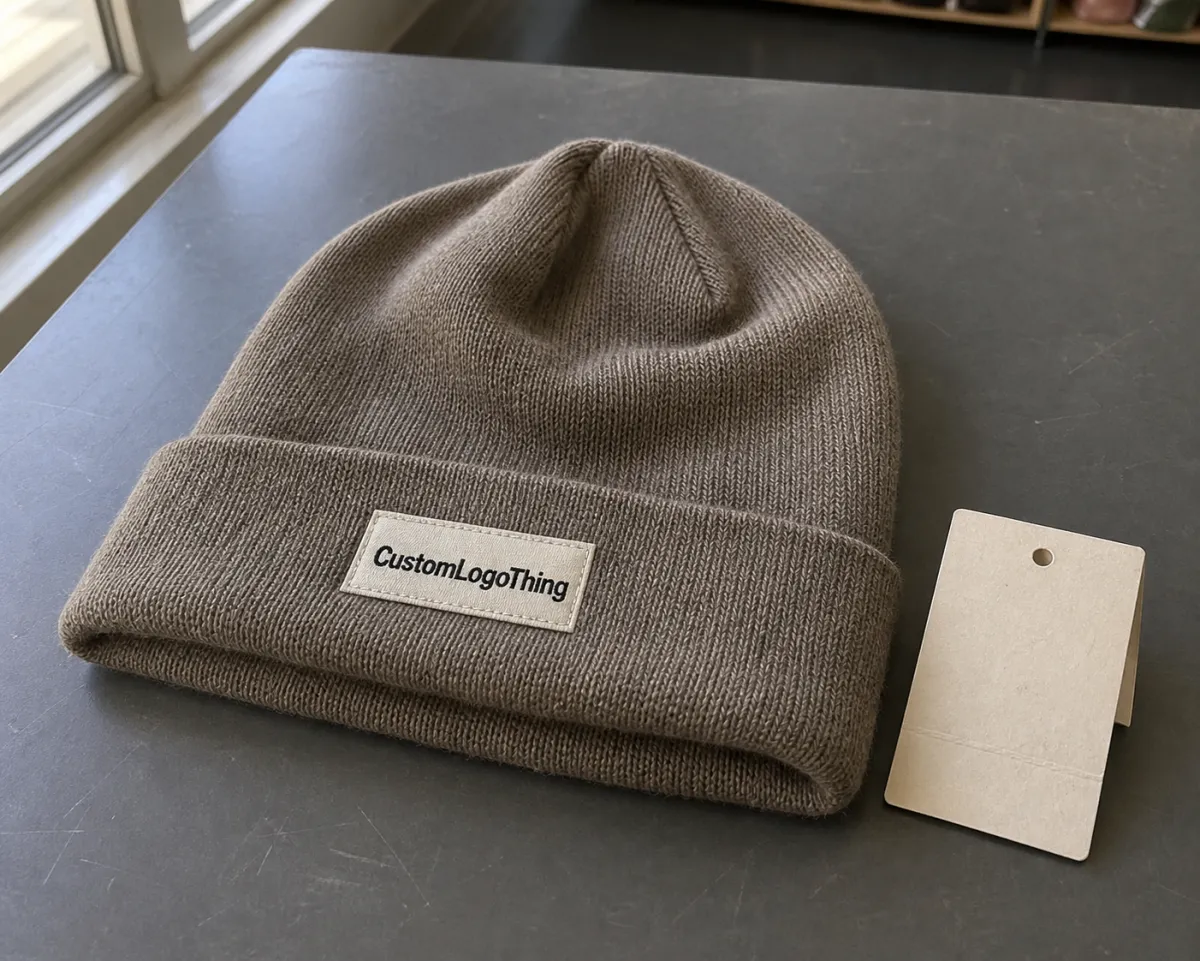
Slouchy beanies usually win on shape first. In a retail environment, shoppers notice the back drape, the crown volume, and whether the cuff frames the face long before they ask about the fiber content. That is why an apparel Slouchy Knit Beanies supplier can be more valuable than a general knitwear vendor. The right partner understands that the silhouette must feel relaxed without drifting into shapeless.
The same basic beanie can work across promo campaigns, teamwear, campus shops, outdoor stores, and streetwear drops if the proportions are tuned correctly. A shallower crown with a tighter cuff reads cleaner and more retail-ready. A longer body with softer recovery feels more fashion-led. Change the body length by even half an inch and the back fall can shift enough to change how the entire hat reads on a head.
Buyers often discover that a sample can feel right in hand and still miss the behavior they need in bulk. After washing, blocking, or even a few hours of wear, the knit may relax more than expected. That can be useful if the drape softens in a flattering way. It can also be a problem if the beanie stretches out at the seams or loses the crisp edge that made the sample look finished.
Practical truth: a beanie is judged from two feet away, but approved one detail at a time. Drape, stretch, logo balance, and recovery need to stay aligned.
Once those shape goals are clear, the rest of the sourcing process becomes much easier. You can compare knit structure, yarn choice, pricing, production timing, and finishing details against a real standard instead of a guess based on photos.
How Knit Structure and Shape Create the Slouch
The slouch comes from a mix of construction, gauge, and proportion. A 1x1 rib knit gives strong stretch and recovery, so it hugs the head and still drops softly at the back. A 2x2 rib can feel a little looser and more decorative. Jersey knit has a smoother face, but it usually needs more engineering to avoid a limp or unstable shape. For many cold-weather programs, a double-layer cuff adds structure and helps the logo area stay flat.
Gauge matters just as much as stitch pattern. A finer gauge with tighter stitch density creates a cleaner, slimmer hand feel, while a looser knit gives more body and a more visible drape. If the yarn is too thick for the gauge, the cap can feel bulky and heat-heavy. If it is too light, the beanie loses the relaxed fall buyers expect from a slouch style. The machine type, stitch count, and yarn count tell you more than a lifestyle photo ever will.
Crown depth, cuff height, and seam finishing shape the final look. A cuff that is too tall steals volume from the slouch. A crown that is too shallow can create a stretched line across the head. Bulky seam finishing can push the knit outward and make the hat sit awkwardly. The goal is a relaxed silhouette that still looks intentional, not a hat that appears one wash away from losing its shape.
Decoration should be planned around the way the fabric behaves under tension. A logo placed too high may disappear into the fold when the beanie is worn pushed back. A patch placed on a highly stretchy section can tilt when the knit opens up. Stable zones on the cuff or front panel usually give the cleanest result because they hold the mark in place whether the cap is flat, folded, or slouched.
There is also a practical production reason to avoid overcomplicating the construction. Every extra seam, color change, or special fold adds another point where the bulk run can drift from the sample. Simple is not always cheaper, but simple is often easier to repeat.
Materials, Branding, and Finish Choices That Hold Up
Material choice drives feel, cost, and customer satisfaction. Acrylic remains common because it is soft, color-rich, and price-friendly. It works well for promotional runs and retail programs that need a broad palette, but lower-grade acrylic can pill faster if the yarn twist is weak. Recycled acrylic supports sustainability claims and can look nearly identical on the surface, though shade consistency often needs tighter approval, especially across repeat orders. Wool blends usually feel warmer and more premium, while cotton blends are lighter and better for transitional merchandising or indoor wear.
Fiber blend also changes how the beanie performs across seasons. A winter collection can tolerate a denser, warmer hand feel, while a shoulder-season drop may need lighter stretch and less bulk around the ears. If the buyer wants comfort plus clean drape, blends in the 70/30 or 80/20 range are common starting points, though the final mix depends on the yarn quality and the target price. There is no universal best blend. There is only the blend that matches the wear pattern and the budget.
Branding should support the knit instead of fighting it. Embroidery lasts well and gives a sharper retail finish, but a heavy stitch count can stiffen a soft cuff. Woven labels keep the hand feel lighter and are useful for subtle branding. Sewn patches and badge applications work when the logo needs more visibility without covering a large section of knit. For a softer touch, many buyers choose a small woven tab on the cuff and leave the body clean.
Finish details matter more than many teams expect. Color matching should be checked against a standard under daylight and store lighting because dark yarns can read differently once the knit stretches. Wash performance should be reviewed for shrinkage, pilling, and edge roll. If the order includes hangtags or folded inserts, FSC-certified paper is worth asking for, and the standard can be checked at fsc.org. For transit and carton handling, ISTA methods are useful if you want packaging checks that go beyond a visual inspection at packing stage.
One detail that buyers often miss is label placement. A woven brand label on a soft cuff can sit beautifully in the sample and then flip outward in production if the stitch allowance is too narrow. Heat-sensitive labels can also curl if the fabric is steamed too aggressively. Those are small issues, but they add up when you are shipping hundreds or thousands of units.
Common material and decoration choices
| Option | Typical MOQ | Unit Price Range | Best For | Tradeoff |
|---|---|---|---|---|
| 1x1 rib acrylic with woven label | 500-1,000 pcs | $1.20-$2.10 | Promo, school, volume retail | Lower fiber premium feel |
| Recycled acrylic with embroidery | 800-1,500 pcs | $1.70-$3.00 | Eco-positioned merchandising | More shade matching attention needed |
| Wool blend with patch and custom fold | 1,000-2,000 pcs | $2.80-$5.20 | Premium retail and cold weather | Higher cost and more care on pilling |
| Cotton blend with badge | 500-1,000 pcs | $1.60-$3.20 | Transitional or indoor wear | Less warmth in deep winter |
Pricing, MOQ, and Unit Cost Factors to Compare
Unit price moves for a few predictable reasons: yarn cost, knit complexity, decoration method, finishing steps, and packaging. If the beanie is simple, with one color and a small woven label, the price can stay near the low end. Add custom embroidery, multiple color changes, a special fold, or individual polybagging, and the number rises quickly. The cheapest quote is often the one that omitted something important.
MOQ is never just a production number. It reflects setup time, yarn planning, and how many pieces the factory needs to make a run efficient. Lower quantities usually mean higher pricing because knitting, trimming, inspection, and packing are spread across fewer units. Multiple colorways can push the minimum higher if the supplier needs separate yarn lots or separate machine runs. If you want two or three colors, ask whether the supplier can combine them in one order or whether each color carries its own threshold.
Hidden line items deserve attention. Sampling fees, yarn dips, digitizing for embroidery, backer cards, folding, polybags, barcode stickers, carton marks, and split shipments can all change the landed cost. A buyer comparing quotes should ask for the same spec sheet every time, then line up the numbers piece by piece. If the decoration, packaging, or carton plan differs, the quote is not comparable.
Here is a practical way to judge quotes fairly:
- Confirm the same fiber blend, gauge, cuff depth, and crown length.
- Check whether the price includes sampling, label application, and final packing.
- Ask if the quote assumes one yarn lot, one size, and one colorway only.
- Request a shipping assumption so the landed cost does not shift later.
Price also changes with season. Knitted headwear tends to get more expensive when factories are under peak winter load or when yarn supply tightens. A buyer who starts late may pay more for faster turnaround, not because the product changed, but because capacity did.
Production Process and Lead Time From Sample to Shipment
The production path is straightforward, but every approval point can slow the schedule. A clean process usually starts with a brief or tech pack, then moves to sample knitting, revision, bulk approval, production, finishing, packing, and shipment. If the buyer has not locked the logo file, the yarn reference, or the label text, the calendar slips quickly.
- Brief and spec review: confirm fit, size, yarn, logo, label, and packaging.
- Sample development: knit the first hand sample and check drape, stretch, and color.
- Revisions: adjust cuff height, crown depth, or decoration placement if needed.
- Bulk approval: sign off on yarn lot, artwork, and final measurements.
- Production and finishing: knit, sew, trim, inspect, fold, and pack.
- Shipment: confirm carton counts, marks, and dispatch details.
Lead time depends on factory capacity, yarn availability, peak-season demand, and packaging needs. For many custom beanie programs, sample development can take about 7-10 business days, while bulk production often runs 12-20 business days after approval. If the order needs custom hangtags, special labels, or extra carton testing, add more time. A good apparel slouchy knit beanies supplier gives milestone dates, not just one final ship estimate, so sample arrival, approval deadlines, and dispatch can be tracked without guesswork.
One more technical point: if the beanie will be boxed for retail or shipped through a distribution center, ask how the carton is packed and whether the cap keeps its shape under compression. Standards like ASTM or ISTA are not there for decoration. They help you spot crush damage, scuffing, or moisture issues before the order reaches a buyer's shelf.
Production also depends on whether the supplier is knitting to a fixed block or making the shape through finishing. Some factories rely on steaming and pressing to set the slouch, which can work well if the process is controlled. The risk is variation between operators. If the beanie needs a very specific fall, ask how they lock that shape from sample to bulk.
Common Mistakes That Make Bulk Results Miss the Sample
The most common mistake is approving a sample without checking stretch recovery, shrinkage, and stitch consistency. A beanie can look strong on day one and still become loose, misshapen, or uneven after one wash if the yarn or knitting tension is not stable. ASTM D3107 is useful here because it speaks directly to dimensional change in knitted fabrics, which is exactly the kind of movement that changes a slouch beanie's fit.
Another problem is oversized decoration. On a slouchy crown, a logo that looks balanced on a flat table can distort once the cap is worn pushed back. Heavy embroidery can pull on the knit, and a large patch can create a hard edge that breaks the relaxed feel. Buyers sometimes ask for more branding visibility, but the hat usually looks better with a smaller mark that sits where the fabric is naturally stable.
Care labels, carton marks, and packaging specs also get forgotten until the order is already moving. That is a bad time to discover the content label needs a legal wording change or the carton count does not match the warehouse request. More delays come from missing label copy than from actual knitting problems, which says a lot about where projects lose time. The paperwork sounds minor until it stops the shipment.
Good sample, bad bulk? That usually means the supplier never locked the yarn lot, stitch density, or finishing method closely enough.
Bulk consistency depends on repeatability. If the sample used one yarn lot and the bulk order uses another without a clear tolerance plan, the hand feel can shift. If the sample was blocked or steamed differently from the production run, the final drape may change again. A dependable supplier should be able to explain what is fixed, what can vary, and how much variance is acceptable before the order starts.
There is a simpler trap too: approving based on a single lighting condition. Knit texture can look tighter under bright white light and softer under warmer retail light. If the buyer checks only one environment, the color and surface finish may surprise them later. That is not a factory defect so much as a bad comparison method.
Next Steps for Shortlisting the Right Partner
Start with a short list built on specs, not on photos. Define the target fit, choose the fiber blend, decide on the decoration method, and write down the finish you want before you ask for pricing. That makes it much easier to compare suppliers line by line and avoids the common trap of judging one quote against a completely different product.
Ask every candidate for measured samples, a spec sheet, MOQ, price breaks, and a written timeline. If one vendor gives a nice product page but no clear measurements, that is not enough. A plain sheet with crown depth, cuff height, gauge, yarn blend, and packaging notes is more useful than a glossy image with no usable numbers. For repeat orders, ask for confirmation that the same knit structure and yarn source will be maintained unless you approve a change.
A simple side-by-side sample board helps more than a long phone call. Put each beanie against the same backdrop, under the same light, and compare the fold, slouch, logo placement, and recovery after stretching. If one sample looks more expensive because of thicker yarn or cleaner finishing, that will show quickly. If another looks soft but loses shape, that shows too. The cheapest mistake is the one that looks fine only before the first wear.
Quality control is worth insisting on early. Ask whether the supplier checks stitch count, measurement tolerance, shade consistency, label position, and packing accuracy before shipment. If they can also provide AQL-based inspection or a similar internal standard, that usually signals a more mature process. Even a simple checklist beats vague reassurance.
If you need a dependable apparel slouchy knit beanies supplier, choose the one that can prove consistency, not just the one with the nicest photo. The right partner will talk clearly about yarn, gauge, MOQ, sampling, packing, and bulk tolerance, then back that up with measured samples and a timeline you can actually plan around.
What should I ask a slouchy knit beanie supplier before sampling?
Confirm the fiber blend, gauge, crown depth, cuff height, and intended logo method before the first sample is made. Ask for the MOQ, available color options, and whether any yarn substitutions could change the hand feel or fit. Request a written lead time estimate for sampling and bulk so you can plan your launch or seasonal drop.
How do I compare quotes from custom beanie suppliers fairly?
Make sure every quote uses the same specs, decoration method, label package, and carton plan so you are comparing like with like. Separate the unit price from setup, sampling, packaging, and shipping charges to see the true landed cost. Ask whether the quote assumes one yarn lot, one color, and one size, because mixed specs can hide extra fees.
What MOQ is typical for slouchy knit beanies?
MOQ varies by yarn type, color count, and decoration complexity, so there is no single universal number. Lower quantities usually carry a higher unit cost because setup, knitting, and finishing are spread across fewer pieces. If you need multiple colors, ask whether the supplier can combine them under one run or if each color has its own minimum.
Which branding method lasts best on a slouchy beanie?
Embroidery is usually the most durable option, but it adds structure, so confirm that the stitch count will not make the cuff stiff. Woven labels and sewn patches keep the hand feel softer and work well when you want a cleaner, more wearable finish. Choose the method based on drape, comfort, and how visible the logo needs to be when the beanie is worn slouched back.
How long does production usually take for custom slouchy knit beanies?
Timing usually includes sample development first, then bulk production, finishing, and packing before shipment. Yarn availability, artwork approval, and peak-season capacity are the biggest factors that stretch the schedule. Ask for a milestone calendar with sample due dates, approval deadlines, and the estimated ship date so there are no surprises.
What quality checks reduce risk on bulk orders?
Look for measurement checks, yarn shade approval, stitch consistency review, label placement control, and a wash or stretch test on pre-production samples. For retail programs, packaging and carton compression checks can matter as much as the hat itself. A supplier that documents these steps is usually easier to work with on repeat orders.