Buyer Fit Snapshot
| Best fit | Eco Conscious Mailers for Skincare projects where brand print, material claims, artwork control, MOQ, and repeat-order consistency need to be specified before quoting. |
|---|---|
| Quote inputs | Share finished size, material target, print colors, finish, packing count, annual reorder estimate, ship-to region, and any compliance wording. |
| Proofing check | Approve dieline scale, logo placement, barcode or warning zones, color tolerance, closure strength, and carton packing before bulk production. |
| Main risk | Vague material claims, crowded artwork, missing packing details, or unclear freight terms can make a low unit price expensive after revisions. |
Fast answer: Eco Conscious Mailers for Skincare: Film, Print, MOQ, and Carton Packing should be specified like a repeatable production item. The safest quote records material, print method, finish, artwork proof, packing count, and reorder notes in one written spec.
Production checks before approval
Compare the actual filled-product size with the drawing, then confirm tolerance on folds, seals, hang holes, label areas, and retail display edges. Reserve space for logos, QR codes, warning copy, and material claims before decorative graphics fill the panel.
Quote comparison points
Review material grade, print process, finish, sampling route, tooling charges, carton quantity, and freight assumptions side by side. A quote is only useful when the supplier can repeat the same color, closure quality, and packing count on the next order.
I still remember a launch meeting in Los Angeles where a founder spent 20 minutes debating serum labels, then another 2 minutes on the mailer. That was backwards, and I said so a little too quickly, which is what happens when a packaging plan feels lopsided and the order sheet says 4,800 units. Buyers often meet the package before they meet the product, and eco conscious Mailers for Skincare can decide whether a brand feels careful, wasteful, or quietly credible long before the bottle gets opened. I have seen that pattern repeat across beauty launches from Culver City to Brooklyn, but skincare is the most unforgiving of the bunch because the formulas are delicate, the margins are tight, and the category carries a promise of clean, thoughtful care that customers notice right away.
The blunt version is this: eco conscious mailers for skincare are not just mailers with a green label. They are shipping materials chosen to reduce waste, protect fragile formulas, and stay honest about end-of-life disposal. That can mean recycled-content poly, paper-based mailers, or lower-impact custom formats, but the right choice depends on seal strength, moisture resistance, parcel weight, and how the brand wants the unboxing to feel. A 350gsm C1S artboard sleeve might suit a luxury sample kit, while a 60-micron recycled poly mailer may be better for a 28 oz subscription refill. The strongest packaging decisions are usually the least theatrical. They hold up in transit and still look intentional on a bathroom counter, which matters more than a glossy mockup ever will.
Skincare is a special case because the shipment is often small, but the expectation attached to it is anything but small. A $48 face oil in a frosted glass bottle cannot arrive scuffed, leaking, or crushed by a flimsy outer sleeve, and a 3-pack of 5 ml ampoules cannot feel like it was assembled in a rush at 4:30 p.m. A subscription box cannot burn margin on extra void fill, oversized cartons, and replacement shipments. That is why eco conscious mailers for skincare are really about balancing four things at once: product safety, shipping cost, customer perception, and disposal behavior after delivery. I learned early that if you get one of those wrong, the others start wobbling like a folding table at a trade show in Anaheim.
The business case is stronger than many teams expect. Better-fit packaging can lower dimensional weight, and on a 2 lb parcel that can mean the difference between a $9.10 label and a $10.85 label on Zone 6 shipments. Cleaner claims can support the checkout page and the post-purchase email. Less excess material can improve pack-out speed by 10 to 20 seconds per order, which matters once a warehouse is shipping 300 or 500 orders a day out of Dallas, Raleigh, or Louisville. Brands that already sell on ingredient transparency cannot afford a package that tells a different story. I have watched customers forgive a simple 1-color mailer far more readily than a flashy package that looked good in a mockup but used too much material to feel credible. Honestly, I think a modest, well-made shipper often signals more confidence than a package trying too hard.
Eco Conscious Mailers for Skincare: What They Are and Why They Matter
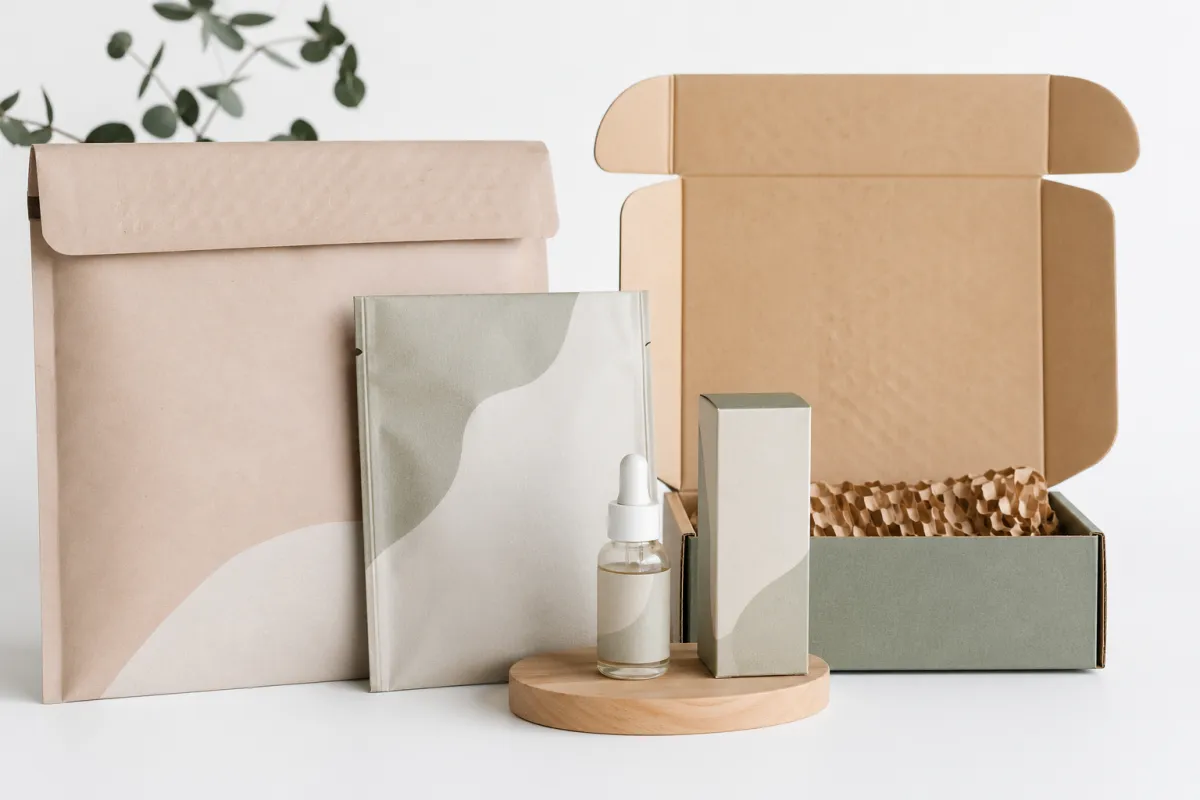
The clearest definition of eco conscious mailers for skincare is simple: they are outer mailers designed to reduce unnecessary impact without sacrificing product protection. That sounds straightforward, but three questions sit inside it. What is the mailer made from? Can it actually be recycled, composted, or otherwise handled responsibly in the real world? What does the complete shipping footprint look like once you account for size, weight, printing, and damage risk? Too many teams answer only the first question and call it strategy. I have sat in those meetings in New York and San Francisco, and they usually end with somebody saying, "Well, it's paper, so we're good," which is not how any of this works.
I learned that lesson on a factory floor outside Shenzhen, where a brand team was excited about a matte paper mailer because it photographed beautifully. The samples looked great on a conference table in a 28 degrees Celsius room. The problem showed up under humidity testing. The adhesive softened after 48 hours in a warm storage room, and the corner seam started to lift. The materials manager there told me, very plainly, that pretty packaging is easy. Packaging that survives a 900-mile truck route in August is the real job. That is the standard I use for eco conscious mailers for skincare now, and I wish more teams would borrow it before they approve something from a mood board.
Skincare adds a premium-experience layer that other categories do not always carry. The outer package is part of the brand ritual. A 30 ml retinol serum or a 50 ml moisturizer sits in a space where the customer expects calm, care, and a little bit of luxury. If the mailer is oversized, underprinted, or visibly overwrapped, the unboxing can feel clumsy. If it is too bare, the customer may wonder whether the brand takes protection seriously. Strong eco conscious mailers for skincare sit right in that middle lane where restraint and performance meet, which is harder to pull off than it sounds. A 140 x 200 mm mailer can feel elegant for a serum vial, while a 220 x 320 mm format may be the right call for a bundled routine set.
There is another reason these mailers matter: they shape how customers read the whole brand before the product can speak for itself. A buyer who sees recycled-content packaging, a clear disposal note, and a tidy fit is more likely to believe the sustainability story behind the serum. That does not mean the mailer needs to preach. It means the details should line up. In one client meeting, a founder told me she wanted "quiet credibility," and the phrase stuck because it describes the job of eco conscious mailers for skincare better than any slogan ever could. Quiet credibility is the whole trick, really; it is hard to fake and easy to damage, especially when the first reprint lands 3,000 units deep.
"The outer mailer is where sustainability is judged first, and judged fastest," a brand director told me during a 4,000-unit relaunch in Portland. "If the box is noisy, oversized, or vague, the customer notices before they even twist the cap."
If you are evaluating eco conscious mailers for skincare, start by asking whether the material story, the shipping performance, and the post-use instructions make sense together. That is the difference between a package that merely looks green and one that earns trust. I would trust the package that can explain itself in one sentence over the one that needs a full press release every time, especially when the carton lands in a bathroom with 70% humidity and a towel hanging 2 feet away.
What Should Brands Look for in Eco Conscious Mailers for Skincare?
Brands should look for a package that balances protection, material transparency, and a clean presentation. In practice, eco conscious mailers for skincare need to fit the product closely, resist moisture and compression, and give the customer a clear disposal story. If the mailer is too large, too fragile, or too vague about its material mix, it will cost more than it saves.
The strongest choices usually combine recycled-content mailers, right-sized dimensions, and simple print coverage. A paper-based mailer can be a good fit for gift sets, while a recycled poly mailer often makes more sense for humid shipping lanes or fragile serum refills. The goal is not to make the package louder; the goal is to make eco conscious mailers for skincare feel deliberate from warehouse to doorstep. A package that looks thoughtful and behaves predictably is going to earn trust faster than one that tries to do too much.
Just as important, the material spec should be readable by operations, procurement, and the customer who is opening the parcel at the kitchen counter. If a supplier can only describe the product in vague marketing language, keep asking questions. Ask for resin percentage, GSM, microns, coating type, and closure details. In my experience, the best packaging vendors do not mind those questions. They usually welcome them, because real specs make it easier to compare options and avoid surprises later.
How Eco Conscious Mailers for Skincare Work in Real Shipping Conditions
In the real world, eco conscious mailers for skincare are judged by what happens in a truck, a sorting facility, and on a doorstep. A mailer that looks excellent in a studio can fail if the seal peels, the side gusset tears, or the contents shift too much inside. I have watched a 250-piece serum launch run smoothly for 11 straight days, then spike in complaints because the mailer film stretched too much under pressure and the inner vial scratched the sleeve. Packaging is unforgiving like that. The weak point usually shows up at scale, not in sampling, which is exactly why I get grumpy when someone says, "The sample looked fine." A sample that survives a hand carry from the showroom to the parking lot is not the same as a parcel that rides 600 miles in a trailer.
The main material options fall into a few buckets. Recycled Poly Mailers are common because they are light, strong, and moisture resistant. Mailers with recycled content can keep the same seal and tear performance while reducing virgin plastic use, and a 50 to 70 micron construction is often enough for lightweight skincare orders. Paper mailers can work for low-risk products or as an outer layer, but they often need an inner barrier or smarter sizing to handle humidity and corner crush. Compostable-looking alternatives can sound appealing, though the actual disposal path depends on local infrastructure and the exact resin blend. That is why eco conscious mailers for skincare should always be tested as a system, not as a material brochure. Brochures are cheap; field failure is not, especially when the reorder quantity is 10,000 units and the lead time is already spoken for.
Durability matters more than marketing copy. Seal strength needs to hold through compression, especially if the package is traveling alongside heavier parcels. Tear resistance matters because skincare shipments often include pump bottles, droppers, or slim sample kits with sharp edges. Moisture protection matters for lotions and oils, which can be fine in a dry postal route and frustrating in a humid one. A brand shipping in coastal markets like Miami or Charleston should think differently from a brand shipping in Phoenix or Salt Lake City. I have seen eco conscious mailers for skincare pass a drop test and still fail a humidity test two days later, which is the sort of result that makes everyone stare at the ceiling for a second and then ask for coffee.
Fill rate deserves more attention than it gets. A mailer that is 40 percent empty wastes material and lets the product move around. Too much movement increases abrasion and corner damage. An overstuffed mailer can stress the seam and slow packing by 15 or 20 seconds. Good sizing is usually a tight fit with a little breathing room, not a giant envelope that needs extra tape and hope. For eco conscious mailers for skincare, the right size often reduces waste and damage at the same time, which is one of those rare moments in packaging where the math and the customer experience agree. A 180 x 260 mm mailer that fits three serums snugly will usually outperform a 250 x 350 mm mailer with 90 mm of dead air inside it.
Printing, adhesives, and closures also matter. A full-surface print on a paper mailer may look premium, but it can complicate recycling if the inks or coatings are not chosen carefully. Strong adhesives can improve shipment performance yet make separation harder later. Closures should be intuitive for the packing team and secure enough for repeat handling. A clean, minimal print on eco conscious mailers for skincare often does more for the brand than a heavy graphic treatment that adds cost without improving trust. I have a soft spot for the restrained version because it tends to age better, and packaging that ages well usually means the factory in Dongguan and the freight line both got a fair shake.
For brands comparing formats, it helps to line up the practical tradeoffs side by side:
| Mailer Type | Typical Unit Cost at 5,000 Units | Best For | Strength Notes | Tradeoffs |
|---|---|---|---|---|
| Recycled-content poly mailer | $0.18-$0.24 | Light-to-medium skincare orders, subscription refills | Strong seal, high tear resistance, good moisture barrier | Plastic-based, so disposal messaging must be clear |
| Paper mailer with barrier coating | $0.22-$0.31 | Giftable kits, dry-climate shipping, brand-heavy launches | Good presentation, moderate puncture resistance | Can weaken in humidity, coating choice affects recyclability |
| Lower-impact custom mailer with recycled content | $0.24-$0.36 | Premium skincare, direct-to-consumer launches | Balanced protection and branding | Usually needs volume commitment and artwork setup |
| Compostable-looking alternative | $0.28-$0.42 | Short runs, campaign drops, sustainability-led positioning | Can feel premium and differentiated | Real-world disposal depends on local systems, not the claim alone |
If you want a broader view of how outer packaging connects to waste reduction, the EPA recycling guidance is a useful starting point. For shipment stress testing, the standards published by ISTA are even more practical because they focus on how parcels actually behave in transit. Those references are not decoration. They are part of making eco conscious mailers for skincare credible rather than vague, and I always point teams to them before they start arguing about font weight or whether the logo should sit 6 mm higher.
Key Factors for Eco Conscious Mailers for Skincare: Cost, Materials, and Branding
Budget conversations around eco conscious mailers for skincare usually go sideways because people compare only the unit price. Unit price matters, but so do setup, minimum order quantity, artwork revisions, storage, and the cost of damage replacements. I have seen a team save $0.03 per mailer, then lose $1.60 in replacement product and support time on each damaged parcel. That is not savings. That is accounting theater, dressed up in a tidy spreadsheet and a very serious face. On a 7,500-order month, the difference can show up as nearly $12,000 in hidden spend.
For a practical budget, think in three layers. Stock mailers can be the cheapest, often around $0.12 to $0.18 per unit, but they rarely carry your brand well. Custom-printed recycled-content mailers at 5,000 units may land closer to $0.18 to $0.30 per unit, depending on color count and material, and a 2-color flexographic run from a supplier in Xiamen or Ho Chi Minh City can keep the cost lower than a 4-color full-bleed design. Short runs under 1,000 units can jump to $0.35 to $0.60 per unit because setup cost gets spread across fewer pieces. If your artwork is changing every month, that matters. Eco conscious mailers for skincare reward consistency more than novelty, which is a relief for people like me who would rather solve a shipping problem once than relive it every quarter.
Minimum order quantities can shape the whole decision. A supplier may quote 2,500 units for a plain recycled mailer and 5,000 or 10,000 units for a custom printed version. That is not a trick; it is how print economics work. If your monthly volume is 800 orders, a 10,000-unit commitment can tie up cash and storage for months. In that case, a phased buy or a limited-color print can be smarter. I would rather see a brand launch with a sensible 2-color system than chase a 6-color hero design that strains the budget and slows replenishment. That is the kind of decision that makes eco conscious mailers for skincare sustainable operationally, not just visually, and it usually fits better in a 200 sq ft packing room too.
Material choice changes perceived value in a direct way. A thick kraft look can feel artisanal, while a smooth recycled poly with a crisp logo can feel modern and controlled. Neither is automatically better. Premium skincare usually benefits from restraint: one bold logo, strong contrast, and a finish that feels intentional without shouting. Gift sets often need a little more warmth. Subscription refills can be quieter. If you are also building out a broader range of Custom Packaging Products, the mailer should fit into the family system rather than sit apart like an experiment someone forgot to delete from the deck. A 350gsm C1S artboard insert can help a 3-piece routine feel premium without turning the packout into a wrestling match.
Branding should support sustainability claims without sounding vague. Terms like "eco-friendly" do very little on their own. Better wording mentions recycled content, reduced excess packaging, or recyclable components where that is genuinely true. If the mailer uses post-consumer resin, say so. If the coating affects recyclability, disclose it simply. Customers are more forgiving of a specific limitation than a fuzzy promise. That is where many brands miss the mark with eco conscious mailers for skincare: they try to sound perfect instead of sounding precise. Precision is less glamorous, sure, but it tends to survive a skeptical customer and a frustrated warehouse lead in Atlanta or Sacramento.
Here is a quick decision map I use with teams that are comparing options for eco conscious mailers for skincare:
- Choose the protection level first: light, medium, or high risk.
- Set the target unit cost, usually within a 10% band of the current mailer.
- Decide whether the customer should read the package as clinical, premium, or giftable.
- Confirm the disposal story in one sentence, not three paragraphs.
- Test artwork on an actual sample, not a PDF mockup.
That sequence saves time because it forces the team to match the material to the shipment, rather than the other way around. I have seen that simple discipline cut weeks off a launch timeline, mostly because nobody had room left to argue about irrelevant details like whether the thank-you copy should be gold foil on a mailer that ships in bulk by the pallet.
Step-by-Step Process and Timeline for Switching to Eco Conscious Mailers for Skincare
The cleanest switch to eco conscious mailers for skincare starts with a packaging audit. Pull the last 60 to 90 days of order data and look at three numbers: average parcel weight, dimensional weight, and damage or complaint rate. Then list your top five SKUs by fragility. A 15 ml glass dropper bottle is not the same as a plastic pump cleanser, and a 6-pack sampler has a different failure mode than a 50 ml moisturizer jar. I once sat with a brand that assumed all 11 products could share the same mailer. They could not. The serum line needed more corner protection, and the sample packs needed a narrower format to stop shifting. The CFO was not thrilled, but the packages were honest about their limits, which is the better problem to have.
Once the numbers are clear, request samples from at least three suppliers. Ask for the actual print surface, the closure style, and the exact material spec. If a sample says recycled content, ask for the percentage. If it is paper-based, ask about coating. If it is a film mailer, ask about thickness in microns. Too many teams approve packaging by touch alone, and that is risky. Touch tells you almost nothing about a package's performance under 14 pounds of compressive load or a 3-foot drop. Good eco conscious mailers for skincare need real tests, not hopeful thumb presses in a conference room, and a supplier in Guangzhou should be able to quote those specs in writing.
My test routine is straightforward and cheap. Pack a full order, drop it from 30 inches onto a hard surface on three sides, and leave one sample in a warm, slightly humid room for 24 to 48 hours. Check whether the closure opens, whether the contents shift, and whether the exterior scuffs in a way that hurts the brand. For glass or hybrid packs, do not stop there. Run a simple vibration test in a delivery tote or use a third-party protocol based on ISTA guidelines. Eco conscious mailers for skincare should be validated the same way any serious shipping system is validated, because your customer's first complaint will not care how noble the material spec sounded or how nicely the dieline was labeled.
Artwork approval should happen after the product fit is locked. That order matters because dimensions influence the print grid and the seam placement. A design that looks balanced on a flat dieline can shift once the mailer is folded and sealed. In one client review, a logo landed 12 mm too close to the lip because the team used a stock template and never checked the production spec. We caught it before print, which saved a costly rerun. That kind of mistake is common when brands rush eco conscious mailers for skincare into production, and it is exactly the sort of headache I try to keep off a launch calendar in the first week of June.
Here is a practical timeline for a standard custom run:
- Days 1-3: packaging audit, SKU measurements, and supplier shortlist.
- Days 4-7: sample request, inbound review, and fit testing with real product.
- Days 8-10: artwork revisions, claim review, and internal sign-off.
- Days 11-15: proof approval and production slot confirmation.
- Days 16-25: manufacturing, QA checks, and inbound shipping.
- Days 26-30: warehouse training, pilot launch, and order review.
That timeline is realistic for many custom orders, though a short stock-based switch can move faster. If the artwork is ready and the size stays stable, 12 to 15 business days from proof approval is common for a straightforward run from a plant in Dongguan or Ningbo. More complex finishes, heavier print coverage, or special material sourcing can stretch that to 18 to 28 business days. Good eco conscious mailers for skincare planning always includes a buffer. It is cheaper to build one into the schedule than to pay for emergency freight, and emergency freight has a way of ruining everyone's mood before lunch on a Tuesday.
Training matters too. The warehouse team should know where the closure sits, how much fill is acceptable, and which SKUs require an insert or a cushion. A 20-minute packing guide can save weeks of inconsistency. I like to phase in the change with a pilot run of one SKU for two to four weeks. That gives you real data on packing speed, damage rate, and customer feedback before you scale. That is the sane way to adopt eco conscious mailers for skincare, and honestly, sane is underrated in packaging operations. A 15-minute huddle at 8:00 a.m. can solve more than a 40-slide deck ever will.
Common Mistakes Brands Make With Eco Conscious Mailers for Skincare
The biggest mistake is buying a mailer that looks green but cannot survive a normal delivery route. I have seen paper-based formats buckle under corner crush, and I have seen thin film mailers split when a pump bottle shifted during transit. Customers do not give packaging a pass because the intention was good. They see leakage, wrinkles, or tears, and that is the end of the story. For eco conscious mailers for skincare, the material has to pass the ugly test as well as the pretty one. The package needs to survive the van, the belt, the porch, and the customer opening it with slightly annoyed fingers at 7:15 p.m.
Another common error is vague sustainability language. If your mailer includes recycled content, say how much. If it can be recycled in some curbside systems but not all, say that in plain language. If the coating or adhesive changes the disposal path, explain it simply. I have sat through enough packaging reviews to know that customers trust specifics. They do not trust fog. Clear instructions are especially useful for eco conscious mailers for skincare because buyers often want to do the right thing and just need a nudge in the correct direction. No one needs a sermon; they need a fact, ideally one printed in 8 pt type and not hidden behind a QR code.
Size mistakes are expensive. A mailer that is too large invites shifting, adds void space, and can increase dimensional shipping charges. A mailer that is too small stresses seals and slows packing. Glass droppers, pump bottles, and sample sachets each behave differently inside a parcel. If your assortment includes all three, do not assume one size will fit all. I once watched a brand lose nearly 6 percent of margin on a high-volume cleanser line because the mailer added just enough bulk to trigger a shipping upgrade on every order. That is the sort of hidden cost that can sink eco conscious mailers for skincare before they even become part of the brand story, which is maddening because the fix was sitting right there in the dimensions sheet.
Supply-chain blind spots are the fourth problem. Too many brands rely on a single vendor and then discover the lead time moved from 14 days to 32 days because resin pricing or press capacity changed. That volatility is normal. It is not personal. It is manageable if you source with a little discipline. Keep a backup spec, keep the dieline on file, and know which features are non-negotiable. I also like to keep a second approved sample on the shelf for every key size. It makes replenishment easier and keeps eco conscious mailers for skincare from turning into a scramble when sales unexpectedly spike after a campaign or a mention from a creator in Austin or Miami.
There is also a social-media trap. A package can photograph well and still be operationally poor. If your team spends more time selecting a background color than testing a closure, the process has drifted. Pretty images do help sales, but they do not replace test results. I learned that the hard way years ago when a client approved a beautiful matte finish that showed scuffing after only 25 parcel touches in transit. One customer photo later, the issue was everywhere. Eco conscious mailers for skincare need credibility first, camera appeal second, and I am stubborn about that because I have seen the consequences too many times, usually right after a busy holiday push.
To avoid those mistakes, brands should keep one rule in mind: every claim must match a real physical property. If the package is recyclable, make sure the substrate supports that claim. If it is made with recycled content, verify the percentage. If it is designed for a premium ritual, make sure the seal and print finish support that promise. That is how eco conscious mailers for skincare stay useful instead of performative. The good ones make the operations team breathe easier and make the customer feel like the brand thought things through down to the last adhesive strip.
Expert Tips to Make Eco Conscious Mailers for Skincare Work Better
Design around the product first, then the story. That order sounds obvious, but I have seen too many teams start with a mood board and end with a package that fits nothing well. Measure the bottle height, the pump width, the cap shape, and the insert clearance. Then choose the mailer. When the product drives the spec, eco conscious mailers for skincare can do their job without forcing the warehouse into awkward packing habits. It also keeps the package from looking overdesigned or underpowered, which is a surprisingly easy line to cross when everyone wants the launch photos to be perfect.
Reduce total packaging weight wherever you can. A lot of brands add a tissue wrap, a thank-you card, a filler strip, and an outer sticker, then wonder why the parcel feels bulky. Sometimes one insert is enough. Sometimes none is. If the mailer itself already delivers structure and a clean brand touchpoint, you do not need duplicate decoration. I have seen a 12 percent material reduction simply by removing two redundant layers from a skincare subscription kit. That is the kind of improvement eco conscious mailers for skincare should encourage, because excess is expensive even when it looks charming in a sample tray.
Plain-language disposal instructions are worth their weight in repeat orders. If the mailer should go in recycling, say so simply. If a liner should be separated, mention that. If local rules vary, acknowledge that too. Customers respect honesty. They do not need a lecture, just guidance. The same is true of sustainability claims. A line like "made with 80% recycled content" is stronger than "better for the planet," because it can be checked. Clear claims make eco conscious mailers for skincare more trustworthy and easier for customer service teams to explain when a shopper asks what to do with the package after it arrives.
Printing choices matter more than many art teams think. A restrained print area often looks more premium than a full-coverage graphic, especially on recycled films or paper. Strong contrast helps the logo read at arm's length, and one accent color can create a luxury feel without adding setup complexity. I like to tell clients that the packaging should whisper quality, not shout sustainability. That balance is especially effective for eco conscious mailers for skincare, where the package is part retail signal and part logistics tool. If the mailer has to do both jobs, clarity wins over noise almost every time.
Keep the supply chain simple. One material, one closure style, one approved backup size. That does not mean every SKU must look identical, but it does mean your procurement team can reorder faster and your warehouse team can train once. Simplicity also helps with cost control. If you are building out a branded range, tie the outer mailer to your broader family of Custom Poly Mailers so the system feels cohesive across launches. That sort of discipline is what separates polished eco conscious mailers for skincare from temporary packaging experiments that look exciting for exactly one quarter, usually right before the next rebrand deck arrives.
One more tip from the factory floor: always ask for a sample that reflects production, not just a hand-cut mockup. A die line, a print plate, and a finished seam can each change the result. In a supplier negotiation I handled last year, the sample was 8 mm wider than the final production spec, and that tiny gap changed the fit of a 30 ml bottle completely. It would have been a costly miss. Real samples are the only honest version of eco conscious mailers for skincare. Everything else is just a promise with nice lighting and a very friendly sales rep.
Next Steps for Launching Eco Conscious Mailers for Skincare
Start with three candidate materials, not ten. That keeps the process manageable and gives you a clean comparison. I usually recommend a recycled-content poly option, a paper-based option, and one premium custom format if the brand wants a more elevated look. Then test each one with the most fragile SKU in the line. For eco conscious mailers for skincare, the hardest product should set the standard, not the easiest. If the toughest serum can survive it, the rest of the line usually follows without drama, even during a 2,000-order weekend sale.
Set a pilot target that is small enough to learn from and big enough to measure. One SKU or one month of orders is often enough. Track damage rate, repack time, customer comments, and unit cost against the current mailer. If the new package adds 8 seconds per order, that might still be acceptable if it cuts damage claims by half. If it saves money but raises support tickets, it is not a win. That kind of measured rollout is exactly why eco conscious mailers for skincare can improve both operations and brand perception. The data should settle the argument, not whoever talks fastest in the meeting or writes the boldest line on the slide.
Before launch, define success in writing. Use numbers: less than 1 percent transit damage, packing time within 5 seconds of current average, and no more than a $0.05 increase in unit packaging cost unless the premium presentation clearly justifies it. Without targets, teams argue from opinion. With targets, they can compare results. I have seen brand teams save weeks of debate by agreeing on those metrics early. That discipline pays off quickly when eco conscious mailers for skincare move from theory to daily use, especially once the first real customer complaints start rolling in and everyone wants a clear answer by 9:00 a.m.
After the pilot, review the data with operations, marketing, and customer service together. That is the piece many teams skip, and it is a mistake. Marketing notices the unboxing. Operations notices the speed. Customer service notices the complaints. Put those views in the same room and the decision gets much easier. Then refine the artwork, adjust the closure, or change the size if needed. The best version of eco conscious mailers for skincare is rarely the first version. It is the one that survives one real launch, one real warehouse shift, and one real week of customer feedback without becoming a running joke in Slack.
If you are ready to move, the smartest path is simple: audit the current shipper, test three samples, launch one pilot, and scale the version that performs best. Done well, eco conscious mailers for skincare can reduce waste, protect delicate formulas, and make your brand feel more credible from the first touchpoint to the final delivery note. I have seen that outcome enough times to trust it, and enough times to know it depends on details, not slogans. Packaging rewards the teams that sweat the boring parts, even if nobody ever posts about them, and even if the mailer itself never gets a glamorous close-up shot. The next move is plain enough: pick the size, test the seal, validate the route, and only then print the run.
What are eco conscious mailers for skincare made from?
They are usually made from recycled-content plastic, paper-based substrates, or other lower-impact materials chosen for shipping performance. The best choice depends on whether your eco conscious mailers for skincare need moisture resistance, puncture protection, or a premium printed finish. I always ask teams to think about the shipping lane first, then the material story second, especially if the parcels are moving through humid regions like Houston or Singapore. Local disposal rules matter too, because a claim that sounds perfect in a deck can fall apart if the customer has nowhere practical to put the mailer after opening it.
Are eco conscious mailers for skincare strong enough for glass bottles?
Yes, if the mailer is sized correctly and paired with the right inner protection, such as cushioning or a rigid insert. Glass products should be drop-tested before launch because strength depends on the full package system, not the mailer alone, and that is especially true for eco conscious mailers for skincare. Glass is beautiful, but it is also very good at making a mess if you get lazy with the spec, so I prefer a 3-foot drop test on all glass SKUs. If a supplier says the package is "fine" without testing, I treat that as a starting point, not the answer.
How much do eco conscious mailers for skincare usually cost?
Pricing varies by material, order quantity, and print complexity, but recycled and custom-printed options often cost more upfront than plain stock mailers. Many brands offset that cost by reducing excess fill, improving packing speed, or lowering damage-related replacements with eco conscious mailers for skincare. I have seen a slightly higher unit price turn into a lower total cost once the replacement rate drops, especially when a 5,000-piece run lands at $0.22 per unit instead of a $0.14 stock option with no branding. The real number to watch is landed cost, not the headline price on the quote.
How long does it take to switch to eco conscious mailers for skincare?
A simple switch can move quickly if the size stays the same and artwork is ready, but custom sourcing and testing add time. Build in time for sample review, internal approvals, production, and a short pilot before full rollout, especially if you are changing to eco conscious mailers for skincare with new materials. Rushing this part is usually how brands end up paying for emergency freight, which I would not wish on anyone, especially with a Friday proof approval and a Monday launch date. A two- to four-week pilot is often the difference between a clean launch and a very annoying one.
Which eco conscious mailers for skincare work best for subscription shipments?
The best option is usually a mailer that balances durability, low waste, and a consistent unboxing experience across repeat orders. Subscription kits often benefit from standardized sizing because it improves packing speed and reduces material waste, which is exactly where eco conscious mailers for skincare tend to deliver the most value. Repetition exposes weaknesses fast, so the format needs to be boring in the best possible way, with a repeatable size like 180 x 260 mm and a closure the team can use 500 times a day without mistakes. If the same kit is shipping every month, the system should feel almost invisible to the warehouse team and almost reassuring to the customer.