Buyer Fit Snapshot
| Best fit | Eco Friendly Retail Boxes Supplier projects where brand print, material claims, artwork control, MOQ, and repeat-order consistency need to be specified before quoting. |
|---|---|
| Quote inputs | Share finished size, material target, print colors, finish, packing count, annual reorder estimate, ship-to region, and any compliance wording. |
| Proofing check | Approve dieline scale, logo placement, barcode or warning zones, color tolerance, closure strength, and carton packing before bulk production. |
| Main risk | Vague material claims, crowded artwork, missing packing details, or unclear freight terms can make a low unit price expensive after revisions. |
Fast answer: Eco Friendly Retail Boxes Supplier: Board, Finish, Dieline, and Unit Cost should be specified like a repeatable production item. The safest quote records material, print method, finish, artwork proof, packing count, and reorder notes in one written spec.
Production checks before approval
Compare the actual filled-product size with the drawing, then confirm tolerance on folds, seals, hang holes, label areas, and retail display edges. Reserve space for logos, QR codes, warning copy, and material claims before decorative graphics fill the panel.
Quote comparison points
Review material grade, print process, finish, sampling route, tooling charges, carton quantity, and freight assumptions side by side. A quote is only useful when the supplier can repeat the same color, closure quality, and packing count on the next order.
Eco Friendly Retail Boxes Supplier: How to Choose Right
Finding an Eco Friendly Retail Boxes supplier is not about picking the greenest brochure or the loudest sustainability pitch. It is about getting a box that protects the product, looks right on shelf, and survives shipping without turning into expensive confetti. Most brands do not lose customers because the packaging is plain. They lose them because the box feels flimsy, wastes space, or makes environmental claims that fall apart the second someone asks for proof.
If you are comparing an eco friendly retail boxes supplier with a general packaging vendor, the difference shows up fast. Material advice is sharper. Structural guidance is better. Tradeoffs are explained instead of hidden under pretty language. Recyclable, recycled-content, compostable, and FSC-certified are not the same thing, and a supplier that treats them like interchangeable labels is usually hoping nobody notices. That is not a great sign.
Eco Friendly Retail Boxes Supplier: What It Really Means
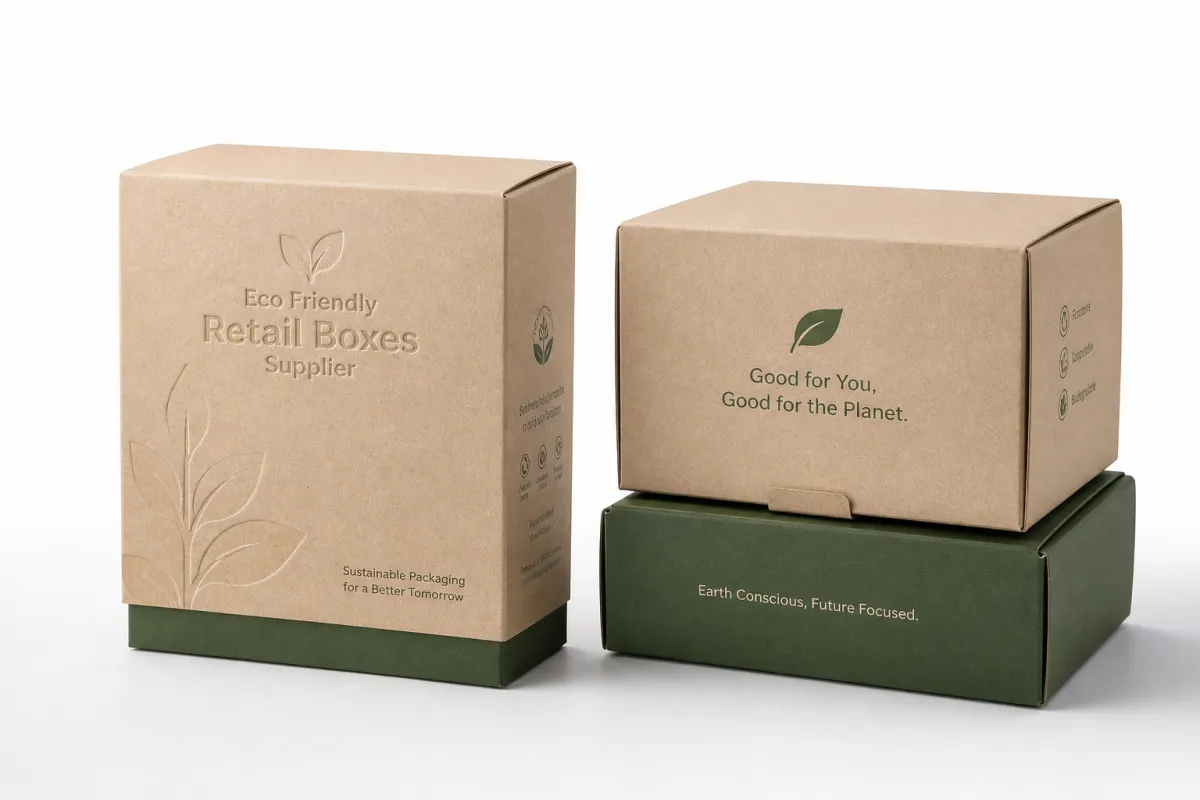
An eco friendly retail boxes supplier should do more than sell brown paper and call it sustainability. The real job is to provide packaging that fits the product, uses sensible material grades, and gives buyers a clear path for disposal after the sale. That can mean recyclable paperboard, recycled-content carton stock, FSC-certified board, or compostable structures where the product and market actually support that choice. The box matters more than the slogan printed on it.
People get tripped up here. A box can use recycled content and still be hard to recycle if it is over-laminated, coated with the wrong finish, or glued together in a way that makes separation annoying. A box can also be technically recyclable and still fail in transit because the board is too weak. That creates waste before the product even reaches the shelf. A good eco friendly retail boxes supplier understands both sides of the equation: environmental profile and physical performance.
Plain English helps. Recyclable means the material can generally be processed again where recycling infrastructure exists. Recycled content means the board includes recovered fiber from previous use. Compostable means the package is designed to break down under specific composting conditions, which is not the same thing as tossing it in a backyard pile and hoping for miracles. Biodegradable is the loosest term of all, and it gets used far too casually. If an eco friendly retail boxes supplier cannot explain the disposal route without drifting into jargon, the claim needs a second look.
The smarter way to judge an eco friendly retail boxes supplier is to separate marketing from manufacturing. Ask what the board is made of, where it came from, what inks are used, and whether the finish still supports recycling. Ask whether the supplier follows chain-of-custody standards for FSC-certified material and whether they can show actual documentation instead of a decorative icon on a PDF. The Sustainable Packaging Coalition at packaging.org offers useful background on packaging systems, while fsc.org explains what FSC certification actually covers.
If an eco friendly retail boxes supplier cannot explain what happens after print, coating, glue, and finishing are added, the green claim is probably more presentation than performance.
That is the frame for the rest of this article: how an eco friendly retail boxes supplier works, what it costs, what to check before you sign off, and how to avoid the very common mistake of buying a box that looks ethical but performs badly. Packaging is full of polished language. The boring details are the ones that matter.
How an Eco Friendly Retail Boxes Supplier Works
An eco friendly retail boxes supplier usually starts with a brief, not with artwork. Good suppliers want product dimensions, weight, display goals, shipping method, shelf life, and order volume before they talk about structures. That matters because a box for a 200-gram cosmetic jar is not the same animal as a box for a 1.5-kilogram appliance accessory. If the supplier skips those questions, they are guessing, and guessing is how rework happens.
The workflow usually moves from structural design to material selection, then sampling, then production. This is where sustainability decisions actually happen. An eco friendly retail boxes supplier may recommend kraft paperboard, recycled SBS, corrugated retail mailers, or rigid board with paper wraps depending on product value and handling risk. They should also explain whether the package ships flat, how it stacks on a pallet, and what kind of print coverage the board can handle without looking muddy or weak.
Communication saves money. A strong eco friendly retail boxes supplier will ask about the retail environment because the store matters as much as the warehouse. Is the box sitting under bright lights? Is it being opened by staff or by end customers? Does it need to survive humid transport, repeated handling, or a display table that gets shuffled every hour? Those questions sound basic. They are not. They decide whether the box lasts long enough to justify the materials used.
Factory reality tends to annoy design teams, but it matters. A structure can look wonderfully sustainable on a render and be a pain in production. Too many folds, too many inserts, too many specialty finishes, too much tiny type on uncoated board - all of that can raise waste and slow output. A practical eco friendly retail boxes supplier balances brand ambition with what the machine can actually do well. That is not uncreative. It is responsible.
I have sat in packaging reviews where everybody loved a concept until someone asked how it would die-cut, fold, and ship. The room gets quiet fast. That silence is useful. It is the point where a supplier earns trust by catching a problem before it becomes a pallet of scrap.
For buyers comparing options across product lines, it helps to look at available formats early. If you are building a broader packaging program, the Custom Packaging Products page is a useful starting point for matching box style to product type instead of forcing one format to do every job badly. The best eco friendly retail boxes supplier is often the one that talks you out of an overcomplicated structure before it becomes a costly headache.
Eco Friendly Retail Boxes Supplier Cost and Pricing Factors
Pricing from an eco friendly retail boxes supplier usually comes down to size, board grade, print coverage, quantity, finishing, and whether the box needs custom tooling. A small carton with simple one-color print and no insert can be surprisingly reasonable. A larger retail box with soft-touch lamination, foil, Custom Die Cuts, and a tray insert climbs fast. There is no mystery there. Every extra step adds material, labor, or setup time.
People often assume sustainable packaging always costs more. That is not true. A plain kraft folding carton or recycled paperboard box can be competitive, especially at scale. What pushes pricing upward is not the word eco; it is complexity. An eco friendly retail boxes supplier will usually tell you that small quantities, specialty coatings, and elaborate structures are the real budget killers. Honest suppliers say this clearly. The dishonest ones smile and let you find out later.
Here is the practical tradeoff. Kraft gives a natural look and can keep material costs moderate. Premium recycled board may improve print quality and stiffness, but it can add cost. Window patches, plastic laminations, and heavy ink coverage may improve shelf appeal while making recycling harder. A good eco friendly retail boxes supplier should help you decide where the packaging must perform and where it can stay simple. That is how you protect margin without pretending every box needs theater.
| Option | Typical Unit Cost at 5,000 Units | Recyclability Impact | Best Fit |
|---|---|---|---|
| Simple kraft folding carton | $0.18-$0.32 | Usually strong | Natural brands, lightweight products, minimal print |
| Recycled SBS carton with full-color print | $0.24-$0.45 | Usually good if coatings stay simple | Beauty, wellness, specialty food, premium retail |
| Corrugated retail mailer with insert | $0.42-$0.85 | Good if kept fiber-based | E-commerce to retail crossover, heavier contents |
| Rigid setup box with paper wrap | $1.10-$2.80 | Depends on wrap and adhesive | Giftable, high-value products, presentation-first packaging |
Use those numbers as a planning range, not a promise. A quote from an eco friendly retail boxes supplier may include or exclude sampling, plates, dies, freight, and assembly. That is where buyers get blindsided. A quote that looks cheaper on unit cost may end up more expensive once you add setup, a rushed reprint, or trucking charges buried in a footnote. Ask for a landed-cost view before you compare suppliers. That is the only fair comparison.
For brands with a broad product mix, it helps to think in tiers. Put the highest spend where the box protects product value or changes customer perception at the shelf. Cut decorative extras where the box is mostly a container. An eco friendly retail boxes supplier should be able to suggest where to spend and where to save. If they cannot, they are probably selling finishes, not packaging.
Key Factors to Check Before You Choose a Supplier
The first non-negotiable is proof. A serious eco friendly retail boxes supplier should be able to show FSC certificates, recycled-content documentation, material data sheets, and clear explanations of inks, coatings, and adhesives. If they throw around sustainability language but cannot back it up, treat that as a warning. Green claims are cheap. Documentation is what costs effort, and effort is exactly what you want to see.
Quality control matters just as much. Look for tolerances on dimensions, edge-crush strength, print consistency, and defect handling. A box that is 2 mm off in one direction may sound minor, but it can create loose product fit, bad stacking, or artwork misalignment. A dependable eco friendly retail boxes supplier will talk about sampling and checks in concrete terms, not vague promises. Ask how they handle reruns, spoilage, and color drift on recycled board, because recycled substrates can print differently than bright white stock.
Brand fit is another filter. Some suppliers are excellent at crisp premium retail presentation. Others are much better with minimalist kraft aesthetics, simpler linework, and lower-ink designs. The wrong fit creates frustration on both sides. A good eco friendly retail boxes supplier should show examples of similar box styles, not just their prettiest portfolio pieces. A brand that needs a clean, matte, natural finish is not served by a vendor obsessed with gloss and foil.
Production capability matters too. Ask whether they run digital printing, offset printing, or both. Ask if they support short-run orders without punishing price jumps. Ask if they can add inserts, partitions, or protective sleeves while keeping the packaging fiber-based. A solid eco friendly retail boxes supplier will explain which finishing options keep the box recyclable and which ones make disposal harder. That conversation should happen before artwork approval, not after the PO is issued.
Customer service is not fluff in this category. A supplier that answers structural questions quickly usually saves weeks of back-and-forth. If a die line issue appears, or if your product changed by a few millimeters, you want someone who can respond with facts and options, not a half-day delay followed by another vague email. That is one of the easiest ways to judge an eco friendly retail boxes supplier: how fast and how clearly they solve problems before production starts.
Step-by-Step Process for Working With an Eco Friendly Retail Boxes Supplier
The cleanest way to work with an eco friendly retail boxes supplier is to treat it like a short project with clear checkpoints. Start with a brief that lists product dimensions, product weight, shipping method, desired shelf impact, sustainability goals, and order quantity. If you already know whether you want recycled board, FSC-certified stock, or a compostable structure, say so early. The more complete the brief, the fewer expensive corrections later.
From there, ask for material samples and structural options. A smart eco friendly retail boxes supplier will usually show several board grades or finishing paths, because the first version is rarely the best one. Test the sample for fit first. Then test stack strength, closure behavior, and how it looks under normal retail lighting. Photos help, but they are not a substitute for holding the actual box in your hand. Packaging is physical. People seem to forget that until a carton crushes.
Testing should go past appearance. A good eco friendly retail boxes supplier should help you check vibration resistance, shipping compression, and shelf wear. The International Safe Transit Association has useful testing standards at ista.org, and those tests matter because a box that looks elegant but fails in transit is not sustainable. Damage creates waste, returns, and replacement freight. That is a very expensive way to learn a lesson.
Most projects follow a similar timeline. Brief and quoting can take a few days. Sampling can take several days to a couple of weeks depending on revisions and material availability. Production usually starts after approval, and the lead time stretches when you add custom tooling or large quantities. Freight can be the slowest part if you are moving boxes across long distances. A sensible eco friendly retail boxes supplier will tell you where time can slip so you can plan around it instead of pretending shipping is magic.
Before production starts, use a final approval checklist. Confirm the dieline, artwork placement, bleed, material specification, finish, quantity, and packing method. Check whether barcodes still scan cleanly. Check whether the box closes without forcing the board. This sounds obvious until someone discovers a rotation error after 20,000 units are already in motion. A careful eco friendly retail boxes supplier should welcome that checklist because it protects both sides.
If you are ordering multiple styles, keep the decision tree simple. Do not mix too many finishes, too many inserts, and too many materials unless the product truly needs them. It is easier to manage one well-built box system than three over-designed variants. If your catalog is growing, it can help to map the line against Custom Packaging Products so each format has a purpose instead of becoming a compromise. A good eco friendly retail boxes supplier will appreciate that discipline.
Common Mistakes Buyers Make With Eco Friendly Retail Boxes Suppliers
The biggest mistake is chasing the greenest-sounding pitch instead of the supplier that can prove performance. A flashy eco friendly retail boxes supplier may talk beautifully about sustainability while offering weak board, poor print consistency, or unclear disposal claims. The packaging world has no shortage of vocabulary. What it needs is evidence. Ask for samples, certifications, and real explanations. If the answers wobble, walk away.
Another common error is over-specifying the box. Buyers sometimes stack on heavy board, full lamination, custom inserts, foil, and thick coatings because they assume more features equal more value. Often the opposite is true. The result is a heavier, pricier package that is harder to recycle. A practical eco friendly retail boxes supplier will push back when the design starts adding weight without adding protection. That pushback is useful, not rude.
Artwork approvals also cause trouble. Recycled boards absorb ink differently, so a color that looks perfect on coated white stock can look dull or shifted on kraft or uncoated recycled board. If you approve design files without a printed sample, you are gambling. A competent eco friendly retail boxes supplier should warn you about this. If they do not, expect disappointment the day the cartons arrive and the brand blue suddenly looks like grayish regret.
Timing creates another mess. Buyers often wait too long, then pay for rushed freight or expedited production. That can erase the savings from otherwise smart packaging choices. A reliable eco friendly retail boxes supplier is still limited by physics, machine time, and transportation. You cannot speed those things up with optimism. Build the schedule honestly, especially if you are launching a product, changing artwork, or moving into a new retail channel.
One more issue: assuming every recyclable claim means the same thing everywhere. Recycling rules vary by market and municipality. A box that is widely accepted in one region may not be handled the same way elsewhere. A thoughtful eco friendly retail boxes supplier should explain what is generally recyclable and what depends on local infrastructure. That nuance matters. It prevents overselling the environmental claim and keeps your brand out of avoidable trouble.
Expert Tips for Choosing a Better Eco Friendly Retail Boxes Supplier
My first rule is simple: ask for proof, not promises. A trustworthy eco friendly retail boxes supplier should be ready with certificates, material specs, sample photos, and a plain-language explanation of what is actually recyclable, recycled-content, or FSC-certified. If the pitch sounds like a green poster, keep digging. Real packaging work lives in details like board caliper, print coverage, and adhesive choice, not in mood boards.
Design for manufacturability. That sounds dull, but it saves a lot of money. A box that looks elegant in a mockup may become awkward, slow, or wasteful in production if the folds are too tight or the inserts are too fussy. A practical eco friendly retail boxes supplier will help you simplify where it does not hurt the customer experience. Usually, fewer materials and cleaner construction mean lower cost and easier recycling. Fancy is not always better. Sometimes it is just expensive.
Test in real conditions. Put the sample through shipping vibration, warehouse stacking, and shelf handling, not just a desk-side approval. If the box is for a high-turn retail channel, check how it wears under repeated touch. A strong eco friendly retail boxes supplier understands that a sustainable package is only useful if it prevents damage and looks good long enough to sell the product. Waste that happens after the customer opens the carton is still waste.
Compare suppliers on how they explain tradeoffs. That is a serious tell. The best eco friendly retail boxes supplier will tell you what improves shelf appeal, what helps recyclability, what adds cost, and what risks damage. Anyone who claims every option is perfect is probably hiding something. Packaging is full of compromises. The honest supplier names them. The best one helps you choose which compromises are worth making.
Finally, choose the supplier that fits your product reality, not your wish list. If you sell lightweight cosmetics, you probably do not need a heavy rigid setup box. If you ship fragile glass goods, cheap board is not heroic - it is lazy. A good eco friendly retail boxes supplier makes the right box easier to buy by explaining the consequences clearly. That clarity is worth more than a polished sales deck.
For brands that need a broader packaging toolkit, browsing Custom Packaging Products can help you compare structures before you ask for quotes. A solid eco friendly retail boxes supplier should be able to work from that kind of clarity instead of forcing every SKU into the same shape.
Frequently Asked Questions
What should I ask an eco friendly retail boxes supplier before ordering?
Ask what materials they use, whether the board is recycled or FSC-certified, and what proof they can provide. A good eco friendly retail boxes supplier should also explain print options, coatings, adhesives, and whether the finished box is still recyclable in your target market. Request sample boxes and a written quote that includes tooling, sampling, freight, and any setup fees so you are comparing real numbers, not just unit cost.
Are eco friendly retail boxes more expensive than standard retail boxes?
Not always. Plain kraft or recycled board can be competitive, especially on larger runs. Costs rise when you add custom structures, specialty finishes, small quantities, or complicated print coverage. A practical eco friendly retail boxes supplier will show where the money actually goes, because the real question is whether the packaging improves brand value and reduces damage enough to justify the difference.
How long does it take to produce custom boxes from an eco friendly retail boxes supplier?
Sampling usually takes days to a couple of weeks depending on revisions and material availability. Full production commonly follows after approval, with more time needed for larger runs or custom tooling. Freight can be the slowest step, so build that into the schedule instead of pretending it will magically arrive tomorrow. A dependable eco friendly retail boxes supplier will give you a timeline that includes the awkward parts, not just the happy parts.
Which materials are best for sustainable retail boxes?
Recycled paperboard and FSC-certified kraft are common choices for retail packaging. The best option depends on product weight, print needs, and whether the box must stay rigid on shelf. A thoughtful eco friendly retail boxes supplier will usually recommend the simplest material that protects the product and still supports brand presentation. That is usually better than picking the fanciest substrate just because it sounds greener.
How do I know if a supplier's green claims are real?
Look for certifications, material specs, and clear explanations of what is recyclable, compostable, or recycled-content. Ask how inks, coatings, and adhesives affect disposal and whether the finished package is still widely accepted in recycling streams. If the supplier cannot explain the claim in plain language, treat it as suspicious until proven otherwise. That is the basic filter for any eco friendly retail boxes supplier worth trusting.
Choosing an eco friendly retail boxes supplier is less about chasing buzzwords and more about making a series of practical calls: material, print, structure, timing, and proof. The right partner will explain where the costs sit, where the sustainability claims hold up, and where the tradeoffs actually are. That is the boring part. It is also the part that keeps your packaging from looking good on paper and failing in the real world.
If you need a clear starting point, use this filter: ask for samples, ask for documentation, ask how the box performs after coating and printing, and ask what happens to it in the bin or recycling stream. If those answers are vague, keep looking. If they are specific, you probably found the kind of eco friendly retail boxes supplier that can protect both the product and the brand without the usual green smoke.
In practice, the best choice is usually the supplier that gives you the least drama. Not the loudest claim. Not the prettiest PDF. The one that can explain the material, prove the certification, and still ship a box that holds up on shelf. That is the standard worth using.