toy pom pom Beanies Bulk Order Planning gets complicated fast when the spec is loose. A beanie can look simple on a screen and still fail in production because the pom is too heavy, the knit relaxes too much, or the decoration sits in the wrong place. Buyers feel those problems immediately once the first carton lands, especially when they are working to a retail deadline or event date and have no room for rework.
The safest approach is to treat the order like a small production run, not a casual merch purchase. Define the yarn, fit, pom style, decoration, packaging, and shipping window before requesting pricing. Then compare landed cost, not just the factory quote. A low unit price can turn into the expensive option after sampling, freight, duties, carton rework, and replacement units are added in.
“A cheap beanie quote is only cheap until the corrections show up.”
Consistency is what keeps the inventory usable. Same shape, same color, same finish, and the same approved placement on every unit. For repeat programs, that means locking the spec to a measured crown height, cuff depth, stitch gauge, decoration file, and carton count before the first cutting or knitting run starts.
Why toy pom pom beanies bulk orders succeed or stall
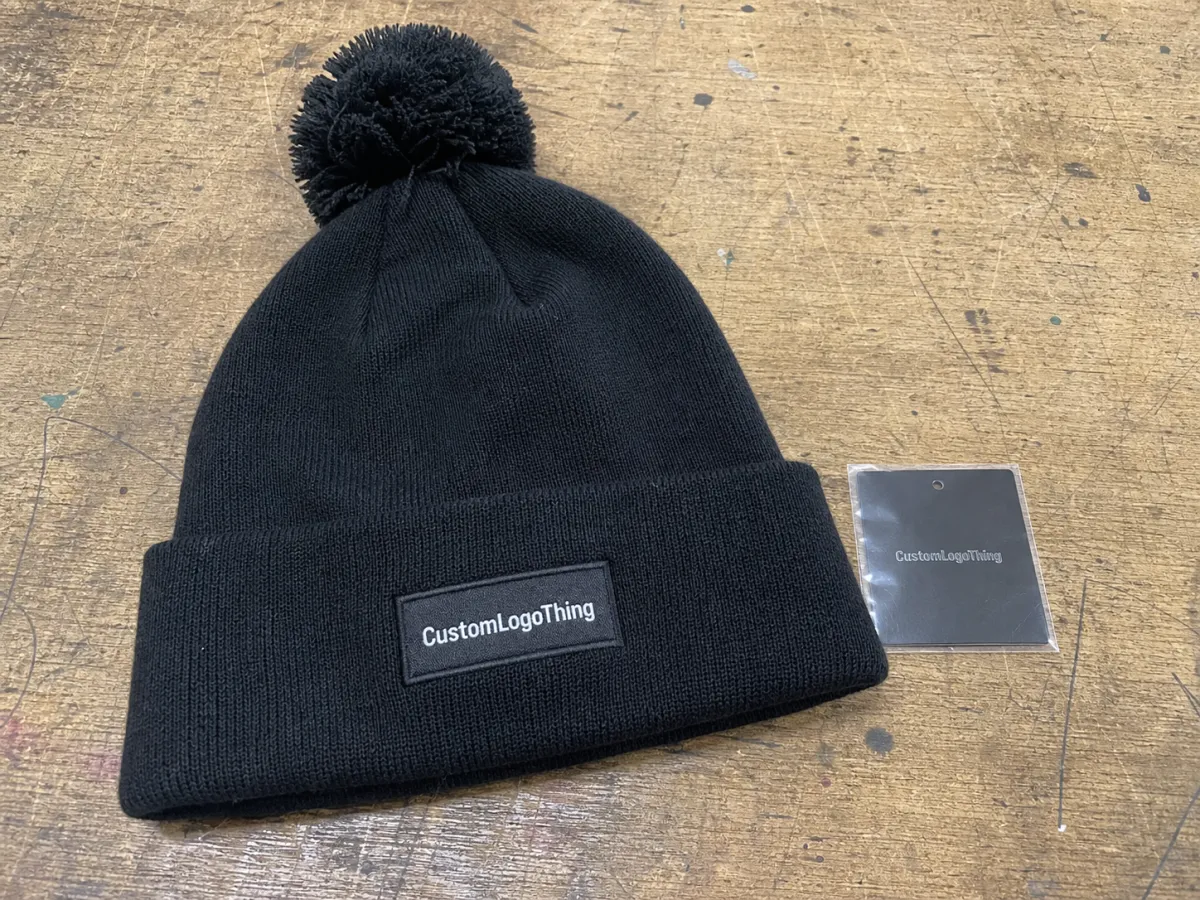
Bulk orders succeed when the buyer knows which details affect function and which ones are just visual preferences. On a beanie, a 12 cm pom may look balanced in a sample photo and oversized on an adult crown. A looser knit may feel softer, but it can also lose shape faster. A tighter knit may look cleaner, but it can cost more and feel less forgiving. The difference between a 7-gauge and 9-gauge knit, for example, changes hand feel, fabric density, and the way a logo patch sits on the surface.
Orders stall when the spec is vague. A sample comes back with too much stretch, the logo lands too close to the seam, or the yarn color is described as “close enough.” If changes arrive after the factory has already allocated material and labor, the project slows down and the price usually rises. Re-knitting a crown panel or redoing embroidery placement can add 3-7 business days before the next approval round.
Bulk planning matters because factories price around batches. If the supplier can source yarn, knit the body, attach the pom, and pack the order in one scheduled run, the unit price usually improves. If the order keeps changing, rush fees and substitutions erase the savings. A stable plan also lets the factory group related work on flat knitting machines, linking equipment, embroidery heads, and packing lines without stopping for mid-run changes.
The useful sequence is simple: spec first, sample second, price third. That order keeps the buyer focused on what actually needs to be approved before production starts. A clear spec sheet should name the fiber content, gauge, weight, target dimensions, decoration method, packaging format, and inspection criteria so the quote is based on the same assumptions every time.
Pom size, knit feel, and fit options buyers should compare
Start with the body construction. Acrylic is still the most common choice because it is affordable, easy to source, and stable at scale. Typical bulk pricing for a stock acrylic beanie with a yarn pom often falls around $2.50-$4.00 per unit at 500 MOQ, depending on decoration and packaging. Recycled acrylic blends can support a sustainability claim without moving the order into a premium bracket, but the yarn source needs to be consistent and traceable. Wool blends feel warmer and more premium, though they usually raise cost by 15%-35% and can change stretch recovery enough to matter in fit testing. For sustainability-led programs, buyers often ask for GRS-certified recycled fiber input, while organic cotton blends for lightweight knit styles may require GOTS verification where the composition supports it.
Fit is where a lot of orders go wrong. A one-size adult beanie can work, but only if cuff depth, crown height, and stretch recovery are checked against real wear. Youth sizing needs its own spec. Shorter crown depth and less volume usually fit better. If a sample looks tall on the table, it will usually look taller after it is worn and repacked. A common adult profile is about 22-24 cm crown height with a 7-8 cm cuff, while youth styles often sit closer to 18-20 cm crown height with a 6-7 cm cuff, depending on the stretch of the rib or jersey structure.
Poms carry their own tradeoffs:
- Yarn pom - lower cost, classic look, and usually the easiest to match to the knit body; often 6-12 cm finished diameter.
- Faux-fur pom - more premium appearance, but batch-to-batch consistency is harder to control and the final hand feel depends on fiber length and density.
- Attached pom - secure and clean for retail, though it is permanent once sewn with reinforced lockstitch or bartack attachment.
- Removable pom - adds hardware and assembly time, but gives the customer more flexibility and usually needs a stronger cap button or snap system.
Pom size should match the body, not overpower it. Smaller poms collapse better in transit and usually read more understated. Larger poms support a playful look, but they add bulk and can make the hat feel heavier at the crown. For youth orders, oversized trim can look accidental instead of intentional. Most buyers compare 8 cm, 10 cm, and 12 cm pom options in sampling, because those sizes often create very different visual balance on the same beanie body.
Color planning matters too. Stock colors are the safest option when the lead time is tight or the first run is small. Custom-dyed yarn gives tighter brand control, but minimums are usually higher and shade variation can appear between dye lots. Heathered yarn can hide minor inconsistencies; solid colors show every mismatch. Contrast poms work best when the body is simple and the buyer wants a clearer merch look without adding a heavy decoration package. For color approval, many factories use a physical yarn card, a lab dip, or a knitted strike-off, and the buyer should approve under daylight-equivalent lighting, not just a phone screen.
Sample check list:
- Measure crown height, cuff depth, and opening stretch.
- Check pom attachment strength with a few firm pulls.
- Inspect yarn evenness under bright light.
- Verify color against the approved reference.
- Test whether the beanie returns to shape after wear and repacking.
Decoration choices that hold up in production
Decoration should work with the knit, not fight it. On beanies, the most reliable options are woven labels, embroidered patches, sewn patches, silicone badges, and clean care labels. Each one affects cost and setup time, but the bigger issue is how the decoration behaves on a stretchy surface. A thick patch can warp the knit. A tiny mark can disappear into textured yarn. Placement is part of the engineering, not just the design.
Problems usually show up near the seam or cuff edge. If a logo sits too close to either one, the stitching gets crowded and the finish looks rushed. Oversized patches can cause puckering, especially on softer yarns. A clean vector file helps, but it will not fix a poor layout. Buyers should give the supplier exact placement measurements, logo size limits, stitch density targets, and a hard limit on thread colors. As a practical rule, woven labels often stay within 40-60 mm width, embroidery can read well around 50-80 mm, and sewn patches are usually easier to control when the face area is at least 45 mm wide.
Embroidery gives a structured look and usually holds up well, but it needs enough surface area to read clearly. Woven labels stay crisp and low-profile, which makes them a good choice when the knit should remain the main visual feature. Patches can look more premium, but they add thickness. Silicone badges are clean and modern, though they do not suit every retail aesthetic. If the buyer wants a performance or outdoor look, silicone can be a good fit; if the goal is a soft retail touch, woven label or low-pile embroidery is usually safer.
Artwork readiness saves time. Send vector files the factory can actually use. Include the exact logo size, the placement measured from the cuff or hem, and whether the badge should lie flat or stand off the surface slightly. If the supplier has to redraw a low-resolution image, the sample cycle slows down and the odds of a mistake rise. The usual sample path is artwork review, placement mockup, thread or color approval, first sample, revision if needed, then pre-production confirmation.
Packaging matters too, especially when the order is going straight to shelves or into event kits. Confirm the final pack-out requirements in writing: retail polybag, hangtag, barcode location, carton count, and any sticker placement needed for scanning. If transit protection is a concern, use the ISTA framework as a reference point. For paper tags or inserts, FSC-certified material can matter if the buyer has a sourcing standard to meet. If the program requires controlled chemical claims, OEKO-TEX Standard 100 can be relevant for yarns, labels, or trims that touch skin, and WRAP or BSCI documentation may be requested when the buyer needs broader social compliance evidence.
For repeat programs, keep the approvals in one spec sheet instead of spreading them across multiple files. One clear reference is easier to produce against than a folder of “final_final_v3” versions. A simple production pack should list artwork location in millimeters, thread or yarn codes, packaging counts, approved carton marks, and the final inspection standard.
Cost, pricing, MOQ, and quote variables for bulk beanies
Pricing starts with the variables the buyer can actually control: quantity, yarn type, pom style, decoration method, packaging, and shipping terms. Change one of those and the quote can move more than expected. A plain acrylic beanie with a yarn pom and woven label sits in a very different cost band from a recycled blend with a faux-fur pom, sewn patch, and retail-ready packaging. In many bulk programs, moving from a stock yarn to custom-dyed yarn adds about $0.20-$0.60 per unit, while upgrading from a yarn pom to a faux-fur pom can add another $0.40-$1.10 per unit depending on size and attachment method.
MOQ usually follows setup effort. Stock colors are easier because the factory is working from existing material. Custom colors, special trims, and multiple decoration steps raise the minimum because they reduce scheduling flexibility. If the first run is small, keep the design simple so the order does not turn into a custom manufacturing problem. Typical MOQs look like 200-300 pcs for stock blanks, 300-500 pcs for basic decorated beanies, and 500-1,000 pcs when custom yarn, multiple trims, or specialized packaging are required.
| Option | Typical MOQ | Indicative Unit Price | Notes |
|---|---|---|---|
| Stock acrylic, yarn pom, woven label | 200-500 pcs | $2.10-$3.20 | Best for faster starts and cleaner price bands. |
| Custom color, yarn pom, embroidered patch | 500-1,000 pcs | $2.80-$4.25 | Usually needs lab dip approval and longer sampling. |
| Recycled acrylic, faux-fur pom, retail packaging | 500-1,500 pcs | $3.60-$5.80 | More material and assembly time; ask about GRS support. |
| Wool blend, premium patch, custom hangtag | 1,000+ pcs | $4.80-$7.50 | Better for premium programs with longer lead times. |
Quote variables are easy to underestimate. Thread color count, extra embroidery hits, sewn-on labels, hangtags, sticker application, and individual polybagging all add labor. If the order needs insert cards, barcode labeling, or retail fold standards, the packing line usually slows down and the quoted price should reflect that. Buyers should ask whether the quote includes sampling, color approvals, carton marks, master carton strength test, and export documentation, because those items are often excluded from the first number.
Good pricing conversations include a clear request for breakpoints. Ask for 300, 500, 1,000, and 3,000 piece tiers so you can see where the setup is absorbed. If the quote drops sharply at 1,000 pcs, that usually means the fixed setup cost is being spread more efficiently. If it barely changes, the spec may be too complex for a small program to price well.
Production steps, timeline, and lead time from sample to shipment
A realistic timeline starts with the sample, not the mass order. The sample step usually takes 5-10 business days for a straightforward knitted beanie with a standard pom and simple label, or 7-14 business days if custom yarn, custom trim, or special packaging is involved. Once the sample is approved, production commonly runs 18-22 business days for a mid-size order, with added time if the factory must wait for custom yarn, certification documents, or packaging components.
The usual workflow looks like this:
- Spec review and quote confirmation.
- Artwork placement mockup and yarn or trim approval.
- Sample knitting or prototype assembly.
- Sample review and revision if needed.
- Pre-production approval with final measurements and packing instructions.
- Bulk knitting, decoration, trimming, and finishing.
- Final inspection, packing, carton sealing, and shipment booking.
The production floor usually follows a sequence of yarn winding or preparation, flat knitting or circular knitting, linking or seam closing, pom attachment, label sewing, trimming, steaming or pressing, folding, and packing. Beanie bodies are commonly made on computerized flat knitting machines or circular knitting machines depending on the pattern and gauge, while embroidery may be applied on multi-head embroidery machines and poms are often assembled and sewn by hand or with simple jigs for consistency.
Inspection checkpoints should be built into the process, not added at the end. At yarn or color approval, the buyer checks shade consistency and hand feel. At first sample, they check measurements, fit, and decoration placement. During bulk production, in-line inspectors should verify stitch count, panel symmetry, seam integrity, and pom attachment strength. Before shipment, the final audit should look for needle damage, loose threads, puckering, staining, mismatched trims, incorrect carton counts, and barcode readability.
A practical QC standard might include AQL 2.5 for major defects and AQL 4.0 for minor defects, though buyers can tighten or relax those thresholds depending on the use case. The final carton check should confirm quantity per carton, packing ratio by size or color, carton marks, and whether the polybags or inserts match the approved specification. If the beanies are meant for retail, the fold direction and label visibility should be verified on a random carton pull before the shipment leaves the floor.
Lead time also depends on material readiness. Stock yarn and standard trims keep the schedule tight. Custom dyes, imported faux fur, or special packaging can add 5-12 business days because each component has its own approval and receiving window. Shipping mode matters too: air can compress the calendar, while sea adds transit time but usually improves landed cost for larger orders.
What a reliable supplier should prove before you place the order
A reliable supplier should be able to show the buyer exactly how the beanie will be made, inspected, and packed. That usually means a written spec sheet, a clear sample photo set, a production timeline, and evidence that the factory can work to the requested standard. Certifications matter when they match the claim. GOTS is relevant for organic fiber programs, OEKO-TEX Standard 100 is useful for skin-contact material safety, GRS supports recycled content claims, and WRAP or BSCI can provide social compliance documentation if the buyer needs it for internal sourcing approval.
Do not assume a certificate covers the whole program. Ask which component is certified, what the scope is, and whether the exact yarn, label, or trim is inside that scope. A recycled beanie body may qualify for a GRS claim, while a separate woven label or badge may not be included unless its supply chain is documented too. If the buyer needs a formal claim on hangtags or product pages, the paperwork should match the actual materials and production records.
A strong supplier should also explain:
- What machine type will knit the body and what gauge it uses.
- Whether the pom is machine-made or hand-finished and how it is attached.
- What decoration method is used and how placement is controlled.
- What inspection checkpoints happen before bulk packing.
- What packaging, barcode, and carton standards can be supported.
Ask for sample photos with measurements, not just styled images. A good sample pack should include front, back, side, and inside shots, plus close-ups of the cuff, seam, pom attachment, and logo area. If there is a claim about softness, warmth, or recycled content, the supplier should be able to back it with material specifications rather than vague marketing language.
Also verify whether the supplier can support a small order without cutting corners. Sometimes a factory will quote a low MOQ but switch to mixed materials, unbranded trims, or simplified construction after the order is approved. That is why the pre-production sample and the signed spec sheet matter: they create a single source of truth before materials are cut.
Next steps: gather specs, request a quote, and reserve production
Before asking for a quote, gather the basics in one file: body material, knit gauge, cuff depth, crown height, pom diameter, decoration method, placement measurements, color references, packaging details, and target delivery date. If you can include quantity tiers, the supplier can price the run more accurately and tell you where the minimums change. That also makes it easier to compare bids on equal terms instead of comparing different assumptions.
When you request pricing, ask for these exact outputs: unit price at 300, 500, and 1,000 pcs; sample fee; sample lead time; bulk lead time; packing details; and what is included or excluded from the quote. If the order needs compliance documents, ask for them at the same time so they do not become a surprise later. A good quote should separate product cost, decoration cost, packaging cost, and shipping assumptions.
Reserve production only after the sample, placement, and materials are approved. That protects the schedule and reduces the chance of a mid-run correction. If the delivery date is fixed, build in a buffer for sampling, pre-production confirmation, and freight booking. A beanie order can move quickly when the spec is tight, but only if the buyer has already made the key decisions.
If the project is still at the planning stage, start with a one-page spec sheet and a photo reference set. That is usually enough to get a realistic quote and a cleaner sample cycle on the first pass.
FAQ
What is a realistic MOQ for toy pom pom beanies?
For a simple stock style, 200-500 pcs is common. Once you add custom color, faux-fur poms, or premium packaging, 500-1,000 pcs is more typical.
How long does sampling usually take?
A basic sample often takes 5-10 business days. If the order needs custom yarn, a new patch, or packaging proofing, 7-14 business days is more realistic.
What lead time should I expect for bulk production?
For a standard decorated beanie, 18-22 business days after sample approval is a practical planning range, not including freight. Custom yarn or imported trims can push that out by another week or two.
Which certifications matter most?
Use GOTS for organic fiber programs, OEKO-TEX Standard 100 for material safety claims, GRS for recycled content, and WRAP or BSCI when you need social compliance support.
What should I inspect on the first sample?
Check dimensions, stretch recovery, pom size, attachment strength, decoration placement, yarn evenness, and whether the beanie returns to shape after wear and repacking.
What defects matter most in final inspection?
Loose threads, uneven crown shape, incorrect color, weak pom attachment, crooked labels, puckering around patches, wrong carton counts, and unreadable barcodes are the most common shipment blockers.

