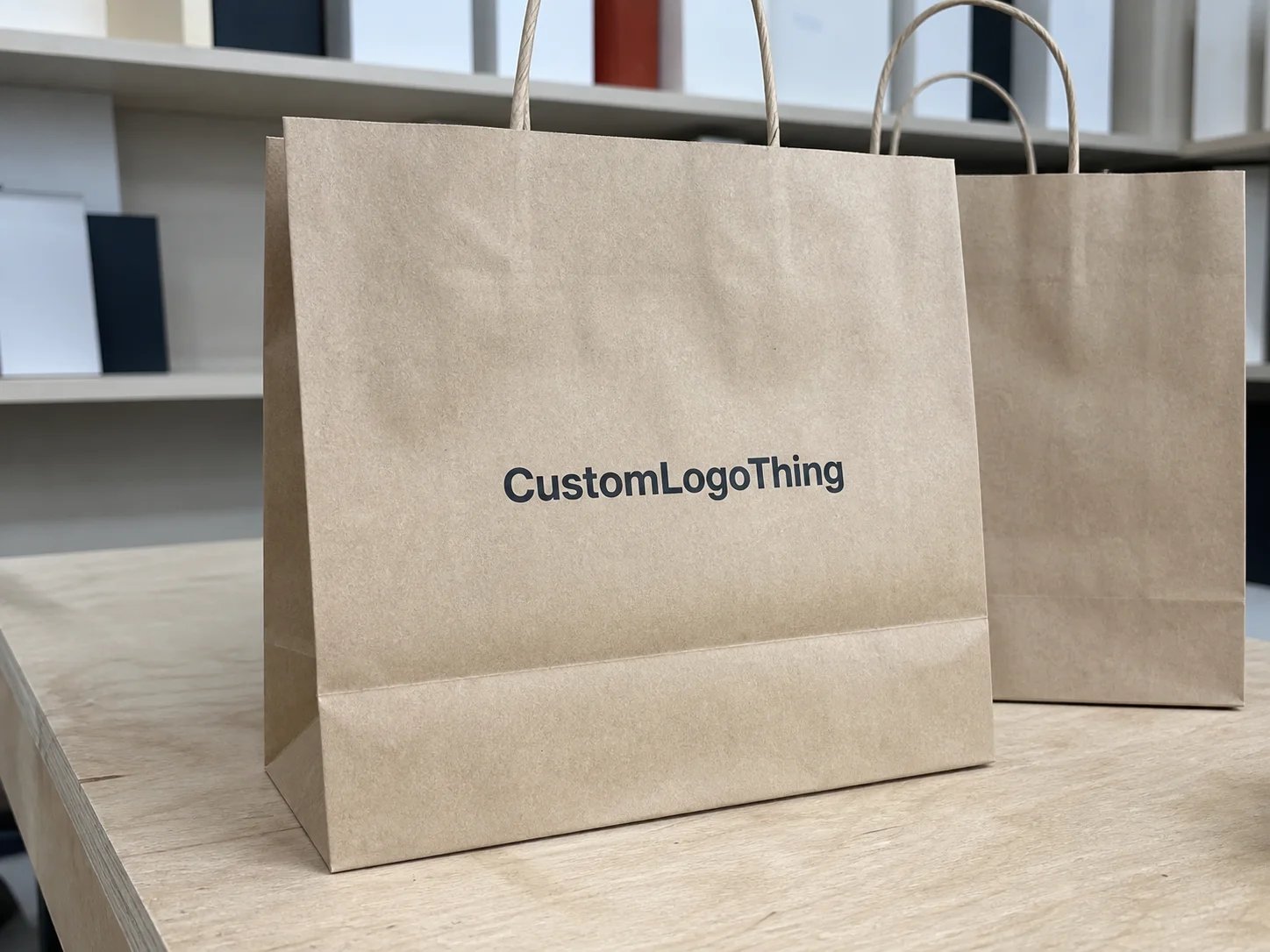
Buyer Fit Snapshot
| Best fit | Branded Corrugated Boxes Supplier projects where brand print, material claims, artwork control, MOQ, and repeat-order consistency need to be specified before quoting. |
|---|---|
| Quote inputs | Share finished size, material target, print colors, finish, packing count, annual reorder estimate, ship-to region, and any compliance wording. |
| Proofing check | Approve dieline scale, logo placement, barcode or warning zones, color tolerance, closure strength, and carton packing before bulk production. |
| Main risk | Vague material claims, crowded artwork, missing packing details, or unclear freight terms can make a low unit price expensive after revisions. |
Fast answer: Branded Corrugated Boxes Supplier: Board, Finish, Dieline, and Unit Cost should be specified like a repeatable production item. The safest quote records material, print method, finish, artwork proof, packing count, and reorder notes in one written spec.
Production checks before approval
Compare the actual filled-product size with the drawing, then confirm tolerance on folds, seals, hang holes, label areas, and retail display edges. Reserve space for logos, QR codes, warning copy, and material claims before decorative graphics fill the panel.
Quote comparison points
Review material grade, print process, finish, sampling route, tooling charges, carton quantity, and freight assumptions side by side. A quote is only useful when the supplier can repeat the same color, closure quality, and packing count on the next order.
Branded Corrugated Boxes Supplier: How to Choose One
A branded Corrugated Boxes Supplier does a lot more than slap a logo on a carton and call it done. The box has to survive shipping, stack properly in a warehouse, and still look like someone planned it on purpose. That sounds basic. It is not. A weak carton can crush product, slow fulfillment, and make a brand look cheap before the customer even opens the lid. A good branded corrugated boxes supplier protects the product and the margin. That is the job.
I have seen teams spend weeks polishing packaging art and then treat the structure like an afterthought. Bad idea. The right supplier helps you balance print, board strength, fit, freight, and lead time without pretending those tradeoffs do not exist. The wrong one sends a pretty sample that folds like wet cardboard the first time it hits a dock. That kind of surprise is expensive. And annoying. Mostly annoying.
What a Branded Corrugated Boxes Supplier Really Does
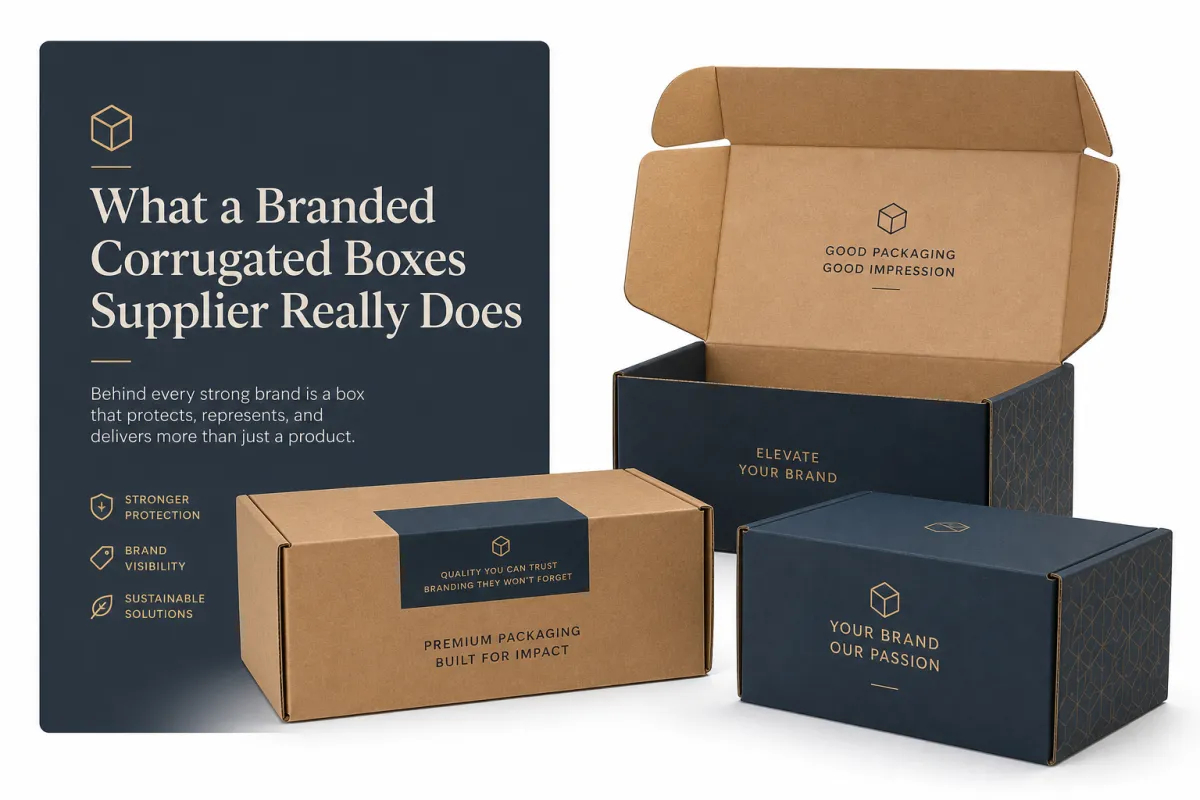
A branded corrugated boxes supplier handles far more than printing. The work starts with the box style and board grade, then moves through dieline setup, print method, converting, finishing, pack-out testing, and shipping prep. If one of those steps gets skipped, the whole order can go sideways.
The terminology is simple once you strip away the packaging jargon. Linerboard is the flat paper on the outer and inner faces of corrugated board. Flute is the wavy middle layer that gives the carton strength and cushioning. Single-wall board uses one flute layer and works for plenty of ecommerce and retail shipper jobs. Double-wall adds another flute and liner, which makes sense for heavier products, longer shipping lanes, or rough handling. Die-cut boxes are cut to a custom shape so the product fits the package instead of forcing the product to fit whatever the box happens to be. A finish can be matte, gloss, aqueous, or left uncoated, depending on how the carton should look and hold up.
For a packaging buyer, the value goes beyond branding. A branded corrugated boxes supplier should help the carton do three things at once:
- Protection - keep the product intact through handling, stacking, and transit.
- Brand presence - make the carton look intentional the second it leaves the pallet or lands on a doorstep.
- Operational fit - move through the packing line without burning labor on bad folds or awkward closures.
That last piece gets ignored all the time. A box can look great and still be miserable to assemble, tape, stack, or store. A good branded corrugated boxes supplier pays attention to closure behavior, print placement, pallet pattern, and whether the finished carton survives real shipping abuse instead of just a glossy mockup. Fancy renderings do not catch crushed corners. Reality does.
Businesses that benefit from a branded corrugated boxes supplier are not limited to ecommerce brands with polished decks and too many fonts. Subscription brands, retail replenishment programs, cosmetics, supplements, home goods, industrial parts, and promotional kits all get value from custom corrugated packaging. If the product ships often, sits on shelves, or reaches the customer before the outer shipper is removed, the box matters.
Corrugated also matters because of what happens after the package is opened. The Paperboard Packaging Council has useful background on reuse and recycling systems at packaging.org. A branded corrugated boxes supplier that understands recycled content, fiber sourcing, and end-of-life claims is usually easier to work with than one that only cares where the logo lands. That stuff gets tested later, and you do not want to be improvising then.
That is the real role in plain English: a branded corrugated boxes supplier keeps structure and presentation from fighting each other.
How a Branded Corrugated Boxes Supplier Works
The process looks straightforward on paper and a little messier in practice. A branded corrugated boxes supplier usually starts with a brief, builds a quote, confirms the dieline, reviews artwork, produces a proof or sample, then moves into production and delivery. The quality of the brief decides whether the project feels controlled or kind of chaotic.
Good suppliers ask the same questions early because the answers shape everything else. Leave them out and the quote becomes guesswork. A serious branded corrugated boxes supplier will want:
- Product dimensions, including inserts or any internal cushioning
- Product weight and whether the box ships singly or in multiples
- Shipping method, such as parcel, freight, or retail distribution
- Stacking needs for warehouse storage or palletized shipping
- Print coverage, number of colors, and whether the artwork wraps the full carton
- Target quantity and whether repeat orders are likely
Artwork prep is where a lot of jobs fall apart. The supplier will usually provide a dieline, which is the flat template showing fold lines, cut lines, and glue areas. Your designer builds inside that template, keeps key text away from folds, and adds bleed where needed. Send a file that ignores the dieline and a branded corrugated boxes supplier can still print it, but the finished carton may look like it lost a fight with a folding knife. Not ideal.
Print method changes the whole feel of the project. Flexographic printing is common for larger runs and straightforward artwork. It is efficient and dependable, especially on shipping cartons with bold graphics or one-to-three-color branding. Digital print works better for shorter runs, variable data, and tighter turnaround jobs where tooling costs need to stay low. Litho-lamination is the premium route, used when a buyer wants a printed sheet laminated to corrugated board for retail-ready packaging. A smart branded corrugated boxes supplier will recommend the method that fits the order size and visual target, not the one that sounds fancy in a sales call.
A box that saves twenty cents and costs twelve dollars in damage is not a bargain. It is a paperwork hobby.
Quality control is the last line of defense, and it should not be treated like a checkbox. A competent branded corrugated boxes supplier checks board integrity, print registration, glue strength, carton fit, and how the package behaves when packed and stacked. For tougher programs, suppliers may also recommend transit testing that follows ISTA methods. The ISTA standards help simulate shipping conditions before the full run leaves the dock.
Brands comparing options before placing an order should look at actual fit, not just a sample photo or polished mockup. A supplier that can produce Custom Shipping Boxes with consistent dimensions and repeatable print quality is often the better choice over one that only knows how to pitch a nice prototype.
In practice, a branded corrugated boxes supplier is coordinating paper, structure, print, and logistics at the same time. That is why the good ones ask blunt questions. They are not being difficult. They are trying to keep you from paying for a mistake that could have been caught in ten minutes.
Key Factors That Shape Quality and Pricing
If two quotes from a branded corrugated boxes supplier look wildly different, there is usually a reason. Sometimes it is harmless, like one supplier bundling freight while another shows it separately. Sometimes it is not harmless at all, like one quote using thinner board that will buckle during normal handling. Either way, compare specs line by line before you compare prices.
The main cost drivers are not mysterious. They are the things buyers tend to notice only after the invoice lands. A branded corrugated boxes supplier prices orders based on:
- Box dimensions - larger cartons use more board and more freight space.
- Board grade - stronger board costs more, but it usually costs less than product damage.
- Flute profile - E flute, B flute, and C flute behave differently in print and stacking.
- Print coverage - a one-color logo costs less than full-wrap artwork.
- Number of colors - each added color can raise setup and print cost.
- Coatings and finishes - aqueous coating, varnish, or lamination add cost and handling value.
- Order volume - higher quantities lower the unit cost by spreading setup across more boxes.
Small changes can move pricing more than people expect. Shift from a standard mailer to a custom die-cut style and tooling costs can jump. Add tight registration demands or a premium finish and the quote changes again. A branded corrugated boxes supplier is not inventing drama here; the machine setup really does change, and somebody has to pay for it.
Here is the pricing trap I see constantly: buyers compare the lowest unit price and ignore everything else. That usually means they miss sample charges, tooling, freight, storage, and rush fees. A branded corrugated boxes supplier can quote a low per-unit number and still be the expensive option once the full project is landed. Ask for the total landed estimate, not the vanity price.
| Quote Type | Typical Unit Range | Best For | Watch Outs |
|---|---|---|---|
| Basic stock-style branded carton | $0.45-$0.80 | Simple logo print, lower risk shipping, faster launches | Limited size fit, fewer branding options |
| Custom die-cut single-wall box | $0.70-$1.35 | Ecommerce, subscription, retail-ready pack-outs | Tooling and sample costs can add up |
| Premium litho-laminated box | $1.10-$2.50+ | High-impact retail presentation, shelf display, gift packaging | Higher setup, stricter artwork control, longer lead times |
Those numbers are rough, not a promise. Order size, print coverage, board grade, and shipping distance can move them up or down quickly. A branded corrugated boxes supplier that gives you a realistic range is usually more trustworthy than one with a suspiciously perfect quote and no explanation.
Performance specs matter just as much as price. Compression strength tells you how well the carton stacks without collapsing. Puncture resistance matters if the package may rub against other cartons or rough freight surfaces. Moisture exposure matters if boxes sit in a humid warehouse or move through cold-chain conditions with condensation. Fit on the packing line matters because an awkward carton slows labor and creates waste.
Testing is where those claims turn into facts. A serious branded corrugated boxes supplier should be able to talk about ASTM compression testing, basic drop testing, and whether the carton needs an ISTA sequence before a full run is approved. For packaging teams that need evidence instead of guesses, that is not fluff. It is the difference between a controlled launch and a long string of warehouse complaints.
Certification and sourcing questions matter too. If your brand sells to retailers or needs sustainability claims that hold up, ask about FSC-certified board and recycled content documentation. A supplier that can speak clearly about FSC sourcing is usually easier to audit later. If you want more background on certified fiber sourcing, FSC is the right place to start.
Bottom line: ask every branded corrugated boxes supplier to quote the exact same specs. Same size. Same board. Same print method. Same quantity. Same delivery location. Otherwise the comparison turns into theater, and packaging already has enough drama.
Step-by-Step: From Brief to Final Production
The cleanest projects follow a predictable sequence, and a good branded corrugated boxes supplier will walk you through it without making you guess what happens next. The process begins with a product brief. That brief should explain what goes inside the box, how fragile the item is, whether it ships alone or in multiples, and what the customer should feel when opening it. If you skip that part, you are basically asking the supplier to read your mind. Good luck with that.
Step one is choosing the structure before the artwork. That sounds obvious, yet brands still do it backward. They fall in love with the design, then discover the box is too small, too weak, or miserable to assemble. A smart branded corrugated boxes supplier will push back on that. Pretty art does not save a bad fit. The box has to protect the product first.
Step two is getting the dieline and building artwork around it. Keep critical text away from folds. Keep barcode placement sensible. Maintain bleed and safe zones. If the carton is printed across multiple panels, think about how the design reads after folding. A branded corrugated boxes supplier can usually catch layout issues early if the file comes in cleanly, but they cannot rescue a design that was built like a puzzle with missing pieces.
Step three is proofing. Depending on the order, the supplier may send a PDF proof, a physical white sample, or a printed prototype. For important launches, expensive products, or retail-ready packaging, I always recommend approving a sample before the full run. A branded corrugated boxes supplier that resists sampling on a technical order is asking you to gamble with inventory. That is a strange hobby.
Step four is production sign-off. Before the order moves, confirm quantity, shipping method, delivery address, and who is responsible for approving the final proof. Miss that detail and one delayed email can hold up the whole run. A good branded corrugated boxes supplier will document the sign-off clearly so nobody argues later about what was approved.
Here is a simple way to think about the production path:
- Share the product brief and target quantity.
- Receive the box recommendation and quote.
- Approve the dieline or structure sample.
- Review artwork and pre-production proof.
- Approve sample or prototype if required.
- Move into production and freight scheduling.
That sequence looks basic because it is. Projects break when one step gets rushed or skipped. A branded corrugated boxes supplier that keeps the process disciplined usually saves more money than the one who promises speed and hopes for the best.
If you want to see how structured packaging programs are handled in practice, reviewing Case Studies can help you spot what good planning looks like. The details matter. Especially the boring ones.
Process and Timeline: What to Expect Before Boxes Arrive
Timeline expectations need to be realistic or the whole project turns into a panic exercise. A branded corrugated boxes supplier can move quickly, but not if the brief is vague, the artwork is messy, or the spec keeps changing. Most delays are self-inflicted. Packaging has a way of punishing optimism.
For a standard custom order, a reasonable timeline often looks like this:
- Spec review and quoting - 1 to 3 business days if the brief is complete.
- Artwork and dieline review - 2 to 5 business days, depending on revisions.
- Sampling or prototype approval - 5 to 10 business days, sometimes more for complex structures.
- Production - 10 to 20 business days after approval, often longer for large runs or premium finishes.
- Freight transit - varies by region, shipping mode, and warehouse appointment windows.
A branded corrugated boxes supplier can shorten the schedule if the buyer is decisive, the files are print-ready, and nobody changes dimensions halfway through sampling. That same supplier can lose a week in a flash if the artwork arrives without bleed, the dimensions are wrong, or legal wants one more text change after approval. That is how “quick jobs” turn into calendar problems.
The biggest timing mistakes are predictable:
- Missing final artwork files
- Unclear box dimensions or product tolerances
- Too many revision rounds
- Seasonal congestion and freight bottlenecks
- Late payment approval or purchase order delays
A serious branded corrugated boxes supplier should offer a milestone schedule. Not a vague promise. A real schedule tells you when the proof is due, when the sample is due, when production starts, and when freight leaves the dock. That gives operations teams time to line up receiving, storage, and labor planning without guessing.
For brands with repeat needs, repeatability matters more than a one-time price drop. The best supplier is the one who can deliver the same box, to the same standard, every cycle. Not the one who wins the first quote and disappears when the reorder lands.
There is also a practical reason to think ahead on timing: carton inventory can sit in your warehouse longer than expected. If your run size is small but your launch volume is high, ordering too late creates a bottleneck that overtime will not fix. A dependable branded corrugated boxes supplier helps map lead time to actual demand, not optimism.
Common Mistakes When Choosing a Supplier
The worst choice is usually the cheapest one, but not because cheap is immoral. It is because cheap often hides missing information. A branded corrugated boxes supplier can quote low by trimming board strength, using a weaker print method, excluding freight, or assuming nobody will ask about samples. That is not value. That is accounting with a smile.
One common mistake is choosing a carton that looks beautiful but crushes in transit. Heavy products need the flute profile and board grade to match the load. A branded corrugated boxes supplier should talk honestly about compression strength and puncture resistance, not just how crisp the logo looks on screen. A box that fails under stacking pressure does not care how good the mockup was.
Another mistake is skipping samples. That gets risky fast with die-cut boxes, closure tabs, and anything that needs tight fit tolerances. A sample can reveal measurement drift, print shift, or closure issues before you pay for a full run. A branded corrugated boxes supplier worth keeping will not mind making one when the order has real consequences.
People also forget the packing line. A carton may look fine in a catalog and still waste labor if it takes too long to assemble or tape. Or the flaps may interfere with automated equipment. A branded corrugated boxes supplier that asks about pack-out speed is thinking beyond graphics, which is exactly what you want.
Do not ignore humidity, stacking, or shipping distance either. Corrugated behaves differently in a dry warehouse than in a damp one. Long-distance freight brings more vibration, more handling, and more chances for damage. A decent branded corrugated boxes supplier will ask where the boxes will travel and how long they will sit before use.
Here is a quick reality check:
- If your product weighs more than 5 to 7 pounds, board strength matters a lot more than most buyers assume.
- If your box ships through parcel networks, edge crush and drop resistance deserve attention.
- If your box sits in storage for weeks, coating and moisture resistance become more relevant.
- If your order includes brand-critical art, proofing and print registration are not optional.
A thoughtful branded corrugated boxes supplier helps you avoid those traps before they become expensive lessons. That is the real value. Not the lowest number on a spreadsheet.
Expert Tips and Next Steps for Shortlisting Suppliers
If you are building a shortlist, start by asking for apples-to-apples quotes. A serious branded corrugated boxes supplier should be willing to quote the same dimensions, board grade, flute type, print method, quantity, and delivery location as the other suppliers in the running. If someone resists that, the comparison is already crooked.
Ask for samples and photos of recent work. Not polished mockups. Actual finished cartons. Better yet, ask for examples from brands with similar shipping needs. A branded corrugated boxes supplier that makes clean premium boxes for gift sets may not be the right choice for heavy ecommerce shippers. Packaging is not one-size-fits-all, no matter how hard sales teams push that idea.
Communication matters more than people admit. Watch how quickly the supplier replies, how clearly they explain revisions, and whether they flag risks early. A strong branded corrugated boxes supplier does not just answer questions; they ask the next useful one before you know you need it. That saves time and keeps the order from drifting.
Repeatability should score high. The best partner is the one who can make the same carton well every time, not just once when everyone is paying attention. A branded corrugated boxes supplier with stable processes, documented specs, and a clean approval trail will usually outperform a flashy vendor with loose habits.
If you want a practical way to score vendors, use these criteria:
| Supplier Criterion | What Good Looks Like | Why It Matters |
|---|---|---|
| Spec accuracy | Quotes match exact dimensions, board, and print setup | Prevents surprise costs and fit issues |
| Sampling process | Physical sample or prototype before full run when needed | Catches structural mistakes early |
| Lead-time discipline | Clear milestones and honest schedule updates | Helps operations plan inventory and labor |
| Print consistency | Repeatable color, registration, and finish quality | Protects brand presentation across reorders |
| Problem handling | Fast, direct response when something goes wrong | Separates real partners from brochure sellers |
Shortlisting gets easier when you stop asking, “Who is cheapest?” and start asking, “Who will still be useful after the first order?” A branded corrugated boxes supplier should make your packaging program calmer, not more fragile.
Before you commit, build a brief, compare three quotes, approve one sample, and run a pilot order. That sequence keeps risk contained and gives you real data instead of optimistic assumptions. A good branded corrugated boxes supplier will respect that process because it shows you care about quality, not just a low number.
If you want to see how a packaging partner supports that kind of planning, review the Case Studies section and look for projects with similar dimensions, print complexity, or shipping conditions. The more your job resembles a proven use case, the less room there is for expensive surprises.
Frequently Asked Questions
What does a branded corrugated boxes supplier handle for custom packaging?
A good branded corrugated boxes supplier handles box structure, board selection, print setup, prototyping, and production. They should also help with dielines, artwork checks, and shipping coordination so the job does not turn into guesswork.
How do I compare quotes from a branded corrugated boxes supplier?
Compare only identical specs: size, board grade, flute type, print colors, finish, quantity, and delivery terms. Watch for hidden costs such as tooling, sample charges, freight, storage, and rush fees, because that is where cheap quotes get sneaky.
What affects branded corrugated box pricing the most?
The biggest drivers are board strength, box size, print coverage, number of colors, custom cutting, and order quantity. Freight and setup costs can matter a lot on smaller runs, so a slightly higher unit price may still be the better deal.
How long does it take to get branded corrugated boxes made?
Simple orders move faster, but custom boxes usually need time for quoting, artwork review, sampling, production, and shipping. If you need a tight timeline, have print-ready files, firm dimensions, and fast approval turnaround before you request the run.
Should I choose custom branded boxes or use stock boxes with labels?
Use stock boxes when the goal is basic protection and speed, especially for low-risk shipping or temporary programs. Choose custom branded boxes when fit, presentation, and repeatable fulfillment matter enough to justify the extra setup.
Choosing a branded corrugated boxes supplier is less about finding someone who can print a logo and more about finding a partner who understands board strength, fit, print quality, timing, and freight reality. That is the difference between a carton that looks nice in a render and a carton that actually holds up in the warehouse, on the truck, and at the customer’s door.
If you want a clear next move, use this sequence: write a tighter spec, request matched quotes, approve a sample, then run a pilot before you place a larger order. That gives you real proof instead of wishful thinking. It also tells you whether the branded corrugated boxes supplier in front of you is a packaging partner or just a printer with a sales pitch. The difference shows up fast.