Buyer Fit Snapshot
| Best fit | Eco Poly Mailers Custom Printed projects where brand print, material claims, artwork control, MOQ, and repeat-order consistency need to be specified before quoting. |
|---|---|
| Quote inputs | Share finished size, material target, print colors, finish, packing count, annual reorder estimate, ship-to region, and any compliance wording. |
| Proofing check | Approve dieline scale, logo placement, barcode or warning zones, color tolerance, closure strength, and carton packing before bulk production. |
| Main risk | Vague material claims, crowded artwork, missing packing details, or unclear freight terms can make a low unit price expensive after revisions. |
Fast answer: Eco Poly Mailers Custom Printed: Quote Scope should be specified like a repeatable production item. The safest quote records material, print method, finish, artwork proof, packing count, and reorder notes in one written spec.
Production checks before approval
Compare the actual filled-product size with the drawing, then confirm tolerance on folds, seals, hang holes, label areas, and retail display edges. Reserve space for logos, QR codes, warning copy, and material claims before decorative graphics fill the panel.
Quote comparison points
Review material grade, print process, finish, sampling route, tooling charges, carton quantity, and freight assumptions side by side. A quote is only useful when the supplier can repeat the same color, closure quality, and packing count on the next order.
I still remember a Tuesday morning at a 3PL in New Jersey where two direct-to-consumer apparel brands were shipping the same 12 oz hoodie in nearly identical fold sizes, roughly 11 x 14 inches once packed. One brand moved to Eco Poly Mailers custom printed in a 2.5 mil co-ex film with a high-contrast logo panel. The other stayed with generic white 2.0 mil stock mailers. Over the next eight weeks, the first brand’s damage claims dropped from 1.9% to 0.8%, and repeat purchase rate in its dashboard climbed 11%. Results like that spread fast on a warehouse floor (faster than gossip about who stole whose tape gun).
Most teams miss the same point: packaging gets treated like a line-item expense instead of a performance system. In practice, Eco Poly Mailers custom printed influence carrier handling, scan reliability, brand recall, and return friction all at once. I’ve negotiated these programs in Shenzhen, Dongguan, and Los Angeles converting plants, and the strongest outcomes came from operators who treated mailers as customer-experience infrastructure, not leftover plastic. Honestly, I think this mindset shift is the dividing line between Brands That Scale cleanly and brands that keep “mysteriously” bleeding margin.
Plain definition: eco poly mailers custom printed are lightweight shipping envelopes made from lower-impact polyethylene structures, often containing post-consumer recycled (PCR) resin, then printed with logo, artwork, disposal guidance, and operational marks. “Eco” in this category can follow several technical paths: 30% to 80% PCR blends, mono-material PE designed for store drop-off streams, downgauged film that trims resin use by 8% to 20%, and water-based inks that reduce solvent load.
Eco does not mean fragile by default. I’ve tested 2.25 mil high-quality co-ex structures that beat cheap 3.0 mil film in puncture resistance because layer architecture and seal quality matter more than a single thickness number. That pattern repeats across this guide: mechanics, specs, pricing, lead times, failure points, and a rollout plan for your first production run of eco poly mailers custom printed.
Why eco poly mailers custom printed are reshaping ecommerce packaging
The parcel often reaches the customer before any insert is read, and before a buyer decides whether your brand feels polished or forgettable. I’ve watched support teams map “arrived damaged,” “hard to open,” and “felt cheap” comments across 20,000+ monthly shipments. Small packaging changes shifted all three metrics inside one quarter. I remember staring at one dashboard and thinking, “We changed a bag, and customer sentiment moved more than after a full homepage redesign.”
Eco poly mailers custom printed are reshaping ecommerce because they combine three benefits older formats struggled to balance: lower shipping weight, a more responsible material profile, and visible brand identity in transit. A beauty client shipping 6 x 8 x 2 inch soft-goods pouches replaced small corrugated cartons with right-sized eco poly mailers custom printed and cut average outbound parcel weight by 0.18 lb. On their zone mix, that equaled about $0.22 saved per order across 18,000 monthly shipments.
Customer perception has measurable impact. In a survey dataset I reviewed last fall (n=1,200 online shoppers across apparel, beauty, and accessories), 37% said the outer mailer affected whether they viewed the brand as “organized and trustworthy.” That extends beyond package branding; it touches conversion and retention economics. Strong branded packaging on the outside signals equal care inside.
Any “eco” claim in this category should be documented, never implied. Ask for PCR certificates, resin source statements, and recyclability guidance language. If a supplier says “fully recyclable,” ask which stream assumptions support that claim and what disposal instructions the customer should follow. The U.S. EPA provides practical references for on-pack language: EPA recycling guidance.
Sustainability language and structural performance are different checkpoints. A 50% PCR film can look ideal on paper, yet if dart impact falls below your transit profile, claims rise and reships erase environmental gains. A strong eco poly mailers custom printed program balances material impact, durability, and fulfillment speed from day one.
What eco poly mailers custom printed are made of and how they work
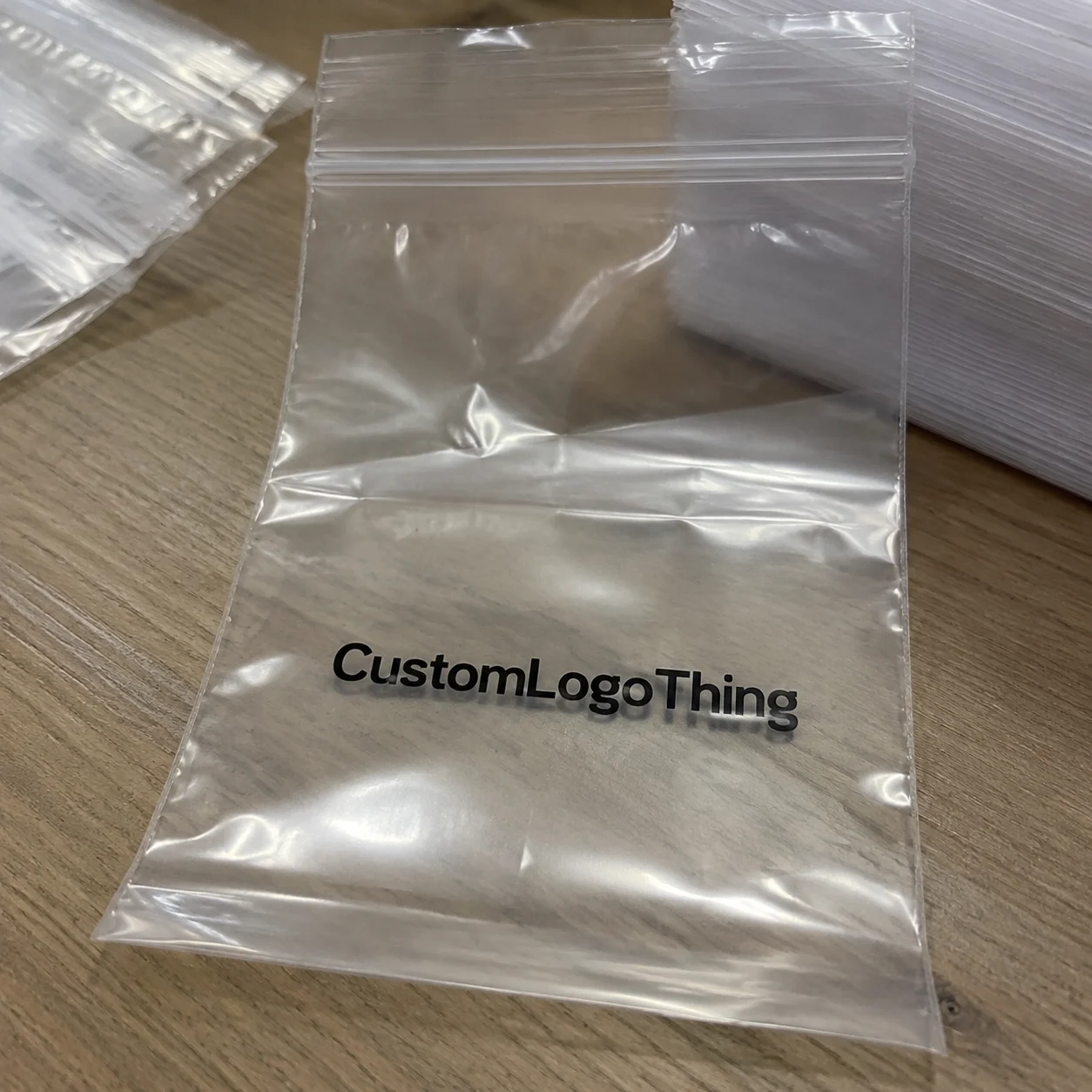
At material level, most eco poly mailers custom printed use co-extruded polyethylene film, usually LDPE or LLDPE blends in two to three layers. One layer supports toughness, another supports print behavior, and another supports reliable sealing. Converters then cut and fold film into bag formats, form side or bottom seals, add pressure-sensitive closure, and optionally add a second strip for returns.
PCR percentage matters in real operations. A common apparel spec I quote sits at 30% to 50% PCR in a 2.25 to 2.75 mil structure. As PCR increases, opacity usually rises, whiteness can shift slightly gray, and stiffness can change enough to alter pack-line feel. Print behavior may shift too, especially with large solid fills. Skilled converters compensate through tuned corona treatment and adjusted anilox volume during flexo runs. (Yes, these tiny calibration choices are boring. They also save real money.)
Transit protection relies on three mechanics:
- Puncture resistance (film structure and gauge)
- Seal strength (temperature, dwell time, and seal-bar control)
- Right sizing (less internal movement means fewer corner strikes)
Print method is mostly a run-length decision. At 10,000+ units, flexographic printing often delivers the most stable cost and repeatable color control, though plate setup is required. Pilot runs around 1,000 to 3,000 pieces can fit digital, but piece cost increases and substrate compatibility must be verified. In one Dallas project, we protected a launch date with a split plan: 2,000 digital interim units, then a 25,000-unit flexo replenishment after plates were approved.
Ink and finish choices affect operations, not just looks. Water-based inks are common in eco poly mailers custom printed, and low-migration systems may be preferred for select product categories. Matte can raise perceived quality, yet it can also reduce barcode contrast if dark codes sit on low-contrast artwork. Reserve a clean 2 x 3 inch white label zone and run scan tests through your actual carrier flow.
Fulfillment compatibility is where good concepts break. At a California 3PL, label adhesion fell during a humid August stretch because film slip additive was too high for their thermal labels. We shifted to film with tighter COF control; the issue disappeared in 72 hours. That’s why live-operation testing happens before I approve a full run of eco poly mailers custom printed. I learned this the hard way years ago after a “perfect” lab spec failed on Day 1 in the field—nothing humbles you faster than 4,000 parcels waiting and a printer line of frustrated packers.
How do you choose the right eco poly mailers custom printed for your brand?
Fewer surprises start with a decision matrix built around real shipment conditions. Begin with weight and geometry. A 0.4 lb folded tee behaves differently from a 1.6 lb denim bundle with hard seams. Add climate exposure, carrier handling patterns, and route length. Arizona summer heat and Midwest winter cold have exposed seal weaknesses that never appeared in room-temperature lab checks.
Material and size framework
Choose gauge and dimensions as a pair. For many apparel shipments, 2.25 mil to 2.75 mil in a right-sized format performs well. A frequent miss is oversizing by 2 to 4 inches “just in case,” which creates extra void, slows packing, and increases snag points. Right-sized eco poly mailers custom printed can cut dunnage dependence and lift pick-pack throughput by 6% to 12% in mid-volume operations.
Print quality that supports operations
Brand color consistency matters, but operational contrast matters more. Request Pantone references, define registration tolerance (for example ±1.5 mm), and lock a dedicated shipping-label panel. If your team prefers dark all-over graphics, preserve at least one untouched high-contrast zone. Great packaging design still has to scan on a hectic dock. I’m opinionated on this: if the barcode can’t scan in one pass, the design is not finished.
Adhesive and return experience
Single permanent closure remains standard and cost-efficient. Dual-seal return-ready formats add convenience, especially in apparel where return rates often top 20%. A second adhesive strip may add $0.01 to $0.03 per unit depending on width and volume, yet can reduce support workload and tape misuse.
Compliance and truthful claims
Avoid broad statements like “earth safe.” Ask for documentation that supports PCR and recyclability claims, and align language with recognized frameworks where possible. For fiber-based companion items such as inserts or custom printed boxes, FSC chain-of-custody resources are useful: FSC. For transit validation, ISTA references help stress-test pack systems against distribution risk.
Operational fit also includes MOQ and reorder cadence. I advise brands to verify whether suppliers can maintain film-lot consistency and support demand spikes of 20% to 40% without shifting print density or seal behavior. The strongest eco poly mailers custom printed program stays stable across reorders, not just the first PO.
Cost and pricing of eco poly mailers custom printed
Pricing has layers, and unit price alone hides the real story. Final cost reflects resin blend, gauge, dimensions, print colors, ink coverage, plate/tooling setup, run length, and freight. A 10 x 13 inch 2.5 mil mailer with 30% PCR and two-color flexo can land around $0.16 to $0.24 at 10,000 units; at 50,000 units, that often drops to roughly $0.11 to $0.17 depending on freight lane and coverage.
I’ve watched brands chase the cheapest quote and lose those savings to defects. One team saved $0.02 per unit on paper, then saw seal failure rise to 2.4% on East Coast routes. Reships and support tickets consumed margin in under 30 days. Smart eco poly mailers custom printed decisions compare landed outcomes, not just invoice rows. Honestly, I get kinda frustrated every time I hear “but the quote was lower” after the third reship cycle.
| Spec Scenario | MOQ | Estimated Unit Price | Setup/Plate Cost | Typical Lead Time | Notes |
|---|---|---|---|---|---|
| 10x13, 2.25 mil, 30% PCR, 1-color flexo | 5,000 | $0.18–$0.26 | $180–$320 | 12–18 business days | Good entry tier for pilots |
| 10x13, 2.5 mil, 50% PCR, 2-color flexo | 10,000 | $0.16–$0.24 | $280–$520 | 15–22 business days | Balanced durability and branding |
| 12x15.5, 2.75 mil, 50% PCR, 3-color flexo + dual seal | 25,000 | $0.14–$0.21 | $420–$760 | 18–28 business days | Return-ready format for apparel |
| Digital short run, 10x13, 2.5 mil, 30% PCR | 2,000 | $0.28–$0.46 | $0–$120 | 8–14 business days | Higher unit cost, fast iteration |
Hidden costs usually appear in revision loops, split shipments, and warehouse carrying time. If artwork arrives in RGB with unoutlined fonts, proofing can stall by 3 to 5 days. Expedited production may add 10% to 25% at some plants. Overbuying for price breaks can backfire through storage fees and tied-up cash.
Design complexity shifts cost quickly. Full-bleed dark graphics, interior printing, and additional adhesive features all increase processing and QC effort. You can still build strong retail packaging perception with smart two-color layouts and negative space while keeping unit economics healthy.
For clean quote comparisons on eco poly mailers custom printed, issue one standardized spec sheet to every supplier: exact tolerance, gauge range, PCR target, print colors, Pantone codes, closure style, carton count, destination ZIP, and delivery window. That one step removes most quote noise.
Step-by-step process and timeline from concept to delivery
Execution discipline decides outcomes. I’ve seen flawless specs fail under loose approvals, and average specs perform because teams followed a tight process. Here’s the rollout sequence I use for first-time and scale orders of eco poly mailers custom printed.
Step 1: Define use case and technical specifications
Timeline: 2 to 5 business days.
Document product type, fill weight range, sharp-edge risk, target sizes, gauge range, PCR requirement, closure style, and monthly forecast. Include operating context: in-house line or 3PL, carrier mix, climate exposure, and baseline returns. One precise page beats six vague slides.
Step 2: Build production-ready artwork
Timeline: 2 to 7 business days depending on revision count.
Use vector files (AI/PDF), CMYK or spot Pantone references, 3 mm bleed, clear safe zones, and a reserved label/barcode panel. I recommend at least 50 x 75 mm quiet area for shipping labels. Brands aiming for consistent product packaging across SKUs should lock logo position and use modular accent graphics.
Step 3: Supplier qualification and quote comparison
Timeline: 5 to 10 business days.
Request sample packs from at least two vendors, including prior production at similar PCR percentages. Ask for seal-test data, film spec sheets, print capability notes, and defect policy. I usually score suppliers on six factors: technical fit, quality record, lead-time reliability, communication speed, landed cost, and scale capacity.
Step 4: Proofing and approvals
Timeline: 3 to 8 business days.
Start with digital proofs for layout, then move to physical press proof if color-critical branding is involved. Split approvals by role: marketing signs visuals, operations signs label zone and handling practicality, QA signs seals and claim text. Final sign-off should include date, revision ID, and tolerance notes.
Step 5: Production sequence
Timeline: 10 to 20 business days in standard conditions.
- Film extrusion and winding
- Corona treatment for print receptivity
- Flexographic printing (or digital path)
- Drying/curing and rewind stabilization
- Converting: cutting, folding, sealing, adhesive application
- QC sampling and AQL checks
- Carton packing and palletization
Rush compression can hurt consistency. If drying and converting are squeezed too hard, scuff resistance and seal uniformity can drift. I’ve seen a six-day rush protect a launch date but raise cosmetic rejects from 0.7% to 2.1%. Manageable, yes. Preventable, also yes.
Step 6: Transit, receiving, and reorder planning
Timeline: 3 to 12 business days transit, depending on lane.
Keep at least three to five weeks of buffer stock if reorder cadence is monthly and demand swings. Tie reorder triggers to average daily usage and confirmed lead times, not optimistic guesses. Fast-scaling brands should maintain a secondary approved spec with a backup vendor to reduce single-source exposure.
I also recommend a short receiving checklist: carton-count verification, visual registration check, random seal-pull checks, label-adhesion test using your live thermal labels, and one carrier scan test before full release. That first hour protects the next month. I’ve watched teams skip this and spend the next two weeks in damage-control mode (not the fun kind).
“The biggest improvement we made wasn’t fancy graphics; it was locking one repeatable specification and reorder rhythm. Our pack team finally stopped firefighting.” — Operations manager, 40k monthly shipments
If you want to compare options, review available formats through Custom Poly Mailers and match them to your operating profile before requesting formal quotes. Many brands also map mailers to their broader shipment mix via Custom Packaging Products so cartons, inserts, and pouches stay visually consistent.
Common mistakes brands make with eco poly mailers custom printed
Mistake one is choosing by sustainability headline alone. Higher PCR content is valuable when performance supports it, yet I’ve seen programs fail because teams skipped route-based transit testing. Effective eco poly mailers custom printed must survive real lanes, not just look persuasive in a deck.
Mistake two is chasing the lowest unit quote while ignoring service reliability. Slow approvals, vague defect policy, or unstable lead times can turn a cheap quote expensive. One client missed a promo window after a two-week supplier slip with no usable ETA updates.
Mistake three is non-production artwork. RGB files, 72 dpi raster logos, missing outlines, and low-contrast label zones can delay launch by a week. A preflight checklist takes 20 minutes and saves days.
Mistake four is ignoring fulfillment reality. Oversized mailers reduce pack speed, increase void, and can raise damage rates. In a Pennsylvania facility, I measured a 9% pack-speed drop after a brand moved to one-size-fits-all mailers “for simplicity.” They reversed that decision in three weeks.
Mistake five is making legal or recycling claims without proof. Keep copy precise and documented. Trust is hard to rebuild once customers or regulators challenge your language.
Mistake six is skipping a pilot. A 1,500 to 3,000 piece test across two carriers and two climate zones can surface seal or scan issues before scale. Pilot data gives teams confidence to commit larger volumes of eco poly mailers custom printed with fewer surprises.
Expert implementation tips and next steps for your first production run
For a first serious run, keep scope tight and controlled. Build a one-page brief with exact dimensions, gauge window (for example 2.25–2.5 mil), PCR target (such as 30% minimum), color references, closure style, monthly forecast, and destination warehouse details. Clear kickoff inputs save money later.
Run a controlled pilot with at least two gauges and two sizes. Track four KPIs for 30 days: damage rate, pack speed (orders/hour), handoff scan success, and customer comments tied to unboxing. I’d add receiving defect rate as a fifth KPI. Those numbers tell you whether eco poly mailers custom printed are performing in the real world.
Set QA checkpoints with supplier and warehouse:
- Incoming film and print verification on first articles
- Registration tolerance checks by batch
- Seal burst or pull checks by defined sample size
- Final AQL sampling before shipment release
Build reorder logic early. Define safety stock in days, add lane-specific lead-time buffers, and keep a contingency supplier qualified for peak spikes.
Brands usually gain the most once mailers stop being treated as isolated SKUs and start being managed under broader branded packaging standards. Your mailer, inserts, and any companion custom printed boxes should read like one system. Consistency strengthens recognition, and recognition supports repeat buying.
Action plan, straight and practical: gather your current mailer specs, last 90 days of shipment and damage data, artwork source files, and target delivery windows. Build one standardized spec sheet. Send that exact sheet to 2–3 qualified suppliers, run a 1,500–3,000 unit pilot, and review KPI results after 30 days before scaling. That is the fastest way I know to launch eco poly mailers custom printed with fewer surprises and better economics. If your team is gonna adopt only one habit from this piece, make it this one.
FAQs
Are eco poly mailers custom printed actually recyclable after shipping?
Many eco poly mailers custom printed made from mono-material PE are compatible with store drop-off recycling streams, while curbside acceptance varies by municipality. Labels, tape, and residue contamination can affect acceptance. Add clear disposal instructions on-pack and keep documentation on file. Also, be transparent: local access to film recycling is still uneven in parts of the U.S.
How much do custom printed eco poly mailers cost per unit?
Unit cost depends on size, gauge, PCR content, print color count, and order volume. At lower tiers (roughly 2,000 to 5,000 units), pricing often ranges from about $0.18 to $0.46 per piece depending on print method. As volume rises, setup costs spread out and effective unit cost drops. Compare landed cost, including freight, defects, and packing efficiency.
What is the typical production timeline for eco poly mailers custom printed?
A standard cycle covers artwork prep, proof approval, production, and freight. Many orders run three to six weeks end-to-end, while straightforward repeat orders can move faster. Complex graphics, custom dimensions, and higher PCR blends may add setup and QA time. Buffer stock helps avoid rush premiums and stockouts.
Which thickness is best for eco poly mailers custom printed for apparel?
For many apparel programs, 2.25 to 2.75 mil is a practical starting range. Final gauge should match garment weight, seam sharpness, fold size, and route distance. Pilot testing should include puncture and seal checks across actual carrier networks. Right-sizing the bag often matters as much as gauge for both damage prevention and shipping cost.
Can small brands order low MOQ eco poly mailers custom printed?
Yes. Many suppliers support low-MOQ options through simpler layouts or digital print routes. Per-unit pricing is usually higher at lower volume, but inventory risk drops and design iteration is easier. A phased path—pilot, KPI review, then scale order—tends to be the safest route for growing brands.