Buyer Fit Snapshot
| Best fit | ecommerce packaging for spring launch for packaging buyers comparing material specs, print proof, MOQ, unit cost, freight, and repeat-order risk where brand print, material, artwork control, and repeat-order consistency matter. |
|---|---|
| Quote inputs | Share finished size, material target, print colors, finish, packing count, annual reorder estimate, and delivery region. |
| Proofing check | Approve dieline scale, logo placement, barcode or warning zones, color tolerance, and any recyclable or compostable wording before bulk production. |
| Main risk | Vague material claims, crowded artwork, or missing packing details can create delays even when the unit price looks attractive. |
Fast answer: Ecommerce Packaging for Spring Launch: Claims, Protection, MOQ, and Cost should be specified like a repeatable production item. The safest quote includes material, print method, finish, artwork proof, carton packing, and reorder notes in one written spec.
What to confirm before approving the packaging proof
Check the product dimensions against the actual filled item, not only the sales mockup. Ask for tolerance on folds, seals, hang holes, label areas, and retail display edges. If the package carries a logo, QR code, warning copy, or legal claim, reserve that space before decorative graphics fill the panel.
How to compare quotes without losing quality
Compare board or film grade, print process, finish, sampling route, tooling charges, carton quantity, and freight assumptions side by side. A lower quote is only useful if the supplier can repeat the same color, closure quality, and packing count on the next order.
On a damp March morning in a corrugated plant outside Chicago, I watched a white mailer fail a drop test after three cycles because the board grade was wrong for 72% humidity and a 38-pound stack load. The sample looked crisp under studio lights. It looked expensive on a table. It looked ready. The delivery van and the porch did not care one bit, especially after the route passed through a wet hub in Memphis. That is the kind of lesson that turns ecommerce packaging tips for spring launch into something practical instead of decorative. Packaging can flatter a concept all it wants; transit is where the truth shows up.
Spring launch packaging is usually a seasonal adjustment, not a total rebuild. Honestly, that is the smartest place to start. Tune the mailer, folding carton, insert, tissue, belly band, or printed note so the brand feels current without forcing a full redesign across every SKU, and you immediately lower the chance of a very annoying inventory mess. If you have ever watched a warehouse manager stare at 14 pallets of the wrong box, you know that meeting is not going to be anyone's favorite. I have seen brands get a stronger perceived value from one interior print, one color accent, and a tighter structural fit than they ever got from a louder exterior graphic. A single $0.12 interior print change on a 5,000-unit run can beat a full rebrand if the box dimensions stay at 9 x 6 x 2 inches and the line keeps moving at 420 units per hour. That is package branding doing real work instead of just posing for the camera.
There is a practical layer people miss. Spring brings moisture swings, more promotional traffic, and shorter shipping windows. The same pack-out that survived January can start failing in April if the warehouse runs warmer, the paper stock softens, or the shipment passes through a wet hub in Memphis or Newark. Good ecommerce packaging tips for spring launch account for transit abuse, customer presentation, and fulfillment speed in one pass, because those three forces shape how the customer reads the product before they ever touch it. I know that sounds a little clinical, but the box is basically your first sales rep, and it is often the only one that shows up in Cedar Rapids at 8:14 a.m. without calling in sick.
A useful way to judge ecommerce packaging tips for spring launch is to map them to the full customer path: warehouse pick, pack-out, transit, doorstep, and unboxing experience. Seasonal packaging only works if it looks fresh, packs quickly, survives carrier handling, and still feels intentional when the customer opens it. That is why the best spring launches usually combine a practical corrugated mailer, a clear insert card, and one controlled visual change rather than a stack of decorative choices that slow the line and blur the message.
That is why I tell teams to treat the box as part of the product, not as shipping debris. When the unboxing feels deliberate, orders look more premium, damage claims shrink, and inserts get read instead of tossed in a crumpled heap on the counter. For one cosmetics client in Atlanta, a seasonal insert printed on 350gsm C1S artboard lifted repeat purchase by 6% over 45 days, while the support ticket rate fell by 11% because the product arrived nested instead of rattling. For direct-to-consumer brands, those ecommerce packaging tips for spring launch can lift conversion, repeat purchase, and social sharing without adding a dramatic amount of cost if the decisions happen early and under clear constraints. And early is doing a lot of heavy lifting here.
Ecommerce Packaging Tips for Spring Launch Basics
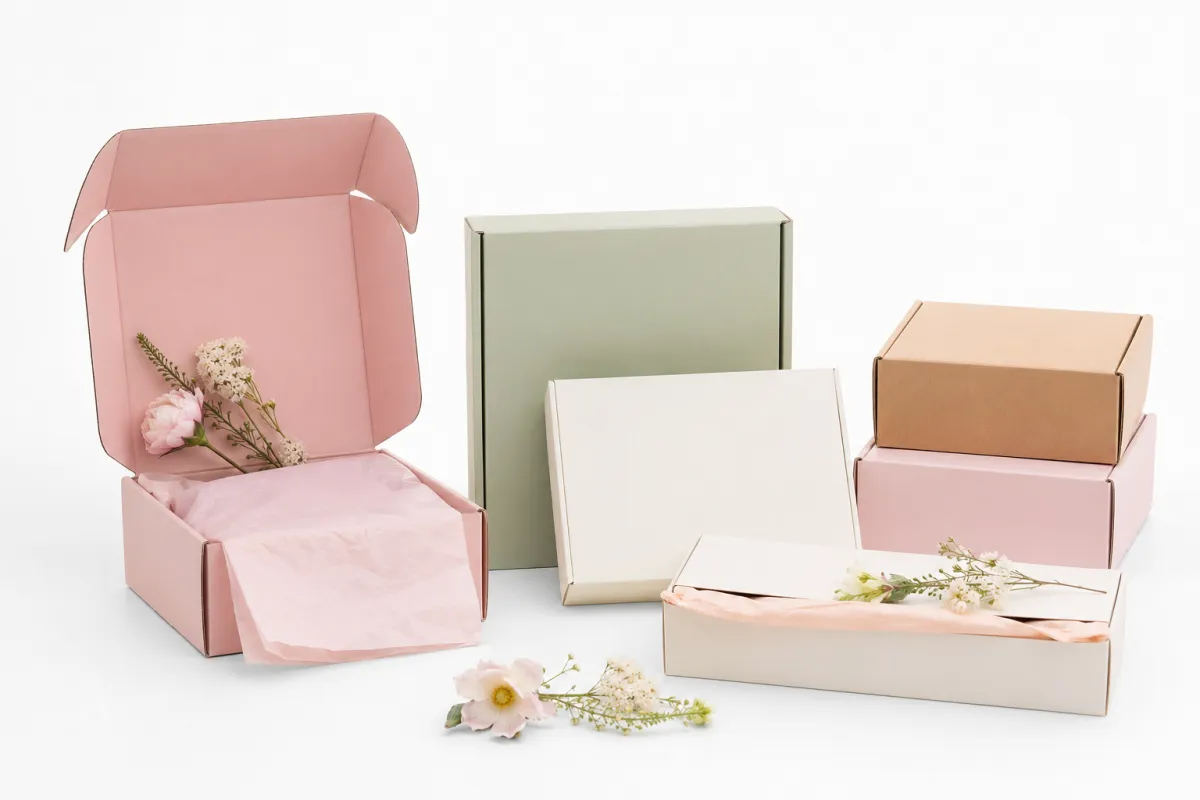
The first rule I learned on a packaging line is blunt: the customer judges the shipper before the product. That is why ecommerce packaging tips for spring launch begin with first-impression discipline. In a spring campaign, the outer carton, the opening reveal, and even the way tissue folds at the corners affect whether the purchase feels seasonal or stale. I have seen a $28 skincare set feel like a $60 gift because the mailer had a soft sage panel, a one-color interior print, and a tidy insert card that matched the campaign art. No magic, just smart sequencing and a 1-color flexo run that cost $0.16 per unit on 10,000 pieces out of Ontario, California.
Spring launch packaging works best as a controlled refresh. Instead of changing everything, most brands do better by updating one or two layers: a printed mailer, a branded insert, or a seasonal tissue pattern. That keeps the existing die lines, carton counts, and fulfillment training intact, which matters when a 3PL in Columbus is already moving 4,000 orders a day. In practice, the best ecommerce packaging tips for spring launch focus on small changes with visible impact rather than a wholesale redesign that creates inventory chaos. I once watched a team spend three weeks debating a brand-new structure when a single interior print on 24pt SBS would have solved the whole seasonal brief. Exhausting. Beautiful, but exhausting.
Temperature and moisture are the hidden variables. A package that looks crisp in a 68-degree design studio can curl, crush, or scuff after two days in a humid warehouse or a delivery truck sitting in the sun. I have watched uncoated kraft soften just enough to change how a tuck flap holds, and I have seen coated SBS show finger marks when the spring air turned sticky in a Southern California facility at 74 degrees and 61% humidity. Those are not abstract risks; they are daily realities that shape ecommerce packaging tips for spring launch in a very practical way. A box can look immaculate in a deck and then behave like it has had a bad morning.
“We did not lose the sale on product quality,” one beauty client told me after a spring launch audit, “we lost it because the box arrived tired.” That line stuck with me, because it captured a truth I have seen in at least three different fulfillment centers: presentation and protection are part of the same decision, not separate ones. In Dallas, one 7-day launch window produced 112 damage claims on a 9,600-unit run because the insert spec was 1.5 mm too loose.
For brands selling through DTC, a 3PL, or a subscription box partner, the spring refresh also has to respect pack-out speed. A package that takes 25 extra seconds to assemble can slow a line enough to create overtime within a week, and overtime is rarely built into the packaging budget. That is why strong ecommerce packaging tips for spring launch usually begin with operational reality: measure, sample, ship test, then decorate. The attractive version comes after the structure works. If that feels backward, good -- it should. A pretty box that breaks is just expensive confetti, especially if the line in Nashville is paying $21.50 per hour to fold it. I have seen teams learn that lesson the hard way, and nobody comes away cheerful.
One more basic point gets missed a lot: the launch box does not need to win a design award. It needs to survive the network, fit the product, and reinforce the season without becoming a labor tax. That usually means fewer folds, fewer adhesives, and fewer hand-applied details than the creative mood board originally wanted. Slightly boring on paper? Maybe. Kind of brilliant in practice? Usually, yes.
How do ecommerce packaging tips for spring launch work from concept to carton?
The workflow usually starts with a brief, a product sample, and a few numbers that matter more than the mood board: product dimensions, target ship weight, expected quantity, and the launch date. From there, the packaging team builds a dieline, checks the fit, and produces a structural sample before artwork ever gets locked. That sequence is one of the most overlooked ecommerce packaging tips for spring launch because teams often rush to graphics and only later discover the insert is 2 mm too tight or the mailer flaps interfere with the corrugate score. Two millimeters sounds tiny until it costs you a week and a reprint, and a reprint on a 5,000-unit order can add $430 before freight.
I still remember a meeting with a skincare brand in Long Beach where the marketing team approved a blush-and-cream design in one afternoon, then discovered the bottle neck and dropper top forced a taller insert than the box could handle. The result was a 19-second slowdown per order, which turned into a packing bottleneck during the first week of launch. That is the kind of mistake that makes ecommerce packaging tips for spring launch feel painfully concrete: structure first, art second, and testing before either one is frozen. Honestly, I think packaging teams should be allowed to say “no” earlier and more often, especially when the prototype is being revised for the third time in a week.
Channel matters too. A direct-to-consumer shipper can tolerate a slightly more theatrical opening sequence, while a retail partner may care more about shelf readability and case-pack efficiency. A subscription fulfillment center wants consistent dimensions, easy top-load access, and minimal hand assembly. In other words, ecommerce packaging tips for spring launch change depending on whether the box lands on a porch, a pallet, or a shelf. One structure rarely serves all three channels equally well, and pretending it can is usually where costs begin to creep. I have seen brands try to make one carton behave like a Swiss Army knife from a facility in New Jersey to a boutique in Portland; it usually ends up as a compromise nobody loves.
The approval gates should be obvious, but I still see teams skip them. Concept signoff should happen before any print proof is billed. Material selection should happen before the final die is cut. Fit testing should happen before the launch date is announced. Then the art proof, then the test shipment, then production lock. If you need a technical reference for transit methods, the testing standards at ISTA are worth studying because they give teams a common language for vibration, drop, and compression risk, including ISTA 3A for parcel shipments under 70 pounds, which lines up closely with solid ecommerce packaging tips for spring launch. I like standards because they are one of the few places in packaging where everybody agrees on what “failed” means.
There is also a quieter sequence that matters: who owns the clock. If marketing is waiting on operations, and operations is waiting on sourcing, and sourcing is waiting on the founder’s note in a shared inbox, the project will drift. One person needs to own each gate. It sounds almost too simple, but spring launches are often lost to handoff ambiguity rather than bad design. That is a deeply unglamorous truth. It is also the one most likely to save you money.
Ecommerce Packaging Tips for Spring Launch Material Choices
Material selection is where brand feeling meets ship reality, and this is one of the places where ecommerce packaging tips for spring launch pay off fastest. Corrugated mailers are the workhorse for most DTC shipments because they handle stack pressure, edge crush, and repeated handling better than a flimsy folding carton. Kraft paper gives a natural, earthy feel that works well for wellness, apparel, and home goods. SBS cartons deliver cleaner print reproduction, which matters when your campaign relies on a subtle pastel and a precise logo lockup instead of a loud graphic. The substrate is not a footnote; it is the whole mood, especially if the base stock is 350gsm C1S artboard with a matte aqueous topcoat.
I visited a supplier in Shenzhen years ago where a startup wanted a high-gloss, fully printed carton for a spring candle drop, but the sample looked great only until we ran it through a 7-foot belt section and a humidity chamber. We switched them to a matte aqueous coating, a single spot color, and a molded pulp insert, and the finished pack actually looked more premium because it felt honest. That lesson still applies to ecommerce packaging tips for spring launch: the right texture often sells the season better than the loudest print budget. I know that sounds almost too simple, but packaging has a habit of rewarding simple decisions made well, especially in facilities in Dongguan where the best results often come from one clean print pass instead of three decorative ones.
If sustainability is part of the brief, the material conversation has to stay practical. Paper-based void fill, molded pulp, and recyclable corrugated structures can be excellent options, but only if they protect the item and fit the line speed. An FSC-certified board or a recyclable kraft mailer can support brand values, yet it still needs the right board strength and the right cut tolerances. I often point clients to the broader sustainable packaging conversation at The Packaging Alliance when they want to understand how material choices connect to recovery, sourcing, and end-of-life, because ecommerce packaging tips for spring launch should never be only about aesthetics. If the “eco” solution tears in transit, it is just a guilt-flavored failure, and a 22% claim rate is not a sustainability strategy.
Finish choices matter more than people expect. A matte coating can make light green or blush look refined, while a water-based ink system keeps the surface friendlier to recycling streams. Spot color accents can deliver a seasonal feel without paying for full coverage print, and an interior message printed in one ink often creates a better reveal than a busy exterior design. If you are comparing options, the most useful mindset is to treat packaging design as a performance system, not a paint job. That is where ecommerce packaging tips for spring launch become visible on the shelf and in the shipping lane. The best packs rarely scream; they hold together and make the brand look like it knew what it was doing all along, even when the run came off a press in Foshan at 11:40 p.m.
It also helps to compare packaging choices against the operational mix: corrugated mailers for rougher parcel routes, folding cartons for premium presentation, molded pulp for fragile components, and paper-based void fill when you want a lighter seasonal footprint. Those are not separate SEO topics; they are the practical vocabulary behind ecommerce packaging tips for spring launch. Put another way, the right substrate and the right insert can save more than a louder print finish ever will, especially when return rates and damage claims are tracked in the same weekly dashboard.
For teams that want a starting point, the right substrate often depends on product class and the kind of brand experience you want to create. A 10-ounce candle, a 14-ounce lotion bottle, and a soft-goods bundle do not need the same protection or the same visual language. If you need a practical catalog for structures and print styles, the Custom Packaging Products page is a useful place to review what can be adapted before you commit to a custom run. That kind of early comparison is one of the most economical ecommerce packaging tips for spring launch I know, and also one of the least glamorous. A $0.07 unit difference turns into $350 on a 5,000-piece order fast.
Material options worth comparing
| Option | Typical price at 5,000 units | Lead time | Best use |
|---|---|---|---|
| Corrugated mailer with 1-color print | $0.54 per unit | 12 to 15 business days after proof approval | DTC apparel, books, light home goods |
| SBS folding carton with matte aqueous coating | $0.41 per unit | 15 to 18 business days after dieline lock | Beauty, candles, premium gift sets |
| Kraft mailer with paper-based insert | $0.33 per unit | 10 to 14 business days after artwork signoff | Eco-focused launches, seasonal bundles |
| Molded pulp insert plus printed sleeve | $0.62 per unit | 18 to 22 business days after sample approval | Fragile products that need stronger suspension |
The numbers above matter because they pull the conversation away from vague phrases like “budget-friendly” and toward landed cost reality. I have watched a client choose a carton that was $0.07 cheaper at the unit level, only to spend more on replacement orders because the structure crushed in transit. That is why ecommerce packaging tips for spring launch should include both the printed quote and the damage-rate assumption. A packaging choice that saves $350 on the purchase order can cost $3,500 in support tickets. I wish that were an exaggeration. It is not, especially on a 9,600-unit drop moving through Atlanta, Dallas, and Phoenix in the same week.
One more thing: color is not just color. A spring palette can go soft and delicate, or it can go muddy fast if the stock absorbs too much ink or the coating dulls the finish. A proof that looks warm on one device can print cool on another substrate. That is where physical samples beat renderings every time. I still keep a folder of “looked fine on screen” failures. It is a useful reminder that packaging lives in the material world, not the pitch deck.
Cost and Pricing: What Spring Launch Packaging Really Costs
Pricing starts with structure design, tooling, and print setup, then spreads into materials, freight, warehousing, and labor. If you are hand-kitting spring bundles, the labor line can rise fast, especially at $18 to $24 per hour in a domestic fulfillment center. That is one reason ecommerce packaging tips for spring launch should always include a cost-per-shipped-order view, not just a unit price. A carton at $0.46 may be cheaper than one at $0.39 if it cuts assembly time by 14 seconds and lowers the return rate. Fourteen seconds sounds tiny until you multiply it by 8,000 orders and someone is calling you about overtime, which often starts after the third week of launch in places like Dallas or Columbus.
I once negotiated a run with a paper supplier who quoted a tempting price for 3,000 Custom Printed Boxes, but the quote depended on a second print pass and a tight waste allowance that would have been fine on a good day and disastrous on a humid one. We changed the specification to a single pass, one fewer ink color, and a slightly larger tuck tolerance, and the project stayed inside budget because the production risk went down. That is a classic example of ecommerce packaging tips for spring launch being as much about supplier discipline as design. The spreadsheet is often where the real design happens, especially if the plant is in Shenzhen and the freight window is 21 days.
The biggest cost levers are usually boring, which is exactly why they work. Standard sizes save on dies and reduce void fill. Fewer unique SKUs simplify inventory. Two print colors cost less than four. A plain interior can save money if the outside already carries the seasonal story. Early ordering avoids rush charges that can run 10% to 20% above standard pricing. Those are not glamorous tweaks, but they are the kind of ecommerce packaging tips for spring launch that keep a finance team calm when the campaign lands on the calendar. Calm finance teams are underrated. Very underrated, especially when a late carton revision would otherwise trigger a $1,200 tool adjustment.
Minimum order quantities and prototype revisions can also change the math. A supplier may quote a 5,000-unit run at one price, then add setup charges if you split the order into two art versions or ask for three rounds of samples. I always advise teams to lock the dimensions before final art and to request a sample budget of at least 5% of the projected run cost, because missing one adjustment on the front end can create a painful reprint later. That is why ecommerce packaging tips for spring launch should include both creative ambition and production restraint. The trick is making the package look easy when the process was anything but, and doing it in 12 to 15 business days after proof approval instead of after the holiday rush.
Freight deserves its own line item, because box cost and box cost landed are not the same thing. A structure that fits a pallet more efficiently can beat a cheaper carton that ships with too much air. I have seen a team save on unit price and lose on transportation because the final form factor wasted cube space in a container. That is the sort of hidden math that makes packaging feel deceptively simple. It is not. It is a chessboard with cardboard and fuel surcharges.
Step-by-Step Spring Launch Packaging Process and Timeline
A workable timeline starts 6 to 10 weeks before the ship date for standard packaging, and closer to 12 weeks if you need custom dies, specialty inserts, or multiple artwork approvals. The first week should cover measurements, product weights, target presentation, and channel requirements. The next stage is structural design and fit sampling. That sequence is one of the most practical ecommerce packaging tips for spring launch because it turns “we need packaging” into a scheduled workflow with checkpoints and ownership. It also keeps the chaos from pretending to be strategy, which is useful when a launch date in Austin is tied to a media buy already paid for in March.
From there, the process usually moves into artwork, proofing, and sample review. I have seen teams burn five days on a typo because the same file was being routed through marketing, legal, and the founder’s inbox without a single owner. I have also seen a launch delayed because someone approved “spring green” without checking which green the printer actually meant. There are, apparently, many greens. When the calendar is tight, every handoff matters. The smart move is to assign one person to lock dimensions, one person to approve copy, and one person to confirm quantities. That simple structure is part of the real-world ecommerce packaging tips for spring launch that save launch dates from slipping, and it is usually cheaper than an extra proof round at $85 to $150 per revision.
Spring campaigns also need buffer time for paper availability, freight delays, and final inventory receipt. If the materials are coming from Asia, a 2-week ocean delay or a port backup can erase the margin of a whole campaign. Even domestic freight can stall if the cartons are arriving during a busy seasonal window. I always recommend a launch-ready checklist that includes a pack-out trial of 25 to 50 units, a ship test with real carriers, and a final count at the 3PL before the marketing team turns on paid ads. Those are the ecommerce packaging tips for spring launch that protect both schedule and revenue, especially if the cartons are being produced in Dongguan and finished in Ontario, California.
Here is a simple approval sequence that keeps the work moving:
- Confirm product dimensions, weights, and shipping class.
- Approve structural sample and insert fit.
- Lock print artwork and inside messaging.
- Run a 10- to 25-unit test shipment.
- Release production after final signoff and inventory count.
That order sounds straightforward, but it prevents the most common delays: re-cutting a die after graphics are approved, reprinting inserts after the dimensions shift, and shipping a final run before the warehouse can actually receive it. If you build your calendar around those five checkpoints, ecommerce packaging tips for spring launch stop acting like theory and start functioning like project management. Which, frankly, is what most launch plans need more than another brainstorm. A 12 to 15 business day production window from proof approval is only useful if the approval is actually frozen.
There is one more timeline reality worth stating plainly: weather can affect the calendar. Spring freight routes are not the same as winter freight routes, and warehousing conditions change faster than most teams expect. If your brand launches across multiple regions, build in enough slack to absorb a delayed inbound shipment without forcing overnight transfers. That is not pessimism. It is how you avoid a perfectly good launch being stranded by a truck that was, inconveniently, three states away.
Common Mistakes That Hurt Spring Launch Packaging
The biggest mistake I see is designing for the table instead of the truck. A package can look elegant in a deck and still fail in a delivery van after a 28-inch drop or a few hours of side pressure from other parcels. That gap between concept and transit is where many spring launches get hurt, which is why ecommerce packaging tips for spring launch always begin with real-world testing, not just a mockup photo. If a carton cannot survive a short ship test, the campaign should not depend on it. A pretty failure is still a failure, and a failed 32 ECT mailer is still a failed 32 ECT mailer whether it came from Chicago or Shenzhen.
Another common error is ignoring humidity and temperature drift. Soft goods, paper wraps, and coated labels all behave differently in a warehouse at 78 degrees with 65% humidity than they do in a design room at 70 degrees and 40% humidity. I have seen print rub off on a pale sleeve after just two days in storage because the coating was chosen for appearance instead of handling. Good ecommerce packaging tips for spring launch assume the package will live in a less-than-perfect environment from the minute it is packed. Spring is romantic on marketing decks and mildly cruel in warehouses, especially in Texas, Florida, and the Midwest in the same week.
Approval order matters, and teams still get it backward. They approve the graphics first, then discover the structure needs a 3 mm adjustment, which means the insert art no longer fits, and the reprint bill lands like a surprise. I still remember a client in apparel who had to scrap 1,200 inserts because the final carton fold changed the inner live area by less than an eighth of an inch. That is a painful reminder that ecommerce packaging tips for spring launch should always prioritize fit before finish. If that sounds fussy, so be it. Packaging is built from tiny tolerances, not optimism, and a 350gsm artboard insert cannot magically stretch to fix a 4 mm error.
Labor is another blind spot. A beautiful unboxing that requires two tissue folds, one sticker seal, one ribbon tie, and a custom card can double pack time if the line is already busy. I have watched a kitting team lose almost 45 minutes on a 250-order batch because the packaging looked simple on paper but demanded too many manual steps. A seasonal package should feel thoughtful, not fussy, and that balance is exactly where ecommerce packaging tips for spring launch protect both margin and customer experience. If the process makes the line groan, the customer never sees the romance anyway, and the warehouse in Louisville pays the bill in overtime.
One more mistake is assuming the same packaging should work for every channel. A carton that is ideal for a DTC subscription shipment may be awkward for wholesale or retail replenishment. A spring launch can involve all three. If you do not separate those use cases early, you end up with a compromise that is technically acceptable and strategically weak. That is not a failure of creativity. It is a planning failure, and it is usually fixable before production starts.
Ecommerce Packaging Tips for Spring Launch Success
The best seasonal refresh is usually focused, not dramatic. One strong color cue, one clear insert message, or one new interior pattern can create the spring mood without forcing a complete redesign of your branded packaging system. I have seen a simple daisy line art on the inside flap generate more positive social posts than a full exterior reprint because the surprise was inside, where the customer actually pauses. That is one of the more dependable ecommerce packaging tips for spring launch: give the eye one memorable detail and let the rest of the system stay efficient. Consumers remember the thing that felt intentional, not the thing that shouted the loudest, especially when it came out of a plant in Foshan for $0.41 per unit.
Testing with real products and real shippers is worth the time, even if it only means 12 sample orders and three carrier lanes. Send one package through ground, one through expedited, and one through the roughest last-mile route your customer base uses. Then ask two or three customers to open it without coaching. You will learn fast whether the tissue tears too easily, whether the insert shifts, or whether the message card feels too promotional. Those findings make ecommerce packaging tips for spring launch sharper and far less theoretical. I trust a slightly awkward customer reaction more than a polished internal slide deck every time, especially if the actual pack-out in Seattle takes 22 seconds instead of 35.
Packaging should also match the rest of the campaign. If your email subject line says fresh start, your landing page uses a pale botanical palette, and your shipment arrives in a heavy black mailer with no interior print, the story breaks. I advise brands to align copy, inserts, and social launch assets so the customer sees one cohesive seasonal thread from ad click to doorstep. That kind of coordination strengthens package branding, and it is one of the most effective ecommerce packaging tips for spring launch when the goal is memorability rather than sheer decoration. The campaign should feel like it belongs to the same universe, not three different meetings, and not three different print vendors in three different cities.
If you are still deciding what to change, start with an audit. Pull one current SKU, one damaged order report, one 3PL pack-out time sample, and one customer review thread from the last 60 days. Then decide whether you need a new mailer, a new insert, or just a seasonal print refresh. Once you have that answer, request samples, set a budget ceiling, and confirm the launch calendar with the warehouse manager before art approval. That is the practical heart of ecommerce packaging tips for spring launch: small, specific decisions made early, before the rush begins. Nothing fancy. Just fewer surprises, and fewer emergency calls from a facility outside Nashville at 7:30 p.m.
I have been in enough supplier meetings to know that the best packaging choices are rarely the flashiest ones. They are the ones that fit the product, respect the labor, survive the carrier network, and still feel special when the customer opens the box. Keep that balance in view and ecommerce packaging tips for spring launch stop sounding like a checklist. They start acting like a repeatable planning habit you can use every season. If you want one concrete rule to carry forward, make it this: lock structure, test in transit, then add the spring finish. Not the other way around. That order protects the product, the budget, and the launch date, which is really the whole job.
FAQ
What are the best ecommerce packaging tips for spring launch products?
The strongest ecommerce packaging tips for spring launch usually start with a light seasonal refresh, not a total redesign. Use one or two visual cues, like a soft color band or an interior message, while keeping the structure efficient and transit-safe. Match the material to the product class, whether that is a 32 ECT corrugated mailer for apparel or a molded pulp insert for fragile goods, so the package feels seasonal without sacrificing protection. I would rather see one good detail than three tired ones fighting for attention, especially on a 10-ounce candle shipped from a facility in Ohio.
How early should I finalize ecommerce packaging for a spring launch?
I recommend starting ecommerce packaging tips for spring launch work at least 6 to 10 weeks before ship date, and 12 weeks if you need custom tooling or complex inserts. That window gives you time for structural sampling, artwork revisions, and freight planning without forcing a rushed approval. If the launch depends on a single production slot, the risk is too high; a 2-week buffer is usually the minimum I would want before any order goes live. I have seen too many “we have time” plans turn into emergency calls by Friday afternoon, especially after proof approval slips by five business days.
How can I control pricing on spring launch packaging?
The most dependable ecommerce packaging tips for spring launch for pricing are to standardize sizes, reduce the number of SKUs, and use fewer print colors wherever possible. Compare total landed cost per shipped order, not just the unit quote, because freight, labor, and damage risk can outweigh a penny or two on the box itself. At 5,000 units, even a $0.05 difference per piece becomes a $250 swing before shipping is counted. That is not pocket change; that is a line item with opinions, especially when a rush fee adds 12% to the PO.
Which materials work best for ecommerce spring launch packaging?
For most direct-to-consumer programs, corrugated mailers and kraft cartons are the safest all-around choices, especially if the product weighs 8 ounces to 2 pounds. Add molded pulp, paper inserts, or paper void fill when the item needs more suspension or a more natural brand feel. The right material is the one that matches the product, the route, and the promise behind the ecommerce packaging tips for spring launch you want to deliver. A luxurious box that collapses in transit is just a dramatic way to disappoint people, and no one in Phoenix wants a crushed sleeve in a 78-degree porch delivery.
How do I make spring launch packaging feel seasonal without overdoing it?
Use one hero color, one restrained pattern, or one printed message inside the box, and keep the outer shipper practical. That approach gives you a spring cue without turning the package into a flyer. A short test with 5 to 10 customers will tell you quickly whether the seasonal details feel fresh or forced, which is exactly the kind of feedback that makes ecommerce packaging tips for spring launch more grounded and useful. If people smile when they open it, you are close; if they squint, you probably went too far, and a second proof is cheaper than a full reprint.


