Buyer Fit Snapshot
| Best fit | Ecommerce Shipping Carton Sizing projects where brand print, material claims, artwork control, MOQ, and repeat-order consistency need to be specified before quoting. |
|---|---|
| Quote inputs | Share finished size, material target, print colors, finish, packing count, annual reorder estimate, ship-to region, and any compliance wording. |
| Proofing check | Approve dieline scale, logo placement, barcode or warning zones, color tolerance, closure strength, and carton packing before bulk production. |
| Main risk | Vague material claims, crowded artwork, missing packing details, or unclear freight terms can make a low unit price expensive after revisions. |
Fast answer: Ecommerce Shipping Carton Sizing: Board, Finish, Dieline, and Unit Cost should be specified like a repeatable production item. The safest quote records material, print method, finish, artwork proof, packing count, and reorder notes in one written spec.
Production checks before approval
Compare the actual filled-product size with the drawing, then confirm tolerance on folds, seals, hang holes, label areas, and retail display edges. Reserve space for logos, QR codes, warning copy, and material claims before decorative graphics fill the panel.
Quote comparison points
Review material grade, print process, finish, sampling route, tooling charges, carton quantity, and freight assumptions side by side. A quote is only useful when the supplier can repeat the same color, closure quality, and packing count on the next order.
Ecommerce shipping carton sizing looks routine until one careless half-inch pushes a shipment into a higher rate band and turns a tidy pack-out into a freight headache. I remember standing on a packing line in Shenzhen in late October, watching a carton that looked perfectly acceptable on paper still tip into the next shipping tier because the internal dimensions, the insert stack, and the board thickness were just far enough out of sync to trigger dimensional weight. The box was only 0.35 inches taller on the outside than the mock-up, but that was enough to move the billable weight from 3 lb to 5 lb on a regional parcel lane. It was one of those moments that makes you stare at a box and think, really? That little thing is gonna cost us that much? It is exactly the sort of detail that punishes guesswork and rewards ecommerce shipping carton sizing built on actual measurements, actual pack-outs, and actual carrier rules.
The simplest way to think about ecommerce shipping carton sizing is this: match the product, the protective materials, and the carrier’s size rules to the smallest safe carton that still keeps the order intact. Not the smallest carton you can bully the item into. The smallest safe cube. That distinction saves money, lowers damage, and keeps order fulfillment from becoming a daily improvisation exercise. If you sell through Shopify, Amazon, wholesale channels, or direct-to-consumer, box size touches shipping materials, labor time, breakage, and even how the customer reads the unboxing experience. A 9 x 6 x 3 mailer with a 350gsm C1S artboard belly band feels very different from a 12 x 10 x 6 RSC with kraft void fill, and the customer notices the difference while the carrier notices the dimensions.
I have seen brands overpay by $0.90 to $2.40 per shipment because their box library grew from whatever the warehouse happened to have on hand. That is not a packaging strategy. That is a supply closet with a postage bill attached. A common example is a 10 x 8 x 6 stock carton that costs $0.28 each in 2,500-piece runs, but sits 1.5 inches too large for a compact skincare set and adds $1.18 in dimensional charges on Zone 5 parcels. Strong ecommerce shipping carton sizing gives the operation a system: one that protects the product, keeps pack speed steady, and avoids the carrier math that punishes excess volume.
How do you choose the right ecommerce shipping carton sizing?
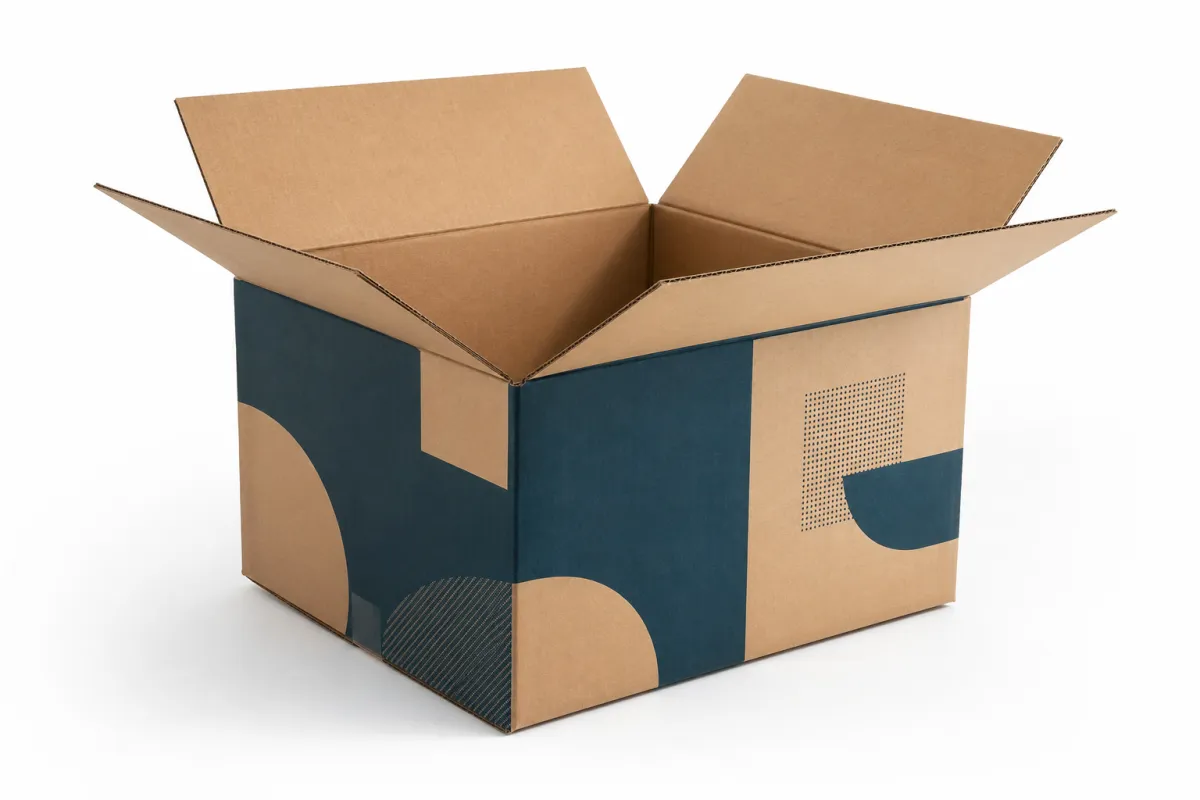
You choose ecommerce shipping carton sizing by measuring the product after protection is added, then comparing that real pack-out against the smallest carton that still clears carrier limits and survives transit. Start with the finished load, not the naked SKU. Add the insert, the wrap, the closure allowance, and the clearance needed for safe handling. Then check the outside dimensions, because that is the number the carrier sees, the billing system uses, and the freight invoice remembers. The right ecommerce shipping carton sizing is the one that protects the product, keeps labor efficient, and avoids paying for empty air you never meant to ship.
Ecommerce Shipping Carton Sizing: What It Really Means
At its core, ecommerce shipping carton sizing means measuring the usable internal space of a carton, then comparing that space with the product after wrap, inserts, and clearance are added. The carton you order is not the same as the space you can really use. Corrugated board takes up room. A 32 ECT single-wall carton is not a magic shell. It has thickness, crush resistance, and a real outside dimension that carriers see long before they care about the item inside. If the board is roughly 1/8 inch caliper on each wall, the outside footprint changes fast enough to matter on UPS, FedEx, and DHL rate tables.
On a factory floor in Dongguan, I once checked a carton meant to hold a ceramic mug set for a California subscription brand. On the drawing, it looked fine at 8.75 x 5.75 x 4.00 inches internal. At the packing station, the handle on one mug and the molded pulp insert left the assembly too tight by 4 mm, which forced the team to switch from a 2-mm wrap to a 4-mm wrap. That tiny gap changed the conversation fast. The outside length jumped enough to alter the rate on a 3-zone parcel lane. That is ecommerce shipping carton sizing in practice: the product, the protective margin, and the carrier measurement rules all have to agree, or the box punishes you for optimism.
The goal is not to strip away every last millimeter and hope for the best. The goal is to build the smallest safe package that survives transit packaging, warehouse handling, and last-mile delivery without creating a mess. Too tight, and the corners crush, the lids crack, and returns pile up. Too loose, and you pay for empty space, extra void fill, and higher dimensional weight. The workable zone sits between those two expensive mistakes, which is a lot less glamorous than a glossy packaging deck but far more useful in real life. For fragile jars, I usually want 1/8 to 3/16 inch clearance on each side plus a crush-resistant insert spec like 3-ply molded pulp or E-flute partitions.
Labor belongs in the calculation too, even though it rarely gets enough respect in spreadsheet meetings. A carton that saves 12 cubic inches but steals an extra 40 seconds at the pack station is not automatically the better choice. Ecommerce shipping carton sizing has to account for line flow, packing ergonomics, and whether your crew can finish 300 orders in a shift without wrestling the same box all afternoon. In a fulfillment center in Fort Worth, I watched a box that took 17 seconds longer to tape add nearly 1.4 labor hours per 500 orders, which is exactly the sort of quiet cost that disappears if nobody bothers to time the process.
“We saved on the carton, then spent it three times over in labor and returns.” That was the line from a subscription client after we cleaned up their carton library in Newark, New Jersey. They were right. A cheap box can become a costly one in a very ordinary, very measurable way, especially if the carton spec starts at $0.19 and the return label lands at $7.80.
If you want a solid reference point for testing language and corrugated basics, the guidance at packaging.org is worth keeping nearby. I still cross-check with ISTA drop tests and ASTM methods whenever a client says, “It should be fine.” Fine is not a specification, and a shipping lane does not care about optimism. The conveyor, the trailer, and the final-mile driver are all much less sentimental than the person approving the carton, especially after the first pallet leaves a plant in Guangzhou or a contract packer in Ohio.
How Ecommerce Shipping Carton Sizing Works in Transit
Ecommerce shipping carton sizing becomes expensive the moment the parcel enters carrier networks. Carriers price for dimensional weight, not just actual weight, because oversized light cartons eat truck space and air cargo space with the same enthusiasm as heavy ones. That is why a 2 lb pillow in a giant carton can cost more to ship than a 6 lb machined part in a compact box. On a Zone 8 shipment, I have seen a 4.2 lb actual-weight carton billed at 9 lb because the outside dimensions crossed a divisor threshold by 0.75 inches on one side. The volume matters a great deal, and carriers have built entire pricing models around that fact.
Internal carton dimensions and outside carton dimensions are not twins. A box that measures 12 x 10 x 6 inches internally may measure 12.5 x 10.5 x 6.5 inches outside, depending on flute type and board thickness. That half inch looks harmless on a spec sheet. To a carrier rate engine, it can move the shipment into a more expensive tier. Ecommerce shipping carton sizing has to be based on the finished box, not just the tidy mock-up, because the finished box is what gets billed. That part is not negotiable, even when the freight invoice feels deeply personal.
Void fill changes the arithmetic too. Kraft paper, air pillows, molded pulp, foam corners, and corrugated inserts all eat into the usable cube. A carton that appears roomy before pack-out can turn into a tight fit once the protective layers are inside. I have seen teams size around the bare product, then discover during sampling that the order fulfillment crew needed another 1.25 inches on the length just to seat the insert without forcing it. On a 500-piece pilot in Atlanta, that one adjustment cut the damage rate from 3.1% to 0.8%, which is the sort of result that makes everyone suddenly interested in tape measurements.
Carton format matters as well. A regular slotted container, or RSC, stays flexible and economical, which is why it shows up so often in ecommerce shipping carton sizing for high-volume brands. Mailers move faster for slim goods. Die-cut boxes give a cleaner fit and usually waste less space, though they demand more planning and often a higher minimum order quantity. Apparel may do beautifully in a compact mailer. Glass almost always deserves a more deliberate structure with inserts. I am biased here: I would rather see a smart, slightly boring box that protects the product than a clever one that shows up cracked and makes everybody pretend it was “probably the carrier.”
Picture the same SKU in two carton setups. A skincare kit can ship in a 9 x 6 x 3 mailer with molded pulp and land at 1.2 lb billable weight, or it can go out in a 10 x 7 x 4 carton with air pillows and land at 2.0 lb billable. The product weight never changed. The shipping cost did. That is ecommerce shipping carton sizing doing exactly what carriers want it to do, which is why a little discipline up front usually beats a lot of apologizing later. On 8,000 monthly orders, a $0.86 difference per parcel turns into $6,880 in avoided freight, which is not a rounding error.
If your packaging stack includes inserts, tissue, or branded transit materials, our Custom Packaging Products page can help you compare the rest of the build alongside the carton itself. The box and the materials around it should behave like one system, not separate departments arguing through spreadsheets. I have sat in those meetings in Long Beach and in St. Louis, and trust me, nobody wins when the carton and the insert are designed in separate universes.
For brands that test packaging seriously, the ISTA testing framework is worth a close read. I have seen clients skip testing to save time, then lose three weeks handling damage claims from shipments that left a warehouse in Charlotte with 32 ECT board where 44 ECT was the safer call. Testing a carton is cheaper than replacing what breaks inside it, and it is a lot less annoying than fielding customer photos of shattered product on a kitchen counter.
Cost and Pricing in Ecommerce Shipping Carton Sizing
Carton price gets too much attention because it is easy to see. Ecommerce shipping carton sizing affects five cost buckets at once: carton price, shipping cost, void fill cost, labor time, and damage risk. If your team only compares unit price, you are reading one line of the invoice and pretending the rest is decorative. A $0.17 carton that causes a $1.35 freight penalty is not cheap, and a $0.31 carton that cuts damage claims by 2.4% can be the better deal by a wide margin.
I learned that lesson during a buyer meeting with a cosmetics brand in Orange County that wanted to shave $0.08 off each carton. The replacement box was cheaper, yes, but it added 18 seconds of packing time and pushed the parcel past a dimensional threshold that cost them $1.10 more per shipment. That was a bad trade in every direction. I said so, politely, while thinking very unpolite thoughts about the phrase “small savings.” We changed the spec from a 12 x 9 x 4 stock carton to a 10 x 8 x 4 custom die-cut and trimmed the freight bill in the first month.
Imagine a custom carton that costs $0.22 more per unit than your current stock size, yet it cuts dimensional weight enough to save $1.10 in carrier charges and reduces breakage by 2%. On 10,000 orders, that is not trivia. That is a serious margin swing. Ecommerce shipping carton sizing should be evaluated against total landed cost, not box price alone. Honestly, I think this is where most packaging conversations go sideways: people fall in love with a cheap carton and forget to count the freight, the filler, and the headache. A warehouse in Atlanta may see the carton as an object; finance sees the cost per order as a system.
| Option | Example Unit Cost at 5,000 pcs | Typical Use | Cost Outcome |
|---|---|---|---|
| Stock RSC | $0.38 to $0.62 | General ecommerce shipping, mixed SKUs | Low unit price, often higher dim weight and more filler |
| Custom RSC | $0.52 to $0.88 | High-volume items with stable pack-out | Better fit, moderate tooling, lower waste over time |
| Die-cut mailer | $0.64 to $1.10 | Flat goods, subscription kits, apparel | Cleaner presentation, less void fill, faster pack speed |
| Custom insert carton | $0.95 to $1.85 | Fragile products, premium kits, glass | Higher upfront cost, lower damage risk and better protection |
Those ranges are examples, not a promise. Board grade, print coverage, die-cut setup, MOQ, and supplier region all move the number. A quote from a corrugator in Dongguan for a plain RSC can look very different from a short-run program at a plant in Ohio or a mailer line in Kentucky. Add full-color print, foil, or a custom insert and the math changes again. Packaging behaves a lot like airline pricing: everyone thinks it is simple until the add-ons land, and then suddenly you are paying for the bag, the seat, and the tiny tray of crackers.
Sampling costs money too. Prototype fees often run from $75 to $250 per design, then freight gets added, then re-sampling shows up if the first fit misses the mark. For a two-up carton mock-up in Shenzhen, I have seen a proof charge of $45 and a full sample set of $120 before shipping, with a 4 to 6 business day turnaround if the dieline is already clean. Warehouse rework can be worse. If your team spends 20 extra minutes a day hunting for the right carton, that labor cost quietly grows teeth. Ecommerce shipping carton sizing is never only a materials discussion. It is a workflow decision, a service decision, and sometimes a sanity decision.
Sustainability goals belong in the same conversation, and they should focus on source reduction as much as recycling language. The EPA waste reduction guidance makes the point cleanly: using less material upstream is better than creating extra waste downstream. A properly sized carton usually beats a giant carton that gets “recycled” after burning more fuel and occupying more cube. I know recycling has a nice moral glow, but preventing the waste in the first place is cleaner, cheaper, and easier to explain to finance, especially if the carton ships from a plant in Suzhou or a domestic converter in Pennsylvania.
Step-by-Step Process and Timeline for Carton Sizing
Ecommerce shipping carton sizing gets a lot easier once you treat it like a process rather than a debate. I use a four-step path with clients because it keeps the team focused on data instead of taste. The faster the right measurements show up, the faster the warehouse stops ordering boxes that almost work. And “almost work” is a phrase that has cost me more time than I care to admit, usually because one person measured the product and another person measured the insert with a different ruler.
- Audit your current pack-out. Pull the top-selling SKUs, note the cartons they actually use, and write down the odd workarounds. Include the messy stuff too: the extra paper twist, the corner pad, the carton the warehouse uses only because it ended up closest to the dock. The weird habits matter because they reveal where the current system is leaking time and money. If a packing line in Atlanta uses three different carton sizes for the same candle set, the problem is probably not the candle.
- Measure the product after protection. Add the actual wrap, insert, clearance, and closure needs. Build a size matrix that reflects how the SKU ships, not how it looks naked on a table. Ecommerce shipping carton sizing starts with the product in its real transit packaging state, not the optimistic version sitting in a mock-up photo. For a glass serum bottle, that might mean 0.25 inch clearance, a 2-piece pulp tray, and a 44 ECT shipper rather than the prettier but thinner option.
- Request samples and test them on the line. Do not only inspect a mock-up. Run real orders through the packing station. Compare outside dimensions, closure speed, and carrier rates. I like to test at least two sizes, because one box usually exposes a flaw the first draft missed. The second sample is often where the truth gets rude. A sample carton from a factory in Foshan can look perfect on a desk and still slow the pack line by 9 seconds if the tuck tab fights the tape gun.
- Revise, approve, and lock the spec. Check crush strength, fit, and pack speed. Then approve the final dimensions before volume production starts. A good carton spec should tell the factory the board grade, flute, print area, tolerances, and any insert details in clear language. For example: 32 ECT B-flute, 1-color flexo on kraft, 0.12 inch tolerance, and molded pulp insert to ASTM D4169 vibration standard. If the spec is vague, the carton will be vague too, and vague boxes are how you end up with expensive surprises.
Timing matters, because packaging delays become shipping delays with almost no warning. A basic audit can take two to four business days if SKU data is clean. Sampling and line testing usually takes one to two weeks, depending on supplier response time and how many revisions show up. Final approval and production lock-in often takes another week or two. A realistic ecommerce shipping carton sizing project can finish in a few weeks, not a few months, if the team responds quickly. For a straightforward custom run, production is typically 12-15 business days from proof approval at a converter in Jiangsu or Guangdong, plus 3-7 business days for trans-Pacific freight if you are importing.
I once had a client ask for “just one more change” after the prototype had already passed the drop test. That one change delayed the launch by nine days and triggered a rush freight charge that cost more than the original carton run. The lesson was plain enough: answer feedback fast, or the freight bill answers for you. I wish that were a joke, but it was a very expensive lesson with a very real invoice. A single revision can be a $180 proof and a 4-day delay; three revisions can turn into a missed ship date and a very annoyed retailer in Dallas.
How I like to organize the sizing review
I keep the review tight. Top 20 SKUs. Current carton. Actual box consumption. Damage rate. Dimensional weight. Void fill used per order. That is enough to find the waste. Once the data is visible, ecommerce shipping carton sizing stops feeling abstract and starts reading like a clean line item with a few obvious leaks. I like that approach because it avoids the ten-page packaging discussion that somehow never ends and never quite decides anything, especially if the room is full of opinions and only one tape measure.
Key Factors That Shape the Right Carton Size
No single carton size fits every brand. Ecommerce shipping carton sizing depends on product shape, protection needs, warehouse behavior, and carrier rules. A flat poster tube, a candle set, and a subscription apparel kit do not belong in the same carton profile. Pretending they do is how people end up with boxes that fit nothing well and force the warehouse into a permanent workaround. A 12 x 9 x 2 mailer may be perfect for books and cosmetics cards, while a 14 x 10 x 8 RSC might be the right call for bundled home goods.
Product shape changes the rules
Shape can matter more than weight. A long narrow item may need a tighter mailer. A tall fragile item may need more headspace and corner protection. Irregular products often need a die-cut fit or a carton with inserts so the load does not shift during transit. For kit-based SKUs, the empty space between components can be the real issue, not the outer carton size. I have seen more trouble caused by awkward geometry than by outright heaviness. A 15-inch curling iron, for example, ships very differently from a 15-inch insulated bottle even when both weigh under 2 lb.
Protection is not optional
Package protection is part of the sizing decision. That includes edge clearance, corner blocks, molded pulp, wrap layers, and any crush-resistance requirement from your damage history. Heavier products often call for a stronger board such as 44 ECT or a double-wall structure. Lighter goods may do perfectly well in a 32 ECT carton if the insert system is doing its job. Ecommerce shipping carton sizing should always reflect the protection plan, not just the bare object. Otherwise you are sizing a carton for a fantasy package, which is a charming concept and a terrible operating plan. I would rather spend an extra $0.14 on a better insert than eat a $9 replacement and a bad review.
Warehouse operations set practical limits
I have worked with fulfillment teams that could manage four core carton sizes and no more. Add a fifth and the line slowed because pickers started grabbing the wrong box. Add a seventh and the inventory became noisy. A carton ladder often works better than a giant box catalog. If your order fulfillment team spends half its time hunting for the right size, you do not have a sizing problem. You have a process problem. And maybe a labeling problem. And perhaps a system that needs fewer heroics and more standardization. In one Indianapolis warehouse, moving from nine sizes to four shaved 11 minutes off every 100 picks.
Carrier rules can override your preference
Carrier math is ruthless. Dimensional weight, girth limits, and oversize surcharges can all nudge your best carton plan into a pricier bracket. I always check outside dimensions against the live carrier rules before signing off. Ecommerce shipping carton sizing that ignores carrier thresholds is basically a gift to the shipping company. Not a cute gift, either. One of those expensive gift baskets nobody asked for. A box that crosses 130 inches in combined length and girth on a parcel network can jump into a surcharge band that wipes out the savings from a cheaper board grade.
Sustainability and customer experience fit together
Smaller boxes usually mean less corrugated, less void fill, and fewer truck cubes wasted in transit. That trims material use and often improves the unboxing experience too. Customers notice when a tiny item arrives in a giant carton stuffed with plastic. They do not call it premium. They call it wasteful. If your brand needs a tighter fit for repeat-volume SKUs, a custom solution through Custom Shipping Boxes is often the simplest path. A 7 x 5 x 2 box with 1-color kraft print can look far more intentional than a bulky stock shipper packed with three air pillows and a shrug.
If cleaner sourcing matters to your team, the FSC certification standard is worth considering for paper-based packaging. It does not solve every environmental concern, but it gives buyers a traceable sourcing story. That matters in retailer audits and with customers who actually read the label. More people read packaging than executives sometimes assume; they just do it while holding a box on the kitchen floor in Chicago or Raleigh, not while sitting in a conference room.
Common Mistakes That Blow Up Carton Size Costs
The biggest mistake is chasing the smallest possible box. People love the idea of a tiny carton until the first corner gets crushed. Then the returns start. Then customer service gets involved. Then someone says the product “must have been damaged in transit,” which is a polite way of saying the box failed. I have had to sit through that conversation more times than I would like, and it never gets more exciting the second time. A 0.20-inch reduction in carton height is not a win if it doubles the breakage rate on a 20,000-piece run.
Another mistake is forgetting that internal dimensions and outside dimensions are different numbers. I have seen teams approve an internal fit that looked perfect on a mock-up, only to find the outside dimensions pushed the shipment into a higher dim-weight bracket. Ecommerce shipping carton sizing has to be checked from the outside, because that is the number the carrier uses. If you only measure the inside, you are basically letting the carton lie to you. That lie can cost $0.80 to $2.10 per parcel depending on zone and carrier.
Using one carton for everything is another classic error. It feels tidy. It is not. Oversized shipments for small SKUs waste money, while larger items get forced into a box that was never meant for them. The warehouse then compensates with extra filler, more tape, or creative folding. None of that looks good on a cost report. It looks especially bad when the pack station has to start inventing solutions on the fly. In a Phoenix fulfillment center, I watched one universal carton create a 27-second pack variance across three SKUs, which made the whole line harder to schedule.
Ignoring labor gets expensive quickly. Extra void fill, awkward inserts, and slow carton assembly all add minutes to every pack station. A box that saves $0.05 but adds 15 seconds to pack time can turn into a very costly box by Friday afternoon. Ecommerce shipping carton sizing should improve speed, not only material usage. If the box is “cheap” but your team groans every time it appears on the line, the box is not cheap. It is just wearing a low price tag. At a wage rate of $18 per hour, 15 seconds becomes real money very fast.
Re-testing is the last thing people forget, and it causes more trouble than the others. Product dimensions change. Suppliers change board specs. Carrier pricing updates. Warehouse staff rotate. If the carton was approved six months ago, that does not mean it still fits the current ecommerce shipping reality. Re-check it. Measure it. Use the real SKU, not the old sample nobody can find anymore. I have personally watched a “known good” carton become a problem because someone changed the insert without telling the packaging team. Nothing says fun like discovering the issue after the pallets are already built.
A carton spec is not a museum piece. It should change when the product, the carrier, or the pack-out changes. If it does not, you are paying for yesterday’s assumptions, and yesterday’s assumptions usually cost more than a fresh sample set from a converter in Nashville or Taicang.
Brands shipping apparel or soft goods often do better with a lighter structure. If you need slim, branded shipping options, our Custom Poly Mailers can reduce void fill and speed up fulfillment for items that do not need a rigid box. That is not the right answer for every SKU. It is the right answer for plenty of them, which is usually better than trying to force every product into one heroic carton and pretending it was clever. A 2.5 mil poly mailer can be plenty for a cotton tee set that ships under 1 lb and never needs crush protection.
Expert Tips and Next Steps for Smarter Carton Sizing
My first tip is straightforward: build a carton ladder. Four or five core sizes will handle most brands far better than a sprawling inventory of nearly identical boxes. Ecommerce shipping carton sizing works best when the warehouse can remember the sizes without checking a cheat sheet every ten minutes. Fewer sizes also mean fewer mistakes, which is one of those wonderfully boring victories operations people secretly love. A ladder of 6 x 4 x 2, 9 x 6 x 3, 12 x 9 x 4, and 14 x 10 x 6 can cover a surprising amount of volume if the SKU mix is mapped carefully.
Second, reserve custom cartons for the SKUs that justify them. I am not against custom packaging. I built a career on it. Still, custom should be tied to volume, freight savings, and damage reduction. If a SKU ships 100 times a month, the math may support a custom fit. If it ships 12 times a month, a stock solution may be enough. Honestly, I think custom packaging gets overused when people want a nicer presentation but have not done the math yet. A custom box at $0.72 that saves $1.05 in freight and cuts a 4% damage rate is worth a serious look; a custom box at $1.40 just for aesthetics usually is not.
Third, review the numbers monthly. Track dimensional weight, damage rate, labor time, void fill usage, and carton consumption. You do not need a giant dashboard with twenty charts and a motivational slogan. You need four or five useful numbers that show whether ecommerce shipping carton sizing is helping or quietly bleeding margin. A short review done regularly beats a huge review done once and then ignored because everyone got busy. I like a 30-minute review on the first Tuesday of the month with the warehouse lead, the buyer, and whoever owns freight.
I also recommend side-by-side prototype quotes before the box is locked in. A $0.10 difference in carton price can disappear the moment carrier math enters the picture. I have negotiated with suppliers in Jiangsu and North Carolina, and the quote that looked pricier on paper sometimes won once freight and breakage risk were added in. A sample set from Ningbo at $68 can beat a domestic quote at $44 if it trims 0.5 lb billable weight on every order. The cheap quote is not always cheap. That part surprises people far too often, though it really should not by now.
When I visited a client’s warehouse last spring in Kansas City, the team had twelve carton sizes on one wall and only three that covered 80% of orders. The rest were clutter. We trimmed the lineup, cleaned up the carton library, and the pack station moved faster within two weeks. The staff liked it because carton roulette stopped. Management liked it because freight costs dropped by 6.8% in the first quarter. I liked it because nobody had to spend another afternoon arguing about which nearly identical brown box was the “real” one.
If you are ready to tighten your own ecommerce shipping carton sizing, start with these three moves:
- Pull your top 20 SKUs and document the current carton used for each one.
- Request 2-3 prototype sizes for the heaviest and most fragile orders.
- Test them on real orders, with real protective materials, before ordering volume.
That is the fastest path to cleaner ecommerce shipping carton sizing without turning your warehouse into a science project. If you need a broader packaging refresh while you are at it, our Custom Packaging Products page is a practical place to review boxes, mailers, and related shipping materials in one place. I would start there before ordering a mountain of boxes that only solve half the problem. A carton run in the wrong flute or wrong footprint can sit on a pallet for months, and that is not a fun kind of inventory.
The brands that win here are rarely the ones with the flashiest packaging deck. They are the ones that measure carefully, test early, and stop pretending the box lives apart from the freight bill. Ecommerce shipping carton sizing connects product protection, carrier rates, and warehouse speed. Get that right, and you cut waste without gambling on damage. Get it wrong, and you pay for empty air, broken goods, and a lot of unnecessary meetings. I have been in those meetings, and I can confirm they are never as good as the person calling them thinks they are. The practical move is simple: pick the carton ladder that covers most of your orders, verify it with real pack-outs, and lock the spec only after the carrier math and the line speed both check out.
FAQ
How do I calculate ecommerce shipping carton sizing for a product?
Measure the product after protection is added, not just the bare item. Then choose the smallest internal carton size that allows safe clearance and efficient packing. Before You Order samples or production, check the final outside dimensions and dimensional weight, because ecommerce shipping carton sizing only works if the carrier sees the right numbers. I like to measure twice, then measure the sample again when I am standing in the actual pack line, because that is where the odd half-inch likes to hide. For a glass bottle, that often means adding 0.25 inch of clearance and confirming the outside size with a tape measure to the nearest 1/16 inch.
What is the difference between carton size and box size in ecommerce shipping carton sizing?
Carton size usually refers to the usable internal dimensions, while box size is often quoted as the outside measurement. That difference looks tiny on paper, but it matters once board thickness is added and the carrier rates the shipment. In ecommerce shipping carton sizing, the outside measurement is the one that hits your freight bill. The inside measurement is useful, sure, but it is not the one charging your card. A 10 x 8 x 4 internal carton can become roughly 10.5 x 8.5 x 4.5 outside depending on flute and caliper.
How many carton sizes should an ecommerce brand keep?
Most brands do better with a small carton ladder, often three to five core sizes. Too many sizes create inventory clutter, slower picking, and more packing mistakes. The right number depends on SKU spread, order volume, and how much packaging complexity your warehouse can realistically manage. I usually start by asking which sizes cover most of the volume, then cut the rest without mercy. If one carton handles 38% of orders and the next handles 24%, those are the sizes to keep on the wall.
Does ecommerce shipping carton sizing affect shipping cost?
Yes. Dimensional weight can raise the bill even when the product itself is light. Oversized cartons can also trigger surcharges, extra filler, and more labor. Better ecommerce shipping carton sizing can reduce damage claims too, which is money in a different bucket but still money. If a box looks roomy enough to pack a blanket in and you are shipping earrings, the carrier will absolutely notice. On a 500-order week, even a $0.75 difference per package adds up fast.
How long does it take to change ecommerce shipping carton sizing?
A basic audit can take a few days if your SKU and packing data are organized. Sampling and real-world testing usually takes one to three weeks, depending on supplier speed. Production timing depends on carton type, order quantity, and how many revisions you need before sign-off. If the team can answer questions quickly, the timeline moves. If not, the boxes sit there waiting while everybody wonders why freight is late. For a custom corrugated run, 12-15 business days from proof approval is a common production window in Guangdong or Jiangsu.


