If you sell long, narrow electronics, electronics seller shipping tubes bulk often cost less than eating returns, replacing crushed cartons, and reprocessing product that wandered around inside the package until it finally lost the argument. The choice is not about buying the thickest tube on the shelf. It is about matching the inner diameter to the item, choosing a wall that fits the lane, and making sure the cap stays on long enough to matter. Miss one of those pieces and the package may look tidy on a bench while failing the minute it gets tossed into real transit.
Why electronics seller shipping tubes bulk reduce damage claims
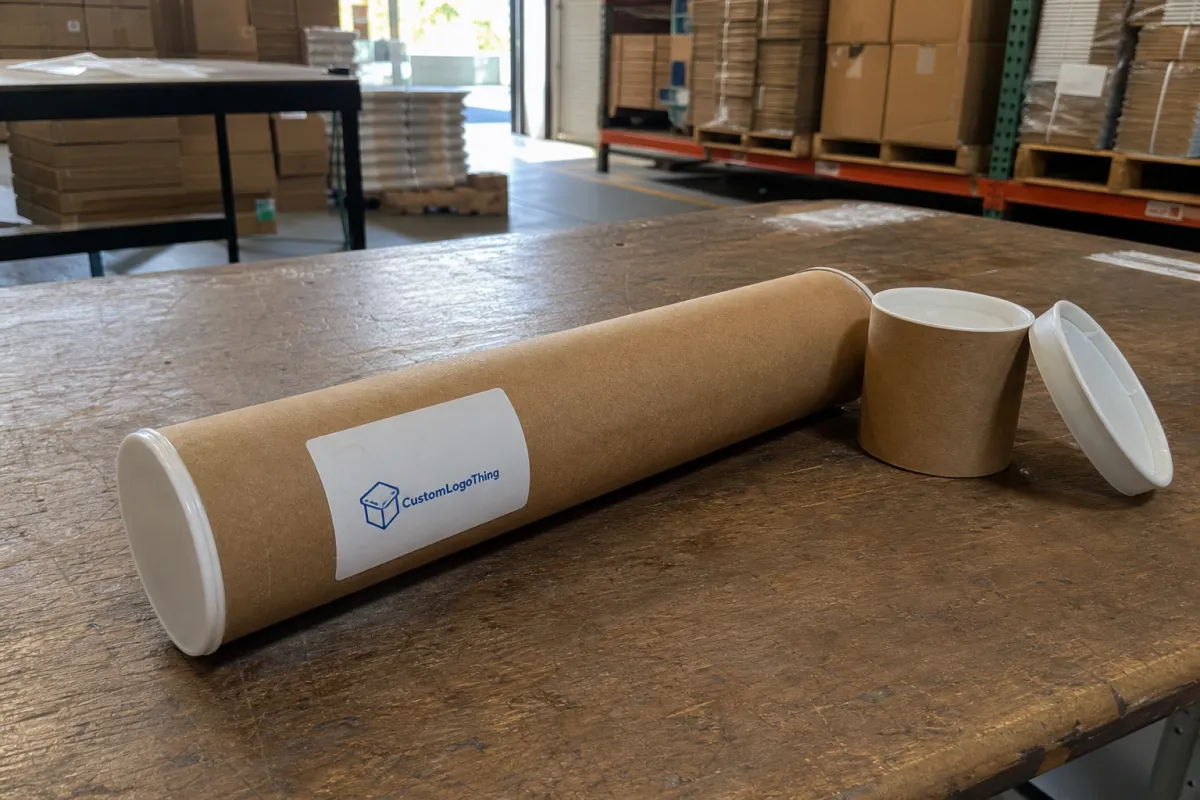
Most shipping failures start with empty space. A cable kit, manual stack, accessory bundle, or poster-style insert gets dropped into a carton that is too roomy, then it slides, picks up speed, and gets punished every time the parcel is tipped, stacked, or dropped onto a conveyor. That simple chain is why electronics seller shipping tubes bulk can cut damage claims so effectively. A tube gives the item a fixed path. Less movement usually means fewer scuffed edges, fewer crushed corners, and fewer returns that nobody wants to inspect twice.
The point matters most for sellers moving cables, adapters, document packs, promotional inserts, and other slim components. Parcel networks do not treat these items gently. Packages move fast, get stacked hard, and are handled by people who never planned to baby them. For long, narrow goods, transit packaging has to control position first and appearance second. A package that looks polished but lets the product rattle is a small piece of theater with a shipping label attached.
Three details separate a tube that ships safely from one that merely looks sturdy: fit, end-cap retention, and crush resistance. Fit keeps the product from sliding enough to build momentum inside the pack. End-cap retention keeps the closure in place under vibration and impact. Crush resistance preserves shape when cartons stack on a pallet or in a crowded freight lane. If one weak point gives way, the whole pack can fail. Packaging rarely gets to fail politely.
Common failure points hide easily if the only approval happens at the rendering stage. Loose movement leads to internal scuffing. Split seams appear when the wall is too light for the load or the adhesive line is weak. Crushed edges show up when the board grade looks fine on paper but behaves like a marshmallow in real freight. End caps that pop loose are the expensive kind of annoyance, because a flawless print job cannot rescue a tube after the cap has already gone missing.
Measure the product first, then choose the tube format that protects it without leaving dead air or wasting board. If the item can slide, the tube is too large. If the cap has to be forced on, the tube is too tight.
For a packaging buyer, electronics seller shipping tubes bulk is not a blanket answer for every product. It is a tool for the right shape. A rigid cable bundle often does better in a tube than in a box with filler. A fragile component that needs corner protection may still belong in a box. That is why serious buyers compare damage risk, dimensional weight, and warehouse handling before they commit to one path. A good packaging choice is usually less dramatic than people expect. It just has to fit the item and the shipping lane.
Some sellers pair tubes with Custom Packaging Products for accessory sets, or switch to Custom Shipping Boxes for square items and reserve tubes for the long-format SKUs. That split is practical. It keeps protection tied to the item instead of forcing one package style to carry every burden in the warehouse.
Dimensional weight can chew through margin faster than damage claims. A long tube with a lot of empty space may cost more to ship than the product inside is worth. Protection still matters, but freight class and packing speed matter too. That balance is why electronics seller shipping tubes bulk deserves a real spec sheet instead of a guess made between two meetings.
Electronics seller shipping tubes bulk: product details that matter
Tube material is the first call, and the labels are not all saying the same thing in different fonts. Spiral-wound paperboard is the common choice for long, light, or moderately rigid items. It stays straight, keeps cost in check, and accepts branding well. Chipboard can work for lighter contents and lower-cost runs, but it is not the first pick when crush resistance matters. Kraft wrap gives the outside a cleaner finish and often improves print appearance. Heavier board earns its keep when stack pressure, parcel abuse, or pallet loading is part of daily operations rather than an occasional problem.
Closure style matters just as much as the tube body. Friction-fit end caps are quick and usually fine for low to mid-risk shipments, but they need tight dimensional control. Plastic end caps are easy to open and close again, which helps with returns or kitting, yet they still need to hold under vibration. Metal caps bring a more durable feel and stronger retention on certain builds, though they also add cost and weight. Adhesive-sealed ends make sense for tamper evidence or one-way shipments, but they reduce reuse. There is no universal closure. There is only the closure that matches your product, your labor, and your shipping lane.
Print decisions affect both brand presentation and warehouse speed. A plain stock tube is cheap and fast. A one-color branded tube can be enough if the goal is recognition without bloating cost. Full-wrap graphics make sense for retail packaging or promotional kits, but they need tighter artwork control and a clean safe zone. Barcode zones and SKU labels deserve more respect than they usually get, because they help scanners, pickers, and packers avoid errors during order fulfillment. A handsome tube that slows the warehouse is not an improvement.
For electronics seller shipping tubes bulk, the format usually fits a few sales scenarios:
- Retail packaging for narrow accessories, printed inserts, or display-ready product lines.
- E-commerce mailers where the tube itself is the shipping container.
- Spare-part bundles that need organization and a clean unboxing sequence.
- Trade show kits for signage, literature, demo cards, or slim technical materials.
- Promotional inserts that ship with larger products and still need to stay flat.
There are also add-ons worth asking about before the order gets locked. Inner sleeves can separate multiple components. Tissue wraps can stop scuffing on glossy finishes. Foam inserts help with delicate bits or odd-shaped accessory sets. Moisture barriers matter if the route includes humid storage, ocean freight, or a long dwell time in cross-dock inventory. None of those features should be added because they sound premium. Add them only when the product actually needs the extra layer.
From a production standpoint, electronics seller shipping tubes bulk should fit your packing line, not fight it. Hand packing can tolerate a little extra clearance because speed matters. High-volume repetitive packing usually benefits from tighter sizing, since every correction costs labor. Buyers miss that tradeoff when they compare samples on a desk and assume the sample tells the whole story. A sample is not a shipping lane, and a shipping lane does not care how pretty the prototype looked under office lighting.
For brands managing a broader packaging mix, Custom Poly Mailers can handle flatter accessory SKUs while tubes handle long formats. That split often reduces waste, improves protection, and gives the warehouse fewer odd shapes to manage. A single package style is rarely the smartest answer. People who try to force one solution across every product usually end up paying for the inconvenience later.
Specifications for electronics seller shipping tubes bulk orders
A quote only becomes useful after the measurements are real. Start with inner diameter, usable length, wall thickness, and cap depth. Outer size alone does not tell anyone whether the product fits. A tube can look correct on a drawing and still fail in production because the cap steals usable length or the wall thickness leaves less room than expected. That is how buyers end up with a technically accurate spec that is practically useless.
Clearance is the next issue. Leave room for product tolerance, inserts, labels, and normal hand-packing variation. Force the fit too tightly and the team slows down. Worse, packers start bending, compressing, or rewrapping contents just to make the tube close. That is wasted labor with a nice label on it. For electronics seller shipping tubes bulk, a controlled amount of clearance is usually better than a spec that looks perfect on a spreadsheet and causes trouble on the line.
Strength specs matter more than packaging jargon. Ask for board grade, seam construction, and crush performance data. If the supplier cannot explain how the wall is built, that is a warning sign. A tube that works for lightweight print material may not survive heavier electronics bundles or repeated stacking on a pallet. If the supplier can point to ISTA test methods or similar performance criteria, that says more than a page of vague promises. The same logic applies to sustainability claims. If recycled content or fiber sourcing matters to your brand, ask for verification such as FSC certification instead of accepting a nice sentence and moving on.
Print specs should be treated like production specs, not decoration notes. Confirm bleed area, safe zone, barcode contrast, and whether the artwork wraps around the body or stays in a panel. If the barcode sits too close to the seam or cap line, scanners can struggle. If the safe zone is ignored, logos drift. If the art crosses a closure line, the finished tube can look sloppy even when the file looked beautiful on screen. A clean proof avoids a lot of friction later.
Tolerance and palletization are not glamorous, but they affect every shipment. Consistent tube sizing matters if you use automated packing equipment or pallet stack planning. If one batch runs loose and another runs tight, staff has to babysit the line. For order fulfillment, consistency saves time. It also cuts freight surprises because neat packs stack better and waste less cube.
For teams managing several SKU families, electronics seller shipping tubes bulk works best when the spec is written in plain, measurable terms. Example: 2.5 inch inner diameter, 12 inch usable length, 0.060 inch wall, plastic end caps, one-color print on a 7 inch panel, and barcode zone reserved on the reverse. That kind of detail gets a useful quote. Vague notes usually produce sales fluff and three follow-up emails.
I have sat through enough packaging reviews to know the difference between a pretty sample and a usable one. One buyer once approved a tube based on outside dimensions alone, then discovered the cap stole almost half an inch of usable length and the cables had to be repacked by hand. That kind of mistake burns labor fast. It also makes the warehouse team suspicious of the next spec, which is not where you want to be.
Here is a practical checkpoint list I use with buyers:
- Measure the product in its final packed state, not just as a loose part.
- Confirm tolerances for length, diameter, and any accessory inserts.
- Define the closure based on reuse, tamper needs, and labor speed.
- Set print rules for logo size, barcode placement, and safe zones.
- Check stack needs if the cartons will ride on pallets or in mixed freight.
Cost, pricing, and MOQ for electronics seller shipping tubes bulk
Pricing for electronics seller shipping tubes bulk is driven by a handful of plain factors: diameter, length, board thickness, print colors, cap style, and whether you need inserts or liners. Add more material or more labor, and the price climbs. That is not a mystery. It is arithmetic. A larger diameter uses more board. A thicker wall uses more material and often a stronger build. Full-wrap print usually costs more than a single panel because setup and registration are more demanding.
The real question is not whether the unit price looks low. It is whether the landed cost makes sense. Landed cost includes freight, sampling, setup, and any packaging labor on your side. A tube that costs a few cents less but takes longer to pack or creates more damage claims is not cheaper. It is just cheaper in the way a bucket with a crack is cheaper than a bucket with a handle.
Quantity breaks usually start making a visible difference around 500, 1,000, and 3,000 units, depending on spec complexity. Plain stock can have a lower entry point. Custom print and special caps usually push the minimum order higher. For many buyers, a custom starting point lands somewhere around 250 to 1,000 units, but that range depends on size and decoration. Ask for tiered Pricing Before You commit. Otherwise you are making a decision in the dark and calling it strategy.
| Option | Best For | Typical MOQ | Typical Unit Price | Notes |
|---|---|---|---|---|
| Plain stock spiral-wound tube | Fast replenishment and low branding needs | 250-500 units | $0.35-$0.85 | Lower setup, good for testing fit and demand |
| Custom printed tube | Retail presentation and branded ecommerce shipping | 500-1,000 units | $0.70-$1.80 | Price changes with color count, wrap coverage, and proofing |
| Heavy-duty tube with upgraded caps | Higher crush risk and repeated handling | 1,000 units | $1.10-$2.75 | Better for tougher transit packaging and stack pressure |
| Tube with inserts or liner | Mixed kits and delicate accessories | 1,000-3,000 units | $1.40-$3.20 | Adds labor, but can reduce movement and rework |
Those figures are useful ranges, not promises. The exact quote still depends on dimensions, print coverage, cap selection, and ship-to location. For electronics seller shipping tubes bulk, that is why a tiered quote is better than a single number. Ask for 250, 500, 1,000, and 5,000-unit pricing if your demand can support it. Sometimes the jump to the next tier saves real money. Sometimes it only ties up cash in inventory and warehouse space. A proper quote lets you see the tradeoff instead of pretending the lowest line item wins by default.
Freight deserves its own attention. A long tube can be cheap to make and irritating to ship, especially if oversized cartons or air-freight exceptions are in the picture. Dimensional weight can hit hard on long but light packs. On domestic parcel routes, a few inches of length can matter more than people expect. On ocean or rail, pallet efficiency and stack pattern matter more. Different lane, different cost driver, same budget pressure.
Some sellers pair tube programs with Wholesale Programs so reorders stay predictable and inventory gaps stay small. That is usually smarter than scrambling for emergency stock after a launch performs better than expected. If the item sits inside a broader packaging lineup, standardizing on a few tube diameters often works better than juggling fifteen custom sizes nobody can remember without searching through old emails.
For buyers comparing electronics seller shipping tubes bulk against other packaging materials, the right test is not unit cost alone. Compare damage rate, packing time, freight impact, and replenishment discipline. If the tube prevents one return in a hundred and saves thirty seconds per pack, the economics can look very different by the end of the quarter. Packaging math has a habit of changing once the real numbers show up.
Process, timeline, and lead time for bulk tube orders
A clean order flow keeps problems small. The usual path is simple: send product dimensions, Request a Quote, review a sample or proof, approve the spec, move into production, then pack and ship. Electronics seller shipping tubes bulk gets messy when one of those steps is skipped or rushed. The biggest delay is often not production itself. It is sampling and proof approval. Buyers tend to assume the factory will absorb uncertainty. It does not. The schedule stays clean only when the details are clean.
Timing matters more than most launch calendars admit. Sample approval can take a few days if the spec is clear. Production often runs 10 to 20 business days after signoff, depending on capacity and print complexity. Freight adds its own clock. Domestic parcel may move quickly, while ocean or consolidated freight can stretch the calendar considerably. If a seller needs stock for a campaign or peak season, that time has to be built in from the start, not added as a hopeful afterthought.
Here is what slows things down:
- Unclear measurements that force a second round of quoting.
- Slow artwork approval because the logo or barcode placement keeps changing.
- Last-minute spec changes after the sample has already been built.
- Missing shipping details that delay packing and freight booking.
- Overly tight timelines that leave no room for correction if the first proof is off.
The easiest way to protect the schedule is to prepare the basics early: final dimensions, label copy, target quantity, ship-to address, and whether a rush split shipment is needed. If your team knows the launch date, say it. If the goods need staged delivery to multiple warehouses, say that too. Packaging programs get delayed by assumptions more often than by manufacturing failures. That is not glamorous, but it is true.
For electronics seller shipping tubes bulk, sampling also serves a practical purpose beyond appearance. It confirms whether the tube loads easily, whether the cap holds, and whether the interior clearance is actually right. That matters even more for pieces with inserts, cables, or bundled manuals because those extra components change the fit. A drawing cannot show how the product behaves under a real hand pack. A sample can.
If the product uses barcodes or SKU labels, request proof placement before full production. Test whether the code scans after printing. Verify that the label sits on the correct face and does not land on a seam or curved edge that causes scanner trouble. A tiny placement error can create the same warehouse headache every day for months. Nobody needs that kind of recurring excitement during order fulfillment.
One practical rule survives every launch meeting: do not lock a rollout around a supplier who cannot give a clear date range. For electronics seller shipping tubes bulk, a supplier should be able to tell you the sample window, the production window, and the freight window without circling the answer. If they cannot, assume the schedule is softer than they are admitting.
Why choose us for electronics seller shipping tubes bulk
For sellers who need consistency, value is not built from decorative language. It comes from predictable dimensions, clean print, and packaging that survives the shipping lane. That is what a good electronics seller shipping tubes bulk program should deliver. If the tube reaches your warehouse looking polished but fails in transit, the spec was wrong or the build was too light. The point is to avoid expensive surprises, not admire them after the fact.
We focus on manufacturing control because repeatability matters. Tight tolerances reduce packing problems. Stable board quality reduces reorder risk. Clean print reduces the odds of scuffed logos, weak barcode contrast, and color drift from one batch to the next. Buyers usually notice quality only when it goes wrong. Great for the buyer, bad for the budget. It is easier to prevent the problem than explain it away after the returns begin.
Support should be practical. That means matching the tube to the product instead of tossing over a random size and hoping the load fits. Some products need a firmer wall. Some need a different end-cap style. Some need an insert because the contents are too loose. Good packaging advice is specific. It saves time and prevents the kind of rework that turns a quote into a scramble.
Flexibility matters too. Some buyers need stock styles for speed. Others need custom Specs for Branding or product control. A good supplier can move between those modes without forcing the customer to rebuild the entire packaging plan. For electronics seller shipping tubes bulk, that flexibility helps new sellers start lean and gives larger programs enough structure to scale without turning the dock into a guessing game.
We also care about the boring work that buyers should not have to chase: clear pricing, sensible quantity tiers, and a production path that does not waste time. If a buyer wants to compare specs, we can do that. If they want to compare packaging formats, we can help them weigh tubes against Custom Shipping Boxes or other Custom Packaging Products. That comparison is usually healthier than pretending every item belongs in the same package shape.
For teams managing ecommerce shipping at scale, this matters because packaging choice affects labor, freight, and claims. A tube can be the right answer for slim electronics, but only if it is built to the right standard and ordered in a quantity that supports the forecast. That is the practical part. Everything else is background noise.
The best buyers ask for numbers. They want measurements, price breaks, sample timing, and a straight answer on lead time. That instinct is right. electronics seller shipping tubes bulk should be handled like any other production purchase: with specs, cost control, and a plan for replenishment. Not with hope. Hope does not hold a carton together.
Next steps to order electronics seller shipping tubes bulk
If you are ready to source electronics seller shipping tubes bulk, send the product dimensions, weight, finish, and shipping method first. That gives the quote real context. A tube for a 6-ounce accessory bundle is not the same as a tube for a heavier electronics kit with inserts. The more precise the starting data, the less back-and-forth you will need later.
Next, choose the packaging format. Decide whether you want plain or printed, spiral-wound or heavier-duty board, and which end-cap style makes sense. If the product needs extra control, ask about inserts, sleeves, or moisture barriers. If the product is simple and the lane is clean, do not overbuild it. Extra material is not automatically better. It just costs more and can make the pack harder to manage.
Then ask for a full quote. The quote should show unit price, MOQ, setup costs, sample cost, and freight. If those line items are hidden, the buyer is being asked to guess. That is not a process. It is a trap with stationery.
Approve a sample or digital proof before full production, especially if barcodes, logos, or fit are involved. If the team skips this step to save a few days, they usually spend those days later fixing a mistake. Production runs are easier to manage than corrections. Once the order is in motion, the easiest way to stay on schedule is to stop changing the target.
Use this short checklist before you place the order:
- Confirm product measurements and tolerances.
- Lock the tube spec for size, wall, and cap style.
- Review artwork for print zones, barcodes, and safe areas.
- Check pricing tiers at 250, 500, 1,000, and 5,000 units.
- Verify lead time for sample, production, and freight.
- Plan reorders early so supply stays steady.
That is the practical route. No drama. No guesswork. Just a clean spec, a realistic quantity, and packaging that does the job in transit and in the warehouse. If your next run needs electronics seller shipping tubes bulk, get the dimensions right, compare the landed cost, and buy the version that protects the product without bloating the freight bill. The actionable takeaway is simple: lock the fit, confirm the cap, and build the order around the real shipping lane, not the sample on your desk. That is how you keep damage claims down and margins intact.
What sizes are best for electronics seller shipping tubes bulk orders?
Measure the usable internal length, not just the outer tube size, so the product fits without forcing the caps. Leave room for inserts, labels, and normal product tolerance instead of buying a tube that is technically correct and practically useless. Use diameter to control movement: the item should fit with slight clearance, not rattle around like it is being mailed in a drum. For electronics seller shipping tubes bulk, the right size is the one that loads fast and ships without internal movement.
What MOQ should I expect for custom electronics shipping tubes in bulk?
Plain stock tubes usually have the lowest MOQ, while custom print, special caps, and inserts raise the minimum. A realistic custom starting point is often 250-1,000 units, but the exact floor depends on size and decoration. Ask for tiered pricing so you can see whether moving up in quantity actually saves enough to matter. That is the only sensible way to judge electronics seller shipping tubes bulk if you are comparing stock and custom options.
How long does a bulk tube order take after proof approval?
Production commonly runs 10-20 business days after approval, assuming the artwork and specs are final. Sampling or proof review is usually the main variable, so slow approvals stretch the schedule fast. Freight time is separate from production, and overseas shipping can turn a quick run into a long wait. If your electronics seller shipping tubes bulk order has a fixed launch date, build in margin early.
Can electronics seller shipping tubes bulk be printed with barcodes or SKU labels?
Yes, but the print zone and contrast need to be confirmed so scanners can read the code reliably. Use labels when you need variable data or fast SKU changes; print directly on the tube when the design is stable. Request a proof that shows barcode placement before production, because guessing is not a plan. For busy order fulfillment teams, that small step saves a lot of grief.
Are shipping tubes better than cartons for long narrow electronics items?
They are often better when the item is slim, rigid, and does not need corner-style box protection. They are not the answer when the product needs heavy cushioning, pallet stacking, or a square footprint. Compare damage risk, dimensional weight, and warehouse handling before choosing one format over the other. That is the honest test for electronics seller shipping tubes bulk, and it is usually the one that protects margin best.


