The electronics logo patch Beanies Material Sample guide exists for one reason: a product that looks right on screen can fall apart the moment it meets real knit, real light, and real handling. A render can make a patch look sharp and a cap look premium. A sample will tell you if the edge lifts, the stitch density sags, or the logo loses its read once the beanie is stretched over a head.
That matters more for electronics brands than most merch teams admit. These beanies usually sit close to high-value products, Trade Show Booths, retail counters, or employee kits that are supposed to feel considered. If the cap feels thin or the branding looks vague, the whole package drops a level.
Samples also expose the awkward stuff that mockups hide. A dark patch on a dark knit can disappear under warm store lighting. Tiny text can close up. A soft hand feel can turn sloppy if the yarn is too loose. None of that shows up in a flat file.
Why Electronics Logo Patch Beanies Samples Beat Mockups
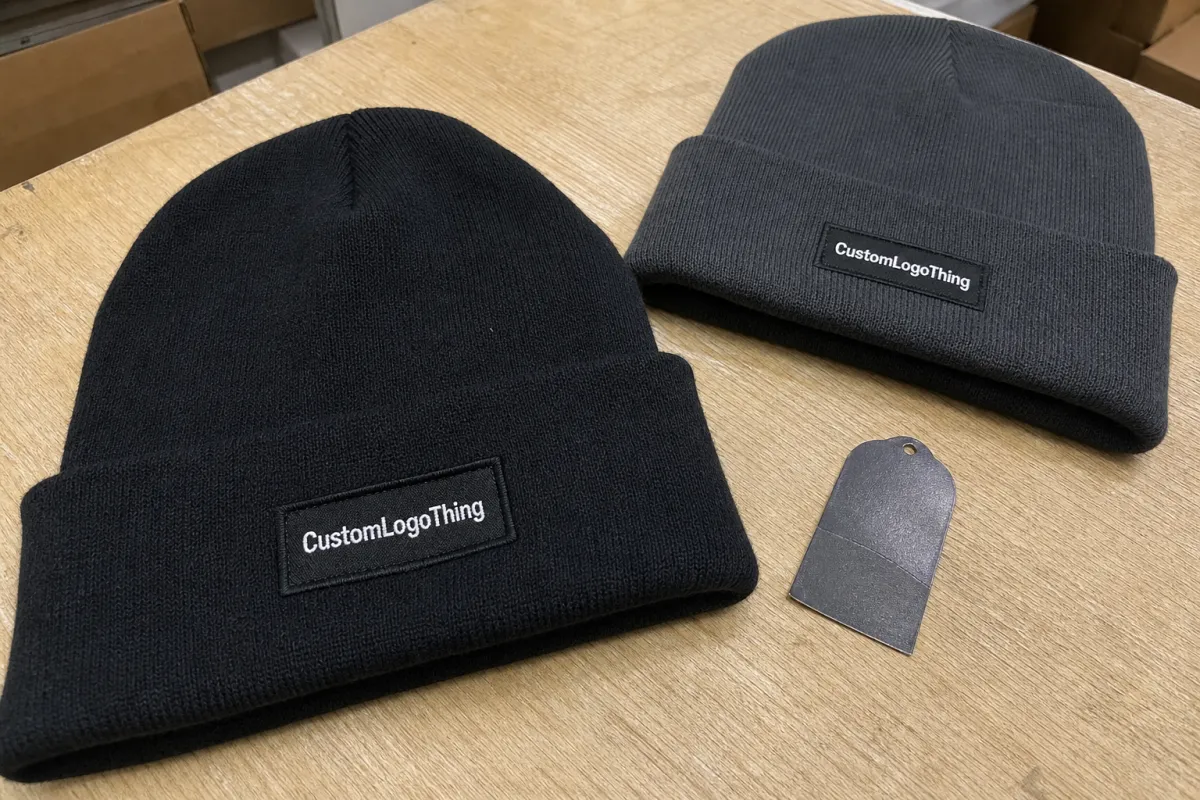
A screen proof can answer placement and color. It cannot tell you how a beanie behaves under stretch, how the crown holds shape, or whether a patch sits flat after folding. Knitwear is physical by nature. That sounds obvious until someone approves a product from a PDF and wonders why the finished item looks cheaper than expected.
For electronics merch, the standard is usually higher than for a throwaway promo cap. A beanie sitting beside chargers, earbuds, or wearables needs to signal precision fast. The logo has to read at a glance. The material has to feel intentional. A sample is the fastest way to find out if the design is doing that work or just pretending to.
A real sample also helps separate a true product issue from a design issue. Sometimes the yarn is fine and the patch is wrong. Sometimes the patch is fine and the knit gauge is doing the damage. On a mockup, those problems collapse into one image. In hand, they split apart immediately.
“Looks clean in a render” is not a production standard. It is just a polite way of saying nobody has tested it yet.
There is a parallel here with packaging. A corrugated carton can look tidy in a proof and still crush, scuff, or tear after shipping. Headwear works the same way. The sample is the only place where appearance, feel, and durability meet at once.
That is why the electronics Logo Patch Beanies Material Sample guide should start with reality, not wishful thinking. If the beanie is meant to feel retail-ready, the sample needs to answer the boring questions: Does it hold shape? Does the patch stay flat? Does the branding still read after the cap is folded into a box or bag? Boring questions save money. Fancy mockups do not.
How the Sample Process Works From Swatch Request to Approval
The best sample request is narrow. Ask for one base knit, one or two patch styles, and the exact backing methods that are actually available. If a supplier can only show you a fantasy build that ignores production reality, the sample is already drifting away from the final order.
Start with the knit itself. Ask for the yarn content, gauge, cuff height, crown shape, and if the piece is single-layer or lined. Then ask for the patch type and attachment method. A sewn patch on a ribbed beanie behaves differently from a heat-applied patch on a smoother knit. Those differences matter more than people expect.
Evaluate the sample under multiple lights. Daylight is the most honest for color. Office LEDs expose surface texture. Warm retail lighting changes contrast, sometimes enough to make a dark logo look softer and less precise than it did in a flat proof. If your final use includes stores, events, or unboxing videos, check the sample in those conditions too.
Set approval criteria before anyone sees the sample. Keep it short and practical: comfort, logo visibility, patch flatness, stretch recovery, and photo readiness. If you want durability, add a basic wear check and a fold test. A sample that passes because everyone “likes it” is not approved. It is just admired.
Record who signs off on what. Marketing usually cares about the look. Operations cares about pack-out, freight, and whether the item arrives without shape damage. Merchandising might care about shelf impact. Those priorities overlap, but they are not identical. If the approval chain is fuzzy, the sample stage turns into a debate club.
Packaging should be part of the sample request, not an afterthought. A beanie that arrives in a crushed polybag tells you nothing useful. A right-sized mailer, kraft wrap, or recyclable insert lets you see the full presentation. If the brand is claiming a cleaner materials story, the outer pack should not contradict it. Recycled paper mailers and FSC certified board make that story easier to defend.
For suppliers that ship samples by courier, ask how the cap is packed inside the carton. A stiff patch can crease against the knit if the item is tossed into a loose box. Small details like this are annoying because they are easy to miss and expensive to fix later. Still better to catch them with one sample than with five hundred finished units.
Material Variables That Change Wear, Warmth, and Perceived Value
Two beanies can carry the same logo and still feel like different products. Yarn, gauge, patch construction, and finish decide whether the piece reads as premium, promotional, or somewhere awkwardly in between.
Acrylic is still the most common base for branded beanies because it is stable, warm enough for everyday wear, and usually easier to control on price. It also takes color predictably, which helps when a brand needs tight matching across a merch set. The downside is that cheap acrylic can feel dry or synthetic if the yarn quality is low. Not all acrylic is equal, and the hand feel tells you quickly.
Wool blends usually bring a better tactile story and stronger warmth retention. They can also raise the price and increase care sensitivity. Some wearers love the natural feel. Others will find them itchier than expected, especially if the blend is not balanced well. That is not a theoretical complaint. It shows up in wear tests and returns.
Recycled yarns improve the materials story, but buyers should ask exactly what is recycled. Post-consumer content is not the same as pre-consumer trim. Recycled polyester blends can also behave differently from recycled acrylic, especially in softness and dye consistency. If sustainability is part of the brief, ask for the fiber composition in writing and do not accept vague language. Vague claims are cheap. Specifics cost a little more and help a lot more.
Gauge matters too. A 7-gauge knit generally feels chunkier and warmer, while a 9-gauge knit tends to look smoother and can carry finer branding details more cleanly. Liner construction changes the picture again. A double-layer or lined beanie holds shape better, but it can feel heavier and raise cost. A lighter single-layer cap may pack smaller, which helps with shipping, but it can look less substantial in retail.
Patch choice does a lot of the branding work. Woven patches are often the safest option for small text or thin linework because they keep detail cleaner than embroidery. Embroidered patches add texture and depth, which can be a plus for bold marks. They are less friendly to tiny icon edges, though. TPU and PVC push the look toward technical and modern, but they can feel out of place on a softer winter item. Leather reads premium, but only if the branding is restrained. Too much color on leather usually starts looking forced.
Attachment method is not a small detail. Sew-on is usually the most durable. Heat-applied backings can speed production, but they need enough surface area and the right knit structure to hold up well. Adhesive-only backing is the weakest option for a beanie that will be folded, packed, and worn repeatedly. A patch that seems secure on day one can start curling at the corners after a few bends. That is the kind of failure a sample should catch.
For branding control, pay attention to the smallest approved detail, not just the overall look. Fine text on a patch usually needs breathing room. Very thin borders are risky. Edge definition depends on both the art and the production method. If the logo has more detail than the patch can carry cleanly, simplify it before bulk production. Trying to force a complicated mark into a small patch usually ends the same way: with blurry edges and an unhappy approval round.
Color consistency is another place where samples earn their keep. Heathered yarns often soften contrast. Deep black can swallow subtle logos. Bright colors can drift warmer or cooler depending on the fiber mix. If the brand uses exact Pantone targets, ask how closely the supplier can match them in yarn and patch print. A good sample will not just show the color. It will show whether the color survives across the full build.
If the outer box or insert card is part of the presentation, ask for those materials too. Recycled kraft, post-consumer board, and biodegradable packaging options can support the product story, but only if the build still protects the beanie from damage. Sustainability is not useful if the cap arrives crushed.
Cost and Pricing Factors That Shape Your Sample Order
Sample price usually reflects complexity more than the beanie itself. One knit base with one patch is simple. Two knit options, two patch constructions, and a packaging mock-up is not. Setup time, material sourcing, and finishing work all show up in the quote.
For smaller runs, the sample fee can feel high because the fixed costs are visible. Pattern prep, patch tooling, and shipping are not hidden anymore. Some suppliers credit the sample fee back against bulk production. Others do not. Ask directly. A $60 sample with credit is not the same as a $40 sample that disappears into overhead.
Shipping can distort the comparison fast. Low sample pricing paired with inflated freight often ends up more expensive than a cleaner all-in quote. Rush couriers can be especially annoying because they punish indecision twice: once in cost and once in timeline. If a supplier promises a fast sample, make sure the freight method matches the deadline. Otherwise, the calendar is just a suggestion.
Here is a practical way to compare sample offers without getting lost in the weeds:
| Sample option | Typical fee range | Best for | What it helps you verify |
|---|---|---|---|
| Single knit + one patch | $25-$60 | First-pass review | Logo scale, hand feel, patch flatness |
| Two knit bases + one patch style | $45-$90 | Material comparison | Warmth, stretch, color depth, recovery |
| Two patch styles + packaging check | $60-$120 | Retail or launch approval | Visual hierarchy, carton fit, shelf readiness |
| Tooling-heavy custom sample | $90-$180+ | Complex branding or small text | Edge definition, adherence, final finish quality |
Tooling-heavy samples cost more because they often require extra setup or special patch construction. That is normal. What is not normal is hiding those costs until the revision round. Ask what is included in the fee, what is not, and whether changes to logo size, patch shape, or yarn color trigger another charge.
Price also changes with quantity of variables, not just quantity of units. A simple 100-piece order with one approved sample can be easier to price than a small order with six possible colorways and three patch styles. More choice sounds flexible. In practice, it makes quoting slower and approval weaker. The sample stage should reduce uncertainty, not collect it.
One more check: ask whether the sample matches the intended production line. A hand-built sample that uses a special finishing method may look great and still fail to represent the bulk run. That is a useful display piece, not a real approval standard. If you need production truth, ask for production-intent materials and construction wherever possible.
Production Steps and Lead Time From Sample to Bulk Run
The production path is usually simple on paper. Spec review. Sample build. Approval. Bulk knitting. Patch application. Finishing. Packing. Shipment. The trouble starts when the sample reveals something the brief did not cover. That is why sample time is not wasted time. It is the moment that keeps the bulk run from inheriting expensive surprises.
A simple sample may take about 5-10 business days. More complex builds, especially ones that involve multiple patch styles or custom backing, can take longer. Bulk production often runs for several more weeks after approval, depending on yarn availability, season, and how much customization the order carries. Custom yarn matching or color correction can add time. So can patch tooling and packaging changes.
Revisions are where schedules slip. A change to yarn content can affect feel and lead time. A change to patch backing can affect adhesion and durability. A change to logo size can alter how the patch is built. Small edits are not always small to production. They can reopen part of the process that had already been settled.
Testing should happen before final approval, not after delivery. A sensible approval round includes a basic wear check, a stretch check, and a fold or pack test. If the beanie will be used often, add a wash test or at least a post-fold inspection after handling. The question is simple: does it still look like the same product after normal use? If the answer is no, the sample did its job by failing early.
Packaging deserves its own checkpoint. A sample that looks strong on a table may shift badly once folded into its final pack. If the final presentation includes a hangtag, insert card, sleeve, or retail carton, test those pieces together. The product should not only look right by itself. It should look right in the system around it.
For brands that care about transport performance, standards like ISTA-tested transit setups are worth referencing. They are not a substitute for a real sample, and they do not guarantee a good hand feel. They do help frame shipping expectations, especially if the beanies are moving through distribution before they reach the customer.
Rush orders compress the calendar, not the physics. You can shorten the window, but you cannot remove inspection, approval, or packing logic. If a supplier says a rush is possible, ask what gets shortened and what does not. A faster timeline is only useful if the sample still proves the final product.
One practical rule: do not approve based on a single close-up photo of the finished sample. Check the whole item. Look at the patch from arm's length. Stretch the knit. Fold it once. Hold it under both daylight and indoor light. Those checks take minutes and often prevent expensive regret.
Common Sample Mistakes That Skew Branding Decisions
The biggest mistake is approving from images only. Photos can soften texture, hide edge lift, and make colors look more balanced than they really are. The beanie may still be wrong in hand, but the photo makes it easier to talk yourself into it. That is a bad habit and a common one.
Another mistake is ignoring contrast loss. A dark patch on a dark knit can look elegant in a mockup and disappear in person. That is risky for electronics brands, where the logo usually needs to read quickly at booth distance or on a crowded retail wall. The sample should be checked from a few feet away, not just nose-to-fabric close.
Teams also underestimate how much small construction choices affect perception. Patch position, stitch density, cuff depth, and crown shape all change the impression of quality. A cap that feels slightly loose may be fine for a giveaway. It will not sell well as a premium merch piece. Same logo, different standard.
Overloading the sample set is another trap. More samples do not always mean better decisions. If every option is a little different, the conversation moves from function to taste, and taste arguments are endless. A focused sample set keeps the team on the things that actually matter: warmth, fit, branding clarity, and finish quality.
Care checks are often skipped because they feel fussy. They are not. A beanie that relaxes too much after wear, pills early, or loses patch adhesion after folding will underperform no matter how good it looks on day one. If the cap is meant to travel, be worn, stuffed in a bag, and worn again, test those behaviors before approval. That is the difference between a sample and a guess.
There is also the issue of mixed expectations across departments. Marketing may want a sharper, more fashion-led piece. Operations may want something easy to fold, pack, and ship. Finance may care about unit cost first and everything else second. The sample stage can handle those tensions, but only if the brief is honest about them.
Most sample failures are not dramatic. They are small and cumulative: a little less contrast, a little more curl, a little less structure after handling. Enough to weaken the brand signal. That is all it takes.
One last mistake: choosing the material based on a single favorite reference piece. Sample comparison should be about fit for purpose, not nostalgia for a cap someone wore once and liked. Retail, internal gifting, event merch, and bundled product add-ons do not all need the same spec. If the use case is different, the sample should be different too.
Next Steps: Build a Sample Checklist Before You Order
Start with the outcome, not the object. Decide what matters most: logo clarity, warmth, premium feel, sustainability, lower price, or faster turnaround. If that priority order is not written down, each sample will be judged against a different standard and nobody will feel confident at the end.
Then request a focused sample set. Two knit bases and two patch constructions usually give enough range to make the tradeoffs visible. For an electronics Logo Patch Beanies material sample guide, the point is not to collect a shelf of options. The point is to reduce uncertainty before bulk production starts.
Add a short internal sign-off sheet. Include color tolerance, hand feel, durability, packaging, and who owns each decision. That keeps the process moving when different teams want different things. It also makes it easier to explain why one sample passed and another did not.
If the launch depends on a fixed date, lock the artwork, patch style, quantity, and delivery window before the sample turns into a full order. Changes after approval cost time and usually cost more money than the revised quote makes obvious. The tighter the brief, the less room there is for guesswork.
For buyers who care about presentation, check the outer pack at the same time. Recycled materials, post-consumer content, and FSC certified paperboard can support the brand story without making the product feel overworked. Used well, the packaging should disappear into the experience, not fight it.
The cleanest sample process is simple: keep the sample count focused, test it in real light, inspect the attachment and the knit, and decide before the order gets large. That is the practical value of sampling. It catches the expensive stuff while the stakes are still low.
What should I check first in an electronics logo patch beanies material sample?
Start with logo readability at arm's length. Fine detail often changes once a patch sits on textured knit, and that is usually the first quality issue buyers notice. Then check hand feel, stretch recovery, and patch edges for curling, lifting, or uneven stitching.
How many sample types do I need before approving a beanie order?
Two knit bases and two patch constructions are usually enough for a useful comparison. Add more only if the brand needs exact color matching or separate retail and giveaway versions. Too many options often make the decision slower, not smarter.
Do material samples usually count toward the final production cost?
Sometimes, but not always. Some suppliers credit the sample fee toward the bulk order, while others treat it as a separate setup charge. Ask before you place the sample so the pricing comparison stays honest.
How long does the sample and production timeline usually take?
A sample often takes about 5-10 business days, depending on complexity and whether revisions are needed. Bulk production commonly takes several more weeks after approval. Rush options can shorten the schedule, but they rarely remove the need for sign-off and inspection.
What is the biggest mistake when choosing materials for branded electronics beanies?
The biggest mistake is choosing by appearance alone and ignoring durability, fit, and wash or wear performance. Another common miss is using a material that works for a giveaway but not for retail or bundled product use. A sample should prove performance, not just look good in a photo. That is the whole point of this sample guide.


