Buyer Fit Snapshot
| Best fit | Embossed Labels for Retail Products projects where brand print, material claims, artwork control, MOQ, and repeat-order consistency need to be specified before quoting. |
|---|---|
| Quote inputs | Share finished size, material target, print colors, finish, packing count, annual reorder estimate, ship-to region, and any compliance wording. |
| Proofing check | Approve dieline scale, logo placement, barcode or warning zones, color tolerance, closure strength, and carton packing before bulk production. |
| Main risk | Vague material claims, crowded artwork, missing packing details, or unclear freight terms can make a low unit price expensive after revisions. |
Fast answer: Embossed Labels for Retail Products: Design and Cost should be specified like a repeatable production item. The safest quote records material, print method, finish, artwork proof, packing count, and reorder notes in one written spec.
Production checks before approval
Compare the actual filled-product size with the drawing, then confirm tolerance on folds, seals, hang holes, label areas, and retail display edges. Reserve space for logos, QR codes, warning copy, and material claims before decorative graphics fill the panel.
Quote comparison points
Review material grade, print process, finish, sampling route, tooling charges, carton quantity, and freight assumptions side by side. A quote is only useful when the supplier can repeat the same color, closure quality, and packing count on the next order.
Embossed Labels for Retail Products: Design and Cost
Under hard retail lighting, a wall of bottles, cartons, and jars can go strangely flat, even when the graphics are perfectly printed, and that is exactly where embossed labels for retail products start to pull their weight. Raised detail catches light, makes tiny shadows, and gives a package a physical presence that ink alone cannot fake, especially when the shopper is moving fast and making a decision with very little patience.
That tactile advantage matters because retail packaging is never just a visual exercise. It is a material decision, a production decision, and a cost decision all at once. embossed labels for retail products need the right stock, the right tooling, and enough restraint in the artwork to feel deliberate instead of crowded. When those pieces line up, they can help a smaller brand look more established, support a premium price point, and make an ordinary container feel more considered without forcing a full package redesign.
Most buyers I work with are not asking whether the effect looks good. They already know it does. The real question is whether embossed labels for retail products fit the surface they will live on, the launch schedule, the handling conditions, and the budget once printing, finishing, and tooling are all sitting together on the quote. That part is a little less glamorous, but it is the part that usually decides whether the job holds up.
Why embossed labels for retail products stand out on crowded shelves
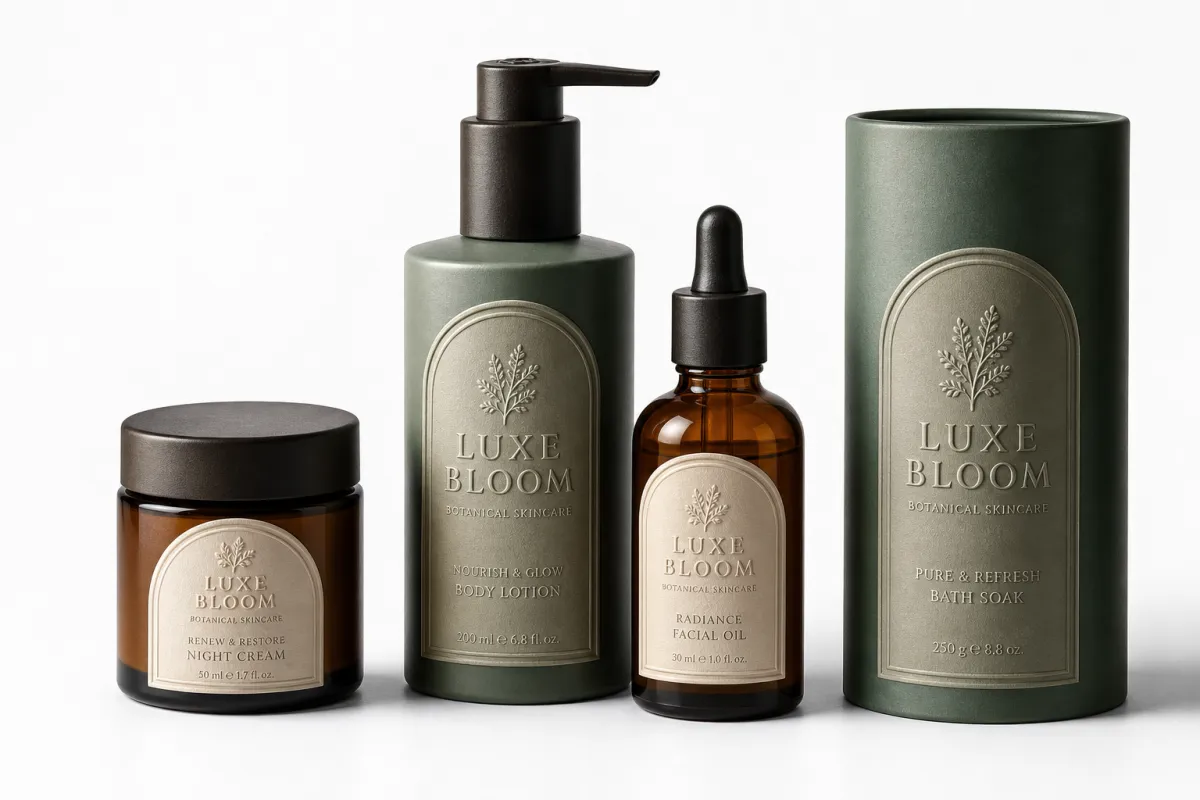
Picture a shelf with twenty similar products lined up shoulder to shoulder. Same light. Same distance. Same brief window of attention from the shopper. In that setting, embossed labels for retail products create a signal that flat print cannot reproduce. The raised surface catches highlights, throws fine shadows, and gives the eye something to stop on before the brand name is even fully read.
That pause has value. A label that feels substantial often carries a stronger quality impression, and quality perception can shape price acceptance more than brands expect. A citrus syrup, a candle, a face cream, or a wellness tincture may all use embossed labels for retail products to suggest care, craft, or refinement. The item does not need to be luxury to benefit from that effect. It only needs to look like someone paid attention.
Here is the practical definition: embossed labels for retail products use pressure, tooling, and a label stock that can be formed so that specific areas rise above the surface. Logos, borders, product names, icon marks, and small ornamental frames can all be lifted to create dimensional detail. The label is not only printed; it is physically shaped.
A label has only a moment to earn a hand, and embossed detail can buy that first touch.
That touch is not a trick. It is part of how people read packaging in a store. Tactile cues suggest thickness, care, and finish quality. For a startup brand, embossed labels for retail products can make a fairly simple container feel more complete. For an established brand, they can refresh a line without changing bottles, jars, or cartons that are already approved for filling and shipping.
Embossing is not limited to a premium look. It can also support a specific category position. A botanical skincare line may want a soft, quiet emboss that feels calm and refined. A heritage-style sauce or specialty condiment may want a stronger raised crest that feels traditional and hand-finished. Even a limited-edition seasonal product can use embossed labels for retail products to create a collectible feel without changing the base package format.
The biggest mistake is assuming embossing belongs only on expensive goods. It is more flexible than that. Specialty foods, cosmetics, candles, nutritional products, and gift-ready retail items all use embossed labels for retail products when the brand wants more tactile shelf appeal. What matters is not the category alone; it is whether the package can support the effect and whether the finish matches the story the brand is already telling.
If you are comparing options for a launch, it helps to think like a buyer and a production manager at the same time. The buyer wants a stronger shelf signal. The production side wants clean registration, sensible quantities, and a label that can survive real handling. That balance separates attractive embossed labels for retail products from ones that look wonderful in a presentation but struggle once they reach the line room. I have seen more than one pretty proof turn into a headache because nobody checked the container shape early enough.
How embossed labels for retail products are made
The production path starts with artwork, but not just any artwork. For embossed labels for retail products, the design file has to tell the supplier exactly which areas rise and which areas stay flat. That means clean vector geometry, careful line weights, and a layout that respects the physical limits of the material. If the artwork carries too much fine detail, the emboss can lose its shape before it ever reaches the shelf.
From there, the supplier creates tooling, usually a matched die or plate arrangement that compresses the label stock under controlled pressure. The raised effect depends on the interaction between pressure, dwell time, stock construction, and the shape of the emboss itself. Even a good tool can produce weak results if the substrate is too soft, too thin, or too slick. That is why embossed labels for retail products are rarely a one-variable decision.
There is also a simple but important distinction between embossing and debossing. Embossing raises the design out of the surface. Debossing pushes it inward. Either can work on retail packaging, but they create different impressions. Embossing tends to feel more visible and tactile. Debossing can feel quieter, more understated, and sometimes more architectural. For embossed labels for retail products, the raised look is usually chosen when the brand wants stronger shelf presence.
Substrate selection matters a great deal here. Paper stocks tend to hold crisp detail well, especially heavier coated or uncoated label papers with enough body to resist flattening. Films can work too, but they behave differently under pressure and may need closer testing. Foils bring another layer of complexity because their surface and construction can change how cleanly the detail forms. The same design that looks sharp on one material can look soft or distorted on another, which is why sample testing is so valuable for embossed labels for retail products.
Finishing choices often travel with embossing. A label might include print layers, foil stamping, selective varnish, matte or gloss coatings, or soft-touch lamination. Each choice changes how the raised area reads under light and how it feels in the hand. The strongest embossed labels for retail products are usually planned as a system, not as a single effect dropped onto a finished layout at the end.
In packaging terms, the best results usually happen when design, material, and finishing are developed together. A raised logo on a carton face, for example, needs enough open space around it so the detail can breathe. A bottle label may need adhesive and stock choices that let the label conform to the curve without fighting the emboss. A jar label may need a slightly shallower relief so the design survives application and shipping. The point is simple: embossed labels for retail products work best when the whole build is considered from the start.
For buyers who want to compare material paths, the difference can look like this:
| Build option | Typical visual effect | Relative cost pressure | Best use case |
|---|---|---|---|
| Flat printed label | Clean, direct, minimal texture | Lowest | High-volume SKUs with tight budgets |
| Foil plus emboss | Shiny accent with tactile raised detail | Medium to high | Premium retail items that need reflection and touch |
| Deep emboss with specialty stock | Strong dimensional presence | Higher | Giftable products, heritage branding, limited runs |
| Subtle emboss on coated paper | Refined, controlled texture | Moderate | Modern skincare, candles, and boutique food lines |
If you are building a broader packaging system, the same decision logic often applies across cartons, hang tags, and pressure-sensitive labels. Our Custom Labels & Tags page is a useful place to compare formats before you commit to a final structure. A label that looks elegant on screen can behave very differently once pressure, adhesive, and stock thickness enter the picture.
Design factors that shape embossed labels for retail products
Design is where a lot of embossing projects succeed or fail quietly. The reason is simple: embossed labels for retail products do not forgive sloppy artwork the way some flat prints do. Thin strokes can disappear. Small serif terminals can fill in. Tight negative spaces can close up. If the original design is too delicate, the emboss can pull it into mush instead of giving it presence.
Line weight deserves first attention. Very fine rules, hairline borders, and tiny text often look elegant on a monitor, but they are not always happy under pressure. In practice, stronger shapes tend to survive better. A cleaner icon with thicker outlines usually embosses more consistently than a highly detailed illustration. That is why a lot of successful embossed labels for retail products use simplified mark forms, larger letter spacing, and deliberate open areas around the raised feature.
Type also matters more than people expect. The label may need the product name to remain readable from three or four feet away, not just from a close inspection in prepress. If the brand mark is small or ornate, the emboss can reduce clarity. A more restrained font, a larger point size, or a separate raised emblem often creates better results. That is especially true for embossed labels for retail products used on crowded shelves where quick recognition counts.
Depth is another key decision. A subtle relief can feel refined and modern. A deeper relief can look dramatic and handcrafted, but it also asks more from the material and tooling. More depth is not automatically better. Sometimes the right answer is a quiet 0.2 mm to 0.4 mm lift that catches light without shouting. Other projects can support a stronger profile, but only if the stock is sturdy and the packaging line can handle it. The best embossed labels for retail products match depth to brand promise, not ego.
Package shape enters the conversation early. Flat cartons are usually the easiest canvas. Curved bottles introduce tension, especially if the label has to wrap or conform. Flexible pouches are more demanding because the substrate may flex during filling, shipping, and consumer use. Textured containers add another wrinkle because the emboss can disappear against the container surface or distort as the label settles. For embossed labels for retail products, the container is never just a backdrop; it is part of the engineering.
Spacing and contrast shape the final look as much as the relief itself. A raised border with enough breathing room can make the whole package feel more deliberate. A crowded front panel often makes embossing feel noisy. That is why experienced packaging teams tend to simplify the layout a bit when they introduce embossed detail. They let the raised element lead, instead of asking it to compete with every other piece of copy or decoration.
Brand personality should guide the design decisions too. Embossing can feel elegant, artisanal, contemporary, heritage-driven, or giftable, depending on the typography and spacing around it. A sparse serif wordmark feels very different from a strong geometric monogram. Both can work on embossed labels for retail products, but they tell different stories. If the design language does not match the product promise, the tactile effect can feel out of place rather than premium.
One more practical point: if the label needs compliance text, a barcode, ingredient panel, or regulatory copy, reserve that space before the emboss is finalized. The decorative feature should never crowd the functional information. Once the die is made, changes cost time and money. With embossed labels for retail products, planning the whole front and back panel together saves a great deal of back-and-forth later. That kind of housekeeping is not glamorous, but it keeps the project from turning into a scramble.
Embossed labels for retail products: process and timeline
The workflow usually starts with discovery and specifications. A buyer defines the label dimensions, application method, container type, quantity, and finishing goals, then the supplier reviews the artwork for emboss suitability. From there, the file moves through cleanup and proof preparation. That first stage is straightforward on paper, but it prevents plenty of trouble later because embossed labels for retail products depend on precise layout control.
After artwork review comes tooling. This is often the longest lead-time step because a custom die or plate must be produced and checked before the full run can begin. If the emboss pattern is complex or the packaging has unusual constraints, the supplier may need more than one adjustment cycle. It is common for embossed labels for retail products to spend extra time in this phase because tiny depth or alignment issues can matter much more than they do on a flat label.
Once the tool is ready, the press setup begins. The operator dials in pressure, registration, and material handling, then runs samples for approval. This is the stage where buyers should pay close attention. Look at edge sharpness, legibility, consistency across the sheet or roll, and how the raised area feels under light and finger pressure. A sample that looks impressive at a glance may still reveal problems when held and turned. That is exactly why proofing matters for embossed labels for retail products.
The approval stage should also include adhesive performance if the label will be applied to a real container. A beautiful sample on a release liner is one thing. A label on a curved bottle with cold storage, an oily surface, or a fast applicator is another. If the product will face shipping stress, it may be wise to review shipping test methods such as those published by ISTA and align packaging tests with the realities of the distribution lane. For some retail programs, that extra discipline is what keeps embossed labels for retail products from failing after launch.
After sample approval, production can move into the full run. Larger quantities reduce the impact of setup cost, but the run still needs careful inspection. A consistent emboss is only valuable if it stays consistent from the first piece to the last. Depending on the job size, finishing complexity, and queue length, lead time often lands somewhere around 12 to 15 business days from proof approval for straightforward orders, and longer if tooling or specialty stock needs extra sourcing. That is a realistic planning window for many embossed labels for retail products jobs, though the exact schedule always depends on the supplier and the build.
For brands with a launch date, backward scheduling is the safest habit. Start with the retail ship date, then count back through artwork approval, sample review, tooling, production, and packing. If one step slips, the whole schedule slips. That is especially true for embossed labels for retail products, where approvals tend to take longer because people want to feel the sample, not just look at it on screen. A quick extra day in review can save a week of panic later.
For teams that want to think in material and sustainability terms at the same time, packaging references from Packaging School and forest certification guidance from FSC can be useful context while you build a label specification. If your brand claims recycled content or responsible sourcing, make sure the material language matches the actual substrate and the documents you can support.
Cost, pricing, and MOQ for embossed labels
Pricing for embossed labels for retail products is usually shaped by five things: tooling, material, press time, finishing complexity, and quantity. Tooling is the one-time or low-frequency setup that creates the raised effect. Material choice covers the paper, film, adhesive, liner, and any coating or lamination. Press time reflects how long the machine has to stay set up for the job. Finishing can add foil, varnish, or secondary operations. Quantity spreads the fixed cost across more pieces.
That last point matters a lot. A short run of 1,000 pieces often feels expensive per unit because the same setup work still has to happen, while a 10,000-piece run may look much more efficient because the setup cost is diluted. In practical terms, embossed labels for retail products might land somewhere around $0.18 to $0.35 per unit on a modest premium run, but the exact number can shift sharply with coverage, material, and finishing. A deeper emboss, specialty stock, or foil accent can push that higher. A simpler build on a strong paper stock may hold the line much better.
MOQ, or minimum order quantity, is usually tied to machine efficiency and waste allowances. A supplier may be able to produce a short run, but the economics can get awkward fast if the setup time is the same as a larger order. That does not mean small brands are shut out. It just means the unit cost may be higher. For embossed labels for retail products, it is common to see multiple quantity tiers so buyers can compare what happens at 2,500, 5,000, and 10,000 pieces.
Here is a simple way to request quotes without creating confusion: provide the final dimensions, artwork files, container type, estimated annual volume, preferred substrate, finish request, and application method. If the labels need to run on automated equipment or wrap around a narrow diameter, say so early. The more complete the brief, the cleaner the pricing. That is especially true for embossed labels for retail products, where hidden complexity can change cost quickly.
The table below is a useful shorthand for buyers comparing value rather than chasing the lowest price alone:
| Cost driver | How it affects price | What to ask the supplier |
|---|---|---|
| Tooling | Raises upfront cost, especially for custom relief | Is the die or plate reusable for reorders? |
| Material | Heavier stock and specialty face materials cost more | Which stock gives the sharpest emboss at the target price? |
| Finishing | Foil, varnish, and coating add time and labor | Can the effect be simplified without losing shelf impact? |
| Quantity | Higher volume lowers unit cost | What are the price breaks at each tier? |
| Application | Curved or automated application can require more testing | Has the label been tested on the actual container? |
One area where brands should be careful is cost cutting through weaker materials. Saving a few cents on the stock can cost much more if the emboss collapses, the label wrinkles, or the adhesive fails in transit. The best embossed labels for retail products are not always the cheapest line on the quote, but they often deliver a better return by looking stronger and reducing production surprises.
If your packaging program includes multiple label formats, compare the embossed version with the rest of the line rather than judging it on its own. A premium front label paired with a simpler side or back label can be a smart compromise. You can build a strong hierarchy without overcommitting the entire pack budget, and our Custom Labels & Tags page is a good reference point if you want to see how different label builds map to different uses.
Common mistakes with embossed labels for retail products
The first mistake is overdesigning. It is tempting to emboss too many elements because the effect feels special, but too many raised zones can make the label busy and reduce readability. A crowded front panel can also create uneven pressure during production. The strongest embossed labels for retail products usually focus on one or two high-value elements, not five competing textures.
Another common problem is using the wrong material. A thin or highly flexible stock may not hold a deep emboss well, and the image can flatten or distort during application. If the package is curved, the challenge doubles. A label that seems crisp in the proof room can wrinkle on the line or relax after filling. That is why sample testing matters so much for embossed labels for retail products.
Environmental conditions also get overlooked. Refrigeration, humidity, oil exposure, and abrasion from shipping all affect how the label performs. A candle jar that sits on a warm shelf has different needs than a chilled wellness product or an oil-heavy cosmetic. If the label will face moisture or friction, the adhesive, coating, and stock need to be matched accordingly. The embossed detail may look excellent on day one and still fail if the construction is not suited to the use case. With embossed labels for retail products, durability is part of design.
Another trap is ignoring the application equipment. A label that looks perfect on a mockup can misbehave on an automated applicator or on a line that moves faster than expected. Registration can drift. Curves can pull the label. Edge lift can show up late in the process. The more specialized the production line, the more important it is to test the real container, not just a paper proof. That is one reason seasoned buyers treat embossed labels for retail products as a packaging system, not a print spec.
Finally, some brands forget about compliance. Barcode space, nutrition or ingredient copy, warning text, and legal marks still need clear placement. If the emboss shape steals that space, the package becomes harder to approve and more expensive to revise. The decorative detail should support the design, not crowd out the required information. In practice, the best embossed labels for retail products make room for both shelf appeal and the information the customer and retailer need.
One more issue shows up often in new programs: assuming the tactile effect will automatically carry the whole package. It will not. Embossing amplifies what is already there. If the typography is weak, the color palette is muddy, or the hierarchy is unclear, the texture cannot rescue it. It can only make the good parts feel better and the weaker parts feel more obvious. That is why embossed labels for retail products should be planned alongside the rest of the visual language.
Expert tips for getting embossed labels for retail products right
Always ask for physical samples. Screen proofs are useful for layout, but they do not tell the full story of touch, light, and edge definition. A sample lets you see whether the emboss feels crisp or muddy, whether the logo reads from a normal shelf distance, and whether the color still supports the raised detail. For embossed labels for retail products, that tactile review is worth the extra time.
Match the depth to the brand promise. A subtle emboss can feel disciplined, modern, and expensive without being loud. A stronger relief can suit heritage products, craft lines, and giftable items that should feel more hand-finished. The most effective embossed labels for retail products are usually consistent with the rest of the package rather than trying to overpower it.
Work backward from the entire package structure. If the bottle is slender and tall, the label geometry should suit that proportion. If the carton uses a matte stock, the emboss may need a bit more contrast to read clearly. If the jar is heavy and low, the label can carry a broader, calmer raised element. This is where packaging people earn their keep: they make the label and the container feel like one decision instead of two separate purchases. That is especially true for embossed labels for retail products in premium categories.
Hybrid builds often perform better than single-effect builds. A raised logo paired with foil can create both visual and tactile emphasis. A soft-touch coating can make the emboss feel richer in hand. A selective varnish can add contrast without turning the front panel into a crowded finish sample. The trick is restraint. The best embossed labels for retail products usually use one tactile hero and one supporting accent, not a dozen effects fighting for attention.
Set up a prepress and production checklist with the supplier before the run starts. Confirm artwork version, die lines, tolerance expectations, substrate, adhesive, finish, application method, and approval sign-off. If there is any question about container curvature, moisture exposure, or shipping stress, test it early. The more you lock down before production, the fewer surprises you see later. That kind of discipline is what makes embossed labels for retail products reliable instead of merely attractive.
If the product line is larger than one SKU, think about visual consistency across the family. A master emboss shape can unify multiple flavors or variants while color changes handle the differences. That keeps the shelf message clean and reduces the need to redesign each item from scratch. With embossed labels for retail products, a small amount of structure often goes a long way.
Reorders matter too. If you expect the label to come back in future production cycles, ask whether the tooling will be stored and reused, what the reorder process looks like, and whether the material will stay available. A label that is easy to repeat is usually a better long-term value than a highly customized build that is difficult to replicate. That is a practical consideration many buyers miss until the second order is already due.
Next steps for embossed labels for retail products
A good starting point is a quick packaging audit. Identify which products need a stronger premium signal, which containers can physically support embossing, and which SKUs are worth the added production attention. Not every product needs the effect, and that is fine. The smartest use of embossed labels for retail products is selective, where the tactile upgrade gives the clearest return.
Then gather your core spec set before you request pricing. You will get better quotes if you share dimensions, quantity, substrate preference, finishing ideas, launch timing, and the actual container shape. If the product will be handled by an automated line or exposed to moisture, say that directly. The more precise the brief, the less room there is for misalignment. Good embossed labels for retail products start with good information.
Ask for samples or a prototype plan. A small proof run can tell you more than ten email threads. Compare the tactile feel, shelf visibility, and durability against your current label approach. If you are weighing two concepts, hold them side by side under the light they will actually see in retail. You will often notice the better option immediately. That is one of the simplest ways to judge embossed labels for retail products without guessing.
Also compare the quote against the whole packaging budget, not just the label line item. A more capable label can support a stronger retail position, and that can affect pricing power, not just appearance. If the raised detail helps the product look more deliberate and more credible, the extra cost may be easier to justify than it first appears. That is why embossed labels for retail products should be evaluated as a brand investment, not only as a print expense.
My practical rule is simple: choose embossed labels for retail products when the added texture genuinely improves brand perception, survives real handling, and fits the production schedule without forcing avoidable risk. If those three conditions line up, the effect tends to earn its keep. If one of them is missing, a flatter, cleaner label may actually be the better business decision.
For brands building a packaging family, the best outcome is usually a balanced one: thoughtful materials, clear typography, a workable production plan, and enough tactile detail to make the package feel intentional. That is the sweet spot where embossed labels for retail products feel premium without becoming fragile or difficult to produce. When that balance is right, the label does more than decorate the product; it helps the product earn trust before the shopper ever picks it up.
FAQs
What materials work best for embossed labels for retail products?
Sturdier paper stocks, coated label papers, and some specialty films usually hold detail better than very thin or highly flexible materials. The best choice depends on the container shape, the target emboss depth, and whether the label needs to resist moisture, oil, or abrasion. For embossed labels for retail products, the smartest move is to test the exact material with the actual artwork before final approval.
Are embossed labels for retail products better than foil labels?
They solve different problems. Embossing adds touch and dimension, while foil adds shine and metallic contrast. Many strong retail packages combine both, using foil for visual emphasis and embossing for tactile premium feel. If you must choose one, decide whether your shelf goal is reflective attention or a more crafted, hand-finished impression. In many cases, embossed labels for retail products and foil work best together rather than as competitors.
How long do embossed labels for retail products usually take?
Lead time depends on whether custom tooling is needed, how complex the artwork is, and whether the order includes printing or other finishing steps. Proofing and sample approval can add time, especially for new products that need careful registration and tactile review. The safest approach is to build the schedule backward from the launch date and allow room for revisions. For many embossed labels for retail products jobs, a realistic window from proof approval to delivery often lands in the 12 to 15 business day range, though that can move up or down with complexity.
What is the MOQ for embossed labels for retail products?
MOQ varies by supplier, machine setup, and material availability, so there is no single standard number. Short runs are sometimes possible, but the unit cost may be higher because tooling and setup are spread across fewer labels. If your volume is uncertain, ask for multiple quantity tiers so you can see how pricing changes. That kind of comparison makes embossed labels for retail products easier to budget without guesswork.
Can embossed labels for retail products be used on curved containers?
Yes, but the label stock, adhesive, and emboss depth need to match the curve so the design does not lift or distort. Highly curved or textured surfaces usually need more testing than flat cartons or straight-sided jars. A sample application on the actual container is the best way to confirm fit before production. For embossed labels for retail products, real-container testing is usually the difference between a nice concept and a reliable package.
Used with care, embossed labels for retail products can do something very practical: they help a package feel more believable, more finished, and more worth picking up. That is not magic. It is the result of good material selection, disciplined artwork, clean tooling, and a production plan that respects how retail packaging behaves once it leaves the mockup table.
So the best next move is straightforward: choose one hero element to emboss, test it on the real container, and judge the sample under the same light and handling conditions the product will face on shelf. If the raised detail still reads clearly, feels intentional, and fits the budget, you have a package decision that is doing real work rather than just adding decoration.