A slider bag can look interchangeable until it enters receiving, replenishment, and shelf restocking. Then the small details matter: how the closure feels, how the film holds up, how the cartons stack, and whether the order is packed for the warehouse in a way that saves labor. That is where retail slider lock Bags Bulk Order Planning becomes a spec exercise, not a shopping exercise.
The smartest buyers start with the product use case, then lock the bag size, film, closure, and pack format before asking for a quote. That keeps the order tied to actual handling needs instead of a catalog image or a unit-price headline.
The Shelf Is Not Where Costs Start
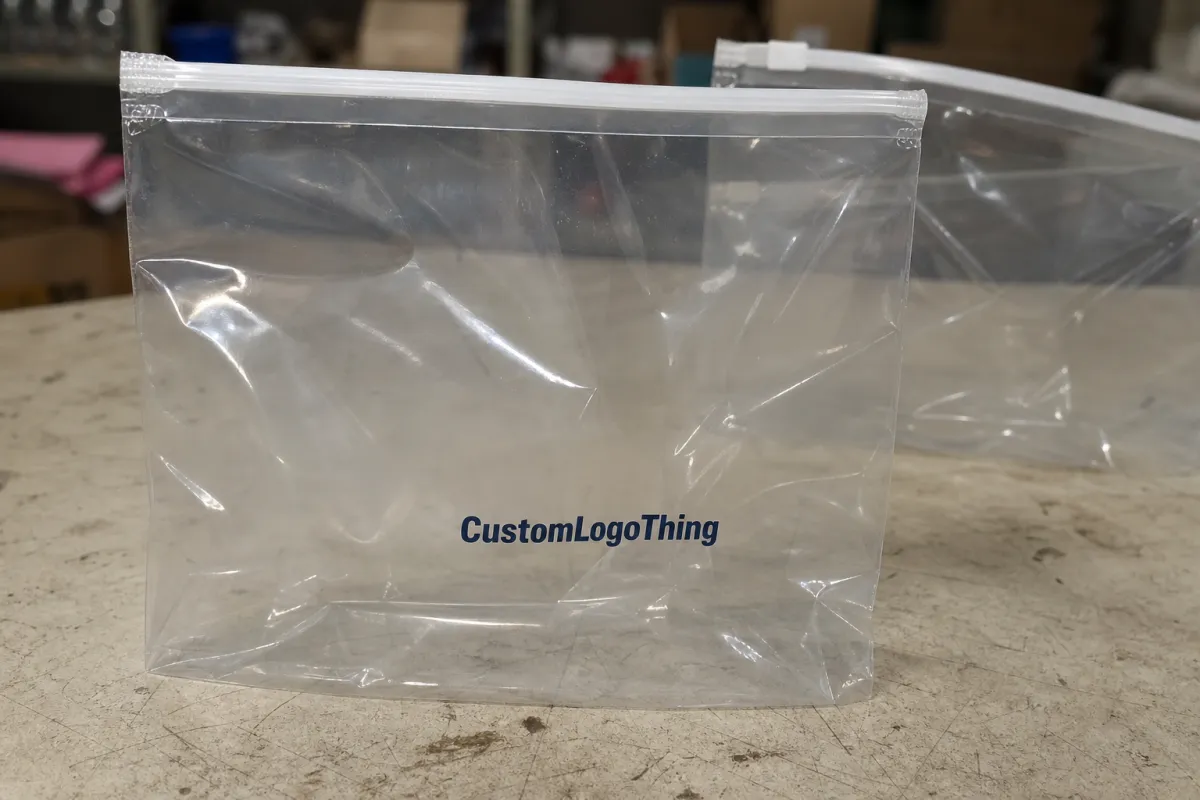
Retail packaging usually fails because it is close, not because it is wildly wrong. A bag can be technically acceptable and still create extra work if the carton count is awkward, the closure is hard to open repeatedly, or the pallet pattern slows receiving. The real cost is often labor, not the bag itself.
For buyers, the bigger risk is inconsistency. If one store gets a slider that moves smoothly and another gets a tighter closure, replenishment becomes uneven fast. Add mixed cartons, unclear labels, or a packing format that does not match the warehouse, and the result is rebagging, confusion, and avoidable delays.
“A bag that saves a few cents but adds receiving time is not a savings line. It is deferred labor.”
Start with the product. What is going in the bag? How often will it be opened? Does it stay in a backroom until replenishment, or does it need to look good on the shelf every day? Once those answers are clear, the specs are easier to settle and the quote becomes more useful.
The shelf is the last step. The buying decisions happen before that.
Retail Slider Lock Bags Bulk Order Planning Starts With the Use Case
The slider exists for repeat access. It gives a cleaner open-and-close action than a standard press seal, which matters when store teams, warehouse staff, or shoppers handle the bag multiple times. A good slider should glide, seal evenly, and give a clear tactile cue that the bag is closed.
These bags are commonly used for loose parts, kits, sample bundles, accessories, and other retail items that need visibility and repeated access. Clear film helps associates identify contents quickly in the backroom, which reduces sorting errors and makes replenishment faster.
Buyers often focus on visible features first, but the more useful questions are practical:
- Will the bag be opened daily or only once?
- Does the product have corners, sharp edges, or rigid parts?
- Will it hang, sit in bins, or stay in master cartons?
- Do store teams need a writable panel or label area?
Functional details can matter more than the mockup. Hang holes help with peg display. Write-on panels help when the same format is reused across changing SKUs. Heavier film may be worth it for molded parts or anything that pushes on the seams. If the bag is going to be opened often, the slider and the film need to work together.
That is why “close enough” causes trouble. A bag that fits once may still be wrong if it is too tight to fill quickly or too loose to hold the product neatly. The bag has to support the retail process, not force the team to work around it.
Material, Gauge, and Sizing Specs to Lock In
Material choice affects clarity, feel, and how well the bag handles repeat use. LDPE is common for flexibility and visibility, while blended films can provide a different balance of stiffness and puncture resistance. For many retail programs, the choice comes down to whether the film can handle product edges and repeated opening without overbuying material.
Gauge is where cost and performance move quickly. A lighter gauge can work for soft goods and low-risk accessories, while thicker film is usually better for angular items or frequent handling. In practice, 2.0 mil may fit lighter retail items, 2.5 mil often covers a broader range, and 3.0 mil or above is often a better fit for parts, hardware, or repeat-open programs. ASTM references such as ASTM D882 for tensile properties and ASTM D1709 for dart impact are useful when comparing film performance in a disciplined way.
Dimensions need more attention than they usually get. The nominal width and length on a quote sheet do not tell you whether the opening is easy to fill or whether the top has enough room to close cleanly. A bag can be technically large enough and still slow down packing if the operator has to fight the opening.
Sample approval is important because drawings do not show everything. They do not reveal whether the slider catches, whether the film buckles around hard edges, or whether the carton stacks the way the warehouse expects. A sample shows the problems before the full order does.
Before quoting, lock in the details that keep production accurate:
- Finished size: width, length, and any extra top room needed for closure.
- Material: LDPE, blended film, or another approved structure.
- Gauge: enough to resist puncture without overbuying film.
- Closure style: slider color, pull feel, and whether a hang hole is needed.
- Pack format: carton count, inner pack count, pallet pattern, and labeling.
- Decoration: print, SKU code, logo area, warning text, or a write-on panel.
- Tolerance range: the variation that is acceptable before a run is rejected.
- Inspection points: seal quality, slider operation, carton integrity, and label accuracy.
One spec change can move the whole quote. A slightly wider bag may improve fill speed but add freight weight. A thicker film may reduce damage and complaints but raise cost enough to matter across many stores. That is why the best retail slider lock bags Bulk Order Planning happens on the spec sheet, not in a last-minute email thread.
For a neutral reference on flexible packaging terminology, packaging.org is a useful baseline. It will not replace a production spec, but it helps buyers and merchandising teams use the same language before a purchase order is written.
Pricing, MOQ, and Quote Inputs That Change Unit Cost
Bag pricing usually comes down to film thickness, bag size, closure style, printing, carton configuration, and total quantity. Buyers know volume lowers unit cost, but the real driver is setup efficiency. A long run spreads tooling, film waste, packing labor, and inspection across more pieces.
MOQ is usually tied to how efficiently the plant can run, pack, and ship the order. It is not just a sales rule. A supplier may quote a small order, but the unit cost often reflects the same fixed effort packed into fewer bags. That is why it helps to ask for several break points instead of one number.
Illustrative pricing ranges below are for planning only. Actual numbers move with size, print coverage, and closure design, but the pattern is useful for buying decisions.
| Order tier | Typical unit range | What it usually means | Buyer takeaway |
|---|---|---|---|
| 2,500 pieces | $0.24-$0.40 | Setup cost is heavy relative to volume | Good for a pilot or spec test |
| 5,000 pieces | $0.16-$0.29 | Often the first practical bulk break | Common sweet spot for new retail programs |
| 10,000 pieces | $0.11-$0.22 | Better spread on labor, packing, and film usage | Works well for repeat replenishment |
| 25,000 pieces+ | $0.09-$0.17 | Strong unit economics, but more inventory risk | Best when sell-through is already proven |
Landed cost matters more than line-item cost. A lower unit price can disappear if carton density is weak, palletization is inefficient, or receiving requires extra labor. If the bags move through a warehouse and then out to multiple stores, the carton and pallet plan should be part of the quote, not an afterthought.
Ask for these inputs up front so the number is useful:
- Finished bag dimensions and any tolerance limits.
- Material, gauge, and whether extra puncture resistance is needed.
- Clear, printed, or labeled format.
- Closure type, slider color, and any hang-hole requirement.
- Carton pack, pallet pattern, and ship-to location.
- Whether the order is a one-time buy or a repeat program.
A buyer who sends all of that at once usually gets a tighter quote and less back-and-forth. A buyer who sends fragments often gets a price that has to be revised later.
Process, Timeline, and Lead Time From Spec to Ship
Most bulk orders follow the same sequence: spec confirmation, proof or sample approval, manufacturing, inspection, carton packing, and freight scheduling. The details vary, but the structure is familiar. If the buyer approves each step quickly, the order usually stays on pace. If dimensions, artwork, or packaging format change midstream, lead time stretches right away.
Lead time is rarely one fixed number. Stock-style bags usually move faster than custom-sized or printed runs because fewer production steps are involved. A simple order may move in roughly 7-12 business days after approval, while a more customized order often needs 12-20 business days or more depending on size, printing, and packaging format. Freight adds its own clock, especially if the destination needs an appointment or cross-dock.
Internal approvals should be set before the PO is released. Otherwise, artwork waits for sign-off and samples sit idle while the calendar keeps moving. If the order is tied to a retail reset or seasonal launch, the approval date matters nearly as much as the ship date.
Production timing also depends on what is already running. A plant may turn a stock order quickly, then need extra time for a special gauge, a different slider color, or a nonstandard carton pack. Buyers who understand that front end are less likely to be surprised when the date moves.
For transit planning, the handling assumptions should match how the shipment will really move. The reference library at ISTA is useful because it frames the drop, vibration, and compression issues that show up in distribution. You do not need a lab report, but you do need enough discipline to keep cartons from arriving crushed or split.
A practical milestone request should include:
- Production start date.
- Proof or sample approval date.
- Estimated completion and pack-out date.
- Freight booking or pickup window.
- Estimated delivery window to the warehouse.
If the quote leaves these dates vague, the buyer absorbs the risk. Clear dates keep retail slider lock bags Bulk Order Planning tied to the actual calendar instead of hope.
What Makes a Reorder-Friendly Bulk Program Work
The easiest bulk programs are the ones that do not drift. The bag dimensions stay the same, the carton count stays the same, the labeling stays the same, and the approved sample stays on file. That consistency is what makes reorder planning simple for buyers and predictable for warehouse teams.
Documentation is a quiet advantage. A saved spec sheet, a dated sample, and approved artwork reduce mistakes when a replenishment order needs to move fast. If a buyer can reference a clean spec package instead of piecing together old emails, the reorder usually goes better.
Strong repeat programs also leave room for small improvements. A supplier may suggest a change in film structure, carton count, or pack orientation that lowers cost without changing how the bag functions. That can improve availability and reduce freight waste without forcing the retail team to relearn the package.
What does not help is drift disguised as a small edit. A different closure, a different pallet height, or a carton label that is close but not identical is enough to create receiving headaches. Retail teams do not want a better story. They want the same run to show up the same way every time.
That kind of order discipline helps:
- Keep one approved spec sheet on file.
- Retain the reference sample for future checks.
- Standardize carton labels and SKU naming.
- Match the pack format to how the warehouse actually receives goods.
- Review the reorder against the previous run before approving production.
If the program is broad enough to need repeat purchasing, it helps to keep the structure aligned with internal procurement expectations. The bigger the rollout, the more valuable a clean, repeatable file becomes.
Next Steps to Turn Specs Into a Clean Purchase Order
Before requesting a quote, gather the essentials in one place. Finished size, film preference, closure style, carton pack, target volume, and ship-to location will get you much farther than a loose note that says “need slider bags, good quality.” That kind of request usually turns into extra clarification and a delayed launch.
Use one spec sheet instead of scattered comments. That habit shortens back-and-forth, reduces the chance of a misunderstood dimension, and keeps the quote tied to the actual use case. If the bags will move through multiple retail channels, a sample or reference spec is worth approving before the full run is released.
A good buying sequence looks like this:
- Confirm the product use case and bag size.
- Choose the film, gauge, and closure style.
- Review carton pack and pallet pattern.
- Request pricing at more than one quantity tier.
- Approve a sample or reference spec.
- Release the PO only after the timeline is clear.
That sequence is not glamorous. It is effective.
For buyers trying to keep a retail program clean, the point is simple: treat the bag as part of the operating system, not as an accessory. If the closure, film, carton count, inspection steps, and freight plan all line up, the packaging disappears into the workflow in the best possible way.
What do I need to quote retail slider lock bags for a bulk order?
Send the finished size, material preference, closure style, color or clarity requirement, and carton pack. Include target quantity and ship-to destination so freight and production assumptions are accurate. If the bag will be printed or labeled, send the artwork or spec notes with the first request.
How does MOQ affect slider lock bag pricing in bulk planning?
MOQ is usually tied to setup efficiency, film usage, and packaging configuration rather than an arbitrary rule. Higher quantities often lower the unit cost because production and packing are spread across more bags. Ask for price breaks at several tiers so you can compare total spend, not just the lowest quoted line.
Can I approve a sample before placing a large retail slider lock bag order?
Yes. Use the sample to check closure feel, fit, clarity, carton count, and whether the bag packs the way your team expects. Keep the approved sample on file so reorder discussions stay consistent.
What usually changes the lead time for bulk slider lock bag orders?
Lead time moves with custom sizing, special materials, print approval, and any changes made after the quote is accepted. Stock-style bags generally move faster than fully customized runs because fewer production steps are involved. Freight distance and warehouse appointment requirements can also affect delivery.
How should I plan packaging for warehouse and store receiving?
Confirm carton pack, pallet pattern, labeling, and inspection points before production so the shipment is easy to receive and count. Match the packaging format to how stores or distribution centers actually open and move inventory. If multiple locations will receive the order, standardize the label and carton data to reduce handling errors.

