Beanies

Embroidery Beanies for Brand Drops: How to Buy Smart

✍️ Emily Watson πŸ“… May 13, 2026 πŸ“– 16 min read πŸ“Š 3,145 words
Embroidery Beanies for Brand Drops: How to Buy Smart

Embroidery beanies for brand drops work because they do a lot with very little. The surface area is small, the logo is close to the face, and the texture reads as deliberate even before anyone notices the brand name. That is useful. A good drop piece should do more than look nice in a product grid. It should hold up in winter photos, survive repeated wear, and still feel worth keeping after the launch window closes.

The best versions are not flashy. They are controlled. Tight artwork, a sensible stitch count, a body that fits the logo instead of fighting it. That combination usually feels more premium than a louder, more complicated design that tries to prove too much. The difference shows up fast once the beanie is on a head instead of on a render.

Why embroidered beanies feel premium on launch day
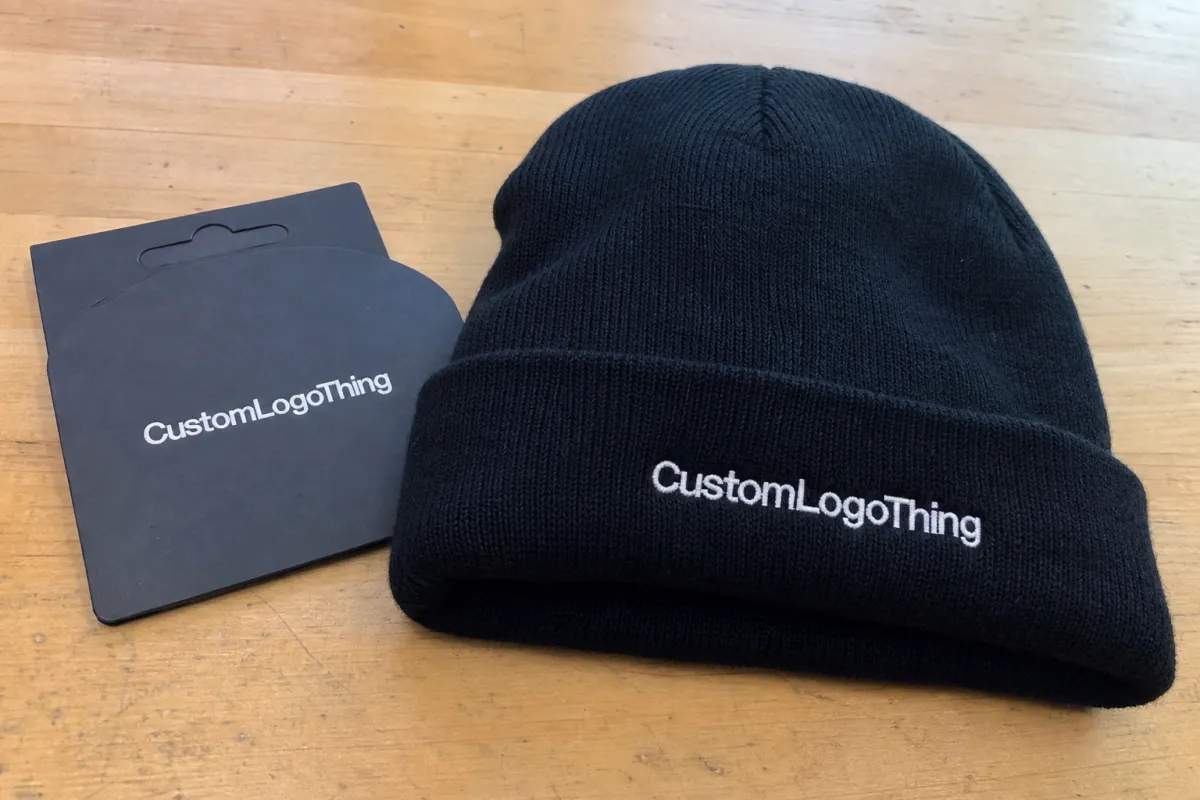
Why embroidery beanies for brand drops feel premium on launch day - CustomLogoThing packaging example

A beanie sits where people actually look: around the face, near the eyes, and right in the frame of a photo. That matters more than most teams expect. Hoodies can get buried under layers. Totes disappear off-camera. A beanie stays visible, especially in cold-weather launches where the rest of the outfit is stripped down.

Embroidery adds texture, and texture signals effort. Flat print can work on knit goods, but it rarely gives the same sense of depth. Stitching catches light differently, creates a slight raised edge, and makes the logo feel built into the piece instead of applied like a sticker. That is a small thing on paper. In hand, it changes the product.

There is also a brand behavior angle here. Beanies get worn in real life, not just during the campaign week. They end up on commutes, at events, in quick mirror selfies, on dogs, over messy hair. A clean embroidered mark keeps showing up long after the drop feed slows down. That is why the better releases usually stay simple. The item needs to work after the hype is gone.

"A beanie is small real estate. If the logo is fighting the knit, buyers feel it before they can explain why."

The launch-day premium effect also depends on restraint. Oversized logos can look desperate on a small front panel. A tidy cuff mark, on the other hand, can make the whole release feel more considered than the price tag suggests. The product does not need to shout. It needs to look like the team made decisions on purpose.

That is the core reason embroidery beanies for brand drops keep showing up in apparel strategies. They are compact, visible, and affordable enough to merch at scale without looking generic. The trick is not finding a beanie. The trick is choosing one that can carry the mark cleanly.

How embroidery works on knit beanies

The process starts with artwork, not thread. A logo that looks crisp on a screen still needs to be translated into stitch structure. That translation is called digitizing, and it is where many projects either get smarter or get ruined. Thin lines may need to be thickened. Tiny type often has to be removed entirely. Complex crests usually need to be simplified before they can survive on a flexible knit surface.

Flat mockups are useful, but they are not enough. Knit fabric stretches. Cuffs curve. The front panel shifts depending on gauge and yarn density. What looks perfectly balanced in a digital file can tilt, close up, or lose legibility once the thread starts pulling against the body.

The knit itself matters just as much as the logo. A tighter gauge gives the embroidery a more stable base. A looser rib can swallow detail and make edges look softer than planned. Cuffed beanies usually offer the easiest placement because the folded area creates a flatter field. Slouch styles can work too, but they are less forgiving if the logo needs strong visual authority.

Most embroidery on beanies falls into a few stitch families:

  • Satin stitch works well for letters, short strokes, and clean edges.
  • Fill stitch covers larger shapes, though heavy fills can make knit bodies feel stiff.
  • Outline stitch is best for tiny marks or simple logos that need clarity more than coverage.

Stitch count is a practical constraint, not a vanity metric. On beanies, a logo that lands somewhere in the 4,000-8,000 stitch range often wears better than one pushed far beyond that. More stitches can mean more detail, but they also mean more density, more stiffness, and a greater chance that the front panel starts feeling like a patch. If the logo relies on fine type or multiple thread colors, simplify it early. Doing that before quoting is cheaper than learning it after sampling.

A stitched sample is not optional theater. It is the first real check on how the product behaves. Thread sheen, tension, fabric stretch, and logo size all change once the embroidery is physical. A sample tells you whether the mark feels centered, whether the cuff sits well, and whether the logo still reads when the beanie is worn instead of laid flat. That is the difference between a mockup that looks fine and a product that actually sells the idea.

What changes the look and hand-feel of a branded beanie

Four specs do most of the work: yarn type, gauge, cuff depth, and crown shape. If those are off, the logo has to compensate, and that rarely ends well. A chunky acrylic body can feel warm and substantial, but it may blur the edges of fine embroidery. A tighter knit gives the stitches a more stable surface, which usually improves readability and makes the piece feel more refined.

Material choice changes the customer experience too. Acrylic is common because it is affordable, consistent, and easy to produce in volume. It also holds color well. Recycled acrylic or blends can help with sustainability messaging, though they sometimes come with a slightly different hand-feel and a modest price bump. Wool or wool blends push the product into a higher-end lane, but they also raise care expectations and can make sizing feel a little less forgiving.

Color is another place where teams overcomplicate things. A tonal thread choice often looks more expensive because it is quieter. Contrast thread gives faster recognition and reads better from a distance. Multi-color logos can work, but only if the mark is already strong at small scale. Otherwise, the beanie starts to feel busy. That is a common mistake with branded goods: more color does not automatically mean more impact.

Placement can rescue or sink the piece. Centered cuff embroidery is the safest route because it is easy to read and easy to wear. Offset placement feels a little more fashion-led and can work for streetwear drops. Side embroidery is subtle and can be great for a monogram or secondary symbol, but it is weak if the goal is immediate brand recognition. The more the logo has to compete with the shape of the hat, the more likely it is to photograph poorly.

Hand-feel is shaped by density. Heavy embroidery can flatten the knit and make the front panel stiff. That is not just a comfort issue. It changes how the beanie folds, packs, and wears through the first few uses. A piece that feels too hard in hand usually reads less premium once it is on the customer. It may still be attractive in a product shot, but the wear test tells the truth quickly.

Cuff depth deserves more attention than it usually gets. A wider cuff gives a larger branding field and a more obvious front panel. A shallow cuff limits placement and can make the logo look cramped. If the beanie is intended for a launch box or a retail shelf, cuffed styles are typically the easiest to brand because they keep the stitch area stable. Slouchier bodies are harder to control and more sensitive to head shape, which means the embroidery has to be even cleaner.

If you are choosing between body colors, ask for physical thread references against the actual knit whenever possible. Digital swatches can mislead. Black thread on charcoal, navy thread on midnight blue, cream on oatmeal; those combinations can look subtle, but they need real-world comparison. Visual branding is never just the logo. It is the relationship between thread, yarn, and light.

Cost, pricing, MOQ, and quote factors

Price is driven by more than the embroidery itself. Body quality, stitch count, thread color changes, digitizing, packaging, and quantity all affect the final number. A one-color logo on a standard cuffed knit is straightforward. A multicolor crest with tiny text and several thread swaps is not. Packaging matters too. A folded beanie in a polybag costs less to prep than one packed with branded tissue, a belly band, or a paper tag system.

These ranges are broad, but they are useful for early planning:

Beanie option Best use Typical unit price range Notes
Cuffed acrylic knit, one-color embroidery Core drop merch with a clean front logo $4.50-$8.00 Usually the easiest balance of value, comfort, and brand consistency
Recycled acrylic or blended knit Sustainability-led launches $5.75-$10.50 Often paired with paper tags or recycled packaging inserts
Heavy rib knit with higher stitch count Premium streetwear releases $6.50-$12.00 Looks strong, but detail simplification matters more on textured fabric
Wool or wool-blend body Higher-end retail drops $9.50-$18.00 Better hand-feel, though sizing and care expectations rise too

MOQ wording deserves a close read. Some suppliers quote by total pieces. Others quote by colorway, logo version, or size split. A minimum order of 500 can mean 500 total, not 500 per design. That detail matters if you are testing two colorways or splitting inventory between an online release and an event. Ask early. It affects the unit cost and the packing plan.

For a usable quote, send the exact logo file, intended size, placement notes, body color, thread references, quantity split, and delivery window. If you already know the packaging format, include that too. A simple polybag may add only a few cents. A more deliberate unboxing setup can add roughly $0.35-$1.10 per unit depending on materials and handwork. Digitizing is often a one-time fee in the $25-$75 range, though complex art can go higher. Freight, tariffs, and rush charges sit outside those numbers and should be checked separately. They are the kind of line items that make β€œcheap” orders less cheap very quickly.

The other cost trap is rework. A design that needs a second sample, a thread change, or a logo simplification can erase the savings from the first quote. That is why the initial spec matters so much. Clear input reduces back-and-forth, and back-and-forth is where timing and budget both leak.

Production steps and turnaround: from approval to shipment

Custom knit goods move through a predictable chain, but the schedule can still slip if the launch calendar is too tight. The usual sequence looks like this:

  1. Brief and artwork review.
  2. Digitizing and digital proof.
  3. Sample production or pre-production approval.
  4. Bulk knitting and embroidery.
  5. Inspection, folding, and packing.
  6. Final shipment and tracking.

Most delays happen between the proof and the sample. That is where teams discover that a logo needs simplification or a thread color needs adjustment. A file that looks ready can still need cleanup once the stitches are mapped out. Seasonal queue pressure matters too. Beanie season is obvious to everyone in production. Capacity tightens, lead times get less generous, and the room for last-minute changes shrinks fast.

For modest runs, a common lead time is often 12-18 business days from approval to ship. More complex programs, larger quantities, or heavier packaging work can stretch to four to six weeks. If the release is tied to a campaign date, build in buffer time. That buffer is not wasted. It protects the sample process, the final quality check, and the shipping promise you make to customers.

Packaging should be tested as part of the production plan, not treated as an afterthought. Folding method, bag size, tag placement, and carton fill all affect arrival condition. A beanie that looked great in the warehouse can arrive looking compressed if the pack-out is sloppy. Small apparel often suffers from this because teams focus on the decoration and ignore the journey. Transit is part of the product.

If you are thinking about transport risk more seriously, the shipping profiles used by ISTA are a useful reference. They help frame how goods behave in transit, which is especially relevant if you are bundling beanies with other merch in the same package. For sustainability-led launches, paper components should be chosen carefully too. A credible recycled story usually depends on clear material choices, not just green language. FSC is still one of the clearest markers buyers understand.

Common mistakes that make drop merch look cheap

The fastest way to make a beanie look less premium is to overload it. Oversized logos fight the small front panel and can make the knit feel crowded. That is a design problem, but it becomes a manufacturing problem too, because the larger the embroidery area, the more the fabric wants to distort. A giant logo on a soft body usually reads less like branding and more like a patch forcing itself into the frame.

Thin lines and tiny text are another common failure. If the lettering cannot be read cleanly once it is stitched, the result becomes fuzzy instead of detailed. Knit fabric does not reward microscopic artwork. It usually eats it. The same issue shows up with logos that use too many colors. Every extra thread change increases complexity, and complexity tends to weaken both price efficiency and visual consistency.

Skipping a sample is the third trap. A digital proof can look balanced and still fail on the real product because thread sheen, stitch direction, or placement shifts the read. This becomes more obvious if the logo sits near a seam or right on the cuff edge. A stitched sample costs time, but it is cheaper than discovering the issue after a batch is already boxed.

Rushing the order can also hurt the result. Tight deadlines leave less room to simplify artwork, match body colors, or improve the pack-out. That pressure tends to show. People can tell when a release was planned carefully and when it was pushed through production with no margin for error.

Packaging mistakes matter more than they should. Loose folding, mismatched tags, or cheap-looking overwrap can drag down the whole product even if the embroidery itself is good. The beanie may be solid, but the drop still feels undercooked. A short run does not need expensive finishing. It does need coherence.

There is a simple test for this: does the product still feel right after the first wear, the first photo, and the first shipment? If not, the issue is usually not the beanie alone. It is the combination of art, material, timing, and finishing working against each other.

Expert finishing tips before you order

Start with a one-page spec sheet. Lock the logo size, placement, color count, body color, and target delivery date before anyone starts quoting the job. That removes guesswork and keeps the conversation focused on the things that actually move cost and quality. For embroidery beanies for brand drops, clarity at the start usually saves money later.

Next, narrow the sample direction. Two or three options are usually enough. Ten options slow everything down and create decision fatigue. A tight selection keeps the launch moving and stops the team from drifting into maybe-land. If the order is premium or tied to a visible launch moment, ask for a stitched sample rather than relying on renderings alone. Texture is the whole point here.

Think about pack-out before you think about the post. If the beanie is going into a launch box, a branded mailer, or a folded apparel kit, the folding method and insert format should be decided early. That is where the unboxing experience gets built. It does not need to be elaborate. It does need to feel intentional. A basic setup can still read expensive if the logo placement is right and the packaging is tidy.

Pay attention to the reorder file set. Save the approved artwork, stitch file, thread codes, and body specification. That makes the next run faster and protects consistency across drops. It also avoids the annoying situation where a successful piece gets slightly altered because nobody can find the original settings. Good merch systems are not glamorous. They are repeatable.

One more practical point: if the beanie is meant to be worn hard, not just photographed, ask how the embroidery will behave after a few washes and a lot of folding. Acrylic and wool blends will age differently. Dense stitches can soften. Tonal thread can show wear differently than contrast thread. Those are not deal-breakers. They are the kind of details that separate a one-off item from one that keeps circulating in the wardrobe.

For most brands, that is the real win. Not the loudest item. The one people keep wearing because it still looks right.

FAQ

What makes embroidered beanies better for brand drops than printed beanies?

Embroidery usually feels more premium because the logo has texture and depth instead of sitting flat on the knit. It also tends to hold up better in cold-weather wear, where friction, folding, and repeated use can wear down some print methods faster.

How many stitches should a logo use on embroidered beanies?

There is no universal number, but the safest approach is to keep stitch count as low as possible while preserving readability. If the art has tiny details or thin lettering, simplify it before quoting so the beanie does not turn stiff or crowded.

What is a realistic turnaround for custom beanies with embroidery?

Turnaround depends on sample approval, quantity, packaging, and seasonal workload. For modest runs, 12-18 business days from approval to ship is common, but larger or more complex orders often take four to six weeks.

Which beanie styles work best for brand drop embroidery?

Cuffed Knit Beanies are usually the easiest to brand because they offer a defined front panel for clean logo placement. Thicker knits can feel more premium, but they need stronger simplification so the embroidery stays readable.

How do I keep a beanie logo from warping during embroidery?

Use artwork sized for knit texture, not for a flat mockup, and avoid overly dense fills that pull the fabric tight. A pre-production sample is the best check for distortion, especially when the logo sits near a seam or cuff edge.

Get Your Quote in 24 Hours
Contact Us Free Consultation

Warning: file_put_contents(/www/wwwroot/customlogothing.com/storage/cache/blog/6a6ae450fcc6ca83384e2265380228fb.html): Failed to open stream: Permission denied in /www/wwwroot/customlogothing.com/inc/blog/PageCache.php on line 20

