A cuffed knit beanie can carry an event farther than most people expect. It gets worn on the commute home, on the campus walk to class, at weekend games, and in staff photos long after the booth is packed away. That makes the sample phase more than a technical checkpoint. It is the moment that tells you whether the giveaway will feel like a useful winter layer or a cheap extra that never leaves the tote bag.
That is the reason the event merch cuffed knit Beanies Material Sample guide matters. A render can show the logo. A spec sheet can list yarn. Only the sample shows how the knit handles stretch, whether the cuff rebounds cleanly, and whether the decoration still reads well once the fabric is worn and relaxed. For buyers responsible for trade shows, sports activations, campus programs, or holiday drops, that is a lot of information to leave to guesswork.
The best sample review is not dramatic. It is methodical. You check the hand-feel, the fit, the logo placement, the packaging, and the timing. You compare what arrived against what was promised. Then you decide whether the piece deserves a bulk order or another revision. That process protects budget, but it also protects brand perception, which is harder to repair once a weak product has been handed out in quantity.
Why one sample can expose a bad beanie run before the event does
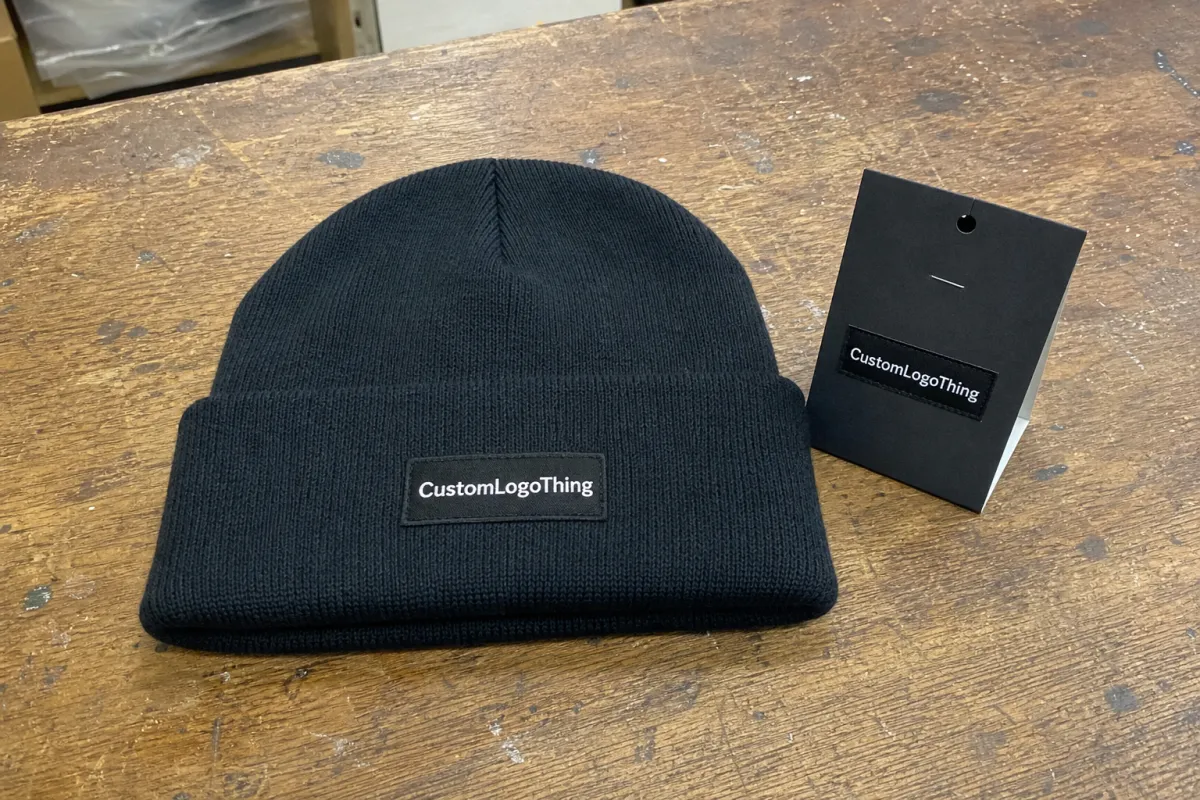
A beanie can look polished on screen and still fail the first time someone pulls it over a head. Knit headwear has more variables than flat merchandise. Yarn hand-feel, rib tension, crown depth, cuff height, seam finish, and decoration method all change how the finished piece behaves. A sample reveals those details in a way digital mockups simply cannot.
Comfort is usually the first hidden issue. If the yarn feels dry or scratchy against skin, attendees may wear the beanie once and stop. If the fit is too shallow, the crown rides high and the shape looks awkward. If the cuff does not hold its fold, the logo shifts. Even a difference of 10 to 15 mm in body depth or cuff height can change the silhouette enough to make the product feel off. That is a small measurement with a large effect.
Brand visibility is tied to wear rate. A beanie that gets worn often creates repeated impressions in transit, at games, in team photos, and in casual social content. A beanie that looks good but feels bad becomes dead inventory as soon as the weather turns cold. That is why the sample is not a box to tick. It is the cheapest stage at which a problem can still be fixed.
One approved sample should answer three basic questions:
- Does it feel right? The fiber should suit direct skin contact, not just look warm.
- Does it fit right? The cuff, body depth, and stretch recovery should match the intended wearer.
- Does the decoration stay clear? The logo should hold its shape after the knit stretches and settles.
Those checks sound simple, but they catch the mistakes that cost the most later. A minor issue on one sample can become a major issue across 500 or 5,000 units. The difference between a successful event item and a forgettable handout often starts there.
What this event merch cuffed knit beanies material sample guide shows
The phrase event merch Cuffed Knit Beanies Material Sample guide sounds narrow, but the sampling process reveals more than material alone. Buyers usually see one of three formats: a yarn swatch, a knit panel, or a finished cuffed beanie sample. Each format answers a different question, and each has limits. The mistake is treating them as interchangeable.
A yarn swatch is useful early in the process. It lets you compare fiber hand-feel, color tone, and twist before anyone commits to full knitting. A knit panel shows stitch density and how the fabric behaves under tension. That matters if you need to know whether the rib structure will hold the cuff cleanly. A finished sample is the most useful approval piece because it combines construction, fit, and decoration in one object. If the logo needs to be judged against the cuff in real proportions, this is the version to inspect.
| Sample type | What it shows | Main limitation | Best use case |
|---|---|---|---|
| Yarn swatch | Hand-feel, color tone, fiber blend | Does not show final fit or decoration | Early material comparison |
| Knit panel | Stitch density, rib tension, stretch behavior | No true cuff or crown shape | Checking gauge and structure |
| Finished cuffed sample | Fit, logo placement, seam finish, overall look | Can still vary from bulk production if specs change | Final approval before order release |
A sample can also reveal what it cannot guarantee. Dye-lot variation still happens. Knit tension can shift slightly when production scales up. Packaging can change presentation if the folding method or carton pack-out changes. That is why the written spec matters as much as the sample itself. The physical sample, the tech pack, and the purchase order should all describe the same product.
Packaging deserves attention too. A beanie that arrives neatly packed in a corrugated cardboard shipper with kraft paper fill tells you something about handling discipline. If the program calls for recycled materials, FSC certified paper, or biodegradable packaging, that should be specified before approval, not argued over after production starts. The box does not improve the beanie, but it can sharpen or weaken the first impression.
One sample should answer three questions: does it feel right, does it fit right, and does the decoration still look right after the knit has been stretched and worn.
Fiber blends, gauge, and decoration choices that change the feel
Material choice changes the entire outcome. Acrylic is still the workhorse for many event beanies because it keeps cost under control, handles color well, and produces consistent results at scale. It is not the most luxurious option, but it is reliable for large promotional runs. Cotton feels softer and more breathable, which can help in shoulder-season events or indoor staff use, though it usually gives less insulation for cold-weather wear. Wool and wool blends bring better warmth and a more premium hand-feel, but lower-quality wool can feel scratchy, especially if the blend ratio is not balanced well. Recycled blends, often paired with polyester or acrylic, are a practical option when sustainability is part of the brief and the buyer wants a cleaner sourcing story.
Gauge is just as important as fiber. A tighter knit usually gives better shape retention and cleaner decoration, especially around the cuff. The tradeoff is a firmer feel on the head. A looser knit can feel softer and more relaxed, but it may lose structure faster and create a sloppier logo field. Rib tension matters a lot on cuffed styles because the cuff is doing two jobs at once: holding the shape and framing the mark. If the rib is too loose, the brim looks lazy. If it is too tight, the beanie can feel restrictive even when the material itself is soft.
Decoration changes how the piece behaves as well. Embroidery is still the default for many event merch orders because it is legible, durable, and widely available. Woven labels create a flatter, cleaner look and are less likely to fight with the knit surface. Patches can make a beanie feel more streetwear-oriented, and they can hide small irregularities in the knit. Knit-in logos look integrated and premium, but they need earlier artwork lock-in and tighter control over stitch mapping. The wrong decoration can make a good yarn look ordinary. The right one can make a modest beanie feel more considered.
Material and decoration choices are easiest to judge with a simple framework:
- Acrylic: best for broad color choices, lower budgets, and large runs where consistency matters more than luxury.
- Cotton: useful when softness and breathability matter, though it is less insulating than winter-focused blends.
- Wool blends: better for premium gifting, colder climates, and higher perceived value.
- Recycled blends: appropriate when the campaign needs a sustainability story that can be supported with documentation.
Decoration quality is easy to underestimate until the sample is in hand. A dense embroidered logo can tug on the knit if the backing is too stiff. A woven label can twist if placement is a few millimeters off. A patch that looks sharp in photos may feel bulky against the cuff. That is why wear-testing the sample matters. Pull the cuff up and down. Stretch the body. Check the mark from arm’s length and close up. A quick glance is not enough.
For teams that also review packaging or transit performance, third-party references can help set expectations. ISTA is useful for thinking about distribution testing and shipping stress, while FSC is the standard reference for paper-based sourcing when recycled inserts or mailers are part of the order.
Cost, MOQ, and quote drivers for sample approvals
Sample pricing usually reflects complexity, not just labor. Yarn choice, stitch count, decoration method, packaging, and shipping all influence the quote. A basic acrylic cuffed knit beanie with single-color embroidery is straightforward to sample. A wool-blend version with several yarn colors, a custom patch, and branded packaging takes longer to set up and check, so the sample price rises with it.
MOQ, or minimum order quantity, affects the final unit cost more than many first-time buyers expect. A 200-piece order generally carries a higher per-unit price than a 1,000-piece order because setup costs are spread over fewer items. That is why the sample fee should be viewed in context. A $35 to $90 sample charge can feel like a small extra line item, but it is far cheaper than approving a bad run and trying to recover through discounts or replacements later. In some cases, the fee is credited toward the final order. In others, it is separate. Ask before you move forward.
There is also a hidden quote risk: omissions. A low quote may exclude sampling, setup, or certain packaging details. That is not always a trick; sometimes it is simply a thinner spec. But a buyer who compares only the headline price can miss the real difference. The safest review is the one that asks what is included, what is optional, and what has been left out of the line item entirely.
| Order style | Typical sample cost | Typical unit price trend | Risk level |
|---|---|---|---|
| Basic acrylic, single-color embroidery | $35-$55 | Lower | Lower |
| Acrylic blend, woven label or patch | $45-$75 | Moderate | Moderate |
| Wool blend, multi-color knit or custom packaging | $60-$120 | Higher | Higher |
That table is not a quote guarantee. It is a reality check. If one supplier is much cheaper, confirm whether the yarn weight, cuff depth, logo method, or packaging spec is different. Sometimes the lower price is real. Sometimes it is built on a weaker assumption. Good sample review helps expose that before the order is locked.
Sample process, lead time, and production steps
The cleanest production path starts with a brief, moves to a tech pack, then to sampling, revisions, and final approval. That order sounds obvious, yet many delays come from sending artwork before the size, yarn, or packaging decisions are fixed. The first sample then lands in a gray zone: close enough to review, not complete enough to approve.
For timing, a first sample often takes 5 to 10 business days after specs and artwork are confirmed. If a revision is needed, add another 3 to 7 business days. Production after sign-off commonly takes 15 to 25 business days, depending on quantity, decoration complexity, and seasonal demand. Shipping sits on top of that. Anyone working toward a hard event date should build in room for sample review, not just manufacturing. The fastest way to miss a launch is to assume the first sample will be the only one.
Send the right information upfront and the process moves faster. The most useful details are practical, not decorative:
- Artwork files: vector logo, color references, and placement notes.
- Size target: head circumference range or a reference beanie to match.
- Quantity: expected run size and whether multiple colors or sizes are needed.
- Event timing: booth date, ship date, or internal handoff deadline.
- Packaging needs: belly band, polybag, insert card, or folded retail presentation.
Transit and presentation are part of the approval too. A sample packed in a corrugated cardboard mailer with kraft paper cushioning usually arrives in better condition than a loose product tossed into a carton. If the campaign needs recycled materials or biodegradable packaging, that must be written into the order details. Otherwise, the factory will choose the most convenient standard packing method, which is rarely the same thing as the brand’s intended presentation.
Approval should happen in layers. First, compare the sample to the brief. Second, verify measurements: body width, cuff height, crown depth, and logo position. Third, inspect the decoration in natural light. Office LEDs can hide thread issues that become obvious outdoors. Finally, keep one approved piece on file. That object becomes the reference if there is any question about the bulk order later. Written notes help, but a physical benchmark is better.
Common mistakes that make beanie samples misleading
The most common mistake is relying on photos. Flat-lay images are useful for general composition, but they do not show how the cuff sits, how the body stretches, or whether the logo puckers after handling. A rendered mockup can hide a shallow crown or a tight opening. If the review never moves beyond the screen, the sample is not doing enough work.
Fit problems are easy to overlook because knit hats are forgiving until they are not. A cuff that is 10 mm taller than planned changes the silhouette. A body that is too short can ride up. A yarn that relaxes too much after the first stretch makes the beanie look worn out before it has been used. None of those issues sounds severe by itself. Together, they create a product that feels careless.
Light changes perception more than many buyers expect. A navy logo may read clearly indoors and blend into the base yarn outside. Thread sheen can look controlled in one light source and glossy in another. Pilling and seam finish are also easier to assess in natural light, where small flaws are not masked by office lighting. A strong sample should hold up under both conditions.
The sample is only honest if the buyer tests it like a customer would: on a head, in normal light, with the cuff folded, unfolded, and handled a few times.
The last mistake is accepting a sample that is materially different from the production promise. If the yarn lot is not named, a substitute may appear later. If trim placement is not measured, a patch may shift. If the production method is not confirmed, the bulk run may drift from the approved piece. That is how disappointment enters a project that looked safe on paper. Specificity is not bureaucracy here; it is the only defense against a close-but-not-right final order.
Expert tips and next steps before you place the order
If the goal is a cleaner approval process, request the sample early and compare it against a written brief rather than a screenshot. Document the details that matter: yarn blend, cuff height, logo size, packaging style, and acceptable color tolerance. Once those points are in writing, the sample becomes repeatable instead of subjective. That is useful for production, and it is useful if the final order ever needs verification.
Share audience context before the sample is built. A staff winter uniform needs different performance than a stadium giveaway. A donor gift can justify a softer yarn and more polished trim. A large event may need simpler decoration and a tighter budget. The more specific the use case, the easier it is to choose the right balance between cost and comfort.
Comparing two or three options often reveals more than a single sample can. A lower-cost acrylic version, a mid-tier blend, and a premium wool blend may look similar at a distance, but they behave differently in the hand. The differences in softness, stretch, and logo clarity are often obvious once the samples are side by side. That kind of comparison also helps teams avoid paying for features the audience will not notice.
If sustainability is part of the brief, ask for proof instead of vague wording. Recycled materials, FSC certified paper for inserts, and responsible carton sourcing are easier to confirm when the request is specific. If the supplier offers packaging in corrugated cardboard with kraft paper fill, that may fit the program well. If the order uses biodegradable packaging, ask what exactly that means in the final packing structure, because the phrase can cover very different material choices.
The simplest standard is also the hardest to fake: approve the beanie only when it feels right, looks right, and matches the written spec line by line. That is the practical value of the event merch cuffed knit Beanies Material Sample guide. It does not just help select a winter giveaway. It reduces the odds that a large, public order becomes a visible mistake.
What should I check first in a cuffed knit beanie material sample?
Start with hand-feel, stretch recovery, and cuff structure. Those three checks reveal comfort and basic quality faster than almost anything else. After that, review logo placement, seam finish, and color under natural light so you catch issues that photos can hide.
How many material samples should I request before approving a beanie order?
One solid baseline sample is often enough if the specs are already clear. Request a revision sample if fit, color, or decoration still needs adjustment. Extra variants make sense only when the yarn blend, trim, or logo placement is still undecided.
What changes event merch beanie pricing the most?
Yarn blend, stitch density, and decoration method usually move pricing fastest because they affect material use and labor. Low MOQ, rush timing, and custom packaging can also push the quote up. If a price looks unusually low, confirm what has been left out.
How long does the sample and approval timeline usually take?
Expect 5 to 10 business days for the first sample after artwork and specs are confirmed, then a few more days if revisions are needed. Production commonly adds 15 to 25 business days after sign-off. Shipping time comes after that, so build in a cushion if the event date is fixed.
Can a material sample predict final bulk quality accurately?
It predicts construction, feel, and decoration quality well when the bulk order uses the same yarn and production method. It cannot eliminate every dye-lot or scale-up difference, which is why the written spec should match the sample before production begins.

