Embroidery Beanies Retail Brand MOQ: Order Smarter
Embroidery beanies retail brand MOQ choices shape cash flow, launch risk, unit cost, and shelf presentation. Use these buyer checks before approving production.
Why Embroidered Beanies Sell Before the First Snowfall
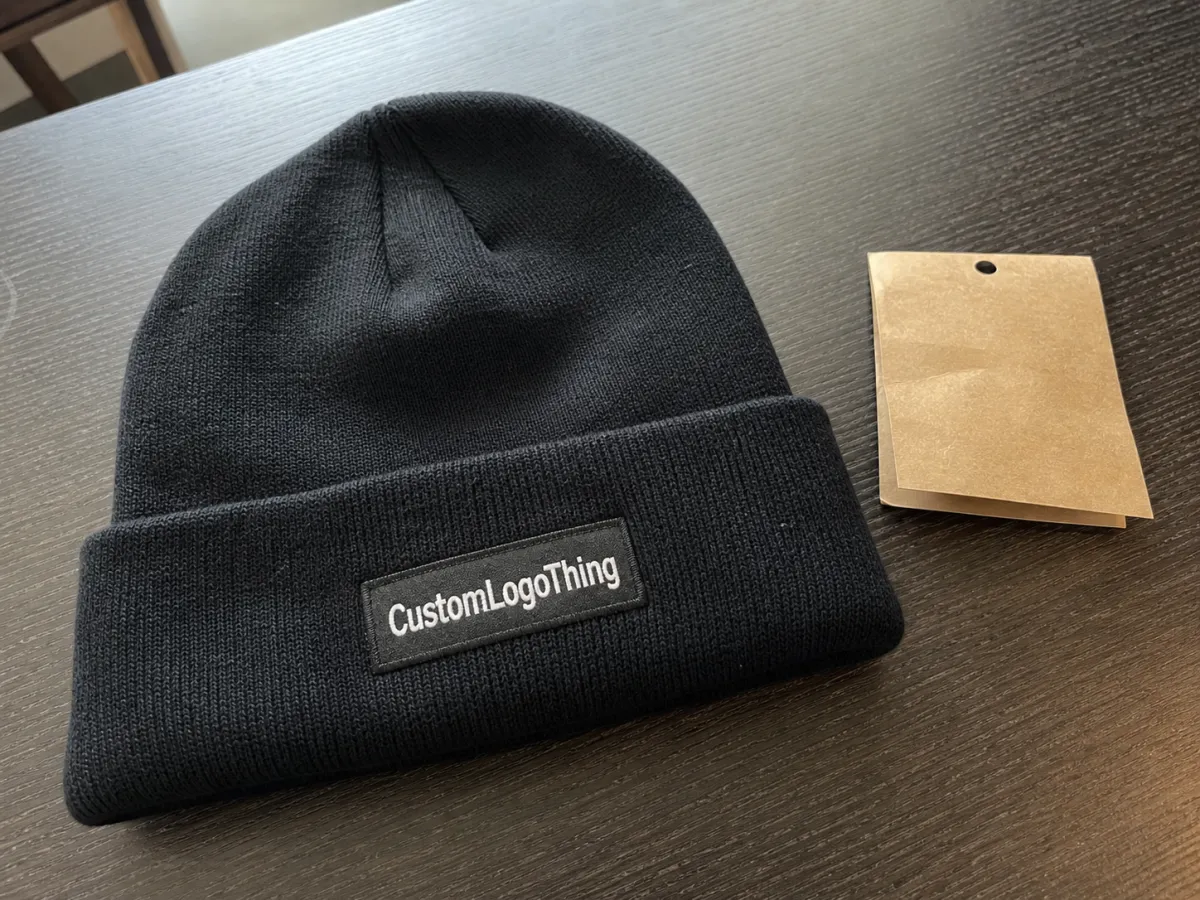
Beanies are small-ticket products with billboard behavior. A $16 to $34 retail knit cap can move through campuses, resorts, gyms, checkout counters, delivery photos, and social feeds for months, which is why embroidery beanies retail brand MOQ planning is not only a quantity question. It affects inventory exposure, design consistency, cash timing, and whether the finished product can support the margin promised in the line sheet.
Printed apparel gets attention because it scales quickly. Embroidery earns attention in a different way: through texture, thread shadow, and a sense of permanence that flat decoration often cannot match. A dense stitched mark on a cuff can make a young brand look established. Crooked placement, poor thread tension, or lettering that closes up on rib knit can make the same brand feel careless before the shopper even checks the price tag.
Retail buyers should treat the beanie as both product and package. The knit, fold, logo, label, hang tag, poly bag, barcode, and carton mark all influence how smoothly the order moves through receiving, ecommerce fulfillment, or store replenishment. A cap that looks good in a mockup still needs to arrive counted, labeled, scannable, and easy to allocate.
Most buyers comparing suppliers are already weighing several variables at once: quantity breaks, sample costs, stitch count, thread colors, beanie colors, freight estimates, proof approval, and delivery dates. They may also be deciding whether a lower test run protects cash better than a larger order with a lower unit cost.
The useful goal is production clarity. A retail brand needs a beanie specification that can be made accurately, packed correctly, and sold at a margin that still works after shipping, labeling, storage, and possible markdowns are counted.
Product Details That Matter on a Retail Beanie
Style changes both the look and the economics. A cuffed beanie gives a clean logo zone, often about 2.25 to 3 inches high after folding. A slouch beanie has a softer streetwear profile, but placement can be less predictable because the fabric collapses differently on the head. Fisherman beanies sit higher and usually suit smaller marks. Pom beanies work well for resorts, schools, winter events, and gift programs, though the pom adds carton bulk and can reduce pack-out efficiency.
Heavy rib-knit beanies often feel more premium because the fabric has body. They also require care during embroidery because the rib structure can pull thread into grooves. A minimalist brand may choose a tight cuff, black or oatmeal knit, and a 1.5-inch wordmark. An outdoor brand may need a thicker acrylic or wool-blend knit with a high-contrast logo area that still reads clearly in cold-weather photography.
Material choice has practical tradeoffs. Acrylic is common because it offers broad color availability, strong durability, and generally lower cost. Cotton blends feel softer against skin but may not provide the same insulation. Wool blends add warmth and perceived value, yet fiber content, care instructions, and shrinkage expectations need closer review. Recycled yarns can support sustainability claims, but buyers should ask for documentation instead of assuming a green hang tag proves anything. FSC certification applies to paper-based tags and packaging, not the beanie fiber itself, so use FSC guidance when specifying retail hang tags, sleeves, or inserts.
Decoration format matters as much as the blank. Direct embroidery is durable and crisp for compact logos. Woven patches handle tiny details and small lettering better than thread stitched directly into knit. Embroidered patches add dimension and can make the mark feel more substantial. Leatherette patches give a heritage or outdoor look, although heat, abrasion, and edge wear should be checked. Chenille patches bring collegiate texture, but they need enough surface area to avoid muddy detail.
Retail finishing is not an afterthought. Fold consistency, hang tags, barcode labels, size or care labels, individual poly bags, master carton quantity, and pack-out organization all affect labor after delivery. For ecommerce, one unit per bag with a scannable label may justify the extra handling cost. For a pop-up shop, bulk cartons grouped by color may be faster. For subscription boxes, the beanie may need to match the full unboxing sequence, including inserts and carton protection.
The best beanie is not automatically the most expensive one. The smarter product is the one that matches the shelf price, launch date, decoration complexity, and reorder plan. If a $22 retail beanie needs a $9 landed cost to make sense, that target should shape the blank, logo size, stitch count, and packaging before artwork is digitized.
Embroidery Specifications Retail Buyers Should Lock Before Quoting
A useful quote starts with complete specifications. Send the beanie style, material preference, color count, logo file, embroidery size, stitch count if known, placement, quantity, packaging requirements, delivery destination, and target in-hand date. Missing details can change the quote by pennies or several dollars per unit, especially on smaller runs.
Stitch count is one of the most misunderstood cost drivers. Two logos can both measure 2.5 inches wide and still price differently. A simple 3,000-stitch wordmark may run quickly. A dense 12,000-stitch crest with filled areas, borders, and small text takes more machine time, more thread, more stops, and more inspection. Those machine minutes affect available capacity during peak winter demand.
Digitizing is the translation stage. Artwork becomes a stitch file that tells the embroidery machine how to build the logo with thread direction, density, underlay, pull compensation, and color changes. Small text under about 0.20 inches high, gradients, hairline rules, and tightly spaced elements often need simplification. On knit fabric, crowding can distort the cuff or make letters close up.
Placement tolerance should be discussed before a purchase order is approved. Knit stretches. Cuffs shift. Embroidery has physical thickness. A buyer may want the mark perfectly centered on every unit, but a realistic tolerance such as plus or minus 0.125 to 0.25 inches is more practical, depending on style and decoration method. Samples and photo references reduce disputes later.
Thread color needs a real-world check. Black thread on charcoal knit may look refined in a studio file and nearly disappear under store lighting. White thread on cream knit can look clean online but weak from six feet away. Ask for thread references, Pantone guidance where possible, and contrast review under lighting similar to the sales channel.
Compliance is less exciting than logo placement, but it affects receiving. Fiber content, care instructions, country of origin, barcode placement, carton marks, and retailer routing rules can determine whether a shipment moves cleanly through intake. For broader transit testing and packaging performance, the International Safe Transit Association publishes standards and protocols at ISTA.
Production callout: Most artwork problems are not artistic problems. They are translation problems between a flat logo file, a stretchy knit surface, and a machine that must repeat the same motion hundreds or thousands of times.
Embroidery Beanies Retail Brand MOQ, Pricing, and Unit Cost: What Changes the Quote
MOQ exists because fixed costs appear before the first finished beanie ships. Blank sourcing, machine setup, digitizing, thread changes, sampling, label handling, packing instructions, and carton work all take time. The embroidery beanies retail brand MOQ conversation is really a risk conversation: how much inventory can the brand absorb, and what unit cost still leaves room for retail margin?
There is no universal price. A standard acrylic cuffed beanie with one direct embroidered logo may sit in a very different range than a wool-blend beanie with a custom patch, hang tag, barcode label, and individual bag. Quantity, material, embroidery size, stitch count, number of placements, patch type, label work, packaging, shipping method, and deadline all move the number.
Volume spreads fixed cost. A small test run can protect cash flow, especially for a new retail brand or limited merch drop, but the unit cost will be higher. Larger orders usually improve the landed cost per unit, yet they also increase exposure if the color, fit, or logo style misses the customer. The best MOQ is rarely the largest number a supplier can produce. It is the quantity that matches sell-through confidence.
| Order Path | Typical Use Case | Cost Behavior | Buyer Watchout |
|---|---|---|---|
| Lower MOQ test run | First drop, pop-up, influencer capsule, new logo | Higher unit cost because setup is spread across fewer units | Limit color splits so the sales read is clean |
| Mid-size retail run | Core colors for ecommerce or stores | Better unit cost with manageable inventory exposure | Confirm barcode, carton, and pack-out rules before approval |
| Large seasonal order | Resort, school, outdoor, or multi-location program | Lowest setup impact per unit; freight planning matters more | Build reorder timing and receiving inspection into the calendar |
| Patch-based program | Detailed artwork, small lettering, premium texture | Patch production adds steps but can improve logo clarity | Check patch edge, backing, alignment, and sew-down quality |
A practical MOQ strategy starts narrow. Choose core colors first: black, heather gray, navy, cream, or another proven palette from the brand's existing assortment. Limit embroidery variations. Test one hero design. Save secondary colors, alternate patches, or seasonal thread changes for reorders after sales data shows what people actually buy.
Hidden cost traps are predictable. Oversized embroidery on stretch knit can require slower production and create more rejects. Too many SKU combinations increase handling time. Rush freight can erase the savings from a lower quote. Custom-dyed yarn may need higher minimums. Individual polybagging and barcode labels add labor, although they may be required for ecommerce or retailer intake. Artwork changes after digitizing can restart the clock.
Custom Logo Things can compare options side by side: direct embroidery versus patch, 100 units versus 300 units, standard pack-out versus retail labeling. That comparison turns embroidery beanies retail brand MOQ planning into a financial tool rather than a supplier rule. Buyers can also review related ordering questions through the Custom Logo Things FAQ before requesting a quote.
Process and Timeline From Artwork to Retail-Ready Cartons
A clean order has a sequence: inquiry, spec confirmation, artwork review, quote, digital mockup, digitizing, sample or pre-production proof, bulk embroidery, quality control, packing, and shipment. Skip steps and the risk moves downstream, usually into a warehouse, store room, or launch calendar.
Simple repeat orders can move faster because the stitch file, approved logo size, thread colors, and pack-out rules already exist. New retail programs need more review. Multiple beanie colors, custom labels, hang tags, barcode stickers, retailer cartons, or marketplace packaging requirements can add days because each element needs confirmation. A realistic production window may range from roughly 10 to 20 business days after proof approval for many standard programs, with shipping time added separately. Specialty materials, patch production, custom trims, or peak seasonal capacity can push that longer.
What slows the timeline? Unclear artwork. Missing Pantone or thread references. Late approval. Logo edits after digitizing. Custom materials. Multiple SKU splits. Incomplete delivery addresses. Retailer routing instructions received after packing has already started. None of these sound dramatic alone; combined, they can consume a week.
Many missed launch dates begin as small ambiguities in the purchase order, not true production failures. A buyer writes "logo on front cuff" but does not define size, thread color, or whether the cuff is folded once or twice. The supplier sends a mockup. The buyer asks for a different placement. Digitizing changes. The sample approval moves. The shelf date does not.
Build the calendar backward from the real selling date. If the beanies need to be photographed, listed online, allocated to stores, packed into subscription boxes, or checked by a receiving team, delivery cannot happen the afternoon before launch. Add time for inspection. Add time for freight variance. Add time for someone to count cartons and verify labels.
Before production, approve the logo size, cuff placement, thread color, beanie color, label content, carton quantity, shipping address, and retailer instructions. Send sales context too. A beanie sold at a ski resort gift shop has different needs than one shipped in a direct-to-consumer merch bundle. The clearer the use case, the better the recommendation.
Quality Checks That Protect Shelf Appeal and Reorders
Quality control is not only about defects. It is about repeatable retail presentation across every unit, carton, and reorder. A beanie that looks good by itself can still create a problem if half the cuffs are folded higher, labels face different directions, or cartons are mixed without clear marks.
Inspection should cover beanie color consistency, knit density, cuff height, embroidery registration, loose threads, puckering, patch alignment, label accuracy, packaging cleanliness, and carton labeling. For retail, a slightly simpler logo executed consistently is often stronger than an ambitious crest that varies across every dozen units.
Beanies create embroidery risks that T-shirts do not. Rib knit can swallow thread, especially with narrow strokes. Stretch distortion can pull a circle into an oval. Lettering that looked fine on a flat PDF can close up after stitching. Logos placed too close to seams or fold lines can tilt visually once the cap is worn. Uneven cuff folds make accurate embroidery look wrong.
Set approval standards before bulk production. Use one approved sample or pre-production proof. Define a placement tolerance range. Keep clear photo references. Confirm acceptable variation in thread and knit color, especially across dye lots or blank shipments. If the beanies need to support strict brand consistency across reorders, keep the approved stitch file and color references tied to the reorder record.
Margin is the hard reason to care. A low unit cost becomes expensive if the brand must discount crooked inventory, replace defective units, or miss a retail delivery window. Ten percent rejected product on a small run can damage cash flow more than choosing a slightly better blank at the start.
Custom Logo Things can support retail buyers with mockups, sample review, production checks, and packaging alignment so finished beanies arrive ready for stores or fulfillment. For brands comparing past campaigns or planning a larger merchandise program, the Case Studies section can help frame practical production questions before quoting.
Retail reality: The customer rarely knows the stitch count. They notice whether the logo sits straight, the cuff feels substantial, and the product looks worth the price on the shelf.
Next Steps to Build a Beanie Order That Can Actually Ship
A good beanie order starts with a short checklist, not a long email thread. Choose the beanie style. Select colors. Provide vector artwork. Define embroidery size. Confirm placement. Estimate quantity. State the target in-hand date. Identify packaging needs. If barcode labels, care labels, hang tags, or carton marks are required, include them before the quote is finalized.
Send sales context, not just a logo. Expected retail price, selling channel, launch timing, climate, customer demographic, and whether the first order is a test run or a full merchandise drop all affect the best recommendation. A $28 premium winter beanie can justify different material and finishing choices than a $12 event giveaway.
If the decision is still open, ask for comparison quotes. Lower MOQ versus better unit cost. Direct embroidery versus patch. Standard acrylic beanie versus premium knit. Basic bulk pack versus retail-ready labeling. Side-by-side options turn a vague buying decision into a measurable one.
For a fast response, Custom Logo Things needs logo files, quantity range, beanie preference, delivery ZIP or country, deadline, and any retailer or marketplace requirements. Vector files such as AI, EPS, or clean PDF are preferred. If only PNG or JPG files exist, artwork cleanup may be needed before accurate digitizing.
Embroidery beanies retail brand MOQ decisions become easier when the quote connects design, cost, lead time, and packing details before production starts. A structured quote, a mockup, and a realistic production path help move the order from a good idea to cartons that can actually ship.
FAQ
What is a typical MOQ for custom embroidered beanies for retail brands?
MOQ depends on beanie style, decoration method, color splits, and packaging needs. Simpler direct embroidery on standard beanies usually supports lower entry quantities than custom-dyed yarn, specialty patches, or complex retail labeling. Retail buyers should ask for quantity breaks so they can compare cash outlay, unit cost, and expected margin before choosing a final order size.
How does embroidery size affect beanie pricing?
Embroidery size often changes stitch count, machine time, thread usage, and the chance of distortion on knit fabric. A compact logo can be more cost-efficient and more wearable, while oversized artwork may require redesign, patch conversion, slower production, or a higher unit cost.
Can I order multiple beanie colors under one retail brand MOQ?
Sometimes, but it depends on supplier rules, blank availability, decoration setup, and how the quantities are split across colors. Too many small color splits can raise handling complexity and cost, so many brands start with two or three proven colors before expanding.
What files are needed to quote embroidery beanies for a retail brand?
Vector artwork such as AI, EPS, or PDF is preferred, along with logo size, placement, beanie color, thread color guidance, quantity, delivery location, and deadline. If only a PNG or JPG is available, the logo may need cleanup or redraw before accurate digitizing and production.
How long does production take after approving an embroidered beanie sample?
Lead time depends on order quantity, material availability, decoration complexity, packaging requirements, and shipping method. The fastest timelines usually come from approved repeat orders with standard beanies, simple embroidery, clear pack-out instructions, and no late artwork changes.


