Custom Bucket Hats Bulk Order: Why Buyers Choose Them
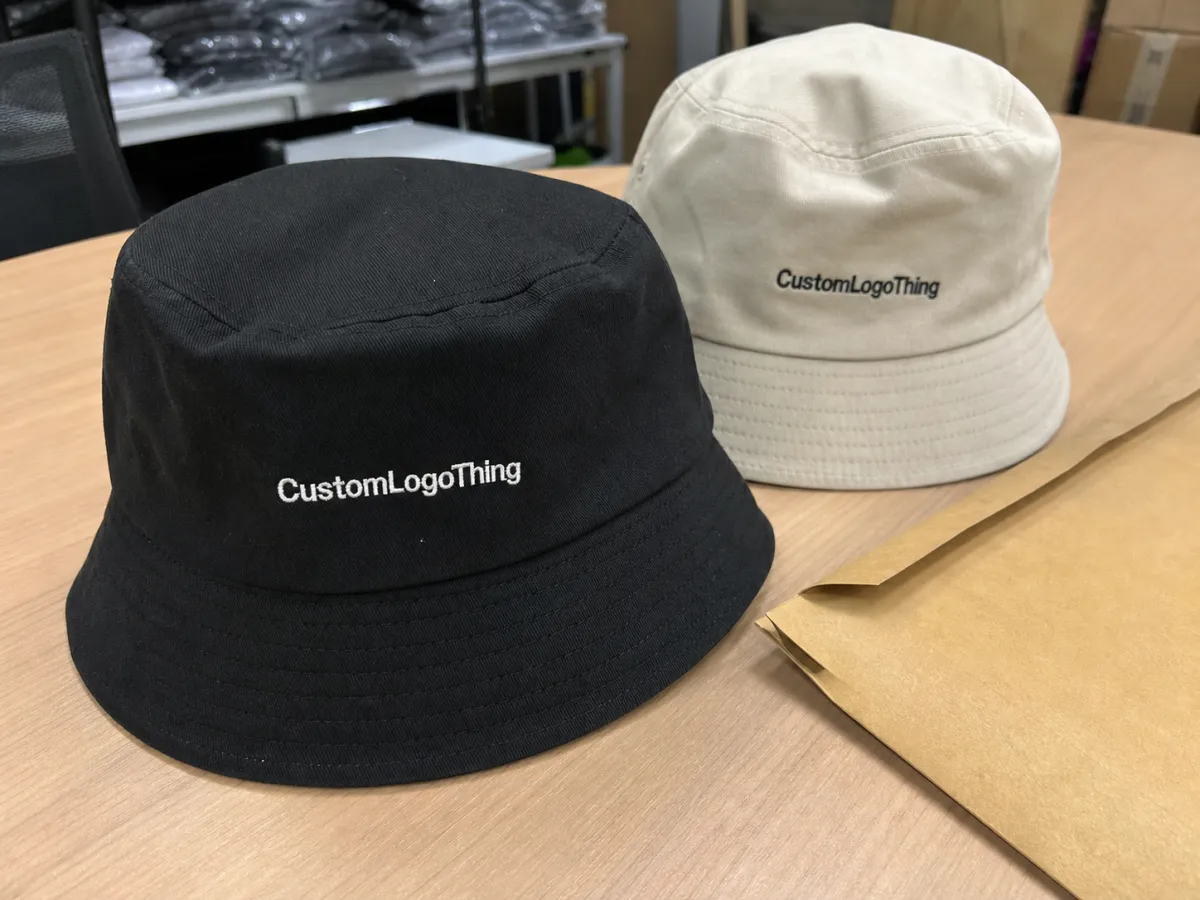
Bucket hats have stayed useful because they solve a simple problem: people want soft, packable headwear that gives shade without feeling too formal or uniform-heavy. A custom bucket Hats Bulk Order is not just a logo placement job. The best results come from choosing the right crown shape, brim structure, fabric weight, size plan, and decoration method so the finished hat feels wearable rather than cheap.
Compared with a basic cap, a bucket hat gives you more visible fabric surface, all-around sun coverage, and a relaxed retail look. That makes it a strong fit for events, apparel drops, resort merchandise, outdoor staff programs, brewery releases, campus welcome kits, and brand teams that want something with more personality than another six-panel cap. It also folds and ships more easily than many structured hats, which matters once the order moves from a mockup into cartons, freight, and distribution.
Bulk ordering is where the planning either pays off or causes problems. A buyer can control unit cost, keep fabric color consistent across the run, plan size splits before cutting or allocation, and request packing details such as individual polybags, size stickers, hangtags, or inner bundles of 25 pieces. Those details may seem minor during quoting, but they become very real when a team is sorting 2,000 hats before an outdoor activation or dividing cartons for several retail locations.
The strongest orders are built before production begins. Fabric, brim width, label placement, thread color, carton labeling, and delivery timing all need to be clear. Treat the hat like retail merchandise, not a disposable giveaway: comfortable enough to wear, visually aligned with the brand, and specified tightly enough for production.
Production callout: If the hats are tied to a launch, event, welcome kit, or retail drop, approve artwork and sampling early enough to leave a receiving buffer. Freight schedules do not adjust themselves around an event date.
Fabric, Shape, and Decoration Options That Change the Final Hat
Material choice sets the tone immediately. Cotton twill is common because it has a familiar hand feel, takes embroidery well, and works for everyday branded merchandise. Washed cotton gives a softer, broken-in appearance, especially for lifestyle programs where the hat should feel relaxed on the first wear. Polyester is useful for quick-dry outdoor use, while nylon keeps the hat light for travel, festivals, and packable kits. Canvas feels heavier and more streetwear-oriented, though it can add bulk in cartons and may not suit every event budget.
Fabric weight changes more than comfort. A lighter washed cotton may fold neatly into a giveaway bag or retail insert, while a heavier canvas-style fabric can support a larger woven patch or bold front embroidery without looking flimsy. Dense stitching on very thin cotton can pull the fabric and create ripples around the design. That is not always a decoration mistake; it is often a mismatch between fabric stability, stitch count, and logo size.
Construction details deserve careful attention. A bucket hat can have multiple crown panels, a top button or no button, metal or embroidered eyelets, contrast stitching, a cotton sweatband, a chin cord, a reversible build, woven inside labels, or a printed care label. Brim width often lands around 2 to 3 inches for fashion and promotional styles, although wider brims may be used for outdoor programs. Wider brims improve coverage, but they can affect carton count, display stacking, and how the hat holds its shape after packing.
Decoration should be matched to both the logo and the fabric. Flat embroidery gives a clean stitched mark for simple to moderately detailed artwork. 3D puff is possible in some cases, but it is less common on soft bucket hats because the crown does not always support raised foam cleanly. Woven patches handle small lettering, badge artwork, and fine borders better than direct embroidery. Screen printing and heat transfers suit larger graphics, while sublimation works best on polyester when the design needs full-surface coverage.
A Custom Bucket Hats bulk order with all-over artwork needs more review than a simple front logo. Pattern placement, seam interruption, print repeat, panel curve, and fabric stretch can all change the final appearance. Tiny type, gradients, fine outlines, and artwork that crosses seams should be checked before the quote is treated as final.
Specs to Confirm Before Approving Bulk Bucket Hats
Good specifications prevent expensive assumptions. Before a quote is locked, confirm the fabric type, fabric weight, hat color, crown depth, brim width, size range, decoration method, decoration size, logo placement, label requirements, packaging, and delivery address. If the hats are part of a larger branded packaging or merchandise program, add kit dimensions, carton limits, warehouse routing, and distribution method to the discussion as well.
Fit is one area where promotional buying can get too casual. Many bucket hats are sold as one-size programs, often with an approximate circumference around 58 cm. That can work for general event giveaways, but retail, uniform, and paid merchandise orders usually benefit from at least two sizes, such as small-medium and large-extra-large. Complaints rise quickly when a hat feels too tight, and a chin strap or drawcord does not fix crown circumference.
Brim construction affects comfort and perceived value. A floppy brim feels casual and packs easily. A firmer brim with multiple stitch rows gives more structure and helps the hat sit better in photos. A wider brim can support outdoor use, but it may reduce the number of hats per carton. For brim shapes outside a basic fashion bucket, a pre-production sample is worth the time because the curve, stiffness, and drape are difficult to judge from a flat mockup.
Color matching also needs a practical conversation. Choosing available stock colors is faster and usually more economical. Custom dyeing can help with brand-critical colors, but it often increases MOQ, sample timing, and approval steps. Pantone references help, yet fabric, thread, woven labels, and printed packaging absorb color differently. A navy cotton twill hat, a navy woven patch, and a navy custom printed box may not match perfectly unless each material is sampled and approved.
- Artwork: Vector files such as AI, EPS, or clean PDF are preferred for embroidery, patches, and print separations.
- Logo scale: A 2.5-inch front logo may read well on a bucket hat, while a 4-inch logo can fight the crown curve.
- Placement: Center-front decoration should be checked against seams, panel width, and brim angle.
- Labels: Confirm woven label size, care label content, country-of-origin needs, and inside placement before sewing.
- Packaging: Decide on bulk pack, individual polybag, hangtag, barcode, or carton label before mass packing begins.
Buyers planning coordinated kits can also review related Custom Packaging Products so the hat, insert card, carton, and product packaging are planned as one program rather than separate jobs pushed together near the end.
Pricing, MOQ, and Unit Cost Factors for Bulk Hat Orders
Pricing is usually driven by quantity, material, decoration method, number of logo locations, stitch count, patch complexity, custom fabric requirements, size splits, packaging, and shipping method. Freight can be meaningful because hats are soft but still take space. A carton of 100 to 200 bucket hats is not unusually heavy, but firmer brims, individual bags, hangtags, and inner cartons can increase volume.
MOQ depends on the production path. Decorated stock blanks often allow lower minimums, especially with standard embroidery or a woven patch. Fully custom cut-and-sew hats, custom dye colors, reversible construction, private labels, and all-over printed polyester styles usually require higher minimums because fabric ordering, cutting, sewing, and line setup must be planned as a production run.
Unit cost normally drops as quantity increases because digitizing, sampling, artwork setup, and production preparation are spread across more pieces. Still, cheapest is not always the best value. A thin fabric that collapses badly, a brim that wrinkles after one wear, or a logo that loses detail can make a low unit price feel expensive once the hats reach customers.
| Order Path | Typical Use | Common MOQ Pattern | Cost Drivers | Buyer Watchout |
|---|---|---|---|---|
| Stock bucket hat with embroidery | Events, staff gifts, campus programs | Lower minimums are often possible | Stitch count, logo size, thread colors, quantity | Stock color and size choices may be limited |
| Stock hat with woven patch | Retail-style giveaways, breweries, outdoor brands | Moderate minimums depending on patch setup | Patch size, border type, backing, application method | Patch proof should be checked for tiny lettering |
| Fully custom cut-and-sew | Retail merchandise, private label programs | Higher minimums are common | Fabric, trims, labels, size run, sampling, sewing | Longer approval path and more spec decisions |
| All-over printed polyester | Festivals, sports, resort merchandise | Higher minimums may apply | Sublimation print, pattern alignment, panels, finishing | Artwork may shift slightly at seams and curves |
For practical planning, prepare the target quantity, in-hand date, destination ZIP code or country, logo files, preferred decoration, hat color, packaging needs, and whether a pre-production sample is required. Custom Logo Things can compare options side by side, such as embroidered cotton twill versus woven patch nylon, so the buyer sees where the money goes instead of working from a vague bulk price. For broader volume planning, the Wholesale Programs page is a useful starting point.
Production Steps, Lead Time, and Approval Timeline
The production path is manageable when the specifications are complete. A typical order moves through inquiry, spec review, quote, artwork check, sample or digital proof, approval, material preparation, cutting, decoration, sewing or finishing, quality control, packing, and shipment. Skip one approval point and the risk shifts downstream, often into a warehouse or event site where fixes are harder and more expensive.
Lead time depends on whether the buyer selects decorated stock blanks or fully custom manufacturing. A stock decoration program can often move faster because the hat body already exists. Custom fabric, dye matching, reversible construction, private label trims, and ocean freight planning add time. Sampling may add several business days, but for a bulk order of 1,000 pieces or more, that sample is usually a useful safeguard rather than a delay for its own sake.
Approval points protect the finished order. An artwork proof confirms logo size and placement. An embroidery sew-out or patch sample confirms detail, thread color, border shape, and legibility. A pre-production sample confirms crown depth, brim feel, label placement, and general fit. Final packing instructions confirm carton quantity, inner bags, size stickers, destination labels, and any kit sequence if hats are being paired with inserts, mailers, Custom Printed Boxes, or welcome materials.
Delays often come from incomplete artwork, late size breakdowns, changes after sampling, unclear delivery dates, or undecided packaging. A buyer may approve the logo quickly but wait a week to confirm whether hats should be bulk packed or individually bagged. That delay still affects the packing floor. Production space is easier to reserve when the full order is ready, not half ready.
If the hats are tied to an event, product launch, resort opening, or campus welcome kit, build a buffer between expected delivery and actual distribution. For domestic receiving, even 3 to 5 extra business days can help with carton counts, internal routing, and issue reporting. For international freight, the buffer should be larger because customs clearance, port movement, and final-mile delivery introduce variables outside the sewing line.
Shipping standards can help buyers think more clearly about handling. The International Safe Transit Association publishes test procedures for packaged products, and while a soft hat order is not the same as a fragile appliance, ISTA principles around transit testing, carton performance, and distribution hazards are still useful for merchandise programs moving through multiple locations.
Quality Checks That Prevent Common Bulk Order Problems
Bucket hats look simple. They are not. Quality problems can show up as uneven brims, puckered embroidery, off-center patches, inconsistent crown depth, rough inner seams, weak sweatbands, shade variation, loose threads, or carton packing that crushes the shape more than necessary.
The main inspection areas are practical: logo placement from center front, decoration clarity, thread trimming, seam strength, brim stitching rows, fabric hand feel, size tolerance, label accuracy, and count per carton. A tolerance of a few millimeters may be acceptable on soft goods, but a logo that leans visibly left on the front panel will be noticed immediately. People tend to forgive small fabric variation more easily than crooked branding.
Decoration has to suit the material. Dense embroidery on a thin washed cotton can pull the front panel inward, especially if the design has a filled block or heavy border. A woven patch may preserve tiny type and keep the front flatter. Heat transfers can look clean on synthetic fabric, but the hand feel, edge lift, and wash expectations should be reviewed. Sublimation gives strong coverage on polyester, but it is not the right path for cotton twill.
Packaging choices also protect quality on arrival. Bulk packing is efficient for simple event distribution. Individual polybags keep hats cleaner during handling and make fulfillment easier. Size stickers reduce sorting errors. Carton labels matter for multi-location shipping because a mixed-color order can become painful if every carton must be opened to identify contents. For sustainability-minded programs, ask about recycled-content bags, paper bands, or FSC-certified paper components where appropriate; the Forest Stewardship Council provides widely recognized certification information for responsible paper sourcing.
A careful production review is not about slowing the order down. It is about catching preventable issues before hundreds or thousands of hats are packed, sealed, and moved into freight. The same thinking applies across package branding, apparel accessories, and promotional kits: fix the issue while it is still visible on the production table.
Where Custom Logo Things Adds Value Before Production Starts
Custom Logo Things helps translate a design idea into production terms. That means checking whether the selected fabric, logo size, decoration method, quantity, timeline, and packaging plan make sense together. A mockup can look clean on a screen and still be difficult on a curved cotton panel with a seam running near the logo edge.
The right buying support is specific. If the deadline is tight, a stock embroidered bucket hat may be the most practical answer. If the order is retail merchandise with hangtags, woven labels, custom color, and controlled fit, a fully custom cut-and-sew style may be worth the longer timeline. If the logo has tiny lettering, a woven patch may be cleaner than direct embroidery. If the brim needs to hold shape for product photography, a firmer stitched brim may be better than a soft floppy one.
For bulk buyers, coordination matters as much as decoration. Quote clarity, sample routing, production updates, packing instructions, and shipment planning all reduce friction. A brand team may need internal approval from marketing, procurement, and operations. Clear specifications make that approval easier because the cost drivers, timeline, and risks are visible before money is committed.
There is also value in knowing what not to do. Do not put a detailed crest across a seam without testing it. Do not choose custom dyeing if the deadline cannot absorb lab dips and approval rounds. Do not ask for multiple size splits after the quote if the production plan was built around one size. A supplier should say those things plainly, because avoiding the wrong choice is often as useful as finding the right one.
Buyers who are coordinating hats with mailers, inserts, custom printed boxes, or other product packaging can also review the FAQ for common order and artwork questions before sending files. Clean information upfront saves time later.
Next Steps to Get a Quote and Place the Order Correctly
Start with the basics: logo file, desired quantity, target delivery date, hat style references, preferred fabric, color direction, decoration method, size needs, packaging instructions, and shipping destination. If there is a firm budget, share it early. A realistic supplier can usually suggest tradeoffs, but only if the target is visible.
Inspiration photos help. Existing merchandise samples help even more. Still, production needs clean artwork and approved specifications, not only a screenshot or rough mockup. A low-resolution image may be enough for the first conversation, but embroidery files, woven patches, and print separations need proper art before final approval.
After the request is submitted, the team reviews feasibility, confirms missing details, recommends suitable options, prepares pricing, and outlines the approval path. That path may include a digital proof, sew-out, patch sample, or full pre-production sample depending on the order type. For retail-style programs, label and packaging decisions should be handled during the same approval cycle, not after the hats are finished.
If budget and deadline are competing, ask for alternatives. A lower-MOQ decorated blank, simplified embroidery design, woven patch instead of complex direct stitching, standard fabric color instead of custom dyeing, or bulk packing instead of individual bags can all change cost and timing. None of those choices is automatically right or wrong; they depend on the audience, use case, and delivery date.
Once the specifications, artwork, timing, and budget are clear, a custom bucket Hats Bulk Order becomes a controlled production project rather than a last-minute merchandise scramble.
FAQ
What is the usual MOQ for a custom bucket hat bulk order?
MOQ depends on whether the order uses decorated stock blanks or fully custom manufacturing. Lower quantities are often more practical with stock bucket hats and standard embroidery or patches. Custom fabric, custom dye colors, reversible construction, and all-over printing usually require higher minimums because materials and sewing must be planned as a dedicated production run.
How long does a bulk order of custom bucket hats usually take?
Lead time depends on order complexity, sample requirements, material availability, approval speed, and shipping method. Decorated stock styles are generally faster than fully custom cut-and-sew hats. Buyers should build in extra time for artwork approval, sample review, freight movement, and receiving checks before an event, launch, or retail release.
Which decoration method is best for custom bucket hats in bulk?
Flat embroidery is a strong choice for clean logos with moderate detail. Woven patches work well for small lettering, badge-style branding, and a retail finish. Screen printing, heat transfer, or sublimation can suit larger graphic designs, depending on fabric, artwork, wash expectations, and the surface area being decorated.
Can I order multiple colors or sizes in one bucket hat order?
Yes, multiple colors and size splits are often possible, but they should be confirmed before quoting. Additional colors, sizes, or decoration versions can affect MOQ, production planning, sampling, and unit cost. A clear breakdown by color and size helps prevent shortages, carton confusion, and fulfillment errors.
What information is needed for an accurate custom bucket hats quote?
Provide quantity, logo files, decoration preference, hat material, color, size range, delivery date, and shipping destination. Include packaging needs such as individual bags, carton labels, hangtags, or multi-location shipping. If budget or deadline is tight, share that early so the supplier can recommend realistic production options.


