A brand can approve beautiful Frosted Zipper Bags on Monday and still receive a messy shipment three weeks later: crushed carton corners, mixed SKUs, soft labels, bent zipper tracks, and counts nobody trusts. A Frosted Zipper Bags Carton Packing checklist for ecommerce brands is not administrative decoration. It is the control document that protects the packaging before the packaging ever protects the product.
That distinction matters because frosted PE and CPE zipper bags behave differently from rigid boxes, tubes, or molded cases. They shift under pressure. They compress in uneven stacks. Their cloudy matte surface can hide rub marks until a warehouse team pulls the bags under bright packing-station light. A bag may look clean in a supplier’s close-up photo, then arrive with scuffed panels, soft corners, or zipper ridges pressed into the film because the carton plan was treated as an afterthought.
For ecommerce brands, carton packing affects more than appearance. It determines how quickly a 3PL can receive the inventory, whether pick teams can identify the correct packaging at the shelf, and whether the bags remain presentable through storage, replenishment, and return processing. A good carton plan does not need to be complicated, but it does need to be specific.
Frosted Zipper Bags Carton Packing Checklist for Ecommerce Brands: What It Prevents
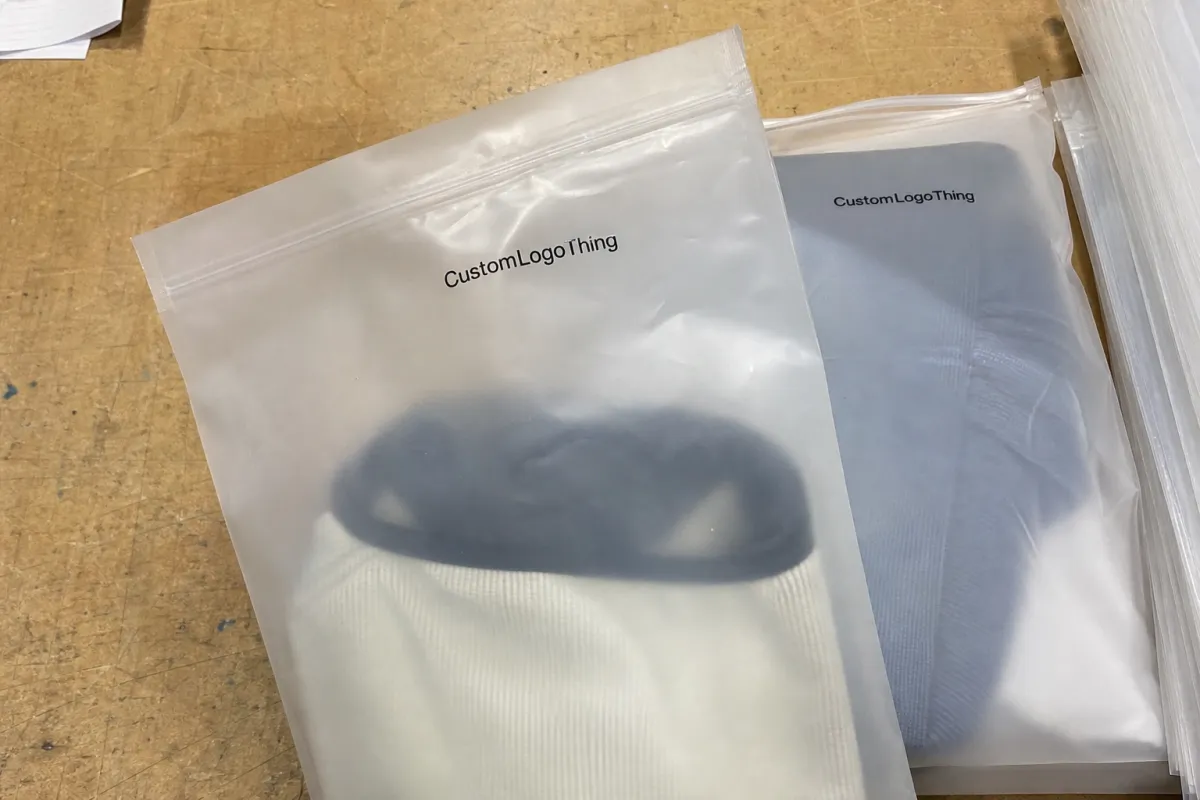
The bag is the customer-facing package. The carton is the package that protects that package. If the second layer fails, a custom bag order can become damaged inventory before a single customer opens a parcel.
Most problems begin with a familiar pattern: the team inspects the bag sample like a retail object, then treats the master carton like a commodity. In practice, carton packing helps decide whether the zipper track stays straight, whether printed logos rub against neighboring bags, whether the matte film picks up carton dust, and whether fulfillment teams can count inventory without opening every box in the shipment.
A useful checklist should cover nine areas: final bag specifications, inner bundling, carton strength, carton quantity, carton labeling, SKU separation, pallet configuration, moisture control, and receiving checks. Each item connects the production floor with freight and warehouse handling. Leave one out, and the problem usually appears later, when the shipment is already sealed, moving, or sitting in a receiving lane.
The operating cost is easy to underestimate. Poor packing can create 20-minute receiving delays per pallet, wrong pick counts at replenishment, avoidable replacement orders, and inconsistent unboxing presentation. A 3PL may also charge extra handling fees if cartons arrive without scannable labels, carton numbers, clear SKU identification, or usable purchase order references.
The checklist is useful for founders placing a first custom packaging order, procurement managers preparing repeat runs, fulfillment leads who need predictable pick-face counts, and ecommerce operators trying to avoid the common “the bags looked perfect in the photo” problem.
Packaging reality check: many defects blamed on bag production are actually carton packing failures that happen after inspection, during bundling, loading, transit, or warehouse handling.
How Carton Packing Works for Frosted Zipper Bags
The basic flow is simple: finished bags are counted into bundles, bundles go into master cartons, cartons are labeled, cartons are stacked on pallets, and pallets move by courier, truck, air, or ocean. The risk sits in the middle steps, where a small packing choice can change the condition of thousands of bags.
Common bundle quantities are 50, 100, or 200 bags. A small 70- or 80-micron frosted zipper bag may pack cleanly in 100-unit bundles. A larger apparel bag with a bottom gusset, slider zipper, vent hole, hang hole, or heavy ink coverage may need smaller bundles to prevent bending, pressure marks, or uneven edges. The right count depends on the bag’s size and stiffness, not on a neat round number.
Frosted bags need controlled stacking because the surface has a matte texture. That texture is part of the appeal, but it can also reveal scuffs, pressure shine, and rub marks. Printed logos can transfer if ink is not fully cured. Zipper ridges can press into the next layer when cartons are overfilled, especially if cartons sit under load for 20 to 40 days during international transit, port handling, and warehouse staging.
Inner poly liners are inexpensive protection. They reduce dust, carton fiber transfer, moisture exposure, and rough contact before the bags reach a fulfillment center. For a first run, a clean liner and a slightly lower carton count are usually safer than a carton packed to its limit with no internal protection.
Carton grade matters as much as count. A single-wall corrugated carton may be acceptable for small, light bags moving domestically. Oversized zipper bags, dense bundles, and direct-to-3PL shipments often need stronger corrugated construction, especially when cartons exceed 12 to 15 kg gross weight. If the supplier can provide an edge crush test rating, burst strength, flute type, or carton material description, ask for it before freight is quoted.
Orientation also changes the result. Flat packing protects the bag shape, though it may increase carton footprint. Vertical packing can save space, but it may bend zipper tracks if the bags lean or the carton is handled roughly. Overfilled cartons often arrive rounded, bulged, or creased at the corners; those are early signs that compression has already started.
Key Specs to Confirm Before Bags Go Into Cartons
Freeze the bag specifications before anyone finalizes carton dimensions. Confirm width, height, bottom gusset, film thickness, zipper type, hang hole, vent hole, logo placement, surface finish, and measurement tolerance. A 3 mm tolerance may sound minor until 5,000 bags are being packed into cartons designed around an earlier sample.
Film thickness changes carton math. A 70-micron frosted PE bag and a 120-micron CPE bag may look similar in a product photo, yet take up different carton volume and resist compression differently. Thicker bags can reduce the number of bags per carton by 10-30%, depending on zipper profile, gusset depth, bundle style, and how much air remains between stacked layers.
Confirm zipper performance with physical samples whenever possible. Apparel brands often care about reclosability because customers reuse the bag for returns, closet storage, or travel. Cosmetics and accessories brands care because a weak zipper makes the package feel cheap immediately. Small electronics sellers may need the bag to hold cables, manuals, adapters, or spare parts after delivery, so the zipper needs to close without distortion.
Print and finish checks belong in the packing conversation. Frosted film softens fine logo details, especially on thin type, small icons, and low-contrast artwork. White ink may look slightly muted. Metallic ink can lose contrast if the film surface is very cloudy. Before cartons are approved, ask for rub resistance feedback, print adhesion checks, and close-up photos under neutral light rather than only warm factory lighting.
Request carton data in writing: carton size, gross weight, net weight, pieces per carton, carton material, and any available strength data. Without those numbers, freight estimates become guesswork, and the warehouse will not know what to expect at receiving.
SKU separation deserves more attention than it usually gets. Mixing sizes, colors, logo versions, or finish types in one carton may save space at the factory, then create receiving errors at the warehouse. One carton per SKU is often cleaner, even if the carton count rises. If mixed cartons are unavoidable, the outer label and internal bundle labels must make that obvious.
Before shipment, request a photo set: open carton, closed carton, bundle count, carton label, bag close-up, pallet view, and measurement proof. For additional examples of how small packaging details affect downstream operations, review the Custom Logo Things packaging case studies.
Cost, Pricing, and MOQ Factors Hidden in Carton Packing
Carton packing affects landed cost, not just factory cost. Carton size affects chargeable weight. Pallet efficiency affects freight. Label clarity affects warehouse labor. Damage rate affects replacement orders, repacking time, and the customer experience.
The obvious cost drivers are custom bag dimensions, film thickness, zipper quality, print colors, finish complexity, and order quantity. The less visible drivers are packing quantity per carton, carton grade, inner liner requirements, inspection level, label format, and whether the warehouse requires barcodes or strict pallet rules.
MOQ can appear in unexpected places. A factory may set the bag MOQ based on film type or printing method, while the packing plan adds separate constraints for custom carton labels, inserts, mixed-pallet restrictions, branded master cartons, or special inner packs. That does not happen on every order, but it happens often enough to ask early.
Consider two quotes. Supplier A offers $0.18 per bag for 5,000 pieces, but packs them in oversized cartons that cube out a pallet quickly. Supplier B quotes $0.21 per bag, packs tighter without compressing the zipper tracks, and provides carton dimensions that reduce freight volume by 15%. The higher unit price can be cheaper after freight, receiving labor, storage, and damage are counted.
| Carton Choice | Typical Use | Approximate Cost Impact | Risk Profile |
|---|---|---|---|
| Single-wall carton | Small, light bags under about 10 kg gross weight | Lowest carton cost | Higher crush risk on long routes or stacked pallets |
| Stronger corrugated carton | Oversized bags, heavy bundles, direct-to-3PL shipments | Often adds $0.40-$1.20 per carton | Lower compression and corner damage risk |
| Inner liner plus desiccant | Humid routes, ocean freight, long storage | Usually a small per-carton add-on | Lower moisture and dust exposure |
| Optimized carton count | Repeat ecommerce packaging runs | May require a packing test | Better freight forecasting and receiving accuracy |
Stronger cartons are usually worth considering when shipments move internationally, sit in storage for weeks, travel through humid routes, or go directly to a 3PL with strict receiving rules. Standards from groups such as the International Safe Transit Association can help teams think about distribution hazards instead of focusing only on unit price.
A complete quote should show bag unit price, carton quantity, carton dimensions, gross weight, packing method, and estimated cartons per pallet. If it only lists unit price, the brand is missing the data needed to forecast freight, storage, receiving, and damage risk. The checklist brings those numbers into the conversation before the balance payment is due.
Production Steps and Timeline From Approval to Delivery
The process usually moves through artwork confirmation, digital proof approval, material production or matching, print setup, mass production, bag inspection, carton packing, carton labeling, export documentation, freight booking, transit, and warehouse receiving. Every handoff can introduce delay.
Sample approval may take several business days if the team is checking dimensions, zipper feel, print clarity, and film opacity. Mass production often runs 12-20 business days after proof approval for many Custom Bag Orders, though the actual schedule depends on quantity, print method, material availability, drying or curing time, and the supplier’s queue. Freight adds another layer: air can move quickly at a higher cost, while ocean freight takes longer and exposes cartons to more humidity and handling points.
Delays often come from ordinary details rather than dramatic failures. Artwork revisions, unclear dielines, missing carton label requirements, failed zipper checks, ink curing time, and freight booking windows can all slow the order. A vague carton label request can stall a shipment almost as easily as a failed print check.
Approve carton packing instructions before production finishes. Once bags are counted and stacked, repacking can add labor cost, create carton shortages, disturb inspected goods, and push freight bookings back by several days. The best time to settle the packing plan is during proof approval or sample approval, while changes are still practical.
Send 3PL requirements early. Useful details include barcode format, label placement, maximum carton weight, ASN requirements, pallet height limits, carton numbering, and mixed-SKU restrictions. Some warehouses prefer cartons under 15 kg for manual handling. Others set hard rules on pallet height, scan position, or how carton numbers must match the packing list.
Before shipment, ask for final carton count, packing list, carton measurements, gross weight, and any inspection notes. If the brand has a launch date, reverse-plan from warehouse receiving, not factory completion. Receiving, counting, QA sampling, and inventory upload can consume 2-5 business days after cartons arrive, and longer if labels are wrong or cartons are damaged.
Step-by-Step Carton Packing Checklist for Ecommerce Teams
Use this section as the working version of the checklist. It is intentionally practical because packing plans fail in practical ways: the label is too vague, the carton is too heavy, the bundle count does not match the warehouse pick habit, or the zipper pressure was never tested inside a full carton.
- Confirm final bag specs. Lock width, height, gusset, film thickness, zipper type, artwork, finish, vent holes, hang holes, and measurement tolerance before carton planning begins.
- Decide bundle quantity. Choose 50, 100, or 200 bags per inner pack based on bag size, staff handling, shelf space, replenishment habits, and whether the warehouse counts by bundle or by carton.
- Approve carton quantity and dimensions. Use real packed samples, a packed-carton mockup, or supplier packing photos rather than only theoretical volume calculations.
- Set carton protection rules. Specify inner liner, desiccant if needed, corner protection for heavier cartons, and no over-compression of zipper tracks.
- Lock carton labels. Include SKU, bag size, finish, quantity, purchase order number, carton number, gross weight, country of origin if required, and barcode if the warehouse needs one.
- Check carton weight. Compare gross weight against carrier and 3PL limits because a carton that is cheap to pack can still be unsafe, slow, or expensive to handle.
- Require pre-shipment evidence. Ask for photos, packing list, carton count, random open-carton inspection, and records of failed or reworked quantities.
- Create a receiving checklist. Have the warehouse verify carton count, visible damage, label accuracy, random bag quality, and SKU separation on arrival.
For repeat orders, keep a carton packing specification on file with the artwork proof and final bag spec sheet. That habit reduces version confusion and gives procurement, the supplier, and the warehouse one shared reference instead of a long chain of email comments.
If sustainability claims matter to your customers, ask whether cartons use certified paper sources and whether those claims are documented. The Forest Stewardship Council provides one recognized framework for responsible paper sourcing, though certification depends on the actual material, converter, and supply chain documentation for the order.
Common Mistakes That Turn Good Bags Into Bad Inventory
The first mistake is maximizing bags per carton without testing compression. That may lower carton count, but it can warp zipper tracks or leave permanent creases in frosted film. The damage may not show in a supplier photo taken from three feet away.
The second mistake is using generic carton labels. “Plastic bags, 1 carton” is not enough. A useful label identifies bag size, finish, logo version, quantity, purchase order number, and carton number. Warehouse teams should not have to cut open five cartons to find the small Frosted Zipper Bags for one product line.
The third mistake is mixing SKUs to reduce carton count. It feels efficient until receiving slows down, cycle counts drift, or the wrong packaging appears at a pick station. A mixed carton can save a few dollars in freight and create far more in labor confusion, especially during a launch or seasonal rush.
Humidity is another quiet problem. Corrugated board can soften in ports, containers, trucks, or warehouses during long storage. Add moisture, stack weight, and a slightly overfilled carton, and the bottom cartons suffer first. If the route is humid or storage will be extended, liners and desiccants are not excessive; they are basic risk control.
Brands also approve bag samples without approving packed carton samples. That is risky because the shipping carton determines how the bags arrive, not how they looked on the sample table. A single packed-carton test can reveal zipper pressure, scuffing, carton bulge, label placement problems, and inaccurate bag counts before the full order is sealed.
Finally, many teams treat carton damage as normal freight noise. Track it instead. Record damage rate by carton size, carrier route, pallet configuration, shipment type, and receiving date. Patterns appear quickly. If one carton format keeps arriving crushed, the packing checklist should change before the next purchase order.
Before You Approve the Packing Plan
Collect four documents before approval: final bag spec sheet, artwork proof, carton packing specification, and warehouse receiving requirements. If one is missing, the packing plan still has a blind spot.
Ask the supplier for one packed-carton mockup or a production photo set before mass shipment, especially for first-time custom frosted zipper bag orders. Photos should show open cartons, bundle counts, labels, carton closure, pallet arrangement, and gross weight proof. A short video is useful if zipper shape, carton compression, or bundle handling is a concern.
Compare carton options using landed-cost thinking: unit price, freight impact, warehouse handling, damage risk, and inventory accuracy. A clean packing plan is not overengineering. It protects cash already tied up in packaging inventory.
Send the packing plan to the 3PL before production closes. Label format, carton weight, pallet height, and SKU separation are easier to fix before cartons are sealed. Once the shipment is moving, every correction becomes slower, more expensive, and less certain.
Create a one-page internal receiving form. Keep it plain: carton count, visible damage, label accuracy, random bag defects, photos taken, and person responsible. For teams building packaging systems across multiple products, the Custom Logo Things case studies can help frame packaging choices as operational decisions, not just design decisions.
Use the Frosted Zipper Bags Carton Packing checklist for ecommerce brands before paying the balance, booking freight, or announcing that packaging inventory is ready. It is a small document with a large job: keeping attractive custom bags countable, usable, and presentable by the time they reach the fulfillment floor.
FAQs
What should a frosted zipper bags carton packing checklist include?
It should include final bag specs, bundle quantity, bags per carton, carton dimensions, carton weight, inner liner requirements, carton labels, SKU separation rules, inspection photos, and warehouse receiving checks. The goal is to connect production details with logistics details so bags arrive usable, countable, and easy for fulfillment teams to identify.
How many frosted zipper bags should go in one carton?
There is no universal number. Capacity depends on bag size, film thickness, zipper profile, gusset depth, bundle quantity, and carton strength. A supplier should confirm the count with a packed-carton test or clear photos, then provide carton dimensions, gross weight, and bags per carton before shipment.
Do ecommerce brands need stronger cartons for frosted zipper bags?
Stronger cartons are recommended for international freight, heavy cartons, long storage, high-humidity routes, or shipments going directly to a 3PL. The extra carton cost can be cheaper than replacing crushed, bent, mislabeled, or moisture-damaged packaging inventory.
How does carton packing affect the cost of custom frosted zipper bags?
Carton packing affects freight volume, chargeable weight, pallet efficiency, receiving labor, storage behavior, and damage rates. Brands should compare quotes using landed cost, not only unit price, because a lower bag price can be offset by inefficient cartons or poor packing.
When should carton packing instructions be finalized for ecommerce packaging orders?
Finalize carton packing instructions before mass production finishes, ideally during proof approval or sample approval. Waiting until bags are ready can cause rushed packing, incorrect labels, mixed SKUs, freight delays, or repacking charges.

