Frosted Zipper Bags Carton packing checklist for apparel brands sounds overly specific until the shipment lands wrong. The bag can look polished, the logo can print cleanly, and the zipper can feel decent, then the cartons arrive bowed, scuffed, mislabeled, damp, or packed so loosely that every unit shifts during transit.
That kind of failure is common because the bag and the carton are often treated as separate decisions. They are not. Once folded garments, printed bags, labels, and export cartons start moving through the same supply chain, every small mismatch shows up in freight cost, receiving time, and final presentation.
Apparel brands use Frosted Zipper Bags for basics, swimwear, kidswear, socks, underwear, accessories, sample sets, and retail-ready bundles because the matte finish looks cleaner than plain clear poly. The finish softens the product view and hides minor wrinkles, but it also changes how the package scuffs, stacks, and survives pressure inside a master carton.
Practical rule: approve the packed carton, not just the bag artwork. A good bag inside a bad carton still ships badly.
What This Checklist Prevents
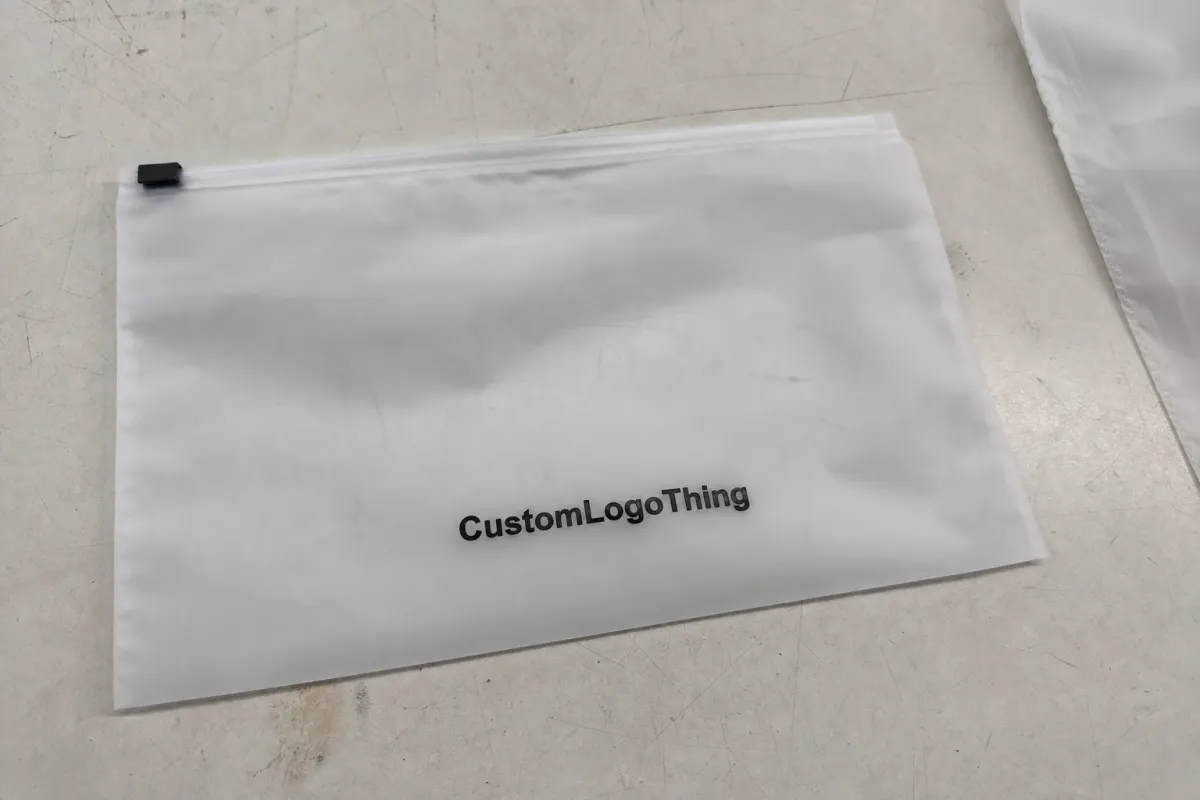
A good packing checklist keeps the shipment from failing in ordinary ways that are expensive but easy to overlook. It controls count accuracy, carton cube, barcode visibility, moisture exposure, carton strength, pallet stability, and warehouse receiving. Miss one of those, and the cost shows up somewhere else, usually as rework, storage fees, or delayed receiving.
Frosted Zipper Bags are usually made from LDPE, PEVA, EVA, or a similar flexible plastic. For apparel, the important part is not the material name alone; it is how the bag behaves after the garment is folded, inserted, zipped, and stacked with dozens of others. A bag that looks premium on a sample table can become awkward inside a carton if the fold is too tight or the film is too soft.
A useful Frosted Zipper Bags Carton Packing checklist for apparel brands should cover bag size, film thickness, zipper style, folded garment dimensions, inner pack count, master carton size, carton grade, labeling, moisture control, pallet pattern, inspection photos, and final approval before shipment. That sounds detailed because it needs to be. Packaging problems tend to hide in the details.
How Carton Packing Actually Works
The flow is simple on paper: the printed bags are ready, the garments are folded, each garment goes into a bag, the zipper closes, units are counted, inner bundles are formed if needed, cartons are filled, cartons are sealed, labels are applied, and the shipment is photographed before dispatch. The trouble starts when one SKU is slightly thicker than expected and the planned carton count no longer fits cleanly.
There are three packaging levels to keep separate. Unit packaging protects one garment. Inner packs group several units, usually by size or color. Master cartons protect those units through warehouse handling, trucking, air freight, ocean freight, and pallet stacking. If the master carton is weak, the unit bag cannot compensate for that weakness.
Soft goods are less predictable than rigid products. A cotton tee, a fleece hoodie, a nylon swimsuit, and a denim layer all compress differently. Fabric traps air, fold sizes drift, zippers shift, and cartons settle once weight is stacked above them. That is why the same carton count rarely works across every style without adjustment.
Frosted film adds one more variable. The matte surface looks premium, but it can show rub marks if the bag moves too freely in the carton. Heavy ink coverage can also scuff, especially on darker logos or large printed blocks. Tight packing reduces movement, but if the carton is overfilled, zippers crease and garments lose their clean fold. The useful target is stable, not stuffed.
Common loading patterns include flat stack, vertical file pack, bundle pack, and mixed-SKU cartons. Flat stack works well for tees, underwear, and swimwear with consistent fold sizes. Vertical file packing can help warehouse teams pull units quickly, but it requires stable bag dimensions and neat carton fill. Bundle pack is useful for retail prep or grouped size runs. Mixed-SKU cartons save carton count, then create sorting headaches if the labels are vague.
A realistic packing test uses actual garments or accurate dummies, not just measurements on paper. Ask for photos of one packed bag, one full layer, the open carton, the sealed carton, and the carton label. Spreadsheets help estimate cube and weight, but they do not reveal whether the zipper rubs, the print scuffs, or the carton wall bows under pressure.
Carton marks should include SKU, color, size, quantity, gross weight, net weight, carton number, purchase order number, destination, barcode, and handling marks where needed. For export shipments or retailer routing, align the carton label format with the buyer’s manual. If the shipment will face rough parcel or freight handling, transit-testing guidance from ISTA is worth reviewing before production starts.
Key Specs to Confirm Before Carton Packing Starts
Bag size, zipper style, and film thickness are the first three specs that affect carton packing. Width and height determine the folded fit. A bottom gusset changes volume. A hang hole, lip above the zipper, or extra print panel can alter how units stack. Even a small change in zipper profile can make a previously acceptable carton count too tight.
For lightweight socks, tees, and swimwear, film thickness often lands around 60-80 microns. For heavier categories such as hoodies, denim, outerwear, and multi-piece sets, 90-120 microns or more may be a better fit because the bag resists puncture and zipper stress more reliably. Thicker film feels better in hand, but it also increases bag cost and carton bulk. That trade-off matters once freight is priced by volume.
Standard press-to-close zippers are usually enough for most apparel orders. Slider zippers cost more and add bulk, so they make sense only when the bag has a repeated-use function or the retail presentation justifies the extra size and price. For a sealed garment kit that opens once, the added cost is often hard to defend.
The garment fold should be locked before carton sizing is final. A one-inch change in folded width or thickness can affect carton count, weight, and pallet height. If the factory changes the fold after the bag is approved, the carton spec changes too. That kind of late adjustment looks small in a meeting and expensive on a freight invoice.
Carton structure deserves the same attention as the bag. Regular slotted cartons work for many lightweight apparel shipments under moderate stack pressure. Double-wall cartons are more appropriate for heavier loads, export routes with multiple handoffs, or cartons that will be stacked high on pallets. Ask for board grade, burst strength, and edge crush test data instead of assuming all cartons behave the same.
Moisture control is another quiet issue. Garments packed too soon after steaming, dyeing, washing, or finishing can trap humidity inside the bag and carton. In humid routes, long ocean freight, or storage periods longer than a month, desiccants are often worth the low extra cost. If sustainability claims matter, review local recycling marks and packaging rules rather than guessing. The EPA recycling resources can help with general guidance.
Compliance details are easy to miss during approval. Some markets require suffocation warnings. Retailers may specify barcode zones, carton label placement, pallet height, or packing list formats. A packaging standard should capture those rules before the order is released. Otherwise the carton may be “correct” in the factory and rejected at receiving.
Cost, MOQ, and Unit Cost Factors
Pricing depends on bag size, material type, film thickness, zipper style, print method, print coverage, order quantity, carton strength, labels, inspection requirements, freight terms, and the number of SKUs being packed. Small runs usually cost more per unit because setup, plates, ink, and machine time are spread across fewer pieces.
Simple stock-size frosted zipper bags can start at a few hundred to 1,000 pieces if stock is available. Custom size, custom print, special zipper styles, gussets, hang holes, or retailer-specific labeling usually pushes the minimum order quantity higher, often into the 3,000-10,000 piece range. Exact numbers depend on the converting line, material availability, and print complexity.
| Option | Typical Use | Cost Impact | Carton Packing Risk |
|---|---|---|---|
| Stock-size frosted zipper bag | Basic tees, socks, samples | Lower setup cost, fewer custom charges | Can fit poorly if the garment fold is not tested |
| Custom printed frosted bag | Retail-ready apparel, branded drops | Moderate increase from print setup and coverage | Print can scuff if cartons are loose |
| Thicker film with premium zipper | Hoodies, denim, premium sets | Higher unit cost and more cube per carton | Better durability, but fewer units fit per carton |
| Retail-compliance carton pack | Major retail, 3PL, marketplace prep | Higher labor and labeling cost | Lower rejection risk if labels and counts are correct |
The bag price is only part of the total. Cartons, inner poly, barcode labels, stickers, desiccants, labor for counting, palletizing, export documents, and final inspection all affect the landed packaging cost. A bag quoted at $0.18 can become a $0.24-$0.32 packed-unit cost once carton materials and packing labor are included. That is not a markup surprise. It is the real cost of handling.
Brands waste money by choosing film that is too thick, printing full coverage when one-color branding would work, using too many carton sizes, or splitting the order into tiny SKU runs. They save in the wrong places when they cut back on zipper quality, carton strength, barcode accuracy, or moisture control. A $0.03 saving per unit disappears quickly if the 3PL rejects forty cartons.
Ask for tiered pricing at two or three quantities, then ask for a carton packing quote that includes carton count, carton size, gross weight, units per carton, and pallet count if applicable. That gives a clearer view of the actual cost than a simple bag quote ever will.
Production Steps and Lead Time From Sample to Packed Cartons
The normal sequence is straightforward: confirm bag specs, submit artwork, approve the dieline, sample the bag, test garment fit, confirm the carton pack method, approve carton marks, run production, inspect, pack, and ship. If one step is skipped, that missing approval usually returns later as a delay or rework charge.
Custom frosted zipper bags often have separate timelines for proofing, material sourcing, printing, converting, zipper application, quality checks, and carton packing. Simple custom print jobs may move in about 12-20 business days after proof approval for moderate quantities. Heavy ink coverage, special materials, multiple SKUs, retailer compliance labels, or large-volume production can stretch that to 25-40 business days before freight.
Sampling should include an actual packing test, not just a bag sample. Put the garment inside the bag, close the zipper, stack the units, load a carton, weigh it, and photograph the result. If the carton bulges during sampling, it will not become neater in transit.
Approval checkpoints should include digital proof approval, physical sample approval, pre-production carton pack approval, first-article inspection, in-line inspection, and final packed-carton inspection. For larger orders, many teams use AQL inspection methods such as ANSI/ASQ Z1.4 or ISO 2859-1. For freight durability, ISTA-style thinking helps because it forces attention on compression, vibration, drops, humidity, and handling pressure instead of idealized conditions.
Late artwork, unclear size breakdowns, last-minute SKU changes, missing barcode data, packaging manuals that arrive after production begins, and freight bookings made before carton details are final are the usual timeline killers. Packaging work needs a freeze date. Once that date moves, freight plans move too.
Build buffer time before launches, trade shows, subscription drops, retail delivery windows, or influencer seeding campaigns. If the launch date is fixed, packaging approvals should happen earlier rather than later. A rushed carton standard tends to cost more than the time it saves.
Step-by-Step Carton Packing Checklist for Apparel Orders
- Confirm the folded garment dimensions for every SKU. Measure width, height, and thickness by size range and fabric weight. A cotton tee and a fleece hoodie cannot share the same packing assumption.
- Confirm the frosted zipper bag size. Leave enough space for easy insertion, but not so much empty room that the garment slides or wrinkles inside the bag.
- Set the units per inner bundle and master carton. Base this on carton weight, warehouse lift limits, SKU separation, and whether the cartons will be palletized.
- Run a carton fit test. Use actual products or accurate packed samples. Record units per layer, number of layers, gross weight, net weight, and whether the carton walls bow.
- Confirm carton specs. Record board grade, dimensions, sealing method, carton marks, barcode labels, pallet pattern, and whether corner protectors, straps, or stretch wrap are needed.
- Inspect the packed result. Check print orientation, zipper function, scuffing, seal strength, count accuracy, label placement, barcode scan quality, and carton readability.
- Photograph the approved standard. Save images of one packed bag, one inner bundle if used, the open carton, the sealed carton, and the carton label so reorders can match the reference.
This checklist is not glamorous, but it is the part that keeps the shipment stable. A frosted Zipper Bags Carton packing checklist for apparel brands exists to remove guesswork. Factories, freight forwarders, warehouses, and brand teams all need the same standard, or one person’s “full carton” becomes another person’s “why did this arrive like that?”
For apparel brands shipping into 3PLs, add the inbound requirements directly to the checklist: maximum carton weight, label side, barcode format, pallet height, carton numbering, packing list format, and SKU mixing rules. Many warehouses prefer cartons under 35-45 lb for manual handling, though retailer rules vary. Confirm the number instead of assuming it.
Common Packing Mistakes That Make Apparel Shipments Messy
The most common mistake is approving the bag alone. The bag looks good on a table, then the packed cartons are too heavy, too loose, too weak, or difficult for the warehouse to receive cleanly. Unit packaging and carton packing need to be designed together.
Overfilling cartons reduces carton count on paper, but it can crush zippers, crease garments, bow carton walls, and raise failure risk during stacking. Underfilling cartons creates a different problem: frosted zipper bags shift during transit, scuff against each other, rub printed logos, wrinkle garments, and arrive with inconsistent presentation.
Mixed-SKU chaos causes another round of avoidable labor. If a carton contains too many sizes, colors, or styles without clear labels, receiving teams spend time sorting. That slows inbound processing and often triggers extra fees.
Barcode and label placement errors are common and surprisingly expensive. Carton labels should face the correct direction, scan easily, match the packing list, and stay attached through handling. Test barcode scans after the label is applied to the carton, not while the label is still flat on a desk. Curved, glossy, wrinkled, or damaged labels can fail even when the artwork looks fine.
Humidity is ignored until the shipment smells wrong. Apparel packed damp or routed through humid conditions can arrive with odor, mildew risk, cloudy-looking bags, or softened cartons. Plastic does not correct bad storage. If garments were recently steamed, dyed, washed, or finished, confirm they are dry before sealing them inside zipper bags.
Changing garment folds after production has started is another easy way to create waste. A small fold adjustment can alter units per carton, freight volume, carton strength, and pallet count. That touches the packing quote, the freight booking, and the receiving plan all at once.
Next Steps Before You Approve Bulk Packing
Before asking for a quote, gather garment measurements, folded dimensions, SKU quantities, artwork files, barcode data, retailer requirements, and preferred carton weight limits. A supplier can price faster and more accurately when the inputs are real. “Standard size” is not a spec; it is a delay disguised as one.
Request a packing mockup with photos showing one packed bag, one inner bundle if used, one full carton, the carton marks, gross weight, and the sealed carton. If palletizing is part of the shipment, ask for pallet pattern, cartons per layer, layers per pallet, pallet height, and stretch-wrap method.
Ask three direct questions before approval:
- How many units go in each carton by SKU?
- What are the gross weight and carton dimensions?
- What happens if the carton is dropped, stacked, or stored in humidity?
Compare at least two packing options: fewer heavier cartons versus more lighter cartons. The cheaper packaging option can cost more in freight or warehouse handling, especially if it increases cube or creates receiving friction. For example, moving from 60 units per carton to 48 units per carton may add carton cost, yet reduce crushing and improve stack stability.
Approve a written packing standard before bulk production begins. Include bag specs, carton specs, units per carton, label placement, inspection criteria, photo references, and who signs off at each stage. If the brand wants repeatable presentation across reorders, the same packing standard should be used and checked against the original approved sample each time.
A frosted zipper bags carton packing checklist for apparel brands is the simplest way to protect product, control cost, and avoid avoidable delivery drama. The real value is not the checklist itself; it is the clarity it creates before anyone starts packing at scale.
FAQ
What should a frosted zipper bag carton packing checklist include for apparel orders?
Include bag size, film thickness, zipper type, garment fold size, units per carton, carton dimensions, carton strength, gross weight, SKU count, carton labels, barcode placement, moisture control, and packed-carton inspection photos. The checklist should also show who approves each step so that the packing standard does not drift between departments.
How many frosted zipper bags should go in one apparel carton?
It depends on garment bulk, bag size, carton strength, and warehouse weight limits. Lightweight tees may allow higher counts, while hoodies, denim, and outerwear usually need fewer units per carton. The right carton is full without bulging, easy to lift, clearly labeled, and stable when stacked.
Do frosted zipper bags increase carton packing cost?
They can, especially if the bag uses thicker film, custom printing, slider zippers, special labels, or larger dimensions that reduce units per carton. The bigger cost driver is often carton efficiency. A slightly oversized bag can increase carton volume and freight cost across the whole order.
How long does custom frosted zipper bag production and carton packing take?
Timelines vary by order size, print method, material availability, sampling, and packing requirements. Custom print, multiple SKUs, and retailer compliance checks add time. Brands should leave time for sample approval, packing tests, final inspection, and freight booking instead of treating packaging like a quick errand.
Can apparel brands use the same carton packing checklist for every SKU?
Use the same checklist structure, but not the same packing assumptions. A swimsuit, cotton tee, fleece hoodie, and denim jacket need different fold sizes, bag specs, and carton counts. Create SKU-specific carton standards for bulky items, premium sets, and mixed-size assortments.

