Double layer beanies Lead Time and MOQ are set by production reality: yarn, construction, decoration, order quantity, packaging, and the date the cartons need to arrive. Not by a mood board. Not by a screenshot pulled from some brand’s winter drop with “can we do this by next Friday?” typed underneath.
A double layer beanie uses more material than a thin single-layer cap, so it usually has better warmth, stronger structure, more weight in hand, and a higher perceived value. Buyers use them for retail shelves, employee winter kits, brewery merch, campus stores, outdoor promotions, trade crews, and cold-weather product drops. Good choice. Also less forgiving. A flimsy beanie can hide poor shape and weak decoration. A heavier double layer style shows fit issues, bad logo scale, and sloppy placement fast.
The smarter path is to define the buying constraints before chasing colors. If the ship date is tight and the order quantity is small, custom knit patterns, woven labels, embroidery, individual bags, and retail cartons all need to be discussed early. Cute wish lists are fine. Production still has rules.
Double Layer Beanies Lead Time and MOQ for Buyers
For buyers, double layer beanies Lead Time and MOQ depend on one basic split: are you decorating an available stock beanie, or building a custom knit product from the yarn up? Those are not the same project. They should not be quoted like the same project.
A stock acrylic cuff beanie with embroidery may work at 100 to 300 pieces if blank inventory is available and the decoration schedule is open. A fully custom double layer knit with brand-color yarns, jacquard graphics, woven labels, inside care tags, and retail packaging usually makes more financial sense at 500, 1,000, or more pieces. The setup work has to be spread across enough units or the cost per piece gets ugly.
A clean quote starts with hard details: estimated quantity, beanie style, yarn preference, decoration method, logo file, label requirements, packaging plan, delivery address, and in-hands date. If the beanies are for resale, say that. If they are for a one-day employee event, say that too. A retail program and a safety crew giveaway do not need the same product.
Retail buyers usually care about hand feel, cuff height, label finish, barcodes, and shelf presentation. Construction and field teams may care more about warmth, durability, washability, and repeat ordering. A school store may need two or three colorways with consistent logo placement. A subscription box may require individual packaging, kitting, carton labels, or delivery into a fulfillment center. None of that is exotic. It just affects timing, cost, or both.
Practical rule: if your deadline is fixed, simplify the product. If your product spec is fixed, give the schedule more room. Demanding maximum customization and minimum lead time is how projects get expensive.
A good supplier checks feasibility before saying yes. That means decoration limits, yarn availability, MOQ fit, production capacity, artwork quality, freight route, and approval timing. A supplier who confirms everything in five minutes is not being efficient. They are saving the bad news for later, which is always charming.
What Makes a Double Layer Beanie Worth Ordering
A double layer beanie is built with two fabric layers or a folded construction that gives more insulation and body than a thin single-layer cap. Simple definition. Big buying difference. The extra layer helps the beanie feel warmer, hold shape better, and avoid that see-through stretch that happens when a cheap knit is pulled over hair or a larger head size.
People judge merch fast. Weight. Softness. Logo position. Whether it looks like it came from a real brand or a bargain bin. A double layer acrylic beanie can work well for budget-conscious programs because acrylic is durable, washable, and color-flexible. A wool blend or recycled yarn style can feel more premium for retail, outdoor, or sustainability-focused campaigns.
Common styles include cuffed double layer beanies, slouchy versions, rib knit beanies, jacquard knit designs, fleece-lined options, and pom-pom styles. Cuffed beanies are the safest for logos because the decoration area is predictable, often around 2.25 to 3 inches high on the front cuff. Slouchy styles need more care because crown depth affects how the logo sits when worn. Pom-poms add personality, but they also add packing volume. Fun has a carton dimension.
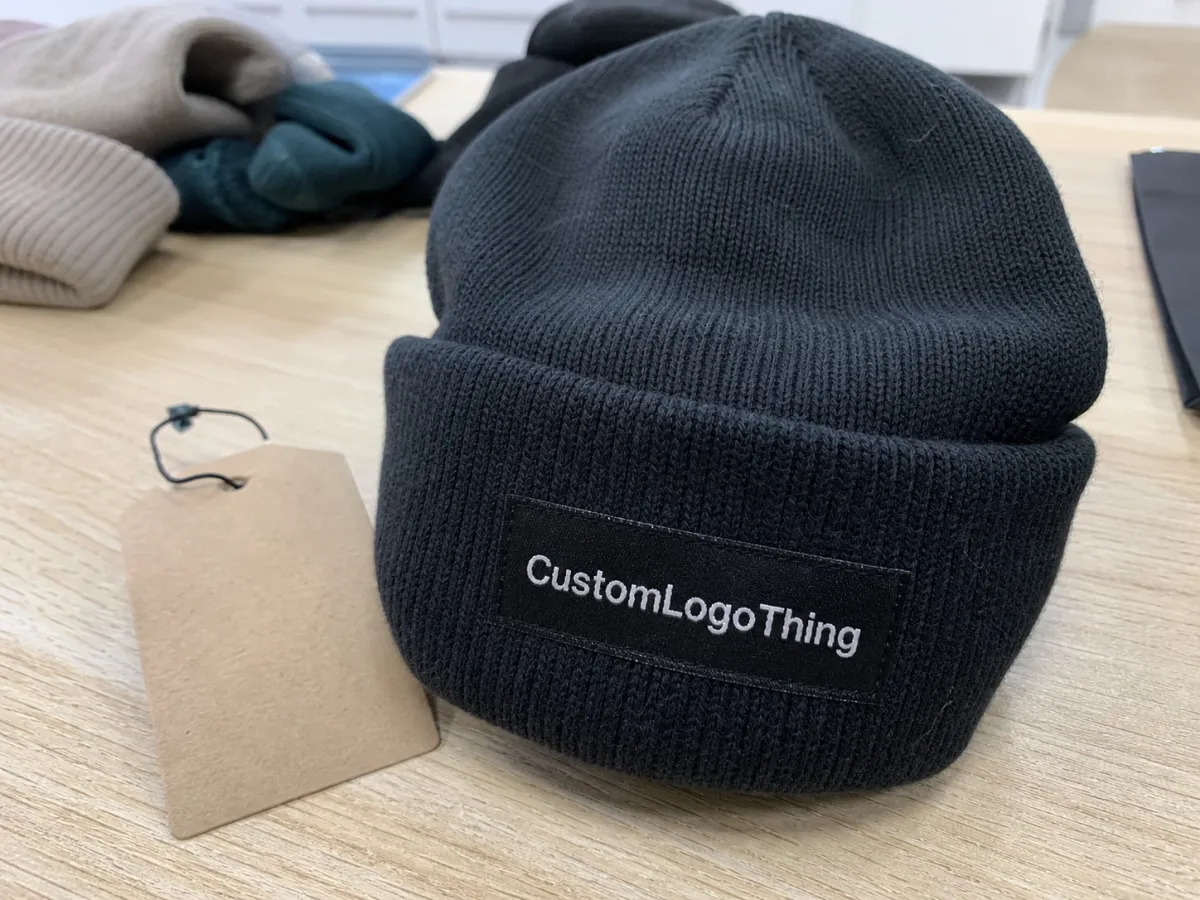
Decoration should match the artwork, not the other way around. Embroidery works well for bold logos, block lettering, and simple marks. Woven labels create a cleaner retail look and can hold small detail better than thread. Leatherette patches add texture and perceived value. PVC patches provide dimension and color control. Jacquard knit is best for larger graphic patterns, repeat marks, stripes, or brand elements worked directly into the knit.
Very small logos, thin text, gradients, and complicated mascot art do not become beautiful because someone calls the beanie “premium.” Embroidery thread has thickness. Knit stitches have limits. Patch materials need minimum line widths. If the artwork needs revision, it is better to find that out before bulk production, not after 1,000 caps arrive looking like a blurry postage stamp.
Specs That Change Fit, Feel, and Factory Timing
Specs are not decoration. They are the product.
Acrylic yarn is popular because it is durable, affordable, easy to wash, and available in many colors. Wool blends bring extra warmth and a more elevated feel, but they cost more and may need more careful care labeling. Recycled yarns can support sustainability programs, especially if the buyer needs documentation. Cotton blends often feel softer and more lifestyle-driven, though they may not recover stretch as aggressively as acrylic.
Gauge and knit density matter too. Tighter knits usually look cleaner and feel more substantial. They may also require more machine time or extra sampling to get the body right. A looser knit can feel soft but may stretch out faster. A dense rib knit can hold shape better, but it may raise unit cost. No free lunch. Annoying, but true.
Sizing should be confirmed before artwork placement. Adult one-size is the default for most programs, but youth sizing, oversized slouch shapes, deeper crowns, shorter cuffs, and extended cuff heights all change the decoration zone. A standard cuff may land around 2.5 to 3 inches tall. A taller cuff gives more logo room, but it can look bulky if the yarn is heavy or the patch is oversized.
Double layer weight affects freight. Buyers forget this constantly. One beanie may not feel heavy. One thousand double layer beanies with patches, belly bands, and individual polybags create real carton volume. That can change shipping method, air freight cost, warehouse handling, and delivery timing. If the order is going into retail cartons or employee kits, packing specs belong in the first quote.
Before quoting, prepare the production details that actually matter:
- Vector logo files such as AI, EPS, or editable PDF whenever possible
- Thread colors, yarn colors, or PMS references for brand matching
- Patch size, label dimensions, and preferred placement
- Inside care label requirements, fiber content, and country-of-origin needs
- Packaging choice: bulk pack, individual polybags, belly bands, hang tags, header cards, or retail cartons
Every added spec can be handled. The issue is timing. Late changes to yarn color, label placement, barcode stickers, carton counts, or hang tag copy can pause proofing, sampling, or packing. That is where timelines go to die. Quietly. Expensively.
MOQ, Pricing, and Unit Cost Reality Checks
MOQ is the minimum order quantity a supplier can produce without making the job inefficient or financially ridiculous. For decorated stock beanies, MOQ may start around 100 to 300 pieces depending on blank inventory and decoration capacity. For fully custom knit double layer beanies, the MOQ is usually higher because yarn setup, machine programming, sampling, and bulk production need enough volume to make sense.
Here is the blunt version: 300 pieces can be a solid test quantity for decorated stock. 500 pieces often unlock better bulk pricing. 1,000 pieces and up usually make custom knit programs more efficient. If you want special yarn colors, jacquard artwork, woven labels, custom packaging, and 72 total units, you are not ordering production. You are ordering disappointment with a logo on it.
| Order Type | Typical Quantity Range | Common Cost Drivers | Best Fit |
|---|---|---|---|
| Stock beanie with embroidery | 100-300 pieces | Setup charges, stitch count, thread colors, inventory availability | Events, staff gifts, smaller promotions |
| Stock beanie with woven label or patch | 200-500 pieces | Patch tooling fees, label minimums, sewing time, placement | Retail-style giveaways, breweries, school stores |
| Fully custom double layer knit | 500-1,000+ pieces | Yarn sourcing, knit programming, sampling, color count | Brand merch, retail launches, uniform programs |
| Custom knit with retail packaging | 1,000+ pieces | Hang tags, belly bands, barcode labels, cartons, freight volume | Retail resale, subscription boxes, seasonal kits |
Unit cost drops with volume because fixed work gets spread across more pieces. Setup charges, sampling, machine programming, admin time, proofing, and packing instructions still exist whether the order is 150 pieces or 1,500 pieces. Not magic. Just math.
Decoration method changes the pricing curve. Embroidery is flexible and direct for many logos, though high stitch counts raise cost. Woven labels look retail-ready and handle small detail better than embroidery. Leatherette patches work well for outdoor, lodge, brewery, and lifestyle merch. PVC patches add dimension and color durability, but tooling fees and minimums apply. Jacquard knit gives strong brand integration, yet it requires more planning because the design is built into the fabric.
Do not chase the lowest cost per piece without checking the product. Weight, stretch, stitch density, cuff recovery, label quality, and decoration alignment matter. Cheap beanies advertise themselves too. Unfortunately.
Lead Time, Samples, and Production Steps
Double layer beanies Lead Time and MOQ should be treated as one buying decision, not two separate boxes on a form. A low MOQ usually limits customization. A highly customized beanie usually needs a higher minimum and a longer calendar.
A realistic production path includes quote review, artwork check, material confirmation, digital proof, sample approval when needed, bulk production, quality control, packing, freight, and final delivery. Simple decorated stock beanies can move faster if blanks and decoration capacity are available. Fully custom double layer knit beanies take longer because yarn sourcing, machine setup, sample approval, and bulk knitting all need room.
As a practical range, decorated stock programs may take roughly 7 to 15 business days after proof approval, depending on quantity and decoration. Custom knit double layer beanies often need several weeks from final approval, especially if yarn colors, jacquard artwork, patches, fleece lining, or custom packaging are involved. Freight sits outside that production clock. Buyers mix those up constantly.
A factory finishing production on Friday does not mean cartons land on your dock Monday. Packing, export handling, carrier pickup, customs where applicable, domestic delivery, and receiving appointments can all add time. Air freight is faster, but it can punch the budget in the face. Ocean freight is cheaper for larger orders but needs a wider window.
Samples are not always required, but they reduce risk. Digital mockups are useful for logo placement, general color direction, and approval routing. Physical samples are Smarter for Retail resale, strict brand standards, new yarn blends, patch sizing, cuff height, or any order where fit and hand feel matter. If the product will sit on a store shelf with a hang tag and barcode, skipping the sample to save a few days can be a bad trade.
Rush orders are possible for simpler specs. Stock beanie, one-location embroidery, no custom packaging, clear artwork, fast approval? That can move. Custom yarn colors, fleece lining, jacquard graphics, woven labels, belly bands, and peak winter demand? Much harder. For seasonal programs, order ahead. Holiday kits, ski events, employee gifts, and retail launches are not the place to gamble on a narrow delivery window.
How to Get a Clean Quote Without the Back-and-Forth
A clean quote is a procurement tool. A vague estimate is just a number waiting to change. To get accurate timing and minimums, send the full buying picture up front: estimated quantity, target delivery date, beanie style, color, logo files, decoration method, packaging needs, ship-to ZIP code or destination country, and budget range if one exists.
Artwork matters more than buyers think. Vector files such as AI, EPS, or editable PDF are best for production review. A high-resolution PNG can work for an early check, but it may need cleanup before embroidery, patch production, or woven label setup. Low-resolution screenshots are not artwork. They are clues.
Tell the supplier how the beanie will be used. Resale, giveaway, uniform, event merch, subscription box, and employee gift programs do not need the same construction. A giveaway can often use a durable acrylic style with embroidery. A retail program may justify a woven label, hang tag, belly band, and tighter QC standards for logo placement. A uniform program may need repeat ordering and consistent color matching across batches.
Custom Logo Things checks decoration feasibility, logo size, material compatibility, color direction, MOQ fit, production calendar, and freight route before confirming a quote. If sustainability matters, say so early. FSC-certified paper can be relevant for hang tags, belly bands, or retail cartons; buyers can learn more about responsible paper sourcing through the Forest Stewardship Council. If packing or transit testing is part of a larger retail program, standards from ISTA may also matter.
Quote validity is not forever. Yarn availability, freight cost, exchange rates, rush capacity, and seasonal demand can move. Sitting on a quote for six weeks and acting shocked when the numbers change is not a purchasing strategy. It is procrastination with a spreadsheet.
For general ordering questions, the Custom Logo Things FAQ is useful, but a serious quote needs project-specific details. Quantity tiering helps too. Ask for 300 and 500 pieces, or 500 and 1,000 pieces, so unit cost and bulk pricing differences are visible instead of guessed.
Common Ordering Mistakes That Delay Beanie Projects
Waiting too long is the classic mistake. Cold weather is not exactly a surprise event on the calendar. If the beanies support winter uniforms, trade shows, holiday gifts, ski weekends, or retail drops, the project should start before the schedule feels dramatic.
Artwork is another delay machine. Tiny text, thin outlines, gradients, low-resolution files, and screen-first logos often translate poorly to knitwear or patches. Embroidery needs enough space for thread. Woven labels can hold finer detail, but they still need readable contrast and realistic sizing. Jacquard knit works best with simplified shapes and fewer colors.
Color confusion causes trouble too. Screen colors, PMS references, yarn colors, thread colors, patch materials, and Printed Hang Tags are different systems. A PMS number can guide matching, but yarn dye lots and thread cards may not land perfectly. If exact brand color is mission-critical, request lab dips, thread references, or a physical sample. If “close enough” is acceptable, say that too. Suppliers are not mind readers, despite the rumors.
Sample approval delays can wreck a schedule. Every day spent debating cuff height, patch size, label placement, or whether the logo should move 0.25 inches left pushes bulk production later. Internal committees love to treat small decisions like constitutional amendments. The factory calendar does not care.
Packaging scope creep is another expensive little monster. Adding hang tags, belly bands, barcode labels, size stickers, individual bags, or custom cartons late can affect cost, packing time, carton dimensions, and freight. If the beanies are part of a kit with gloves, mugs, socks, or cards, define the packing order early. Kitting sounds simple until carton weight, insert placement, and barcode scans enter the room.
Freight needs a buffer. Air freight is faster and expensive. Ocean freight is slower and usually cheaper. Ground delivery can still run into weather, carrier capacity, warehouse receiving appointments, and holiday congestion. For more practical order timing questions, check the FAQ page before assuming production time and transit time are the same thing.
Next Steps Before You Place a Custom Beanie Order
Start by choosing the product path: decorated stock or fully custom knit. Stock decoration is better for speed, smaller quantities, and simpler budgets. Fully custom knit is better for brand control, larger programs, retail launches, and designs that need built-in pattern work. Neither option is automatically better. The right choice depends on quantity, deadline, budget, and how much product control you need.
Then lock the basics. Confirm target quantity, decoration method, yarn direction, packaging level, delivery location, and a real in-hands date. “As soon as possible” is not a date. “Needed at our Denver office by March 12” is a date. That difference changes how a supplier checks production and freight.
- Choose stock decoration or fully custom knit construction.
- Request two quantity tiers, such as 300 and 500 pieces or 500 and 1,000 pieces.
- Decide what matters most: lowest cost, fastest turnaround, premium retail feel, recycled materials, or exact color matching.
- Gather vector logo files, PMS references, label specs, and packaging requirements.
- Ask for a physical sample if the order is large, retail-facing, or brand-sensitive.
- Leave buffer for approvals, revisions, freight, and internal purchasing delays.
Physical samples are especially useful for retail programs, strict brand standards, unfamiliar materials, and any project where fit, stretch, thickness, or hand feel could affect buyer satisfaction. Digital mockups are faster, but they cannot show how a rib knit stretches over the head or how a patch bends on a cuff.
Also decide what you are willing to trade. If price is the priority, simplify decoration and packaging. If speed matters most, use available stock and avoid custom yarn. If the beanie needs to feel retail-grade, accept the higher unit cost and plan enough time for sampling. Want sustainable materials, exact color, custom labels, rush delivery, and the lowest possible price? Sure. And I would like freight carriers to deliver by teleportation.
To get accurate double layer beanies Lead Time and MOQ, send Custom Logo Things the style, quantity, logo, decoration preference, packaging needs, ship-to location, and delivery deadline before asking for final pricing. Clean inputs get cleaner quotes. Cleaner quotes create fewer surprises.
FAQ
What is the typical MOQ for custom double layer beanies?
MOQ depends on whether the beanie is stock with decoration or fully custom knit. Decorated stock styles may start around 100 to 300 pieces. Fully custom double layer beanies often make more sense at 500 to 1,000 pieces or higher because setup charges, sampling, and machine time need enough volume. Higher quantities usually lower the unit cost because fixed work is spread across more units.
How long is the lead time for double layer beanies?
Simple decorated stock beanies can move faster if inventory and decoration capacity are available, often in the 7 to 15 business day range after proof approval. Fully custom knit double layer beanies take longer because yarn, sampling, machine setup, production, QC, and freight all need time. Shipping time is separate from production time, and yes, that distinction matters.
What affects double layer beanie pricing the most?
The biggest pricing factors are quantity, yarn type, knit construction, decoration method, patch or label choice, packaging, and freight. Embroidery is usually flexible for logos, while jacquard knit and custom patches require more setup. Premium yarns, recycled materials, special labels, individual packaging, tooling fees, and rush timelines can all raise the cost per piece.
Can I rush a custom double layer beanie order?
Rush orders are easier with available stock beanies and simple decoration. Rush timing is harder for custom yarn colors, jacquard designs, fleece lining, complex labels, or retail packaging. Air freight can shorten transit time, but it raises cost. The fastest way to check feasibility is to send quantity, logo, style, decoration, packaging, and required delivery date upfront.
Do I need a sample before bulk production for double layer beanies?
A physical sample is recommended for retail programs, large orders, strict brand standards, or new materials. Digital mockups are faster, but they do not show exact fit, stretch, thickness, or hand feel. Samples help confirm logo size, patch placement, cuff height, color direction, and packaging. Skipping the sample can save time, but it shifts more risk onto the bulk order, especially if double layer beanies Lead Time and MOQ are already tight.