If you sell handmade apparel, etsy Custom Clothing Tags can do more than identify a product. A small woven label, a satin size tag, or a simple hang tag can shift a garment from “handmade item” to “brand with a point of view.” That difference is subtle on a spreadsheet and obvious in the hand.
Buyers notice faster than sellers expect. They see the stitching, the care information, the consistency between the label and the rest of the packaging, and whether the item feels finished or improvised. A tag is not decoration alone; it is part of how the product earns trust before the first wash.
Why Etsy custom clothing tags matter more than most sellers expect
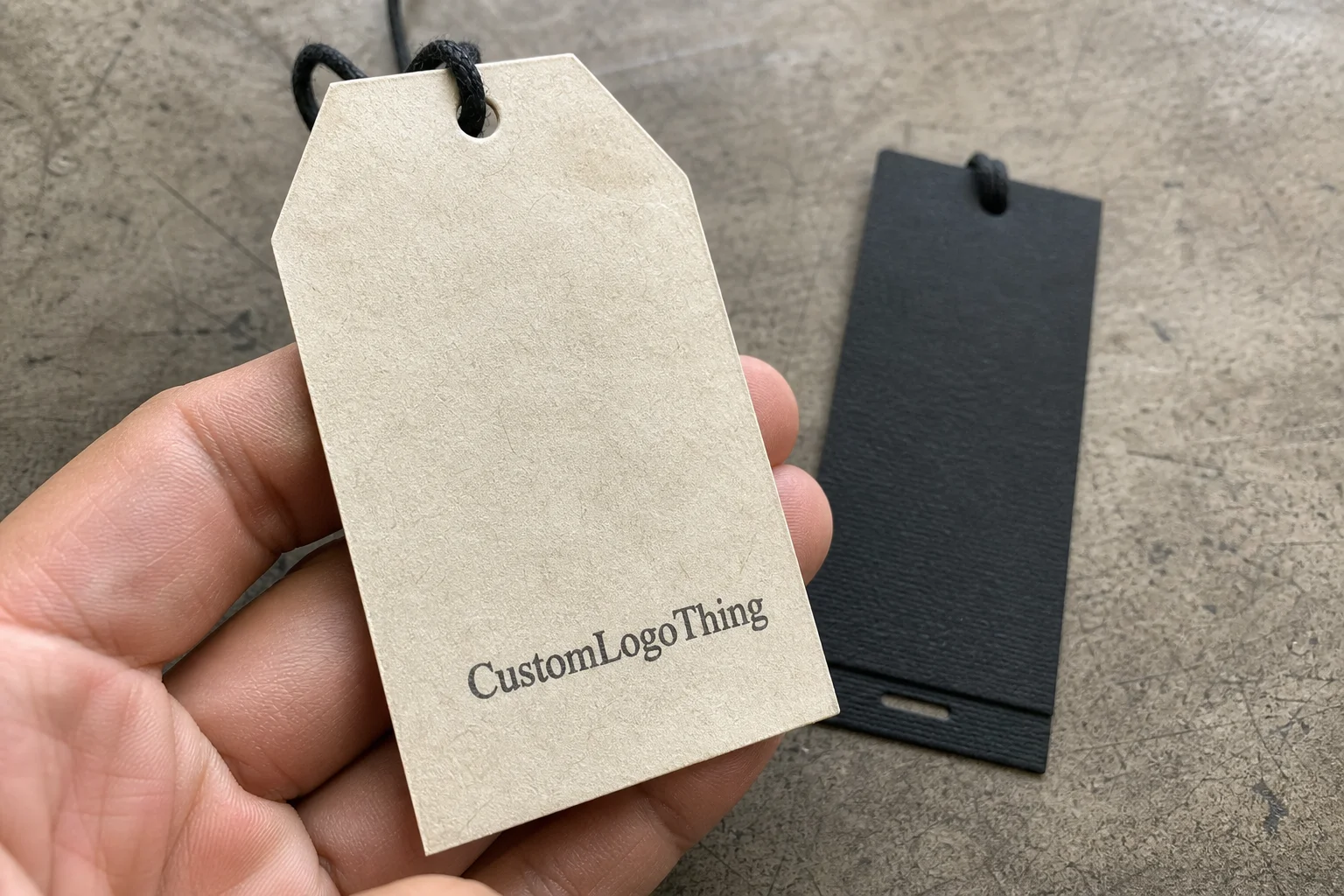
A clothing tag has multiple jobs. It identifies the brand, carries sizing or care information where needed, and improves the final presentation of the garment. For some products, it also helps with compliance. Size identification, fiber disclosure, and wash instructions may not be glamorous, but leaving them out can make a product feel incomplete.
The effect varies by category. A baby bodysuit needs softness first. A knit beanie can usually tolerate a stitched woven label at a seam. Activewear often performs better with heat-transfer labels because scratchy neck tags can turn into customer complaints quickly. And if the product ships in custom printed boxes or branded mailers, the clothing tag should feel like part of that system rather than a loose add-on.
Most sellers narrow the choice to a handful of label types:
- Woven labels for durability and a polished, brand-forward look
- Printed satin labels for a softer feel and flexible text layout
- Heat-transfer labels for tagless comfort on skin-contact garments
- Hang tags for branding, pricing, care notes, or product storytelling
- Size and care labels for repeatable garment identification and wash guidance
The right choice depends on three things: where the tag will sit, how the garment wears over time, and how sensitive the wearer is likely to be to texture. That last factor gets ignored more often than it should. A label that looks crisp in a mockup can feel irritating once it is stitched into a side seam and worn for a full day.
Good tag design is not about making the label loud. It is about making it clear, comfortable, and consistent enough that every product feels like it came from the same brand system.
If your packaging already uses a certain font, paper finish, or color family, the clothing tag should echo that logic. The strongest product presentation usually feels deliberate rather than overdesigned. The tag is only a few square inches, but it can carry the whole visual rhythm of the brand.
How the ordering and proofing process works
The ordering flow for etsy Custom Clothing Tags is usually simple on paper: choose a label style, submit artwork or text, confirm dimensions, review a proof, approve production, then wait for shipment. In reality, the speed depends on how prepared the buyer is. Clean files move quickly. Files with tiny text, unclear artwork, or last-minute changes slow everything down.
Suppliers usually need a few core details before quoting accurately:
- Your logo file or label text
- Desired label size in inches or millimeters
- Fold style, such as center fold or end fold
- Background and thread colors
- Edge finish or cut style
- Quantity target and reorder expectations
- Any care text, fiber content, or sizing notes
The proofing stage is where most costly mistakes are either caught or approved by accident. A design that looks balanced on a laptop screen may become cramped at label size, especially if the text is tiny or the logo depends on hairline details. Woven labels can blur very thin lines because they are built from threads. Printed labels can hold more detail, but they are more sensitive to color shifts, low contrast, and artwork with gradients.
Woven and printed labels are made differently, and the difference matters. Woven labels have more texture and typically feel sturdier over repeated wear. Printed labels can show finer detail and more flexible layouts, but substrate and ink behavior become more important. Minimum order quantity often tracks with that production method. A buyer doing a test run may find printed options easier to start with, while woven labels usually make more sense for a stable design that will be reordered.
Lead time is often shaped less by manufacturing than by proof approval. A response in a few hours keeps the order moving; a response in a few days can put an otherwise simple job behind schedule. For sellers who source Custom Labels & Tags alongside Custom Packaging Products, that responsiveness can be the difference between a clean production week and a frustrating one.
Key materials, sizes, and finishing choices
Material choice should match the garment, not just the logo. A label that feels perfect on a tote bag may feel scratchy on a baby tee. A satin label can look elegant, but if the item gets frequent washing and abrasion, a sturdier woven construction may age better.
Common material choices include damask woven polyester, which is a strong option for detail and durability; satin, which has a smoother finish and softer hand feel; cotton, which supports a natural or handmade look; and heat-transfer options, which suit tagless comfort. For garments that sit directly against skin, this decision affects customer experience more than most sellers expect. A complaint about itchiness can hurt repeat sales faster than a plain label ever will.
Size affects both readability and placement. Small labels work for necklines or side seams, but if the format gets too tight, text becomes hard to read and the logo loses impact. Babywear usually needs labels that are compact and gentle. Outerwear and bags allow more room for logo, website, and care details. The more information you want on the tag, the more size you need to keep it legible.
Finishing choices shape both appearance and attachment:
- Center fold works well for sewing into seams while keeping the graphic visible on both sides
- End fold gives a cleaner stitched finish at the edges
- Loop fold is useful when the label must wrap around a seam or neckline
- Straight cut can be used for sewing or heat sealing, depending on construction
Attachment method matters just as much as material. Sewn-in labels are reliable and hold up well, though the stitches will be visible. Iron-on backing can speed installation in some workflows, but wash durability depends on both garment fabric and application quality. A soft-hand finish improves comfort, but not if it leads to fraying edges or premature fading.
The best label usually balances brand appearance, wash performance, and how the tag behaves against skin or seams. That is the real work of apparel branding, even if the label itself is tiny.
Cost, pricing, MOQ, and what changes your unit cost
Pricing for etsy Custom Clothing Tags depends on several moving parts, and the spread can be wide. Material type, size, number of colors, quantity, fold style, and edge finish all affect cost. Special packaging, like individual folding or bagging, can add to the total. If the artwork needs cleanup or correction, that can show up too.
Small runs cost more per label because setup work is spread across fewer pieces. That is simple production math. A 500-piece order often carries a higher unit price than a 5,000-piece order, even when the design is identical. For a new product, the premium may be worth it. For a steady seller with repeat styles, a larger run usually lowers cost and reduces reorder friction.
Here is a practical way to think about it:
| Order type | Typical use | Common unit cost range | What affects the price most |
|---|---|---|---|
| Small test run | New product launch or seasonal design | $0.18-$0.45 per label | Setup, quantity, and material choice |
| Mid-volume order | Core shop styles | $0.08-$0.20 per label | Fold style, color count, and finishing |
| Higher-volume reorder | Established best sellers | $0.04-$0.12 per label | Quantity and how standardized the artwork is |
Those ranges are broad, not promises. A detailed woven label with multiple colors and a special fold can cost more than a simple printed size tag even at the same quantity. Shipping, rush production, and replacement orders caused by an approved-proof mistake can change the total again. The useful number is the total landed cost, not just the piece price.
Hidden costs deserve attention. File cleanup, color matching requests, rush fees, and split shipments can quietly raise the final bill. If you want a tighter estimate, ask for quotes at two or three quantities and compare the break points. That usually shows where the best unit economics actually sit.
Step-by-step: how to order the right clothing tags for Etsy
Ordering the right label starts with defining the garment use case. A label for a sweater is not the same as a label for a sports bra, and a decorative tag for a gift item is not the same as a care-focused label. Decide what the tag must do best: comfort, durability, branding, or information.
- Define the product and where the label will live: neckline, side seam, hem, waistband, or exterior.
- Prepare clean artwork with simple shapes and readable text. Tiny copy should be cut back unless it is absolutely necessary.
- Choose the construction: woven, printed, satin, cotton, or heat-transfer, based on feel and washing conditions.
- Confirm the format: size, fold, edge finish, and attachment method.
- Review the proof line by line, checking spelling, contrast, logo proportions, and any required fiber content or care instructions.
- Approve only when it looks right, then order enough quantity to cover realistic sales volume and a modest restock buffer.
The proof review deserves more attention than most sellers give it. A typo on a label can undermine confidence in the entire brand. The same goes for poor color contrast or cramped layout. If the tag carries care or fiber information, clarity beats ornamentation every time. Standards and traceability practices from organizations such as ISTA and material sourcing references from FSC are useful reminders that even small-format packaging should support durability, readability, and responsible material choices.
If your shop also uses branded packaging or custom printed boxes, coordinate the tag with the rest of the presentation. Matching the paper finish, color family, or typography can make the order feel more deliberate. The label does not need to match exactly, but it should belong in the same visual system.
Common mistakes that hurt quality, comfort, or sales
The most common mistake is trying to fit too much into too little space. A logo, website, social handle, care note, size, and legal text can crowd a small label fast. The result is poor readability and weak reproduction quality, especially on woven labels where ultra-fine details do not always survive production.
Another common issue is choosing material based on appearance alone. A satin label may look elegant online, but if it feels rough after a few washes, customers notice. A woven label may be durable yet still uncomfortable if the edges or seam placement rub against the neck. The best label has to work in the actual garment, not just in a mockup.
Placement is easy to underestimate. A well-designed tag can still fail if it sits where fabric stretches, folds awkwardly, or rubs skin. On stretch garments, placement should respect seam behavior or the label can distort after wear. On knits, the attachment method should avoid puckering and visible strain.
Other mistakes show up in production planning:
- Using font sizes that are too small to print or weave cleanly
- Ordering too few labels and paying more for frequent reorders
- Skipping proof review and approving spelling errors or wrong sizing
- Ignoring comfort on skin-contact garments
- Choosing a label style that clashes with the rest of the product packaging
The fix is usually straightforward: slow down at the proof stage, simplify the layout, and match the construction to the garment. That one habit saves money and makes the brand look more consistent.
Expert tips for better branding and smoother production steps
If the goal is to make the label support sales, use one repeatable system and stick with it. A core label family across main products helps the brand feel familiar from item to item. Consistency matters as much as the logo.
For new materials, request a physical sample when possible. A sample swatch reveals more than a render ever will, especially for garments that touch skin or get washed often. Softness, edge feel, stitch behavior, and color depth are easier to judge in hand than on screen.
Keep the logo simple for small-format production. Extremely detailed artwork is better suited to hang tags or inserts, where there is more room. For woven or printed labels, clean shapes and strong contrast usually reproduce better. That does not mean the brand has to look plain; it means the label scale has its own limits.
Plan ahead for inventory. If a tag color and style work across several collections, there is less need to redesign every time a new product line launches. That saves time and keeps product packaging more coherent from season to season.
Document approved specs once they are final. Keep the exact dimensions, fold style, thread colors, artwork version, and quantity that passed inspection. Reorders are easier when the same choices do not need to be rediscovered every time.
For sellers building a broader packaging system, this is where product packaging and label planning meet. A good label supports the garment. A good system supports the business.
Next steps for comparing suppliers and placing your order
Before requesting quotes, build a one-page spec sheet. Include the logo file, target size, fold preference, material, quantity estimate, and any text that must appear on the label. That keeps each supplier quoting the same job, which makes comparison far easier.
When comparing suppliers, ask about three things: price, lead time, and proof support. A low price does not help if the supplier cannot correct artwork well or if the schedule keeps slipping because the proofing process is unclear. For apparel with tight launch dates, responsiveness matters as much as the unit cost.
If sample photos or swatches are available, review them closely. Look for edge quality, print clarity, stitch consistency, and how the material feels in hand. If you are unsure, start with the label that fits the garment feel and brand positioning, not the one that sounds most impressive on paper.
Once the proof is approved, order with a modest buffer. Sales spikes, replacement needs, and future restocks happen. Running out of tags at the wrong time creates avoidable delays. A safety margin is usually smarter than ordering to the exact piece.
In the end, etsy custom clothing tags are a small part with an outsized effect. Choose the Right material, keep the artwork clear, and use a process you trust. The label will do its job quietly, which is usually what good branding looks like.
What should I look for when buying Etsy custom clothing tags for handmade apparel?
Prioritize comfort, wash durability, and readability over decorative details that may not reproduce well at small size. Match the label material and fold style to the garment type so the tag does not irritate skin or distort on the seam. Confirm the supplier can provide a proof before production so errors can be caught early.
How long do Etsy custom clothing tags usually take to produce?
Production time depends on label type, quantity, and how quickly artwork is approved. Delays often happen during proofing rather than manufacturing, so fast responses help keep the order moving. Rush options may exist, but they usually increase total cost and can limit material or finish choices.
What is the best material for custom tags on clothing that gets washed often?
Woven polyester is a strong choice for long-term durability and repeated washing. Printed satin can work well when softness matters more than extreme abrasion resistance. For tagless comfort, heat-transfer labels can be practical on many garments.
Why do the prices for custom clothing tags vary so much?
Price changes with size, quantity, material, fold style, color count, and whether the order needs special finishing. Smaller orders usually have a higher unit cost because setup work is spread across fewer labels. Shipping, artwork adjustments, and rush production can also affect the final total.
Can I use custom tags to make a small Etsy shop look more professional?
Yes, consistent labeling helps handmade products feel intentional, organized, and brand-ready. A clean, readable tag can also improve customer confidence by showing care information and a polished finish. The strongest results usually come from using the same tag style across the main product line so the brand feels cohesive.


