The fastest way to slow down an event merch Premium Cuffed Beanies reorder plan is usually not the knitting line. It is the missing documentation around the first run. If the original mockups, cuff measurements, yarn details, stitch count, and logo placement were never captured cleanly, the second order has to be rebuilt from old emails and memory, which adds avoidable risk to a job that should be routine.
Paper trails matter.
Repeat orders should be simpler than first-time buys because the key decisions are already made. The fit was approved, the design was signed off, and the team has some sense of how the product performs in the field. A reorder only stays simple when the original order was documented well enough to copy without interpretation.
When the buyer keeps the old PO, artwork files, sample photos, measurement notes, and carton labels together, the supplier can usually quote faster and reduce back-and-forth. Well-documented reorders often receive quotes within 24-48 hours, yarn confirmation or digital mockups within 1-2 business days, pre-production samples in 5-7 business days, and shipping in 18-22 business days after proof approval. First-time programs usually run longer, often 22-30 business days, because the spec still has to be defined and confirmed.
Premium Cuffed Beanies do more than hold heat. They show up as staff apparel, donor gifts, retail stock, and bundled event merch. One style often has to serve several purposes, so the reorder plan needs to protect both consistency and timing. Most premium cuffed programs work best in the 300-1,000 unit MOQ range, with 500 units often sitting in a practical middle ground for buyers who want stable pricing without overcommitting inventory. At that level, setup costs can still be absorbed without pushing the per-unit price too high.
Why repeat orders move faster than first-time beanie programs
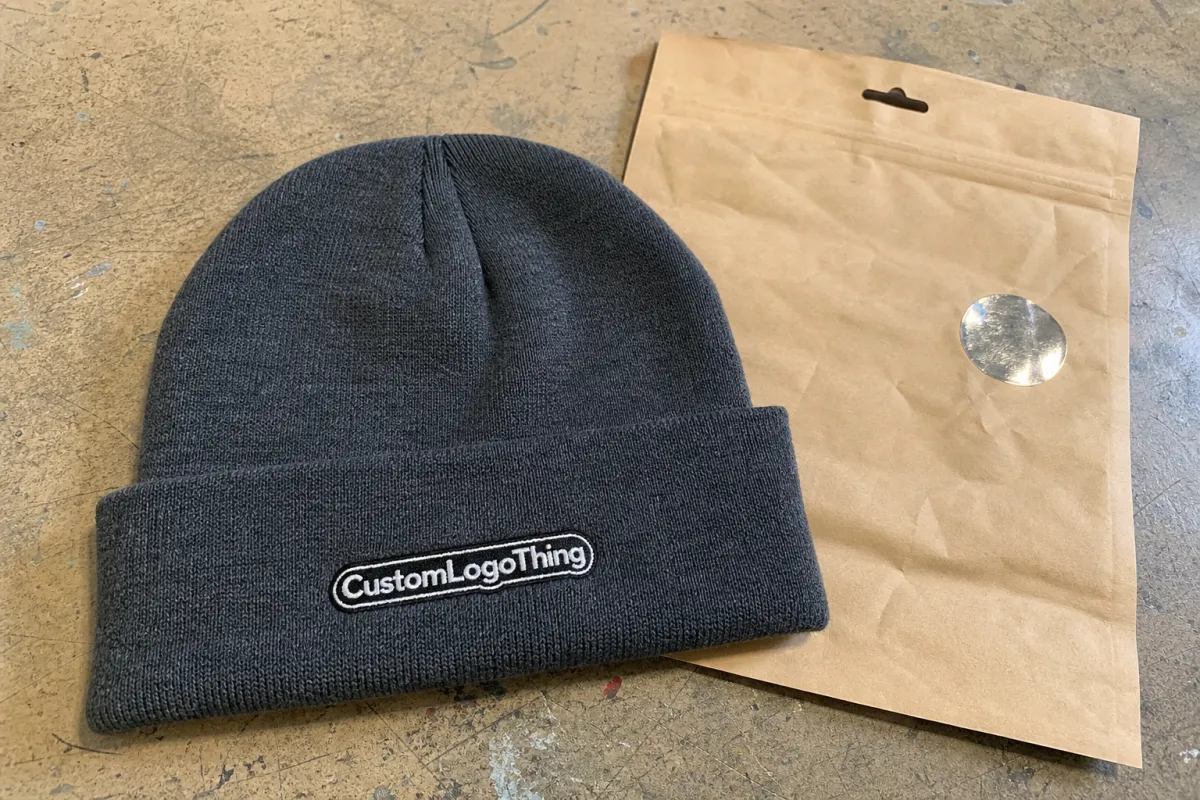
Manufacturing capacity is rarely the main constraint on a reorder. Mills can knit, decorators can stitch or apply patches, and packers can carton the goods. The delay usually comes from uncertainty. If the cuff height, thread color, logo scale, or hand feel were never written down clearly, the order can slip back into proofing and clarification. On a clean repeat, the factory can skip pattern rework, new yarn searches, and fresh decoration approvals, which saves time and reduces waste.
A buyer who keeps the sample, yarn, and decoration method unchanged gives the factory fewer places to get it wrong. It also makes the cost more predictable. Every change creates work somewhere: artwork cleanup, color matching, another sample, more review cycles, and more sign-off delays. If the first order already passed a first-article check, the reorder should move straight to yarn lot confirmation, gauge, placement, and carton review instead of restarting the proof cycle.
Cold-weather merch follows a seasonal pattern, and the buying use case can change even when the product does not. A conference may need a staff version, then a retail version, then a replenishment run for the next season. A campus store may reorder after orientation week clears the shelf.
A sports event may need an emergency refill after the first giveaway wave. That makes the reorder file just as important as the decoration itself. The same beanie can serve different programs, but the procurement record has to be precise enough to support each one.
Practical point: the best reorder plans are boring in the right way. The specs stay fixed, the proof looks familiar, and the second shipment matches the first without anyone having to reconstruct the order from scratch. The most reliable programs usually keep yarn composition, gauge, cuff height, stitch count, artwork placement, packout, and inspection standards in one place so the same details can be repeated without interpretation.
How to build an event merch premium cuffed beanies reorder plan
A premium cuffed beanie is judged by more than decoration. Buyers notice cuff depth, knit density, stretch recovery, body length, and how the hat sits after folding, packing, and a few hours of wear. A beanie can look identical in a product photo and still feel different in hand if the rib tension is looser or the cuff changed by half an inch. For premium programs, the body is often knit on 3GG or 5GG computerized flat knitting machines, then linked at the crown, steam-blocked, and checked before decoration.
The best reorder plan starts with the version that already worked. If the first run passed review and the feedback was positive, keep that style and treat the reorder as a controlled repeat. The hat structure, yarn blend, decoration method, and packaging format should stay aligned unless there is a clear sourcing reason to change them. This is not the place to improvise.
For the materials file, note whether the beanie uses 100% acrylic, an acrylic-wool blend such as 70/30 or 80/20, recycled polyester, or organic cotton trim. If the program includes recycled fibers, ask for GRS documentation. If it uses organic cotton components, ask for GOTS support. For yarn and label safety, OEKO-TEX Standard 100 is the usual reference. For social compliance, WRAP or BSCI audit status is often requested. Those certificates do not change the knit, but they make the file easier to approve and reduce procurement questions later.
Decoration choice shapes both the look and the budget. Embroidery is durable and gives cuffed knitwear a clean premium feel. Woven patches are better for sharp detail, small type, or more graphic logos. A 50-80 mm embroidered mark often fits a cuff well, while a woven patch can carry finer lines without losing legibility on textured knit.
Woven labels sit lower on the cost curve and work well for subtle branding. Knit-in artwork feels integrated, but it is best when the design is simple and the run is large enough to absorb setup. A practical sample flow usually goes like this: submit art and measurements, approve a digital mockup, review a yarn strike-off or color swatch against Pantone, confirm a pre-production sample or photo sample, check stitch density and thread colors, then sign off on the production sample before bulk knitting begins. Most programs allow 1-2 rounds of revision before the factory locks the spec.
| Branding option | Typical unit cost | Strengths | Best fit |
|---|---|---|---|
| Embroidery | $5.10-$8.40 at 300-500 MOQ | Durable, premium hand, straightforward approval | Staff kits, donor gifts, conference merch |
| Woven patch | $5.60-$9.25 at 300-500 MOQ | Sharp detail, good for small type and fine lines | Retail programs, campus stores, brand-led events |
| Woven label | $2.50-$4.00 at 500 MOQ | Lightweight, subtle, easy to standardize | Budget-sensitive reorders, bundled promo sets |
| Knit-in detail | $6.20-$10.80 at 1,000+ MOQ | Integrated look, high perceived value | Larger runs, simpler art, retail displays |
The price spread has a clear reason behind it. A small reorder with a detailed patch can cost more per unit than a larger embroidered run with a simpler mark. Final pricing depends on decoration method, yarn choice, quantity, and whether the goods need retail-ready packaging or can ship in bulk. At 500 units, a plain or lightly branded premium cuffed beanie often lands around $2.50-$4.00 per unit before heavier decoration, while a more finished retail build with embroidery, woven patching, branded hangtags, or custom packaging moves higher because of labor, setup, and inspection time. Common add-ons include $35-$75 for digitizing, $45-$120 for patch or label setup, and $0.15-$0.45 per unit for folded polybag or hangtag packout.
For event teams, the value is continuity. A repeat-order beanie that matches the first batch can move from a giveaway table to staff apparel to a shelf item without looking like a different product. That kind of consistency keeps the brand stable and reduces internal debate when stock needs to be replenished.
Construction specs that protect fit, color, and logo placement
A reorder gets easier when the spec sheet answers the small questions before they become problems. Record the yarn blend, gauge, cuff height, body length, closure style, and stretch. A clean spec sheet leaves less room for guesswork and gives the supplier a clearer target. For most premium cuffed beanies, buyers should note body length around 8-10 inches, cuff depth around 2.5-3.5 inches, and finished width around 8.5-10 inches flat, with a tolerance of +/- 0.25 inch on the key measurements.
Color calls need the same discipline. Pantone references help, but knitwear still shifts a little once yarn, machine tension, and blocking come into play. The safest approach is to keep one approved sample on file, plus photos under indoor and daylight conditions. That way, the buyer can compare the final knit against the approved shade band, sample card, and logo placement photos before the bulk run starts.
Thread count and stitch direction also matter. A dense 12-gauge or 1x1 rib cuff will hold a small embroidered mark differently than a looser 5GG body, and a patch placed too close to the fold can distort when the cuff is worn. The spec should call out exact logo placement, usually measured from the center front seam or the left side seam, so the decoration lands consistently from piece to piece.
For the factory, the cleanest production path usually starts with incoming yarn inspection, then sample knitting, color approval, bulk knitting, linking, steaming, trimming, decoration, and final packing. Inspection checkpoints should include yarn lot verification, stitch uniformity, cuff height, logo placement, loose-thread trim, seam strength at the crown, and carton count. A final AQL check of 2.5 on major defects is common for apparel, with a separate check for metal contamination if needles or clips are used in the decoration area.


