Subscription Premium Cuffed Beanies quote requests move fastest when the product has already been defined in plain language. Once the knit, cuff depth, logo placement, and color are fixed, the next run stops being a design discussion and becomes a repeat production exercise. That shift matters more than many buyers expect.
The real cost in custom headwear is rarely the hat alone. It is the time lost to unclear specs, artwork revisions, inconsistent yarn lots, and the small errors that turn into sample cycles. For recurring programs, those hidden costs can exceed the difference between a budget beanie and a better-built one. A quote that reflects repeatability is usually worth more than a quote that only looks low on paper.
Subscription buyers, team buyers, merch managers, and retail replenishment teams all want the same thing: a product that looks the same every time it lands in a box. That is harder than it sounds. Beanies are forgiving to wear, but they are not forgiving to spec drift. A cuff that changes by half an inch can alter the placement of a patch. A yarn substitution can change the handfeel enough to affect approvals. A color that shifts under warehouse lighting can trigger a new round of questions.
The cheapest quote is often the one that ignores reorders, then charges for the fixes later.
Why a subscription premium cuffed beanies quote is usually easier the second time
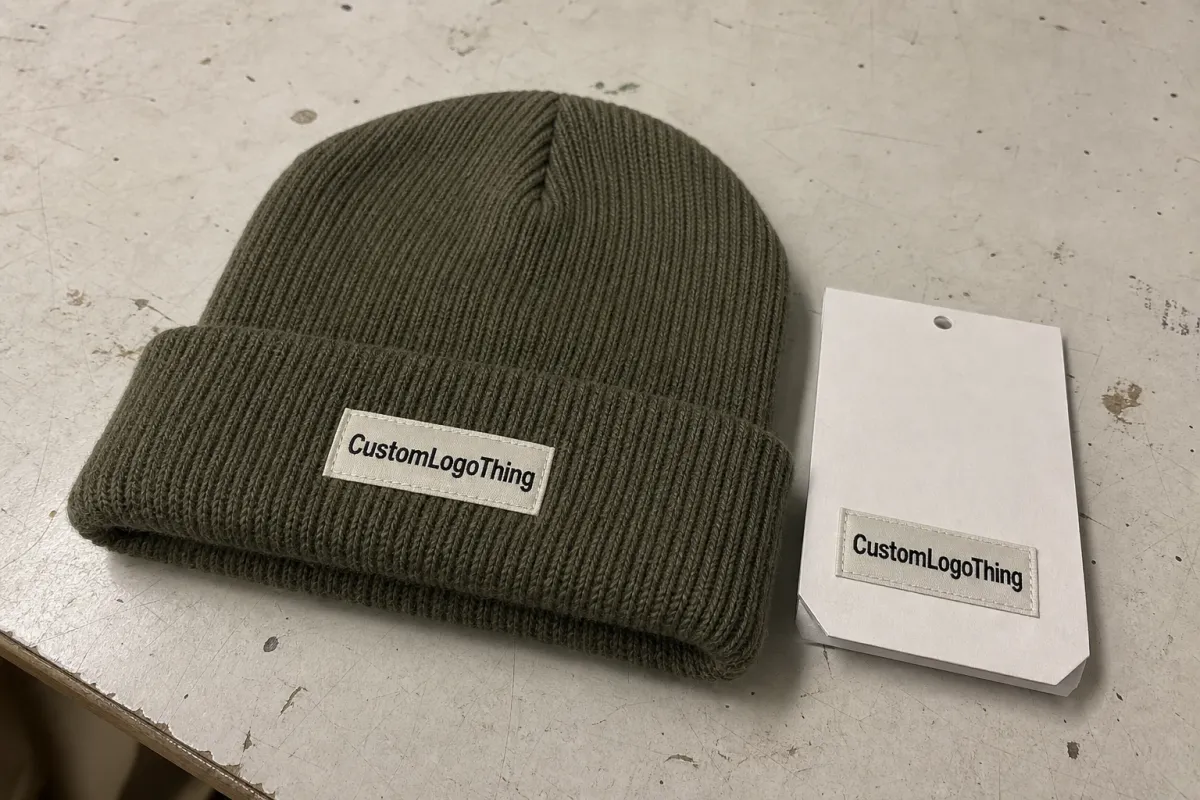
The first order pays for discovery. That is where the team sorts through decoration size, crown height, cuff depth, yarn choice, and whether the logo can live comfortably on the folded edge. The second order should not need that same work. If the production recipe is saved correctly, a Subscription Premium Cuffed beanies quote for a repeat run is usually faster to produce and easier to compare across quantity tiers.
Repeat orders also reduce judgment calls. There is no need to re-decide whether a patch is too large for the cuff or whether a stitch count will blur fine lettering. The answer already exists in the approved sample, the sign-off sheet, or the first production run. That is why subscription programs often outperform one-off purchasing: they create a known specification that can be reproduced instead of re-invented.
This is where many buyers underestimate the value of documentation. A recurring order with a clean spec sheet can move through pricing, proofing, and production with fewer interruptions. The difference is not dramatic in a single line item. It becomes obvious across a year of restocks. Fewer revisions mean fewer delays. Fewer delays mean fewer rush charges. Fewer rush charges mean the final landed cost stays closer to the original plan.
There is also a subtle but important buying advantage. Once the first run establishes the exact product, the reorder can be benchmarked against it. If the new price moves up, the buyer can see whether the change came from yarn, freight, decoration, or a smaller quantity tier. That kind of visibility is hard to get when every request starts from zero.
In subscription merchandising, predictability matters more than novelty. A recurring beanie should look like the same item in every shipment, not a family of similar hats. That may sound obvious, but in production it is one of the most common failure points.
Premium cuffed beanie construction buyers can compare fast
“Premium” is not a decorative word. In beanie production, it usually means the construction is denser, the shape is cleaner, or the finish holds up better after repeated wear. Buyers can compare the main options quickly if they focus on the parts that actually affect feel and durability.
The first thing to check is yarn type. Acrylic is the most economical option and remains common for promotions because it is easy to knit, soft enough for everyday wear, and available in a wide color range. Acrylic-wool blends cost more, but they tend to feel warmer and more substantial. Recycled yarns can support sustainability claims, though color matching and texture should be reviewed before a full run. The handfeel can vary more than buyers expect, especially across different suppliers or dye lots.
Knit density matters just as much. A tighter knit generally looks cleaner, keeps its shape better, and gives logos a steadier surface. Loose knits can feel softer at first touch, but they may stretch more and show decoration inconsistencies. For most Premium Cuffed Beanies, a mid-to-heavy gauge is preferred because it balances warmth, structure, and decoration performance.
- Acrylic - lower cost, broad color availability, common for promotions and onboarding kits.
- Acrylic-wool blend - warmer feel, better structure, often used for retail or team programs.
- Recycled yarn - useful for sustainability goals, with more attention needed on consistency.
- Heavier-gauge knits - denser and more substantial, usually slower to produce and priced higher.
Cuff construction is the next filter. The cuff creates a stable zone for branding and helps the hat sit properly on the head. For most buyers, a cuff depth around 2.5 to 3.5 inches gives enough room for a logo while keeping proportions balanced. Too shallow, and the decoration looks cramped. Too deep, and the beanie starts to read oversized or bulky.
Decoration method changes the final impression. Embroidery is still the fastest route for a classic look, but it has limits on line weight and tiny text. Woven patches handle detail better and can make a small logo read more clearly from a distance. Faux leather or embossed patches feel more premium, but they need enough flat surface to sit cleanly on the cuff. On a folded beanie, that matters a lot. A patch that curls or tilts slightly can make an otherwise good product look rushed.
For buyers comparing samples, one practical rule helps: if the logo is hard to read from about three feet away, the issue is usually the artwork scale, the stitch density, or the placement. It is rarely solved by adding more decoration types. It is solved by adjusting the design to the knit.
Specifications that control fit, decoration, and reorder consistency
Good quotes are built on measurable details. A cuffed beanie request should include the numbers that control fit and repeatability: relaxed circumference, cuff depth, crown height, knit gauge, and stretch recovery. Without them, even a capable supplier has to infer too much.
Relaxed circumference for cuffed beanies usually falls somewhere around 19 to 23 inches, depending on knit density and fiber content. That range is normal because stretch behaves differently across constructions. A tight, structured knit will hold its shape better, while a softer knit may feel more flexible but also less precise after wear. That difference affects how the beanie sits, how the cuff lies, and how the logo appears once the product is on a head instead of a flat table.
These are the specifications that should be written down before a reorder is quoted:
- Fiber content - acrylic, blend, or recycled yarn.
- Knit gauge - often 7, 9, or a similar production gauge.
- Cuff depth - commonly 2.5 to 3.5 inches for branding space.
- Decoration size - embroidery dimensions or patch width and height.
- Color reference - approved swatch, PMS target, or saved sample.
- Packaging - polybag, size sticker, barcode, carton count.
Color control deserves more attention than it usually gets. Yarn dye lots can shift slightly, and even a subtle shift becomes visible when a subscription order lands next to an earlier shipment. Under store lighting or in a warehouse, a shade difference that seemed minor on a screen can look obvious. The safest approach is to retain one approved master sample and one documented color reference. That gives the production team a target they can actually match.
Labels and patches need the same discipline. A woven label can carry more detail than a small embroidered mark, which makes it useful for precise logos or secondary branding. Faux leather patches create a rugged look, but they need the cuff to be flat enough to hold them cleanly. Embroidery remains the most economical decoration for many custom beanies, but it has to respect stitch count and line thickness. Small text often disappears faster than buyers expect.
Packaging should also be treated as a spec, not an afterthought. Subscription and replenishment programs benefit from consistent carton counts, clean labeling, and individual bagging if the products move through fulfillment centers. Transit-ready packaging reduces the chance of mixed counts, scuffed decoration, or confusion during receiving. If shipment testing is part of the buying process, references from ISTA can help define the level of protection expected. For hang tags, inserts, or paper sleeves, FSC-certified paper is an easy compliance check for teams that want a documented sourcing standard.
When these details are captured up front, the reorder quote becomes much more stable. That is the practical difference between a generic beanie request and a production-ready one.
Pricing, MOQ, and what changes the quote
Most buyers want three answers at once: how much, how many, and how fast. The complication is that custom beanie pricing moves on several levers at the same time. Yarn selection, knit complexity, decoration method, quantity tier, and whether the order is a first run or a reorder all change the final number.
MOQ is where many subscriptions hit friction. Depending on construction, minimums may start around 100 to 300 pieces and climb higher when the beanie uses more complex decoration or special materials. Smaller quantities almost always carry a higher unit price because setup costs do not shrink much. Sampling, digitizing, approval time, and material sourcing all remain part of the job whether the order is 100 units or 1,000.
| Construction | Typical unit price at 500 pcs | What you get | Best use |
|---|---|---|---|
| Basic acrylic, embroidered cuff | $3.40-$4.90 | Soft everyday knit, simple branding, dependable value | Promotions, onboarding, budget merch |
| Acrylic-wool blend, embroidered or patch logo | $4.80-$7.20 | Warmer feel, cleaner structure, stronger retail presence | Teams, clubs, winter retail |
| Recycled yarn, woven patch | $4.60-$7.60 | Better sustainability story, more premium presentation | Brands with eco messaging |
| Heavy-gauge premium knit, patch and special packaging | $5.90-$8.90 | Dense feel, substantial silhouette, higher perceived value | Premium merch and retail |
The rest of the quote depends on setup. Embroidery digitizing may run roughly $25-$75, depending on the design. Patch setup can fall in the $40-$120 range if the art requires conversion or new tooling. Sample or pre-production references often land around $30-$90, though custom color matching can push that higher. Freight should be separate whenever possible. If shipping is folded into the unit price without explanation, the comparison becomes fuzzy fast.
Decoration choice has a bigger effect than many buyers assume. Embroidery is usually the lowest-cost branded option, especially for clean logos with limited detail. Woven patches cost more, but they hold sharp detail better and can make a premium program feel more deliberate. Faux leather, embossed patches, and mixed-material finishes raise the price further because they add material and labor steps. The key is to ask for line-item pricing so the cost difference is visible instead of hidden inside one total.
Rush timing should be discussed early. If materials are already in hand and the schedule is realistic, a rush fee can make sense. But a 1,000-piece custom knit with a new patch design is not an in-stock blank cap. It takes time to source, sample, approve, and produce. Pretending otherwise only creates later disappointment.
For a subscription buyer, the best quote is not the lowest one. It is the one that can be repeated with minimal drift and minimal paperwork the next time the order returns.
Process, approval, and production steps that keep orders moving
A clean workflow saves more money than a hard bargain. The usual sequence is straightforward: send the brief, review the mockup, approve the sample or proof, confirm quantities, begin production, and ship. Most delays happen before the knitting starts. Once the spec is locked, the remaining variables are mostly queue time and freight.
Reasonable timing ranges are fairly consistent across this category. Mockups often come back in 1 to 3 business days. A sample or pre-production reference may take 5 to 10 business days. Production usually runs 12 to 20 business days after approval, before freight is added. Reorders can move faster if the same yarn, decoration, and packout are reused. They slow down again if the color, file, or carton count changes halfway through.
Artwork approval deserves more attention than it often gets. A logo that looks fine in a flat PDF can behave differently on a folded cuff. A two-millimeter shift in placement can make a patch look off-center. Tiny text can collapse once it is reduced to beanie scale. For that reason, good proofing should show the logo at actual size on the cuff, not only as a polished presentation image. A production team that does this well is reducing risk. A team that avoids it is usually hoping the buyer will not notice until the goods arrive.
Packout is another place where recurring orders can fail. If the beanies are going into a fulfillment center, a subscription box, or a retail distribution chain, the count per carton should be consistent from run to run. Clear carton labeling and stable case packing reduce receiving errors. They also make internal approvals easier because the operations team can compare one shipment against the last without guessing whether the format changed.
Transit testing references such as ISTA can help if the shipping method is part of the buyer’s quality standard. Paper inserts, hang tags, and retail sleeves can be specified with FSC-certified stock when the program needs a documented paper source. Those are not flashy details, but they reduce procurement friction, which is often the thing that slows a repeat order the most.
The best process is the one that produces the same result with the least discussion on the second run. That is the real test of a subscription program.
How subscription buyers keep restocks predictable without overordering
Strong subscription programs avoid inventory chaos by keeping the product stable. They save the decoration file, preserve the approved sample, and document the exact knit, cuff, and packaging choices from the first run. That gives the next reorder a fixed starting point instead of a fresh guessing game.
There is a practical internal benefit too. A known SKU is easier to approve. Finance sees a repeatable cost structure. Marketing sees the same approved look. Operations sees a familiar carton count and delivery pattern. Each of those steps removes a little friction, and that friction is usually what causes orders to get delayed until they become rush work.
Buyers also need to decide where the premium belongs. Is it in the knit quality, the warmth, the logo finish, or the packaging? A slightly higher-cost beanie can still be the better business choice if it feels better, wears better, and matches the brand more accurately. A cheaper acrylic option may look fine at first glance, but if it pills quickly or loses shape, the program can feel less credible by the second shipment.
That tradeoff is especially visible in subscription or seasonal replenishment. A recurring item does not need to be the most expensive item in the catalog. It does need to be consistent. In practice, consistency sells more repeat orders than novelty does.
Overordering is another hidden risk. Some buyers overbuy because they are trying to avoid stockouts, but the result is stale inventory and more storage cost. A stable spec with a reliable reorder cycle often solves that problem better than extra volume. The order can be smaller, better timed, and easier to explain internally.
That is the practical value of a subscription model for cuffed beanies: it keeps the product moving without forcing the buyer to rebuild it every time.
What to send with the first request
A useful request gives the production team enough detail to quote the right product on the first pass. Quantity. Logo file. Decoration method. Target delivery date. Yarn preference. Cuff size. Color reference. Packaging needs. If those items are clear, the subscription Premium Cuffed Beanies quote usually comes back with fewer assumptions and fewer corrections.
- State the target quantity and the expected reorder rhythm, even if it is approximate.
- Send the logo in vector format if available, or the cleanest file you have.
- Pick one decoration method to price first, then request alternates if needed.
- Confirm cuff depth, yarn type, and color reference before approving the proof.
- Ask for separate line items for unit cost, setup, sampling, and shipping.
Tiered pricing is also useful. A quote at 300 pieces says one thing. A quote at 500 and 1,000 pieces says much more. That matters for subscription buyers, because the first run may be a test and the second run may be the real volume. If the supplier can hold the same spec across those tiers, the reordering process becomes easier instead of more complicated.
If the brief is clean, the quote usually is too. If the brief is vague, the quote will often look attractive at first and then unravel during proofing. That is why the first message matters so much in recurring headwear programs.
FAQ
How do I request a subscription premium cuffed beanies quote with the right specs?
Send quantity, logo file, preferred decoration method, delivery target, cuff depth, yarn preference, and packaging needs in the first request. The more of the product is defined up front, the less the supplier has to guess.
What affects premium cuffed beanies pricing the most?
Quantity tier, yarn choice, knit density, and decoration method usually drive the price more than anything else. Rush timing, packaging, and setup complexity can also shift the total.
What is a normal MOQ for custom cuffed beanies?
MOQ varies by construction, but many custom runs start around 100 to 300 pieces. Smaller quantities usually carry a higher unit price because setup costs are spread over fewer units.
How long does production usually take after approval?
Mockups may take 1 to 3 business days, samples or references 5 to 10 business days, and production 12 to 20 business days after approval. Shipping time is separate and depends on destination and method.
Can a subscription beanie program keep the same look on every reorder?
Yes, if the yarn, color standard, cuff dimensions, decoration files, and packaging details are saved before the first run. Reorders stay consistent when the approved sample becomes the reference point for every future order.


