Event merch soft touch poly mailers unit cost review gets interesting once the package has to do real work. A soft-touch mailer can make apparel kits, sponsor drops, and VIP giveaways feel more finished without moving to a carton. The finish adds tactility, reduces glare, and usually improves the first impression at a glance.
The key question is not whether the mailer looks better. It usually does. The question is whether the upgrade fits the use case. For a high-visibility launch or event drop, the added presentation can be worth it. For internal fulfillment or bulk staff merch, plain packaging may be enough.
Packaging costs also stack quickly. A small per-unit increase can matter once the quantity rises, especially after freight, print setup, inserts, and labor are included. That is why buyers should judge the mailer as part of the full landed cost, not as a standalone line item.
Soft-touch changes the feel and presentation first. It does not replace the need for adequate film strength, clean seals, or proper sizing.
Why soft-touch mailers can lower perceived shipping cost
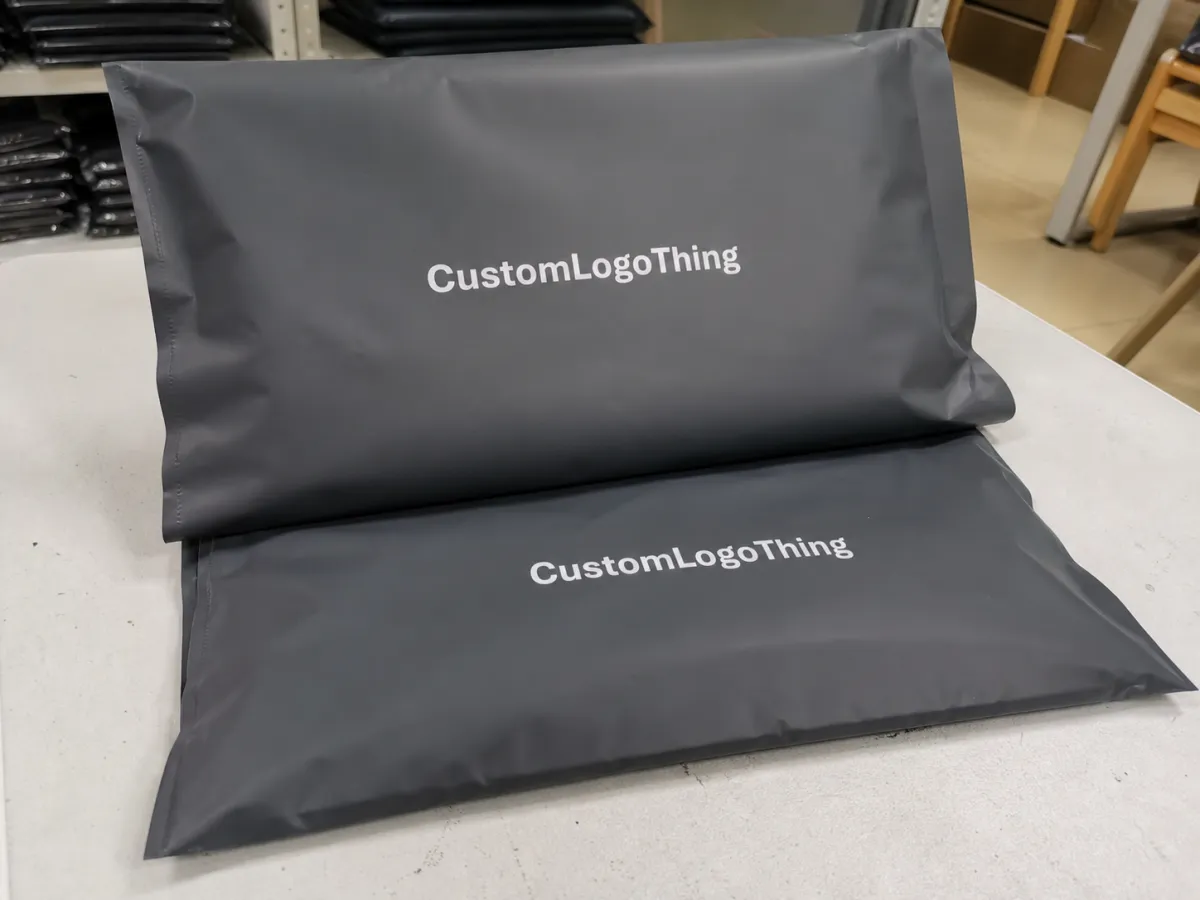
A matte, soft-feel mailer can make a shipped merch order look more deliberate than a standard glossy bag. That matters because event packaging often has to create a premium feel quickly, before the recipient even opens it. Soft-touch finishes hide fingerprints and glare, which helps in retail booths, check-in tables, and warehouse handling.
The result is a shift in perception: a plain mailer says the order was shipped, while a soft-touch mailer suggests the package was planned. For apparel, notebooks, and small promo bundles, that presentation can raise the perceived value without adding a rigid box or extra filler.
The limit is important. Soft-touch improves appearance and hand feel, but it does not fix weak film, poor sealing, or sharp contents that can puncture thin material. Buyers should treat the finish as a presentation choice, not a substitute for structural performance.
For orders that need both presentation and transit protection, references from Packaging School and testing guidance from ISTA can help frame the requirements before quoting.
Material and print details that change the order
Soft-touch mailers are usually based on poly film with a tactile surface treatment or laminate. Suppliers describe that finish in different ways, so a sample matters more than the wording in the quote. Similar-looking finishes can feel different once ink coverage, opacity, and thickness are added.
The film itself does the heavy lifting. It affects puncture resistance, seam strength, and how the bag handles in bins, carts, and last-mile delivery. If the contents will be handled more than once, the base material matters more than the mockup.
Ask for the specs behind the sales language: gauge, adhesive type, opacity, print method, and whether the finish is coated or laminated. Clear answers here usually mean a cleaner quote and fewer surprises later.
Print choice changes cost and appearance. One-color logos are usually simpler than full-bleed art. Printing on one side is cheaper than wrapping the entire bag. Heavy ink near seams can create registration problems, and large dark solids can show inconsistencies if production control is weak.
For event merch, a restrained design often works best. A clean mark on a soft-touch surface usually feels more premium than a crowded layout. More ink is not always better; sometimes it only adds cost and visual noise.
Before approving art, confirm a few basics:
- Flat or gusseted construction?
- Peel-and-seal, double-seal, or tamper-evident closure?
- How opaque is the film under bright light?
- Will the print scuff in bulk cartons?
- Can the printer hold color across large solid areas?
When labels, inserts, tissue, and outer packaging all need to match, it can help to source the set together so the finish and dimensions stay aligned. If that is part of the job, a broader Custom Packaging Products order may simplify the setup. If the order will be reordered during the season, keep the spec sheet attached to your Custom Poly Mailers file so the next run does not drift.
Size, gauge, closure, and branding specs to lock in
Size should be based on the packed bundle, not the product alone. A folded tee plus a card insert is one thing; add a sticker sheet, cap, or hangtag pack and the package changes. Too-tight sizing stresses seals and creates bulges. Too much extra space makes the mailer look sloppy and lets contents shift in transit.
For light event merch, film thickness often lands around 2.5 mil to 4 mil. Heavier kits may need more material, especially if they include hard edges or accessories. Thicker film can improve handling and reduce puncture risk, but it also raises unit cost and freight weight. That tradeoff is worth reviewing before approval.
Closure style affects both speed and customer experience. Peel-and-seal is common because it is fast. A double-seal option can help with returns or secondary use. Tear strips improve opening. Tamper-evident closures add security for sensitive or higher-value shipments. These details may seem small, but they influence labor and perceived quality.
Branding should be locked before quoting. Send the right file format, confirm Pantone or PMS targets, and define bleed and safe-area rules. If the artwork wraps around the bag, ask where the seam breaks sit. If the design uses a dark background or full opacity, confirm the contents stay hidden under strong light.
- Packed size: measure the final bundle, not the garment alone.
- Gauge: match film weight to product weight and handling risk.
- Closure: choose based on speed, security, and reusability.
- Artwork: confirm bleed, safe area, color targets, and seam placement.
Event merch soft touch poly mailers unit cost review
This is where the quote either holds up or falls apart. In an event merch soft touch poly mailers unit cost review, the main cost drivers are size, film gauge, print coverage, finish treatment, quantity, and shipping terms. The lowest quote on paper is not always the lowest landed cost. If the bag needs reproofing, freight is excluded, or seals are inconsistent, the savings disappear quickly.
At low quantities, setup and tooling make premium finishes look expensive. That is normal. Fixed costs are spread across fewer pieces, so the unit price rises. As quantities increase, the per-piece price usually drops. In some cases, moving from 1,000 to 5,000 pieces changes the economics enough to justify holding stock for future events.
| Mailer option | Typical unit cost at 5,000 | Best use | What drives the price |
|---|---|---|---|
| Plain stock poly mailer | $0.08-$0.14 | Basic apparel fulfillment | Size and film gauge only |
| Printed standard poly mailer | $0.12-$0.22 | Branded shipments with modest presentation goals | Print coverage, color count, and setup charges |
| Soft-touch printed poly mailer | $0.18-$0.34 | Event merch, VIP kits, sponsor drops | Finish, artwork complexity, and MOQ |
The gap between options is often smaller than expected once freight and labor are included. A plain mailer can seem cheaper until the package arrives looking generic or gets damaged in transit. A soft-touch mailer should justify its premium by improving presentation and reducing the chance that the package feels disposable.
Watch for hidden charges. Ask whether the quote includes plates, samples, proofing, rush fees, split shipments, palletization, or multiple destinations. Some suppliers quote the bag only and add corrections later. Others include a cleaner landed price but require a larger minimum order. Comparing unit price without comparing the full landed total is where budgets get blindsided.
Timing also matters. A small premium can become significant when multiplied across several drops or rush restocks. A serious cost review looks at the whole run, not a single line item.
2026 pricing trends and new mailer options
For 2026, soft-touch pricing is being shaped by three practical shifts: more buyers want lower-gloss premium packaging, more suppliers are offering recycled-content film blends, and more event teams are ordering smaller, faster replenishment runs instead of one oversized annual buy. In my own quote reviews this year, the best pricing usually came from buyers who shared final dimensions, artwork, and ship date up front. That reduced proof revisions and kept the event merch soft touch poly mailers unit cost review close to the initial estimate.
Updated market pricing in 2026 is also a little more segmented. Standard printed mailers still compete aggressively, but soft-touch options with recycled content or upgraded adhesives typically carry a modest premium. Buyers can expect the finish itself to add value, but not always a huge jump if the supplier already runs a similar laminate on press. In many cases, the bigger cost swing comes from MOQ and freight zone, not the coating.
Newer options worth asking about include post-consumer recycled poly blends, reduced-ink minimalist layouts, and return-ready double-seal formats. Some suppliers also offer soft-touch mailers with a subtle satin finish rather than a fully matte hand feel, which can help control cost while keeping the premium look. If sustainability is part of the brief, ask whether the film can be made with recycled content without compromising seal strength or opacity.
These options matter because event merch is getting less tolerant of waste. Teams want packaging that photographs well, ships safely, and does not create a pile of one-off extras after the event. A good event merch soft touch poly mailers unit cost review should now include finish, recyclability goals, and reorder flexibility together instead of treating them as separate decisions.
Production steps, proofing, and lead time expectations
The production path is usually quote request, artwork review, digital proof, approval, production, inspection, and shipping. Most delays come from missing information early or late changes near approval. If the quote is based on incomplete specs, the proof changes. If the proof changes, the schedule moves. If the schedule moves late, freight gets more expensive.
Artwork is the usual culprit. Missing files, unclear color targets, logo-size changes, and unconfirmed ship-to details can all add days. The slow part is often not the factory; it is the back-and-forth during approval.
Many custom runs land in the 12-18 business day range after proof approval. Complex art, large quantities, seasonal congestion, or special film requests can extend that. Rush production may be available, but it usually leaves less room for mistakes. If the package has to arrive by a fixed event date, build in a buffer.
Shipping time is separate from factory time. A run can finish on schedule and still miss the event if freight is booked too late. That is especially true for multi-location drops or orders moving through a fulfillment center before the event.
Do not skip the approvals that protect the expensive parts: size, finish, logo placement, and ship-to details. A clean proof is cheaper than a remake.
If the mailer is a repeat item, keeping it tied to a familiar Custom Poly Mailers workflow can make reorders easier and reduce the chance of spec drift.
What makes a supplier reliable for repeat event drops
The real test is not whether a supplier can produce one good run. It is whether the second and third runs match the first. Color consistency, stable film quality, dependable seals, and clean reorder handling matter more than a polished quote.
Sampling is important because soft-touch finish can read differently in person than in a proof. A sample also shows whether the seal feels secure, whether the surface scuffs too easily, and whether the opacity is strong enough. For recurring event programs, the sample becomes the baseline.
Reliable suppliers tend to be clear and predictable. They quote plainly, give realistic lead times, answer proof questions quickly, and explain freight without hiding it behind vague line items. They should also be able to tell you whether the run uses stock film or a more custom build.
That reliability saves more than money. One bad seal creates service tickets. One off-color batch creates rework. One damaged shipment can force a rush replacement that wipes out the savings from the original order.
Before placing a repeat order, ask whether the supplier can pull archived artwork, whether the film spec will stay the same, and whether any manufacturing changes will be flagged before production starts. Those are the details that keep event drops from turning into guesswork.
Next steps for an accurate quote and order plan
If you want a quote that is actually usable, send the packed dimensions, quantity target, artwork file, finish preference, ship-to location, and event date together. That reduces back-and-forth and makes landed unit cost easier to compare. If the order is still flexible, ask for at least two or three quantity breaks.
Ask for a proof or sample before approval, especially if the order depends on texture, brand color, or a specific unboxing feel. A digital proof can show the logo, but it cannot show how the finish feels or how the film handles in bulk.
The cleanest decision framework is simple: does the mailer support the event, protect the contents, and stay inside the real landed budget after freight and setup are included? If yes, the premium is easier to defend. If not, the upgrade is mostly decoration with a higher invoice.
What affects soft-touch poly mailer pricing for event merch most?
Size, film thickness, print coverage, and the soft-touch finish are the main drivers. Quantity breaks usually matter more than minor design changes once you move beyond the minimum order, and freight plus proofing can shift landed cost more than buyers expect.
How do I choose the right size for event merch mailers?
Measure the final packed bundle, not the garment alone. Allow room for inserts, folded tees, or promo cards so the seal closes cleanly, and ask for a sample recommendation if the kit includes mixed merchandise or odd shapes.
Are soft-touch poly mailers durable enough for shipping apparel?
Yes, if the film gauge and seal match the product weight and handling risk. Heavier apparel or multi-item kits may need thicker film or stronger adhesive, so confirm puncture resistance and seal performance before approval.
What is a normal MOQ for custom event merch mailers?
MOQ depends on size, print complexity, and whether the order uses stock film or a more custom build. Simple printed runs often start lower than fully customized finishes, so compare more than one quantity break before deciding.
How long does it take to produce custom soft-touch poly mailers?
Timeline depends on proof approval speed, order size, and print setup requirements. Many custom runs land in the 12-18 business day range after approval, but artwork delays and seasonal congestion can extend that.


