A coffee roaster pom pom beanies Unit Cost Review starts with whether the hat will sell as retail, not just whether it will keep someone warm. For roasters, the beanie has to read well on a shelf, support the brand, and still leave room for margin after decoration, packaging, and freight.
That is why buyers should think in terms of spec, cost, MOQ, lead time, and inspection from the start. If the design is unclear, the quote will be too. If the decoration is overcomplicated, the unit cost goes up quickly. If the fit is off, the product stops behaving like a retail piece.
Why Roaster Merch Sells on Shelf Appeal Not Just Warmth
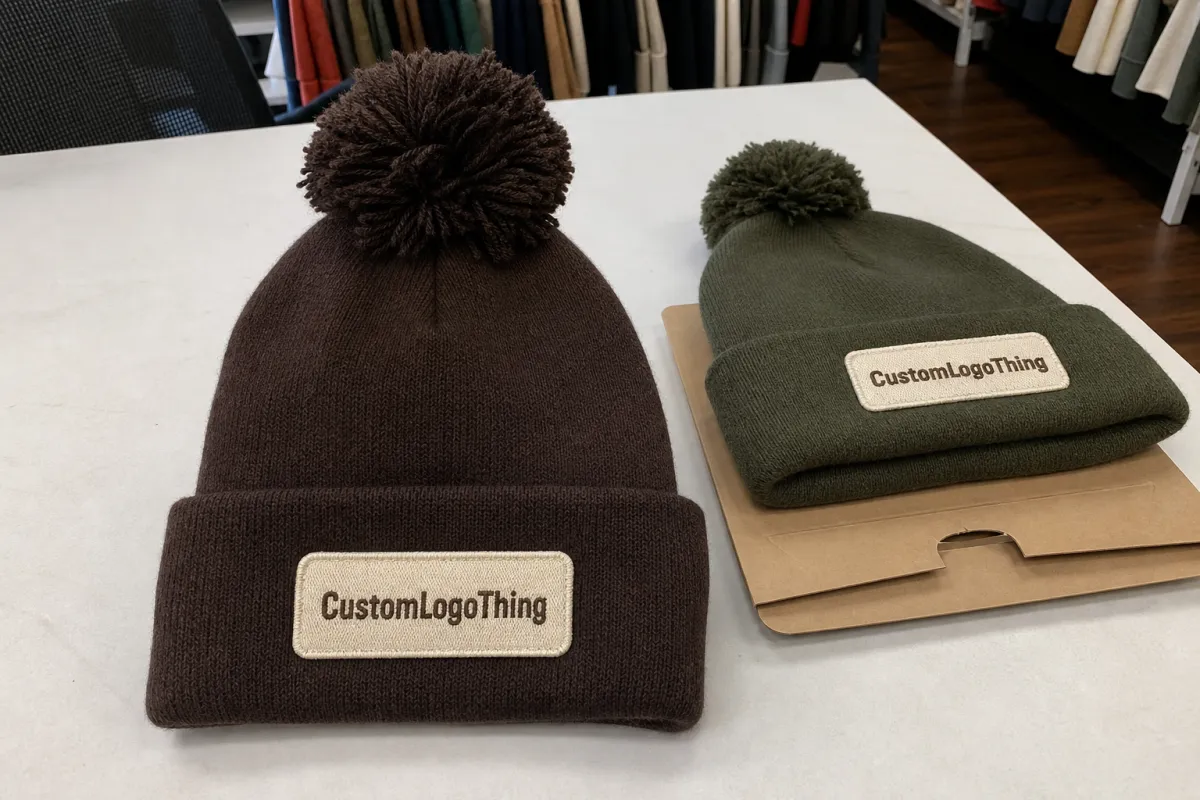
A pom pom beanie earns attention fast, but only if the proportions are right. Cuff height, knit texture, and logo contrast matter more than the basic idea of a winter hat. Buyers are not selling insulation; they are selling a product that looks finished on a peg wall or near the register.
Roasters usually get better sell-through when the beanie feels like a real retail item. That means a cuff that sits flat, a crown that holds its shape, and enough contrast for the logo to read without effort. Small marks buried in dark yarn tend to disappear, which wastes decoration space and weakens the shelf presentation.
Display affects pricing too. A hat that photographs cleanly and looks intentional in person can support a better markup and fewer markdowns later. A beanie that looks like a generic promo item usually gets treated like one, which can hurt sell-through and inflate inventory risk.
Product Details That Make the Beanie Feel Retail-Ready
The strongest beanies are usually simple, but the details have to be controlled. Crown shape determines whether the hat feels structured or floppy. Cuff height determines how much room you have for decoration. A taller cuff helps with embroidery or a patch; a shorter cuff can work if the logo is small and the knit is dense.
Decoration choice should follow the art. Embroidery works for bold marks. Woven patches handle detail and small type better. Leather patches feel premium but can lean outdoorsy. A label on the cuff is tidy and economical. Each option changes both the look and the cost, so the decoration method should be chosen before the quote is finalized.
Pompom style matters more than many buyers expect. A single-color pom pom is usually the safest and least expensive option. A multicolor pom pom can echo the brand palette, but it can also push the product toward novelty. Oversized pompoms create a stronger statement, yet they can make a small crown look unbalanced.
Packaging is part of the product, not an afterthought. A hang tag, belly band, or simple polybag with a branded sticker can improve perceived value quickly. For retail, folded presentation matters. For wholesale, the packout still has to protect the cuff and pom pom so the hat arrives in sellable shape.
Quality checks should confirm logo size, patch placement, cuff width, and pom pom diameter before bulk production starts. On knit goods, a few millimeters can change the final look more than buyers expect, especially when the mark is small or the knit is loose.
For comparison shopping, the options below usually have the clearest cost and merchandising impact.
| Option | Look | Typical Cost Impact | Best Use |
|---|---|---|---|
| Embroidery on cuff | Clean, classic, simple | Lowest to moderate | Bold logos, short runs |
| Woven patch | Sharper detail, more retail-ready | Moderate | Small text, detailed marks |
| Leather patch | Premium, outdoorsy | Moderate to higher | Simple emblems, upscale merch |
| Branded hang tag + band | Stronger shelf presentation | Low to moderate | Retail checkout, gifting |
Fabric, Knit, and Fit Specifications Buyers Should Lock First
Fabric is the base of the quote, so it should be decided early. Acrylic is usually the easiest way to control unit cost and MOQs. It is consistent, warm enough for most retail use, and tends to price cleanly. A wool blend feels more premium but increases material cost and care sensitivity. Recycled yarn can support a sustainability message, although color and texture may be less predictable.
Knit gauge changes the product more than many buyers expect. A tighter knit feels denser and more substantial. A looser knit feels softer and more casual. Thicker beanies often look more premium, but they also use more material and raise the cost per piece. The right choice depends on whether the hat is meant for colder climates, everyday retail wear, or staff use.
Fit has to be locked before quoting. Most adult beanies are one-size-fits-most, but cuff depth, crown height, and stretch recovery decide whether the hat sits correctly. A shallow cuff can make the logo zone too tight. A hat that stretches out and does not recover will create complaints after one season.
Fiber content and finishing should also be confirmed. A 100% acrylic beanie is usually easier to care for and more forgiving in retail. A wool blend may require more careful labeling. If the product is going through retail, the supplier should confirm care labels, fiber content, and origin marking before bulk starts.
Color matching belongs in the first round of spec review. If yarn dyeing needs Pantone references, send them upfront. If stock yarn colors are acceptable, ask for swatches or standard references before approval. When the beanie has to match coffee bag ink or a seasonal palette, the packaging and garment references should be sent together.
Shipping and packing should not be ignored either. Cartons should hold shape, folding should be consistent, and the pom pom should not get crushed into a permanent tilt. Knitwear is durable, but careless packout still makes it arrive looking tired.
Coffee Roaster Pom Pom Beanies Unit Cost Review
Price is usually driven by five inputs: yarn choice, decoration method, pom pom complexity, label work, and packaging. If a quote looks unusually cheap, one of those items is probably missing. Buyers should compare complete specs, not just headline numbers.
Bulk pricing improves as quantity rises, but the biggest drop usually happens between the smallest MOQ and a mid-range run. After that, the savings flatten. A clean spec sheet saves more money than arguing over tiny logo changes.
| Quantity | Typical Unit Cost | Setup / Notes | Buyer Fit |
|---|---|---|---|
| 100 units | $4.80-$7.50 | Higher setup charges, sample fees may be separate | Test run, staff drop, small merch launch |
| 300 units | $3.20-$5.10 | Better spread on labor and decoration | First retail order, moderate seasonal volume |
| 500 units | $2.70-$4.20 | Usually steadier pricing and better decoration flexibility | Proven style, retail wall, wholesale program |
| 1,000 units | $2.10-$3.30 | Best cost per piece, but more inventory risk | Large launch, multi-location rollout |
Those ranges assume a typical spec: acrylic knit, one decoration method, a standard pom pom, and basic packout. Add a woven patch, custom hang tag, or specialty label and the number moves. Tooling fees can apply to custom leather patch dies, woven label setups, or custom tag cuts. Setup charges usually cover art prep, machine programming, or stitch programming.
The landed cost matters more than the ex-factory number. A beanie at $3.10 with weak packaging may land worse than one at $3.45 with better presentation and fewer revision rounds. Freight, duties, brokerage, and split delivery can erase a low headline price quickly.
That is why a useful cost review should include sample cost, decoration, packaging, transit, and inventory risk. A slightly higher per-unit cost can still be the better buy if the spec is cleaner and the final product is easier to sell.
Production Process and Lead Time From Art File to Dock
The production flow is straightforward on paper: artwork intake, digital proof, sample or strike-off, bulk production, packing, and shipping. The fastest orders are the ones where the buyer answers basic questions before the first proof goes out.
For standard runs, sample timing is often 5-10 business days once the artwork is usable. Bulk production commonly takes 12-20 business days after approval, with longer timelines for custom yarn dyeing, special labels, or more complex patch work. Freight is separate, so ship date and arrival date should not be treated as the same thing.
Delays usually happen in the same places: unclear artwork, slow approvals, sample revisions, and late freight booking. Tiny logo text, vague placement notes, and color references like “close enough” are common causes. If the buyer can decide the decoration and color system early, the schedule usually holds better.
Seasonal planning matters too. If the beanies need to be on shelf before cold weather hits, the project should start 8-12 weeks ahead of launch. Less time can work, but it increases the chance of compromise on spec or delivery.
Quality-control checkpoints should happen more than once. Check the sample, verify the bulk against the approved sample, and confirm packout before shipment. The most useful checks are the boring ones: stitch density, patch placement, cuff width, color consistency, and measurement against the approved spec.
What Makes Our Roaster Beanie Program Easier to Reorder
Reorders work best when the original spec is saved clearly. Archived approvals, color references, and label details prevent the second run from turning into a new project. If the first beanie sold well, the second run should use the same knit, trim, and placement without extra guesswork.
That matters for coffee roasters using beanies as both staff wear and retail merch. Staff pieces need consistency and durability. Retail pieces need presentation. A good reorder system covers both without changing the product every time.
Starting with a smaller run can also be smart. A 100- or 300-unit test protects margin and limits inventory risk. If the style proves itself, the reorder can scale without changing the spec. That is the point where the program becomes easier to manage.
Quote history should stay clean. If the supplier keeps the original artwork, placement notes, packaging details, and label callouts, the buyer does not have to rebuild the order from scratch. The second run should be simpler than the first, not more complicated.
What to Send for an Accurate Quote and Faster Approval
Send the logo file in a clean format, the decoration method you want, the quantity by color, and the exact placement. A screenshot with vague notes is not enough for a reliable quote.
Include your target unit price, delivery location, and deadline. A beanie going to one warehouse is not the same as a beanie split across multiple stores, so freight and carton counts change the math.
Also send packaging requirements early. If you want a hang tag, belly band, or specific polybag, state it in the first brief. If you need a sample before bulk production, ask up front so the schedule reflects that step.
Here is the fast checklist:
- Final logo file or vector art
- Decoration choice: embroidery, patch, or label
- Quantity split by color and size, if relevant
- Target unit cost and total budget
- Delivery date and shipping destination
- Packaging, hang tag, or polybag requirements
- Sample approval before bulk production
If the hat has to match coffee bag ink, a seasonal palette, or a brand refresh, send the references together. Clear preferences beat vague inspiration every time. From there, compare identical quotes: same yarn, same decoration, same packaging, same freight assumption.
What affects coffee roaster pom pom beanie pricing the most?
Yarn choice, decoration method, and packaging usually move the price more than logo size does. Lower quantities cost more per piece because setup and labor are spread across fewer units. If the quote does not show those pieces clearly, there is usually a catch hiding somewhere.
What MOQ should I expect for custom pom pom beanies?
A common range is 100 to 300 units, with better pricing once you move past the smallest run. Lower MOQs are possible, but unit cost usually climbs fast unless the spec stays simple. Stock yarn colors and one decoration method help keep the order manageable.
How long does production usually take after artwork approval?
Sample timing is often 5-10 business days, and bulk production is commonly 12-20 business days after approval. Custom colors or labels can extend that. Freight time is separate, so buyers should treat ship date and arrival date as different steps.
Which decoration method works best on a coffee shop pom pom beanie?
Embroidery works for simple marks, while woven or leather patches handle detail better. Tiny text is a bad idea on knitwear because it can fill in or disappear. Keep the mark bold so it reads from across the counter and still looks clean on a retail wall.
How do I make sure a reorder matches the first beanie run?
Keep the approved spec sheet, color references, and label details from the first order. Ask the supplier to archive the production record so the second run follows the same knit, trim, and placement. If the first run used a different yarn lot or patch size, document that too.
The details that matter most are usually the boring ones: fit, finish, packaging, and landed cost. That is what separates a solid retail piece from a hat that just exists. For most buyers, a careful coffee roaster pom pom beanies Unit Cost Review is the difference between a seasonal win and a box of unsold inventory.

