Event merch trucker caps Sample Checklist for Buyers. The value is not in checking a box; it is in catching the issues a render cannot show. A mockup can confirm logo placement, but it cannot tell you whether the crown sits too tall, the mesh feels flimsy, the sweatband feels scratchy, or the decoration starts to distort once it crosses a seam. Those details matter when the cap has to look right in photos, survive a long event day, and still feel worth handing out.
Trucker caps are more sensitive than they look. Shape, fit, front-panel structure, mesh density, closure type, and decoration method all interact. A cap built with a 260-300 gsm cotton twill front behaves differently from one using a 100% polyester foam front or recycled polyester mesh. Embroidery, woven patches, PVC patches, screen print, and heat transfer each land differently on a curved panel. A design that looks clean on-screen can shift once the factory applies it to an actual cap body, especially around the center seam and the transition from crown to brim. The result is simple: a physical sample gives buyers the real information they need before production money is spent.
The business case is just as practical. One weak sample can trigger a second round, push the launch past the event date, or lock the team into an order that technically matches the art but still feels off in person. Sampling is a small cost compared with a missed window or a stack of caps nobody wants to wear. A good first sample also protects the order against avoidable rework such as color corrections, patch remakes, logo repositioning, or switching from a 6-panel build to a 5-panel build after approvals have already started.
Event merch trucker caps sample checklist: why a sample beats a mockup
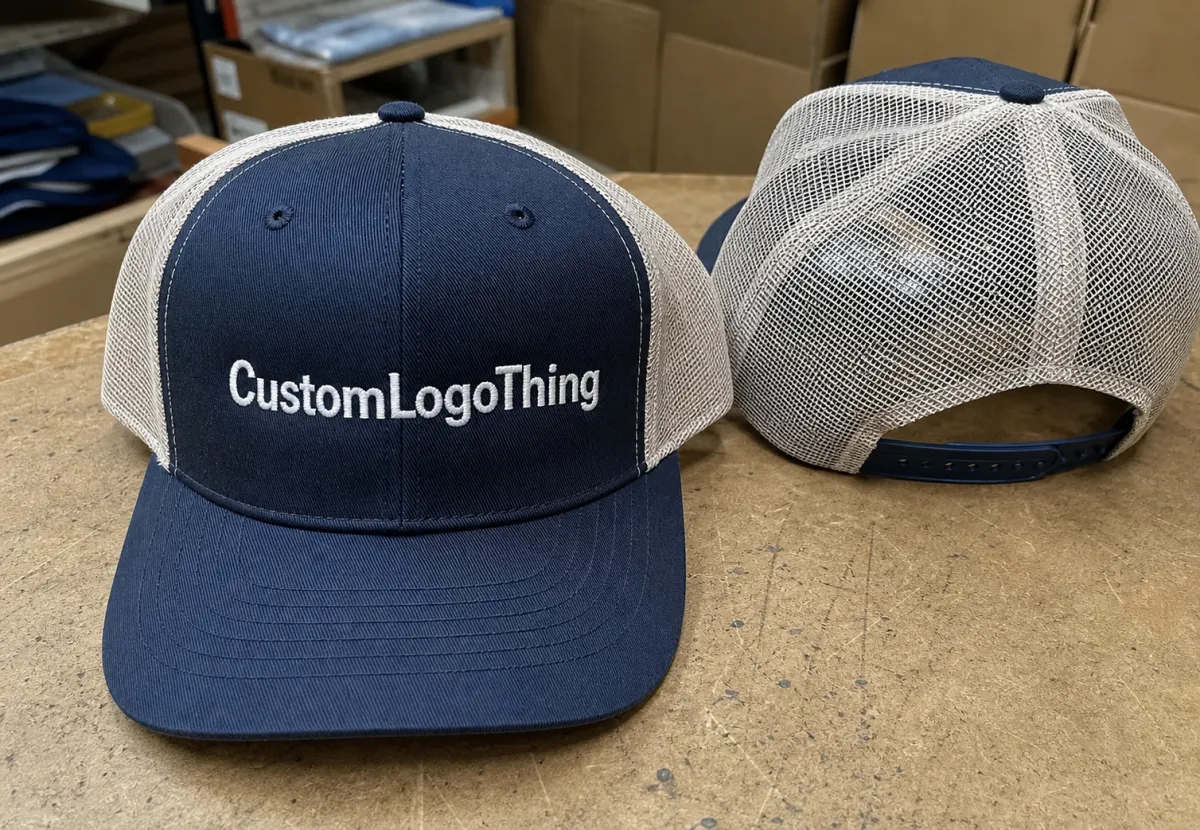
A mockup shows intent. A sample shows behavior. That difference matters most with trucker caps because several variables affect the finished result at the same time: crown depth, brim curve, front-panel stiffness, mesh density, and closure type all change how the cap fits and photographs. A solid sample also reveals whether the stitching density, patch edge finish, and sweatband placement stay consistent once the cap is worn, folded, and handled on site.
A foam-front trucker behaves differently from a structured cotton twill front with mesh sides. Embroidery can pull lighter materials inward, especially on soft foam fronts and thin recycled polyester panels. A woven patch may preserve detail better, but it also changes how the front panel sits. Heat transfer can look clean on a proof and then distort once it is applied over a curved seam or a seam intersection. The sample reveals those tradeoffs quickly and lets the buyer choose the right balance of appearance, hand feel, and durability.
Use case matters too. A cap for a registration table giveaway does not need the same comfort and wear durability as a cap for a field crew or stage team. A sponsor activation may only need the logo to read clearly at arm's length, while a staff cap needs to hold up through sun, movement, and repeated handling. For field wear, details like breathable mesh, a reinforced sweatband, and a more secure snapback or hook-and-loop closure become more important than for a one-hour handout. A sample tells you whether the build matches that reality.
Practical rule: if the cap needs to look right in photos, fit different head shapes, and hold up under mixed indoor/outdoor lighting, a sample is the cheapest way to catch structural mismatches before production.
The same quality-control logic used in packaging and shipping testing, including the verification approach described by ISTA, applies here: review the actual item before you commit to volume. For branded caps, that usually means checking the finished unit against the approved spec sheet, not just against the art file.
How the process and timeline work from proof to approval
Sampling usually follows a predictable path. Artwork comes in, a proof gets issued, the sample is built, it ships, and the buyer reviews it for approval or revision. A typical sample workflow is: 1) receive vector art or a high-resolution logo file, 2) confirm cap body, color, and decoration method, 3) create a digital proof or tech pack, 4) produce the physical sample, 5) inspect and approve or revise, and 6) release to bulk production. The longest delays usually come from small gaps in the brief, not from the actual sewing or decoration. Missing vector art, a vague Pantone reference, or a last-minute switch from embroidery to a woven patch can reset the timeline.
Domestic sampling can often move in about 5-10 business days when the blank is in stock and the decoration is straightforward. Offshore sampling commonly runs 10-18 business days before freight, and that assumes the base cap is already available. For more complex builds, such as a custom 6-panel crown, recycled polyester mesh, or a molded PVC patch, the timeline can stretch to 18-22 business days before the sample is in hand. Express service can shorten the build, but it does not eliminate review time, packing time, or shipping time. If more than one department needs to sign off, add cushion for another round of feedback.
Before production starts, get written approval on the details that actually drive the order: artwork placement, color, decoration method, quantity, and packaging or labeling. If the caps need polybags, size stickers, hangtags, carton markings, or retail-style folding, those instructions should be in the approval record before the sample is signed off. Fixing them later adds cost and time. If the factory is using certifications in the supply chain, ask for the document set up front: OEKO-TEX Standard 100 for components that touch skin, GOTS for organic cotton fabric, GRS for recycled polyester mesh or recycled snaps, and WRAP or BSCI for social compliance documentation where relevant.
What drives cost, pricing, and MOQ for custom trucker caps
Sample pricing and production pricing should be treated separately. A sample quote often includes the blank cap, decoration setup, labor, freight, and sometimes a revision fee if the first proof changes. Bulk pricing spreads those setup costs over volume, so the unit price drops as quantity rises. Comparing the two as if they were the same number usually creates confusion.
The main cost buckets are easy to track:
| Cost bucket | What it covers | Typical buyer impact |
|---|---|---|
| Blank cap | Base trucker cap, stock or sourced | Higher when the exact panel shape, mesh type, or closure is not on hand |
| Decoration setup | Digitizing, screen setup, patch tooling, or transfer prep | Often the largest first-run cost driver, especially for embroidered or molded details |
| Sample fee | One-off build for approval | Usually higher per piece than production |
| Freight | Domestic or international shipping | Can exceed decoration cost on a single sample |
| Revision cost | Changes after the first proof or sample | Adds time and can reset the schedule |
For a decorated event sample, a working range of about $35-$120 before freight is common, with complexity pushing the price toward the high end. Simple embroidery usually costs less than a woven patch, PVC patch, or multicolor transfer. For production, a practical reference point is about $2.50-$4.00 per unit at 500 MOQ for a straightforward embroidered trucker cap, and about $1.80-$3.20 per unit at 1,000 MOQ when the same body and decoration are repeated. More custom builds, such as a recycled polyester mesh crown, a branded woven label, or a molded patch, often add $0.35-$1.50 per cap depending on size, colors, and application method.
MOQ depends on the blank, the decoration method, and how much of the cap is custom. A stocked cap with standard embroidery may support a lower minimum, often around 100-300 units. A custom crown shape, specialty mesh, or molded patch usually raises MOQ because the factory cannot reuse the setup as widely; those programs often start around 300-500 units, and fully custom builds can move to 500-1,000 units or more. When quotes are broken into line items, the buyer can see whether the increase is coming from the blank, the logo treatment, the closure, or shipping. That makes the decision clearer: simplify the build, increase the quantity, or accept the premium because the event needs a more specific look.
The right choice is usually the one that protects the deadline and still gives the team a cap people will actually wear. If a premium finish is important, it is often worth paying more for a tighter mesh, a cleaner patch edge, or a better sweatband rather than trying to save a few cents on the base cap.
Fit, fabric, and decoration details that determine sample quality
A clean decoration does not rescue a bad cap body. Fit comes first. Crown height affects how the cap reads on different heads. A low-profile cap can feel close to the head and photograph more compactly, while a medium- or high-profile crown can create a bigger brand area and more space for a logo. Front-panel stiffness affects whether the logo sits flat or bows. Brim curve changes the profile in photos. Closure style matters too; snapback, strapback, and hook-and-loop all adjust differently when caps are handed out quickly on an event floor.
Fabric changes the feel more than many buyers expect. Foam-front truckers create a bold silhouette and a strong print surface, but they can run warmer than softer polyester-front versions. A 100% cotton twill front gives a more natural hand feel and may be a better fit for premium merchandising, while a 100% polyester front is often easier to keep consistent in bulk. Mesh back panels improve airflow, yet mesh density varies enough that two caps can feel like different products. Tighter 3D mesh usually reads more premium and holds shape better. Looser 2D mesh may breathe more easily, but it can also look cheaper under close inspection. The sweatband matters as well; a brushed tricot or terry sweatband is more comfortable for longer wear days than a thin basic tape finish.
Decoration method drives both appearance and durability. Embroidery is familiar and durable, but dense stitch counts can pull lighter fabrics. A typical cap logo may use a 4,000-8,000 stitch range, while a larger front design can climb higher and require stabilizer to prevent puckering. Woven patches preserve fine detail better than embroidery on small logos or thin lettering. PVC patches work for bold shapes and outdoor-facing branding, though they add weight and can feel stiff if oversized. Screen print can be efficient for simple artwork, but it is less forgiving on curved panels. Heat transfer gives crisp color and fast turnaround, yet it needs careful temperature control, often around 160-180 C, and consistent dwell time so the adhesive bonds without glossing or warping the panel. For production consistency, many factories use Tajima or Barudan multi-needle embroidery machines, laser cutters for patch shapes, heat presses for transfers, and 5-thread overlock machines to finish seams cleanly.
If the order uses certified materials, ask for the specifics in writing. For example, organic cotton twill can be certified to GOTS, recycled polyester mesh can qualify under GRS, and skin-contact components can be tested to OEKO-TEX Standard 100. Social compliance documents such as WRAP or BSCI are also useful when the buyer needs factory-level process verification rather than just a product claim.
Sample review checklist for buyers and merch teams
Start with the obvious and work toward the technical. Lay the sample next to the approved art and confirm logo scale, placement, and color first. Then check the cap body for crown depth, front-panel shape, seam alignment, brim curve, and closure function. A good review is not just visual; it also includes hand feel, flex, and wear. The cap should open and close cleanly, sit evenly on the head, and keep the logo centered after several adjustments.
Then move to the construction details. Look at stitch tension, thread trim, seam allowance, and patch edge finish. Check whether embroidery has caused puckering, whether the mesh is aligned evenly from left to right, and whether the sweatband is straight and secure. On a decorated sample, inspect the underside of the front panel for backing, adhesive bleed, loose threads, or exposed stabilizer. If the cap includes a woven label, printed tape, or interior branding, confirm that those elements are clean and readable.
The practical inspection checkpoints are simple: 1) compare the sample against the approved spec sheet, 2) verify the color against a Pantone reference or approved swatch, 3) test the closure 5-10 times, 4) check that the brim is symmetrical and free of warping, 5) confirm the decoration is centered and not crossing a seam in a way that distorts the logo, and 6) document any nonconformance with photos before approval. For bulk programs, an AQL-style final inspection is useful, with special attention to workmanship, measurements, labeling, packing, and carton count.
If the sample passes, ask for a pre-production sample or a top-of-production check on the first run when the order is large or the artwork is critical. That extra checkpoint is often worth it for event launches, retail merchandising, or staff uniforms where consistency matters across every unit.
Common mistakes that slow approvals
The biggest delay is usually not a manufacturing problem; it is a missing decision. Buyers often send art before they decide on decoration method, color reference, cap profile, or packaging. That leaves the factory guessing and creates a sample that is technically useful but not actually approved. The fastest way to avoid this is to send a complete brief with artwork files, Pantone references, target quantity, required certifications, and the intended use case.
Another common mistake is mixing expectations across product types. A 5-panel foam cap, a structured 6-panel cap, and a soft-structured recycled polyester cap will not behave the same way, even if the same logo is used on all three. If the team wants a premium retail feel, say so early and request samples that reflect that goal. If the cap is meant for a giveaway, prioritize speed, legibility, and price instead of overbuilding the crown or overcomplicating the decoration.
Teams also lose time by changing decoration after the proof is approved. Switching from embroidery to a woven patch, or from a woven patch to a PVC patch, can change the unit price, the sample lead time, and the MOQ. A switch from one method to another can also require a new mockup, a new tool, or a new test sample. If the design might change, keep the approval gate open until the team is sure.
Finally, do not ignore packing and label details. If the order needs individual polybags, size stickers, barcode labels, or retail-ready folding, those items should be listed before approval. Fixing packaging after the sample arrives is one of the easiest ways to add a week or more to the schedule.
What to confirm before you place the order and move to production
Before you release the PO, confirm the final spec in writing. The order should include cap body style, fabric composition, mesh type, color codes, decoration method, logo size, placement, sample reference, MOQ, unit price, sample cost, and lead time. If the build uses organic cotton, recycled polyester, or another verified input, ask for the relevant certification scope and validity period so the documentation matches the product claim.
It also helps to confirm the production checkpoints. For example, ask whether the factory will verify the first stitch-out, inspect the first finished cap against the approved sample, and run a final packing check before shipment. If the order is large, a mid-production photo review or in-line inspection can catch issues before they are repeated across the full quantity. That is especially useful when the cap uses multiple materials, like a cotton twill front, polyester mesh back, and embroidered patch.
When all of that is clear, the sample stops being a guessing exercise and becomes a controlled approval step. That is the point: fewer surprises, cleaner production, and a cap that looks intentional when it reaches the event floor.
FAQ
How many sample rounds should I expect? One round is common for straightforward embroidered caps with complete artwork and clear color references. Two rounds are more likely when the decoration method changes, the cap body is custom, or the team needs to compare multiple finishes.
What certifications matter most? OEKO-TEX Standard 100 is useful for components that touch skin, GOTS matters for organic cotton, GRS is relevant for recycled polyester or recycled trims, and WRAP or BSCI are commonly requested for social compliance documentation.
What is a realistic MOQ for custom trucker caps? Stock bodies with basic embroidery may start around 100-300 pieces. More custom builds often start around 300-500 pieces, while fully custom shapes or special patches can require 500-1,000 pieces or more.
How long should I allow for sampling? A simple domestic sample can take 5-10 business days, while offshore sampling is often 10-18 business days. If the build is custom or requires special materials, 18-22 business days is a safer planning window before freight.
What should I inspect on the sample? Check logo placement, color, crown height, brim shape, closure function, stitch quality, patch edges, sweatband comfort, and packing details. If anything looks off, document it before giving approval.
What is a realistic production price? For a straightforward decorated trucker cap, about $2.50-$4.00 per unit at 500 MOQ is a practical planning range, with lower per-unit pricing at 1,000 units and above. Complex patches, recycled materials, or custom bodies can push pricing higher.


