The sample that causes trouble is usually the one that looks finished. It sits flat, the embroidery is centered, the cuff is neat, and the buyer feels the order is basically safe. Then someone tries it on, the cuff folds the wrong way, and the logo ends up too high or too low for anyone standing ten feet away. That is the problem the trade show premium cuffed Beanies Sample Checklist is meant to catch before the order turns expensive.
Trade show beanies do more than keep heads warm. They have to hold shape in fluorescent light, survive repeated handling at a booth, and still read as branded merchandise rather than random winter stock. A sample is not a keepsake. It is a decision tool, and the decision should be based on how the beanie performs on a person, under real lighting, after it has been stretched, folded, and worn a few times.
The failures are rarely dramatic. More often, they are subtle enough to slip past a rushed review: the cuff is slightly too soft, the thread color is technically close but visually off, or the label lands one finger-width too far left. None of those issues looks catastrophic in isolation. Together, they make a premium beanie look merely acceptable, which is not the same thing.
Trade Show Premium Cuffed Beanies Sample Checklist: What Buyers Miss
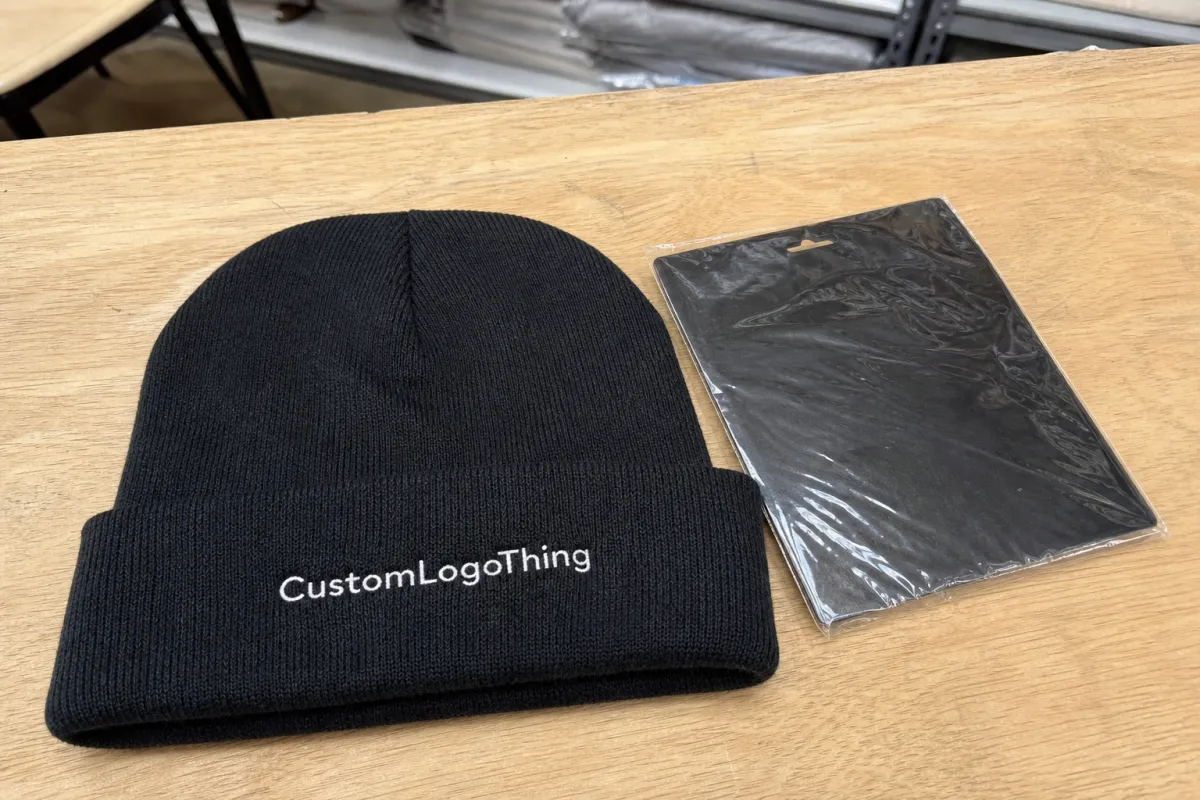
Most buyers begin with yarn content and stop there. That is a start, not an approval method. A strong sample has to prove fit, structure, decoration, and finish at the same time. A hat that feels good in the hand can still look wrong on a head. A logo that is technically accurate can still vanish under show lighting. That gap between "looks fine" and "works on site" is where many orders get into trouble.
The biggest misses are usually practical. A cuff that is half an inch too tall can hide the lower edge of a logo. A knit that feels soft in a sample room may collapse after a few wears. A label can be beautifully made and still sit in a place that makes the whole item look off-center. Trade show items need to be judged as a complete object, not as separate parts arranged on a desk.
A good checklist also prevents memory drift. People in different departments tend to remember different details from the same conversation. Sales remembers the brand color. Operations remembers the due date. Marketing remembers the logo size. The sample becomes the one place where all those decisions have to agree. If they do not agree in writing, they are not approved.
Practical rule: if the beanie only looks right when it is lying flat, keep reviewing. Put it on a real head, stand back, and inspect it under the same kind of light the trade show floor will use.
How Sample Approval Works for Branded Cuffed Beanies
The approval flow is simple on paper and messy in practice. The buyer shares the spec: size target, color direction, logo placement, decoration method, and packaging needs. The supplier responds with a mockup, a blank sample, or both. Then comes a decorated sample, feedback, and sometimes a revised sample before the final pre-production sign-off. Each step matters because each one proves something different.
A digital proof only confirms layout and proportion. A blank physical sample proves fit, stretch, yarn handfeel, and cuff behavior. A decorated sample is the only version that tells you how the final item will actually present. That decorated sample is the one worth debating, because that is what the customer will receive.
| Sample type | What it proves | Typical use | Typical cost impact |
|---|---|---|---|
| Digital mockup | Artwork placement, color direction, basic proportions | Early internal review | Usually free or bundled |
| Blank physical sample | Fit, cuff height, knit feel, stretch recovery | Material and shape approval | $20-$60 plus shipping |
| Decorated sample | Logo size, stitch density, label placement, finish | Final buyer sign-off | $40-$150 depending on setup |
Before anyone signs off, lock down the basics in writing: sizing, cuff height, decoration size, label placement, color references, folding style, and packout. If the order needs a second review cycle, say that early. A late revision is where schedules start slipping.
That discipline matters more with trade show inventory than with general retail merch. Event items move through more hands and have less room for error. A sample that is "close enough" for a warehouse promo box can still miss the mark at a booth where every piece is visible.
For teams that need a clearer approval framework, reference material from Packaging School is useful because it treats approval as a process, not a vibe.
Cost, Pricing, and MOQ: What Changes the Quote
Beanie pricing moves for predictable reasons: material, decoration, labor, and quantity. A premium cuffed beanie with simple embroidery and stock yarn can sit around $4.50-$7.50 per unit at moderate volume. A heavier knit, merino blend, custom label stack, or more complex patch application can push that into the $8-$14 range and sometimes beyond it. That is normal. Good knitwear is not priced like generic promo inventory.
Sample pricing behaves differently from bulk pricing because setup work gets spread across one piece instead of hundreds. A decorated sample can cost $40-$120, sometimes more if the design needs digitizing, patch tooling, or multiple revision rounds. Some suppliers apply part of that fee to the final order, but not all do. Ask before the sample is made, not after the invoice arrives.
MOQ changes the math quickly. A 250-piece run usually gives a much cleaner unit cost than a 50-piece run. Below that, setup and handling start dominating the quote. At 25 pieces, the price can jump sharply because the supplier is still doing the same work for far fewer units.
- Yarn type: Acrylic is usually the least expensive, wool blends and merino cost more, and recycled fibers can sit anywhere in the middle depending on supply.
- Knit complexity: A simple 1x1 rib is easier to produce than specialty gauges, heavier double layers, or mixed-texture knit patterns.
- Decoration method: Flat embroidery is usually cheaper than woven patches, multi-layer labels, or combined decoration systems.
- Packaging: Individual polybags, size stickers, hang tags, and custom inserts add cost and lead time.
- Shipping: Air freight, split shipments, and rush delivery can erase a budget advantage fast.
Hidden costs are where buyers get surprised. Ask about digitizing fees, color matching charges, revision fees, and whether freight is included. If the packaging uses paperboard or insert cards, check whether FSC-certified stock is required for your internal sustainability rules. That is a planning issue, not a branding slogan.
One practical note: a low sample price can sometimes hide a high revision cost. If the first version needs changes, the second round may cost more than the first. That is not unusual; it is simply the cost of adjusting a one-off item to match a real production brief.
Process and Timeline: From Artwork to Delivery
A realistic schedule starts with artwork and ends with delivery, not approval. For a standard premium cuffed beanie, sample preparation often takes 7-14 business days. Complex embroidery, custom patches, or special labels can add more time. Bulk production after approval usually takes another 2-5 weeks. Transit is separate. If the trade show date is fixed, leave room for one correction cycle because that is where the schedule usually gets tested.
The delays that matter most are predictable. Color confirmation takes longer than expected. Stitch density needs adjustment. A label sits too high. Packaging instructions are vague. None of those problems is rare. The good news is that all of them can be controlled if the buyer gives clear written feedback early enough for the supplier to act on it.
Rush orders are possible, but they are not free speed. Faster sample making, priority production, and expedited freight all add cost. What should not be rushed is the review itself. Cutting the review window is how small defects escape into production: crooked labels, weak logo contrast, puckered seams, or cuff dimensions that do not match the approved spec.
Shipping also deserves more attention than it gets. Beanies are soft goods, so they can be packed densely, but dense packing can flatten shape or crease labels if the carton plan is poor. Suppliers that think about carton compression, vibration, and repeat handling usually do better in transit. Packaging tests such as those referenced by ISTA are useful because they treat shipping as part of the product experience.
If the schedule is tight, the safest shortcut is not to skip the decorated sample. Reduce complexity instead. Use a stock yarn, simplify the label stack, or remove secondary packaging. Those choices are easier to manage than trying to recover from a bad approval one week before the event.
Spec-by-Spec Review: Fit, Knit, Color, and Decoration
This is the part that prevents drift. A sample should be checked against specific measurements, not just judged as "nice" or "not nice." Start with the yarn content. Acrylic is common because it is affordable and stable. Wool blends feel warmer and often look richer. Merino adds softness but also adds cost. Recycled fibers can be a good option, though availability and color consistency may vary more than buyers expect.
Then look at construction. For a premium cuffed beanie, a 1x1 rib knit with a double-layer cuff is common because it helps the beanie hold shape without feeling stiff. A heavier gauge can feel substantial, but too much density can create a rigid look. A lighter gauge may be easier to wear, yet it can read less premium if the yarn is thin or the cuff collapses. The right answer depends on the audience and the use case.
Fit should never be approved from a desk photo. Put the sample on at least two or three heads if the event audience is broad. Measure the cuff depth, check the stretch recovery after a minute on head form, and inspect whether the ribbing springs back after it is pulled. If the cuff rolls or twists, the beanie loses the clean shape that makes it suitable for a show floor.
Fit and structure
Check the cuff depth from edge to crown, the body length when worn, and the way the beanie settles at the back of the head. A cuff that is too short can make the logo sit awkwardly high. A cuff that is too tall can crowd the forehead. The issue is not just style; it is visibility. The beanie needs to frame the brand, not fight it.
Also check recovery. Pull the cuff gently, release it, and watch what happens. Good knitwear returns to form without looking stretched or baggy. If the structure relaxes too quickly, the hat can start looking worn out before it has even reached a customer.
Decoration and visibility
Embroidery should be dense enough to hold edges cleanly, but not so dense that it puckers the knit. A patch should sit flat and have trimmed edges that do not fray. A woven label needs to be centered and stitched evenly. For a trade show, the decoration has to read from booth distance. If the brand name disappears until someone is standing right next to the table, the piece is too quiet.
- Logo scale: Large enough to read across an aisle, but not so large that it distorts the cuff.
- Thread contrast: Judge against the actual yarn, not just the screen proof.
- Label placement: Center it intentionally, because even a slight offset changes the whole impression.
- Finish: Confirm folding style, bagging, and tag placement if the beanies ship retail-ready.
Color needs its own review because knitwear behaves differently under different light. Navy can look nearly black indoors. Heather gray can flatten under flash photography. Some brand colors look richer in daylight than they do in a convention hall. Review the sample in natural light and under indoor lighting similar to the show floor. If the supplier is using yarn-dyed material or specialty thread, ask for the exact reference used in production so the result is repeatable.
Finally, inspect the seams and inside finish. Loose yarn tails, uneven stitching, or rough finishing on the inside can be a signal that the factory is rushing the build. Buyers do not always show the inside of a beanie, but the quality still affects durability and comfort. Premium work tends to hold together from the inside out.
Common Mistakes That Blow Up Beanie Orders
Approving from photos alone is the most common error. Lighting, angle, and compression can hide puckering, weak cuff structure, or a decoration that sits too low. A JPEG is useful, but it is not a substitute for a physical sample. That matters even more for trade show inventory because the first impression has to hold up in person.
Ignoring cuff behavior is another classic mistake. The cuff is the billboard. If it stretches out, twists, or refuses to settle, the beanie stops looking premium very quickly. Buyers often focus on logo accuracy and forget that the cuff controls the whole silhouette.
Vague feedback creates rework. "Make it better" is not a production instruction. "Reduce logo width by 8 mm, shift the label 1 cm lower, keep cuff depth at 2.25 inches, and use the same charcoal thread" is an instruction. Suppliers can act on measurements. They cannot act on general discomfort.
Other mistakes are more logistical than visual, but they still cost time and money:
- Not allowing enough time for one revision cycle.
- Skipping a backup sample when several people need sign-off.
- Forgetting how the beanies will be packed, stored, and handed out at the booth.
- Approving a sample that looks good but cannot be repeated cleanly at scale.
Another problem is assuming the decorated sample is the end of the process. It is not. It is the point where the buyer starts asking the right questions. The better the sample review, the less likely the production run will drift from what was promised.
Expert Tips and Next Steps Before You Approve
Do a final comparison under two lighting conditions: daylight and the kind of indoor lighting the show floor will have. That one step catches weak contrast, color shifts, and label glare that an office desk light hides. It takes minutes and can prevent a costly mismatch.
Keep one extra sample if multiple stakeholders are involved or if the event date is non-negotiable. It is cheap insurance. Shipping damage, internal handoff mistakes, and last-minute meetings have a way of consuming the only sample at exactly the wrong time.
Use a written sign-off sheet. It should confirm yarn content, cuff depth, logo size, stitch method, label location, packaging format, unit price, and lead time. Once those items are recorded and accepted, there is less room for "we thought it meant something else" later.
A clean approval sequence usually looks like this:
- Confirm the spec sheet and artwork.
- Review the physical sample on a real head.
- Check the sample under show lighting.
- Approve the quote, timeline, and packaging in writing.
- Keep one approved reference sample for production comparison.
That process is boring in the best possible way. It reduces surprises, limits rework, and gives the supplier a stable target. For a custom knit item with a fixed event date, boring is valuable.
If you need the short version: use the Trade Show Premium Cuffed Beanies sample checklist to compare the sample against the written spec, not against memory, mood, or a thumbnail photo. That is how a branded hat stays a controlled purchase instead of becoming a small manufacturing mystery.
What should be included in a trade show premium cuffed beanies sample checklist?
Include yarn content, cuff height, fit, stitch quality, logo placement, decoration method, color references, packaging, and final approval notes. The goal is to make the sample match the production order in measurable ways, not just in appearance.
How many samples do I need before approving custom cuffed beanies?
Plan for at least one decorated sample, and allow for a revision if the fit, color, or decoration needs adjustment. If several teams need sign-off, a backup sample helps avoid delays caused by shipping or internal handoffs.
What affects the sample price for trade show cuffed beanies?
Decoration complexity, yarn choice, setup work, custom labels, and revision rounds all affect the sample price. Rush timing and expedited shipping can raise it quickly, so ask for a line-item quote before the sample is made.
How long does sampling and production usually take?
A sample often takes about 7-14 business days, depending on decoration and revisions. Production commonly adds 2-5 weeks after approval, and transit should be planned separately if the show date is fixed.
What is the smartest way to approve a beanie sample for a trade show?
Check the beanie on a real head, inspect it under show lighting, and compare it to the written spec sheet. Approve only after the supplier confirms colors, placement, packaging, and timing in writing.


