Event Merch Woven Label Beanies Material Sample Guide Basics: Why Small Changes Matter
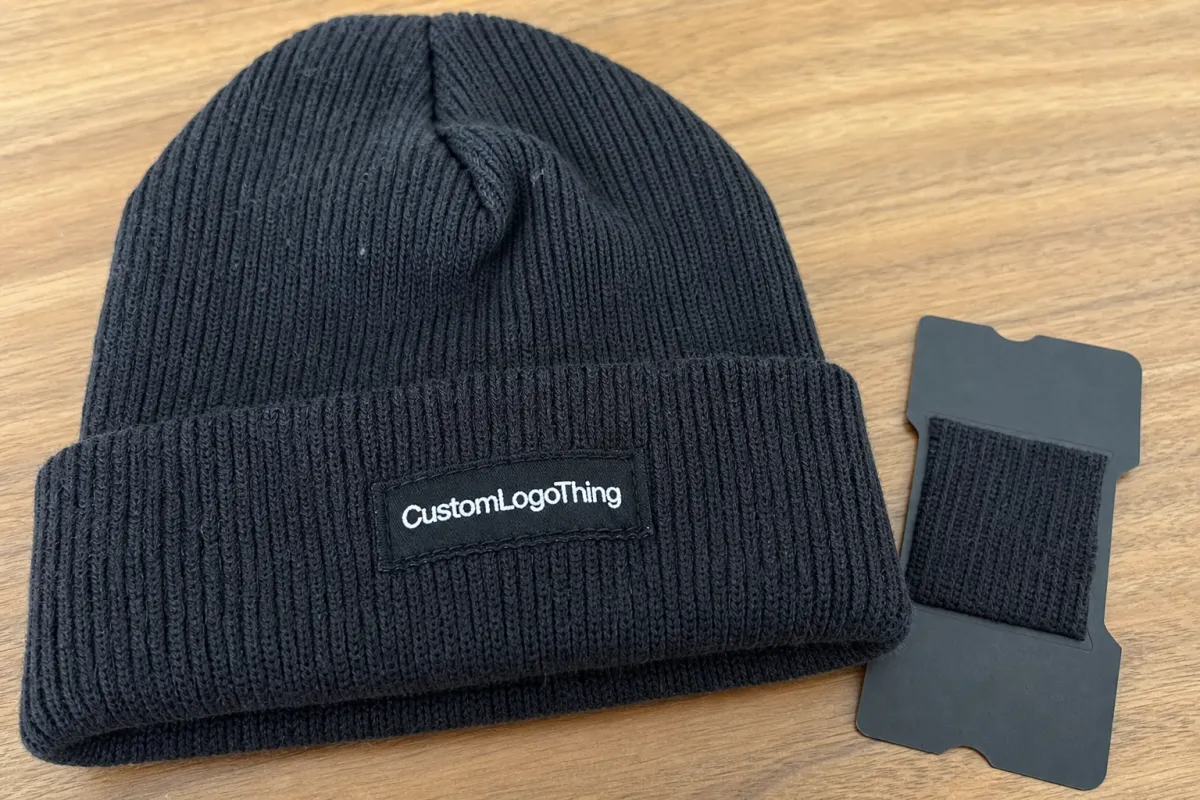
For a launch table, sponsor drop, staff kit, or winter activation, the event merch woven label Beanies Material Sample guide is the part of the process that tells you whether the product will feel polished or disposable. A 2 mm label shift, a looser knit, or a color that warms up under indoor lighting can change how the piece reads in hand.
Mockups only show layout. They do not show seam bulk, stretch recovery, edge scratch, or whether a woven label sits flat after the beanie has been worn for a while. That is the real test. Flat art is not the same thing as a wearable product.
A material sample is the checkpoint for body fabric, knit structure, label construction, and finish before production starts. For event merch, that checkpoint matters because one weak approval can turn into hundreds of flawed units and a missed delivery window. If the product is tied to a fixed event date, the risk is immediate.
The right sample questions are simple: does it fit, does it feel right, and can it be repeated in bulk without drift? If you are comparing trim options, it helps to review related branding pieces like Custom Labels & Tags, because the label often carries the visual weight.
Practical rule: approve a sample only after it answers three things at once: fit, feel, and repeatability.
How Sample Beanies Are Built, Reviewed, and Revised
The sample process usually starts with art files and a short spec sheet. From there, the supplier confirms yarn choice, knit gauge, label size, and label placement. A first sample may be knit, trimmed, washed, and inspected before it reaches you. If the design uses a woven label, that label may also have its own setup cycle before it is sewn in.
Buyers often group three different things together: a digital proof, a woven label swatch, and a full beanie sample. They are not the same. A proof checks layout. A swatch shows thread density, edge finish, and color interaction. A full sample shows the object under real tension, where cuff height, seam behavior, and stretch recovery start to matter.
Revisions are normal. A label that reads too wide, a body that feels thin, or a placement point that sits too high on the cuff usually calls for a second sample. That second pass can test a different fold, a tighter weave, or a corrected label color if the brand has strict standards. It is cheaper to adjust one variable now than to spend production money correcting it later.
Make review notes specific. “Make it better” is useless. “Reduce label height by 3 mm and move it 8 mm lower on the cuff” is actionable. Mark the sample, measure the changes, and keep the approved version as a reference. Memory is a terrible spec sheet.
A clean approval rhythm looks like this:
- Review the first sample under neutral light.
- Record changes in writing, not just in chat.
- Confirm the final reference sample.
- Release production only after the supplier acknowledges the same version.
If the woven label is the main branding feature, ask whether the body knit can stay fixed while only the trim is revised. Sometimes that is possible. Sometimes it is not. Knowing which part is flexible saves time and avoids version drift.
Materials, Knit Structures, and Label Finishes That Change the Feel
Body material is where comfort, cost, and brand perception start to diverge. Acrylic is common because it is soft, color-stable, and price-friendly at volume. Recycled acrylic fits a lower-impact material story. Wool blends bring warmth and a more premium hand feel, but they are not always the best choice. Some wearers find them itchy, and some programs do not want the maintenance questions that come with natural fiber mixes. Lined versions cost more, but they solve comfort issues fast for staff uniforms or cold-weather fan merch.
Knit structure changes the product more than many buyers expect. Gauge affects visual density. A tighter knit usually looks cleaner and holds shape better, while a looser knit can feel softer but may sag after repeated wear. Cuff height changes how much space the label gets and how the logo reads from a distance. Stretch recovery is the boring metric that decides whether the beanie bounces back after a long day.
The woven label deserves the same attention as the fabric body. Thread count affects how crisp the artwork looks. Edge finish affects whether the label feels smooth or scratchy. Fold style changes how the label sits on the cuff. Color saturation is another trap: the same Pantone can read heavier on a dense woven label than on a printed proof, especially under indoor event lighting.
Buyers often focus on logo visibility and forget the body has to be wearable. A beanie can look great on a table and still fail because the seam is bulky, the cuff twists, or the label rubs against skin. Wear it for ten minutes. Stretch it. Fold it. Try it on different head sizes if the order is for staff, VIPs, or a mixed audience.
Use the use case to narrow the build:
- Fan merch: prioritize bold color, fast visual read, and a label that survives repeated wear.
- Staff uniforms: focus on comfort, stretch recovery, and a label finish that does not irritate skin.
- Tradeshow giveaways: keep the build clean and the packaging compact so the piece feels intentional.
- Outdoor winter events: favor warmer fiber mixes, tighter knit structures, and clear label attachment points.
Packaging matters too, because the product does not arrive naked into the world. If the beanies are going into event kits or retail-style distribution, ask about FSC certified kraft paper inserts, corrugated cardboard shippers, or recycled materials with post-consumer waste content. For some programs, biodegradable packaging is worth the extra spend. For others, the smarter choice is a lighter, right-sized shipper.
If sustainability claims are part of the brief, check the chain carefully. FSC is a useful reference point for paper-based packaging claims, and the standards are public at FSC standards and certification. The goal is not badge collecting. It is making sure packaging supports the message instead of fighting it.
Cost, MOQ, and Unit Pricing for Sample Requests
Sample pricing is where buyers get misled by a low headline number. A simple reference sample may cost $35-$90 depending on yarn sourcing, knit complexity, and whether the woven label is already set up. A more customized version with label revisions, alternate colors, or rushed handling can move into the $90-$180 range. None of that is unusual. The issue is that the sample fee is often separate from the bulk order minimum.
MOQ matters because a supplier may be fine producing a sample at a modest cost but still require a larger production run to make the project viable. Read the sample quote as a setup signal, not the final buying picture. Ask whether any part of the sample fee will be credited back against the bulk order. Some suppliers apply partial credit; others do not.
| Sample option | Typical cost | Typical turnaround | Best for | Main tradeoff |
|---|---|---|---|---|
| Standard reference sample | $35-$90 | 7-12 business days | Testing one confirmed spec | Limited revision room |
| Color or placement revision sample | $60-$140 | 10-15 business days | Comparing finish or fit changes | Extra setup and review time |
| Rush custom sample | $90-$180+ | 3-7 business days | Fixed event deadline | Higher cost and less flexibility |
The useful number is not just unit cost. It is landed cost. Shipping, customs handling, packaging, and any secondary components can change the real price faster than buyers expect. A beanie packed in a compact corrugated mailer may travel differently than one stacked loose in a poly bag. If the final order includes presentation cards, branded sleeves, or inserts made from kraft paper, those pieces affect cost too.
Two cheap revisions can cost more in time than one better-planned sample. That matters because event merch has a deadline, not a mood board. When a launch date is fixed, time is usually the most expensive line item in the room.
Timeline and Production Steps: From Sample Approval to Delivery
Lead time starts before the sample exists. A realistic path is brief, art check, yarn confirmation, sample build, review, revision if needed, bulk production, quality control, and transit. If everything is clean, the sample stage may move in 7-14 business days. If label setup, yarn sourcing, or approval rounds stack up, it can take longer.
The hidden timing variables are usually the ones buyers do not see. Yarn availability can shift the schedule. Woven label looms need their own slot. More colorways mean more handling. Private packaging adds another pass through the line. If the order needs custom folding, retail inserts, or branded presentation, the calendar gets tighter fast.
For transit, package testing matters more than many apparel buyers expect. If the beanies are shipping in cartons or going through distribution, the supplier should think about compression, moisture, and carton integrity. The ISTA transit test methods are a useful reference if you want to speak clearly about shipping durability, especially for orders moving through parcel networks.
Work backward from the event date. A practical schedule might look like this:
- Week 1: confirm specs and submit art.
- Week 2: review sample photos or the physical sample.
- Week 3: approve changes and lock the reference sample.
- Weeks 4-6: bulk production and packing.
- Final week: freight, receiving, and event prep.
That schedule is conservative on purpose. A deadline that is only probably safe is not safe. If the beanies are part of a larger merch kit, coordinate the carton count, label count, and insert count early so packing does not become the bottleneck.
Common Mistakes That Make Sample Beanies Mislead Buyers
The biggest trap is judging a sample under perfect conditions. Bright showroom lighting can make a color look cleaner than it will look at an outdoor festival or in a warehouse handoff. A navy knit may read almost black indoors. A heather gray can pick up more warmth than expected. If the event is outdoors, review the sample in daylight or beside natural light.
Fit errors are another classic problem. A beanie that looks fine flat can feel too loose on a small head or too tight on a larger one. Stretch testing matters. So does retention. If the cuff slides up or the crown sags after wear, that is not a minor defect. It is a wearability issue.
Buyers also focus too hard on logo visibility and ignore the things that drive satisfaction. Label placement, seam bulk, edge finishing, and the feel of the stitch against skin all affect whether the piece gets worn again. That matters for event merch because repeat wear turns a giveaway into a useful brand touchpoint.
Skipping wear tests, wash tests, or packaging checks is another easy mistake. A sample that looks excellent on a desk may wrinkle, itch, or lose shape after a short wear cycle. The same goes for packaging. If the piece is supposed to arrive retail-ready, inspect the fold, card stock, bag closure, and carton presentation.
One more thing: the wrong reference sample can create false confidence. If the approved sample and the production sample are not clearly marked, the project drifts. Annotated photos, labeled reference bags, and a short approval note cost almost nothing compared with rework. The sample is a filter, not a trophy.
Expert Checks Before You Approve and Place the Bulk Order
Before you sign off, check five things in plain language: fabric feel, color match, label accuracy, stretch recovery, and attachment strength. If the piece is for staff or VIP use, add comfort and packaging presentation to that list. The sample should prove the product is ready for real handling, not just for a photo shoot.
Ask for annotated photos or a marked-up reference sample. That gives production a visual standard, which matters when multiple hands touch the order. If the schedule is tight, request two sample variants rather than gambling on a single version: one focused on fit, one focused on finish. The cost is usually easier to justify than a bulk correction.
Here is a practical final checklist:
- Confirm yarn type, knit gauge, and cuff height.
- Verify woven label size, fold style, and placement.
- Test stretch recovery and seam comfort on a real head.
- Review packaging with the same care as the beanie.
- Lock the timeline before the order moves to production.
If sustainability is part of the brief, make the packaging instructions explicit. Say whether you want kraft paper inserts, recycled materials, FSC certified cartons, or biodegradable Packaging for Event kits. That way the supplier can quote the whole system, not just the knit.
A beanie order is not just a knit cap; it is a small bundle of material, labor, branding, and timing. A good sample process turns that bundle into something predictable. That is the actual value here.
What should I check in an event merch woven label beanies material sample?
Start with knit density, stretch recovery, and overall hand feel, because those affect comfort and fit fastest. Then inspect woven label size, placement, edge finish, and color accuracy under normal lighting. If possible, try the sample on a real head size instead of judging it flat on a table.
How many woven label beanie samples should I request before approving?
One full sample is the minimum if the order is straightforward. For a high-stakes event, ask for a second variation so you can compare color, placement, or finish before you commit. A final reference sample is even better when production needs a fixed standard.
Do material samples change MOQ or final pricing for beanies?
The sample fee is usually separate from MOQ, although some suppliers credit part of it back against the bulk order. Final pricing still depends on quantity, material choice, label setup, and finishing details. Ask for landed cost, not just unit cost, so freight and rush charges do not surprise you later.
How long does an event merch woven label beanies sample usually take?
Timing depends on yarn availability, label production, and how many revision rounds the project needs. A sample can move faster when the art is final and the material choice is already locked. If the beanies must arrive before a fixed event date, build in extra time for rework and transit.
What if the sample looks right but feels wrong on wear?
Do not approve based on appearance alone, because comfort and fit decide whether people actually wear the beanie. Ask for a different knit gauge, fiber mix, or lining option if the feel is too rough or too loose. That is exactly why the sample process matters: it lets you solve comfort issues before a thousand units are already in motion.


