Coffee roaster Logo Patch Beanies material sample guide is really a buying checklist. The sample is where you find out whether the beanie feels like a branded product or just a logo attached to cold-weather filler. It should answer practical questions about fit, hand feel, patch quality, color accuracy, and how the piece will hold up in real use.
That matters because mockups hide a lot. A clean render will not show knit tension, patch curl, cuff distortion, or whether the logo still reads clearly once the beanie is worn. A sample catches those problems before they spread into a full order.
For coffee roasters, the beanie also has to sit comfortably beside roast bags, cups, aprons, and retail labels. If the material and decoration do not match the rest of the brand system, the product looks accidental. If they do match, the item feels intentional and easier to sell.
Coffee Roaster Logo Patch Beanies Material Sample Guide: What a Sample Kit Should Prove Before You Order
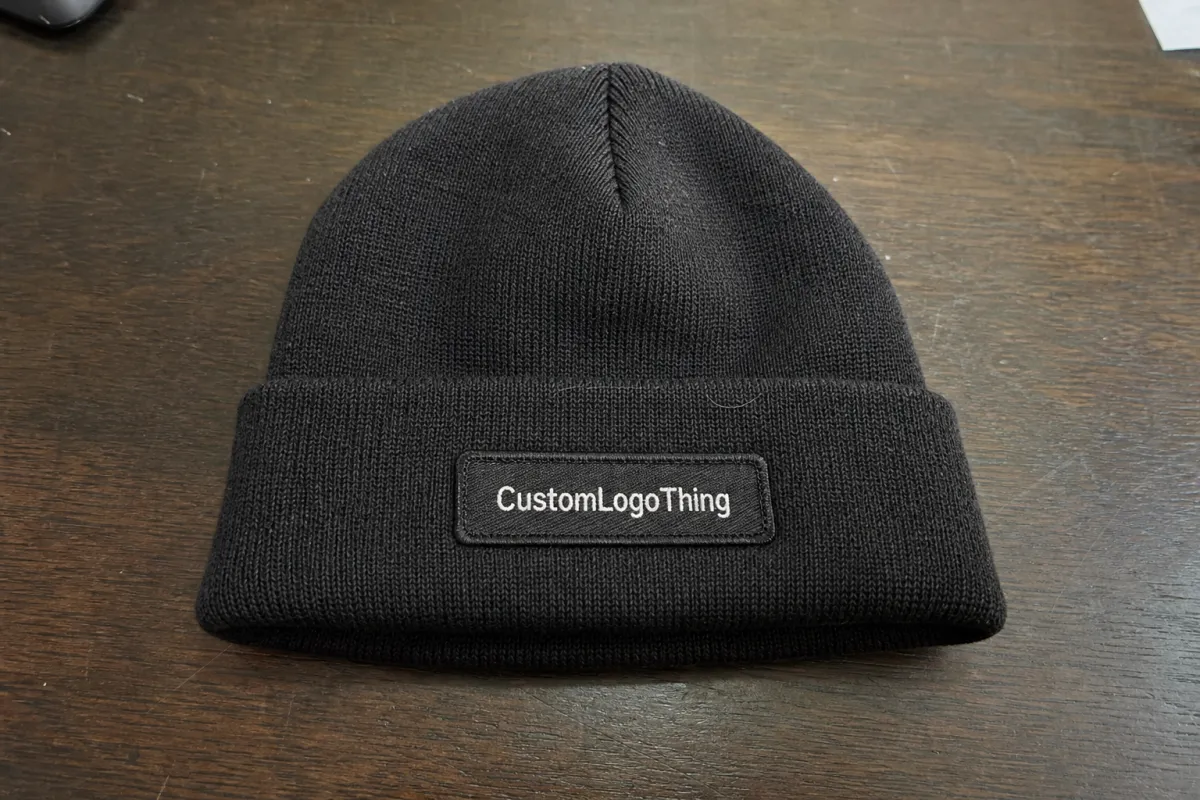
A useful sample should answer one question: would someone actually wear this? That means checking more than artwork placement. The sample has to prove the beanie works in hand, on head, and under normal lighting, not just on a flat screen.
The most common problems are predictable. Color drift can make charcoal look blue-gray or brown depending on the light. Patch behavior changes by material, so woven, leather, PVC, and embroidery all sit differently on a knit cuff. Hand feel matters too, because a beanie that looks premium but feels scratchy will be rejected fast in retail or gift sets.
The sample should also reflect the production level you are paying for. Buyers often approve a nice proof without checking whether the logo size, cuff height, and patch type actually work together. The sample is a measurement tool, not a decoration.
A mockup sells the idea. A sample proves the product.
For coffee brands, the sample doubles as a shelf test. Put it next to a roast bag, paper cup, and tote. If the palette clashes or the patch finishes feel off, that becomes obvious immediately. If the materials work together, the beanie reads as part of the same brand family.
Coffee Roaster Logo Patch Beanies Sample Process and Timeline
Good sampling starts with the artwork. Thin lines, tiny text, and delicate icons often need simplification before they can be turned into a patch at beanie scale. A supplier should flag those issues early so you are not approving a logo that cannot be made cleanly.
Send a vector file, outline fonts, and specify placement from the start. Include color references if you have them, but treat them as guidance rather than exact matches. Yarn, knit texture, and patch materials never behave like flat print samples.
- Art review: Check line weight, stitchability, and minimum readable size.
- Material selection: Narrow down the shell knit, yarn blend, and patch type.
- Patch proof: Review shape, border treatment, finish, and size.
- Placement mockup: Confirm the patch sits centered on the cuff when worn.
- Preproduction sign-off: Approve final colors, quantities, packaging, and labeling in writing.
A practical first-sample timeline is usually 7-14 business days after artwork approval, plus shipping. Add another 3-7 business days if the design needs revision. Custom yarn dyeing, new patch tooling, or special packaging can extend that window.
Packaging should be reviewed with the sample, not after it. If the beanies will ship in cardboard mailers, confirm the insert, board type, and whether the supplier can use recycled or FSC certified materials without making the pack too weak. For broader transit and material guidance, the Packaging School and Packaging Institute resource at packaging.org is a useful reference.
Material, Patch, and Knit Factors That Change the Finish
The shell fabric drives most of the visual and comfort decision. Acrylic is common because it holds shape, takes color consistently, and keeps costs predictable. Cotton blends feel softer and more casual. Wool blends push the product toward a more premium cold-weather feel, but they usually increase price and need clearer care instructions.
Knit construction changes how the patch sits. A tighter gauge creates a flatter base and usually makes the logo look cleaner. A looser knit can make the patch edges read uneven. Cuff height matters too, because a deeper cuff gives more room for placement and reduces the risk of the patch looking off-center when worn.
Patch choice affects both appearance and pricing. Woven patches are usually best for small text and detailed logos. Leather gives a more rustic, premium cue and works well with darker roasts or heritage branding. PVC creates strong contrast and bold shapes but can feel too glossy for understated brands. Embroidery adds texture and works when the logo does not need razor-sharp detail.
| Component | Option | What It Changes | Typical Price Signal |
|---|---|---|---|
| Beanie shell | Acrylic | Shape retention, color consistency, lower base cost | Usually the most budget-friendly base |
| Beanie shell | Cotton blend | Softer hand, lighter warmth, more casual look | Often a modest increase over acrylic |
| Beanie shell | Wool blend | Warmth, premium feel, stronger cold-weather appeal | Commonly adds $0.80-$2.20 per unit |
| Patch | Woven | Fine detail, sharp logo edges, cleaner retail look | Often adds $0.15-$0.40 per unit |
| Patch | Leather | Rustic premium cue, good contrast on dark knits | Often adds $0.35-$0.90 per unit |
| Patch | PVC | Bold shape, strong color blocks, high visual impact | Often adds $0.40-$1.20 per unit |
| Patch | Embroidery | Texture, dimensional feel, less flat than print | Often adds $0.20-$0.70 per unit |
Yarn color deserves more attention than it usually gets. Warm heather gray can make a leather patch feel deliberate. Cool black acrylic can make the same patch feel sharper and more graphic. Off-white can look excellent in photos and still show warehouse dirt quickly. The sample tells you which version is real.
Size is another hidden variable. A patch that measures 2 inches wide on a flat proof may feel too small once the cuff stretches. Too large, and the beanie can start reading more like staff gear than retail apparel. The sweet spot is usually the size that stays visible from a few feet away without overpowering the knit.
Cost, Pricing, MOQ, and Quote Variables to Expect
Sample pricing and bulk pricing are not the same. A standard sample may cost $40-$150 depending on whether the supplier is using stock materials or making a new knit color, patch, or label. If the patch needs tooling or a custom mold, the sample can cost more. Some suppliers credit part of that fee against the first production order, so ask early.
MOQ changes the math quickly. A 100-piece run and a 500-piece run often have very different unit prices because setup, patch creation, and packing labor are spread across fewer or more units. As a loose planning range, simple patch beanies at larger volume may land around $3.50-$6.50 per unit. Smaller runs, wool blends, or more complex decoration can move into the $6.50-$10.00 range.
The main pricing drivers are straightforward:
- Patch type: Woven, leather, PVC, and embroidery have different setup and material costs.
- Yarn blend: Acrylic, cotton, and wool do not price the same way.
- Logo complexity: More detail usually means more labor or more revisions.
- Labeling: Woven tabs, sewn-in labels, care tags, and hangtags add steps.
- Packing: Polybags, paper bands, tissue, and retail boxes affect cost.
- Rush timing: Faster turnaround usually means higher pricing.
Packaging can move a quote more than buyers expect. Corrugated cardboard, kraft paper inserts, FSC certified board, and recycled materials are all reasonable choices, but they still need to protect the knit first. A sustainable pack that crushes in transit is still a failure.
Step-by-Step Material Sample Review Checklist
Review the sample twice: once like a designer and once like a customer. Check it in daylight first, then under the kind of indoor lighting used in your cafe, retail shelf, or event table. A black patch, green knit, or warm gray shell can all look different depending on the light source.
Before approving, verify the basics in the same order every time. Confirm the logo is readable from a few feet away. Inspect patch edges. Stretch the cuff and see whether the shape rebounds cleanly. Put the beanie on a head or mannequin, because flat lays hide crooked placement better than they should.
A quick wear test is enough to catch most issues:
- Stretch the cuff three times and watch for distortion.
- Press the patch edges lightly to check lift or weak adhesion.
- Wear the beanie briefly and note itch factor, pressure, and warmth.
- Photograph it next to a roast bag, apron, and cup sleeve to test brand consistency.
- Record a clear pass/fail note for color, fit, patch clarity, and overall retail feel.
If packaging is part of the order, review it at the same time. A clean knit can still fail if the hangtag blocks the patch, the care label irritates the wearer, or the inner bag wrinkles the cuff. If paper-based packaging is involved, confirm whether the board keeps its shape and whether post-consumer waste content can be used without weakening transit performance.
For shipment stress, it helps to think the same way as a transit test. The International Safe Transit Association at ista.org is useful if you want to think through drop, vibration, and handling before a wider order. Most beanies do not need formal lab testing, but they do need to avoid obvious crush damage and moisture issues.
Document everything. Save the approved sample photo, yarn color note, patch type, packing method, and date in one file. If production comes back slightly different, that record is far more useful than a vague memory.
Common Ordering Mistakes That Create Rework
The first mistake is trusting the mockup too much. Digital artwork is useful for placement and rough color direction, but it cannot show texture, knit tension, or how a patch reacts to a curved surface. A leather patch that looks soft in a render may feel much firmer in hand.
The second mistake is skipping the sample because the logo seems small. Small details are exactly where problems hide. A tiny patch still has to sit straight on a stretchy cuff, and a slightly off-center placement becomes obvious once the beanie is worn.
The third mistake is leaving packaging and labeling until the last minute. If the beanie is going to retail, the hangtag needs to fit without fighting the patch. If it is shipping, the outer pack needs to survive stacking, movement, and the occasional wet box.
The fourth mistake is collecting too many opinions too late. Brand wants contrast, sales wants margin, operations wants speed, and the owner wants it to look expensive. Those goals can coexist, but only if the feedback is consolidated before another round starts.
If the sample is vague, the bulk order will be vague too.
Expert Tips for Faster Approval and Better Sell-Through
A sample process should reduce risk and improve sell-through. If the supplier can produce two near-final versions, compare one that sits at the target retail cost and one that pushes the finish higher. A woven patch on acrylic may win on margin. A wool blend with a leather patch may win on shelf appeal.
Use the sample with real buyers before the full order locks. Staff, wholesale accounts, and regular cafe customers usually give more useful feedback than an internal meeting. Ask direct questions: Would you wear this? Would you pay the target price? Would you give it as a gift?
Keep the beanie aligned with the rest of the product line. If the roast bags use muted inks and kraft labels, a loud neon patch will break the visual system. If packaging leans on recycled materials and a restrained palette, a matte woven or leather patch usually feels more coherent.
Save the approved sample, a yarn swatch, patch photos, and the exact notes used for sign-off. That record becomes the best tool you have when a later run looks a shade off. Physical references keep the production conversation grounded.
Next Steps to Move from Sample to Production
Once the sample is approved, lock the details in writing. Include the final artwork file, closest color reference, patch type, beanie color, cuff placement, packing method, quantity, and delivery window. If any of those change later, the order is no longer the same order.
Work backward from the launch date, not the ship date. Time is usually needed for photography, product copy, store setup, and receiving the goods. Seasonal drops leave little room for delay, so a sample that saves a few days is often more valuable than one that looks slightly prettier.
Keep the packaging practical. FSC certified cartons, kraft paper, recycled materials, and post-consumer waste content can support a cleaner presentation, but they still need to protect the knit and hold the patch flat. A beanie that arrives crushed is hard to recover from.
That is the real value of a coffee roaster logo patch Beanies Material Sample guide: fewer surprises, cleaner approvals, and a merch item that feels intentional the first time someone picks it up. If the sample passes the hand test, the lighting test, and the shelf test, the production order has a real chance of matching the approved version.
FAQ
What should be included in a coffee roaster beanie sample kit?
Include the actual beanie, patch options, yarn swatches, and any packaging pieces that will ship with the order. Add size notes, care instructions, and a simple approval sheet so every reviewer is checking the same details. If the product is going to retail, ask for a packed sample too.
How long does the sample and approval process usually take?
Clean artwork usually moves faster, but the process still depends on patch type, material choice, and how many revisions you need. A practical plan is 7-14 business days for the first sample, plus another few days if changes are requested. Shipping time sits on top of that.
Which patch material works best for coffee shop merch beanies?
Woven patches are usually best for small logos and fine detail. Leather gives a more rustic premium feel, PVC is good for bold shapes and contrast, and embroidery works well when texture matters more than sharp lines. The best choice depends on your logo and your price target.
How do MOQ and pricing interact on patch beanies?
Higher MOQ usually lowers the unit cost because setup costs are spread across more pieces. Smaller runs cost more per unit, especially if the patch or yarn needs custom setup. Ask for pricing at two or three quantities so you can see the margin difference clearly.
What should I check before approving the final bulk order?
Check color, fit, patch placement, patch edge quality, and packaging together. Do a wear test and a photo test in real lighting. If the sample works in hand, on camera, and on the shelf, you are much less likely to end up with rework later.