Event merch Logo Patch Beanies Bulk Order planning gets easier once you accept a boring truth: people buy the thing that looks wearable right away. They do not want to decode the size, guess the fit, or wonder whether the decoration will peel off after one season. A clean patch on a simple beanie removes most of that hesitation.
That is why these orders work so well at outdoor events, winter retail tables, campus stores, sponsor activations, and staff programs. The product is easy to understand from a few feet away. The logo has enough room to do its job. The knit body does not compete with the decoration.
The best results usually come from buyers who start with constraints instead of style mood boards. What temperature will people wear this in? Will it sit on a table, hang on a wall, or ship in cartons to multiple sites? Is the logo meant to feel premium, utilitarian, or loud enough to read across a concourse? Those answers matter more than whatever trend is floating around this month.
Why event merch logo patch beanies sell at the table
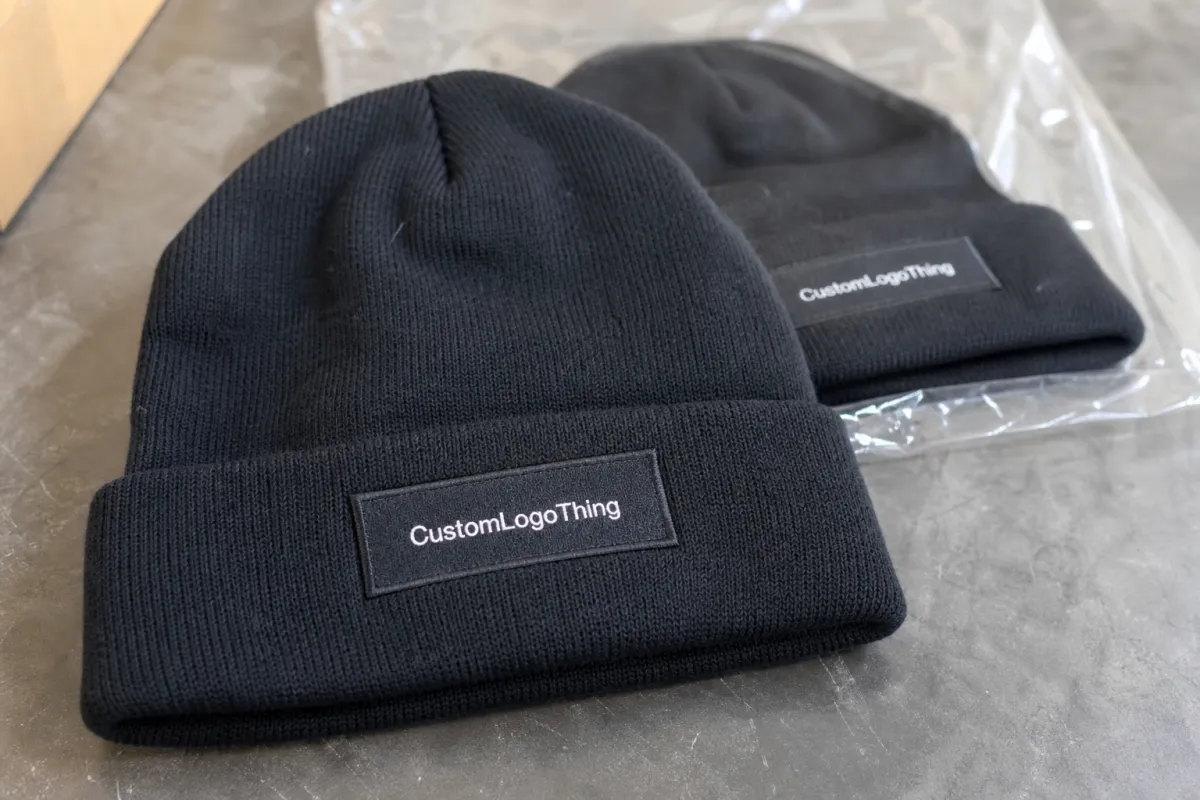
Beanies have a built-in sales advantage because they solve the hardest part of merch buying: fit. One size covers most heads. Nobody has to ask for a size chart. That alone removes friction, especially in cold-weather settings where shoppers are moving fast and do not want to think too hard.
A patch helps because it concentrates the branding without turning the whole garment into an ad. The knit stays usable. The logo stays visible. The item still reads like something people might wear after the event is over, which is the whole point if you want sell-through instead of leftovers.
That is also why event merch logo patch beanies Bulk Order Planning should begin before artwork is finalized. A wordmark with thin strokes may need cleanup at a 1.5 to 2 inch patch size. A badge shape may need a wider front panel and a tighter placement rule so it sits flat on the cuff. If the art is not adjusted for the decoration method, the quote and the sample both become slower than they need to be.
Practical rule: the easier the beanie is to read at a glance, the more likely it is to move. Clear patch shape, clean body color, and one strong logo beat a busy layout almost every time.
There is another reason these pieces do well: they photograph cleanly. Stacked beanies are easy to merchandise. A good patch catches light without looking shiny in a bad way. The product can sit in a display crate, hang from a peg, or be handed across a table without needing a sales script.
Patch options, knit builds, and decoration details
The patch is where the product earns its keep. Woven patches hold small text and sharper edges better than most stitched builds, so they are a smart pick for compact logos or wordmarks that need to stay legible. Embroidered patches bring more texture and a traditional winter-merch feel, which works nicely for schools, outdoor groups, and heritage-style branding. PVC patches create a molded, dimensional look that reads bold from a distance. Faux leather is quieter and more premium, especially on muted beanie colors. Sewn-on woven labels are the lightest visual option when the brand wants restraint instead of punch.
Beanie construction changes the feel more than many buyers expect. A cuffed beanie gives you a predictable front panel, which usually makes logo placement cleaner and easier to approve. Uncuffed styles can look more relaxed, but the decoration area is less controlled. Slouch beanies have a softer lifestyle look, though the body does not always sit still enough for precise patch placement. If the item is meant for retail, cuffed is usually the safer choice. If the brief is casual and fashion-leaning, slouch can make sense.
Knit density matters too. A tighter knit with better recovery tends to hold its shape and present the patch more cleanly after wear. Loose knits feel cozy, but they can ripple under the decoration or stretch out faster if the yarn quality is low. That is not always a deal-breaker for giveaways. It is a problem if the beanies need to feel retail-ready.
Material choice should be handled as a practical decision, not a catalog preference. Acrylic is still the workhorse because it is affordable, easy to source, and warm enough for most event use. Acrylic-wool blends feel better in hand and can look more elevated, but they usually cost more and may require more careful washing guidance. Recycled yarn options are increasingly common, though they are not all equal. Ask how the yarn is made, how much recycled content is actually in the body, and whether the claim applies to the full beanie or only part of the fiber blend.
Color matching is worth extra attention. The patch and the knit body should be judged together, not separately. A patch can match the artwork well while the yarn lands a half-step off, and the product still feels inconsistent on a table or in photos. The reverse also happens. Closest-match approvals are often enough for knitwear as long as the overall read is clean and intentional.
| Patch type | Best use | Typical strengths | Tradeoffs |
|---|---|---|---|
| Woven | Fine-detail logos, compact wordmarks | Sharp edges, tidy retail look | Less texture than embroidery |
| Embroidered | Outdoor merch, school spirit, heritage branding | Strong texture, familiar finish | Very small type can blur |
| PVC | Bold event merch, modern branding | Dimensional, durable, high visibility | Can feel heavier on softer knits |
| Faux leather | Minimal branding, premium gift sets | Understated, polished, subtle | Not ideal for tiny detail |
If your project has sustainability requirements, ask for the actual fiber and packaging specifications rather than relying on a label. Recycled yarn content, paper hangtags, and carton materials can all be documented, but the details vary by supplier. For broader reference on certified forest materials, FSC is a useful place to compare paper and packaging claims.
Specs to lock before you request a quote
If you want a quote that can actually be used, send more than a logo file. Start with the beanie style, patch type, patch size, placement, color count, and the purpose of the order. A merch drop, a retail run, and a sponsor giveaway do not behave the same way in production. They should not be priced as if they do.
Artwork readiness comes next. Vector files help, but legibility matters more than file format alone. If the logo includes tiny type, thin lines, or nested detail, ask whether any of it needs to be simplified for the patch size you want. At small dimensions, a pretty line on screen can become a mess in stitching or molding.
Patch size should be chosen with the final garment in mind. A 2 inch patch can feel right on a cuffed beanie with a simple mark. Bigger badge-style logos may need 2.25 to 3 inches to stay readable. Too small, and the design loses clarity. Too large, and the patch starts fighting the knit body. There is a narrow middle ground where it just looks right.
Packaging belongs in the first quote request, not the last email before shipment. Individual polybags, hangtags, insert cards, size stickers, and retail folding all change labor, freight cube, and the overall presentation. Bulk carton packing is efficient for giveaways and event handouts. Retail programs usually need something cleaner on the shelf. Either way, the packing choice belongs in the spec sheet.
It also helps to decide whether the color standard needs to be exact or simply approved. Exact standards can mean more sampling and more back-and-forth. A close match is often enough for knitwear, especially when the body color, patch material, and final display all work together. Spell that out early. Vague color language is one of the fastest ways to slow a project down.
- Beanie style: cuffed, uncuffed, or slouch
- Patch details: material, size, shape, and edge finish
- Decoration: sewn, heat-applied, or mixed construction
- Packaging: bulk carton, polybag, hangtag, or retail fold
- Artwork: vector preferred, with outlined fonts and approved colors
Cost, pricing, and MOQ tradeoffs that affect unit cost
Beanie pricing usually comes down to a few predictable variables. Yarn choice is one. Patch complexity is another. Color count, packaging, and the need for tooling all push the number around. A basic acrylic cuffed beanie with a simple woven patch often lands in the low single digits per piece before freight at mid-range volumes. Add heavier yarn, a molded PVC badge, individual polybags, hangtags, or a more complex patch and the price can move into the mid single digits or higher. Small runs cost more per unit because the setup gets spread over fewer pieces. That part never changes.
MOQ matters because setup costs do not care about your target unit price. If a custom patch mold is needed, a low quantity order carries more overhead on each piece. Add multiple colorways and the overhead climbs again because each version may need separate approval, packing, or sorting. Buyers often obsess over the minimum order quantity without looking at the total spend. The better question is how MOQ interacts with the final use case and the landed cost.
There are real ways to save money without making the item look cheap. Choose one body color. Keep the patch shape simple. Reduce secondary packaging for promo runs. Avoid fine detail that needs special handling. Those choices lower friction. They also keep the order moving. On the other side, split shipments, rush charges, and tiny follow-up orders usually erase any savings from ordering too little the first time.
A practical budget plan is to order slightly above the exact event need. A modest overage for replacements, damaged cartons, or surprise demand is usually cheaper than placing a second short run later. That is where event merch Logo Patch Beanies bulk order planning stops being theoretical. It becomes a numbers game: pay a little more now, or pay a lot more later when time is short.
Tooling is another line item worth asking about. Simple woven or embroidered patches may only need standard setup. Molded PVC or special faux leather debossing can add a one-time fee. That fee is not always huge, but it should be visible before approval. A quote that hides setup until the last step is not a quote you can trust.
| Cost driver | Lower-cost choice | Higher-cost choice | What it changes |
|---|---|---|---|
| Body knit | Standard acrylic | Heavier knit or blended yarn | Hand feel, warmth, retail appeal |
| Patch style | Simple woven label | Custom PVC or detailed embroidery | Setup, detail level, visual impact |
| Packaging | Bulk carton pack | Polybag plus hangtag | Presentation, labor, freight cube |
| Order mix | One colorway | Multiple colorways | MOQ efficiency, sorting, approval time |
Process and lead time from approved art to shipment
The cleanest path is usually simple: art review, proof, patch approval or sample, knit and patch production, assembly, inspection, and final packing. Each step depends on the one before it. If the buyer waits three or four days to answer a proof question, the whole schedule slips. That can matter a lot when the order has to land before a fixed event date.
Lead time depends on the season, the factory queue, the complexity of the decoration, and how quickly approvals come back. Cold-weather merchandise often gets ordered in the same windows every year, which means production schedules can tighten fast. A clear approval packet moves better than a vague one. Nobody wants to guess what "close enough" means once production has already started.
A realistic timeline for a custom logo patch beanie order is often 12 to 20 business days after approval. Simple runs can move faster. New tooling, special packaging, or a first-time patch style can add time. Physical samples, if needed, can add another week or two. If the event date is fixed, work backward from the ship date rather than from the day the quote arrives. That is the safer way to avoid a freight scramble at the end.
Buffer time matters because plans change. Shipping addresses move. Carton instructions change. Sponsor programs add a second delivery point after the proof is already approved. None of that is unusual, but it does mean the order should be documented cleanly before production starts. Confirm patch size, placement, color standards, packing method, carton count, and destination before the order is released.
For projects that need a shipping framework, the test and handling standards discussed by ISTA are a useful reference point. The goal is not to overbuild a soft good. It is to pack it in a way that survives the trip and arrives looking ready to sell or hand out.
How to compare factories for repeat orders and QC
Repeat orders are where supplier quality shows up. A good factory keeps the sample record, remembers the approved tolerance, and makes the second run match the first without forcing everyone to start over. That matters if the beanie sells well and needs a reorder, or if the same item becomes part of a recurring winter program.
Ask how color control is handled. Ask how patch placement is checked. Ask what tolerance is normal for knit variation. Ask whether the team documents the approved sample so the next production run has something concrete to follow. These are not picky questions. They are the difference between a reorder that looks right and one that only looks close.
Quality control should cover more than the patch face. Check stitch security, loose threads, knit defects, label accuracy, and packaging count before the cartons leave the floor. Mixed lots and replacement pieces deserve special attention because that is where mistakes tend to hide. If a supplier can explain how they inspect and correct errors, that is a better sign than a polished pitch deck.
Good production habits show up in small ways. Clear milestone updates. Documented approvals. A direct answer when something is off. The willingness to say a logo is too detailed for the patch size before the order is in motion. That kind of honesty saves time. It also keeps budget problems from turning into deadline problems.
Good sign: the factory can tell you exactly how it will inspect patch placement, count cartons, and match the approved sample on a reorder. That process matters more than a low quote with no structure behind it.
For a buyer, the real test is consistency. If the first run was good, the second should not feel like a gamble. A supplier that treats repeat work as a fresh guess every time is not saving you money. It is spending your time.
Next steps to finalize your bulk order
Before requesting pricing, gather the logo file, target quantity, event date, preferred beanie style, and the patch material you want to compare. If the order is for retail, include packaging notes. If it is for a giveaway, include the distribution plan. If the beanies are shipping to more than one site, write that down too. The clearer the brief, the fewer revisions you get later.
Confirm the budget range and the backup options at the same time. A quote built around a realistic quantity is more useful than a speculative one because it lets the supplier choose the right patch method, packing level, and carton plan from the start. If the final quantity could shift because of sponsorship or turnout, say so early.
For most buyers, the shortest checklist works best: artwork, quantity, target date, beanie style, patch type, color standard, and packing method. Keep those seven pieces aligned and the project stays manageable. Leave one of them vague and the schedule starts leaking time.
That is the real value of event merch logo patch beanies Bulk Order Planning. It is not about making a simple product feel fancy. It is about building something people will actually wear, with specs that hold up through sampling, production, and the messy part where boxes move from one place to another.
FAQ
How far ahead should I plan a logo patch beanie bulk order for event merch?
Plan early enough to cover art review, proof approval, and production without forcing a rush fee. If the order needs custom patch tooling, special packing, or a physical sample, add more buffer. Working backward from the ship date is safer than starting from the quote date and hoping for the best.
What MOQ is typical for event merch beanies with logo patches?
MOQ depends on the decoration method, patch complexity, and whether the order uses one colorway or several. Simpler patch builds and one body color usually scale more efficiently than highly customized runs. Ask for MOQ and price breaks together so you can compare total spend instead of chasing the lowest number.
Which patch type works best for cold-weather merch sales?
Woven and embroidered patches are common when the goal is a soft, retail-friendly look. PVC or faux leather can work well when the brand wants a bolder or more dimensional finish. The right choice depends on the artwork, the audience, and whether the beanie is meant for giveaway use or paid merchandise.
Can I order multiple colors in one logo patch beanie run?
Yes, but each added colorway can affect setup, packing, and unit cost. One core body color with one patch design is usually the most efficient path. If variety matters, ask how mixed-color packing affects MOQ and production timing before you commit.
What should I send with my quote request for bulk custom beanies?
Send the logo file, preferred patch style, beanie style, target quantity, and the date the order needs to ship. Include packaging requirements, color references, and notes about where the beanies will be used. A complete brief gets a more accurate quote and surfaces production risks earlier.


