Fabric Labels for Clothing do more than carry a brand name. They touch skin, survive wash cycles, anchor compliance copy, and quietly shape how finished a garment feels. A buyer may not study the label first, but they will feel it first. That small strip of fabric can make a shirt seem considered or careless in a matter of seconds.
The practical job is straightforward: identify the brand, communicate size and care details, and hold up under wear. The harder part is balancing all of that without making the label scratchy, bulky, or visually noisy. A label can be technically correct and still be wrong for the garment. Same product, different impression.
That is why label choice is not a decorative decision. It affects quality perception, retail readiness, and the amount of back-and-forth required before production starts. For teams ordering from a supplier such as Custom Labels & Tags, the best results usually come from treating the label as part of the product system rather than a last-minute trim.
Fabric labels for clothing: what they are and why they matter
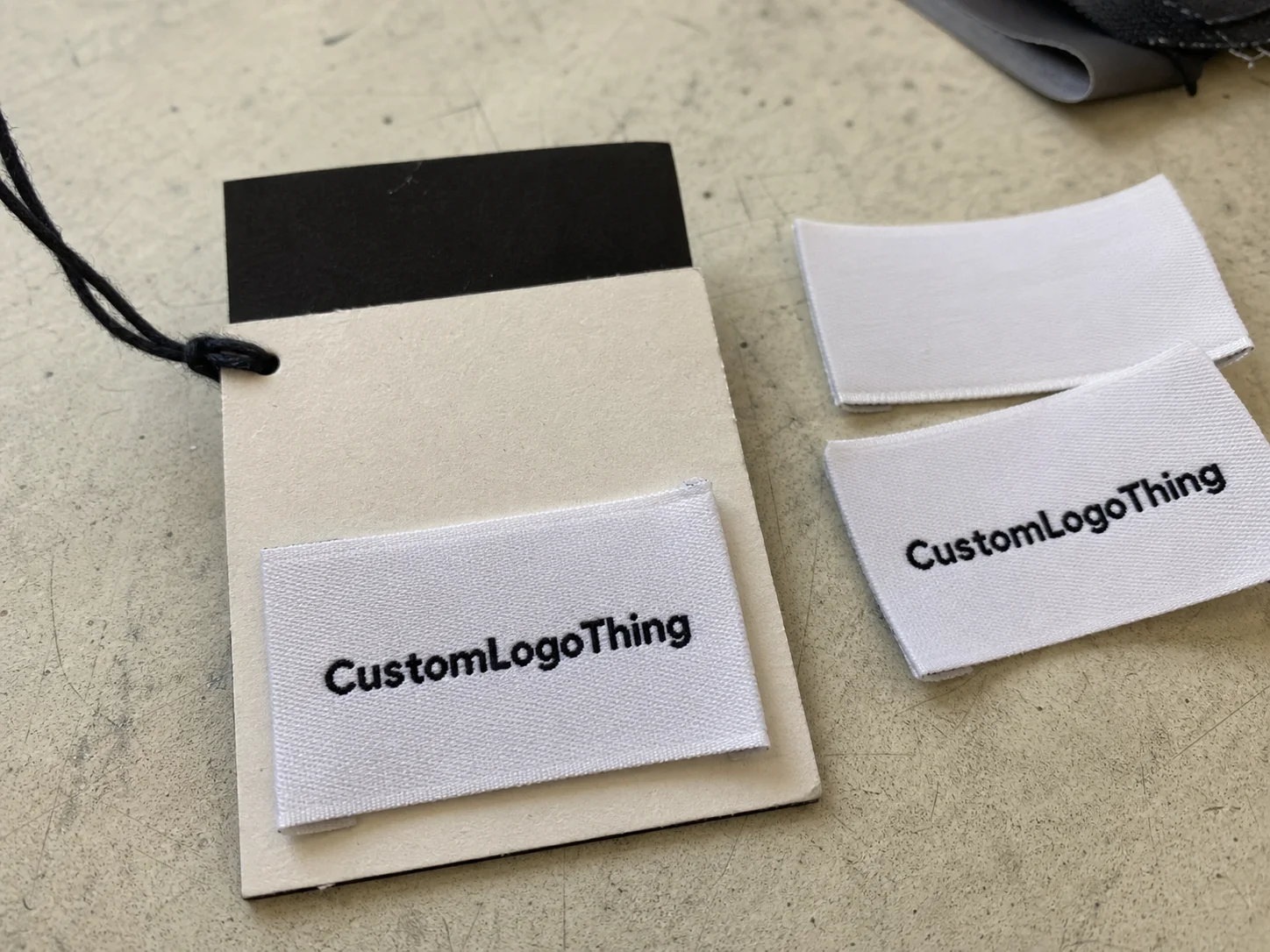
Fabric Labels for Clothing appear in several placements: neck labels, side seam labels, hem labels, size tabs, care labels, and occasional branding pieces stitched into linings or outer hems. Each one serves a slightly different purpose, but the underlying job is the same. It should help the garment feel complete and communicate information cleanly.
From a production standpoint, labels sit at the intersection of branding and compliance. A minimal fashion line may only need a size mark and a logo. A retail program can require fiber content, care symbols, country of origin, and localized text. Those extra lines are not optional in many channels, and they need room on the label from the start. Shrinking them into an afterthought usually creates a bad result.
There is also the matter of hand feel. A label can be soft, stiff, smooth, textured, glossy, matte, or intentionally rugged. That choice should track the garment. Kidswear, base layers, and athletic pieces usually need softer finishes and clean edges. Tailored shirts or premium denim can tolerate a different feel, but they still need to be comfortable and legible.
A label that looks correct in a proof can still feel wrong on a finished garment. That is the gap most teams underestimate.
Buyers often focus on the logo, then discover too late that the label sits awkwardly in the seam or scratches the neck after a few washes. That is not a design problem alone. It is a specification problem. A good label begins with a clear answer to three questions: what must it say, where will it live, and how hard does it need to work?
For broader packaging standards, it helps to think in systems rather than isolated components. That is consistent with the way packaging organizations discuss quality control and product presentation: the smallest element still affects the whole customer experience. A garment label is small, but it travels with the garment for the life of the item.
How woven and printed labels are made
The two main paths are woven labels and printed labels. Woven labels are created on a loom, where threads form the design directly into the structure of the label. Printed labels start with a textile base such as satin, cotton, nylon, or polyester, then the artwork is applied on the surface.
Woven labels are usually better for logos, small type, and repeat wash durability. The structure itself carries the image, which means the design tends to age better under abrasion. Printed labels are often chosen for softer hand feel, lower visual density, or more flexible text treatment. They can be a better fit when comfort matters more than texture or when the artwork is too detailed for weaving at small sizes.
Neither option is automatically better. The right choice depends on the garment, the placement, and the amount of information the label needs to hold. A woven label can look refined on a premium knit, while a printed satin label may feel better on the inside of a blouse or fashion dress. If the label sits against skin, softness may matter more than absolute longevity. If it lives in a seam and gets washed often, durability can outweigh everything else.
Artwork preparation matters more than most first-time buyers expect. A supplier usually needs dimensions, fold type, Pantone or color references, a copy-ready text file, and an editable logo file. If a logo contains extremely fine lines or tiny letters, it may need simplification before weaving. If the care text is crowded into too small a space, it may be unreadable after production. The machine will reproduce what you send, not what you meant.
Proofing is the real decision point. A digital mockup shows layout and proportion. It does not show texture, stiffness, edge behavior, or how the label looks once it is sewn into a garment. A physical sample does. If the sample feels too rigid, reads too densely, or curls at the edges, bulk production will not magically correct it.
Fabric choice also changes the result. Polyester tends to offer good durability and color retention. Satin gives a smoother, slightly shinier surface and is common in fashion labels. Cotton has a more natural look and can fit heritage or eco-positioned brands, though it requires careful design so the print or weave does not disappear into the texture. Nylon can handle strong wear, but it is not always the softest choice against skin.
Fabric label cost, pricing, and MOQ tradeoffs
Pricing for fabric Labels for Clothing usually depends on a narrow set of variables: material, size, fold style, number of colors, finishing method, quantity, and whether the label needs special cutting or backing. Change one of those variables and the quote moves. Change four of them and the estimate can shift noticeably.
Unit cost falls as volume rises because setup costs get distributed across more pieces. At small quantities, the line still has to be prepared, artwork reviewed, thread or ink matched, and finishing handled. That means a low-quantity order may cost much more per label than a larger one, even if the label itself is simple.
MOQ means minimum order quantity. It exists because production has fixed work at the front end. A factory cannot ignore setup time just because a customer wants a small batch. That is why a short run sometimes looks expensive. The machine run may be brief, but the prep work is not.
| Label option | Typical use | Common tradeoff | Indicative unit cost |
|---|---|---|---|
| Woven damask label | Branding, neck labels, premium apparel | Best detail and long-wear performance, more sensitive to artwork complexity | $0.08 to $0.28 at volume |
| Printed satin label | Soft-touch branding, fashion garments, care information | Very soft feel, but surface wear can appear sooner than on woven labels | $0.06 to $0.20 at volume |
| Printed cotton label | Natural look, lifestyle brands, textured apparel | Less sheen and more texture, so contrast needs careful planning | $0.07 to $0.24 at volume |
| Custom folded label | Side seam or center-back applications | More finishing steps, usually a higher unit price than straight-cut labels | $0.10 to $0.35 at volume |
Those numbers are directional, not promises. Two labels that seem similar on paper can quote differently once you account for size, fold style, edge finishing, and how much information must be packed into the design. A two-color woven label with a standard fold is not the same job as a six-color printed label with a special cut or a dense care panel.
The traps are usually self-inflicted. Too many colors. Too much text. A last-minute size change after approval. Adding a fold after quoting straight-cut. All of those steps alter production and can push the price higher because they change the work required at the factory level.
For a first order, a modest quantity is usually the safest move. It lets you test garment fit, wash performance, and customer response before you commit to a larger run. That is a more disciplined use of cash than overordering labels for a design that still needs validation.
Production steps, timeline, and lead time planning
The production path is usually simple on paper: quote request, artwork review, proof approval, production, finishing, quality check, and shipping. In practice, most delays happen before the machine runs. Missing text, vague color references, unfinished artwork, and late revisions are the usual culprits.
Sampling and bulk production are not the same thing. A sample can move quickly because it is a small, controlled test. Bulk orders need scheduling, material allocation, machine time, finishing, inspection, and packing. For many orders, a realistic lead time is about 12 to 15 business days after clean proof approval, though that can stretch depending on order size, label format, and seasonal demand.
That estimate assumes the file is ready. If the artwork needs to be redrawn, if the logo has to be simplified, or if the label text needs to be corrected after proofing, the clock keeps running. The easiest way to lose time is to treat artwork cleanup as a small task. It rarely is.
Shipping should be part of the plan, not an afterthought. Air shipping is faster and more expensive. Ground or ocean can save money, but both can introduce risk if the labels are tied to a retail ship date or a seasonal launch. A batch that finishes on time but arrives late still misses the schedule.
For timing and transport discipline, standards groups such as ISTA are useful even for a component like a label. The point is not to over-engineer a small item. The point is to respect the fact that a label only has value if it arrives intact, on time, and ready to sew.
Key specs to lock before you quote
Before asking for pricing, lock the core details. Size. Fold style. Material. Color count. Attachment method. Text. If the label needs compliance copy, reserve space for it early. Trying to force that information into a layout after the design is approved is a common way to end up with cramped type and poor readability.
Fold style changes how the label behaves inside the garment. End fold is common for side seams and hem applications. Center fold is often used in neck labels because it creates a neat finish at the top. Loop fold can work well for certain branded or hanging applications. Straight cut is simple and efficient, but it usually needs a clear application plan so the edges do not look raw or unfinished.
Readability is a production issue, not just a design preference. Thin type can disappear in weaving. Low-contrast colors can blend into dark garments. Tiny logos can look sharp on a screen and muddy at actual label size. The smaller the format, the more disciplined the layout must be.
Compliance copy deserves the same attention. Fiber content, care symbols, size markings, and country of origin may be required in many retail channels. If the supplier understands those requirements, they can help allocate the label space properly. If they do not, the spec needs to be tightened before the order goes to proof.
A clean quote request should include:
- Label size in millimeters or inches
- Fold style or cut style
- Artwork file and editable text copy
- Material preference
- Quantity target and any backup quantity
- Care, fiber, or origin text if needed
- Deadline and shipping destination
That level of detail makes comparison useful. You are no longer comparing rough guesses from different suppliers. You are comparing the same spec with different pricing structures.
Common mistakes that make labels feel cheap
The most common mistake is overloading a small label with too much text. It becomes a paragraph instead of a brand marker. Nobody reads it, and it looks crowded even before it is sewn into the garment. A strong label is legible at a glance.
Fit is the second problem. A label that is too stiff, too wide, or too abrasive can irritate the wearer. That matters most on childrenswear, sportswear, and layers that sit close to the skin. If customers routinely cut the label out on day one, the design failed to do its job.
Artwork can also undermine the final result. Thin sans-serif fonts, low-contrast palettes, and highly detailed logos often degrade during weaving or printing. What looks polished in a digital file can lose clarity in production. This is one place where simplifying the design often improves the product.
Testing separates acceptable labels from merely plausible ones. Wash tests, rub tests, and seam placement checks show whether the label can handle actual use. They also reveal whether the stitching causes puckering, whether the edges roll, or whether the print starts to wear too quickly. For apparel that will be washed repeatedly, the question is not whether the label looks good once. It is whether it still looks acceptable after use.
Quantity planning is another easy place to lose money. Ordering too few can force a second run later, and the second run may not match perfectly. Thread lots shift. Print results vary slightly. A reorder file should be saved with the final dimensions, approved text, and production notes so the brand does not drift over time.
Many cheap-looking labels fail for the same reason: the label was treated as a separate item instead of a component that has to match the garment, the stitching, and the brand voice. Once those parts agree, the label looks intentional. When they do not, even a decent material can look underdeveloped.
Expert tips and next steps for your first order
Start with a spec sheet rather than a vague concept. Measure the available space. Decide where the label will be sewn. Confirm the text. Choose the fold. Then decide whether woven or printed construction fits the garment better. That sequence reduces revision loops and makes the quote more accurate from the beginning.
Ask for a physical sample before committing to bulk. A mockup on screen cannot tell you how the label feels in hand or whether it sits cleanly inside the garment. Put the sample on the actual product, not just on scrap fabric. Check softness, legibility, seam behavior, and whether the label curls or shifts after a wash cycle.
If a label passes in hand and survives washing, it is probably ready. If it only looks right in a proof, it is not.
For a first launch, a smaller run is usually the more rational choice. It protects cash, reduces waste, and gives you feedback from real wear rather than design-room opinion. Once the label proves itself, scale the order and keep the spec file tight so reorders stay consistent.
Reorder discipline matters more than most teams realize. Save the final art file, the approved dimensions, the fold type, the material, and any notes about text placement. That record is what keeps the brand consistent six months later when someone new has to place the next order.
For fabric labels for clothing, the goal is not to make the label the star. The best labels disappear into the garment while still doing exact work: identifying the brand, carrying required information, and feeling right against the body. If you treat that strip of fabric as a product component with real constraints, the outcome is better quality, fewer revisions, and fewer surprises in production.
What are fabric labels for clothing used for besides branding?
They can carry size, care instructions, fiber content, country of origin, and compliance details. They also help a garment feel finished and make the product easier to identify in retail, resale, and returns processing.
Are woven fabric labels better than printed fabric labels for clothing?
Woven labels are usually stronger on durability and fine detail, especially for repeated washing. Printed labels can be softer and more economical, which makes them useful for garments where hand feel matters most.
How much do fabric labels for clothing usually cost?
Cost depends on quantity, size, fold style, color count, and material choice. Small orders cost more per unit because setup costs are spread across fewer labels, while larger orders usually lower the unit price.
How long does it take to produce custom fabric labels for clothing?
Most timelines include proofing, production, finishing, and shipping, so the total lead time is longer than the machine run itself. Clean artwork and quick approvals help; revisions are what usually slow the order down.
What should I send when requesting a quote for fabric labels for clothing?
Send the label size, fold type, artwork file, text copy, quantity, and any special finishing or attachment requirement. If you have a target price or deadline, include that too so the quote reflects real constraints.


