Fitness Running Caps MOQ: How to Request Bulk Pricing Without Guesswork
Fitness running caps MOQ gets easier to plan when you compare fabric, fit, decoration, packaging, pricing breaks, and lead times before you place a bulk order.
Fitness running caps MOQ shapes the whole project long before the first sample gets approved. Setup work, decoration prep, color matching, and carton planning take almost the same effort on a 200-piece run as they do on 1,000 pieces. That is why a quote can look sharp on a spreadsheet and still produce a disappointing landed cost once sampling, packaging, and freight are added in. The real question is not only what each cap costs, but what it costs to get a finished, sellable cap into inventory.
For a brand launching a new activewear line, a gym planning retail merch, or a race organizer building an event drop, the first order has to do two jobs at once: test demand and protect cash. Too small, and setup costs eat the margin. Too large, and boxes of the wrong color or the wrong fit start stacking up. Why guess at demand when the first run can teach you where the product actually belongs?
Why Small-Batch Running Caps Still Need Volume Planning
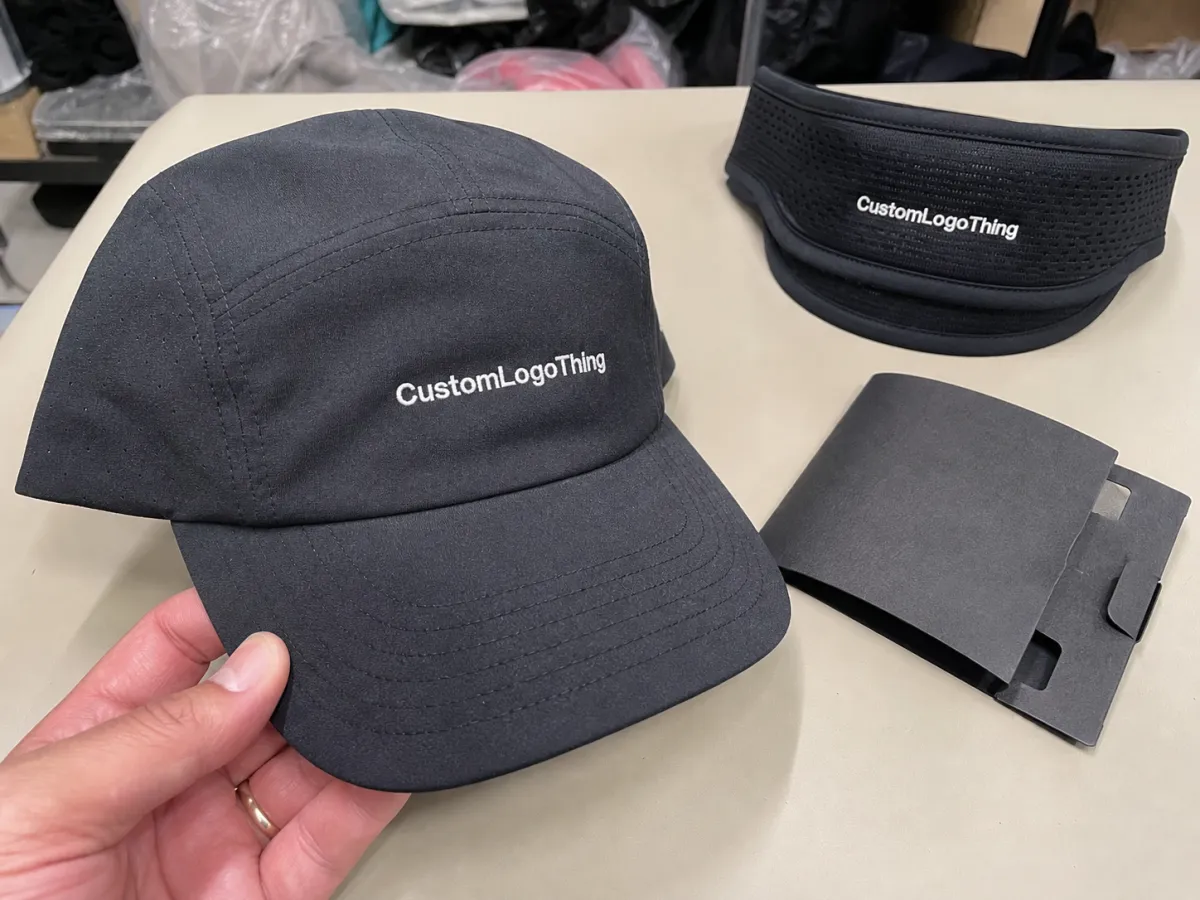
A small order sounds simple until production starts counting the work. Panels still need cutting. Logos still need digitizing or print setup. Threads still need color matching. Cartons still need packing labels. Final inspection still takes time. None of those steps disappear just because the order is modest. In practice, that is why many buyers find the minimum order for active headwear feels higher than they expected.
Volume planning matters because the real cost is tied to labor and setup, not only raw material. A cap may use less than a square meter of fabric, but the factory still has to stop, schedule, and organize the build. That is especially true for custom running caps with reflective prints, bonded patches, or mixed materials. One trim change can turn a simple production line item into a more involved assembly job.
Think in terms of landed cost per usable cap. A low unit price means little if the visor arrives crooked, the sweatband feels abrasive, or the crown sits awkwardly on different head shapes. Retailers and brand managers also need to think about sell-through. If the cap ships in a clean polybag, with correct hangtags or barcodes, and is ready for display, the staff time saved can be worth more than a small discount on the factory quote.
Different buyers feel MOQ pressure in different ways:
- Fitness brands need repeatable quality and a retail-ready finish.
- Gyms and studios usually want a modest first run with room for reorders in the same color.
- Race organizers care more about timing certainty than decorative complexity.
- Sports clubs need a fit that works across a wider range of head sizes.
- Promotional distributors often need a clear path from concept to bulk pricing fast.
The cap itself is only part of the order. Packaging, labeling, and the approval sequence can make a manageable run feel easy or painful.
A buyer who plans those details early usually gets a cleaner result and fewer surprises when the shipment lands.
Materials and Construction That Keep Caps Light
Material choice is the first real design decision for active headwear. Polyester remains common because it is light, dries quickly, and accepts decoration well. Recycled polyester can work just as well for brands that want a more responsible material story without giving up performance. Nylon is a little different: smoother hand, crisp appearance, and good shape retention in structured builds. Mesh blends matter when airflow matters more than a polished premium look.
The crown construction changes how the cap behaves on the head. A structured crown keeps its shape and tends to look sharper on a shelf. An unstructured crown feels softer, folds flatter in shipping, and often wears less rigidly during long sessions. The visor matters too. A stiff visor holds its curve and gives a cleaner profile, while a softer visor can feel lighter and less formal. Laser-cut perforations and side vents help move heat out of the cap, especially in humid training conditions.
Buyers sometimes focus on the shell and forget the sweatband. That is where comfort is won or lost. A brushed polyester sweatband, soft terry lining, or technical inner band can change the whole feel of the cap. If the cap is light but the band scratches the forehead or traps moisture, the customer notices quickly. It is the kind of detail that does not show up in a mockup but shows up immediately on a run.
Durability comes from construction as much as fabric. Clean panel stitching, reinforced seams at stress points, and a visor insert that holds its curve after repeated wear all matter. Colorfastness matters too. A black cap that fades after a few washes or a bright cap that shifts shade from panel to panel creates returns and complaints. For activewear, visual consistency is part of the product, not decoration.
There is always a tradeoff between ultra-lightweight construction and a more finished retail feel. A minimal cap may wear beautifully but look too plain in a store. A more built-out cap with structured panels, a higher crown, or a patch detail can raise perceived value, but it also raises cost and sometimes weight. The right spec depends on the buyer channel, not the most impressive quote line.
If packaging is part of the brief, it helps to think beyond the cap itself. Carton size, inner packing, barcode placement, and hangtag format can affect both damage rates and warehouse handling. The packaging.org resources are a useful reference for terminology and material choices when you want the order to arrive ready for distribution rather than be repacked on arrival.
Sizing, Decoration, and Spec Details to Approve
Fit starts with measurements. The useful specs are head circumference range, crown height, panel count, visor curve, adjuster range, and the depth needed to keep the cap secure without pressure points. Many adult running caps fall in the 56-60 cm or 58-62 cm adjustment range, but that depends on the target market. A cap that sits well on one wearer can pinch at the temples or ride too high on another, so the spec should define what a good fit means for your customer.
Decoration should match how the cap will be used. Flat embroidery remains a dependable choice for logos that need texture and a premium finish. Bonded patches can create a cleaner face with less stitch density on the front panel. Silicone logos, reflective prints, and low-profile labels fit a modern athletic look without blocking ventilation. If the cap is meant for high-output wear, avoid anything bulky enough to rub against the forehead or interfere with the sweatband.
Approval needs more than a logo file. Ask for placement measurements, stitch density, color references, and the exact logo size on the cap. If the logo is too large, the front panel can distort. If the stitch count is too low, the design may look thin and uneven. Color matching needs the same discipline. A Pantone reference helps, but it should be checked against the actual fabric swatch because thread, patch material, and base cloth can all look different under shop lights and daylight.
Three sample types usually matter most:
- Fit sample for checking shape, depth, and comfort.
- Strike-off for confirming embroidery, print, or patch appearance.
- Pre-production sample for approving the exact build before the full order starts.
Good sampling removes surprises before they become expensive. Check symmetry panel to panel, seam finish at the sweatband, visor shape from the front and side, closure function, and logo consistency across colors and finishes before sign-off.
Fit is not a detail.
Who wants a cap that looks perfect in a mockup and fails on a run?
Pricing, MOQ, and Sample Costs
Pricing for fitness running caps usually starts with the base construction and then climbs as details accumulate. A simple 5-panel cap with a standard closure and a small logo can price very differently from a ventilated cap with reflective trim, a custom sweatband, and retail-ready packaging. The factory quote often hides that complexity inside line items, so you need to read it like a build sheet, not a shopping cart.
MOQ is rarely a random number. It usually reflects how the factory groups materials, cuts fabric, and schedules decoration. If a supplier has to open a custom dye lot, source a special closure, or set up a dedicated print screen, the minimum rises. If the cap uses stocked materials and a common shape, the floor can be lower. That is why two caps with similar appearance can have very different order thresholds.
Sample costs are part of the real budget, not a side note. Fit samples, strike-offs, and pre-production samples each serve a different purpose, and each can add time and expense. A rushed sample often costs more than a patient one, especially if artwork changes after the first round. The best buyers treat sampling as a decision tool, not a hurdle to clear as cheaply as possible.
Unit price also changes with quantity bands. The jump from 200 to 500 pieces can be meaningful because setup costs spread out. The jump from 500 to 1,000 may be smaller but still worth tracking. That is where buyers can negotiate smarter: ask which components are driving cost, then test whether a color change, packaging change, or trim simplification would move the order into a better band.
Look past the headline number. Ask for the sample fee, the mold or screen charge, the packaging add-on, the freight assumption, and any surcharge for urgent timelines. A quote that answers those questions clearly is usually more trustworthy than one that only flashes a low base price.
Quote Process, Timeline, and Production Steps
A strong quote request gives the supplier enough detail to price the job accurately without making them guess. Share target quantity, cap style, fabric preference, decoration method, color references, packaging needs, and any size or fit requirements. Include artwork in editable format if possible, and ask for a proof that shows logo placement and finishing notes. The more the brief resembles a production spec, the fewer revisions you will need later.
Timeline usually follows a predictable path: brief, quote, sample, revision, pre-production approval, bulk production, inspection, and shipment. Each step adds time, and each decision point can create a delay if the buyer is still debating fit or artwork. A project moves fastest when stakeholders approve the same details at the same time. Otherwise, the factory waits while the internal team keeps discussing the same crown height or logo size.
It is worth asking one simple question early: what happens if the first sample misses the mark? If the answer is vague, the project may drift. If the supplier can explain revision timing, remake policy, and approval checkpoints, you have a better path to on-time delivery. Clear process is often more valuable than aggressive promises.
Production steps should also be visible. Cutting, stitching, decoration, pressing, inspection, packing, and carton labeling all need to be sequenced in a way that matches the order. If your cap uses multiple colors or mixed materials, ask how the factory prevents shade variation between panels. If your delivery date matters, ask where the schedule has slack and where it does not. That kind of transparency separates a working partner from a lucky one.
Some suppliers will quote fast but stay vague on the method. Others may be a little slower, yet their answers reveal a real production plan. The second option is usually safer when the order has branding, retail, or event timing risk attached to it.
What a Reliable Cap Supplier Should Prove
A reliable cap supplier proves more than price. They show sample quality, consistent communication, and a willingness to explain tradeoffs. They should be able to discuss materials, fit, decoration, and packaging in plain language without hiding behind jargon. If the answer changes every time you ask the same question, the factory may be improvising instead of managing the order.
Look for evidence that the supplier understands activewear use. Can they explain breathability? Can they talk about sweat management, visor stiffness, and logo durability after repeated wear? Do they know how a running cap differs from a fashion cap or a casual promotional hat? Those details matter because performance headwear fails in different ways than ordinary branded merchandise.
Quality control should be visible too. Ask how they inspect symmetry, stitch tension, color consistency, and packaging accuracy. Ask whether they measure finished dimensions against the spec sheet. A factory that can describe its checks clearly is more likely to catch issues before shipment. A factory that relies on vague assurances may not notice a problem until the boxes are already on the truck.
Communication speed matters, but clarity matters more. A quick reply that does not answer the question is not useful. A thorough reply that names the exact fabric, confirms the closure, and flags a risk is much more valuable. If the supplier already asks the right questions before quoting, you are probably working with someone who understands the order.
Experience with similar products is useful, but not enough on its own. Ask for actual examples of comparable caps, similar branding methods, or packaging requirements close to your brief. Then compare those examples against your goals. A supplier should be able to show not just that they have made caps before, but that they have made the right kind of cap for your channel.
Next Steps for a Faster Quote and Cleaner Order
Start with a clean brief. List the use case, target quantity, size range, fabric preference, decoration method, packaging requirement, and delivery window. Add references for shape or style if you have them. Then ask the supplier to quote on at least two scenarios, such as a simpler build and a more premium build. That gives you a cost range and makes the tradeoffs visible.
Next, compare the quote against your actual launch plan. If the cap is for retail, think about finish, labeling, and shelf appeal. If it is for an event, think about timing, durability, and participant comfort. If it is for a gym or club, think about reorder potential and whether the same color can be repeated later. The right answer depends on how the cap will be sold, worn, and replenished.
Do not skip the sample review. Even a well-written spec can miss something that only appears in hand. Check the feel of the sweatband, the curve of the visor, the depth of the crown, and the clarity of the logo under natural light. If anything feels off, fix it before bulk production starts. That small delay is usually cheaper than a large correction after shipment.
Finally, confirm the details in writing. Quantity, colors, decoration method, packaging, approved sample reference, timeline, and Incoterms or freight assumptions should all be visible on the final order sheet. The goal is simple: fewer surprises, cleaner production, and a cap that is ready to ship with confidence.
Frequently Asked Questions
What does MOQ mean for fitness running caps? It is the minimum quantity a factory wants before it will set up materials, decoration, and production for your order.
Why does a small cap order still cost so much? Because setup, sampling, and packing work take time even when the quantity is modest.
What is the best fabric for running caps? Lightweight polyester is common, while recycled polyester and nylon can work well depending on the look and performance target.
Should I approve a sample before bulk production? Yes. A fit sample, strike-off, or pre-production sample can prevent expensive mistakes later.


