A Five Panel Caps sample approval checklist keeps a buyer focused on the details that actually affect the final order: crown shape, fit, decoration, cost, and lead time. The sample is where a drawing becomes a physical product, so small differences become important fast. A front panel that collapses under embroidery, a visor that feels too soft, or a logo that shifts a few millimeters can all change whether the cap is acceptable for production.
The point of review is not to admire the sample. It is to decide whether the spec is ready to repeat at scale. That means checking construction, wearability, and decoration in hand, not just approving a mockup on screen.
Five panel caps sample approval checklist: what to inspect first
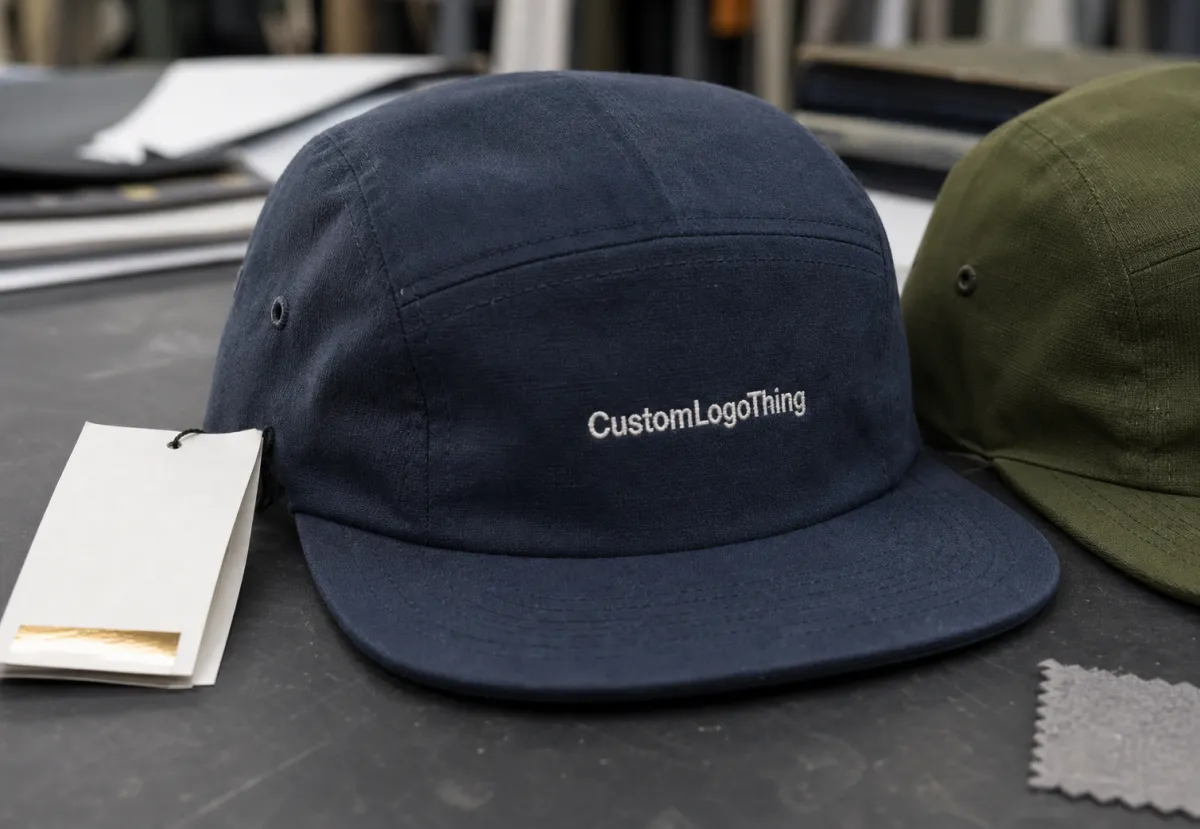
Start with the overall shape. Five-panel caps have a cleaner front profile than many six-panel styles, so the front panel does more of the visual work. If the crown sits too high, too flat, or too stiff, the cap will wear and photograph differently than expected. Confirm the shape against the approved tech pack, but also judge how it sits on the head.
Next, inspect the front panel, seams, and topstitching. A soft panel may buckle once embroidery is added. A panel that is too rigid can look bulky and wear higher than the buyer intended. Check whether seam placement, panel tension, and stitch lines support the intended silhouette.
Fit should be checked as a physical test, not only as a measurement. Crown height, brim curve, and closure range all affect comfort and appearance. A cap can measure correctly and still wear wrong if the profile is off by a small amount.
Best practice: inspect the sample in hand, on head, and under bright light. Photo review alone hides the issues that usually cause delays later.
Also confirm whether the sample matches the use case. A retail style, event giveaway, and team uniform cap do not need the same level of structure, but they do need the same level of clarity on what is being approved. Once the sample is signed off, it becomes the reference for production and reorders.
How the process and timeline usually move from proof to approval
The usual path is simple: artwork confirmation, sample build, physical review, revision if needed, then final sign-off. The timing is less simple because each step depends on the actual cap construction. If embroidery is involved, digitizing may be needed before sampling. That file has to suit panel curvature, fabric weight, and logo scale, not just the artwork itself.
Timelines vary by complexity. A blank or lightly decorated sample may take about 7-12 business days before shipping. A custom sample with special fabric, extra revisions, or complex decoration can take 12-20 business days or longer. Shipping adds more time, especially on cross-border orders.
Feedback handling is where approvals often get messy. Comments arrive in email, chat, and screenshots, and the factory ends up guessing which note matters most. A cleaner method is one revision sheet with a single decision owner. If the sample is not approved, separate must-fix items from preferences so the next round is easier to execute.
For launch dates or retail delivery windows, plan backward from the deadline, not forward from the request date. That matters more than most buyers expect. Packaging can also affect the schedule if cartons, inserts, or retail pieces need confirmation. If transit testing matters, the ISTA methods are a useful reference.
Fit, fabric, and decoration details that change the outcome
Fit starts with the crown. A cap can measure correctly and still wear poorly if the front panel is too tall, too shallow, or too stiff for the intended style. Buyers usually notice that immediately. Crown height, seam layout, and panel tension all affect how the cap sits and how it reads in photos.
Fabric choice changes both appearance and production behavior. Cotton twill is familiar and usually supports embroidery well. Polyester twill can hold color and resist wrinkling better in transit. Performance blends may feel lighter, but stitch behavior can shift under tension, especially with denser logos. Heavier fabric can support more thread without puckering; lighter fabric may distort if the stitch count is too high.
The visor deserves its own check. A firmer brim gives a sharper retail profile. A softer brim may suit a relaxed style, but it may not hold shape as well after unpacking. Sweatband comfort, eyelet placement, and closure type also matter because they affect fit consistency and unit cost.
Decoration is often where the sample proves or breaks the brief. Logo scale, placement, stitch count, patch edges, and color contrast should be reviewed in natural light, not only under office lighting. Small type can disappear on a curved front panel, and a balanced digital proof can become crowded once the cap is sewn.
- Embroidery: gives depth and texture, but is sensitive to stitch density and panel tension.
- Woven patch: is better for small type and fine detail, with a flatter hand feel.
- Print: works for simpler graphics, though color accuracy depends on fabric and curing.
Check the sample twice: once under the lighting you will use for approval photos, and again near a window or outdoors. That second look often reveals sheen differences, thread contrast, or color shift that indoor light hides.
Cost, pricing, MOQ, and unit cost drivers to confirm early
Sample cost and production cost should be treated as separate questions. Sample fees usually cover build labor, digitizing, shipping, packaging, and revision work. For a decorated five-panel cap, a straightforward sample may land around $40-$120. More complex versions with custom trims or multiple revisions can cost more.
MOQ changes the economics quickly. A run of 100-300 caps usually has a higher unit cost than a 500-1,000 piece order because setup, artwork prep, and decoration labor are spread across fewer units. Custom labeling, special fabric, and multiple decoration locations can widen that gap even more.
Small upgrades add cost in ways buyers often underestimate. Dense embroidery increases stitch time. Woven patches add labor. Custom interior labels, printed tape, contrast underbrims, and seam tape each add another setup point. Special closures may change both material cost and assembly time. For that reason, sample approval should not happen without a production quote attached to the approved spec.
| Sample path | Typical cost range | What it proves | Best use |
|---|---|---|---|
| Blank fit sample | $25-$60 | Crown shape, closure, visor feel | Early fit and structure check |
| Decorated pre-production sample | $60-$150 | Logo placement, stitch quality, finish | Final approval before PO release |
| Revised sample | $35-$110 | Corrected artwork or construction changes | Second round after feedback |
Ask for two quotes: one for the sample and one for production at the expected quantity break. That split makes the real cost drivers easier to see and gives the buyer a better basis for approval. If packaging or hang tags need responsible sourcing, FSC certification is worth checking for the paper side of the order.
Step-by-step review for a clean sample sign-off
Put the tech pack, artwork, and approved measurements side by side before reviewing anything. That avoids the common mistake of judging the sample from memory instead of the written spec. A second set of eyes helps too: one person can measure while another checks construction and decoration.
- Measure the cap: compare crown height, brim length, panel width, and closure range against the spec sheet.
- Inspect construction: look for seam consistency, loose threads, puckering, and tension marks around the front panel.
- Review decoration: check logo scale, placement, color match, and edge quality under bright natural light.
- Test the fit: wear the cap and note forehead contact, adjustability, and brim angle from the wearer’s point of view.
- Record one decision: write every correction in one approval sheet so the factory receives a single revision list.
That last step matters more than it sounds. Mixed feedback creates mixed results. If three people send separate notes, the next sample often comes back with only part of the problem fixed. A single approval sheet keeps the supplier focused on one version of the truth and creates a clear record for later production checks.
It also helps to define which details are non-negotiable. For some programs, logo placement and crown shape matter most. For others, closure comfort or color match carries more weight. The checklist should reflect the actual brand risk, not generic quality language.
Common mistakes that slow cap approvals
The biggest delay is approving from photos only. Texture, visor stiffness, and crown shape are hard to judge on a screen, and thread sheen changes under different light. A cap can look perfect in markup and still wear wrong in hand. That is why the physical sample exists.
Skipping bright-light review is another easy miss. Neutral daylight or a clean inspection lamp can reveal uneven topstitching, thread mismatch, or patch edges that disappear under warmer indoor lighting. If the buyer never checks that way, the problem can survive into production.
Approval also slows when too many people send separate comments. Marketing may care most about visual impact, procurement about cost, and operations about delivery timing. All three matter, but they need one decision owner. Without that, the supplier gets a moving target.
Transit time for revised samples is often underestimated. A corrected cap may need another build pass plus another week in shipping. For event-driven orders, that delay can matter more than the sample fee itself. The Five Panel Caps sample approval checklist works best when it includes the calendar, not only the cap.
Expert tips for sharper approvals and fewer revisions
Ask for an annotated sample card or measured spec sheet. Every change should tie back to a dimension, thread color, placement note, or fabric choice. Vague feedback creates vague revisions, while exact feedback saves time and reduces the chance of a second wrong sample.
Review the cap with the decoration method in mind. Embroidery behaves differently from a woven patch, and both behave differently from print on a curved front panel. A flat proof can look balanced while the finished cap feels crowded. Buyers who understand that relationship usually avoid the most expensive rework.
Use the same inspection conditions every time. If one sample is judged under warm desk light and another near daylight, the comparison becomes unreliable. Consistency sounds unglamorous, but it is what makes approvals cleaner and internal sign-off easier.
Keep a record of approved fabrics, trims, closures, and logo sizes by style. That archive is especially useful for repeat programs. Once a cap works, there is no reason to rediscover the same details on the next order.
Practical buyer note: if the sample is close but not right, name the exact issue and request a corrected sample. “Make it better” usually leads to another round of guesswork.
Next steps after approval: order release and production follow-through
After approval, confirm the final version in writing. Include photos, measurements, decoration notes, and any instructions that need to move with the order. That approved sample should become the standard for production, packing, and receiving.
Before releasing the PO, recheck lead time, carton quantities, labeling, and shipment method. A cap can be technically approved and still miss the launch if barcode labels, carton counts, or delivery timing were never confirmed. Those details are small on paper and large in practice.
Save the approved sample in a clearly labeled place. It is the benchmark if a shipment arrives with a drift in stitch density, panel shape, or logo placement. For repeat programs, that benchmark is often more useful than a folder full of messages because it shows what was actually agreed.
If the goal is a clean order release, use this five panel Caps Sample Approval Checklist to tie together fit, finish, pricing, and timeline. That is where most of the risk sits, and it is where most late surprises begin.
FAQ
What should a five panel caps sample approval checklist include?
It should cover fit, crown shape, fabric, closure type, decoration placement, and finish quality. It also needs measurement checks, artwork accuracy, and a final yes-or-no decision with a written revision list if changes are needed.
How many sample rounds are normal for a five-panel cap approval?
One round is common when the art and construction are simple. Two rounds are typical when the cap uses custom embroidery, special fabrics, or new trim details. More rounds usually mean the feedback changed midstream or the first notes were too vague.
What affects five panel cap sample pricing the most?
Digitizing, fabric choice, closures, and decoration method are the biggest drivers. Shipping and revision fees can also move the sample price more than buyers expect, especially on small orders where setup is spread across fewer pieces.
How long does sample approval usually take?
The timeline depends on sample construction, shipping distance, and how quickly the buyer reviews it. Revisions add days, so the first approval round should include every stakeholder who needs to weigh in. For launch-driven programs, plan backward from the hard deadline.
What if the sample fits but the logo looks wrong?
Measure logo placement, scale, and stitch density before approving anything. If the issue affects brand visibility or legibility, ask for a corrected sample or an annotated revision. Do not release production until the approved decoration matches the visual standard you want repeated.