Buyer Fit Snapshot
| Best fit | Flat Pack Boxes Wholesale projects where brand print, material claims, artwork control, MOQ, and repeat-order consistency need to be specified before quoting. |
|---|---|
| Quote inputs | Share finished size, material target, print colors, finish, packing count, annual reorder estimate, ship-to region, and any compliance wording. |
| Proofing check | Approve dieline scale, logo placement, barcode or warning zones, color tolerance, closure strength, and carton packing before bulk production. |
| Main risk | Vague material claims, crowded artwork, missing packing details, or unclear freight terms can make a low unit price expensive after revisions. |
Fast answer: Flat Pack Boxes Wholesale: Pricing, Specs, and Lead Times should be specified like a repeatable production item. The safest quote records material, print method, finish, artwork proof, packing count, and reorder notes in one written spec.
Production checks before approval
Compare the actual filled-product size with the drawing, then confirm tolerance on folds, seals, hang holes, label areas, and retail display edges. Reserve space for logos, QR codes, warning copy, and material claims before decorative graphics fill the panel.
Quote comparison points
Review material grade, print process, finish, sampling route, tooling charges, carton quantity, and freight assumptions side by side. A quote is only useful when the supplier can repeat the same color, closure quality, and packing count on the next order.
Flat Pack Boxes Wholesale: Pricing, Specs, and Lead Times
Buying flat pack boxes wholesale usually starts as a storage decision and ends up shaping the whole packaging workflow. I have seen teams focus on print, finish, and color first, only to realize later that the box itself was the thing slowing them down. A warehouse full of pre-built cartons eats shelf space fast, while a clean stack of flat-packed inventory can sit neatly on a pallet, slip into a narrow storage bay, and stay out of the way until the next packing run begins. That kind of order matters because packaging problems often show up in the daily rhythm of operations, not in a product sketch. A box can look right on paper and still cost too much to store, too much to move, or too much time to assemble once it reaches the packing table.
For most packaging buyers, the real test comes down to four numbers: storage cube, labor minutes, reorder frequency, and landed cost. Get those numbers lined up and flat pack boxes wholesale becomes a practical advantage rather than a line item on a purchase order. Miss the mark and the cheapest quote can turn expensive in ways that are easy to overlook, from wasted floor space to extra handling to the cost of filling excess void around a box that never fit the product in the first place. That is the part people miss in a hurry, and it can be a costly miss.
Why Flat Pack Boxes Wholesale Can Cut Costs Fast
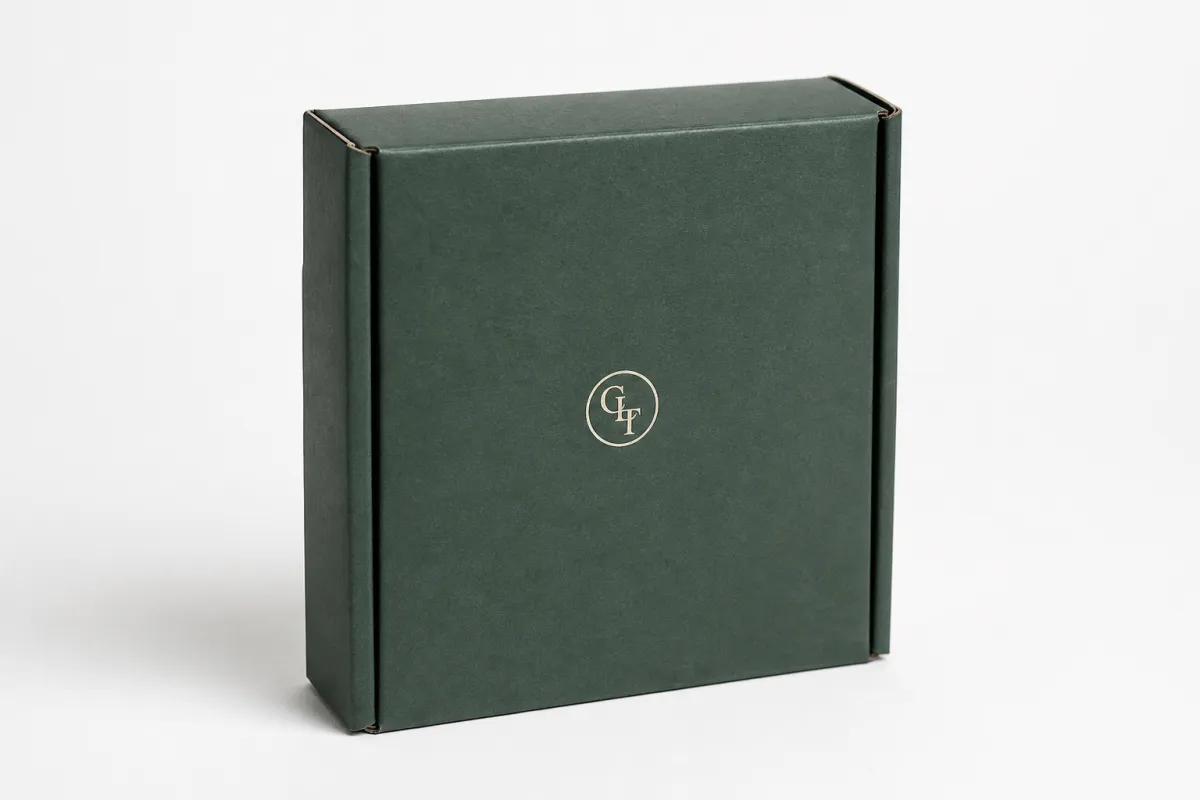
Warehouse teams usually notice the savings right away. Flat-packed cartons take up far less room than assembled boxes, which means they can be staged against a wall, stored on a single pallet deck, or tucked into a cabinet without swallowing the entire receiving area. That cube reduction is one of the strongest reasons flat pack boxes wholesale helps control cost. In many operations, the storage footprint drops by 70% or more compared with pre-built cartons, depending on the box structure and size. Less space used for packaging means more space for inventory, easier aisle movement, and fewer unnecessary trips just to reach the next stack.
Receiving also gets easier. Flat-packed cartons are simpler to count, simpler to inspect, and far less likely to be crushed or scuffed before they ever make it to the pack line. Assembled boxes can trap dust, deform under weight, or get bent during internal transport. Flat-packed inventory avoids most of that handling damage. That matters for branded packaging as well, because a warped score line or a dinged edge can make even strong custom printed boxes look less finished than intended.
Freight plays a part too. Shipping flat usually lowers dimensional weight and lets more units move per pallet. A buyer comparing flat pack boxes wholesale against pre-built cartons should separate outbound freight, receiving freight, and internal movement costs instead of looking at a single invoice in isolation. The difference may seem modest on one order, then become meaningful after multiple replenishments. For recurring product packaging programs, that compounding effect often matters more than a small unit-price gap.
I usually suggest a simple reality check before choosing a structure. Compare the following against your own operation:
- How many units fit on a standard pallet in flat form
- How many cartons fit in your actual storage area, not the ideal version on paper
- How long one person needs to assemble a single box at pack-out
- How often the SKU needs to be reordered across the month or quarter
That is the business case in plain terms. Floor space, labor, and cycle time tell you more than a glossy spec sheet ever will. A buyer who tracks those inputs can often justify flat pack boxes wholesale faster than a buyer comparing only print finishes or surface texture. I have sat in enough sourcing reviews to know that the best-looking carton is not always the best-performing one, and the gap tends to show up after the first replenishment, not on the sample table.
"The cheapest box rarely stays the cheapest once storage, handling, and reorders are part of the equation."
For operations that run on tight fulfillment windows, that idea holds up. A carton that arrives flat, stacks cleanly, and folds quickly can remove friction from the entire packing process. That is why flat pack boxes wholesale is often the preferred route for subscription kits, retail replenishment, and e-commerce fulfillment teams working with limited back-room space.
There is also a human side to it. If a team has to fight with packaging all shift, morale slips a little, and the mistakes start creeping in. A better box does not fix everything, sure, but it can make the line feel less like a wrestling match.
Flat Pack Boxes Wholesale: Product Options and Use Cases
No single box structure works for every product. Flat pack boxes wholesale includes a wide range of formats, and each one behaves differently in storage, assembly, and presentation. Buyers usually compare mailers, tuck-top cartons, retail-ready folding cartons, shipping cartons, and custom die-cut formats. The shape may look simple at first glance. The use case usually is not.
Mailers are a common choice for e-commerce because they ship flat, lock together quickly, and create a tidy unboxing experience. Tuck-top cartons are often used for cosmetics, apparel accessories, and small electronics where package branding matters as much as physical protection. Retail folding cartons are chosen for shelf presentation because they support strong print coverage and a more finished look on the sales floor. Shipping cartons are different again, since they are built around protection first, especially where stack pressure or long transit distances create more risk.
If you are ordering flat pack boxes wholesale for subscriptions or sample packs, the fit has to be precise. A loose product shifts around. A tight fit can crush the contents. A few millimeters can change the outcome. The best packaging designs usually start with the product dimensions, then add space only where the assembly method or insert truly needs it. That is one reason custom sizing often beats a standard stock box even when the stock option has the lower sticker price.
For many buyers, the choice breaks down like this:
- Standard size if the product already matches an existing footprint and needs little or no void fill
- Custom size if the product moves during transit or needs a more polished shelf presentation
- Retail packaging if the carton has to sell the product before it is opened
- Shipping-focused carton if compression resistance and transit protection matter most
There is a useful difference between a box that stores well and a box that performs well. Flat pack boxes wholesale can do both, but only when the structure matches the job. A mailer designed for lightweight apparel can look efficient and still fail a heavier item if the board grade is too light. A die-cut retail carton can look premium and still waste money if the print area is larger than the branding needs.
Browse our Custom Packaging Products if you want to compare structures side by side before choosing a format. For repeat replenishment programs, our Wholesale Programs are a strong starting point when the goal is to balance cost, storage, and presentation across multiple orders.
Assembly complexity deserves attention too. The more complicated the fold, the more important the score pattern and crease consistency become. A carton with beautiful print that slows the pack line is not a good result. That is why flat pack boxes wholesale should be evaluated as both a packaging purchase and an operations decision. The carton is part of the workflow, not just a container.
Flat Pack Boxes Wholesale Specifications That Matter
Specs are where the conversation gets serious. Buyers comparing flat pack boxes wholesale should begin with board grade, flute type, caliper, and strength rating before thinking about embellishment. For folding cartons, you may see 18 pt, 20 pt, 24 pt, or 28 pt SBS and CCNB. For corrugated cartons, the usual references are E-flute, B-flute, or C-flute, along with ECT or burst strength. Those numbers are not decoration. They tell you how the box behaves under stacking pressure, transit vibration, and repeated handling.
Dimensions matter in three separate ways. Internal dimensions determine how the product sits in the carton. External dimensions affect pallet efficiency and how many boxes can be staged, stored, or shipped in a given cube. Receiving footprint matters because your team has to work with the space it actually has, not the space it hoped it had. A box can be technically correct and still awkward to use. Good flat pack boxes wholesale orders account for all three at once.
Print specs deserve the same level of attention. Buyers often focus on cost per unit, yet print coverage changes the economics quickly. A one-color logo on kraft board is a very different job from full-color CMYK coverage with a soft-touch laminate. Spot color, aqueous coating, matte varnish, and foil all affect more than appearance; they change lead time and finishing cost as well. If the box is part of branded packaging or customer-facing retail packaging, ask for a spec sheet that includes artwork bleed, safe zones, and any dieline restrictions.
Moisture exposure and stacking pressure deserve a look too. A carton stored in a dry, climate-controlled room faces a very different risk profile from one traveling through humid loading zones or long parcel routes. If the box will see rough handling, ask whether the structure was designed around an ISTA test profile or a similar distribution testing standard. The ISTA standards are a useful reference when you want packaging decisions tied to transit conditions rather than guesswork.
For businesses using fiber-based packaging, sourcing can matter as well. If you need certified fiber, ask for FSC documentation and compare the supplier's chain-of-custody claims with the source records at FSC. That does not automatically make a box better, but it can support procurement requirements and honest sustainability claims when those claims are part of the brief.
These are the specs I would never skip on a quote for flat pack boxes wholesale:
- Inside dimensions and outside dimensions
- Board grade, flute type, or paperboard caliper
- Print method, color count, and coating
- Assembly type, such as pre-glued, self-locking, or tuck-top
- Any insert, partition, or structural reinforcement
- Testing reference, if shipping performance matters
That level of detail prevents mistakes later and gives you a cleaner way to compare suppliers, since flat pack boxes wholesale quotes can look similar on the surface while being built from very different materials underneath. I have seen two quotes with nearly identical pricing behave very differently once the board grade and finishing steps were lined up side by side. On paper they were cousins; in production, not even close.
Pricing, MOQ, and Quote Basics for Flat Pack Boxes Wholesale
Pricing on flat pack boxes wholesale usually moves with six variables: material grade, size, print complexity, finishing, tooling, and quantity. Material is often the biggest lever, especially if the spec moves from stock corrugated to premium paperboard or a heavier caliper. Size matters because larger cartons use more paper and lower sheet utilization. Print and finishing add cost quickly when the artwork covers a wide area or requires several production steps.
The MOQ, or minimum order quantity, affects the pricing structure because setup costs get distributed across fewer or more units. A low-volume custom run can still make sense, but the unit cost will usually be higher. That is not a penalty. It is simply how production works. On a 500-piece order, a die charge, plate charge, or proofing step has less volume to spread across than it would on a 5,000-piece run. Buyers evaluating flat pack boxes wholesale should expect that relationship and plan around it.
A proper quote should give you more than one number. If the proposal lists only unit price, there is not enough information to make a real decision. Ask for the following:
- Unit price at each quantity break
- Tooling, plate, or die charges
- Proofing or sampling fees
- Freight or shipping method
- Lead time after approval
- Payment terms and any rush fee
That approach reveals landed cost, which is what your finance team actually pays. Two quotes for flat pack boxes wholesale can sit close on unit price and then drift far apart once freight and setup are added. A buyer who compares landed cost is usually making the better call.
Here is a simple comparison framework for common order types:
| Order Type | Typical MOQ | Common Price Pattern | Best Fit | Main Tradeoff |
|---|---|---|---|---|
| Stock-style flat cartons | 200-500 units | Lower setup cost, modest unit price | Fast replenishment, standard sizes | Less exact fit and less branding control |
| Semi-custom folding cartons | 500-1,500 units | Moderate setup cost, better per-unit value at scale | Retail packaging and branded packaging | More artwork and spec decisions required |
| Fully custom die-cut boxes | 1,000-3,000 units | Higher setup, better economics at larger volume | Exact-fit product packaging and premium presentation | Longer approval and tooling cycle |
For many programs, flat pack boxes wholesale sits somewhere between those options. That is where buying judgment really shows. The lowest unit price does not always create the best total result. A box that costs a little more but cuts void fill, ships better, and folds faster can save more over the life of the program.
I usually think the strongest supplier conversations begin with three questions: what is the product, how is it shipped, and where does it fail? Once those answers are clear, the quote becomes much easier to judge. That is especially true for flat pack boxes wholesale, where the headline price can hide the cost of mistakes elsewhere in the chain.
One more practical point: if a quote looks unusually low, check what is missing before you celebrate. A missing die fee or a vague freight line can make a quote look great right up until the invoice lands. That is the kind of surprise nobody enjoys.
Process, Timeline, and Lead Time From Quote to Delivery
Production for flat pack boxes wholesale usually follows a clear sequence: inquiry, spec confirmation, artwork review, proof approval, production, quality check, packing, and shipment. The order is predictable. The timing is not always predictable. If the artwork is incomplete, the dieline is off, or the spec sheet leaves out a key dimension, the schedule can slow down quickly.
For a straightforward repeat order, lead time can be fairly short. Many projects fall into the 10-15 business day range after proof approval, though freight and destination can extend that window. First-time custom jobs often take longer because the box may need a sample or a structural review before production starts. If the order requires custom tooling, a new insert, or a specialty coating, the timeline stretches again. That is part of the process, not a sign that something is wrong.
The fastest projects are the ones that arrive with clean information. If the buyer knows the inside dimensions, board preference, print count, and delivery window before the first call, the supplier can quote accurately and avoid revision loops. For flat pack boxes wholesale, a tight spec sheet usually saves more time than a long back-and-forth chain of emails. Clear information cuts down on proof corrections, and proof corrections are one of the most common reasons schedules slip.
Here is a realistic timeline example for a custom project:
- Day 1-2: quote request and spec review
- Day 3-5: artwork placement and dieline confirmation
- Day 6-8: proof review and approval
- Day 9-18: production and finishing
- Day 19-23: packing, dispatch, and transit
That is a planning model, not a promise. If a buyer needs to shorten the cycle for flat pack boxes wholesale, the strongest levers are fast proof approval, fewer artwork revisions, and a spec that does not force late structural changes. Shipping method matters too. Air freight moves faster than ocean or ground freight, but it changes the economics quickly.
The quality check step should never be treated like a box-ticking exercise. A careful supplier will inspect print alignment, score accuracy, glue performance, and cut quality before the order ships. That matters especially for custom printed boxes and retail-facing cartons, where a small registration shift can alter the final presentation. For shipping cartons, compression performance and score integrity usually matter more than perfect gloss control.
From the buyer's side, lead time risk usually falls into three buckets:
- Artwork risk: revisions, missing fonts, or low-resolution files
- Structural risk: wrong dimensions, weak board, or poor fit
- Logistics risk: delayed freight booking or a missed delivery window
When those are under control, flat pack boxes wholesale becomes much easier to plan around. Experienced packaging teams request proofs early, keep artwork organized, and avoid changing the structure after the quote is approved because every late change costs time. A little discipline here saves a lot of scrambling later.
Why Choose Us for Flat Pack Boxes Wholesale
At Custom Logo Things, the value is not just in supplying a carton. The value is in helping buyers make a cleaner purchasing decision. For flat pack boxes wholesale, that means accurate specs, repeatable print results, and communication that stays focused on the details that affect the order. If the box needs a tighter fit, a stronger board, or a cleaner presentation, those choices should be settled before production starts, not after the first shipment lands.
Buyers usually want four things from a packaging partner: dependable sizing, responsive quoting, consistent quality, and support with dielines or artwork setup. Those are reasonable expectations. A supplier that treats packaging as an operating cost, not just a printed object, is more likely to prevent rework, delays, and surprise charges. That is the difference between a commodity quote and a sourcing relationship that actually helps.
For repeat flat pack boxes wholesale programs, consistency matters almost as much as price. A carton that works on the first run but drifts on the second run creates downstream issues in fulfillment and retail display. Good package branding depends on repeatable structure, not only on attractive graphics. If a lid sits differently from batch to batch, the brand impression shifts with it.
We also pay attention to how the box fits the workflow. A setup that looks elegant in a rendering can be less useful if it takes too long to assemble or leaves the team fighting with fold lines. Practical packaging design should support the people packing the box, the people moving the box, and the people receiving it on the other end. That sounds simple, yet plenty of buying mistakes come from overlooking it.
Our Wholesale Programs are built for buyers who care about unit economics and repeatability. If you need broader category support across product packaging, retail packaging, or promotional cartons, our Custom Packaging Products page is a helpful way to compare options before you request a quote. For flat pack boxes wholesale, the best outcome usually comes from pairing the right structure with the right ordering strategy.
The honest advantage here is clarity. You should know what you are buying, why it costs what it costs, and what the production path looks like before you commit. That is the standard we try to hold. In a market where packaging decisions can get vague very quickly, clear specs and direct answers matter more than polished language.
If you are still comparing suppliers, ask for a sample, review the dieline against the real product, and check the assembly against the pack line, not just the desk. That one step catches more problems than most people expect.
Next Steps to Order Flat Pack Boxes Wholesale
If you are ready to source flat pack boxes wholesale, start with a short checklist instead of a vague request. Confirm the product dimensions first. Choose the box style next. Then decide whether the order needs print, coating, inserts, or a specific board grade. Once those points are set, you can estimate monthly or quarterly usage and compare quotes with much better accuracy.
Request samples or proofs whenever the fit is tight or the box is customer-facing. That advice saves money more often than it costs money. A sample can catch a dimension problem, reveal a scoring issue, or show that the print coverage is too heavy for the chosen board. For high-value custom printed boxes, the sample stage is not optional. It is the least expensive place to find a mistake.
Before choosing a supplier, build a simple comparison sheet. Include MOQ, unit price, freight, turnaround time, print method, and reorder process. Add notes about whether the quote includes tools, dies, or plates. If two suppliers quote flat pack boxes wholesale with the same unit price but different setup terms, the landed cost can be very different once the order ships.
Here is the kind of information that speeds up the quote process:
- Inside dimensions and product weight
- Desired box style and assembly method
- Logo placement and print colors
- Monthly or quarterly volume estimate
- Delivery address and target date
That list stays short on purpose. It gives the supplier enough detail to quote accurately without burying them in unnecessary back-and-forth. For flat pack boxes wholesale, clarity usually gets you to a useful answer faster.
Move ahead once the numbers line up with your budget and schedule. Verify the spec sheet. Review the proof. Check the lead time against your receiving window. Then place the order with confidence. The right flat pack boxes wholesale program should reduce storage burden, support the brand, and make replenishment easier from the first shipment onward.
What is the minimum order for flat pack boxes wholesale?
MOQ depends on box size, print setup, and whether custom tooling is required. Standard sizes usually allow lower minimums than fully custom structures. Ask for the MOQ together with the quoted unit price so you can judge the real cost per box.
How do I compare flat pack boxes wholesale quotes accurately?
Compare the same dimensions, board grade, print method, and finish across every quote. Check whether freight, setup, proofs, and tooling are included or billed separately. Use landed cost, not only unit cost, to identify the best total-value option.
What information do I need before requesting a quote?
Have your inside dimensions, product weight, desired box style, print needs, and estimated order quantity ready. Include shipping destination and target delivery window so lead time and freight can be priced correctly. If possible, send artwork files or at least logo placement instructions.
Are flat pack boxes wholesale better for storage than assembled boxes?
Yes, flat-packed cartons usually use much less storage space before assembly. They can also improve receiving efficiency because more units fit on a pallet or in a storage bay. The main tradeoff is that someone still has to fold them before use, so labor planning matters.
How long does production usually take for flat pack boxes wholesale?
Timeline depends on approval speed, order size, artwork complexity, and whether custom tooling is needed. Simple repeat orders move faster than first-time custom projects. A clear spec sheet and quick proof approval usually shorten turnaround the most.
For buyers who want tighter storage, cleaner replenishment, and a more controlled packaging budget, flat pack boxes wholesale is often the sensible choice. The key is to compare the full spec, not just the headline price, and to place the order only after the dimensions, print, and lead time all line up with the way your operation actually runs. If those pieces are in place, the box stops being a headache and starts doing real work.


