Buyer Fit Snapshot
| Best fit | Flat Poly Mailers Bulk Order projects where brand print, material claims, artwork control, MOQ, and repeat-order consistency need to be specified before quoting. |
|---|---|
| Quote inputs | Share finished size, material target, print colors, finish, packing count, annual reorder estimate, ship-to region, and any compliance wording. |
| Proofing check | Approve dieline scale, logo placement, barcode or warning zones, color tolerance, closure strength, and carton packing before bulk production. |
| Main risk | Vague material claims, crowded artwork, missing packing details, or unclear freight terms can make a low unit price expensive after revisions. |
Fast answer: Flat Poly Mailers Bulk Order: Pricing, Specs, Process should be specified like a repeatable production item. The safest quote records material, print method, finish, artwork proof, packing count, and reorder notes in one written spec.
Production checks before approval
Compare the actual filled-product size with the drawing, then confirm tolerance on folds, seals, hang holes, label areas, and retail display edges. Reserve space for logos, QR codes, warning copy, and material claims before decorative graphics fill the panel.
Quote comparison points
Review material grade, print process, finish, sampling route, tooling charges, carton quantity, and freight assumptions side by side. A quote is only useful when the supplier can repeat the same color, closure quality, and packing count on the next order.
Flat Poly Mailers Bulk Order: Pricing, Specs, Process
A flat Poly Mailers Bulk order looks simple on paper. Then the numbers start to move. A size that is even slightly oversized can raise postage, waste shelf space, and slow packing enough to show up in labor reports. Apparel, soft goods, printed inserts, and other low-profile products usually do best in a mailer that hugs the item instead of floating around it. That is where a well-planned flat poly mailers bulk order pays off: lower unit cost, steadier fulfillment, and fewer last-minute substitutions when stock tightens.
The decision is financial before it is visual. In one warehouse audit I reviewed, a team shipping about 1,200 orders a week was losing time to packaging choices that looked harmless in isolation. A few seconds at the bench per parcel became hours by month-end. A mailer that is a touch too large can also tip a parcel into a higher dimensional-weight charge, depending on carrier and service level. That kind of expense rarely gets noticed early, which is why a flat poly mailers bulk order should be judged against measurable outcomes: packing speed, storage footprint, and repeatable presentation.
It also helps to be honest about fit. Flat poly mailers are not a cure-all. They work best when the item already has a low crush risk and does not need rigid structure. If the product has sharp corners, fragile surfaces, or a shape that shifts in transit, another package style may be smarter. For a large share of ecommerce SKUs, though, the flat format is the efficient choice because it matches the actual risk profile of the shipment.
Why a Flat Poly Mailers Bulk Order Makes Sense for Fast-Moving Brands
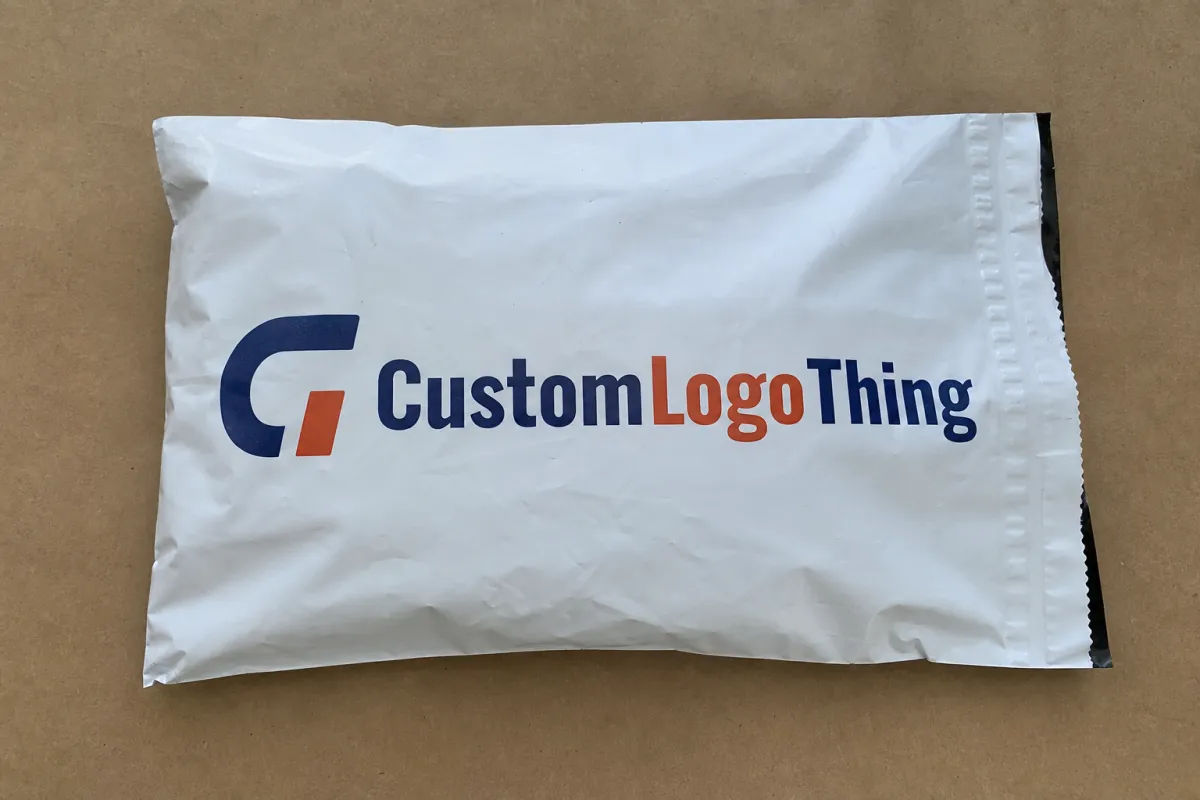
A flat poly mailers bulk order makes sense because it solves a practical logistics problem: lightweight products still need controlled packaging. A mailer that is too large leaves dead space, while one that is too small forces the packer to stop, re-fold, and start over. That may look minor on a single order. Across a busy line, it becomes labor cost.
Brands shipping clothing, socks, swimwear, books, and printed collateral often prefer the flat format because it keeps the parcel low-profile and easy to stack. That matters in the warehouse and during transport. It also matters in the receiving area, where a neat package tends to look more intentional than a baggy one.
Inventory stability is another reason buyers move toward a flat poly mailers bulk order. Small test buys can feel flexible until demand jumps. Then one size runs out, another color gets left behind, and the team is stuck rushing a replacement order. Bulk buying reduces that scramble. It also keeps branding consistent, since the same print, size, and adhesive behavior repeat from one replenishment cycle to the next.
The purchasing math is not complicated, but it is easy to undercount the hidden costs. Lower unit price matters. So do stock availability and the absence of emergency substitutions. A store shipping 500 orders a week can burn through packaging fast enough that even a short gap becomes expensive. A flat poly mailers bulk order creates a planning window, which is especially useful during peak seasons, promotional launches, and subscription resupply periods.
Flat poly mailers tend to fit products that do not need rigid protection. They are a strong match for:
- Apparel such as tees, leggings, underwear, and lightweight outerwear.
- Soft accessories like scarves, hats, and fabric pouches.
- Printed inserts, brochures, books, and flat promotional materials.
- Low-profile ecommerce items that already have retail packaging of their own.
They do not fit every shipment. A product with sharp corners, crush risk, or fragile surfaces usually needs a bubble mailer or a mailer box. Still, for a broad set of ecommerce items, a flat poly mailers bulk order is the efficient choice because the protection level matches the actual risk profile.
Brands comparing packaging systems often review the outer mailer together with inserts and branded tissue through Custom Packaging Products, while higher-volume buyers build a steady replenishment plan through Wholesale Programs. Packaging should fit the shipping model. It should not fight it.
The cheapest mailer stops being cheap the moment it adds postage, slows the line, or forces a second shipment later.
That is the hidden value of a flat poly mailers bulk order: the savings show up in several places, not only on the invoice.
Flat Poly Mailers Bulk Order Product Details: What You Are Actually Buying
At the most basic level, a flat poly mailers bulk order buys a polyethylene film package with heat-sealed seams, a self-seal adhesive strip, and a flat profile intended for non-fragile shipments. The structure sounds simple. The material choices are not. Film gauge affects the feel in hand. Seam quality changes leak resistance and tear behavior. Adhesive consistency decides whether the closure holds on a warm truck day or peels after rough handling.
Most buyers start with appearance, then move into function. That order is fine as long as both are checked. A plain white mailer gives a clean retail look. Black or gray hides the contents better and can feel more premium. Clear mailers are less common for ecommerce shipping, though they can be useful in controlled environments where visible contents help sorting. A custom-printed mailer adds branding and makes the shipment feel intentional, especially when the outer package is the customer’s first physical touchpoint.
For a flat poly mailers bulk order, the real comparison is not just color. It is the tradeoff between visibility, branding, and handling speed. A print-heavy design may look strong on a website mockup, yet if the ink coverage increases cost by 20% to 35%, the buyer needs a clear reason to accept it. In some businesses, a single-color logo on a dark mailer is enough. In others, a pattern or message panel earns its cost because the parcel is handled directly by the end customer.
There is also a quiet operational issue that only shows up after the purchase: mailer consistency across the full run. A sample that seals well is not enough. The full batch has to behave the same way, carton after carton. If the adhesive strip is too aggressive, packers may struggle to close it cleanly. If it is too weak, the seal may fail in transit. Either problem creates friction, and friction shows up quickly in fulfillment.
Here is a practical way to separate the main flat mailer choices:
- Plain stock mailers - Lower cost, faster procurement, and ideal for routine shipping.
- Custom-printed mailers - Higher brand impact, better for recurring fulfillment and retail consistency.
- Opaque mailers - Better privacy and stronger concealment of contents.
- Clear or translucent mailers - More specialized, usually chosen for internal handling or specific retail programs.
A flat poly mailers bulk order also needs a fit check. The mailer should be large enough for the folded product and the self-seal flap, yet not so large that the item slides around inside. Too much room can make the parcel look sloppy and can reduce seal quality if the adhesive is under tension. Too little room creates insertion friction and slows the packing bench.
Shipping teams usually compare flat poly mailers with padded mailers, bubble mailers, and mailer boxes. The dividing line is protection. Flat poly mailers are lighter and usually cheaper, but they do not absorb impact the way a bubble mailer does, and they do not protect corners the way a box can. That is why a flat poly mailers bulk order works best for products already suited to flexible packaging.
A quick buyer check can save time before any purchase is locked in:
- Does the product fit without being forced?
- Does the closure seal with a clean overlap?
- Does the mailer protect the item during normal transit?
- Does the mailer size support the shipping rate structure?
Packaging teams often refer to the International Safe Transit Association when they want a framework for how packages behave under shipping stress. That does not mean every ecommerce order needs a lab program. It does show why real transit conditions should be part of the buying decision, not an afterthought.
Specifications That Matter Before You Place an Order
Specification discipline is where many packaging purchases succeed or fail. A flat poly mailers bulk order should be built from measurable fields, not a vague description like “standard size” or “good quality.” The core specs to request are simple: dimensions, film thickness in mils, adhesive type, print area, and color options. If a supplier cannot quote those clearly, the buyer is already working too hard.
Dimensions should be stated in a way that matches the filled mailer, not only the flat sheet. In sizing terms, a 9 x 12 inch mailer is not interchangeable with a 10 x 13 inch mailer when the product folds thickly. That extra inch can change whether the flap closes cleanly and whether a shipping label fits without crossing the seam. A flat poly mailers bulk order should start with the packed product, not only the raw item.
Thickness is usually listed in mils, and many buyers assume thicker always means better. That is not true in every case. A 2.5 mil mailer can be enough for soft apparel, while a 3.0 or 3.5 mil film may be more appropriate for sharper edges or heavier garments. Going thicker raises cost and can reduce flexibility in packing. The strongest option may also be the least efficient one if the product is soft and low-risk.
The better question is not “What is the thickest available?” It is “What thickness protects the SKU without adding waste?” That is the practical lens for a flat poly mailers bulk order, especially when the packaging is tied directly to shipping margin.
Seal behavior matters more than many first-time buyers expect. A self-seal adhesive strip should close consistently across the full batch, not only on samples. The seal should resist opening under normal handling, and the strip should not become brittle during storage. If the mailers will sit in a warm warehouse, adhesive stability is worth confirming in writing. A low-cost mailer that opens in transit is not a low-cost mailer anymore.
Here is a checklist worth confirming before approval:
- Finished size - Confirm inside or outside dimensions, and make sure every party uses the same measurement standard.
- Film thickness - Request the mil rating and ask whether the gauge is uniform across the sheet.
- Seal type - Verify self-seal adhesive, tamper-evidence behavior, and closure width.
- Print area - Check how much room is available for logo, return address, or messaging.
- Color and opacity - Confirm whether the chosen color conceals contents well enough for the product.
- Packing format - Ask how many pieces are per carton and how cartons are labeled for receiving.
For procurement teams, the key document is the quote spec sheet. A flat poly mailers bulk order should not move forward on memory alone. The approved proof or written spec sheet should match the quoted size, thickness, count, and decoration details. That protects both the buyer and the supplier if a disagreement appears later.
Stackability is another detail that gets ignored until the warehouse fills up. A mailer that stacks efficiently on a pallet and in a storage cage saves space for actual inventory. A flat poly mailers bulk order should support storage as well as shipping.
Buyers who want a broader packaging comparison can review the Custom Poly Mailers page to compare construction and branding options. If the operation also uses secondary pack-outs, printed cartons, or inserts, the sustainability and material discussion can connect to EPA packaging guidance, especially when material reduction is part of the buying brief.
Flat Poly Mailers Bulk Order Pricing, MOQ, and Quote Breakdown
Pricing for a flat poly mailers bulk order is driven by a few main variables: size, film thickness, print coverage, color, artwork complexity, and total quantity. That sounds obvious. The interaction between those variables is where the real buying decision happens. A larger size can push material consumption up quickly. Full-coverage print raises setup and production time. Specialty colors or custom finishes can move the quote further than buyers expect.
MOQ matters because it changes the economics of the order. Smaller runs usually cost more per unit because setup costs are spread across fewer pieces. Larger runs usually unlock better pricing tiers, but only if the buyer can use the inventory before changeover risk becomes a problem. A flat poly mailers bulk order should be sized to actual usage, not optimistic usage.
As a directional benchmark, plain stock mailers often sit in a lower cost band than custom-printed versions, and the gap grows as print coverage increases. Depending on size and thickness, a plain mailer might fall around $0.08-$0.18 per unit at 5,000 pieces, while a custom-printed option can move into roughly $0.16-$0.38 per unit, with larger or more heavily printed formats costing more. Those figures are directional, not promises. Freight, carton count, and decoration method can shift the final number.
| Option | Typical MOQ | Indicative Unit Cost | Usual Lead Time | Best Fit |
|---|---|---|---|---|
| Plain stock white mailers | 500-1,000 pieces | $0.08-$0.18 | 3-7 business days | Routine shipping, fast replenishment |
| Plain stock black or gray mailers | 500-1,000 pieces | $0.10-$0.20 | 3-7 business days | Privacy, premium look, low complexity |
| One-color custom print | 3,000-5,000 pieces | $0.16-$0.28 | 10-15 business days | Branding with controlled spend |
| Full-coverage custom print | 5,000-10,000 pieces | $0.22-$0.38+ | 12-20 business days | High-recognition retail presentation |
Look carefully at what the quote includes. A flat poly mailers bulk order quote should spell out unit price, setup or plate charges if applicable, freight, sample cost, artwork support, and any packaging or palletization fees. Buyers often compare only the piece price and miss the real landed cost. That is how a “best price” turns into the wrong price.
There are also hidden costs that can catch a buyer off guard:
- Split shipments - Useful for warehousing, but they can add handling cost.
- Rush production - Worth paying for only when the schedule truly demands it.
- Special packaging - Individual carton labels, pallet wrap, or custom master cartons can carry a fee.
- Artwork revisions - Extra proof rounds can slow the order and can add design cost.
Ask for three quantity breaks, not one. A serious buyer should see the cost at the current need, the near-term growth case, and the volume where pricing drops enough to matter.
That request makes a flat poly mailers bulk order easier to compare. If one supplier gives a single price and another gives multiple breaks, the second quote usually provides more buying power, even before unit price is discussed. A clear quote often signals a more organized production workflow.
Many brands compare direct sourcing with general marketplace buying. That comparison is rarely close. Marketplace listings can work for emergency stock, but they usually offer less consistency on size, print fidelity, and replenishment. A dedicated supplier is better suited to repeat orders because the documentation is tighter and the order history is easier to preserve. That advantage grows as volume rises.
One more pricing point deserves a straight answer: freight can erase a small unit-price advantage. If two quotes are within a penny or two per mailer, the landed cost and transit time matter more than the headline figure. That is especially true for low-volume purchases or split shipments. A flat poly mailers bulk order is a procurement decision, not just a product purchase.
Process and Lead Time: From Quote to Delivery
A flat poly mailers bulk order usually follows a familiar workflow: inquiry, sizing confirmation, quote, artwork review, proof approval, production, packing, and shipping. The sequence sounds routine, but the pace depends on how complete the first request is. If the buyer sends dimensions, quantity, branding needs, destination, and target delivery date up front, the process moves faster. If those details are missing, the project can stall in email back-and-forth for days.
Delays usually show up in three places. First, artwork files may be incomplete or not press-ready. Second, the buyer may change quantities late, which can alter price breaks and production scheduling. Third, proof approval may sit too long because no one owns the final decision. A flat poly mailers bulk order is easier to manage when one person is responsible for approval.
Lead time also depends on whether the order is plain stock or custom-printed. Stock orders usually move faster because they do not require artwork setup or print calibration. Custom runs take longer because color, layout, and placement need to be verified before production starts. That pattern holds across most packaging categories, and it is one reason planning matters.
Here is a realistic planning framework:
- Stock mailers - Often 3-7 business days to ship, depending on inventory and freight method.
- Custom-printed mailers - Often 10-15 business days after proof approval, sometimes longer for larger runs.
- Complex artwork or higher quantities - Can extend into the 15-20 business day range if print preparation is involved.
That planning window matters if the packaging supports a launch, holiday peak, or subscription shipment. A flat poly mailers bulk order should not be placed on the assumption that every step happens instantly. Build in a buffer for transit variance and warehouse receiving time, because even a strong production schedule can be interrupted by freight congestion or intake delays.
There is also a quality step buyers should not skip: proof approval. If a printed mailer is being ordered, confirm spelling, logo placement, return address, color intent, and print scale before signing off. A rushed proof can create weeks of annoyance. The second order is easier than the first, but only if the first one is documented cleanly.
The ISTA standard library is useful for buyers who want a reference point on packaging performance and test protocols. A flat mailer does not always need a full lab program, but the principle remains the same: packages should be judged against actual handling conditions, not only by how they look on screen.
Planning checklist:
- Confirm the target delivery date before requesting a quote.
- Send final dimensions, artwork, and quantity in one message.
- Approve proofs quickly and assign one decision-maker.
- Hold a small stock buffer if the order supports a known sales spike.
A flat poly mailers bulk order planned this way usually creates fewer surprises. It also makes replenishment simpler, because the next purchase can mirror the approved spec rather than restarting the discussion from zero.
Why Choose Us for a Flat Poly Mailers Bulk Order
What should a buyer expect from a supplier? Start with consistency that can be measured. A good flat poly mailers bulk order should deliver the same dimensions, adhesive behavior, and print quality from batch to batch. That matters because the second and third orders should feel like a continuation of the first, not a new experiment.
At Custom Logo Things, the value is practical, not promotional. Buyers need spec guidance before they buy, artwork checks before approval, and quantity planning that reflects real usage rather than guesswork. If a supplier only wants to take the order, the buyer ends up managing the production details themselves. That burden is avoidable.
Quality control matters more in bulk than in a small test buy. A flat poly mailers bulk order should include checks on film gauge consistency, seal testing, and print registration. A few percentage points of inconsistency may not matter on ten sample pieces, but they matter across thousands of units. If the mailer is part of the brand experience, the mismatch becomes visible quickly.
There is also a meaningful difference between working with a packaging supplier and buying from a generic marketplace listing. Marketplace convenience can be useful, but it usually does not bring the same level of documentation, continuity, or accountability. A dedicated supplier can help preserve the exact spec across repeat orders, which matters if you do not want to re-qualify the packaging each time you reorder.
Why repeat buyers stay with one supplier:
- Clear quoting that makes landed cost easier to understand.
- Communication that keeps proofing and timing under control.
- Documented specs that reduce reordering errors.
- Flexibility to scale the flat poly mailers bulk order without rebuilding the process.
A strong supplier relationship also helps with print continuity. If the logo needs a small update or the return address changes, the previous spec can serve as the base file. That saves time and reduces the chance of version drift. In bulk packaging, version drift is expensive. It is also avoidable.
Buyers who need broader packaging support can review the wider catalog through Custom Packaging Products, while teams that need scaled purchasing can use Wholesale Programs to structure repeat volume. For common questions during selection and approval, FAQ is also a helpful reference point.
One more trust signal matters here. Material sourcing and sustainability claims need care. A poly mailer is not automatically better just because it is thin. Buyers should ask whether the package can be downgauged, whether recycled content is available, and whether the overall packaging system reduces material use. The mailer itself should support the claim, not the other way around. For paper-based inserts or secondary packaging, certification references like FSC matter when the specified material is actually paper.
That honesty is part of professional buying. Some suppliers overpromise on eco claims or durability. A trustworthy quote should state what the mailer is made of, how it is finished, and where the limits are. If a product is best for apparel and not for edge-heavy goods, say so plainly. Buyers do not need spin. They need packaging that performs the way it was quoted.
How to Place the Right Flat Poly Mailers Bulk Order
The cleanest path to a good flat poly mailers bulk order is to work backward from the product. Measure the folded item, choose the smallest mailer that fits without forcing the seal, estimate monthly usage, and request a quote using the same criteria from every supplier. That lowers guesswork and makes comparison much easier.
Sample testing is worth doing if the item is fragile, unusually shaped, or sensitive to adhesive pressure. A product that looks easy to ship may behave differently once folded, stacked, and inserted repeatedly. A sample run answers the questions that matter: does the mailer close cleanly, does it resist tears, and does it hold up through a normal shipping cycle? For a flat poly mailers bulk order, that test is often cheaper than fixing a bad purchase later.
Before asking for pricing, gather these details:
- Product dimensions, including the folded or packed state.
- Expected monthly or quarterly usage.
- Branding needs, including logo, message, and color preference.
- Shipping destination and freight preference.
- Target delivery date and any launch deadline.
Then compare suppliers using the same columns every time. A flat poly mailers bulk order should be judged on size, thickness, MOQ, lead time, artwork support, and freight. If one quote looks cheaper but hides costs in shipping or setup, that is not a better quote. It is just a quieter one.
There is useful discipline in asking for a written quote summary rather than relying on a loose email thread. The summary should state the final spec, the total count, the per-unit price, and any fees tied to print or freight. That makes reordering easier and protects the budget review process. It also gives the receiving team something concrete to check against the shipment.
One practical detail many buyers miss is replenishment timing. A flat poly mailers bulk order should not be scheduled when inventory is already down to the warning line. If average usage is 10,000 pieces a month and lead time is three weeks, the reorder point needs to be set before the last pallet is opened. That sounds basic, but it is the difference between calm planning and emergency buying.
A second detail is storage. Poly mailers are light, but they still need dry, flat, accessible space. Heat and pressure can affect adhesive performance, and crushed cartons can slow the line. If the packaging is being stored for months, that should be part of the order plan. It is easier to protect the inventory now than to explain a seal problem later.
Immediate action path:
- Confirm the product size and shipping needs.
- Choose a mailer style and thickness that fits the SKU.
- Request a tiered quote with freight included.
- Approve the proof and lock the production window.
- Schedule the next flat poly mailers bulk order before stock gets tight.
That is the cleanest way to buy. It is not flashy, but it is how stronger packaging programs operate. A flat poly mailers bulk order should be a repeatable supply decision, not a one-time scramble.
For brands that want fulfillment to stay predictable, the best move is usually to standardize the size, lock the spec, and reorder before usage spikes. That is how a flat poly mailers bulk order protects margin, cuts handling friction, and keeps the packaging experience steady from one shipment to the next.
If you are placing a flat poly mailers bulk order this quarter, the practical takeaway is simple: standardize the folded product size, choose the smallest mailer that clears the seal and the label, and ask for three quantity tiers with freight included. That combination gives you the real cost picture before you commit, which is the point.
What size flat poly mailers bulk order should I choose for apparel?
Measure the folded garment rather than the hanger size, and leave enough room for the self-seal flap. Pick the smallest size that fits without forcing the product, since oversized mailers can waste postage and storage space. If you ship multiple apparel types, build a size matrix so one mailer size can cover most orders.
How many pieces count as a flat poly mailers bulk order?
Bulk usually starts at a supplier's MOQ, which may be a few hundred units or more depending on size and print complexity. Higher quantities generally reduce unit cost, so ask for tiered pricing before you lock in the order. If volume is still changing, compare a smaller trial run against the long-term cost of a larger purchase.
Are flat poly mailers strong enough for everyday ecommerce shipping?
They are a strong fit for lightweight, non-fragile items like clothing, accessories, and printed materials. Thickness, seal quality, and product shape matter more than marketing claims, so test a sample with your actual SKU. If the item has sharp edges or needs crush protection, a padded option or box may be the better choice.
How long does a flat poly mailers bulk order usually take?
Plain stock mailers usually move faster than custom-printed orders because they do not require artwork approval or print setup. Lead time depends on quantity, customization, and freight method, so confirm the production schedule before paying. Build in extra time if the order supports a launch, peak season, or a subscription shipment date.
Can I customize a flat poly mailers bulk order with my logo?
Yes, most bulk orders can be custom printed with a logo, brand pattern, or simple marketing message. Ask for the print area, file format requirements, and proofing process before sending artwork. If color accuracy matters, request a close Pantone match or a printed proof for approval.
What should I ask before approving a flat poly mailers bulk order quote?
Ask whether the quoted price includes freight, artwork setup, carton packing, and any plate or proof fees. Confirm the finished size, film thickness, adhesive style, and the exact quantity break being priced. If the supplier cannot define those details clearly, the quote is not ready for approval.