Foil Printed Labels: How to Order Better Clothing Labels
Foil printed labels can make a garment look more expensive without changing the garment itself. That is the point. The hard part is not the shine. It is getting the spec, substrate, and production method to work together without producing a shiny mistake.
Why foil changes the read of a label
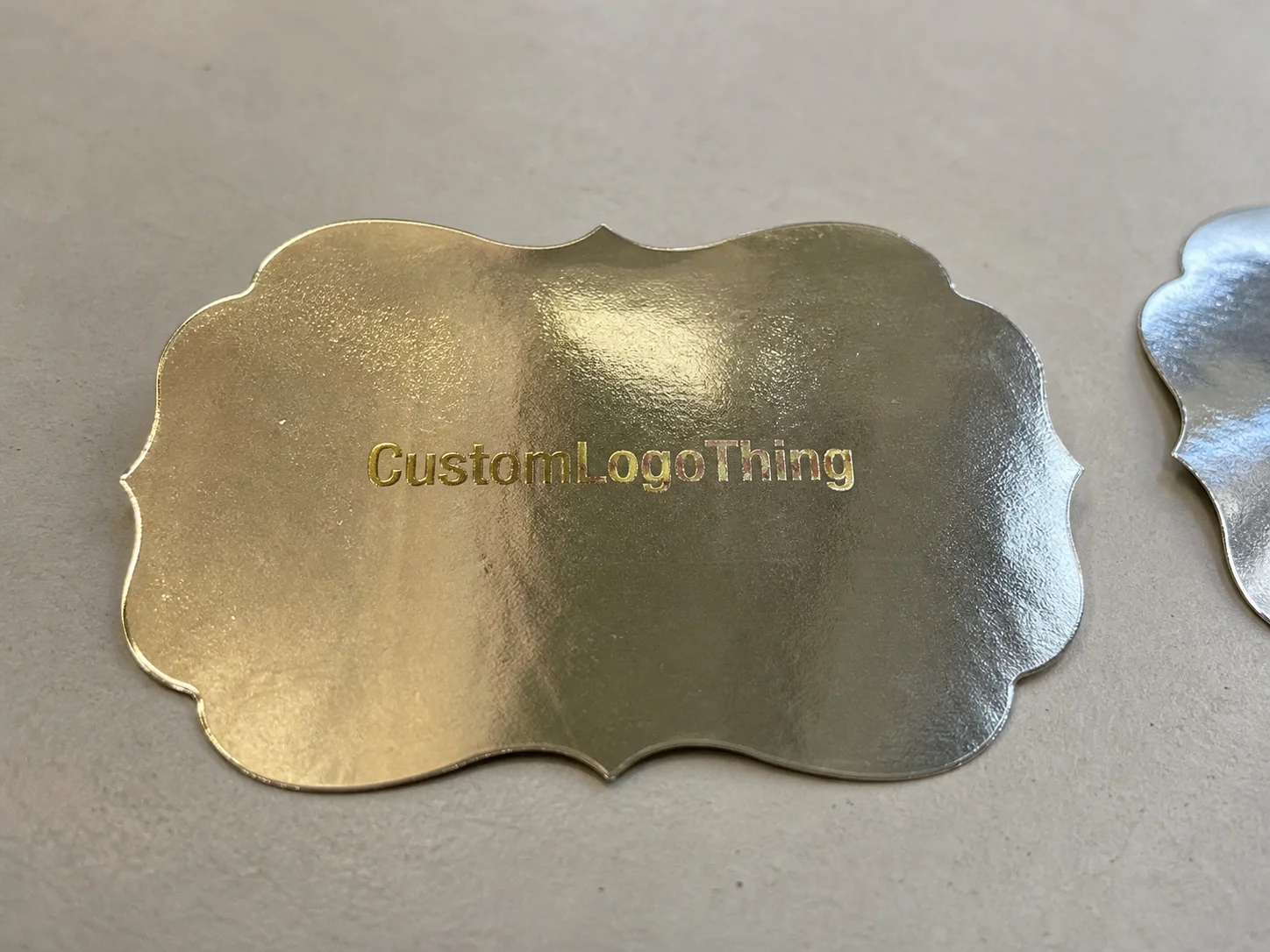
Foil printed labels do one thing very well: they pull attention into a small area. On a garment, that matters more than people expect. A clean metallic mark on a neck label, side seam tag, or hangtag insert can make a basic tee read like a considered product instead of a blank with branding slapped on later.
The effect is not just visual noise. Foil catches light, which gives the label a second level of contrast beyond the ink or substrate color. Under retail lighting, in a product photo, or on a folded stack in a warehouse, that little flash can make the brand mark easier to see and easier to remember. It also tends to make size marks and short product codes feel cleaner, assuming the artwork is not overloaded.
That last part matters. Foil is best when the artwork is simple and deliberate. Thin lines, tiny lettering, crowded logos, and long care-copy blocks are where the finish starts working against you. The label should look sharp at arm’s length and still stay readable up close. If it only looks good from across the room, the spec is probably wrong.
Buyers usually care about three things here: appearance, durability, and cost. Foil can improve the first one fast. The other two need discipline. A finish that looks premium but cracks, scuffs, or lifts after a few wash cycles is not premium. It is just expensive at launch.
The right use cases are usually straightforward. Premium basics, capsule drops, gift boxes, limited runs, and outerwear trims with short brand text are all good candidates. Heavy information labels are not. If the label has to carry legal copy, fiber content, and care instructions, the foil area should stay small and support the text, not swallow it.
How foil printed labels are made
Suppliers use different names for the same general idea, and that is where confusion starts. Some call it foil stamping. Some call it foil printing. Some describe it as transfer or hot-press decoration. The label is not improved by the vocabulary. Ask what process is actually used, what substrate it sits on, and how the foil is bonded.
Most builds include a base material, a print or adhesive layer, the foil application, curing or heat pressing, and then trimming and finishing. Depending on the factory, the base can be woven satin, coated paper, synthetic film, polyester, or another printable stock that matches the garment. The important part is bonding. The metallic layer needs enough heat, pressure, or chemical adhesion to survive handling and laundering.
Substrate choice changes the result more than most buyers want to admit. A smooth synthetic stock usually gives the cleanest edges and the most even reflection. A textured base softens the look. A stretchable garment label can distort the foil if the construction is not built for movement. Heat-sensitive fabrics can also create problems if the application method runs too hot. A pretty sample on card stock does not prove anything about the real garment.
Durability comes from the full stack, not the top layer alone. That means the substrate, the adhesive, the foil formulation, the application settings, and the finishing method all matter. If one piece is wrong, the label can start to fail at corners, edges, or high-friction points. Wash cycles make those weak spots obvious very quickly.
That is why sample approval should be stricter than a screen mockup. A mockup can show color placement and general layout. It cannot show edge adhesion, abrasion resistance, or how the finish reacts once it is folded, sewn, packed, and washed. If a supplier says a design looks good in the render and stops there, the review is incomplete.
If the sample only looks good on paper or on a screen, it is not approved. Foil lives or dies on the actual substrate.
Cost, pricing, and MOQ
Pricing for foil printed labels is usually driven by five things: size, foil coverage, substrate, quantity, and finishing complexity. None of that is mysterious. A small logo hit costs less than a full-bleed metallic design. A standard stock label costs less than a custom construction. And the smaller the order, the more setup cost gets pushed into each unit.
For planning, a run around 5,000 pieces often lands around $0.12 to $0.30 per unit for a simple foil treatment. If the label is larger, has more coverage, or needs more finishing work, the number moves up. Smaller runs can get expensive fast. At 500 pieces, it is not unusual to see $0.35 to $0.80 per unit once setup, proofing, trimming, and packing are included. If a quote comes in far below that, something is missing.
| Option | Typical unit cost at 5,000 pcs | Best use | Main tradeoff |
|---|---|---|---|
| Standard printed label | $0.06-$0.14 | Functional branding and care information | Lower visual impact |
| Foil printed label | $0.12-$0.30 | Premium logos, size marks, and limited drops | More sensitive to substrate and application method |
| Woven label with metallic yarn | $0.20-$0.45 | Textured premium branding | Less sharp reflection than foil |
MOQ matters because the setup cost does not shrink just because the order is small. A 300-piece test run can cost more per unit than a much larger production order even if the materials are similar. Buyers often compare only the line item price and ignore the rest: artwork prep, sampling, shipping, rework rules, and whether defect replacements are included.
Ask for an itemized quote. If Supplier A includes proofing and replacement allowances while Supplier B leaves them out, the cheaper quote is not cheaper. It is just incomplete. A useful quote should state the exact label size, material, foil coverage, finish, packing method, lead time, and delivery terms. Otherwise you are comparing guesses.
There is also a practical limit on how much visual complexity you should expect at a low MOQ. Fine gradients, tiny reverse type, and dense linework all become riskier as the run gets smaller because the supplier has less room to absorb setup waste and inspect each batch carefully. Foil printed labels can absolutely work on small runs, but the design should reflect the economics instead of pretending they do not exist.
Production flow and lead time
The cleanest orders start with a proper brief. Not a scattered thread of half-baked notes. Send the artwork, dimensions, material preference, foil placement, quantity, garment type, wash requirement, and any packing notes together. If the details are split across messages, revisions multiply and the quote gets less reliable.
The proof stage is where weak specs get exposed. A digital mockup is useful for layout, but it is still a mockup. Foil tone, edge definition, and registration all look different once the supplier turns the file into a physical sample. Approve only after the supplier confirms the substrate, the foil area, and the smallest readable text size. If the label has multiple elements, make sure the supplier confirms each one, not just the logo.
Typical timing is fairly predictable. A sample often takes about 5 to 10 business days once the art is final. Standard production often takes 10 to 15 business days after proof approval. Rush orders are possible, but they cost more and they reduce tolerance for revisions. Shipping adds its own buffer. People routinely forget that part, which is how a “ready by Friday” order ends up arriving next Tuesday.
Quality control should happen before packing, not after the customer spots a defect. Count tolerance, alignment, foil coverage, and surface protection all matter because metallic finishes are easier to scuff than plain matte print. Labels should be separated or packed in a way that prevents the foil surface from rubbing against itself. Loose bulk packing is a shortcut. Shortcuts are usually visible later.
For shipment risk, transit testing is worth asking about. The ISTA framework is useful if you want to think about vibration, compression, and handling conditions rather than assuming every parcel is gentle. That does not replace supplier QC. It just gives you a better way to talk about damage risk before the order leaves the building.
How to spec the artwork and material
Start with the job the label has to do. If it is decorative, you can push harder on shine and contrast. If it needs to carry legal or care information, legibility comes first. If it has to do both, split the design so the foil supports the hierarchy instead of competing with the text.
Then decide on contrast. Foil on a matte black base reads very differently from foil on a gloss white stock. Silver and chrome tones feel sharper and colder. Gold is warmer and more obvious. Rose gold can work, but only if the garment palette supports it. A finish that clashes with the fabric or packaging tends to look accidental.
Artwork should be simplified before it is sent out. Thin strokes, tiny reversed lettering, and crowded seals are risk points on foil printed labels. Vector files are the best starting point because they keep edges crisp and make scale changes less painful. Raster art can work in some cases, but only when the resolution is high enough and the supplier is comfortable with the detail level.
- Use the final logo file, not a screenshot.
- Specify dimensions in millimeters or inches and keep them fixed.
- Mark every text element and its exact position.
- Separate decorative foil from care copy if the layout needs both.
- Ask for a sample on the actual garment fabric, not only on a flat proof.
Material choice should follow the use case. Stretch jersey, rough twill, and coated synthetics behave differently under heat and pressure. A label on a rigid box insert does not face the same abuse as a neck label on a hoodie. If the garment will be washed often, abrasion resistance matters more than a perfect first impression. If it is a limited drop with lighter wear, you have more room to prioritize appearance, but not enough room to ignore durability.
There is also a production tolerance issue that buyers tend to skip. Very small text can shift slightly depending on the process. That is normal. The answer is not to chase microscopic detail. The answer is to set realistic minimum sizes, line weights, and safe margins so the label can be produced consistently. If the design only works when everything is perfectly aligned, it is too fragile for production.
Common failures and how to avoid them
The most common mistake is cramming too much foil into too little space. That sounds obvious, yet it keeps happening. When every letter, border, and accent is metallic, the label loses contrast and starts to look busy instead of premium. A little empty space usually improves the finish more than adding more shine ever will.
Substrate mismatch comes next. A label can look fine on a flat sample and fail once it is sewn into a stretchy shirt or applied to a textured hoodie. Buyers often blame the foil when the real problem is the base material. If the fabric bends, stretches, or heats unevenly, the label construction has to account for that.
Proof approval is another weak spot. Screens hide small registration issues, edge lift, and glare problems. Foil printed labels are especially sensitive to glare because glare can either sharpen the brand mark or make it harder to read. Ask for close-up photos and, if the order is important, a physical sample on the actual fabric. A supplier that refuses to answer process questions is not saving you time. It is skipping the part where problems get found.
Quote shopping without locking the spec is a classic way to compare things that are not actually the same. One supplier may use thicker stock, stricter inspection, or broader foil coverage. Another may quietly reduce material weight or simplify finishing to hit a lower price. The cheaper quote can still be the worse deal, even if it looks clean on paper.
Repeatability matters too. One decent sample is not enough. You want a supplier that can hold the same finish across repeat orders, not just one attractive first batch. If the second order drifts in color, shine, or placement, the line starts to look inconsistent fast. That is hard to fix once the garments are already in circulation.
A good quote is not the lowest one. It is the one that tells you exactly what you are getting, how it is built, and what happens if the batch misses spec.
What to request before you order
Send the same spec sheet to every supplier you are considering. Same artwork. Same dimensions. Same quantity. Same material request. Same finish notes. That is the only way to compare quotes without introducing noise. If the responses come back with different assumptions, the differences will show up quickly.
Ask for a sample, or at minimum ask for close-up photos of similar work on a similar garment. Foil printed labels can look excellent in a catalog and mediocre when they sit against a seam, fold, or textured surface. The garment matters. The finish has to survive bend, rub, and washing in the actual use case, not just in a controlled sample view.
Before approval, confirm these points: count tolerance, packing method, defect policy, wash guidance, and lead time. If a supplier cannot explain how they protect the foil during shipping, that is a warning sign. If they cannot say what happens when a batch arrives scuffed or misregistered, that is another one. Those are not edge cases. They are the basics.
Build the decision around three variables only: appearance, durability, and landed cost. The rest is supporting detail. If the finish looks good but fails quickly, it fails. If it is durable but dull, it misses the brand brief. If the price is low but the spec is vague, the order is a gamble. There is no prize for buying the cheapest label that nobody wants to touch.
For broader trim sourcing, it helps to align the label order with the rest of the garment approval cycle. That keeps brand color, material choice, and finish expectations moving in the same direction. The fewer times your team has to re-explain the same spec, the fewer mistakes sneak into production.
Foil printed labels work best when the supplier proves the finish fits the fabric, the use case, and the timeline. That is the real filter. The shine is the easy part. The rest is what makes the order worth paying for.
FAQ
What are foil printed labels used for on clothing?
They add a metallic finish to brand, size, or decorative labels without changing the garment itself. They work best when the label area is small and the brand wants a cleaner premium signal. They are less useful for dense care-copy blocks or layouts that rely on tiny text.
Are foil printed labels durable in the wash?
They can be durable if the substrate, adhesive, and application method match the garment and the wash conditions. Heat, abrasion, and repeated folding are the main stress points. Always ask for wash-test results or a real sample on the same fabric before you approve production.
How much do foil printed labels cost per unit?
Cost depends on quantity, label size, foil coverage, setup, and finishing requirements. At around 5,000 pieces, a simple foil treatment often falls in the $0.12 to $0.30 range per unit. Smaller orders usually cost more per piece because setup is spread across fewer labels.
What artwork do suppliers need for foil printed labels?
Send the final logo file, dimensions, foil placement, color intent, and any legal or care text. Vector artwork is usually preferred because it keeps edges sharp and makes registration easier. A simple tech pack helps the supplier stay aligned with the spec instead of guessing.
Can foil printed labels work on stretch or textured fabrics?
Sometimes, but the construction has to be chosen carefully because stretch and texture can distort the finish. Ask for a sample on the actual garment fabric, not just a flat proof. If the garment will be washed often or stretched hard, durability should come before visual effect.